The Daily Toast: Douglas Murray On Putting Country Before Party

Tim Montgomerie - 2

The exodus begins…

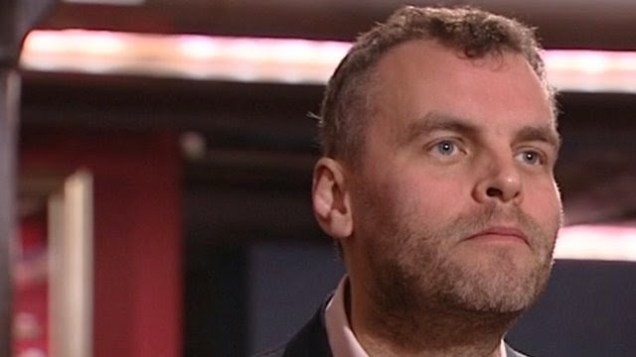
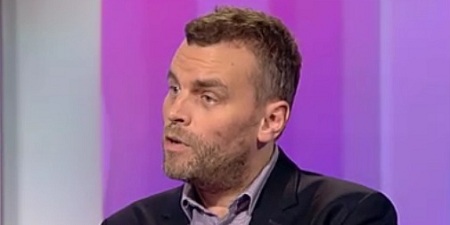
Douglas Murray lends an eloquent voice of support to Tim Montgomerie and his brave decision to quit the Conservative Party as an act of protest against Cameronism:

In the wasteland of principles that is Westminster, Tim Montgomerie has always been an exception.  The area is filled with ambitious, bland careerists whose idea of taking a stand (as with most of the commentariat) consists of trying to locate two ‘extremes’ before comfortably wedging themselves equidistant between them.  But in resigning from a lifetime’s membership of the Conservative party, Tim Montgomerie has demonstrated that there is still room for principles in politics.

[..] But here is the bigger problem for [Montgomerie’s critics]. It may well be that they shouldn’t care about the founder of Conservative Home, and one of their party’s most loyal and thoughtful members, choosing to leave the party.  Just as they may for the time-being not mind taking all those leaflet-deliverers for granted while riding against their core wishes.  But one day they may wake up to discover that amid all the high-handed dismissals and principle-free careerism, there is nobody around left to watch their political backs.  What a day that will be.  And perhaps it will come sooner rather than later.

If anything is going to hasten this day of reckoning, it will be the coming EU referendum. The party grassroots are overwhelmingly at odds with the leadership on the key question of Brexit. The parliamentary Conservative Party is on course to split just as dramatically as Labour split over the vote for military action in Iraq back in 2003.

Then throw in a rancorous, ill-tempered EU referendum campaign – our country is debating an existential issue, and tempers will inevitably fray and then snap. Things will be said that are far worse than David Cameron’s prissy, coded jibes at the expense of Boris Johnson in Parliament today.

And in the midst of this intra-party warfare, Conservative MPs may come to realise – or recall – that there is far more that divides them than just the question of Brexit. Other ideological differences, suppressed in the name of the “greater good” of general election victory, will come bubbling back to the surface.

Some Tory MPs might even make the mistake of asking themselves what the Cameron/Osborne legacy will be – and then recoil in horror when they realise that they fought their way back to power only to blindly implement Tony Blair’s fourth term New Labour agenda.

And then will come the desperate casting around for a more authentic conservative vision, and a more credible leader to bring it about. And vindication for Tim Montgomerie.


Read my take on Tim Montgomerie’s resignation from the Conservative Party here, as part of the “What Conservative Government?” series.


Tim Montgomerie

Agree with this article? Violently disagree? Scroll down to leave a comment.

Follow Semi-Partisan Politics on TwitterFacebook and Medium.

The Media’s Unhealthy Boris Fixation

Boris Johnson - Vote Leave

We all know that Boris Johnson’s decision to “Vote Leave” is gratuitously unprincipled and self-serving. So let’s just stop talking about him – otherwise, we merely give his publicity machine the fuel it craves

Fraser Nelson gets to the heart of what really matters in the Brexit debate – how long it will take David Cameron to forgive Boris Johnson for his treachery:

Until now, David Cameron had been very lucky in his enemies: David Davis, Gordon Brown, Ed Miliband and then Jeremy Corbyn. But last night, the quality of his opposition in the EU referendum campaign rose rather substantially. He now finds himself arguing against not only against Michael Gove, the person he turns to when he’s short of killer lines, but against Boris Johnson, perhaps the single most popular figure in the Conservative Party.

[..] This is a gamble that could either leave Boris in the wilderness, or writing the next set of No 10 Christmas cards. Should David Cameron lose the referendum, he will probably have to resign as Prime Minister given how much of his personal authority is on the line. And who would succeed him? Not George Osborne, who urged the Prime Minister to hold an early vote. The leadership race will be decided by Conservative Party members, who are expected to back “out” by a margin of three-to-one.

[..] Already, there are signs of the Cameron operation closing ranks against Boris. No 10 has a semi-official vengeance policy: ministers with a long-standing opposition to the EU will be forgiven for backing “out”. The implication is that there will be no forgiveness for Boris, who has waited until now to declare his support for Brexit. “The last thing I wanted was to go against David Cameron,” said Boris yesterday. Quite true: what he wants is to come after him – and he is, as of last night, the bookmakers’ favourite to do just that.

This kind of breathless court gossip sometimes makes me despair of the Westminster media. There is a real, existential question before us right now – whether Britain should remain in the EU and follow its winding road toward political integration, or take a bold step toward independence and sovereignty. And a media class that did its job properly – speaking to the people rather than excitedly talking amongst themselves – would focus on the policy, not the personalities.

Does the Conservative Party leadership succession matter? Absolutely. Along with Tim Montgomerie, I have a significant ideological interest in who takes over from David Cameron and (hopefully) restores some radical conservative vision to the party of Margaret Thatcher. But there’s a time and a place.

Fraser Nelson at his best is a thoughtful and questioning conservative commentator – particularly when he focuses on social issues like welfare dependency. Were Nelson to fully engage his engine, we would likely all benefit from his considered addition to the EU referendum coverage. But as of Monday evening, everything Fraser Nelson has written thus far has focused on the tedious subject of Boris Johnson’s career.

I don’t need a poll to tell me that right now, people care more about the arguments for and against Brexit than they do the many fierce little psychodramas playing out between the Conservative Party leadership and Brexit-supporting Tory backbenchers, or between David Cameron and Alexander Boris de Pfeffel Johnson. But survey the mainstream media and you will find a lot more breathless leadership speculation than deep, forensic analysis of David Cameron’s fraudulent renegotiation, or the arguments for and against Brexit.

I’m sure that better stuff will follow. I hope it follows soon.


Boris Johnson - EU referendum

Agree with this article? Violently disagree? Scroll down to leave a comment.

Follow Semi-Partisan Politics on TwitterFacebook and Medium.

Support David Cameron? I’d Rather Feel The Bern

Bernie Sanders For President

Bernie Sanders or David Cameron? There’s no contest

At a time when far too many conservatives on both sides of the Atlantic have revealed themselves to be either snarling authoritarians (Marco Rubio, Donald Trump) or patrician, vacuous hairdos (David Cameron), the search for authentic commitment to individual liberty can sometimes lead to unexpected places.

Spiked are now making the controversial argument that this search leads all the way to Vermont, and to US presidential candidate Bernie Sanders.

Todd Gillespie writes:

Despite being slammed by some as a big-government lefty, Sanders’ track record is more complicated — and arguably more libertarian than has been appreciated. Even libertarian stalwart Ron Paul has come out in support of Sanders’ small-government credentials, shortly after his son, Rand, left the Republican race.

Bernie has espoused positions similar to Rand’s, even joining with him to oppose government surveillance. Last year, Sanders wrote a blistering criticism of the ‘Orwellian’ practice of spying on citizens. He voted against the 2001 Patriot Act and its dreadfully named replacement, the Freedom Act, in 2015 — both of which Clinton supported. He is arguably the only candidate left who takes positions that can legitimately be described as libertarian.

He supports freedom of speech. He backs net neutrality and opposes attempts to censor the internet. In 2005, he introduced the Stamp Out Censorship Act, which sought to prohibit the government enforcing ‘indecency fines’ on non-public media (it failed to pass). Recently, addressing students at Liberty University (a Christian institution whose president has just endorsed Donald Trump), most of whom think very differently to Sanders, he said ‘it is vitally important for those of us who hold different views’ to engage in debate.

Anti-surveillance. Anti-censorship. Pro civil liberties. Pro free speech. All more than can be said of many American conservatives, who ostentatiously flaunt their love of the Constitution – by which they mean the Second Amendment, while conveniently overlooking the First and Fourth Amendments.

Gillespie continues:

Sanders’ right-wing critics write him off as a big-state socialist. But a better label might be ‘libertarian socialist’. Yes, he has a vision of centralised government spending funded mainly by tax hikes on big business, but Comrade Bernie also envisages having a private sector with greater employee ownership. He has introduced legislation several times to increase government funding for centres that would provide training and technical support for the promotion of worker ownership and participation. He introduced the Rebuild America Act 2015, proposing an extra $1 trillion investment to renew America’s crumbling infrastructure, increasing airport capacity, improving and expanding railways, roads, bridges and broadband connection. He also wants to end crippling student debt and drastically increase loans to fuel small-business innovation. You can’t accuse him of thinking small.

Of course there is also much in Bernie Sanders’ platform to abhor – the punishing effective tax rates which would be required to fund this social democratic revolution, the increase in the size of government and the stripping away of agency and responsibility from free citizens to make their own decisions and take their own risks, for a start.

But perhaps it is also a sign of the divergence between the American and British political spectrums that I quite often find myself nodding along in agreement when the ornery senator from Vermont opens his mouth to speak. Perhaps when you move far right enough in your British politics (many certainly seem to think I am Thatcher on steroids) you actually break through and register on the far left of the US political scale.

And one thing is certain – if Bernie Sanders were prime minister of the United Kingdom, we would have a far more ideologically conservative leader than we currently have in David Cameron.

Spot The Socialist - David Cameron vs Bernie Sanders - Semi Partisan Politics - Sam Hooper

Agree with this article? Violently disagree? Scroll down to leave a comment.

Follow Semi-Partisan Politics on TwitterFacebook and Medium.

What do Jeremy Corbyn And Tim Montgomerie Have In Common?

Tim Montgomerie - Jeremy Corbyn

Martin Kettle tells us in his latest Guardian column:

Tim Montgomerie and Jeremy Corbyn make unlikely bedfellows. The Tory activist and journalist – founder of ConservativeHome.com – is a self-proclaimed admirer of Margaret Thatcher. She’s the reason Montgomerie went into politics. For the leader of the Labour party, on the other hand, Thatcher embodies everything he would like a Labour government to dismantle, reverse and bury.

Yet the two men agree about one thing. Montgomerie tore up his Tory party card on Thursday, protesting that there is very little that David Cameron and George Osborne are doing, not least in Brussels this week, that Blairites or Cleggites could object to. When Corbyn ran for the Labour leadership last year, he made pretty much the same charge. What’s more, he won the contest because a lot of supporters agreed with him.

Montgomerie and Corbyn see the world very differently. But they both now belong to the growing part of the British public that believes parties must stand for more sharply defined aims that reflect a distinct view of the world. Many of this group believe, in addition, that the voters are crying out for such a change to be offered to them.

Kettle goes on to reach wildly different conclusions than this blog – his piece ends with an implied warning that ideology of either side should be kept firmly in the box, lest we end up with a British version of the US Republican Party. But in terms of surveying the scene, he is absolutely right.

Most recently, the backlash against centrism has been more a phenomenon of the Left than the Right. The Labour leadership contest blew open long-suppressed divisions and resentments about the direction of the party, and (remarkably) actually saw the long-subjugated old-school socialists regain control. The Right, by contrast, has not been so divided. Sure, we’ve had the rise of UKIP as a serious threat on the eurosceptic and traditionalist fronts, but most Tories have been so happy just to be back in majority government that there has been no real disquiet over what David Cameron is actually getting their party to do while in power.

But this could all be about to change. The EU referendum on 23 June will pit Tory against Tory as each of us confront the existential question facing our country. As Chris Deerin warned a year ago based on his experience of the Scottish independence referendum, the coming battle will be bitter and divisive. And only a hopeless optimist could think that once this internal Conservative warfare starts, other issues will not quickly be dragged into the debate – deeply suppressed differences over fiscal policy, housing policy, defence, welfare, energy and climate.

Kettle’s piece suggests that he would disagree, but I regard all of this to be an extremely welcome thing. The ridiculously narrow Overton window staked out by our two main political parties has left many millions of British people without a voice on some of the greatest issues of our day. Worse still, it stinks to high heaven – whether it is always the case or not – of an establishment collusion to protect the interests of the political class over and above the good of the country.

Anything which helps to break open the stranglehold of centrist, consensus politics on our public discourse should therefore be welcomed. That’s why this blog supported Jeremy Corbyn’s leadership of the Labour Party despite disagreeing with him on virtually every issue of substance. And it is why I will enthusiastically cheer any development which causes stress and discomfort to David Cameron, who – as Tim Montgomerie lamented – has undone nearly all of Thatcher’s radical influence on the Conservative Party.


Read my take on Tim Montgomerie’s resignation from the Conservative Party here, as part of the “What Conservative Government?” series.


Tim Montgomerie

Agree with this article? Violently disagree? Scroll down to leave a comment.

Follow Semi-Partisan Politics on TwitterFacebook and Medium.

Cameron’s EU Deal – Reaction

BELGIUM EU SUMMIT

Didn’t he do well?

As our victorious prime minister returns to London to chair the fateful cabinet meeting which will now likely set the wheels in motion for a June referendum, it’s worth taking a brief survey of how David Cameron’s deal – essentially an embossed, artfully decorated statement of the status quo – is being received.

The division between those who are angry or depressed and those who are buoyantly cheerful really tells you all that you need to know.

Toby Young bristles at being asked to greet the status quo like a shiny new present, but recognises that such a devoutly europhile prime minister could scarcely be expected to to any better:

The attempt to spin this deal as a great victory, which grants Britain a “special status” within the EU, is unlikely to win the Prime Minister many friends. On the contrary, it may end up alienating people who haven’t yet made up their minds who will feel they’re being taken for fools.

[..] Crucially, the EU leaders made it clear that there won’t be any further reforms, at least none that will mean a transfer of powers away from the centre. So Downing Street won’t be able to spin this agreement as the beginning of a reform process rather than the EU’s best and final offer.

Many of the “wins” Cameron boasted about in his speech were just assurances that the EU isn’t going to take away the protections for Britain already won by Margaret Thatcher and John Major. We won’t be forced to join the euro! Whoopee doo.

Tim Stanley channels his inner Tony Blair and declares Cameron’s pitiful outcome to be “weak, weak, weak”:

David Cameron’s deal with Europe is weak, weak, weak. It could never be anything but. Why? Partly because the Prime Minister is an inveterate Europhile.

He approached these negotiations from the stance of someone who ultimately wanted to stay in – and how could he negotiate from strength when everyone around the table knew that he was bluffing? More importantly, the idea that Britain can build for itself a “special status” within Europe is pure fantasy.

The EU cannot be decentralised; the UK cannot prosper on its fringes. The only real choice is between the status quo and Brexit.

[..] The Europeans made it clear from the outset that there would be no rewriting of the fundemantal principles. Rightly so: one country cannot determine the direction of travel for the entire continent. And if one country gets to pick and choose its own rate of integration into the new super state – why, everyone else will want to do the same.

So Cameron could never have been given substantial reforms because just putting them on the table would have jeopardised the grand European project. We have reached a point in the history of the EU when what Britain needs and what Europe wants are no longer compatible. The only logical thing left to do is to leave.

Paul Goodman compares David Cameron’s loftily declared original list of renegotiation objectives with the limp and shrunken prize he now holds in his hand – and he makes the choice facing Conservative MPs crystal clear:

Many Conservative MPs told their voters and Associations at the last election that Britain’s relationship with the EU cannot go on as it is.  They are fully entitled to say now that they have changed their minds.  That they have been persuaded that Britain’s future is brighter as an EU member state.  That they will swallow any misgivings they have about the deal, and back their Party leader – who, after all, is on some measures the most successful Conservative leader of modern times bar Margaret Thatcher.  That this is no time to campaign for a referendum result that would turn an election-winning Prime Minister out of office, and destroy the reforming work of the first majority Tory Government in over 20 years.

What they cannot say, if they have declared that Britain’s relationship with the EU must see real reform, is that this deal makes a difference.  And if they want to see such change, the lesson of this summit is that it isn’t on offer.  Which leaves only one option open to them, and to Party members of the same mind – to back Brexit.

Meanwhile, the Guardian is priming its core audience of nodding-dog virtue-signallers with key arguments to use against Brexiteers, and confirms what any thinking person knows – that the ultimate decision has nothing to do with David Cameron’s non-existent concessions from Brussels:

First of all, the details of the deal are not the crucial issue. Months ago, when David Cameron revealed his renegotiation agenda, it was already clear that this was not going to be a fundamental redefinition of Britain’s relationship with the EU. Nor would we suddenly find ourselves in “a reformed Europe”. On this, Eurosceptics are right: Cameron’s demands were less than he pumped them up to be, and inevitably, given that 27 other European countries had to be satisfied, what he achieved is even more modest. But it would be madness to let a decision about the economic and political future of Britain for decades ahead hinge on the detail of an“emergency brake” on in-work benefits for migrants.

New Europeans – that pressure group of proto-EU citizens waiting impatiently for the new  European that they crave to finally hatch – are happy too:

The Prime Minister has secured his so-called “emergency brake” on in-work benefits paid to mobile EU citizens coming to Britain. However, it will not be his hand that is on the brake, despite his announcement to the contrary.

The brake is in the hand of the Council.  The Council may be ready to pull the brake for the UK already – but it is still the Council’s hand on the brake. The European Parliament would need to pass the necessary legislation.  So the earliest the legislation could be in place is 2017.

The emergency brake will operate like the transitional arrangements – after 7 years it will drop away. In the meantime, very few people will be affected because mobile EU citizens rarely apply for in-work benefits in the first four years. There is very little evidence to show that EU citizens are claiming in-work benefits on arrival in Britain.

[..] The potential savings from David Cameron’s “clamp down” on other benefits for mobile EU citizens are trivial and petty in the context of the national accounts. They amount to about £30m on some estimates. This is less than what it costs to run the Royal Opera House.

And they are right – the main “headline concession” that David Cameron managed to secure from Brussels remains entirely in the hands of the EU rather than Britain, and would make absolutely zero tangible difference to anything whether it is ultimately pulled or not.

These people have no reason to lie. They are the people who were potentially most affected by any major changes that David Cameron might have negotiated, so their relief (bordering in crowing) is absolutely genuine – and utterly damning of Cameron’s claim to have fundamentally changed our relationship with the EU.

Back to Tim Stanley for another eloquent denunciation of this brazen establishment stitch-up:

There are a million reasons to hate politics: the groupthink of the establishment is one of them. Cowardice is another. It’s like being governed by jellyfish: spineless synchronised swimming in one terminal direction.

For years Tories have used the issue of Europe to win votes, promising us either serious reform or a campaign to leave.

But not only was David Cameron’s renegotiation effort a paper tiger (Francois Hollande: “Just because it lasted a long time doesn’t mean that much happened”) but now the Cabinet has largely decided to follow its leader and back the In campaign.

[..] The entire weight of the state, media and big business will fall behind a campaign saying that Europe is good for us even if, from a distance, it appears to be a giant ball of flame hurtling into an abyss of despair.

Against this confederacy of dunces stands a small number of politicians brave enough to risk friendships and careers to tell us the truth – that this deal is a sham, the EU is dying and Britain is better off out.

I myself have nothing to add at this time. Others have already encapsulated what I feel, and said it better than I could – most notably Dr. Richard North at eureferendum.com, who echoes my reference last night to Neville Chamberlain:

Mr Cameron may have in his mind’s eye the image of Prime Minister Neville Chamberlain returning from Munich in 1938, triumphantly waving his “piece of paper” at Heston Airport (where the M4 service station now stands), but at least Mr Chamberlain’s “deal” bought us critical time, allowing us to re-arm sufficiently against the Nazi menace.

But this piece of paper is nothing but a fraud – a pretence. This Prime Minister has brought nothing back, nothing of substance, and is now intent on using is as the basis for a referendum where he is intent on selling his snake-oil “special status”.

Yet, all the time, Mr Cameron’s efforts have been a sideshow besides the main event – the real renegotiation under way to transform the 19 members of the Eurozone into a single state. That is the EU real agenda not the stage-managed drama of the Prime Minister emerging blinking into the light and announcing he has secured our future for a generation.

Nor should we assume that the Brussels barons will treat us kindly if we vote to remain in the EU. They will brush aside future British protests, telling us that we have had our chance to do things our way and rejected it. Our prospects sitting uneasily on the margins of the emerging superstate will not be promising. Unloved, ignored and marginalised, we face an uncertain, even risky future, on the outskirts of the new European empire.

But I, and this blog, will have much to say as we now fight onward to the 23 June referendum date. And those politicians who built their jealously-guarded careers and reputations on what turns out to be paper-thin euroscepticism should expect no understanding and no mercy.

The divided Leave camp has been caught napping – Cameron is going to the country with a desultory deal, entirely based on the belief that we are so divided that we will not be able to mount an effective Remain campaign – and by publicly embracing people like George Galloway, it seems that some of us are determined to prove him correct.

If you haven’t been paying attention so far, or have only half tuned in, then now is the time to perk up and fulfil your duty as an engaged citizen. We have just four months to win our freedom from the European Union and, if we succeed, potentially spark a renaissance of real democracy through Europe.
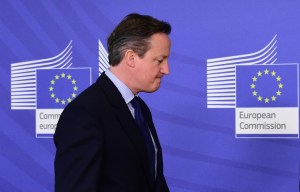
BELGIUM-EU-BRITAIN-POLITICS

Agree with this article? Violently disagree? Scroll down to leave a comment.

Follow Semi-Partisan Politics on TwitterFacebook and Medium.