Will The EU Referendum Be Decided By The “Shy Eurosceptic” Vote?

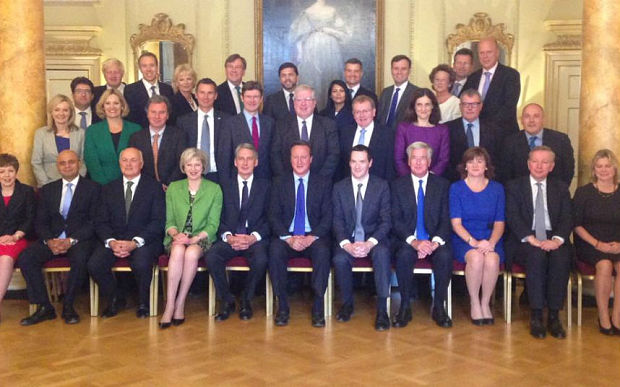
David Cameron - Conservatives - Cabinet

Is there a shy eurosceptic factor at play in the EU referendum?

What happened to all of the supposedly staunchly eurosceptic Conservative cabinet ministers – people like Sajid Javid and Rob Halfon – when it came time to nail their colours to the mast and declare their desire to leave the European Union?

Charles Moore has a theory:

Obviously one factor is that Tory MPs have found it convenient in recent years to adopt Eurosceptic protective colouring in their constituencies. But I think there is something deeper. The fear factor which may well win the referendum for Mr Cameron actually operates even more strongly on the elites than on the mass of the population. People who hold important jobs are much more worried than normal citizens about being considered ‘off the wall’. If they opt for ‘leave’, they will be interrogated fiercely by their peers about their decision. If they declare for ‘remain’, they will be left in peace. The EU is the biggest elite orthodoxy of the western world since we gave up our belief in imperialism. Most people within elites find it too tiring and dangerous to question the orthodoxy under which they have risen to the top.

Now, I have no time at all for those craven Conservative MPs who built their precious reputations and careers on a foundation of what turns out to be utterly fake euroscepticism. But neither can I deny the very real, socially oppressive aura that surrounds euroscepticism in some quarters, whereby it becomes very difficult for people to publicly express their eurosceptic opinions in certain context and company. And if one cannot excuse the shameless U-turning when it is committed by our elected representatives, we should perhaps be more understanding when ordinary members of the public falter.

So what are we dealing with here? It’s the same factor which makes otherwise confident, extroverted people drop their voices to a hushed and conspiratorial whisper when discussing their conservative political leanings in an elite (or creative/artistic) workplace, or makes a school teacher think twice before openly contradicting the biased, anti-Tory ranting of their colleagues.

But it is more than simply avoiding hassle. For many people, not only the elites, it is also a case of seeking to avoid very tangible real-world consequences of being known to hold unfashionable opinions – the threat of public ridicule, professional censure or even job loss, simply for committing thought-crime.

Maybe nobody will care if you fail to join in the joking with your colleagues when they laugh about Nigel Farage or mock those knuckle-dragging Little Englanders who want to pull up the drawbridge on Fortress Britain. But maybe they will notice, and maybe it might lead to an awkward question: “Wait a minute, you can’t seriously support those racists, can you? You’re having a laugh, right?” Far easier to just go along with the crowd. Why risk antagonising the boss, or the people you sit next to every day? Why risk that upcoming promotion? Better just stay silent.

And of course, this is exactly what happened last May. Ed Miliband and the Labour Party convinced themselves that they were heading for victory in the general election. They really, sincerely believed it (read Dan Hodges’ book “One Minute To Ten” to get a sense of just how fervently they believed it). But it was all nonsense, a great exercise in self-deception made possible by the fact that Labour activists had created such a stultifying aura of sanctimonious left-wingery and screeching Tory-hatred that anyone with a remotely conservative political leaning simply dropped out of the conversation and went silent. Silent, that is, until May 7 – at which time they marched to their polling station and delivered David Cameron back to 10 Downing Street.

Is there a chance that history might repeat itself now it comes to the EU referendum? It is certainly a possibility. There are many social settings – mostly where the social, academic or artistic elites live and work – where expressing a eurosceptic opinion or declaring one’s support for Brexit is tantamount to reading aloud from Mein Kampf in the town square. But conversely, there are no equivalent places or scenarios where one might reasonably expect to be actively persecuted for expressing pro-EU sentiments.

That alone speaks volumes. And while it may not excuse the despicable behaviour of some Conservative cabinet ministers who chose career advancement over eurosceptic principle, it would explain the reluctance of many people from certain professions or social groups to openly declare their euroscepticism.

As to how much of a chilling effect the establishment’s instinctive pro-EU instincts have on the polling and the wider referendum debate, we will likely not know until the votes are counted.


Scientists for EU

Universities for Europe - 2

Agree with this article? Violently disagree? Scroll down to leave a comment.

Follow Semi-Partisan Politics on TwitterFacebook and Medium.

Philip Hammond’s Weak Diplomacy And Our Friends In The European Union

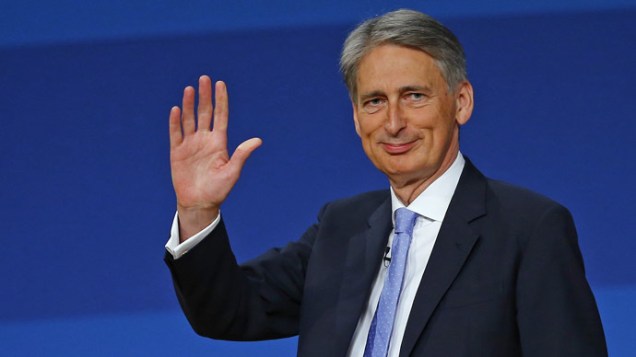
Philip Hammond - European Union - Remain - EU Referendum - 2

If the Foreign Secretary sincerely believes that other member states would punish us for leaving the European Union, he hasn’t been doing his job cultivating strong diplomatic relationships and standing up for Britain

Alan Johnson and Philip Hammond both clearly attend the same branch meeting of the Dewy-Eyed European Union Cheerleaders Association, because both politicians – one Labour and one Conservative – are both now peddling the same pathetic line to the media, namely the suggestion that Britain amicably leaving the European Union would be like “sticking two fingers up” at our allies and inviting some form of deserved retribution in return.

Alan Johnson writes in MailOnline:

In terms of our own borders, Britain is actually in the best possible position – in the EU, signed up to the Dublin Accord but outside Schengen.

Thus economic migrants have to register in the EU country where they first arrive (thousands have been deported from Britain in the past 20 years for breaching this requirement), and a visa is still required for anyone outside the EU to enter this country.

Furthermore, it was because Britain was part of the EU that David Blunkett was able to persuade Nicolas Sarkozy to, in effect, move Britain’s border from Dover to Calais.

If Britain put two fingers up to the 27 other nations in the EU the first reaction of the French would undoubtedly be to end that arrangement, thereby ending the security barrier that that arrangement offers us.

This was tremulous, scaremongering nonsense when the same idea was advanced by Conservative MP Mark Field, and it is tremulous, scaremongering nonsense when it comes out of the mouth of Alan Johnson, too, having been comprehensively refuted and debunked by many people, not least on this very blog.

Meanwhile, Philip Hammond – who one might have expected to know and conduct himself better, given the fact that he currently serves as Foreign Secretary – echoed the same cheap catchphrase to MPs in Parliament.

The Telegraph reports:

The Foreign Secretary has told MPs a leave vote the EU would be seen as “two fingers to European leaders and we can expect the same in return.”

He says that if Britain votes to leave the EU “the mood of goodwill towards Britain will evaporate in an instant”.

This is essentially an admission of incompetence by the Foreign Secretary. What Hammond is suggesting to us with this cheap attempt at scaremongering is that he has so mismanaged our relationships with key European allies, and so misled them as to the nature of British public sentiment toward the EU and the consequent possibility of Brexit, that our perfectly amicable and controlled departure would come as a complete shock to them.

Furthermore, if Hammond’s words are to be taken seriously, it means that he has presided over the worst diplomatic failure in recent British history – namely the failure of a declared nuclear power, as well as a leading military, economic and cultural power, to command such respect on the world stage as might survive us leaving a supranational arrangement which we no longer believe works in our favour. Is that really what the Foreign Secretary wants to tell the British people?

Europhiles and Remainers can’t decide whether Brussels is friend or frenemy; whether the other EU member states are dear friends who would be sorry to see us go, or bitter rivals who would seek to punish Britain for rejecting their vision of a politically unified Europe. And it is about time they made up their minds.

As this blog recently pointed out:

Of course, the cynical pro-EU “Remain” campaign tries to have it both ways. When it suits them in their campaigning, the EU is a happy-go-lucky club of like-minded countries who frolic and trade with one another. But when that hopelessly naive, childlike view of Brussels is questioned by eurosceptics and Brexiteers, out comes the other portrait of a snarling, vicious EU which will ruthlessly destroy Britain if we continue to drag our feet or think about leaving.

Good cop, bad cop. Europhiles will normally try the “good cop” routine first when engaging with undecided voters. But this tends to come unstuck as soon as eurosceptics and Brexiteers counter with their own positive vision of Britain restored as a sovereign democracy playing a full and engaged role in global trade and world affairs.

Since the pro-EU crowd are unable to share their own repugnant vision of a politically integrated Europe for fear of scaring people away, they are instead forced to go negative, hence the rapid and disconcerting pivot from “See how nice the European Union is, and all the wonderful things it does for us” to “If we try to leave the EU, they’ll rough us up”. Truly, their position is less a serious argument about governance and diplomacy, and more the tortured thought process of a battered spouse trying to rationalise staying in an abusive relationship.

In many ways, it is unsurprising that there is so much confusion over what would likely happen in the event that Britain declared our intention to leave the EU following a “Leave” vote in the referendum. Few journalists have taken the time to assimilate the information and share it with their readers, which then positively begs unscrupulous Remainers like Philip Hammond and Alan Johnson to exploit the public’s fear and ignorance.

The excellent Brexit blogger Ben Kelly lays the groundwork – and demolishes a lot of misconceptions on both sides of the debate – in this piece at Conservatives for Liberty, well worth quoting at length:

Negotiations undertaken after citation of the withdrawal clause of the Lisbon Treaty will be a matter of practical politics. Although the application of EU and international law is not a settled issue, especially in this as yet untested area, the notion that the EU would refuse to cooperate, or even seek to “punish” the UK in the event of secession – thereby clearly violating EU law as well as failing to comply with international law – is beyond the realm of realistic politics.

Although Article 50 negotiations conducted under a framework of treaty law will be first and foremost a political matter, it is clear that lawyers will be consulted regarding the laws application. What we can be certain of is that – as Sir David Edward, the first British Judge of the European Court, has said – EU law requires all parties to negotiate in good faith and in a spirit of cooperation.

Article 50 requires the EU to conclude an agreement with the seceding state, “taking account of the framework for its future relationship with the Union“. Notably, Articles 3,4 8 and 21 of the Treaty on European Union require the EU to “contribute to … free and fair trade” and to “work for a high degree of cooperation in all fields of international relations, in order to … encourage the integration of all countries into the world economy, including through the progressive abolition of restrictions on international trade” and to adhere to the “principle of sincere cooperation […] in full mutual respect” and “assist each other in carrying out tasks which flow from the Treaties.”

Moreover, the Vienna Convention of the Law of Treaties obligates negotiators to act in “good faith” and “good faith” itself is an underlying principle of international law, and certainly a principle of WTO law.

The EU negotiators must therefore endeavour to reduce trade restrictions in accordance with treaty provisions and, crucially, their actions are justiciable. If EU negotiators were to veer away from treaty provisions, or indeed if any other EU member sought to impose sanctions or restrict trade, the UK could opt to lodge a formal complaint with the European Court of Justice (ECJ), and block the discriminatory action.

It must be remembered that during the Article 50 negotiations the UK remains a member of the EU and enjoys the full rights and privileges of membership. The Commission itself may be legally obliged to step in and begin infringement proceedings against the offending member state.

It may amuse lazy political commentators to paint the hypothetical future Brexit negotiations as some kind of zero-sum game, trial of strength or fiendishly complex case study in Game Theory, but this would simply not be the case. The truth would be altogether more boring and pragmatic than the europhile naysayers would have us believe, with both sides obligated to negotiate with one another in good faith.

Kelly is right to eschew the tub-thumping “they need us more than we need them!” kind of language as he builds his case, but nonetheless it is worth pointing out that in the event of Brexit negotiations being initiated, all national governments would come under huge and sustained pressure by their local business leaders and lobbyists to avoid taking any retaliatory or counter-retaliatory action which might lead to the throwing up of onerous new barriers to trade.

Given the amount of money and reputational capital that many multinational companies are willing to spend lobbying and campaigning for a “Remain” vote, it is not unreasonable that they would make equally strong representations to the British and EU member state governments to ensure a smooth and orderly Brexit – one which this blog firmly believes is best accomplished by following a fully worked-through plan like Flexcit, in which we would minimise economic disruption from leaving the EU’s political union by maintaining our EFTA and EEA membership.

Those people on the Remain side who seek to dumb down the argument and reduce the nuanced situation of Article 50 Brexit negotiations to a cartoonish “sticking two fingers up at Europe” / “get punished by France and Germany in response” are being deliberately misleading in attempt to distract from the paucity of their case. But worse than that, they are also subscribing to the fatalistic, anti-British mindset which states that our country – the fifth largest economy and one of the most consequential actors on the world stage – is actually nothing more than a minor, third-rate country, easily bullied by its peers.

But remember: by peddling this nonsense, EU apologists like Philip Hammond and Alan Johnson are not merely demonstrating their lack of faith in Britain (particularly concerning coming from a Foreign Secretary). They also reveal their lack of respect for the intelligence of their fellow citizens, whom they lazily assume can be swayed and manipulated by their base scaremongering and dark warnings of EU reprisals.


British Foreign Secretary Hammond attends a news conference in Riyadh

Agree with this article? Violently disagree? Scroll down to leave a comment.

Follow Semi-Partisan Politics on TwitterFacebook and Medium.

David Cameron Is At His Arrogant Worst When He “Wins” PMQs

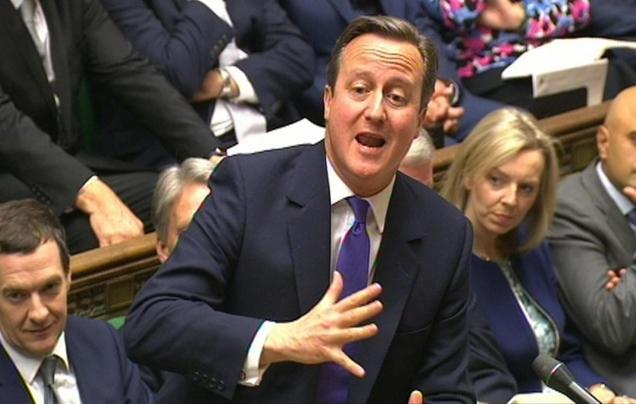
David Cameron - PMQs - Prime Ministers Questions

Since he has proved himself incapable of cleansing the Tories of their unfair reputation as the “nasty party”, what exactly is the point of David Cameron?

The media is abuzz today with talk of David Cameron’s withering put-down of Jeremy Corbyn at Prime Minister’s Questions.

The Spectator breathlessly reports that “Cameron delivers a knockout blow to a struggling Corbyn“:

This could have been a tricky PMQs for David Cameron. Instead, it will be remembered for Cameron ventriloquising his mother and telling Corbyn ‘put on a proper suit, do up your tie and sing the national anthem’.

What gave this jibe its potency, is that it sums up what a lot of voters think of the Labour leader. It was not quite as Flashmanesque as it sounds. For it came in response to a Labour front bench heckle asking what Cameron’s mother would say about cuts in Oxfordshire.

Even before Cameron floored Corbyn with that line, the Labour leader was struggling. He chose to go on the NHS and the junior doctors’ strike. But even on this subject, he couldn’t make any headway. Worryingly for Labour. Corbyn’s PMQs performances are—if anything—getting worse. You can tell that Cameron is now just cruising through the Labour leader’s questions.

Responding to a heckle from the Labour benches about his mother, Mary Cameron (who signed a petition opposing local public service cuts), the prime minister let loose with all of the pent-up frustration he feels at Jeremy Corbyn’s refusal to play the traditional role of Generic PMQs Sparring Partner.

Here’s Cameron’s quote in full:

“I’ll ask my mother. Oh I think I know what my mother would say, I think she’d look across the dispatch box and she’d say put on a proper suit, do up your tie and sing the national anthem.”

If this is what “winning” Prime Minister’s Questions now looks like, then both the tone and content of our political debate – even by the low standards set by Parliament – is in far worse a state than even I have been lamenting.

And Tim Montgomerie’s decision to leave the Conservative Party is vindicated, as David Cameron’s latest flash of temper reminds us that under his leadership, the Tories are not interested in enacting radical conservative reform in the model of Thatcher, but rather seek to wield power just for the sake of it, while ridiculing everybody else from their lofty perch. Why else refuse the opportunity to respond directly to criticism and defend his record in favour of delivering smarmy, schoolboy jaunts directed at the Leader of the Opposition?

People who defend David Cameron’s rootless, opportunistic leadership of the Conservative Party love to claim that by steering such a centrist, New Labour-friendly course, the prime minister is in some way helping to “de-toxify” the Tory brand.

The clear implication of this is that we should shut up and accept the fact that there is almost nothing conservative about this Conservative government, because bland centrism and the failure to advance conservative principles is the price we have to pay whilst conservatism’s reputation is cleansed of the “stain” of Thatcherism. And to be fair, with so little else to recommend Cameron’s government other than the fact  it is not Ed Miliband’s government, they have a point. Detoxification is all that the Tories have going for them at the moment.

Except they don’t even have that. We live in a political climate where anti-Tory activists will daub “Tory Scum” on war memorials, spit at innocent people attending the Conservative Party conference and indulge in all manner of overblown rhetoric about the heartless Evil Tories coming to take away your human rights and cast your disabled relatives out onto the streets to die of exposure. If the past few years are supposed to have been an exercise in image rehabilitation for the Tories, they have been the most abject failure and waste of political capital.

Yet David Cameron is supposed to be our Great White Hope, the man who delivers Conservative majority governments at general elections by running away from any policy or principle which might be seen as “nasty” or right wing.

It is all the more surprising, then, that Cameron consistently chooses to be so nasty and unnecessarily aggressive at PMQs – not just putting his points across or counter-attacking forcefully, as PMQs requires, but actively relishing in delivering the most personal put-down or remark possible. Less Tony Blair’s devastating but above-the-belt “weak, weak, weak” jibe at John Major’s expense, and more “you’re too poor to buy nice clothes”.

Seriously, how did David Cameron think that his “proper suit” comment would play once it seeped beyond the Westminster and media echo chamber and into the public consciousness? Sure, it won a big laugh and sustained mockery of Corbyn in the House of Commons chamber, but replayed on television it just looks like a cheap and nasty stunt from a man who would rather resort to personal insults than answer a straightforward question.

People sitting at home – those few who actually pay any attention to the outcome of Prime Minister’s Questions, at any rate – will not have seen a clever and likeable prime minister slapping down an angry, extremist left-winger. They will have seen a haughty, self-important Old Etonian standing at the dispatch box and making cutting personal remarks about the sartorial choices of a slightly befuddled but harmless-looking professor type.

Even when David Cameron “wins” Prime Minister’s Questions (as he did today) he loses, because he is fundamentally incapable of winning his exchanges with the Leader of the Opposition without morphing into the most ridiculous caricature of a snobbish public school boy imaginable in order to do it.

And hey presto, Labour’s work is done for them – smoking gun evidence that the Tories are a party of arrogant toffs, and that if they had their way then politics would only be for impeccably dressed people from establishment families, wearing Savile Row suits and speaking the Queen’s English. And all Jeremy Corbyn had to do in order compound this perception in the public consciousness was wince through David Cameron’s latest smarmy insult.

Remind me: what was David Cameron’s essential winning quality, again?


Jeremy Corbyn - PMQs

Agree with this article? Violently disagree? Scroll down to leave a comment.

Follow Semi-Partisan Politics on TwitterFacebook and Medium.

Tony Blair And The Shell-Shocked Centrists: The Fears Of A Fading Elite

Tony Blair - New Labour - Centrism

Pity Tony Blair. Unloved and discredited in his own country, he still fails to understand the role he played in the anti-centrist backlash on both sides of the Atlantic

A panicked, uncomprehending Tony Blair is struggling to understand the appeal of left-wing insurgents such as Bernie Sanders and Jeremy Corbyn, LabourList reports:

Tony Blair has said he finds it difficult to understand the surge to prominence of Jeremy Corbyn and Bernie Sanders amid doubts over both men’s capacity to win general elections.

The former prime minister said the two veteran left-wingers faced a “question of electability” but admitted that stagnating living standards for people on lower- and middle-incomes had generated anger at elites in Britain and the US.

Blair also warned political parties they would be powerless to help people unless they “selected someone who is electable”.

[..] Blair, who was speaking to The Guardian and The Financial Times, said candidates who could “rattle the cage” were emerging, in a reference to Corbyn, who came from the left fringe to easily beat the party establishment to claim the Labour leadership, and to Sanders, who hopes to emulate him by winning the Democrat nomination ahead of Blair’s friend Hillary Clinton.

“It’s very similar to the pitch of Jeremy Corbyn,” Blair said. “Free tuition fees: well, that’s great, but someone’s going to have pay for it. An end to war, but there are wars.”

Where to begin?

Let’s start with Tony Blair’s “pass the smelling salts!” terror at the supposedly unhinged and crazy far-left politics of Bernie Sanders. That’s the same Bernie Sanders who would be chased out of Britain with flaming torches and pitchforks for being too right-wing, were he the UK prime minister, thanks to his support of private sector-delivered healthcare and the right to bear arms.

The interesting thing – and Todd Gillespie at Spiked has also picked up on this – is that with his support for civil liberties and the rights of the individual over the big guy (corporation or government), Bernie Sanders is in some ways a better conservative standard-bearer than most of the people currently squabbling for the US presidency – and certainly far more so than our own Coke Zero Conservative prime minister, David Cameron.

In many ways, when Tony Blair comes charging into the US presidential contest in support of Hillary Clinton and against Bernie Sanders, he is not making the principled case for a pragmatic, centre-left policy platform capable of winning elections, as he so smugly claims. After all, the American Right is also tearing itself apart at the moment, and there is nothing to say that Sanders could not defeat one of the more inexperienced or unpalatable GOP candidates still standing.

No, what Tony Blair is doing here is siding with the political elite – of which he is very much a part – and the tired old orthodoxies which people have grown so heartily sick of that they are now desperately casting around for alternatives in people like Donald Trump and Bernie Sanders. A former Labour prime minister who remembered anything at all about his party’s roots might not be quite so quick to publicly embrace a US presidential candidate awash in Wall Street donations and influence.

But Blair genuinely can’t see the problem with consistently, publicly and unapologetically siding with globalisation’s winners and richest beneficiaries while either ignoring or actively harming those who are left behind. And he cannot understand why this fawning deference to money and power is creating a populist backlash which has changed the course of his party.

Which brings us on to Jeremy Corbyn. LabourList’s report of Tony Blair’s comments continues:

He suggested the sudden rise of Corbyn and Sanders, each after years spent toiling in relative obscurity on the left of their parties, reflected a loss of faith in the centre-ground of politics as well as the changing technology of political communications.

“I think there is a combination of factors behind these movements which are happening both sides of the Atlantic. Part of it is the flatlining of lower and middle income people, the flatlining in living standards for those people, which is very frustrating. It’s partly an anger for sure at the elites, a desire to choose people who are going to rattle the cage.

“And it’s partly also about social media, which is itself a revolutionary phenomenon which can generate an enormous wave of enthusiasm at speed. When I first started in politics, these things took so long to build up momentum; your decision points were well before that moment was achieved. But it’s also a loss of faith in that strong, centrist progressive position and we’ve got to recover that…

“One of the strangest things about politics at the moment – and I really mean it when I say I’m not sure I fully understand politics right now, which is an odd thing to say, having spent my life in it – is when you put the question of electability as a factor in your decision to nominate a leader, it’s how small the numbers are that this is the decisive factor. That sounds curious to me.”

Blair is absolutely right that there has been a loss of faith in centrist politics. But centrist politics is not an innocent victim. Centrist politics has delivered a cross-party political consensus which was defiantly pro-European in face of public euroscepticism, which doggedly refused to talk about immigration even as a centre-left New Labour government spurned transitional controls and allowed hundreds of thousands more economic migrants a year into Britain without ever consulting the people, which sought to label anyone who questioned this policy as racist, and which trotted out the same tired old tropes about Our Beloved NHS and precious public services while doing almost nothing new or radical to reshape them for the twenty-first century.

Many people in Britain yearn for more genuinely left-wing solutions to be offered by a political party. Many would like the railways renationalised, and the energy companies too. This blog believes that such moves would be hugely regressive and statist, and very quickly result in poorer service and less choice for consumers. But those who believe in nationalisation deserve a voice in the political debate – a voice which Labour studiously excluded for many years. If Tony Blair seriously believed that high-handedly shutting people out of his party would store up no resentment for the future and possibly one day result in a backlash, then he is quite delusional.

Blair acts as though the rise of Jeremy Corbyn is merely a function of social media, and angry far-leftists hijacking the conversation. But it goes far deeper than that. The rise of Corbyn on the British Left, Sanders on the American Left and Trump on the Right are not an inchoate expression of public rage, but rather an indicator that a fully rational public has finally realised that the political consensus of the main political parties is not delivering what they need – be it middle class job security or success on the world stage.

The growth and prosperity delivered by the centrist political consensus in Britain has not been experienced uniformly by all citizens. That much is understandable – different policies will impact different socio-economic groups differently. What is unacceptable, though, is the fact that the centrists from both main parties never made a concerted effort to tweak those policies to help people who were left behind. They simply advocated more of the same.

More European Union. More government spending on the bloated, unreformed welfare state. More uncritical praise for the NHS. And more of the depressing view of Britain as nothing more than a nation of schools, hospitals and public services rather than a great nation built on our commercial, private sector initiative, and with boundless untapped potential.

Choose to treat the people like mindless, avaricious consumers rather than thinking, engaged citizens with a stake in their world, and you had better make damn sure that you deliver sufficient prosperity to keep everyone happy and distracted. This is how the centrists have treated us for years – essentially saying “you leave the global governance and great ideological questions to us, and in exchange we will deliver you a cheap supply of flat-screen TVs and other consumer goods”.

But when not everybody can afford the flat-screen TV or the iPhone or to scramble on to the property ladder, they start to look around them and notice things. Awkward things. Things like the fact that they no longer have the final say in issues affecting them, because sovereignty has been outsourced to the European Union. Or things like the character of their towns and cities – even their whole country – visibly changing because of levels of immigration about which they were never consulted. Or things like a broken welfare state which ensnares some people in lifelong dependency while allowing others to fall straight through the safety net to their deaths.

Brendan O’Neill picks up on this point – the fact that it is those who have not benefited economically from centrist consensus politics who are most likely to recognise that all is not well with our democracy – in his excellent piece in the Spectator:

The Third Wayists are quaking in their boots. The middle-class, middle-of-the-road technocrats who have dominated politics for the best part of three decades are freaking out. These people who bristle at anything ideological, are disdainful of heated debate, and have bizarrely turned the word ‘moderate’ into a compliment feel under siege. And no wonder they do, for on both sides of the Atlantic their very worst nightmare — a revenge of the plebs — is becoming flesh.

You can see this sometimes clumsy but nonetheless forceful reassertion of pleb power in everything from Trumpmania to the staggering back to life of Euroscepticism — or what snooty moderates call ‘Europhobia’, because every point of view that runs counter to their own must be a mental illness, right?

[..] In both Middle America and Middle England, among both rednecks and chavs, voters who have had more than they can stomach of being patronised, nudged, nagged and basically treated as diseased bodies to be corrected rather than lively minds to be engaged are now putting their hope into a different kind of politics. And the entitled Third Way brigade, schooled to rule, believing themselves possessed of a technocratic expertise that trumps the little people’s vulgar political convictions, are not happy. Not one bit.

And with regard to euroscepticism specifically:

We’ll see more of this in the coming months, more defamation of those who dare to say: ‘I don’t like Brussels.’ But Euroscepticism represents, not some swirling, xenophobic disgust with Europeans, as it has been pathologised by the pleb-fearing PC lobby, but a people’s feeling of exhaustion with the ossified oligarchy of the Brussels machine. It speaks to a desire among ordinary people to take back some control over their lives and destinies. And as The Economist pointed out, this Eurosceptic urge is strongest among the less well-educated — that is, the plebs, those tired of being treated as welfare, nudging and paternalism fodder by the new political elites.

So bring it on, this revenge of the plebs. Let’s cheer their rude, intemperate injection of ideology into the flat, lifeless sphere politics has become over the past 20 years. And let’s enjoy the squirming of an aloof political class and commentariat who mistakenly thought they had put the pesky masses and their troublesome views out to pasture.

If Tony Blair does not understand the anger and disillusionment directed not just at him but toward consensus politics in general – and there is no reason to doubt that his bewilderment is genuine – then one has to ask: what happened to the political nous of the man who won three consecutive general elections for Labour?

Why, when he has one foot firmly planted on each side of a massive new fault line emerging in our politics – not between Left and Right but between consensus politics’ winners and losers – is Tony Blair unable to understand his own starring role in precipitating the earthquake?
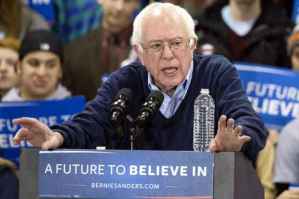
 

Bernie Sanders - Refutes Bernie Bros

Agree with this article? Violently disagree? Scroll down to leave a comment.

Follow Semi-Partisan Politics on TwitterFacebook and Medium.

Sajid Javid’s Perplexing Case For Britain To Remain In The EU

Sajid Javid - EU Referendum

Sajid Javid’s bizarre, fatalistic justification for backing Remain

When it comes to picking a side in the coming EU referendum, it is possible to categorise the many betrayals and disappointments dished up so far by the Conservative Party.

Some, like William Hague’s, are infuriating because of their misplaced priorities and fawning deference to power. Others, like that of Harlow MP Robert Halfon, are depressing because they fly in the face of long-avowed, ostentatious euroscepticism. But none are so perplexing as the screeching U-turn executed by Business Secretary Sajid Javid.

A barely coherent Javid took to the pages of the Daily Mail today with the most bizarre case for staying in Europe yet offered by a turncoat Tory – arguing that Britain would be much better off had we never joined the EU in the first place, but that now we are in the clutches of Brussels we have no choice but to allow ourselves to be slowly consumed and digested, like an unlucky insect caught in a Venus fly trap.

Javid begins by painting a rosy picture of the Britain we might now inhabit had we never joined the European Community back in 1973:

It’s clear now that the United Kingdom should never have joined the European Union. In many ways, it’s a failing project, an overblown bureaucracy in need of wide-ranging and urgent reform.

Had we never taken the fateful decision to sign up, the UK would still, of course, be a successful country with a strong economy.

We would be an independent trading nation like the US, Japan, or Canada.

Over the years, we would have developed trade agreements with the EU and with others, all without surrendering control over immigration or our economic independence.

You might think that this would lead quite naturally to a stirring call for Britain to reclaim all of these squandered benefits of independence. But Sajid Javid proceeds to wrong-foot us by continuing:

If this year’s referendum were a vote on whether to join in the first place, I wouldn’t hesitate to stand up and say Britain would be better off staying out.

But the question we’re faced with is not about what we should have done 43 years ago. It’s about what we should do now, in 2016.

That’s why, with a heavy heart and no enthusiasm, I shall be voting for the UK to remain a member of the European Union.

And so unfolds the most depressing, fatalistic argument in favour of staying in the European Union that you will likely hear this entire campaign. Apparently, had we made the right choice forty years ago we could now be living in the land of milk and honey, with endless prosperity and contentment for all. But we missed the boat, and because of that one supposedly irredeemable mistake, we are condemned to dwell forever in the arid desert of unwanted European political union.

Why? Because Sajid Javid is afraid of the potential short-term cost. Or rather, because he values democracy, sovereignty and national self-determination so little that the mere possibility of short term economic disadvantage is enough to make him turn a blind eye to the very real failings and even more anti-democratic future direction of the EU:

As I’ve said before, a vote to leave the EU is not something I’m afraid of. I’d embrace the opportunities such a move would create and I have no doubt that, after leaving, Britain would be able to secure trade agreements not just with the EU, but with many others too.

The great unanswerable question is how long that would all take – and at what short-term cost?

Take this logic and flip it around. Suppose it were possible that by becoming a fascist dictatorship for decade or so it would be possible for Britain to increase GDP by three per cent over and above current annual forecasts – by forcing the unemployed to build houses and weapons in exchange for benefits, riding roughshod over pesky planning regulations, and generally doing all of the autocratic things which democracy rightly prevents us from doing.

According to Sajid Javid’s logic, we should toss democracy aside and eagerly embrace strong-fisted dictatorship, just to reap the potential economic gain. Nothing else would matter – or at least, everything else would be secondary to the GDP question.

Javid continues:

The negotiations would end well for Britain, but we have no idea what the economic cost would be in the meantime – how much foreign investment would go elsewhere, how much domestic investment would be deferred or cancelled.

Even the most committed members of the ‘leave’ camp accept that there will inevitably be a short-term cost to leaving.

The question is whether it is balanced out by the long-term gains. It’s a very reasonable question – and I came incredibly close to answering ‘Yes, yes it is.’

Javid even admits here that “the negotiations would end well for Britain”. Ignoring the fact that a plausible plan for Brexit exists, which de-risks the entire process and eliminates much of the uncertainty, Javid is willing to throw away an eternity of democratic self-governance in exchange for what he himself believes to be just a couple of years of potentially increased economic security. This is an almost pathological level of risk-aversion.

Javid’s half-hearted apologia concludes:

My heart says we are better off out. My head says it’s too risky right now. For the past six years, I’ve been doing everything I can to repair the damage Labour did to our national economy.

I’m no europhile, but nor am I prepared to risk undoing all that work and casting aside all the sacrifices we asked of this country while the post-Brexit talks drag on and investor confidence wavers. Staying in the EU for now doesn’t have to mean accepting the status quo.

[..] For me, this referendum does not have to be a once-in-a-generation event. The fight for reform is not over and if Brussels fails to recognise that, I can see a time when walking away may be the right thing to do – but in a more benign global economic environment and under a UK Government that makes a credible case for leaving.

And so ends the most bizarre case for remaining in the EU you are ever likely to hear. Apparently we are now to make existential decisions about the future of our governance and democracy solely according to where we happen to be in the economic cycle. Want to restore sovereignty while the economy is booming? Go for it! But want to make a bid for freedom during a downturn – or even just a potential downturn? Sorry, GDP projections say no.

This atrocious argument for Remain encapsulates everything that this referendum should not be about. We are talking about the future governance and sovereignty of our country. If there was ever a time for us to think as fully engaged citizens with an eye on the future – and the ability of our children to exercise control over their destinies – then this is it. Now is certainly not the time to think and act like fearful, petty consumers, concerned only with the fatness of our wallets today while sparing no thought for the future of our democracy.

Yet this is exactly what Sajid Javid asks us to do. I agree with you, the EU is totally undemocratic and resistant to reform, he essentially tells us. But the pound might briefly dip against the euro if we leave, so screw securing democracy for tomorrow, vote for the status quo to guarantee an uninterrupted supply of cheap flat-screen TVs today!

What a pathetic, insular, insulting argument to make. How disgusting that the supposed rising star of the Conservative Party would thus attempt to appeal to the scared and avaricious consumer within us, rather than the enlightened and noble citizen.

Make a passionate case for a federal European state and I will respect you, even though I profoundly disagree.

Make a wobbly-lipped, pant-wetting case for clinging to the EU’s skirts out of sheer terror at the Big Bad World and I will roll my eyes at you and move on.

But if you dare treat me like some kind of mindless automaton who thinks only with tomorrow’s bank balance in mind – if you tell me that the EU sucks, but that I should vote to remain because to leave would cause a brief macroeconomic blip – then I will tell you to go direct to hell. And I will hold you in seething contempt for a very, very long time.

When the Continental Congress met in Philadelphia to discuss the portentous issue of separation from Britain in 1776, the committee chosen to draft the famous declaration was – astonishingly – not myopically obsessed with the impact of independence on GDP.

Thomas Jefferson understood, when he wrote “We hold these truths to be self-evident, that all men are created equal, that they are endowed by their Creator with certain unalienable Rights, that among these are Life, Liberty and the pursuit of Happiness”, that something far greater than 1777’s economic forecasts was at stake. That democracy itself was at stake.

Sadly, this democratic ideal – or indeed the concept of anything being more important than minimising the risk of disruption tomorrow, even when the status quo is crying out for disruption – is totally anathema to many of those who argue against Brexit today, including many supposed eurosceptics who should know better.

The Conservative Party has served up its share of gut-wrenching disappointments and betrayals in the build-up to this EU referendum. But none of them are proving quite so difficult to stomach as this steaming pile of nonsense from Sajid Javid.


Sajid Javid - EU Referendum - 2

Agree with this article? Violently disagree? Scroll down to leave a comment.

Follow Semi-Partisan Politics on TwitterFacebook and Medium.