Tony Benn And The Left Wing Case For Brexit

What is the left wing case for Brexit? The same as everyone else’s case: democracy and self-determination

In this response to a student’s question at the Oxford Union, the late Tony Benn makes a calm but passionate argument for Brexit which anybody of any political leaning should be able to embrace:

When I saw how the European Union was developing, it was very obvious that what they had in mind was not democratic. I mean, in Britain you vote for the government and therefore the government has to listen to you, and if you don’t like it you can change it. But in Europe all the key positions are appointed, not elected – the Commission, for example. All appointed, not one of them elected.

[..] And my view about the European Union has always been not that I am hostile to foreigners, but that I am in favour of democracy. And I think out of this story we have to find an answer, because I certainly don’t want to live in hostility to the European Union but I think they are building an empire there and they want us to be a part of that empire, and I don’t want that.

Typically, the left-wing argument against the EU and for Brexit consists of lamentations that EU rules prevent the government from renationalising industries, erecting protectionist barriers to trade and entry, or otherwise meddling in the free market. Jeremy Corbyn would be busy making such arguments right now, were it not for his colossal failure of political courage in rolling over to the demands of the die-hard pro-Europeans the moment he became Labour Leader.

Such arguments are all well and good, if you are one of the small minority of the population for whom the British government’s current inability to renationalise the energy sector keeps you awake at night in a cold fury. But such people are few and far between.

When asked his own thoughts about the European Union, Tony Benn did not do what most contemporary Labour Party personalities do, and talk about the virtues of undemocratically imposing more stringent social and employment laws on Britain (an irritatingly less social-democratic country than our continental friends). Because Tony Benn understood that the left-wing case against the European Union was about democracy, democracy and more democracy.

Tony Benn understood that some things are more important than whether Britain might happen to move in a slightly more left or right wing direction as a short and medium term consequence of Brexit. He understood that self-determination and democracy – particularly the ability for the citizenry to remove people from office – is the first and most important consideration in determining the democratic health of a country.

And Benn understood that living in a democracy where his own side would sometimes win and sometimes lose was far preferable to living in a dictatorship where his own preferred policies were implemented through coercion with no public redress.

Jeremy Corbyn also seemed to understand these things, until he most unexpectedly ascended to the leadership of the Labour Party, which loves the European Union with a blinkered fierceness with which there can be no reasoning.

Indeed, there are now so few high profile left-wing eurosceptics that the bulk of the heavy lifting in this EU referendum will inevitably be done by those on the centre-right. Their challenge – our challenge – will be to make a positive case for Brexit as a desirable thing in and of itself, and not as part of a partisan political agenda.


Jeremy Corbyn - European Union - EU Referendum - Capitulation

Agree with this article? Violently disagree? Scroll down to leave a comment.

Follow Semi-Partisan Politics on TwitterFacebook and Medium.

Tales From The Safe Space, Part 1 – California State University, Los Angeles

It’s not physical intimidation if you shout “no violence!” while you are doing it

If it strikes you as strange that an intimidating mob of student activists should be attempting to disrupt and shut down a speaking event by shouting “No Violence!” over and over, while physically preventing people who wanted to peaceably attend the talk from entering the theatre, then congratulations – you must be innocent and unschooled in the ways of the New Intolerance on campus.

Those of us who have the misfortune of observing and cataloguing such incidents, however, know that this is now an entirely routine tactic on the part of student activists who claim that their right to live in an ideologically pure, self-reinforcing bubble trumps the rights of others to speak or hear dissenting opinions.

Jennifer Kabbany of The College Fix gives a first-hand account of what it was like to be present at this mob, and the hostility which she witnessed – not even as the Reviled Speaker du jour (in this case Ben Shapiro), but merely as a bystander and journalist:

The demonstrators were upset conservative Ben Shapiro was slated to speak in the theater and they’d blocked the door leading into the venue.

As a journalist there not only to cover the protest, but also the speech, I made my way as far as I could toward the door. The entire lobby was choked with student protesters, but the closer I got to the door, the more intense things got.

People held signs touting various “diversity” slogans, and one or two rainbow flags waved above the crowd. Chants and shouts of “no hate speech” and “this is our school” peppered the moment.

Finally, I managed to squirm my way about 15 to 20 feet from the door. Then I could go no farther. Student protesters had filled the narrow entryway, and anytime someone would try to enter, they would throw up their hands, form a human wall-shield, and chant “no violence.”

I watched the intensity, the anger on the faces of students as they screamed and scowled at the Young Americans for Freedom representatives there trying to host the event. I watched as campus visitors tried to gain access and were physically blocked by protesters who looked all too willing to fight if it came down to it. The anger and vitriol was palpable.

Shouting and chanting “no violence!” while physically restricting the movement of people simply trying to go about their private business is now a commonplace tactic among student anti free speech zealots.

We saw much the same tactic being deployed against student journalists covering the University of Missouri protests, as Conor Friedersdorf noted in The Atlantic:

This behavior is a kind of safe-baiting: using intimidation or initiating physical aggression to violate someone’s rights, then acting like your target is making you unsafe.

“You are an unethical reporter,” a student says [..] “You do not respect our space.” Not 30 seconds later, the crowd starts to yell, “Push them all out,” and begins walking into the photographer. “You’re pushing me!” he yells. And even moments after vocally organizing themselves to push him, they won’t fess up to the nature of their behavior. “We’re walking forward,” they say, feigning innocence. Says one snarky student as the crowd forces him back, “I believe it’s my right to walk forward, isn’t it?” Then the photographer is gone, and only the person holding the video camera that recorded the whole ordeal remains. Ironically, he is a member of the press, too, which he mentions to one of the few protestors who is left behind.

By then, the mask has fallen.“Who wants to help me get this reporter out of here?” an unusually frank protestor yells. “I need some muscle over here!”

The woman calling for muscle? An assistant professor of mass media at the University of Missouri … who had previously asked the campus for help attracting media attention.

As always, the “safe space” is a one way street, and those enforcing the safe space are free to use any verbal or physical means necessary to arbitrarily enforce it.

But those involved genuinely do not see the irony. Rather than seeking to foster an atmosphere where everybody is welcome on campus, these student activists are only too happy to vilify and seek to banish those people with conservative, traditional, wacky, offensive or just plain weird ideas – anything which doesn’t fit the new progressive mold.

Where once student activists eagerly sought to assert and defend their right to free speech in furtherance of their social and civil rights objectives, today’s students are more likely to go running to the authorities asking for “heretical” speech – basically anything which goes against orthodox thinking – to be banned.

This is insulting to those who find themselves censored, and frightening to those who find themselves on the receiving end of summary mob justice from the Safe Space Enforcement Squads. But it does most damage to those who the activists ostensibly claim to be protecting.

It infantilises grown adults (nearly all students are at least eighteen years of age, old enough to pick up a rifle and fight and die for their country) and makes the condescending assumption that they are too fragile and helpless to withstand having their ideas challenged, their lifestyle choices questioned or (to use the currently fashionable terminology) their experiences, even their existences “invalidated”.

As it happened, the event was cancelled before Ben Shapiro even turned up – CSULA’s president taking the counter-intuitive decision to silence free speech so as to better allow the “free exchange of ideas”. When Shapiro proceeded to turn up to speak anyway, with the president’s permission, a protester pulled a fire alarm in a bid to disrupt the speech, and ultimately Shapiro had to be escorted from campus surrounded by a police motorcade, out of “safety concerns”.

Another female student journalist was also aggressively and physically confronted, if not actually assaulted, at a protest about Ben Shapiro’s lecture.

Oscar-winning movie “Spotlight” showed us how the journalists investigating sexual abuse by priests in the Boston Archdiocese learned that when priests were mysteriously marked as being on “sick leave” in church directories, this actually meant that they had been withdrawn from parish duties by the bishop, and quietly hidden away so as not to raise attention to paedophilia in the Church.

Similarly, if you run a Google or LexisNexis search for public events cancelled due to “safety concerns”, you can be reasonably certain that the events returned in the search results were effectively censored by detractors wielding the threat of violence. “Safety concerns” has become nothing more than a convenient code phrase used whenever free speech falls victim to the New Intolerance.

And yet we are supposed to believe that it is people like Ben Shapiro who threaten the safety of our university campuses.


Postscript: There’s a reason why this piece does not mention the subject of Ben Shapiro’s speech – because it doesn’t matter. So long as he was not engaging in criminal behaviour or actively inciting violence, having been invited he had every right to turn up and say whatever he damn well pleased. The fact that such an idea should be so shocking and alien to us now shows how deeply authoritarian and intolerant we have become as a society – and not only on university campuses.


Safe Space Notice - 2

Agree with this article? Violently disagree? Scroll down to leave a comment.

Follow Semi-Partisan Politics on TwitterFacebook and Medium.

David Cameron And Donald Trump – Promising Security Over Conservatism

David Cameron - Donald Trump - Conservatism - Conservative Party - Republican - GOP - Ideology - Security

Donald Cameron and David Trump. Or is it the other way around?

In many ways, you couldn’t imagine two politicians more different than Donald Trump and David Cameron.

The British prime minister (despite his best efforts) exudes an air of privileged, private school entitlement at all times, and has a reputation for making withering (if cruel) put-downs of his opponents in the House of Commons. The increasingly presumptive Republican Party presidential nominee, on the other hand, takes pride in being brash and boastful, and his claim to “have the best words” is as laughable as it is factually inaccurate.

Furthermore, David Cameron was quick to weigh in against Donald Trump when Trump made sweeping and inaccurate generalisations about Britain and Muslims, stopping short of the shrieking and hysterical calls for Trump to be banned from entering the UK, but still condemning him in strong words.

And yet, the two politicians – one seasoned in Westminster politics, the other making a virtue of his inexperience in the ways of Washington – are more alike than it first seems.

In seeking to understand the persistent appeal of Donald Trump to a large and broad swathe of the Republican Party base, Einer Elhauge argues that Donald Trump wins because he promises to be The Great Protector, keeping Americans physically safe and financially secure in an uncertain world.

Elhauge writes in the Atlantic:

The message of his Republican opponents has effectively been: We are more faithful to conservative principles. Trump’s message has been entirely different. He essentially says: I will protect you. I’m conservative, but if protecting you requires jettisoning conservative ideology, I will do so. Protecting you is the prime directive. This message has powerful resonance, especially for voters who feel the Republican Party has failed to protect their interests.

You see this pattern in all of Trump’s deviations from conservative orthodoxy. Take the debate over Planned Parenthood. Like all conservatives, Trump opposes abortions. But he stresses he does not want to stop funding their wonderful work protecting women from cervical and breast cancer. The other Republican candidates simply express a desire to destroy Planned Parenthood outright. Trump’s message to voters: The other candidates will adhere rigidly to ideology, even if it needlessly fails to protect millions of women from cancer. I won’t.

[..] Trump’s signature policy is to build a wall to protect his voters’ jobs. What could evoke protection more than building a huge wall? His opponents quibbled about its feasibility but ultimately adopted the same position. Trump’s message to voters: I care about protecting you enough to propose huge historic projects. The other candidates begrudgingly agreed, but their heart is not in it, so they are less likely to follow through.

Free trade is great, Trump says, but it has to be fair. His opponents just adhere to pure free trade, which does increase the economic pie. But economic research shows that free trade harms some subsets of voters, particularly the working-class voters flocking to Trump. The message to his voters: I will favor free trade only to the extent that I can protect you from harm, perhaps by compensating you using the gains of trade. My opponents will favor free trade even if it harms you.

And as it goes for policy, so it goes for style. Trump consistently eschews the hard-headed statements of fidelity to conservative principle or the Constitution which voters hear from Senator Ted Cruz, focusing instead on cultivating the same “your safety first” narrative:

Trump talks endlessly about his polls, because the polls stress that he is strong enough to protect his voters. He speaks extemporaneously and often crassly in a stream-of-consciousness way, which has many pitfalls but emphasizes that his views are unprepared, authentic statements of his views and that he will thus carry out his promises to protect his audience. He responds aggressively to every attack, no matter how minor, conveying the sense that he will also aggressively protect his voters.

It is hard to deny the success of this approach. Many voters, feeling let down by the stewardship of both President Obama and the reactionary Tea Party dominated Congress which followed in 2010, have lost faith in politicians selling explicitly ideological remedies for America’s ills.

Rand Paul, Mike Huckabee and Rick Santorum got nowhere this election cycle, suggesting that the public’s flirtation with Constitutional libertarianism and social conservatism respectively are not the vote-winners they once were. And the same goes on the Left, with Hillary Clinton now pulling clear of Senator Bernie Sanders in the Democratic primary, despite the huge achievements of Sanders’ campaign.

The situation in Britain is strikingly similar. David Cameron’s general election victory – at Labour’s expense and despite the rise of UKIP, the SNP and Green Party on the radical Right and Left – suggests that while a minority of voters (this blog included) crave stronger ideological differences and a move away from consensus politics, a larger number of people looked at the two main parties and went for the option which they believed would deliver them the most security.

Having secured his coveted Conservative majority government in the general election, David Cameron declared in his victorious 2015 party conference speech:

I tell you: our party’s success in growing our economy and winning the economic arguments has never been more vital.

Nothing less than the security of every single family in our country depends on it.

Before concluding:

And now with couples married because of us, working people backed because of us, the NHS safe because of us and children in the poorest parts of the world saved because of us, everyone in this hall can be incredibly proud of our journey – the journey of the modern, compassionate, One Nation Conservative Party.

This was not the speech of a flinty-eyed ideologue yearning to roll back the frontiers of the state. It was the speech of a leader who calls himself a conservative, but is perfectly willing to use the machinery of government to deliver the social and economic outcomes that he wants – in Cameron’s case, building an election-winning coalition by promising physical, social and economic security over and above freedom and individual liberty.

Ed Miliband, to the extent that his weak leadership stood for anything, ran on a platform of fairness and equality, emphasising entitlement over strength and security. And it got him absolutely nowhere.

David Cameron and the Conservatives, by contrast, ran on a platform of stability and security as the only objective. It wasn’t thrilling, inspiring or glamorous, but given the weakness of his opponents, it was enough to deliver a parliamentary majority that almost nobody predicted.

You can argue that David Cameron represents everything that is ideologically vacuous and wrong with modern British conservatism – as this blog does, loudly and often. But what you cannot do is deny the fact that Cameron has hit on a winning electoral strategy.

That’s why David Cameron ran for re-election with a manifesto pledging a creepy, statist “plan for every stage of your life”.

That’s why the Conservative Party talks about creating a strong economy not as an end in itself, but only in the context of generating more taxes to pay for ever more public services.

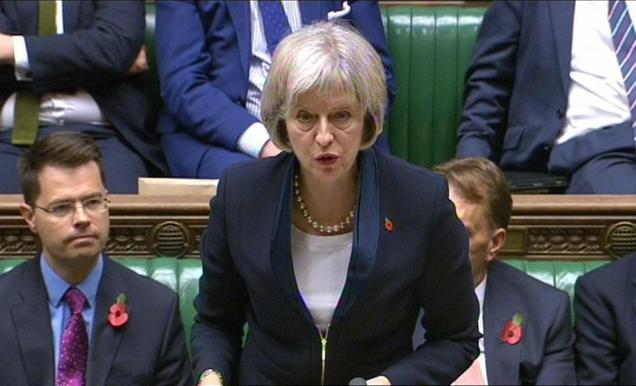
That’s why there is not an ancient right or civil liberty that David Cameron and Theresa May will not gladly crush in their effort to be seen as strong in the fight against terrorism.

Sure, they may look and sound different – almost complete opposites, in style and temperament. But both Donald Trump and David Cameron are both essentially playing the same trick – or perpetrating the same fraud – on their respective electorates, depending on your outlook.

Donald Trump was once a Democratic Party supporter and donor, talked up his great friendship with the Clintons and held positions which are diametrically opposed to his current conservative stances. David Cameron, meanwhile, calls himself a Conservative but is busily implementing Tony Blair’s fourth term New Labour agenda.

Neither man is what he publicly claims to be. And certainly neither Donald Trump nor David Cameron can fairly be described as small-c conservatives.


Donald Trump - Make America Great Again - Hat

Agree with this article? Violently disagree? Scroll down to leave a comment.

Follow Semi-Partisan Politics on TwitterFacebook and Medium.

The Left Wing Case Against Mass Surveillance And The Investigatory Powers Bill

Theresa May - Investigatory Powers Bill - Mass Surveillance

The draft Investigatory Powers Bill will neither increase security nor effectively tackle extremism

Laura Westwood argues in Left Foot Forward that existing mass surveillance techniques have proved ineffective at stopping terror attacks, and that the new measures outlined in the government’s draft Investigatory Powers Bill would further undermine civil liberties with no commensurate reward:

Perhaps most unsettling is the potential harm caused by intruding on the lives of innocent people. Whatever the rationale, mass surveillance practices imperil our rights to privacy and freedom of expression. The UK’s Independent Reviewer of Terrorism Legislation himself warned that taking missteps could sow divisions in society and incubate the problem of ‘home-grown’ terrorists.

Why? Because extremists thrive on exploiting disenfranchisement and grievance. We are told so by former members of Islamist extremist groups. Taking blanket surveillance even further than it already goes is a calculated risk at best, and right now, the sums aren’t adding up.

Already, people languish in British prisons not for committing or inciting terrorist acts, but merely accessing articles and propaganda which praises terrorist acts, or expressing support for them on social media. Such actions may be reprehensible, but bringing the full weight of criminal law crashing down on people with odious foreign policy views and sharp tongues on social media is punishing thought, not words, and is incompatible with a free society.

Furthermore, locking up people like Runa Khan – imprisoned for “disseminating terrorist material”, which basically meant sharing pro-ISIS propaganda articles on Facebook – does nothing to confront and kill the noxious ideas in question, but rather elevates them to an unearned position of nobility, and makes a martyr of their speaker.

As Mick Hume argues in his book “Trigger Warning: Is The Fear Of Being Offensive Killing Free Speech?”:

If she had dressed her young children in suicide vests and sent them out to die in a bomb attack, that would be terrorism. But going online to argue that Muslim mothers should try to raise their sons to grow up as jihadis is something else entirely, more like perverse parenting advice than a military command. Words are not physical weapons and viewpoints are not violence, however ‘radical and extreme’ they might appear to most of us. The opinions expressed by the likes of Runa Khan need to be openly challenged. Trying to bury them instead in prison, on the ground that they are too dangerous to be let loose on Facebook, can only lend their radical message more credence.

At a time when almost all the serious business of governing has ground to a halt for the duration of the EU referendum campaign, mass surveillance is the one area where David Cameron’s ideologically rootless, authoritarian government seems determined to make progress. All other reforms and legislative activity have effectively been placed on hold, yet this most un-conservative government is formalising and expanding the powers of the state to indiscriminately collect and hold data on the private activity of citizens, with the kind of weak and unenforceable safeguards that you would expect from a country with no written constitution.

Why? Because while everything else is allowed to drift as David Cameron seeks to bully and scare the British people into fearfully voting to remain in the European Union, expanding the power and influence of the state over our lives knows no rest.

Those on the Left who oppose this are right to do so – not in pursuit of a political victory over the Evil Tories, but because the Investigatory Powers Bill is bad law and bad policy. And because it will be the poorest, most disadvantaged and least well-connected citizens who first fall prey to the surveillance state, as it always is.

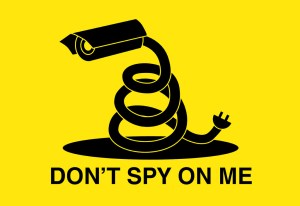
Don't Spy On Me - Mass Surveillance

Agree with this article? Violently disagree? Scroll down to leave a comment.

Follow Semi-Partisan Politics on TwitterFacebook and Medium.

Hate Speech / Free Speech

Earlier this month I had the privilege of attending an event organised by Spiked, entitled “A New Intolerance On Campus”.

The final panel of the day focused on the question “Is hate speech free speech?”, and while it was a little unbalanced (Dan Hodges was due to provide the counterpoint opinion but was unfortunately unable to attend) there were eloquent arguments in favour of unrestricted free speech from Brendan O’Neill, Maryam Namazie and particularly Douglas Murray.

While the arguments expressed here will be familiar to anyone who closely follows the debate on free speech and the climate of censorship on university campuses – particularly those who have read Mick Hume’s worthwhile book “Trigger Warning: Is The Fear Of Being Offensive Killing Free Speech” – the video is still worth a watch.

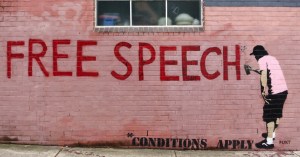
Free Speech - Conditions Apply - Graffiti

Agree with this article? Violently disagree? Scroll down to leave a comment.

Follow Semi-Partisan Politics on TwitterFacebook and Medium.