Tales From The Safe Space, Part 3 – Pittsburgh Succumbs To Milo Fever

Milo Yiannopoulos - University of Pittsburgh - Free Speech - Safe Space - Identity Politics

Don’t blame conservatives or free speech advocates for endangering student mental health; blame the modern cult of Identity Politics

Latest to fall victim to the scourge of Milo Fever is the University of Pittsburgh, where a scheduled talk by the touring Milo Yiannopoulos brought some adult student protesters to the point of tears.

The university’s own Pitt News reports:

Pitt police officer Scott DuBrosky said he and the other officers working at the event escorted about 17 people — most of them students — from the event for protesting, but that no protesters gave the Pitt police any problems.

He said Pitt police anticipated the highly tense atmosphere at the event and agreed with Pitt administrators before the event to remove those who disrupted Yiannopoulos’ speech.

Pitt police did not remove about 15 students who silently held signs saying, “My friend who was raped needs a safe space,” and, “My friend who is depressed needs a safe space,” throughout the entire event.

Some students left on their own accord — a few of them sobbing.

While the Daily Caller reports on the aftermath of Yiannopoulos’s speech:

But in the aftermath of Yiannopoulos’ visit, many liberal students found themselves struggling to come to terms with an event they deemed “unsafe” and even “violent.” Hundreds of students attended a meeting of Pitt’s student government to express their distress that the event was allowed to go forward in the first place.

“I felt I was in danger, and I felt so many people in that room were in danger,” student Marcus Robinson said of the non-violent event. “This event erased the great things we’ve done … For the first time, I’m disappointed to be at Pitt.”

Robinson faulted school officials for not providing a room next door staffed with counselors that could provide emotional support for students “traumatized” or “invalidated” by Yiannopoulos’ speech.

Many students argued Yiannopoulos had engaged in “hate speech” and therefore should never have been allowed a public platform in the first place. One even said that despite the lack of any physical attacks, the event was still “real violence” against liberal students.

“This is more than hurt feelings, this is about real violence,” said student Claire Matway. “We know that the violence against marginalized groups happens every day in this country. That so many people walked out of that [event] feeling in literal physical danger is not all right.”

There is so much ridiculous in here to unpack, not least:

1. The fact that any student – and recall, these are grown adults with the right to vote and take up arms in defence of their country – should feel in “literal physical danger” as a result of opinions expressed by a guest speaker who at no point advocated or incited discrimination, let alone violence.

2. The fact that a speaker who expresses ideas which go against the prevailing Social Justice orthodoxy can, with only their words, “erase” any of the tangible things which the students may have done in pursuit of their agenda.

3. The persistent, wheedling call for academic institutions to treat their students like an overbearing parent might treat a child, with the demand for a designated safe space room and trained counsellors on standby to treat the walking wounded – mown down in their seats by a hail of wordfire which contradicted or mocked their own values – much as one might have a field hospital behind the front lines in combat, or a Red Cross tent at a music festival.

4. The notion that anybody can be “invalidated” – essentially made to disappear in a puff of smoke, as though they never existed – by the words of another human being.

5. The hysterical and frankly insulting conflation of “violence against marginalized groups [which] happens every day in this country” with the fact that a group of privileged students chose to attend an event at which they heard ideas and opinions contrary to their own. And the supremely self-regarding notion that having one’s views challenged places one on the same spectrum of suffering and injustice as (say) Trayvon Martin or Michael Brown.

There is a real problem – manifesting mostly on American college campuses but creeping inexorably across the Atlantic to infect British universities, too – of young and impressionable students drinking so deeply from the well of Identity Politics and Social Justice that they are in genuine danger of doing themselves real, self-inflicted mental and emotional damage.

I’ve been reading and researching these phenomena for many months now, and I no longer doubt that in their minds, many of these students genuinely believe that by hearing a contrary opinion or a less-than-affirming remark about their life choices, they are incurring real, physical and mental harm.

(Though it is also plainly apparent that many of the more wily students know this Identity Politics scam and “mental safety” trope to be complete hogwash, but nonetheless embrace it as a means of exercising power over their peers and supposed academic supervisors).

But I’ll now readily concede that for many of these infantilised students who are reduced to tears by a voluntarily-attended, non-violent talk by Milo Yiannopolous, they have indeed incurred a trauma of some kind. Though it may seen completely absurd and hysterical to a normal person, to them it is profoundly real. I will accept that much. We only differ as to the cause of this sudden mass vulnerability, and the proper remedy.

They say ban speakers like Milo Yiannopolous and prohibit the things that they say from being spoken aloud on campus, essentially elevating certain people and ideas above debate and criticism. I say that they need to stop doing the thing which is making them – grown adults! – so vulnerable to speech and writing which contradicts their dogma in the first place.

And what makes them so vulnerable is the incessant and obligatory dividing up of student bodies by race and gender and sexuality, and forcibly separating this group of equal students into an artificial hierarchy of privilege and oppression which exists more in their minds than their lived experience on campus. What makes them vulnerable is the false notion that the social justice causes for which they campaign in wider society are anywhere near as prevalent or serious within their cloistered college campuses, when this is manifestly not true.

Take the example of the students of Silliman College at Yale University who were apparently seriously considering transferring away from one of the best universities in the world because they felt that their college Master was not treating them sufficiently like an overbearing parent by dictating which Halloween costumes were permissible for them to wear and which should be banned for being offensive.

As Conor Friedersdorf noted at The Atlantic, these students were blessed to be studying not only at one of the world’s premier academic institutions, but within surroundings of almost unparalleled luxury – including two Steinway grand pianos, a film editing lab and an art gallery for student use – which are utterly unimaginable for millions of people for whom the chance to study at even the lowest-rated and most ramshackle of higher education institutions is nothing but a distant dream.

That’s not to say that instances of racism, sexism, rape and assault do not take place on college campuses, and that it is terrible when they do. But today’s student activists have lost all sense of perspective. For many of them, hearing any narrative which differs in any way from the progressive Identity Politics interpretation of the world in which they marinate is now just as bad as being the victim of a physical or mental assault.

And we should no longer doubt them at their word. Anybody who is able to work themselves into a tearful tizzy at the sight and sound of Milo Yiannopoulos, perceiving themselves to be in “literal physical danger” at his presence on their university campus, clearly is acutely mentally vulnerable in some way.

But this vulnerability is utterly self-inflicted, and is entirely a consequence of the victim having delved so deep into the cult of Identity Politics now peddled on campus, and Tumblr-style Social Justice culture beyond, that any sense of perspective or capacity for rational thought is completely destroyed.

And for their own sake and ours, these fragile people need to leave their places of academic instruction and return home to their parents, because frankly, they are starting to create a very unproductive – if not yet unsafe – space indeed for those students who went to university naively expecting that they would be attending a place of learning and intellectual debate.


Safe Space Notice - 2

Top Image: The Pitt News – “Conservatism and controversy: Milo Yiannopoulos speaks at Pitt

Agree with this article? Violently disagree? Scroll down to leave a comment.

Follow Semi-Partisan Politics on TwitterFacebook and Medium.

Tales From The Safe Space, Part 2 – Segregation Returns At UC Berkeley

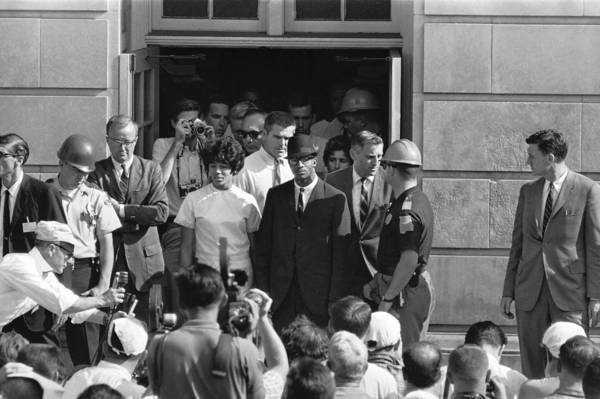
Vivian Malone - James Hood - University of Alabama - George Wallace - Racial Segregation - Integration - Racism

Minority students in America are less discriminated against and victimised today than at any time in history. And yet, in 2016, some are clamouring for the reintroduction of racial segregation, for their own “protection”

The fight for social justice claims another Pyrrhic victory in California this year, as racial segregation comes roaring back to university student accommodation.

The Berkeley Student Cooperative, a student housing organisation primarily serving students at the University of California Berkeley, is proudly rolling out racially segregated accommodation for “people of colour” who, unlike their predecessors fifty years ago, experience untold oppression, violence and discrimination in their daily lives, and thus desperately need a “safe space” to huddle together in respite.

The Daily Californian reports, in a fawningly approving article entitled “Reclaiming a safe space: Person of Color co-op to open this fall”:

In May 2014, the BSC Board of Directors established the Demographic Inclusion Task Force in order to propose ways that the BSC could better meet the needs of low-income students and students of color. The DITF conducted another membership census in the 2014-2015 school year that revealed socio-demographic issues like those found in the 2012 census. The DITF also led a series of focus groups last October, with the goal of identifying the root causes of the socio-demographic barriers.

[..] According to Skye Ontiveros, DITF chair, some of the focus groups revealed that certain students of color did not feel welcome in the undergraduate houses. In the focus group, some students of color reported that they felt like they could not cook traditional dishes in the kitchen because it did not stock the food that they needed or felt that their cultures’ music was not accepted in the common room. She explained that these situations create a hostile environment for students of color by stifling their right to cultural expression.

The DITF hopes that the Person of Color theme house will foster a safe space where students of color feel comfortable expressing themselves and their cultures, according to Ontiveros. White students and higher-income students can legally live in the Person of Color theme house, but Ontiveros hopes that they will choose to live in a different house and reserve this space for people of color.

“It’s meant for people of color,” Ontiveros said. “It’s not meant for folks who … want to be an ally or … want to learn about different cultures.”

And naturally, in order to live in this Racially Segregated For Everyone’s Mental Safety accommodation, residents must partake in mandatory “inclusivity” training, so as to receive top-up indoctrination in the same kind of reactionary social justice extremism which led to the segregation in the first place:

The Person of Color theme house will be founded on three pillars: cross-cultural exchange, academic and professional support, and anti-oppression and allyship. In order to achieve these goals, members will need to dedicate five hours to the community per semester by holding or attending workshops dedicated to these pillars. Possible workshops include traditional cooking or music lessons and inclusivity training.

It is astonishing to read the flimsy grounds on which racial segregation is now being reintroduced in Berkeley. The Daily Californian cites no evidence of racially motivated attacks or even verbal altercations – not that this would make racial re-segregation any more acceptable. No, the entire justification for the dramatic step of reintroducing segregation seems to be based on the “feeling” of a small number of students in a focus group that their food or music was somehow unwelcome in racially integrated student accommodation.

This is ludicrous. The entire point of the Berkeley Student Cooperative is to provide low-cost accommodation for students who would struggle to afford market-rate campus accommodation. If each building was to stock ingredients catering to every culture in the world, what do the safe space dwellers think would happen to their rent costs? And since when did not having your favourite ethnic food provided by default constitute such an intolerably “hostile” environment that self-segregation is the only answer?

If this perplexing story tells us anything, in fact it shows us how far the civil rights and tolerance movements have come, that today’s pampered student activists are reduced to throwing their toys out of the pram because their communal kitchens do not come replete with every conceivable cooking ingredient from around the world (as though going to the store and buying things independently was not an option).

Or to invert Chris Rock’s excellent joke at the recent Oscars ceremony, now that minority students (thankfully) no longer live in daily fear of finding their grandmother swinging from a tree, they are free to worry not only about who is nominated for Best Documentary Foreign Short, but also about whether they can ever possibly rebuild their lives after having once received a quizzical look for playing their favourite Balinese Gamelan music CD in the common room.

One would think that a country with such a visceral recent history of racial segregation and deeply engrained hostility – which often took the form of lynchings and systematic disenfranchisement rather than the mere failure of a student housing cooperative to stock certain ethnic foods – would do everything possible to avoid repeating the mistakes of the past and bringing back customs which were properly buried with Jim Crow. But then one would also think that a country whose civil rights movement succeeded only thanks to the exercise of free speech would be rather less cavalier about restricting speech today.

Sadly, these mistakes now seem doomed to be repeated as UC Berkeley leads the way in playing host to a racially segregated student population.

More tales from the Safe Space here.


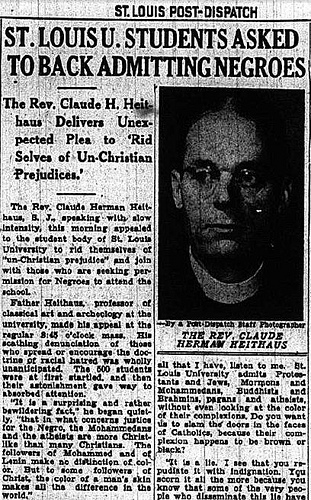
Racial Integration - St Louis Post Dispatch.jpg

Safe Space Notice - 2

Agree with this article? Violently disagree? Scroll down to leave a comment.

Follow Semi-Partisan Politics on TwitterFacebook and Medium.

The Pro-EU Elites Have Not Even Considered The Case For Brexit

Britain in Europe Campaign

More people become eurosceptic with time and experience than come to love the EU. That should tell us a lot about who to listen to in this EU referendum debate

In his Telegraph column today, Charles Moore considers the  soft bigotry of the “swivel-eyed moderates” who instinctively support the Remain campaign for Britain to stay in the European Union without even considering the opposing arguments.

Moore writes:

I do not mean that they do not know a lot about the subject – many of them do. Nor that they are not genuinely concerned for Britain’s future – most of them are. I mean that most have not, for one single second, imagined that life outside the EU might be a viable, even preferable alternative to life within it, so they do not understand the case they are opposing.

This is a form of bigotry, and it is less common on the Leave side – not because the Outers are necessarily deeper people, but because they have lived under the dominance of the pro-EU order, and so have been forced to think hard about it.

The bigotry of successful people is stronger than that of uneducated ones, because their life stories tell them they know best. So they stop thinking and instead merely disdain those who disagree with them. Years ago, Mr Cameron famously derided Ukip as “swivel-eyed loons”. Such people exist, perhaps, but the present danger is much more from the swivel-eyed moderates, who so resolutely refuse to look at the way the world is going.

They also do not see how much they have failed. In the 21st century, the world order and financial systems dominated by the free West have been shaken more profoundly than at any time since 1945, and the people in charge do not know how to correct their own errors, or even admit them. The euro is a major part of this new world disorder, as is the effort to deepen the European Union in the wake of it.

There is a lot of truth in this argument.

Certainly everyone of my age (33) has grown up knowing nothing other than life inside an explicitly political European Union, with many of the same institutions – the Parliament, the Council – which exist today. Unlike those who voted to leave the European Community in 1975, people my age have no recollection of life in a sovereign country, and so have no frame of reference when considering Brexit. No wonder, then, that to many young people the thought of leaving something so seemingly rooted and permanent as the EU (though of course it is nothing of the kind) seems to be crazy.

There is much truth, too, in Charles Moore’s assertion that those of a pro-EU dispensation – particularly the wealthier professional and establishment types who tend to support the EU the strongest – have not been forced to think hard about the question. This is not a criticism of such people, for in many ways it is inevitable.

If you have grown up and prospered under the status quo, with Britain as a vassal state of a larger and ever-more tightly integrating political union, then it takes an extraordinary amount of curiosity, empathy or insight to come to any conclusion other than that the EU has been a resounding success on all counts. By contrast, if you are self-employed or work in a semi-skilled or unskilled job at the sharp end of globalisation, you are more likely to be negatively impacted not just by immigration, but by the inability of your vote to effect any kind of meaningful political change in Britain thanks to the cross-party pro-EU consensus.

As this blog recently noted when discussing the Christian case against the EU:

Too often – at least in Britain, with the media’s patronising and dismissive coverage of UKIP leading up to the European and general elections – we explain away these populist movements, or belittle their support base by suggesting that they are all economically left-behind losers or curtain-twitching village racists.

And it’s partly true, only not as an insult. If you are a well paid professional in rude financial health you can better afford to be a consumer rather than a thinking citizen. You can use your vote to signal your virtue (anyone but UKIP!) or advance your lazily thought out utopian daydreams, with little fear of the consequences. But those of our fellow citizens on the sharp edge of globalisation – those whose livelihoods are impacted by deindustrialisation, new technology, outsourcing and the information economy – tend to see things differently.

This doesn’t mean that we should adopt every nativist, protectionist policy that comes along – because barriers to trade are never the right answer. But it does mean that we should acknowledge that the eurosceptic parties of the Right and the Left are at least asking some important questions that the mainstream parties, trapped in their centrist consensus groupthink, have consistently failed to do.

I feel particularly qualified to talk about this, as growing up I was the most ardent European Union supporter and federalist imaginable. And not in an ignorant way – I had done the reading and acquainted myself with how the EU was structured and how it worked. I firmly believed that the age of the nation state was over, that patriotism was silly and gauche, and that our only hope of a prosperous future lay in dissolving ourselves into a greater European collective. Adopting the euro, creating an EU army – you name it, I believed in it.

I would look enviously across the Atlantic at the power and influence of the United States and, coveting the same, agitate for the European Union become an equally powerful actor on the world stage. Britain seemed small, parochial and redolent of the past. Surely, I thought, our future lies as part of something greater?

Euroscepticism - Eurosceptic - Word Cloud

And I persisted in this belief for some time, the arrogance of youth helping me to dismiss friends, family, experts and the vast majority of the general public who thought differently to me as being xenophobic Little Englanders who just didn’t know what was good for them.

Only when my appreciation for democracy and self-determination (and small-c conservatism) caught up with my authoritarian Utopianism did I realise that the accumulated wisdom of the British people might exceed my own, and that there may be good reasons to be sceptical of the European Union. And only when I came to realise the extent to which the EU is a creation of a small group of European intellectuals and political elites who thought that they knew best – and that the only way to bring about their creation was through stealth and subterfuge, never declaring the ultimate federal destination of travel – did I come to see how profoundly wrong it is.

The point is that I have been on a political journey. I held one set of beliefs and looked to one limited set of facts, and then I questioned those ideas, drew on a wider array of evidence and renounced my previous positions. As Charles Moore would put it, I grew up under the dominance of the pro-EU order, but then thought hard about it and changed my mind.

The pro-EU Remain campaign boasts very few people who have been on a similar journey but in reverse; who were once ardent eurosceptics but came to see the light and learn to love enforced European political union. And that’s because the pro-EU consensus is nothing but a haven for establishment groupthink and bias confirmation. Newcomers to the pro-EU cause such as the Conservative Party’s Sajid Javid and Rob Halfon have not been on an intellectual journey, but merely fell into line behind their party leadership. That’s what makes their “coming out” arguments so desperately unconvincing.

The uncomfortable truth for the pro-EU crowd and the Remain campaign is this: the more you learn about the European Union, its history, the way it came about and its ultimate direction of travel, the more likely you are to oppose it and want Britain to leave. When ignorance prevails and people believe that the EU is nothing more than a friendly club of countries trading and co-operating with one another to Save the Earth, the europhiles win. But when the drip-drip of facts and evidence begins to permeate the debate, people start questioning those pro-EU shibboleths and opposing our continued participation in this mid-century supra-national experiment.

Furthermore, it is those who think primarily with their wallets, as consumers first and foremost, who are most likely to be susceptible to the Remain campaign’s Project Fear and scaremongering tactics about the hysterically hyped “costs” of leaving the European Union, while those who think as engaged citizens and global stakeholders who are most likely to question the European project.

Charles Moore is quite right: there is indeed an army of swivel-eyed ideologues in this EU referendum debate. And though they would hate to admit it, it is those on the Remain side who are most likely to be impermeable to facts, and who are least likely to have ever held a different view on the EU and been on an intellectual journey to arrive at their present position.

And as a rule of thumb, it is generally wisest to listen to those who can show evidence of having thought deeply about an issue and been persuaded by the steady accumulation of evidence to revise their thinking, rather than those who were born with their deeply-engrained love of the European Union pre-programmed in their brains.


Brexit - EU Flag

Agree with this article? Violently disagree? Scroll down to leave a comment.

Follow Semi-Partisan Politics on TwitterFacebook and Medium.

Where Is The Passion For Or Against Brexit From Our Elected Representatives?

When it comes to voting and speaking their conscience on Brexit, British MPs should do as former American congressman Anthony Weiner said…but perhaps not as he did

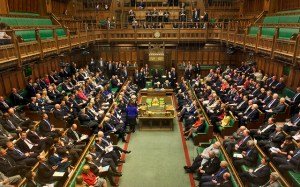
When the British parliament gets rowdy, it tends to be the braying backbench donkeys at Prime Minister’s Questions making the noise, usually in response to some tenuously witty put-down from David Cameron.

What you see far less in parliament are individual politicians getting angry or visibly passionate about particular issues (Mhairi Black’s vastly overrated maiden speech notwithstanding). Perhaps this is partly because of our British reserve – though this is a comity which notably does not seem to extend to social media.

The parliamentary debate following the announcement of David Cameron’s pitiful renegotiation deal with the European Union was a case in point, and the following drip-drip of MPs and ministers once considered to be dependable eurosceptics dutifully lining up behind the prime minister was especially depressing.

Even when solid arguments were made for or against Britain’s continued EU membership, much of the debate was conducted in that dry, technocratic and risk-averse style which does so much to turn people away from politics.

Thus the media expended many more column inches writing about whether David Cameron felt “betrayed” by Michael Gove’s decision to support Brexit, and what kind of punishment Boris Johnson might expect for doing the same. In the near complete absence of really passionate and full-throated arguments on either side (except in the thriving Brexit blogosphere), the Westminster media focused on the court drama and palace intrigue rather than the policy.

It needn’t be so. It is possible to show passion and wear one’s heart on one’s sleeve in a political debate, and doing so (provided that it is genuine) can actually foster greater trust between the people and politicians who are actually perceived as standing for something.

Former New York representative Anthony Weiner resigned from Congress in disgrace, but during his time in Washington he built just such a reputation as a firebrand, with floor speeches which frequently went viral and broadened the reach and appeal of politics.

One such speech – in which Rep. Weiner excoriated Republicans for hiding behind procedural rules as cover for voting against providing healthcare to 9/11 first responders – is particularly applicable to the Brexit debate as it is now being conducted in Westminster:

You vote yes if you believe yes. You vote in favour of something if you believe it’s the right thing. If you believe it’s the wrong thing, you vote no.

You would think that this would be stating the obvious, but apparently not, judging by the number of committed europhile MPs who are quick to reel off all the things they hate about the EU rather than make a full-throated defence of Brussels, and the eurosceptic turncoats who have suddenly come up with implausible-sounding pressing reasons why now is not the right time for Brexit.

Am I the only one who would like to see a bit more genuine passion (as opposed to the creepy “passion” of Ed Miliband, or David Cameron pretending to be “bloody lively”) in our politics, rather than the same old consensual blandness?

Of course, for fiery debates like this to take place in the House of Commons, certain stultifying rules would need to be relaxed (though PMQs and the reaction to SNP MPs clapping shows just how arbitrary the enforcement of these rules already is).

But more than that, to have Anthony Weiner style passion in our politics, and the Brexit debate in particular, we would need more of our elected representatives to do the following:

1. Dare to make the honest, non-technocratic or fearmongering case for or against Brexit (with the europhiles ceasing to deny their desire and preference for European political union), and

2. Place their sincerely held beliefs over and above thoughts of career advancement.

But partly because the legislature and the executive are intertwined in the British political system, career-minded MPs are not currently incentivised to build a reputation as passionate and independent-minded firebrand legislators, as to do so would immediately mark them out as “troublemakers” to be passed over for promotion.

There is, at present, no attractive or lucrative career path in Westminster politics that does not lead inexorably away from legislating and toward joining the government, and the warping effect that this has on our lawmaking process cannot be overstated.

Yet another reason for comprehensive constitutional reform in Britain, to separate the executive from the legislature so that both are better able to do their jobs.


Parliament - House of Commons - Debate

Agree with this article? Violently disagree? Scroll down to leave a comment.

Follow Semi-Partisan Politics on TwitterFacebook and Medium.

Cameron The Weakling

David Cameron thinks that publicly exaggerating and flaunting Britain’s supposed weakness and vulnerability will make people vote to stay in the European Union, while having no impact on perceptions of his own leadership

We have already been treated to the spectacle of our wobbly-lipped Foreign Secretary insinuating that he is so inept at managing our foreign relations and defending Britain’s interests that we would likely be “punished” by our European friends if we voted to leave the EU.

And now it is David Cameron’s turn to make an ostentatious public spectacle of just how weak and insignificant he believes we are as a country, and how hopelessly unable to defend the British interest he is.

From Michael Deacon’s sketch in the Telegraph:

Francois Hollande, the President of France, respects the British people. He respects their democratic right to choose how they wish to be governed. He would never wish to put pressure on them. And if, when the referendum comes, they decide that the UK should leave the EU, he will respect their decision.

But, he added casually, there would of course be… “consequences”.

He said the word many times. “Consequences.” There would be “consequences” relating to trade, “consequences” relating to immigration. “Consequences?” Oh, he was “unable to deny” there would be “consequences”.

Was it true, asked a journalist, that if the UK left the EU, France would abandon the deal that helps stop migrants crossing illegally from Calais to Britain?

Monsieur Hollande looked at the journalist equably. Well, he replied. Naturally there would be “consequences”.

All of this took place while our prime minister stood limply next to the French president at his podium, as though French special forces had kidnapped Samantha and the kids and were holding them at gunpoint in the background.

At what point does the dirge-like, pessimistic drivel offered up by the Remain campaign and spouted ceaselessly by loyal government ministers stop making the public question whether Brexit is safe, and start making them question why the hell we pay these people if not to aggressively defend our own national interest?

Not to get all Land of Hope and Glory here, but Britain is still a reasonably big deal in the world. A major economic power, the premier European military power and one of a handful of countries in the world with real expeditionary capabilities, and a cultural reach probably second only to the United States. Most British people know this, and do not buy into the miserablist, declinist view of Britain peddled by so many in the Remain camp.

David Cameron has clearly made a calculation that talking about the catastrophic consequences of Brexit on the United Kingdom will scare up a significant number of votes and thus undermine the Leave campaigns. Never mind that it makes him look like a liar for having previously suggested that he might recommend Brexit if he was not successful in securing his pitiful package of “reforms”. And never mind the galling spectacle of a British prime minister actively and passionately running down his own country for electoral advantage.

Allister Heath picks up on this same theme in the Telegraph:

But the Government and many of its anti-Brexit allies have gone too far: instead of carefully stoking the public’s understandable fear of change, and planting doubt in its mind, they have decided to wildly exaggerate the downsides of leaving. The hit to the economy could be greater than that from the Great Recession, we are told by some hysterical economists, and even that best-selling children’s books would no longer be written because, apparently, no non-British authors or illustrators would be allowed into the UK if we were not part of the EU.

These and many other of the similarly extreme claims that have been made in recent days are laughably implausible, even to nervous, swing voters; fear is only effective as a political strategy if it is credible. Even worse for the Government, it has also allowed a toxic narrative to set in: the idea that it would be powerless to stand up for Britain’s interests and look after our economy in the event of a Leave vote.

It’s all rather pathetic and defeatist. It would be too hard and time-consuming to conclude alternative trade deals, we are warned, and we apparently don’t have the requisite skills in the Foreign Office; there is nothing anybody could do to stop our companies, consumers and tourists being bullied and victimised by vindictive foreign governments; and we would be bulldozed by the angry bureaucrats of Brussels wherever we turn. Dominic Grieve, the former attorney general, has claimed that British expats living in Europe would risk “becoming illegal immigrants overnight”, even though their status would in fact be protected under the Vienna Convention of 1969.

Project White Flag, as we should learn to call it, boils down to one long stream of nauseating, miserable, declinist negativity. Alarm bells ought to be going off in Downing Street: politicians don’t win elections or referenda by pretending to be weak and powerless, and by claiming to be at the mercy of foreign governments.

As this blog has repeatedly stated, the Remain campaign need to make up their minds. Is the EU a soft and friendly club of countries getting together to braid each other’s hair and co-operate on a range of mutually beneficial issues, or is it a snarling, angry organisation which threatens to rough us up if we attempt to leave? Are we in a happy marriage with the EU, or an abusive relationship?

And we British citizens also need to make up our minds about something. We need to decide why we should continue to tolerate having in office a prime minister, foreign secretary and other elected officials who hold our country in lower estimation than many of their own citizens, and who – by their own admission – have stated that they would be unable to aggressively defend our national interest in the event of Brexit.

Because we are rapidly reaching the point where the public may start to question the point of keeping a pampered man and his family installed in Number 10 Downing Street at all,  when all he does is openly boast about his inability to influence other nations and stand up for Britain.


David Cameron - Angela Merkel - Francois Hollande - EU Renegotiation - Brexit

Agree with this article? Violently disagree? Scroll down to leave a comment.

Follow Semi-Partisan Politics on TwitterFacebook and Medium.