Arrested For Thoughtcrime In Britain Following The Brussels Terror Attacks

Matthew Doyle - Facebook - Twitter - Brussels Attacks - Muslim Woman - Arrest - Free Speech - Police

Britain has become an authoritarian dystopia where the police prefer to waste scare resources scouring Twitter for instances of supposed thoughtcrime, rather than tackling real-world crime

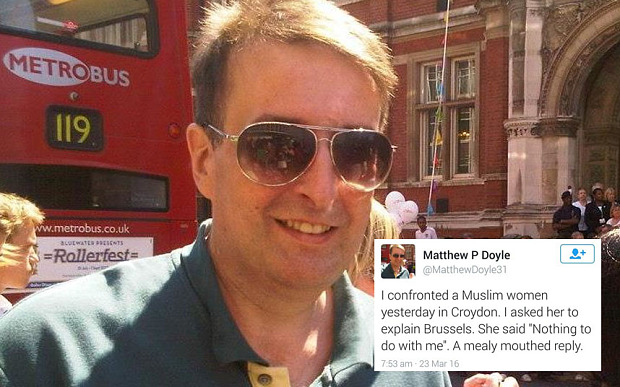
Matthew Doyle of Croydon, south London, was not the first person to say something stupid in the aftermath of the Islamist terror attacks in Brussels yesterday, and he will certainly not be the last. But Doyle does hold the dubious honour of being the first person in Britain to be arrested for thinking and saying – or in this case, tweeting – the wrong thing about the Brussels attacks, the latest victim of Britain’s dystopian hate speech laws.

As with most people whose free speech most urgently needs defending, Matthew Doyle does not come across as a remotely sympathetic character.

The Telegraph explains:

A man who tweeted about stopping a Muslim woman in the street yesterday, challenging her to “explain Brussels”, and lambasted on Twitter for his comments, has responded to the criticism today, insisting he is not some ‘far right merchant’.

Matthew Doyle, partner at a south London-based talent & PR agency, posted a tweet on Wednesday morning saying: “I confronted a Muslim woman in Croydon yesterday. I asked her to explain Brussels. She said ‘nothing to do with me’. A mealy mouthed reply.”

He was later arrested.

His tweet referred to yesterday’s bomb attacks on the Belgian capital’s main airport and Metro system that left at least 34 people dead and 198 injured. His comment went viral, being retweeted hundreds of times before he eventually deleted it.

Mr Doyle told the Telegraph he had no idea his tweet would be the “hand grenade” it has proven to be – and that Twitter’s 140 character limit made the encounter sound vastly different to how he thought it went.

Now there is a good case to be made that Matthew Doyle is something of an idiot – in a follow up tweet, he later exclaimed “The outrage I felt was real. I cannot understand why I decided to ask the nearest Muslim I ran into”, which certainly suggests that perhaps we are not dealing with a world class mind here.
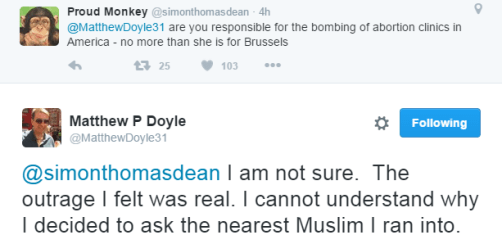
Matthew Doyle tweet

And his subsequent tweets veered firmly toward the knuckle-dragging bigot end of the spectrum, when he retorted “Who cares if I insulted some towelhead??”
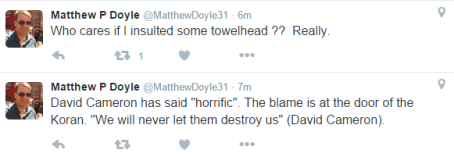
Matthew Doyle tweet - 2

But let’s be clear – even if we apply the most unforgiving interpretation of Matthew Doyle’s tweet, and his subsequent account of the conversation, it should not be enough to land a citizen of a supposedly free democracy in trouble with the law.

Even if Doyle literally sought out the first Muslim-looking person he could see on the high street, approached them unbidden and asked them to account for the terrorist actions in Brussels yesterday, no country calling itself free should drag that man through the criminal justice system.

It may be incredibly ignorant and offensive to suggest that all Muslims share responsibility for the terrorist attacks in Brussels this week. It may be astonishingly stupid. But stupidity and lack of manners should not be enough to earn someone a knock on the door from the police.

In this case, the initial response of the Twitterverse was (for once) exactly what should happen – society’s self-righting mechanism kicking in against the actions of a conspicuous idiot. Doyle said something irretrievably stupid which was then widely retweeted, and he found himself on the end of thorough, fully deserved mockery from complete strangers online. Many of the subsequent parody tweets effectively (and wittily) exposed the total lack of logic behind Doyle’s sentiments and actions.

https://twitter.com/ThaKingSlayer/status/712613539366748160

So why is confrontation, rebuttal and mockery not enough in twenty first century Britain? Why can we not simply go to bed content that a self-declared idiot has had his idiocy widely exposed, refuted and mocked, without wanting to twist the knife further? Why is it now also necessary to compound his punishment by heaping an arrest, a trial and a possible criminal conviction on top of the self-inflicted public shaming?

As Alex Massie recently lamented when looking at the public’s response to Donald Trump’s comments about Britain, cases like these only prove his how snarlingly authoritarian and illiberal a place modern Britain can be once the sunny, progressive façade is peeled back:

It is always depressing to discover that there are vastly fewer liberals in this country than you might wish there to be. But that discovery should no longer surprise us.

This is the true attack on British and European values, and it comes from within. I am far less worried about the slim possibility that I will find myself standing next to a suicide bomber on my morning commute, and far more concerned that every single day I am apparently rubbing shoulders with people who smile and appear friendly at first glance, but who would not hesitate to bring the full weight of the criminal justice system crashing down upon my head if I happen to one day say the wrong thing (defined by British law as anything which gives them offence).

As a political blogger with sometimes forceful and controversial views, I am less worried that my writings may earn me a punch in the face from a stranger (I couldn’t be less famous, and my reflexes are quick – though I am probably playing with fire when I criticise our national religion, the NHS) and far more worried that someone will read something that I write, take massively overinflated exception to it, and – with a few clicks of a mouse or a quick telephone call – report me to the police, who would then be obliged to investigate me under Britain’s oppressive hate speech laws.

In the age of Islamo-fascist terror, my liberty and wellbeing is far more under threat from the Public Order Act 1986, the Communications Act 2003 and the Racial and Religious Hatred Act 2006 than it is from the terrorist’s bomb or the bullet. Not because I ever incite racial or religious hatred – indeed, I abhor those who do so – but because under the same laws that put Matthew Doyle in a jail cell, my “guilt” would depend entirely on the perception of the supposed “victim”. Anybody at any time can read anything that I write, claim to be alarmed and distressed by the ideas that I express, and have me carted off to prison.

They can do this to idiots like Matthew Doyle. They can do it to political bloggers like me. And they can do it to you. Sitting at your computer right now, you can get yourself arrested and cautioned, convicted and even sent to prison just by typing fewer than 140 characters on your keyboard. In Britain. In the year 2016.

In case the government actually cares, this is how the terrorists really win. They’ll never make Britain part of a radical Islamic Caliphate, but they can certainly help to ensure that we become such a snarlingly authoritarian, freedom-hating society that our country is changed irrevocably for the worse.

And as the freedoms and liberties which distinguish Britain from more benighted parts of the world – including primitive quasi-medieval regimes like the Islamic State – are shot to pieces, it is our own hand on the trigger. No one else’s. We do this to ourselves.


Postscript: What remains unclear at this time is whether Matthew Doyle was arrested for the content of his original tweet, his subsequent tweets (some of which were actually far more offensive) or the real-world act that his initial tweet described.

It may seem an arcane detail, but it will be interesting to discover whether the woman accosted by Doyle made the complaint, or whether it was a foot soldier in Britain’s growing army of professional online offence-seekers who took offence on her behalf. I would bet a very large sum of money that it is the latter, and that while the “victim” herself probably shrugged off the incident, Doyle’s prosecution is being urged most strongly by other people who are completely unconnected with the incident and who were not adversely affected in the slightest by his tweet.

 

CCTV - Police State

Agree with this article? Violently disagree? Scroll down to leave a comment.

Follow Semi-Partisan Politics on TwitterFacebook and Medium.

What Might A Post-Osborne Conservative Party Actually Look Like?

Britain Election

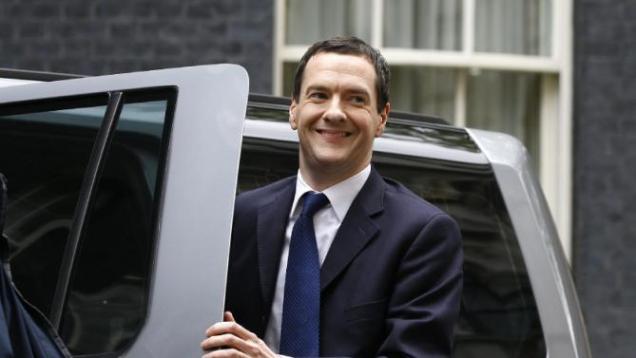
George Osborne has political enemies. But are they also ideological opponents?

What hope is there that the Conservative Party might realistically follow a different intellectual and ideological path after the Age of Cameron and Osborne?

While there have been precious few public signs of senior cabinet or backbench, leadership-calibre Conservative MPs willing to make a public stand for a smaller state and greater individual liberty, perhaps we should be encouraged by the fact that many Tory MPs apparently hold such a low opinion of George Osborne, the navigator largely responsible for the party’s current centrist course.

James Kirkup has been surveying attitudes to the Chancellor within the parliamentary party:

How much trouble is Mr Osborne in? Put it this way: Tory MPs who a few months ago were so wary of his power over their future that they flinched at the mention of his name are now speculating about whether he will keep his job.

By way of evidence, here are some things Conservatives have said to me about the Chancellor in recent days. Two of the quotes below come from serving members of the government. One is from someone who holds a senior office in the Tory hierarchy. One is a backbench MP who could easily have a prominent place in Cabinet in a year or two.

1. “No chance. None. Zero. Never going to happen. Dead. Deader than dead.”

2. “He has been found out. He doesn’t believe in anything and no one likes him. It was useful for people to support him when he was on the way up, but no one will stick with him on the way down.”

3. “The thing about George is that a lot of people think he’s a bit arrogant and rude, but that’s because they don’t really know him.

“Well I’ve worked with him pretty closely for several years now and so I know that the truth is that in person he’s actually much worse than that.”

Kirkup goes on to chart a path back out of the wilderness for Osborne, which is of far less interest to this blog, which ardently hopes that the Chancellor and his “New Labour Continued” strategy perish in the desert.

But there is no point looking forward to the departure of Cameron and Osborne unless there is a reasonable prospect of them being replaced by other, better alternatives – future leaders whose conservatism does not retreat at the first sight of negative headlines, and who know when the pain of public opposition is worth the gains (i.e. not in pursuit of a paltry £4bn of savings from Personal Independence Payments for disabled welfare claimants).

Back in November of last year, this blog pointed out that winning power only to implement Tony Blair’s unrealised fourth term of office was a waste of a Conservative administration, and that those who campaigned and voted Tory deserved better:

The fact that David Cameron and George Osborne are watching the slow implosion of the Labour Party and conjuring up plans to woo Ed Miliband voters – rather than capitalise on this once-in-a-century opportunity to execute a real conservative agenda unopposed – reveals their worrying lack of confidence in core conservative principles and values. If the Prime Minister and Chancellor really believed in reducing the tax burden, reforming welfare, building up our armed forces, shrinking the state, promoting localism and devolving decision-making to the lowest level possible (with the individual as the default option), they could do so. They could be building a new, conservative Britain right here, right now. Virtually unopposed.

But Cameron and Osborne are doing no such thing. They simper and equivocate, and talk about fixing the roof and paying down the debt while doing no such thing, and still they attract endless negative headlines for inflicting an austerity which exists primarily in the minds of permanently outraged Guardian readers.

If Britain is not a transformed country in 2020 – with a smaller state, more dynamic private sector and greater presence on the world stage – there will be absolutely nobody to blame other than the party holding the keys to government. The party with the word “conservative” in their name. The Tories will have been in power for ten years and have nearly nothing to show for it, save some weak protestations about having fixed Labour’s prior mismanagement of the economy.

That’s not the kind of party I want to be associated with. That’s not the party I campaigned to elect in 2010, back when it seemed possible that a new Conservative administration might aspire to being something more than a moderate improvement on Gordon Brown.

In other words, in order to make an exciting potential future leadership candidate, the Conservative MPs rolling their eyes as the Chancellor of the Exchequer self destructs (or uses up another of his nine political lives) must not simply dislike George Osborne – and there is increasing evidence that his support is a mile wide but an inch deep – but actually have an entirely different vision for the party.

That rules out all of the most obvious successors (Theresa May, Nicky Morgan, Philip Hammond, Michael Fallon, Jeremy Hunt) as well as those one-time Bright Young Things who have recently proven their unreliability by failing to come out in support of Brexit (Sajid Javid, Stephen Crabb, Matt Hancock, Rob Halfon).

Unfortunately, that mostly leaves a pool of potential candidates who are probably too new to Parliament to mount a credible leadership bid by 2020, or citizen politician types who have already publicly disavowed any future leadership ambitions. This blog took a warm liking to Chris Philp (if only he can be cured of his europhilia), David Nuttall (with some specific policy reservations) and James Cleverly when these MPs recently addressed a Conservatives for Liberty lobby event, and also Lucy Allan – though the latter’s social media exploits and alleged behaviour towards her staff raise some worrying temperamental questions.

Kwasi Kwarteng is also a sound conservative, advocating a return to a contributory welfare state as well as being an excellent author. Dominic Raab is very bright, and strong on individual liberty and meritocracy.

None are what you might consider to be household names at present. In some cases, that may have the potential to change by 2020, depending on what happens and whether any of these candidates are promoted into the cabinet as the Conservative Party approaches the end of David Cameron’s term.

But the green shoots of a British Conservative revival do exist. They are small and fragile at present, and no matter who is leading Labour in 2020, Cameron’s successor will have to contend with Tory Fatigue after ten years back in government, making the urge to tack to the centre even harder to resist than it is already.

Which is all the more reason why this blog believes it is now imperative to identify, support and champion those future leadership prospects who fit the profile of an heir to Thatcher rather than another disappointing, Cameron-style Ted Heath tribute act.


Conservative Party Logo - Torch Liberty - Tree

Agree with this article? Violently disagree? Scroll down to leave a comment.

Follow Semi-Partisan Politics on TwitterFacebook and Medium.

Brussels Attacks: Solidarity With Belgium Today, But What About Tomorrow?

Bruxelles - Brussels - Terrorist Attack - Brandenburg Gate - 3

Solidarity is great. What’s next?

There is a very familiar pattern to all of this.

A bloody Islamist terrorist attack brings carnage and fear to the streets of a major Western city.

Everyone from heads of state to the man next door rush to publicly register their shock and solidarity on Twitter.

Someone inevitably pops up after a few hours to lecture us that there is nothing Islamic about Islamic State, and that we should really be calling them Daesh, or “so-called Islamic State”.

Someone else usually pops up to say something incredibly bigoted or ignorant about all Muslims.

Impromptu shrines appear in a major square of the afflicted city, with candles, chalk drawings and sometimes a bit of impromptu John Lennon.

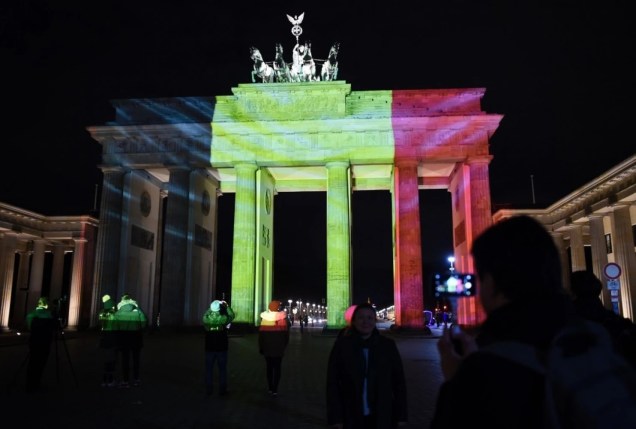
And the day closes with Europe and America’s major landmarks illuminated to resemble the national flag of the afflicted nation. They’re getting really good at that part now.

Fast forward a day, and plans are well afoot to grant even more powers to the well-meaning but overstretched security services – who were unable to make use of their current extensive powers to thwart the attack – and generally at the expense of our civil liberties. Particularly our rights to privacy and free speech.

Fast forward a month, and we have all moved on. Domestic political concerns, celebrity scandals and daily life have reasserted themselves.

I think we can all agree that we’ve got the public grief, cathartic expressions of solidarity and stern faced authoritarianism down to a fine art at this point.

When are we going to start acknowledging – and maybe even tackling – the root causes?


Bruxelles - Brussels - Terrorist Attack - Le Monde - Cartoon

Agree with this article? Violently disagree? Scroll down to leave a comment.

Follow Semi-Partisan Politics on TwitterFacebook and Medium.

The Leave Alliance Campaign For Brexit: Citizen Democracy In Action

The Leave Alliance Launch - TLA - 2

This EU referendum is about the people, not the Westminster elite. Fortunately, there now exists a truly independent Brexit group – the only genuinely grassroots campaign fighting the referendum, and the only one with a credible plan for safely leaving the European Union

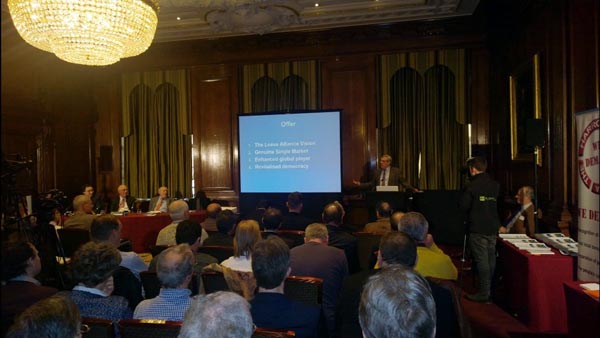
Last week – on Budget day, in fact – the Leave Alliance of individuals and groups campaigning for Britain to leave the European Union held its launch in Westminster.

Don’t worry, you’re not the only one who didn’t realise that anything had happened. The media is still having trouble wrapping their collective mind around the fact that in a referendum, the voices of politicians are no more important than those of ordinary citizens. That’s why every time Boris Johnson opens his mouth to utter his latest half-baked Brexit plan it is considered front page news, but when a group of private citizens and organisations form an independent campaign group to fight a national referendum it is deemed so un-newsworthy that it receives barely a ripple of attention.

Even when that launch takes place in the heart of Westminster, literally down the street from certain venerable news organisations (hello, Spectator), the idea of the Westminster media dispatching a journalist or two to see what was happening in their own back yard is apparently unthinkable. Every last resource simply had to be committed to this year’s Pulitzer Prize-winning coverage of George Osborne’s 2016 Budget, Omnishambles Revisited.

To be fair, The Leave Alliance – of which this blog is an enthusiastic supporterdid register a mention in Christopher Booker’s Telegraph column:

[Boris] Johnson’s empty-headed amateurishness only typifies the fatal failure of any of his allies in the “Leave” campaign to agree on a plausible, properly worked-out exit plan. One after another they come up with their own equally half-baked suggestions, which only demonstrate how none of them have done their homework. This is giving Cameron’s “Project Fear” an open goal, by failing to show how we could practically leave the EU while continuing to enjoy full access to the single market.

The only group that has done so, the Leave Alliance – launched last week with support from the Bruges Group, the Campaign for an Independent Britain and others – is too small to bid for the lead role in the campaign (although I am told on good authority that its expert and exhaustive analysis of all the options has been found very useful by civil servants).

But for a full account of the Leave Alliance launch you have to turn to the blogosphere. Lost Leonardo, writing at the Independent Britain blog, provides this summary:

The Leave Alliance (TLA) is a network of new and established political groups, bloggers and tweeters who are committed to winning the EU referendum for the “leave” side. What makes TLA unique among the declared leave groups is its support for a credible Brexit plan.

Flexcit: The Market Solution is a six-phase plan for recovering Britain’s national independence in stages, as part of a continuous process, rather than as a one-time event. That change of perspective shifts the Brexit debate firmly in the direction of pragmatic and practical politics. The exact form that our post-Brexit deal takes is less important than our vision for what we will do with our national independence. Self-governance means taking responsibility unto ourselves and, if our politicians are any indication, a long process of discovery and rediscovery lies ahead.

So as to short cut the economics- and trade-centred debate that has been allowed (some might say encouraged) to obscure the more important political question—who governs Britain?—the Flexcit plan advocates remaining in the Single Market and then working to create a genuine free trade area in Europe whilst also rebuilding the national policy-making framework and enhancing our democracy by means of The Harrogate Agenda.

This gravity of this referendum on Britain’s EU membership compels us all to think as fully engaged citizens, not merely as frightened consumers or “low information voters” easily manipulated by the cynical propaganda emanating from the major Remain and Leave campaigns. And in this campaign, it is the Remain campaign which benefits from our ignorance and the Leave campaign which is strengthened by knowledge.

When people educate themselves about the European Union, its history and its workings, they almost inevitably become more eurosceptic as the scales fall from their eyes and they realise that the EU is in fact not just a friendly club of like-minded countries who gather together to braid each other’s hair and have a good chat.

As I recently confessed:

Growing up, I was the most ardent European Union supporter and federalist imaginable. I firmly believed that the age of the nation state was over, that patriotism was silly and gauche, and that our only hope of a prosperous future lay in dissolving ourselves into a greater European collective. Adopting the euro, creating an EU army – you name it, I believed in it.

[..] Only when my appreciation for democracy and self-determination (and small-c conservatism) caught up with my authoritarian Utopianism did I realise that the accumulated wisdom of the British people might exceed my own, and that there may be good reasons to be sceptical of the European Union. And only when I came to realise the extent to which the EU is a creation of a small group of European intellectuals and political elites who thought that they knew best – and that the only way to bring about their creation was through stealth and subterfuge, never declaring the ultimate federal destination of travel – did I come to see how profoundly wrong it is.

[..] There is indeed an army of swivel-eyed ideologues in this EU referendum debate. And though they would hate to admit it, it is those on the Remain side who are most likely to be impermeable to facts, and who are least likely to have ever held a different view on the EU and been on an intellectual journey to arrive at their present position.

And as a rule of thumb, it is generally wisest to listen to those who can show evidence of having thought deeply about an issue and been persuaded by the steady accumulation of evidence to revise their thinking, rather than those who were born with their deeply-engrained love of the European Union pre-programmed in their brains.

One of the reasons I am proud of my association with The Leave Alliance is the fact that it is full of other people who, like me, have been on an intellectual journey. Sure, some of us saw through the EU from the beginning, but others – myself included – were won over to the side of Brexit by the steady accumulation of incontrovertible evidence.

We count Britain’s foremost authority on the European Union among our number, as well as several independent writers who possess more patiently acquired knowledge about the global regulatory environment than most of the Westminster media combined.

And if nothing else, the fact that the Westminster media failed to cover something as significant as the Leave Alliance launch – despite the fact that it was happening right in their midst – should be enough to convince anyone of the importance of doing one’s own research on Brexit, and not relying on any one single source or campaign when making this most important of decisions.


European Union - United Kingdom - Britain - Flags

Agree with this article? Violently disagree? Scroll down to leave a comment.

Follow Semi-Partisan Politics on TwitterFacebook and Medium.

What Conservative Government? – Part 4, Iain Duncan Smith Resignation

Iain Duncan Smith - IDS - Resignation

How many more ideologically principled, Thatcher-style conservatives can David Cameron’s centrist political machine afford to alienate?

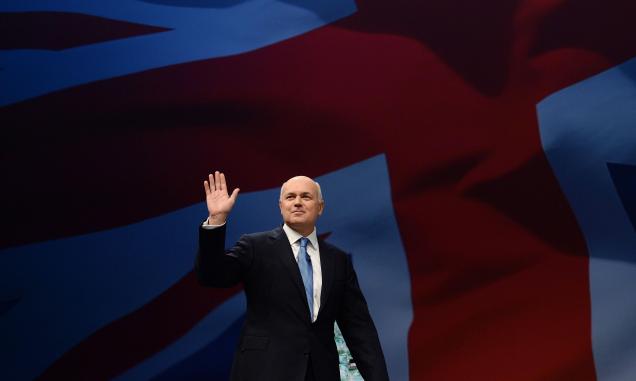
There is a telling line in James Kirkup’s excellent, fair assessment of the full context behind Iain Duncan Smith’s resignation:

The Prime Minister has already done things that will underpin his eventual legacy: winning the Scottish independence referendum and the general election.

Kirkup probably meant this as praise, but in reality it is the most damning indictment of the current conservative government imaginable – far worse than anything that Iain Duncan Smith said in his resignation letter.

Because it is quite true – some of the greatest accomplishments of David Cameron and his core team of loyalists since 2010 are avoiding having the country disintegrate on their watch, and managing to win a second general election against a historically weak Labour leader pursuing a transparently flawed strategy. If the bar for success in British government has truly been set so low then we are in real trouble.

But David Cameron is not a visionary leader. He came to power in 2010 promising to get Britain through difficult economic times, and was re-elected in 2015 promising to be a reasonably competent Comptroller of Public Services. And to be fair to the man, he never really promised to be a great statesman or a formidable world leader.

Being a doggedly centrist technocrat is all well and good, but eventually people quite rightly start to ask what your government is for, besides acquiring the reins of power and then keeping hold of them for as long as possible. David Cameron’s best answer – the main headline from the Conservative Party’s 2015 general election manifesto – was that we should vote Tory because they have a “plan for every stage of your life“.

Nobody within the Conservative Party seemed to care that this sounded alarmingly socialist and suggestive of the Nanny State – people craved security above freedom, it was believed, and so that’s what would be promised and delivered. More of the status quo, whether the status quo worked well or not.

In other words, as this blog has long been saying and my Conservatives for Liberty colleague Paul Nizinskyj has now eloquently written, David Cameron’s role model is far more the steady pair of hands in tough times rather than the visionary, bloody minded reformer – more Ted Heath than Margaret Thatcher.

I won’t lie: my first reaction on hearing the news that Iain Duncan Smith – who together with Michael Gove is one of the few Conservative heavyweights left with any discernible core conviction – had finally snapped and told George Osborne exactly what to do to himself was “great – anything to make the smug little cretin sweat”.

Because George Osborne is David Cameron with less charisma. And since David Cameron has almost no charisma of his own, that puts George Osborne well into negative territory. Given the fact that his blunders (the Omnishambles Budget, tax credits, PIPs) have done as much to colour the political landscape as his “victories”, I also find his reputation as a master political strategist to be hugely overinflated.

If running to the political centre by jettisoning core conservative principle by adopting left-of-Labour policies like a £9 minimum wage counts as political genius then sure – anybody who can successfully cross-dress as a politician from a different party to pick off some extra votes is a master strategist. But it makes George Osborne a lousy conservative.

Not everything in Osborne’s budget was wrong. Should the thresholds for tax brackets move upwards with inflation? Ideally yes, they should do so every year to neutralise the effect of fiscal drag. But to package measures such as this with reductions in the Personal Independence Payments to hundreds of thousands of disabled people is frankly idiotic.

In some ways, this is emblematic of the ridiculous nature of the Budget spectacle, a choreographed event which encourages the Chancellor of the Exchequer to play god with other minister’s departments, either stealing their flagship ideas (as with academies) or otherwise presenting them out of context. But it also speaks to this government’s utter failure to enact a bold, coherent and unapologetically conservative agenda.

Janet Daley sums it up perfectly:

Mr Osborne’s reputation as a tactical political genius has gone south too. Maybe that’s been the problem all along: his understanding of politics was all about tactics – about messaging and grids, presentational gloss and re-branding – and had nothing to do with fundamental, irreconcilable principle. I am prepared to guess that he quite literally does not understand politicians who are prepared to risk everything for an idea, a conviction: a personal moral mission.

He thinks that they are bloody-minded and naive, with no comprehension of the modern science of winning elections. But that, it seems, is not what the people believe: they are beginning to think that their leaders should stand for something, should have a fundamental sense of what they are in politics for. It’s what they call “authenticity”, and it could turn out to be more of a winner than all the clever marketing techniques in the world. Imagine that.

I understood what Michael Gove was trying to accomplish at Education. And I get what Iain Duncan Smith was wrestling with at the Department for Work and Pensions, and admire his semi-successful efforts to get people into work, and to make that work pay more than dependency on the state. Unlike many others who write sanctimoniously but ignorantly about the issue, I have witnessed the welfare state up close, and seen exactly what our “compassionate” system is capable of doing to people when the dead-eyed state machine is responsible for their lives.

I get all of that. But I have no idea what David Cameron is trying to accomplish as prime minister, or what George Osborne thinks he is doing at the Treasury. Because it certainly isn’t paying down Britain’s debts, as they both like to claim. Nor is it guarding Britain’s sovereignty and place in the world – Cameron has gutted Defence, and is in the process of tricking the British people into voting to remain in what he falsely claims to be a “reformed” European Union.

Neither Cameron or Osborne are motivated by the desire to roll back the state and make the British people more free – their heavy-handed government is all for ever-greater restrictions on both ancient and recent hard-won civil liberties, and is seemingly anxious to sacrifice what freedom we have left upon the altar of “national security”.

There is almost nothing about shrinking the state and expanding personal liberty in this government. But there are lots of policies – cutting state spending on the poorest and weakest in society while continuing to lavish stage largesse on wealthy older people (through non-means tested benefits and the lack of a housing supply policy to benefit the young) – which play right into Labour’s hands, making the Tories (and those who support them) look like nothing more than selfish, grubby opportunists, lining the pockets of the already wealthy while others suffer.

In short, I don’t know what this Conservative government is for, besides trying to stay in power and preventing Labour from stealing it. And apart from the work he was doing in his own department, I suspect that Iain Duncan Smith didn’t know either, no matter how much obligatory praise he heaped on Cameron in his resignation letter.

So I cannot do anything but endorse Iain Duncan Smith’s decision to quit. The final straw was no doubt Downing Street’s insistence that Duncan Smith come out all guns blazing in defence of the welfare cuts in the Budget, while simultaneously planning to walk back the proposals themselves – making IDS look like the crazed ideologue and Cameron / Osborne as the calm voices of reason. Who would want to stick around to be treated in that way?

And if Iain Duncan Smith’s resignation destabilises the government – so what? We currently have a nominally conservative prime minister who is busily enacting Tony Blair’s fourth term of office. We effectively already have a Labour prime minister – or a New Labour one, at least.

Maybe an improbable defeat to Jeremy Corbyn’s Labour Party – or a good scare, at least – is the shock the Tories need to dig deep and find a real conservative leader.


Postscript: Iain Duncan Smith’s full resignation letter – which this blog believes was far too generous and courteous – is shown below.

I am incredibly proud of the welfare reforms that the government has delivered over the last five years. Those reforms have helped to generate record rates of employment and in particular a substantial reduction in workless households.

As you know, the advancement of social justice was my driving reason for becoming part of your ministerial team and I continue to be grateful to you for giving me the opportunity to serve. You have appointed good colleagues to my department who I have enjoyed working with. It has been a particular privilege to work with excellent civil servants and the outstanding Lord Freud and other ministers including my present team, throughout all of my time at the Department of Work and Pensions.

I truly believe that we have made changes that will greatly improve the life chances of the most disadvantaged people in this country and increase their opportunities to thrive. A nation’s commitment to the least advantaged should include the provision of a generous safety-net but it should also include incentive structures and practical assistance programmes to help them live independently of the state. Together, we’ve made enormous strides towards building a system of social security that gets the balance right between state help and self help.

Throughout these years, because of the perilous public finances we inherited from the last Labour administration, difficult cuts have been necessary. I have found some of these cuts easier to justify than others but aware of the economic situation and determined to be a team player I have accepted their necessity.

You are aware that I believe the cuts would have been even fairer to younger families and people of working age if we had been willing to reduce some of the benefits given to better-off pensioners but I have attempted to work within the constraints that you and the chancellor set.

I have for some time and rather reluctantly come to believe that the latest changes to benefits to the disabled and the context in which they’ve been made are a compromise too far. While they are defensible in narrow terms, given the continuing deficit, they are not defensible in the way they were placed within a Budget that benefits higher earning taxpayers. They should have instead been part of a wider process to engage others in finding the best way to better focus resources on those most in need.

I am unable to watch passively whilst certain policies are enacted in order to meet the fiscal self imposed restraints that I believe are more and more perceived as distinctly political rather than in the national economic interest.

Too often my team and I have been pressured in the immediate run up to a budget or fiscal event to deliver yet more reductions to the working age benefit bill. There has been too much emphasis on money saving exercises and not enough awareness from the Treasury, in particular, that the government’s vision of a new welfare-to-work system could not be repeatedly salami-sliced.

It is therefore with enormous regret that I have decided to resign. You should be very proud of what this government has done on deficit reduction, corporate competitiveness, education reforms and devolution of power. I hope as the government goes forward you can look again, however, at the balance of the cuts you have insisted upon and wonder if enough has been done to ensure “we are all in this together”.


Iain Duncan Smith

Agree with this article? Violently disagree? Scroll down to leave a comment.

Follow Semi-Partisan Politics on TwitterFacebook and Medium.