Ian McEwan On Identity Politics

Ian McEwan

Only this immensely privileged generation of students can afford the luxury of being Social Justice Warriors

In the course of an interesting interview with the Guardian’s Decca Aitkenhead promoting his new novel “Nutshell”, author Ian McEwan digresses on the subject of identity politics.

From the feature article:

“Where I get a little critical of it is where selfhood becomes all of your politics, in a world in which we are more troubled than at any point I can remember in my adult life.”

Do identity politics look like decadent narcissism to him? “It feels like that, coming to the university aspect of it. These children have grown up in an era of peace and plenty, and nothing much to worry about, so into that space comes this sort of resurgence that the campus politics is all about you, not about income inequality, nuclear weapons, climate change, all the other things you think students might address, the fate of your fellow humans, migrants drowning at sea. All of those things that might concern the young are lost to a wish for authority to bless them,” he says, “rather than to challenge authority.”

My emphasis in bold.

Doesn’t that just perfectly sum up the Cult of Social Justice and Identity Politics? A generation of students raised at a time of great material abundance, peace and prosperity arrive at university to find most of the great injustices of the past already slain by previous generations of campaigners. Bereft of purpose but still feeling the strong student urge to embrace a cause, they crank up their sensitivity settings to perceive any slight or inequity, however small or unintentional, to be evidence of the systematic oppression of one or more classes of prescribed victim groups.

McEwan’s last sentence is particularly profound – the idea that today’s young people no longer rail against authority in the way that student activists of old did, but rather make tear-stained appeals to authority figures to intercede on their behalf. This is the victimhood culture, clearly distinct from an honour culture (which would encourage the individual to stand up to minor sleights or “microaggressions” and confront the issue themselves) or a dignity culture (which would only sanction involving authorities in case of grave injury).

In contrast with honour cultures and dignity cultures, victimhood culture encourages the individual to exaggerate their own vulnerability and the “harm” which other have inflicted in them through careless words or gestures, and to seek redress from external authority figures not as a last resort but as the first and default option.

Sadly, our generation is primed for this culture. We millennials have often been raised from birth to believe that we are unique, precious and perfect snowflakes worthy of praise and validation from dawn til dusk, that sticks and stones may break our bones but mere words can kill us stone dead, and that there is no greater goal in life than self-actualisation – living life according to our every passing whim, based on an “identity” we create for ourselves which is declared by Social Justice Warriors to be above any questioning, reproach or criticism.

In fact, I’m certain I made the very same point as Ian McEwan on this blog not long ago:

This is an attempted coup by an utterly coddled and spoiled generation of students who know almost nothing of hardship, deprivation or prejudice compared to their predecessors even just a few decades ago.

These tinpot student dictators arrive on campus at the age of eighteen to find most of the really hard battles already won for them – ironically, by genuinely brave radicals like Germaine Greer and Peter Tatchell. But these students must find some outlet for their youthful “idealism”, and so they latch on to the growing Politics of Identity, assimilating its intricacies and genuinely persuading themselves of its core message – that what matters is not the content of one’s character, but rather one’s arbitrary lived experience as a member of a defined and segregated subgroup.

And so rather than simply accepting that they have it rather good, even compared to their parents and grandparents, these student snowflakes go on the march. They find ever-smaller slights or “microaggressions” and protest them ever-more loudly and hysterically in an attempt to assert power over university administrations – many of which meekly submit without so much as putting up a fight.

Throw in the fact that their social hierarchy is based on a purist adherence to the Politics of Identity – with members gaining social currency for flaunting their own tolerant nature or identifying and persecuting anyone whose behaviour happens to violate one of the many invisible lines restricting our speech and behaviour – and you have a potent and deadly combination.

I have always been a fan of Ian McEwan‘s novels. Saturday was edgy, evocative and incredibly well researched, Solar was inventive and at times hilarious, On Chesil Beach made a four-hour flight from Cyprus to London so exquisitely awkward that I wanted to blow the emergency exit and jump out of the aircraft while The Children Act remains shamefully unread on my bookshelf, part of an ever-growing backlog.

But I also admire McEwan’s forthrightness and willingness to speak his mind rather than toe the establishment line on all social matters. McEwan recently caused a ripple of scandalised headlines when he questioned whether people should be free to choose their gender identity:

In a speech to the Royal Institution, the Booker prize-winning writer asked whether factors such as biology and social norms limited our ability to adopt a different gender.

“The self, like a consumer desirable, may be plucked from the shelves of a personal identity supermarket, a ready-to-wear little black number,” McEwan said. “For example, some men in full possession of a penis are now identifying as women and demanding entry to women-only colleges, and the right to change in women’s dressing rooms.”

In a Q&A after his speech, one woman asked McEwan, 67, to clarify what she called his offensive remarks, the Times reported. “Call me old-fashioned, but I tend to think of people with penises as men,” he said. “But I know they enter a difficult world when they become transsexuals and they tell us they are women, they become women, but it’s interesting when you hear the conflict between feminists now and people in this group.

“It’s quite a bitter conflict. Spaces are put aside, women are wanting to put spaces aside like colleges or changing rooms, and find from another side a radical discussion coming their way saying men who want to feel like it can come in there too. I think it’s really difficult. And I think there is sweeping through American [university] campuses a kind of strange sense of victimhood and a sense of purposeful identities that we can’t actually all of us agree with. Of course sex and race are different, but they also have a biological basis. It makes a difference whether you have an X or Y chromosome.”

Cue the kind of response one has come to expect when anybody dares to give voice to such thoughtcrime.

His new novel, Nutshell, is narrated from the perspective of a foetus still in the womb, and is likely to raise all kinds of hackles from staunch free right campaigners and militant free choice protesters alike.

But on the Cult of Social Justice and Identity Politics, McEwan hits the nail on the head. How different the university campus must seem to him now than it was when he was a student. One wonders whether McEwan would even be allowed to set foot on the campus of the University of East Anglia in Norwich, where he received his Masters in creative writing – the university has received a “red” rating in Spiked’s annual university free speech rankings.

Certainly McEwan, one of UEA’s most distinguished alumni, would never be welcome at the Students’ Union with its blanked restriction on “imagery or language which reinforces a gender binary”. Having expressed his own personal views on the subject of transgender issues, McEwan’s presence would clearly create an oppressive and highly unsafe space for the delicate flowers now following in his footsteps.

What’s really concerning is this: Ian McEwan is now something of a grandee in Britain’s cultural scene, yet even he was ultimately forced to apologise for airing his own personal views on transgenderism, effectively reversing his earlier statement under duress and confessing “biology is not always destiny” and that a person’s decision to change their gender must be “celebrated”.

If one of Britain’s most successful and respected authors cannot hold a contrary or agnostic position on hot-button social justice issues where conformity without exception is demanded and expected, what hope is there for new, up-and-coming artists or academics to question the new orthodoxy or admit to holding an unpopular opinion? Who will be rash enough to dynamite their own career before it has gotten off the ground  by admitting their heresy or reflecting it in their work?

And what future for the rich and vibrant British artistic and cultural scene when the Social Justice Warriors finally get their way and browbeat everybody in the land into thinking, saying and “celebrating” the same things?

 

Ian McEwan - Transgender comments

Bottom Image: Guardian

Support Semi-Partisan Politics with a one-time or recurring donation:

Agree with this article? Violently disagree? Scroll down to leave a comment.

Follow Semi-Partisan Politics on TwitterFacebook and Medium.

Music For The Day

Thank you for the music

The late Leonard Bernstein, whose 98th birthday would have been today, conducting Candide Overture from a concert performance of Candide with the London Symphony Orchestra and Chorus, recorded in December 1989.

This performance took place just a few short years before I started the first of many pilgrimages to the Barbican Centre to see the LSO perform. Many faces in the orchestra, some sadly now departed, are familiar to me.

Leonard Bernstein is one of my heroes – an exuberant man brimming over with talent and energy, someone who knew exactly what he wanted to do with his life, and who got on and did it: making music in all its glorious forms.

A rich life truly lived, and an unparalleled contribution made to American music, including some of the 20th century’s most achingly beautiful.

Happy birthday, Maestro.


Leonard Bernstein

Follow Semi-Partisan Politics on TwitterFacebook and Medium.

Sincere Congratulations To The Spectator For Their All-Women Cover Issue

Fraser Nelson - The Spectator - Westminster Media - Journalism

A brief rant before normal service resumes…

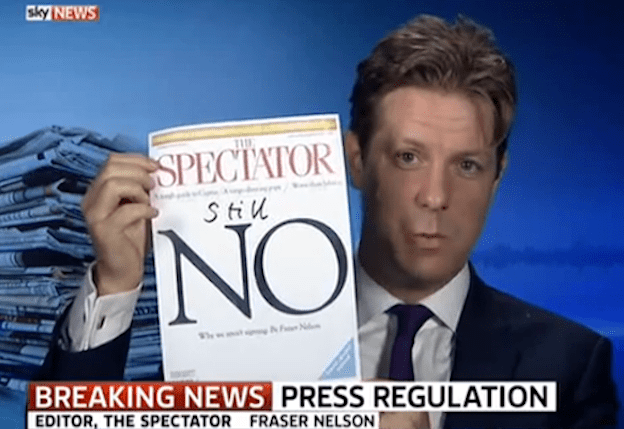
The Spectator editor Fraser Nelson today felt the need to publish a self-congratulatory humblebrag remarking on the fact that their latest print edition’s cover page apparently features only the work of female writers, despite no conscious decision having been made to indulge in affirmative action.

Nelson gushes:

Just before The Spectator went to press yesterday, my colleague Emily Hill pointed out that I’d just taken away the only male name away from the cover: all seven of our coverlines were stories written by women. Did I really want that? I hadn’t thought about it until then, and for a while I did consider engaging in tokenism and slapping a man on for the sake of it. But why bother? Spectator readers don’t really care about gender, just good writing.

In fact it hadn’t occurred to any of us, until that point, that we were about to run what Ariane Sherine, who writes our cover story, today hails as the first all-woman cover in The Spectator’s 188-year history. But this wasn’t a patronising attempt at a ‘wimmin’s issue’ or some other awful tokenistic wheeze. Our all-women cover wasn’t deliberate, it was just the way the cards fell. Each week we want to get the best writers on the most original topics: this week, they all happened to be women.

That’s not to say there’s no difference when it comes to getting hold of good writers. As Emily will tell you, women don’t put themselves forward as much as men. To get the full range of talent from all available writers can mean people like Emily going to great lengths to find and encourage new writers – like Ariane Sherine. As so often, Fleet Street follows up. As I write, two national newspapers are vying for the right to republish her cover story.

Full disclosure: I have a bit of a beef with lead article author Ariane Sherine (a one-sided affair; she, I’m sure, has no idea who I am) following her previous effort for The Spectator, an appallingly condescending report about how she performed a comedy gig in the heart of UKIP-supporting coastal Essex and somehow, miraculously, was not ripped to shreds by the rabidly racist, evil Brexiteers who dwell there.

It is interesting, too that Sherine (and apparently other women writers published in The Spectator) had to be sought out, coaxed and persuaded to write for the venerable magazine because “women don’t put themselves forward as much as men”. Funny, that. I, a despicably privileged man, have pitched to The Spectator before – it was actually a terrible piece from a few years back when my writing was very green, not at all worth publishing – but then I never had the pleasure of being sought out and implored to honour The Spectator’s readers with the fruits of my keyboard. That must be quite a nice feeling.

I don’t normally do this, but let’s just muse on the topic of gender equality for a moment, particularly as it relates to journalism. Regular readers will know that I spent pretty much every spare moment of the past year campaigning for Brexit in the EU referendum, initially rather haphazardly but (I hope) increasingly coherently as I read Richard North’s peerless eureferendum.com blog, learned about Flexcit and fell in with The Leave Alliance. I claim zero credit for any of the specific ideas this blog has supported around Brexit and the future of international trade – my tiny bit part in this effort consisted merely of standing on the shoulders of giants, particularly Richard North and Pete North, whose technical mastery and polemical writing I admire enormously.

The point, I suppose, is this. For some time now, a group of independent, citizen bloggers have churned out consistently better analysis and commentary on the EU referendum and Brexit on any given day than the mainstream media has given the British people in an entire year. Even now, dim-witted publications like the Guardian and FT are scrambling to catch up and think through some of the ramifications and issues which the people in my circle have been writing about for months. And what mention or recognition has this work prompted from the Westminster media? How many links to our widely-read and shared articles have appeared in mainstream outlets like The Spectator?

I think you know that the answer is zero.

Now, you don’t have to rate Semi-Partisan Politics at all – though I am personally quite frustrated, this issue is much bigger than little old me. But doesn’t it seem slightly odd that the entire Westminster media managed to somehow overlook the hard work of a small army of pro-Brexit bloggers on the biggest political issue to face Britain, just when fresh analysis was sorely needed, and yet The Spectator has time to scour Britain at great length for underappreciated female talent to promote to the front page?

Fraser Nelson claims that The Spectator’s all-women front page was entirely accidental, and I take him at his word. But isn’t it telling that this feat was achieved at the height of silly season, the summer recess, when the political news which is the Spectator’s bread and butter is almost entirely absent? When MPs come back from recess and things get serious again, let’s see how many months or years it takes for the next unintentional all-women issue to go to print. My guess is that it will be some while; that when PMQs is back and party conference season gets underway we will be seeing a lot more of James Forsyth, James Delingpole and Rod Liddle on the cover. Just a hunch.

So what was the amazing piece which made the cover of The Spectator anyway, you ask? Well, it was a thrilling exposé of a growing trend among millennials whereby single women stop looking for a suitable man and choose to marry themselves instead.

A snippet:

As far as the bride was concerned, the wedding was perfect. Her dress was beautiful, the vows were traditional and she changed her name after the ceremony. The clifftop scenery was breathtaking, the seven bridesmaids were encouraging and supportive: move over Princess Di. There was only one thing missing: the groom. Like a growing number of single women, Sara Starkström had decided to marry herself.

‘I thought about people marrying other people without loving themselves first,’ says Starkström, a writer, explaining what many would call a bizarre overreaction to finding herself single at the age of 29. ‘How could they pledge to do all this stuff for another person when they couldn’t promise themselves the same thing? I decided to marry myself to celebrate my independence and strength. I did it to promise to be my own best friend.’

[..] While many commentators make scathing judgments about sologamy (the feminist blog Jezebel ran a dismissive piece called ‘Single women, please stop marrying yourselves’, chiding, ‘You should be aware that you’re no trailblazer and you’re sure as hell not thumbing your nose at the system. You’re buying into it’), this hasn’t stopped increasing numbers of women from taking the plunge. For Starkström, self-marriage was a liberating act for which she is quite happy to take all the jokes ‘about me carry-ing myself over the threshold and making love to myself’.

And the thrilling conclusion:

Perhaps this is the crux of the sologamy issue: self-marriage is harmless, cheap compared to the £20,500 average cost of a classic wedding, and the union seems to make the bride very happy. If only the same could be said for the majority of traditional marriages which feature a groom. Princess Diana’s fairy tale fell apart when she found that there were three people in her marriage. Now, for an ever-increasing number of determined modern women, one is more than enough.

This isn’t even original. Even I know – don’t ask me how – that Sex and the City featured a similar storyline nearly fifteen years ago, in which protagonist Carrie Bradshaw decides to marry herself as a way of recouping the money spent on friends’ engagements and replacing an expensive pair of shoes which were stolen at a previous party. This kind of story is “and finally…” fodder on the TV news, not lead article material for The Spectator.

This may be silly season, but British politics is hardly dull at present – we have the ramifications of the EU referendum result to pick through, and the slow-motion car crash that is the Labour Party’s self-destruction, while America continues to wrestle with the Donald Trump phenomenon. In these circumstances, I’m sorry to say that Sherine’s story about sologamy has more than a whiff of affirmative action about it.

Before the inevitable feminist lynching begins, another disclaimer: I have long believed that The Spectator’s Isabel Hardman is the outstanding political journalist of her generation and, based on my couple of conversations with her, a genuinely nice person in the SW1 bubble. If The Spectator had ten Isabel Hardmans on staff, I wouldn’t expect a male-written cover story any more than once a year. It shouldn’t be necessary, but I want to put any idea that this rumination is some alt-right, anti-woman rant quickly to bed.

Note too that even when quoting the established feminist blog Jezebel, The Spectator fails to provide a link to the article Sherine cites by name. This is how unwilling the establishment British media are to share readers, clicks and opportunities. It is selfishness beyond measure, and is ultimately counterproductive – the American political blogosphere grew and thrives today not only because bloggers link to one another, but because there is a dialogue between what were traditionally the “legacy” print media outlets and alternative voices.

Readers aren’t forever lost to a publication which dares to link. In fact, readers often respect the original source all the more as a curator of other worthwhile information across the internet, thus increasing their loyalty. Maybe this doesn’t easily show up in the monthly SEO and web traffic reports which now seem to drive all media behaviour – and which have turned the Telegraph from a respectable broadsheet to a sensationalist purveyor of clickbait – but it is a real factor nonetheless. My own personal blogging hero, Andrew Sullivan, built the most influential political blog in history based entirely on this philosophy of curating the web for his readers and also providing fresh commentary which was picked up by the legacy media.

To this day, if there is a worthwhile piece of commentary or analysis on an American political blog, it is not unusual to see it linked to in a piece by an “establishment” journalist on the staff of, say, the New Republic or the National Review. Semi-Partisan Politics has been cited in the National Review a couple of times, a courtesy not once extended by any major British publication, and this despite the fact that 80 per cent of this blog’s output concerns UK rather than American politics.

So how should the British media interact with the blogosphere and promote new talent? Well, call me old fashioned but I believe that a simple commitment to meritocracy can’t go far wrong. Sure, The Spectator will always hire the likes of Pippa Middleton to write vacuous society guff about hunting for truffles in their Christmas issue, and that’s fine. But when it comes to political coverage, one wishes that established British publications would at least pretend to aspire to genuine meritocracy, seeking out the best analysis and commentary regardless of race or gender rather than indulging as they do in flagrant nepotism on the one hand and leftist affirmative action on the other.

I’ll speak plainly, because it’s better than dancing around the issue, from my perspective as someone no longer in the first flush of youth trying to build an audience and reputation as a writer. It is frustrating to pour every spare minute into this blog, providing (I dare to hope) sometimes original and refreshing commentary – particularly I think on the 2015 general election, the ongoing Labour leadership saga, free speech or academic freedom issues and the EU referendum – and see what is  objectively weaker commentary from nepotism beneficiaries or the obvious fruits of affirmative action benefit from a prestigious platform, greater recognition, and – oh yes, from monetary reward too. It’s just a little bit hard to take day after day.

I could play the minority card too, if I wanted to talk up my BAME working class background, but I would never compromise my principles by demanding that I be given a platform based on who I am rather than what I have to say. I won’t go there – it would be a violation of everything that this blog stands for. Others sadly seem happy to do so.

I write because I love to write, and because I think I have slowly created something quite small but precious here at Semi-Partisan Politics; because I have a small readership whom I love to serve, write for and debate with; because it is better than ranting into Facebook 24/7 as I used to before I opened a WordPress account. But sometimes it is a bit galling to see an inferior product exalted and given prominence when I and several of my good writer friends toil in obscurity.

Building a reputation and audience as a writer should be hard – it rightly takes time, effort, humility and perseverance. It has taken me over four years to even begin to get a sense of who my audience is / should be, and how best to serve them – and I claim no special skill at what I do, only a great deal of enthusiasm for it. But whether it is Twitter interactions, links to my site or other interactions, the amount of support I have received from American journalists and publications on the other side of the Atlantic vastly exceeds what little help or hand up I have ever received from the British media class – despite the fact that at least 80 per cent of my written output, networking and outreach efforts are focused on British politics and the Westminster media.

And I think British journalists and editors should be made to feel a little bit ashamed of that fact. Not for my sake – I’ll be just fine, and 95 per cent of the time I am happy to keep plugging away without a murmur of complaint. They should feel shame because my situation is far from unique, and because there are writers in my acquaintance whose insight, bravery and raw talent would enrich our country’s entire political discourse if only it had the bully pulpit it deserves.

The Westminster media establishment should be ashamed because the way they seek out and promote writing talent fails the British people, serving them an often substandard and derivative stream of written output and unoriginal thinking from the pens of the well-connected (either by parentage or ability to fill the checkboxes of a Diversity Officer’s form) while effectively pretending that the struggling political blogosphere – the primary outlet for so many talented, aspiring writers – doesn’t even exist, and certainly not as a source worthy of links or interaction.

Okay, rant over. I don’t have the energy to bring this piece to a neat end.

Normal business will now resume. Read it here first, or three months later from someone who gets paid to do this kind of thing.


Political Blogging 2

Top Image: The Spectator / Sky News

Support Semi-Partisan Politics with a one-time or recurring donation:

Agree with this article? Violently disagree? Scroll down to leave a comment.

Follow Semi-Partisan Politics on TwitterFacebook and Medium.

Tales From The Safe Space, Part 40 – The University Of Chicago Fights Back

University of Missouri - Mizzou Hunger Strike

Yes, some things – like academic freedom – are more important than the delicate feelings of new undergraduate students. Kudos to the University of Chicago for making their incoming freshman class aware of that hard fact up front.

In a refreshing contrast to the usual depressing tales of faculty capitulations to the whining, self-involved voices of the Cult of Social Justice and Identity Politics, the University of Chicago decided to make a bold stand for academic freedom.

From Heat Street:

The University of Chicago, one of America’s most prestigious and selective universities, is warning incoming students starting this fall not to expect safe spaces and a trigger-free existence during their four-year journey through academia.

In a letter sent to the class of 2020, university officials said one of the defining characteristics of the school was its unwavering commitment to freedom of inquiry and expression. Civility and mutual respect are vital to the campus culture, the letter states, but not at the expense of shielding students from unpopular opinions or ideas.

“Our commitment to academic freedom means that we do not support so-called “trigger warnings,” we do not cancel invited speakers because their topics might prove controversial, and we do not condone the creation of intellectual “safe spaces” where individuals can retreat from ideas and perspectives at odds with their own,” the letter states.

Expect the University of Chicago to be rewarded for their courage and integrity through greater application and enrolment numbers, as well as higher levels of achievement from the incoming undergraduate class as those delicate snowflakes too enraptured by their own vulnerability and completely unable to process dissenting opinions decide to study at other, more large-L liberal schools.

Already we have started to see a backlash against those institutions and university leaderships which are too quick to capitulate to petulant SJW demands to alter the curriculum, suppress free speech, disinvite conservative speakers and turn the campus from being a place of fearless debate to one of infantilising self-affirmation and victimhood.

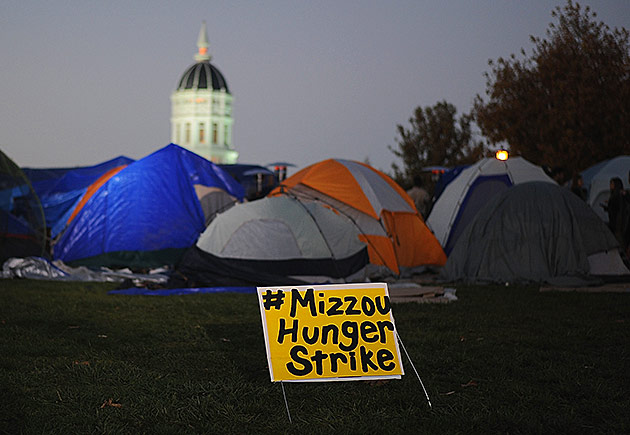
The University of Missouri, roiled by campus protests last year in which marauding Social Justice Warriors forced the resignation of the university president for failing to treat black students like helpless victims, has seen its enrolment and profitability fall off a cliff. Good. If there is any justice, enrolment at Mizzou will dwindle until there is nothing left but tumbleweeds and the shrieking activists who drove out reason from a place of learning. And closer to home, the University of Oxford’s Oriel College had to frantically appease angry alumni donors who were ready to cancel their donations to the college in protest at Oriel’s limp capitulation to the Rhodes Must Fall movement.

In this very “Tales From The Safe Space” series, we have previously highlighted other examples of academic institutions standing up to their crybully students rather than rolling over and letting them seize control – the uncompromising example set by Dr. Everett Piper, president of Oklahoma Wesleyan University, is particularly encouraging.

As Dr. Piper memorably warned his students:

If you’re more interested in playing the “hater” card than you are in confessing your own hate; if you want to arrogantly lecture, rather than humbly learn; if you don’t want to feel guilt in your soul when you are guilty of sin; if you want to be enabled rather than confronted, there are many universities across the land (in Missouri and elsewhere) that will give you exactly what you want, but Oklahoma Wesleyan isn’t one of them.

At OKWU, we teach you to be selfless rather than self-centered. We are more interested in you practicing personal forgiveness than political revenge. We want you to model interpersonal reconciliation rather than foment personal conflict. We believe the content of your character is more important than the color of your skin. We don’t believe that you have been victimized every time you feel guilty and we don’t issue “trigger warnings” before altar calls.

Oklahoma Wesleyan is not a “safe place”, but rather, a place to learn: to learn that life isn’t about you, but about others; that the bad feeling you have while listening to a sermon is called guilt; that the way to address it is to repent of everything that’s wrong with you rather than blame others for everything that’s wrong with them. This is a place where you will quickly learn that you need to grow up.

And flatly reminded them:

This is not a day care. This is a university.

A long-overdue reminder for some students.

And so the University of Chicago’s stand against the SJWs did not happen in isolation; nor was it possible without a rigorous examination of the negative trends in campus life and the various ways in which academic freedom is under attack. And that is precisely what they did – back in 2014 the university commissioned a report on the state of freedom of expression at universities nationwide and reaffirming their own commitment to the timeless value of free speech over and above any passing social fashion.

From the report (my emphasis in bold):

Because the University is committed to free and open inquiry in all matters, it guarantees all members of the University community the broadest possible latitude to speak, write, listen, challenge, and learn. Except insofar as limitations on that freedom are necessary to the functioning of the University, the University of Chicago fully respects and supports the freedom of all members of the University community “to discuss any problem that presents itself.”

Of course, the ideas of different members of the University community will often and quite naturally conflict. But it is not the proper role of the University to attempt to shield individuals from ideas and opinions they find unwelcome, disagreeable, or even deeply offensive. Although the University greatly values civility, and although all members of the University community share in the responsibility for maintaining a climate of mutual respect, concerns about civility and mutual respect can never be used as a justification for closing off discussion of ideas, however offensive or disagreeable those ideas may be to some members of our community.

[..] In a word, the University’s fundamental commitment is to the principle that debate or deliberation may not be suppressed because the ideas put forth are thought by some or even by most members of the University community to be offensive, unwise, immoral, or wrong-headed. It is for the individual members of the University community, not for the University as an institution, to make those judgments for themselves, and to act on those judgments not by seeking to suppress speech, but by openly and vigorously contesting the ideas that they oppose. Indeed, fostering the ability of members of the University community to engage in such debate and deliberation in an effective and responsible manner is an essential part of the University’s educational mission.

And it is that last part which presents such a challenge to many of today’s students – young people today are not only arriving at university unable to tolerate let alone contest ideas which they oppose, they are outraged at the very suggestion that they should learn to cope in such a way.

And not entirely through their own fault, for mine is a snowflake generation raised to believe that we are special, unique, perfect and above any reproach which might damage our self-esteem. We are taught not that sticks and stones may break our bones but words will never hurt us, but rather that sticks and stones may break our bones but words can kills us stone dead.

From early childhood education on upward we are taught that hurting someone’s feelings is just as bad – if not worse – than physically assaulting them. And all the while we are told to present our tear-stained faces to the relevant authorities the moment that somebody upsets us, so that they can receive their just punishment. We are not taught self sufficiency, resilience and the power of reason, but rather are encouraged to exalt in our weaknesses and wear our fragility like a badge of honour.

Little wonder, then, that when my generation reach university and fall under the intoxicating presence of the Cult of Social Justice and Identity Politics (student protests always appearing edgy and cool, but this incarnation representing a dangerous shift in attitude and tactics) so many of us immediately buy in to the idea that our personal worldview and beliefs are never to be questioned.

The University of Chicago alone cannot do anything about the way that people in the English-speaking Western world raise their children or educate them at a young age. They cannot challenge the toxic rise of baby-centred parenting, where parents and adults contort themselves to conform to the whims and sensitivities of their historically pampered children rather than promoting respect, deference and anti-fragility. The University of Chicago is but one academic institution facing a tidal wave of consequences from years of bad parenting, educational and child-rearing trends in society.

But what the University of Chicago can do – what they did do, admirably – is boldly restate who and what they are as an organisation, and what they stand for as an institute of higher education. They can boldly restate their commitment to the timeless values of academic freedom, and the fostering of personal and intellectual growth through robust debate and the free exchange of views. They can tell their incoming freshmen that no matter how accustomed they are to getting gold stars simply for participating, or demanding positive affirmation of even their most questionable decisions, the days of coddling will end the moment they set foot on campus.

This is what the University of Chicago did. This is what every university in America, Britain and the entire English-speaking world needs to do now if they are to avoid regressing into nothing more than adult daycare centres where the Play-Doh and puppy videos are piled high while challenging books burn in a pyre outside the library.


Safe Space Notice - 2

Top Image: Sports Illustrated, Michael B. Thomas/Getty Images

Support Semi-Partisan Politics with a one-time or recurring donation:

Agree with this article? Violently disagree? Scroll down to leave a comment.

Follow Semi-Partisan Politics on TwitterFacebook and Medium.

NHS Heresy, Part 1

NHS RIP

Instituting a new feature on this blog, highlighting those rare, brave souls who dare to stick their heads above the parapet and suggest that Our Blessed NHS (genuflect) is no longer a sustainable model for delivering top quality healthcare to the British people

The Telegraph’s Jeremy Warner says the unsayable:

In a tax-funded health care system, the normal, self-limiting rules of supply and demand don’t apply. Where the service is perceived to be essentially “free”, demand can never be sated; it will just keep on growing until it breaks the system.

Three new elements have entered the equation in recent years to make an already grave situation much worse. One is the advent of mass communications. As people become more aware of potential threats to their health, and what treatments might be available to counteract them, they expect better and demand more.

Second, society is ageing. Most health care costs are incurred in the latter stages of life. Current demographics are delivering a double blow; more people are both moving into the high cost cohorts, and once in, they are surviving much longer than they used to.

And finally, there is the ceaseless march of technology, including the advent of “personalised medicine”, procedures and or treatments tailored specifically to the patient’s individual genome. Over time, this approach to medicine ought to become cheaper. It also already promises to make some existing and extremely expensive, treatments obsolete. But right now, it only piles on the costs. A personalised service is also quite alien to the NHS’s culture of uniformity. Even applying it will require radical change, never mind the small matter of how to pay for it.

Warner concludes, hopefully:

If the NHS was ever the “envy of the world” described by popular myth, it has long since ceased to be so. None of this is to denigrate those who work selflessly against the odds in British health care for the betterment of the UK public. It is merely to point out that the post-war model of funding no longer works and needs a radical overhaul. It would be a brave Prime Minister who questioned this sacred cow, but with meaningful Labour Party opposition all but vanished and the challenges and opportunities of Brexit likely to force change across the policy landscape, there could scarcely be a better time for some radical thinking than now.

This blog has no such optimism. Theresa May has earned her reputation as a somewhat traditionalist authoritarian for a good reason. She is already making noises about opening more grammar schools, thus establishing the new prime minister as a reinforcer of traditions rather than a slayer of sacred cows.

And the NHS, having passed its 68th birthday, is not just a British tradition – it is the British tradition, more integral to who we think we are as a people than Wimbledon, red telephone boxes or the Queen. You will see the monarchy abolished in this land before you see a system of private healthcare replace Our Precious NHS, at least under this government.

More to the point, Theresa May’s government already has its semi-competent hands full coming to terms with the scale of the challenge presented by Brexit. Unlike some of the cowboys in Vote Leave or Leave.EU, this blog never pretended that Brexit would be easy, and Theresa May’s Foreign Secretary and ministers for trade and leaving the EU are just now beginning to realise this fact.

Successfully negotiating the scoping of Britain’s negotiating position and then managing the initial two-year secession negotiations following the triggering of Article 50 will, whether Theresa May likes it or not, expend just about all of the political energy and capital that her government possesses this side of a general election, even if the Labour Party manages to continue being a slow-motion car crash right through til 2020. There simply will not be enough energy left for the fundamental restructuring of British healthcare, especially in the face of howling opposition from the NHS Industrial Complex, that vast web of vested interests which grows around the world’s fifth-largest employer like ivy on a crumbling building.

Neither has Theresa May shown any great interest in touching the super-charged third rail of British politics in any case. She kept Jeremy Hunt on in his role as Health Secretary, hardly a bold marker of intent to pursue a radically different course of action. Neither does a parsing of May’s past speeches reveal a yearning desire to enact healthcare reform bubbling beneath the cold, authoritarian exterior.

After the 2020 general election and in a post-Brexit environment, things may be different. This blog sincerely hopes that this is so – that Britain, buoyed by the fact that Brexit has (hopefully) been achieved without ushering in the apocalypse, might be in the mood to tackle other big challenges. But here we are on extremely flimsy ground – when nobody can comfortably predict the next month in British politics, it is foolish to daydream about what might possibly happen in four years’ time.

Yet everything that Jeremy Warner writes is true. At best, any government – even an NHS-worshipping Labour government under Jeremy Corbyn- could only paper over the cracks in our healthcare system. Relative performance on key metrics (like cancer survival rates) will continue to drift downwards, further away from our continental rivals, while NHS cheerleaders continue to point to value for money studies which suggest, on paper, that their idol is still the “envy of the world”. And the British people will continue to heap unending, unthinking praise on the NHS, literally killing themselves with their devotion to that giant bureaucracy.

It would nice to be able to write something more optimistic, but at this time there are absolutely zero grounds to expect that the situation will change for the better, short of a major crisis or unexpected political shock.


NHS Logo - Cross - National Religion - Worship - Idolatry

Top Image: Express

Support Semi-Partisan Politics with a one-time or recurring donation:

Agree with this article? Violently disagree? Scroll down to leave a comment.

Follow Semi-Partisan Politics on TwitterFacebook and Medium.