I Will Not Be Intimidated Into Silence By A Mob Capitalising On Tragedy. Sorry.

Ed Rooksby - Twitter Mob - Jo Cox

A quick word before normal business resumes

Anyone wanting to see the dark, ugly side of humanity had only to look at the comments coursing on Twitter last night, following the tragic and senseless murder of the Labour MP for the constituency of Batley and Spen, Jo Cox.

Apparently we are now a country of people who cannot wait six hours without seeking to twist a tragedy into our political advantage; a country where even as the body of the deceased is still warm, some despicable people find a way to make the tragedy about themselves, and to fashion it into a weapon with which to bludgeon their political opponents.

I’m not an idealist, I had a general sense of how things would play out as soon as the awful news was confirmed at the police press conference. But I thought that people might wait at least a day, out of respect, before seeking to capitalise on human tragedy and suffering. I’m not just talking about anonymous people on Twitter. Some of the nation’s leading political commentators piled in on the act – Polly Toynbee and Alex Massie (whom I previously respected) should be utterly ashamed of themselves. I’m sure there are others.

Seeking to use the senseless murder of an MP, of anyone, to smear half the country – young and old, rich and poor, from all social classes and professions, united only by their stance on the EU referendum question – as being somehow vicariously responsible for the act (or for the “mood” of the country, as more slippery columnists put it) is absolutely appalling. I’ve seen some acts of abject intellectual and moral cowardice and assorted low skulduggery during this campaign, but even I was shocked by just how low some people were prepared to go last night.

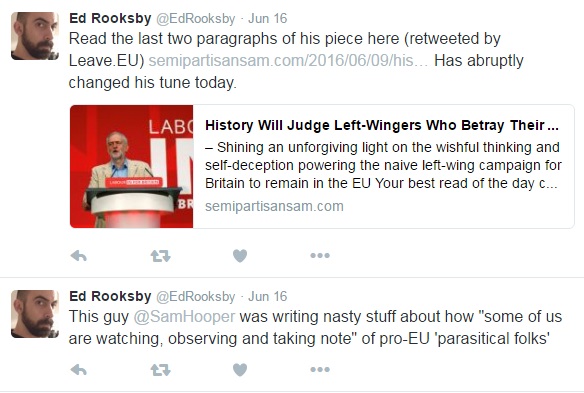
One of these snarling little Moral Policemen tried to come for me, too. A nasty little oik who had been following me for several weeks on Twitter decided to retweet one of my articles, quote from it very selectively and misleadingly to make it seem as though I had been encouraging violence. Anybody who knows me, or who reads this blog, knows this to be an impossibility. My Twitter accuser certainly knew the truth. But no matter – this “fortunate” murder had given him exactly the opportunity he wanted to slander Brexiteers and make us all collectively, vicariously guilty for the act of a madman.

And for about thirty seconds, this Twitter zealot achieved his goal – he aroused fear. Fear that the mob (and anyone who was on Twitter last night will testify as to the mob mentality present at the time) might pick up on this retweet and run with it. It could have happened. My accuser had over a thousand followers, enough to cause a ripple if seen by the right people. And he had just launched an article of mine, disingenuously and maliciously quoted, into the Twittersphere, where reputations can be ruined in 140 characters but no meaningful defence can be conjured within the same constraints.

I’m a part time blogger, with a day job. In my writing about free speech issues I have seen how peoples’ lives and reputations can be ruined by the mob, usually for no good reason at all – see Justine Sacco. And as I saw my accuser’s tweet sitting out there on the internet for all to see, I did wonder if the mob might come for me. And I thought about the potential consequences of being turned on by the mob. They didn’t – his tweet was lost in an ocean of other, more outrageous tweets, as it turned out. But for a good minute, it gave me pause and grounds for concern about my reputation, even my livelihood.

And this is exactly what certain debased elements of the media, commentariat and the general public wanted to happen. Not just to me, but to everyone who is guilty of the “crime” of believing that Britain would be better off outside the European Union, and who dares to say so in public. The mob wanted to point to the murder of Jo Cox and then at us, drawing a connection where patently none existed, and cow us into silence by accusing us of creating the “mood” which made the attack possible – despite nobody possessing the full facts of the case so soon after the attack.

This wasn’t just antisocial losers on Twitter. Their actions had the cover of “prestige” journalists with platforms in The Guardian and The Spectator. The intelligentsia – members of the supposedly civilised dinner party set – are complicit in trying to stoke up a mob and turn it on people who disagree with them about the forthcoming EU referendum.

Well, I’m sorry, but this blog will not be silenced. Nor will I be told by Twitter trolls or champagne socialists in the Guardian that I am in any way responsible for the toxic “mood” which has come to rest on this country. That mood is entirely the fault of the self-serving elites and their media cheerleaders, who have ignored or belittled those with differing opinions for so long that it has indeed provoked a rage – but a nonviolent one; not the rage which killed Jo Cox.

Nor will I be given moral lectures by people who, in the immediate hours following the tragedy, rushed to their keyboards to make political capital out of a young woman’s death. While Alex Massie and Polly Toynbee were rending their garments and wailing into Twitter about how awful we Brexiteers are, I had an evening of calm reflection and reading – after having lit candles for Jo Cox and her family, and for our country, at my local church. But sure, I’m the bad guy because I write passionately about the EU referendum and Brexit.

These snivelling, sanctimonious Moral Police will do anything to silence dissent. They will erect safe spaces or no platform people they dislike. They will make being “offensive” a criminal charge and imprison people. They will harass, bully and attempt to shame people on social media if they do not at all times say the “correct” thing or espouse the proper opinions. And now, when faced with the death of an MP, young woman and mother, they will wait not even a day before seeking to capitalise on the tragedy and use it to silence their dissenters.

This intimidation will not work on me, and I am determined that it will not work on this country. So bring on the slights, the attempted Twitter shamings and the rest of it, you faceless trolls and important members of the commentariat. Your despicable, tawdry tactics shall not succeed.


Free Speech - Conditions Apply - Graffiti

European Union - United Kingdom - Britain - Flags

Agree with this article? Violently disagree? Scroll down to leave a comment.

Follow Semi-Partisan Politics on TwitterFacebook and Medium.

The British Media’s Shameful Coverage Of The EU Referendum

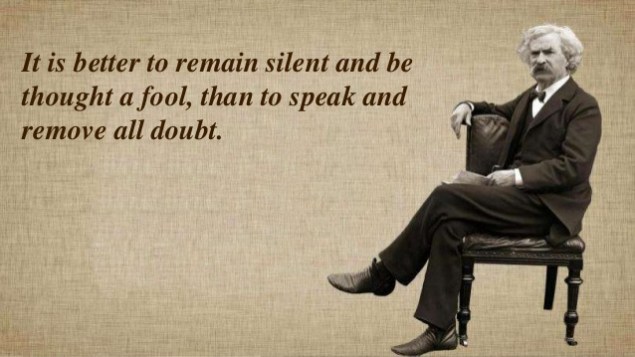
Mark Twain - It is better to remain silent and be thought a fool, than to speak and remove all doubt

Of the many disappointments in this EU referendum campaign, the utter failure of the British press to discharge its basic professional duty stings worst of all

A well-functioning, free press is essential to the health of a democracy.

Rigorous journalism, conducted with integrity, is the lifeblood of a vigilant, engaged citizenry – without it, the people cannot make informed decisions and corruption, incompetence and decay quickly begin to corrode good government.

The current EU referendum should therefore be a great test for our nation’s media elite, and reveal whether or not the British press are fulfilling their essential function. After all, here is an absolutely existential question facing the nation – do we stay in the European Union or do we leave? There are many interweaving areas to consider – trade, foreign policy, defence, national security, trade, immigration, the economy. And there is the temporal aspect – what is awkward or uncertain in the short term may have huge benefits in the long run, and vice versa. In every respect, this is a big, meaty issue for Britain’s finest journalistic minds to wrap their heads around.

Of course, no one journalist or publication can perfectly embody all of the great journalistic characteristics of fearlessness, impartiality, scepticism and rational enquiry all the time. That much is not possible, nor expected. We are all human beings and we all have motivations and core beliefs which give us blind spots or encourage us to take mental shortcuts. That’s normal. But at the macro level, if our democracy were in good shape, by now we should see an accumulation of evidence of rigorous enquiry by the media class. Even in a media market where newspapers and websites make no claim of impartiality we should still see evidence of lies being exposed, truth being searched out and upheld, and assertions constantly questioned.

This holds true even when the quality of the discourse itself – in this case driven by the two official campaigns on each side of the EU referendum – is poor, as is very much the case with the fearmongering establishment Remain campaign and the unhinged, loose cannon Vote Leave. Bad ideas are bad ideas and false statements are false statements, whether they come from the shouty man on Twitter or an oleaginous SW1 spokesperson. Therefore, bearing the imprimatur of establishment authority should make one more open to questioning, not less, and there should always be a healthy scepticism of authority and social status.

So are we currently passing the test? On this most important of issues, has the British media been doing its job properly?

It hardly needs stating that the answer is a resounding “no”. In fact, the quality of coverage has fallen incredibly short of the standard we should expect from a healthy democracy – but then, our democracy is hardly healthy. Or particularly democratic. Tthis is not a criticism of any one journalist or publication – though there are several whose deserve full and individual criticism for their groupthink, confirmation bias and craven deference to power. But for the purposes of this blog post we will focus our attention on the overall national media output.

And the best way to see how the media have fallen short in their EU referendum coverage is through their utter lack of curiosity about a plan for Brexit. This is particularly odd given the fact that the SNP government’s weighty tome outlining a plan for Scottish independence provided such rich pickings for journalists during the 2014 referendum. As time dragged on and on, one might have reasonably expected calls in the press for the release of a Brexit plan to have reached a loud crescendo, eventually forcing the hand of the official campaign.

But no – when it was high handedly decided that having an actual plan for what to do after the referendum would be stupid because it would (shock horror) invite scrutiny, there was barely a peep from the media. Vote Leave were allowed to get away with fighting this most rare and consequential campaign without so much as a list of bullet points scribbled on the back of a napkin. Yet you will struggle to find one television or newspaper interview where senior Vote Leave figures (or Leave.EU figures prior to the designation decision) were put on the spot about their lack of an agreed plan.

And yet a Brexit plan exists, and has done for several years. It’s called Flexcit and is hosted at the eureferendum.com blog authored by Dr. Richard North, one of Britain’s foremost authorities on the history and workings of the European Union. Now, it may not bear the stamp of the Westminster bubble, but it was at one point being considered for adoption by Leave.EU (who shamefully decided not to do so because it detracted from the simplistic anti-immigration, economically illiterate message which is working such wonders for the Leave campaign at the moment).

And yet does this warrant the slightest attention from the Westminster media? Apparently not. Besides a vaguely disparaging article in the Herald Scotland, you won’t find a single mention of it by name in a major UK newspaper, let alone on television. Those columnists and pundits who know of Flexcit (and thanks to many ordinary supporters and a large web footprint it is hard to miss in a Google search) and support the plan are forced to make murky allusions to it, because openly mentioning the one citizen-authored plan for leaving the European Union would mean the torpedoing of that article before it ever saw the light of day.

This is a plan which was originally drawn up as an entry to an official competition organised by the IEA, and which has now been downloaded nearly 100,000 times. It isn’t some child’s finger-painting stuck lovingly to the fridge door with a magnet – it is a serious piece of work. And yet even as Britain debates the merits of leaving or staying in the EU and the process by which Brexit might occur, apparently no “household name” Westminster journalist has considered it worthwhile to write about the only comprehensive Brexit plan in existence.

Why the media blackout of Flexcit? One can only speculate – but none of those speculations lead to a very pleasing conclusion. Some journalists and publications overlooking Flexcit might be accepted as a very odd act of omission. The entire Westminster media stubbornly refusing to to mention Flexcit while hanging on every word uttered by Boris Johnson begins to look like a conspiracy of silence. Particularly since The Leave Alliance – the network of Brexit campaigners united under the Flexcit banner (this blog is a member) – has twice met right under their noses in prestigious central London locations.
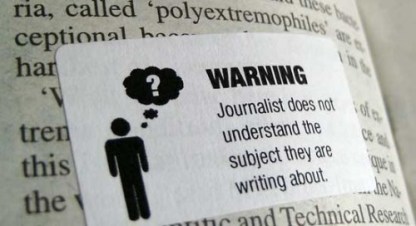
Warning - Journalist does not understand the subject they are writing about

In fact, if you want to see a serious mention of Flexcit and the staged withdrawal from the EU advocated by the Flexcit plan, one has to look in the American media – Andrew Stuttaford has twice written about Flexcit while covering the EU referendum for the prestigious conservative journal National Review, meaning that American readers are perversely better informed about the most comprehensive (and likely to be adopted) plan for leaving the European Union than most British people.

Take a moment to let that sink in. Britain is having a great national debate about whether and how to leave the European Union. There exists a comprehensive plan for doing so, which is particularly relevant now because one of the Remain campaign’s chief attack lines is that Leave supporters don’t know what Brexit looks like. But if you want to read about this plan, you will have to rely either on the American media or the small but dedicated army of citizen journalists and bloggers who promote it, because nobody in the British media cares to report on something of material significance to the campaign.

You don’t need to be a fully paid-up Brexiteer to realise that there is something profoundly wrong with this picture. Surely, if there exists a properly thought-out plan for how Brexit might work, it would be in the public interest to mention this plan? Maybe a couple of SW1’s finest journalists might take a few hours out of their busy day to skim the 400 pages and form an opinion, heck, even contact the author with a few questions. But apparently not. If it wasn’t dribbled into a microphone by Boris Johnson – a man who had not even decided that he wanted Britain to leave the European Union a few short months ago – the British media don’t seem to think it is worth covering.

Stuttaford’s latest National Review piece says what the British media will not:

David Cameron’s predictably dishonest ‘Project Fear’ is working predictably well.

The best way to counter it is to show that Brexit is, economically speaking, manageable, and the best way to manage it (there are alternatives) is by joining the European Economic Area—doing a Norway, to use the shorthand. It’s dull, and that’s the point: Dull is reassuring. Signing up for the EEA also recognizes the reality that, after decades of British entanglement with Brussels, leaving the EU is a process, not one bold break, however much romantics might wish otherwise.

Over at EU Referendum, Richard North has, as I have mentioned before in this Corner, been making this point for years (his EEA-based ‘Flexcit’ plan remains—for anyone who wants to get into the details—an essential read).

Before concluding:

I have always thought that Brexiteers would be the underdogs in this referendum. That’s how it has turned out to be, but if those who want out of the EU want to have a shot of winning this thing, they have to show that they have come to grips with the ‘how’ as well as the ‘why’ of Brexit. Their version of ‘how’ will not necessarily be definitive, but the fact that it is being articulated will go quite some way to reassuring an understandably nervous electorate that its concerns are being thought through.

[..] Like it or not, Johnson is the most prominent ‘face’ in the Leave camp.  He needs to start talking about a Brexit route with enough substance to it to reassure the anxious. Arguing that the UK has the economic and political clout to cut a good economic deal with its future former EU partners is not crazy, but it is not enough to convince nervous voters to take the Brexit ramp.  It looks too much like wishful thinking.  And what voters want to hear is evidence of serious thinking.

We can talk until we are blue in the face about the many failings of Vote Leave. And when the history of this campaign is written, they will rightly come in for much criticism for failing to embrace a comprehensive, risk-minimising Brexit plan like Flexcit. But a rigorous press should and would have discovered Flexcit without needing it to be trumpeted by Boris Johnson or slapped onto the side of Nigel Farage’s battle bus. Professional rigour should have seen to that much, or even (one would have hoped) natural curiosity.

The fact that the one rigorous Brexit plan in existence has played almost no role in the national referendum discussion to date is damning evidence of the British media’s lack of interest in rigorous reporting, and strong preference for covering the personality-based, tit-for-tat human drama. And one can understand the temptation. Reading through a 400-word tome about how to withdraw from the European Union while maintaining economic stability is soooo boring, especially when one could be writing breathless gossip pieces about how Michael Gove’s wife and Samantha Cameron have fallen out over their husbands’ divergent views on Brexit. Why do the serious research and analysis when it’s far easier – and generates far more precious web traffic – to report on the latest incendiary nugget to fall from the… mouth of Boris Johnson?

Here, Pete North says it best:

As present, we are only superficially aware that we don’t have democracy because we are missing an essential component of a healthy democracy – a free and inquisitive press. It is not that the state censors our media, rather it censors itself largely to appease advertisers and corporate cronies. In that regard the government does not need to censor the British press.

But as much as anything it has lost its essential inquisitiveness. It is concerned only with the entertainment aspect of politics rather than the dreary business of policy. It is for that reason I look forward to the day when our newspapers go the way of the dinosaur. A fate well deserved.

But in having such a dismally inept media, decisions that affect our lives go unnoticed. We are often taken by the idea that government takes sweeping decisions behind closed doors but the ultimate joke is that they are held in the open, transcribed and published on the web. These days the best way to ensure nobody will read something is to put it on the EU website.

Regardless of which side they happen to occupy in this referendum, most thinking people agree that the level of debate has been shockingly bad. Whether it is David Cameron suggesting that it is “immoral” to vote for Brexit (despite having “ruled nothing out” himself during the renegotiation) or Vote Leave insisting that Brexit would free up £350 million every week which they would prefer to spend building a brand new NHS hospital on every street corner, both sides are spewing out misinformation and hysteria, and talking down to the general public in an immensely grating fashion.

If the Westminster media were doing their job, they would not only fact-check the obvious untruths and misrepresentations emanating from both sides, they would also search out and report on the best of Brexit and Remain thinking from outside of the SW1 bubble. Yet it does not seem to occur to them that people who are not currently MPs, journalists, celebrities or the spouses of MPs, journalists and celebrities also have ideas and opinions about the EU referendum. Sometimes, those ideas and opinions are actually quite good. Sometimes – gasp – they are a lot better than what the professional politicians and pundits are saying.

As things stand, Britain is probably on course to vote to Remain in the European Union, based on a campaign in which both sides were reduced to screaming “but the NHS!” at each other until exasperated voters stopped paying attention. Very few of us will go into the polling booth with an understanding of the EU’s history, its strategic impetus and its future direction of travel. Very few of us will cast our vote with so much as a basic understanding of the global regulatory environment and the EU’s (diminishing) role in setting standards. And as the results start to come in, few of us will have voted purely according to the specific question on the ballot paper, which merely asks us whether we want to leave or remain in the European Union.

And to some extent that’s normal. Not everybody can be an expert. Most people have lives, and do not live and breathe this stuff 24/7. But conversely, just as not everybody can be an expert, nobody has to be totally ignorant, either. There is no reason why the British people, at this late stage in the campaign, could not have a better base level of knowledge than we do. There is no good reason why (for example) important terms like the EEA, Single Market and Schengen Area are routinely confused or conflated with one another. There is no good reason why, in a referendum about deciding whether or not to leave the European Union, so few people know about the one comprehensive plan to deliver precisely that outcome. No good reason at all. Yet here we are.

And for this dismal state of affairs you can thank the Great British Media.

You’re doing a heckuva job, Fleet Street.
 

If you actually put faith in modern journalism youre gonna have a bad time

European Union - United Kingdom - Britain - Flags

Agree with this article? Violently disagree? Scroll down to leave a comment.

Follow Semi-Partisan Politics on TwitterFacebook and Medium.

In Turkey, Journalists Sentenced To Jail For Charlie Hebdo Solidarity

Charlie Hebdo cover - Tout Est Pardonne

In Turkey, Theocracy – 1, Free Press – 0

Turkey takes another step towards fundamentalist theocracy as freedom of the press recedes even further.

Hurriyet Daily News reports:

Two journalists were sentenced to two years in prison on April 28 for republishing in their columns a cover of French satirical magazine Charlie Hebdo featuring an image of the Prophet Muhammad.

Istanbul’s Second Criminal Court of First Instance sentenced daily Cumhuriyet journalists Ceyda Karan and Hikmet Çetinkaya to two years on charges of “openly encouraging hate and enmity among people via the press” for reprinting the caricature of the Islamic prophet after the Jan. 7, 2015, attacks on Charlie Hebdo in Paris that killed 12 people.

However, the court ruled for the acquittal of the journalists on charges of “insulting people’s religious values” on the grounds that the criminal factors had not been constituted.

Some 1,280 people had filed a criminal complaint against Karan and Çetinkaya for republishing in their columns the cover of Charlie Hebdo, including Turkish President Recep Tayyip Erdoğan, his daughters Esra Albayrak and Sümeyye Erdoğan, his son Bilal Erdoğan, his son-in-law Energy Minister Berat Albayrak and his adviser Mustafa Varank.

So the climate for journalism in Turkey is now such that a despotic thin-skinned president and members of his parasitic family feel that it is appropriate to drag journalists before the court and have them convicted simply for carrying out objective reporting.

Closing down independent newspapers and converting them into pro-government propaganda outlets is apparently no longer enough. Individual journalists must also be persecuted and jailed for offending the sensibilities of the Turkish president, his close family members and a thousand or so other assorted religious fundamentalists who believe that their right to sail through life unoffended trumps the right of journalists to report the news.

The Telegraph outlines the wider negative trend:

But the sentencing comes amid a mushrooming crackdown on Turkish and international news media within the country. According to PEN International, some 28 writers and journalists were either detained or imprisoned in Turkey at the end of 2015 while more than 100 remained on trial, most for national security offenses.

Cumhuriyet’s editor-in-chief, Can Dündar, and the paper’s Ankara bureau chief, Erdem Gül, are currently on trial on trial behind closed doors on charges of revealing state secrets and could face multiple life sentences if found guilty.

International trial monitors and press freedom groups have condemned those proceedings, describing the case as an instance in which “journalism is on trial”.

And this is a country which entertains hopes of joining the European Union.

This is the regime which Europe Germany is scrambling to appease.

The sentencing of these journalists is unacceptable. But it is also exactly what many in Britain and the West tacitly condone when they leap to their feet in defence of the right of “marginalised” people to avoid having their religious faith and political opinions subjected to the same scrutiny, discussion and criticism as those from the “privileged” majority.

This is the legacy of every single person who supports the concept of “hate speech”, or whose condescending, neo-colonialist views of Muslims and other minorities hold that they are inherently less intelligent, less capable of engaging in debate and more prone to violence than the white majority, who should indulge them in their fragility or violent excesses like understanding parent figures.

As soon as one accepts the racist notion that some people are inherently less capable than others of having their beliefs and opinions challenged or even mocked, one opens the door to civil or criminal penalties for doing so.

When the Metropolitan Police arrest a man in London for tweeting something deemed by completely unconnected third parties to be “Islamophobic”, it becomes that much easier for authoritarian regimes in parts of the world with weaker democratic traditions to claim that they are only following “best practice”, that their despotic excesses are just a nothing but a difference of degree. And at the very least, this makes it much harder for Britain to remonstrate with Turkey. How can we lecture Turkey that arresting journalists is abhorrent when we do the same thing ourselves?

It is time for Britain and the West to reoccupy the depressingly deserted moral high ground. Yes, criticise Turkey for their government’s chilling suppression of free speech and a free press, and yes, proclaim that you are still Charlie (but only if you really are).

But as we do so, we should not allow the beam in beleaguered Turkey’s eye to distract us from the steadily-growing speck in our own.


Freedom of Speech - Free Speech

h/t Brendan O’Neill and  Mashable

Agree with this article? Violently disagree? Scroll down to leave a comment.

Follow Semi-Partisan Politics on TwitterFacebook and Medium.

A Semi-Partisan Pledge Drive

Political Blogging

This is a shakedown

I don’t do this often – maybe twice a year – but this is one of those times when I walk up and down the virtual tube carriage shaking my tin and requesting any spare change from readers who find some real value in this site, and have the means to help support it through a monetary donation or subscription, however small.

(Those who have already kindly donated this year are specifically requested NOT to do so again, and to instead consider supporting The Leave Alliance here if they feel so inclined – your generosity towards me is already very much appreciated. You know who you are.)

I am pleased to report that this blog is going from strength to strength (as hopefully you will have observed). New features have been trialled, some have inevitably fallen by the wayside and others have really taken off. Most notably, yours truly was invited to debate the infantilisation of today’s students on the BBC’s Daily Politics show earlier this year – not necessarily the topic or angle I most wanted for my debut, but a good opportunity nonetheless, and one which led to this brilliant caricature drawn by a viewer:

Samuel Hooper - Daily Politics - BBC - Caricature - Sketch - Cartoon - 2

The upshot is that with two back-to-back record-breaking months in March and April, pageviews and unique visitors for 2016 to date have already surpassed the totals for 2015. In other words, in the first third of this year more people have visited and read Semi-Partisan Politics than did so in the whole of 2015.

This has been achieved partly by a significant increase in blogging frequency – from several posts per week to several posts per day, on average. In many ways this is bowing to the inevitable. A political blog is in some ways like a television channel, and going quiet even for a day is the equivalent of dead air during prime time – if you stop, people will simply change the channel.

But this growth is also due to the loyalty and help of you, the readers. Increasingly I find that Semi-Partisan Politics is getting significant referrals through Twitter, Facebook, Reddit and various online bulletin boards – not to mention from the sidebar links of my blogging comrades of The Leave Alliance. Now that this site has a small but real readership, I am able to spend more time writing and less time trying to drum up an audience. A sincere thank you to all those who have shared links to this site, or taken the time to comment and enrich the debate here.

The other fairly significant change is an increase in shorter response-based pieces, particularly with the “Tales From The Safe Space” series. Here, the broader argument (in defence of free speech and academic freedom) is advanced in multiple posts, without the need to restate the case in full each time, and I have shared numerous examples of bad (and occasionally encouraging) things taking place on British and American university campuses with some pointed commentary, but without the full context you would get in a complete essay.

Syndication continues at Conservatives for Liberty and Guerilla Policy.

While I continue to play around with the format and focus of individual posts and series, this blog retains its commitment to the following ideals:


Brexit: freedom from the European Union

Democracy and national sovereignty

Constitutional reform and a federal UK

Separation of church and state

Healthcare reform, not NHS worship

Smaller, smarter government

Free speech, without restriction

Fighting the Cult of Identity Politics

Fighting timid centrism on the Right

Fighting empty virtue-signalling on the Left


Maintaining the high tempo of blogging required to grow this site means that besides the day job and family time, this blog is my life. Other interests are largely on hold in order to commit to writing as much as possible, a sacrifice I am happy to make because I believe the issues which I write about are important. The few occasions on which this blog has been picked up in the national media validate this assessment, I believe.

I would like to do more. My future reading list now spills onto two book shelves as I try to stay up to date with the most important issues I cover while also trying to remediate a desperately poor grounding in history and philosophy (thanks, state education).

Obviously the EU referendum is a priority at the moment – I am proud of my association with The Leave Alliance, the only group with not only a plan for achieving Brexit in a safe and non-disruptive way, but more importantly a genuinely positive vision for what a globally engaged and democratically renewed Britain should look like.

If you agree with these objectives and enjoy this blog’s coverage and commentary, please do consider using the PayPal tip jar to make a small contribution to my work:


One-off donations or small regular contributions are all greatly appreciated, and help me to continue my work here. Reader contributions partially supported last year’s live-blogging of the UKIP party conference which won acclaim in the national media, and I hope to repeat the exercise at more of the party conferences this season.

Many thanks to everyone for reading, sharing and commenting.


Political Blogging 2

Follow Semi-Partisan Politics on TwitterFacebook and Medium.

The Financial Times Makes A Worryingly Stupid Cheerleader For The EU

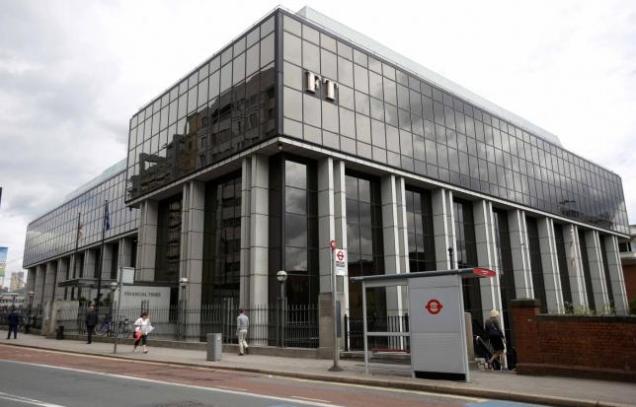
A company logo hangs on the headquarters of the Financial Times newspaper in London

The slavishly pro-EU Financial Times often displays a childlike level of understanding of how the European Union – and global regulation – actually works

Apparently the arguments for Brexit “do not add up”.

We have this from the most scrupulous and unbiased of sources, the Financial Times, so of course it must be true. Millions of Brexiteers, The Leave Alliance and little old me can pack up our things and go home, because Martin Wolf of the Financial Times has spoken.

Except that when Martin Wolf speaks on the topic of the European Union, he sounds like an idiot. This is his opening gambit:

If the UK voted to leave the EU, it would almost certainly be outside the arrangement organising the life of our neighbours and principal economic partners forever. Given this, the question is whether the option to leave should be exercised now. My answer is: absolutely not. To see why, let us examine popular arguments in favour of departure.

Oh dear. In his first sentence, Wolf inadvertently describes the overwhelming case for Brexit, before he can even launch in to his promised list of ten rebuttals. For he says that the EU is an organisation which seeks to “organis[e] the life of our neighbours and principal economic partners” – and indeed ourselves, since we are part of the union, too.

This is refreshingly honest, albeit unwittingly so. The EU does indeed seek to organise not only the lives of our neighbours and trading partners at the nation state level, but crucially (and most offensively) at the level of the private citizen too. Why? Because the EU does not see itself as some kind of a trading club. It sees itself as a government of Europe, sitting above national governments but gradually rendering them obsolete and irrelevant. The EU makes no secret of this fact – it is enshrined in the treaties, quotes from senior EU officials and even emblazoned on the wall of the European Parliament Visitors’ Centre, for those who care to look. It is only here in Britain where politicians and assorted EU apologists bury their heads in the sand and lie to themselves (and to us) about the real purpose of the European Union.

So Martin Wolf is quite correct – if Britain leaves the EU, we will absolutely be outside the arrangement which seeks to organise the lives of 500 million European citizens from every single member state. Power will be brought one step closer back to the individual citizen. And the fact that Martin Wolf and the Financial Times see this as a bad thing – that they visibly recoil from the idea that Britain should shed a superfluous layer of supranational government and seek to return power to the people – really tells you everything you need to know about whose side they are on. Hint: it is not the side of we the people.

The article then lurches from bad to worse, with a series of “rebuttals” of the Brexit case each one less supportable than the next. We are assured, for example, that a politically integrated eurozone is unlikely, despite the European Union doing everything but spell out in fireworks their intention to do exactly that.

Some of Wolf’s later points – particularly around immigration and trade agreements – are slightly more accurate. But this is only because he is creating straw man arguments to demolish, aided in his efforts by the hapless official Vote Leave campaign. The various spokespeople and figureheads of Vote Leave say enough stupid things between them to enable Martin Wolf to publish a ten point anti-Brexit rebuttal every day from now until polling day, but that is very different from Wolf managing to disprove or discredit the core arguments in favour of Brexit, most of which he pointedly skirts around.

Specifically, Martin Wolf never appears more out of his depth than when he attempts to show that there is no natural positive alternative to EU membership, and when he attempts to discredit the Norway (EFTA/EEA) option as an interim step. Thus we get utter bilge like this:

Seventh, it would be easy to agree on alternatives to EU membership. Yet those recommending leaving have no agreed position. There are three plausible alternatives: full departure with trade regulated by the World Trade Organisation, which would cost the UK its preferential market access to the EU; Swiss-style membership of a trade arrangement in goods, with bilateral deals in other areas, which is complex and would require the UK to retain free movement of people; and Norwegian-style membership of the European Economic Area, giving full access (except for having to abide by rules of origin in trade in goods) but would deprive the UK of a say on regulations. In all, the more sovereignty the UK wishes to regain, the less preferential access it retains. This trade-off cannot be fudged.

Enter Pete North, with a forensic and merciless dissection of Wolf’s position that genuinely make one wonder how it can be that North is the amateur blogger and Wolf the supposedly prestigious journalist.

North responds:

Wolf says that “There are three plausible alternatives”. This is where we are in straw man territory. He cites the WTO option which does not in any way address the multiple cooperation agreements or issues surrounding non-tariff barriers and in fact would likely cause asymmetric tariffs in the EU’s favour. If Wolf was a halfway credible analyst he would know that much. It’s a non-starter and would in fact case the very chaos that remainers have been talking up. So we are back to the age old question. Ignorance, dishonesty or both?

This means of exit is commonly associated with unilateral withdrawal, which no government intends to do nor would even consider it when faced with the practical ramifications. And so we can say with absolute certainty that we are looking at a negotiated exit.

With regard to the Swiss Option, comprising of membership of a trade arrangement in goods, with bilateral deals in other areas, Wolf is right to say it is “complex” and given that we have only two years under Article 50 to negotiate a settlement, we can safely assume that a bespoke deal is not on the cards. Talks may be extended but the tolerance for uncertainty will be short. Any UK government entering negotiations would rapidly be disabused of any fanciful notions of recreating the relationship from the ground up.

So actually, an off the shelf agreement based on the EEA is looking the most probable exit means and since it is the least disruptive for both parties and the most achievable, that is most likely what will be asked for and the only thing on offer. Having done a scoping exercise in advance of submitting our Article 50 notification, we can say with some confidence that a transitional deal could be arranged inside the mandated two years. To ensure it does not drag on, we will in all likelihood adopt most of the existing cooperation agreements as they are without opening them up fro scrutiny. We will swallow the lot. Wolf has it that the UK would have to retain free movement of people membership of the European Economic Area, which is true, but actually irrelevant.

At the end of negotiations what we end up with is more or less the same access to the single market and no real changes in the business environment. Cooperation agreements continue as before and nothing looks that much different on day one. This renders much of the speculation about Brexit entirely redundant. Wolf as much admits this.

Having taken Wolf to school on the fundamental about the most likely future model for UK-EU relations, North goes on to destroy Wolf’s fatuous but oft-repeated claim that an interim EEA/EFTA solution somehow means having no “say in regulations”:

In any area of regulation you care to look, the EU is a recipient of rules as much as anybody else. Its rules are subordinate to global standards and such standards from the basis of nearly all new EU technical regulation. Brexit not only gives us a right of opt out at the WTO/UNECE level, we would also enjoy EU consultation before any rules went as far as the EU parliament for what they laughingly call scrutiny. What that means is we will never again see the EU abusing its power to foist rules on us that we do not want.

Wolf is right however when he says that there are trade-offs. Asserting sovereignty in regulatory areas does have trade-offs. Because Norway has heavy protections on its own aquaculture and agriculture it is subject to tariffs. It remains that way because that is what Norway chooses to do. Their parliament examined the balance of issues and decided on a case by case basis whether the trade off was worth it. In more areas than one, Norway has concluded that sovereignty matters more. This would be that democracy thing. And the whole point of Brexit as it happens.

And while the regulatory regime doesn’t change that much, it does mean that we are free to change it where we deem change is appropriate. It categorically does not mean a huge administrative undertaking to establish a separate regulatory system. All it means is we can change it as and when we want to – and when we want regulatory reform, we have a direct line to the global bodies that make the rules rather than having the EU speak on our behalf. The clout we have in that regard in on the basis of what we bring to the table in terms of soft power and expertise which is considerable when you consider the UK’s many assets.

[..] The dinosaur hacks of the FT are fixated on “free trade deals”, many of which are not actually that useful to UK industry and we would benefit more from independent participation on global forums to remove technical barriers to trade. In that respect the traditional bilateral trade deal (or FTA as they insist on calling them) is obsolete. The future is the development of common regulatory frameworks that extend far beyond the confines of little Europe. Being independent of the EU ensures that we put the brake on the EU’s gold plating tendency while having first dibs in the global arena.

In so many ways, Brexit gives us the best of both worlds. The continuity of single market access along with trading agility, free association with global alliances and a functioning veto. All we get from the europhiles is that we can’t have our cake and eat it. It turns out we can eat the cake and ask for seconds if we so choose.

I cannot repeat this often enough: if you want sound analysis of the EU referendum question and an informed understanding what Brexit might look like, it is absolutely no good turning to the legacy media. They simply do not know what they are talking about because they have not invested the time to think through the issues clearly or to update their 1990s-era understanding of global trade and regulation. Worse still, they lack the humility to learn from those who have invested time and do know.

Martin Wolf airily tries to dismiss Brexit as a leap into the unknown, claiming that leaving the EU would entail moving toward one of three unpalatable future relationships, when it actually turns out that there is only one likely future model Brexit state given the political and economic constraints faced by both parties, and that one model preserves the single market access about which the FT and others rightly fret while extricating us from the unwanted political union.

Worse still, Wolf compounds his error by lazily asserting that this “cake and second helpings option” (as North puts it) would mean Britain having no say when it comes to shaping regulations, when in fact it is only by leaving the European Union that we are able to restore our voice at the real “top tables” where the rules are made.

We are now presented with a rather difficult set of possibilities. Either:

1. Martin Wolf and the Financial Times are so thoroughly incompetent and lacking in knowledge about one of the very subjects for which readers pay them for their expertise, or

2. Martin Wolf and the Financial Times do understand how global trade works and the true nature of the European Union, but deliberately keep this information from their own readers for some other sinister purpose (most likely because their corporate readership balks at the increased economic risk which inevitably accompanies any great enterprise worth undertaking – like Brexit)

Incompetence or malevolence. Pick your poison, but the Financial Times is undoubtedly guilty of at least one of these offences, if not both.


European Union - United Kingdom - Britain - Flags

Top Image: Reuters

Agree with this article? Violently disagree? Scroll down to leave a comment.

Follow Semi-Partisan Politics on TwitterFacebook and Medium.