At Least Jeremy Clarkson Is Honest About His Euro-Federalist Dreams

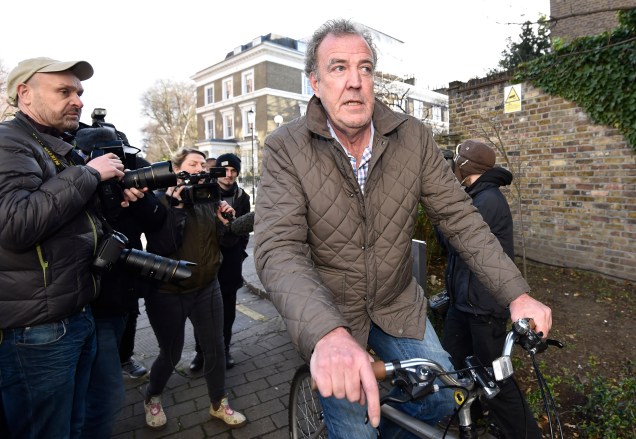
British television presenter Clarkson returns to his home in west London

Unlike most people in the Remain campaign, at least Jeremy Clarkson has the courage and decency to admit that he doesn’t just tolerate the European Union but actually dreams of Britain being part of a federal European country

So that great producer-punching pseudo Man of the People, Jeremy Clarkson, has come out definitively in support of Britain remaining in the European Union – and not just the EU as it is now, but the EU as it yearns to become in the near future, a fully politically integrated federal European state.

No great surprise there – Clarkson has made pro-European rumblings before. But what is surprising (and actually rather impressive) is the full-throated way in which Clarkson embraces his support of the EU.

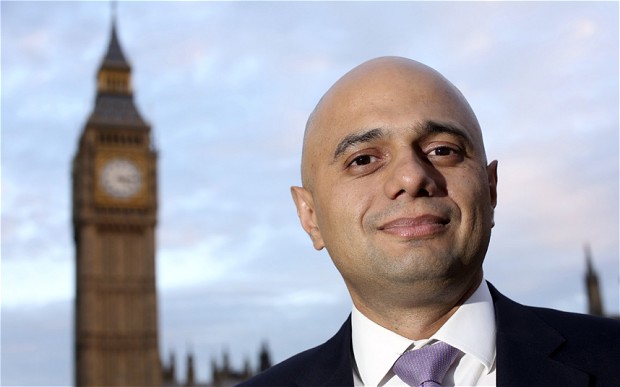
Unlike nearly every leading politician and personality in the Remain camp, Clarkson does not attempt to flatter us or pretend that he “gets” our concerns about Brussels gradually usurping our democracy. Unlike the deceitful-yet-ingratiating Sajid Javid, Clarkson makes no promises to go back to ranting at Brussels the moment he has helped doom us to continued membership of the EU (though in Clarkson’s case, more ranting is all but guaranteed).

Jeremy Clarkson actually does something which almost nobody in the intellectually squalid, fear-based Remain campaign dares to do – he owns his pro-Europeanism and wears it as a badge of honour, rather than doing what so many Turncoat Tories and others have done, prancing around like the World’s Biggest Eurosceptic before meekly running to David Cameron’s heel and supporting Britain’s continued membership of the EU as soon as the prime minister snapped his fingers.

Clarkson writes in the Sunday Times (+):

I suppose that now is as good a time as any to declare my hand. I’m with the man whose wife we fancy. I’m in.

When Mr Cameron was touring Europe recently, seeking a better deal for Britain by sucking up to the leaders of such places as Romania and Hungary, I watched on YouTube an MEP called Daniel Hannan make an anti-EU speech to a group of, I think, students. It was brilliant. One of the best speeches I’ve ever heard. And, I’ll admit, it made me question my beliefs. But despite his clever, reasoned and passionate plea for us to leave Europe, I’m still in. He talked sense, but a lot of this debate is about how we feel.

In 1973 my parents held a Common Market party. They’d lived through the war, and for them it seemed a good idea to form closer ties with our endlessly troublesome neighbours. For me, however, it was a chance to make flags out of coloured felt and to eat exotic foods such as sausage and pasta. I felt very European that night, and I still do.

Whether I’m sitting in a railway concourse in Brussels or pottering down the canals of southwestern France or hurtling along a motorway in Croatia, I feel way more at home than I do when I’m trying to get something to eat in Dallas or Sacramento. I love Europe, and to me that’s important.

I’m the first to acknowledge that so far the EU hasn’t really worked. We still don’t have standardised electrical sockets, and every member state is still out for itself, not the common good. This is the sort of thing that causes many people to think, “Well, let’s just leave and look after ourselves in future.”

In other words, Jeremy Clarkson is your garden variety Euro-federalist. He looks at the bureaucratic opacity of Brussels, the contempt in which the EU is held by many of its citizens and the fact that cultural and regulatory harmonisation has not been completed to produce a single cultural identity where we all identify as Europeans first and use the same electrical outlets, and concludes that the correct answer is “more Europe”.

Fair play to him. He’s completely wrong, and betrays an almost criminal contempt for the democracy and right to self-determination for which our ancestors fought, bled and died. He is the archetypal person who votes as a consumer – because a harmonised, federal Europe would be better for his wallet and his weekend jaunts to France – rather than as a thinking, engaged citizen. But at least he has the god damn balls to honestly state his position. Hardly anybody in our own elected House of Commons supporting the Remain campaign would dare to do the same.

But then it begins to come off the rails (or the test track). Clarkson continues:

Britain, on its own, has little influence on the world stage. I think we are all agreed on that. But Europe, if it were well run and had cohesive, well thought-out policies, would be a tremendous force for good. I think we are all agreed on that as well. So how do we turn Europe from the shambles it is now into the beacon of civilisation that it could be in the future?

Oh really? We are “all agreed” on that, are we?

Actually, no we are not agreed at all. Our prime minister and foreign secretary may hold our country, its history and present capabilities in astonishingly low esteem, but fortunately the same cannot be said for many of the people. Many of us correctly believe Britain to be one of the few truly indispensable nations on Earth, that our contributions to the arts, sciences, commerce and global security are almost unmatched, and that we could throw our weight around in the world accordingly, if only we cared to stand up for our own national interest once in awhile.

But such views are unheard of outside the Chipping Norton set, the middle class clerisy in general and the fawning circle of friends and admirers surrounding David Cameron (of whom Jeremy Clarkson is one). These people, many of whom came of age at the peak of 1970s declinism and economic doldrums, have at their core a deep pessimism and scepticism about the ability of Britain to survive and prosper as an independent actor on the world stage.

So deeply have they internalised this self-doubt and self-loathing that no matter how much evidence you show them to the contrary – the examples of Australia and New Zealand, say, somehow surviving in the world without being part of an Asia Pacific Union and sharing a common parliament and court – they bat it away without even stopping to think.

Clarkson then sums up:

Right. So let’s switch our attention. Let’s leave the “parish councillors” alone and concentrate our big guns on the real decision makers in Brussels. Let’s have hacks outside their houses all day long, waiting for one of them to do or say something wrong. Let’s make them accountable. Let’s turn them from “faceless bureaucrats” into household names.

That is the biggest problem with the EU right now. Nobody is really concentrating on its leaders. Nobody is saying: “Hang on a minute . . .” And this means they are running amok.

It’s why we need to stay in. So our famously attentive media can try to stop them. To make them pause before they move. To make the Continent work the way the Continent should — as a liberal, kind, balanced fulcrum in a mad world that could soon have Trump on one side and Putin on the other.

And here we have the classic pivot back to “the answer is more Europe!” Rather than looking at public attitudes toward the European Union which range from disengaged indifference to blind, seething rage, Clarkson concludes not that the experiment in political integration by stealth has failed, but rather that we should just come to terms with it and re-order our media and culture around the EU’s artificial construct.

Clarkson is actually saying that if only more journalists doorstopped Jean-Claude Juncker and Martin Schulz every morning with awkward questions about budgets and foreign policy, we would immediately begin to feel more vested in the EU project and finally become enthusiastic Europeans. It’s pure wishful thinking, of course, but then so is everything about the EU, an political organisation build on the the principle of “If you build it, they will come” (they being a European demos willing to be led by Brussels).

But though Clarkson is wrong on nearly every point, cavalier with our democracy to the point that it does not even merit a mention in his article and unabashedly in hoc to the establishment’s ingrained europhilia, still he somehow comes away as the most intellectually honest and respectable of all the high profile Remain supporters.

Unlike an oleaginous Turncoat Tory, Clarkson does not feel the need to butter us up with constant anecdotes about how he hates Brussels just as much as we do, honest. And unlike those bland Remainers on the Labour benches, he does not just mutter inanities about countries “working together”, as though intergovernmental co-operation were not possible without the umbrella of an undemocratic political union.

No, Jeremy Clarkson owns his position, and has the guts to tell us that not only should we learn to love the European Union as it is now, we should actively fight for further political integration:

But, actually, isn’t it better to stay in and try to make the damn thing work properly? To create a United States of Europe that functions as well as the United States of America? With one army and one currency and one unifying set of values?

At last, an honest argument from a Remain supporter – someone who is brave enough to stand up and say “actually, I feel more European than British, I think that the nation state is kind of passé anyway, I’m envious of the size and power of the United States and terrified by the sight of Russia; therefore, we should proceed full speed ahead with the creation of a European country”.

Again: I find Jeremy Clarkson’s argument utterly repellent and contemptuous of our hard-won democracy and liberty. But my God, it’s refreshing to hear from someone from the Remain camp who actually says what they really feel about the European Union.

David Cameron, Philip Hammond, Theresa May and other assorted peddlers of FUD (fear, uncertainty and doubt) – your turn next in the honesty corner.

 

European Union - United Kingdom - Britain - Flags

Agree with this article? Violently disagree? Scroll down to leave a comment.

Follow Semi-Partisan Politics on TwitterFacebook and Medium.

Sajid Javid: Stop Trying To Build Bridges With Eurosceptics – We Don’t Want You

Sajid Javid - European Union - EU - Brexit - Remain campaign

The anti-EU movement has no further need of fawning, two-faced politicians who talk the eurosceptic talk for cheap applause but consistently vote and campaign for Britain’s continued participation in political union

Apparently, Sajid Javid is suffering from an acutely troubled conference after renouncing his much-vaunted euroscepticism and cuddling up to power by supporting David Cameron’s fear-based Remain campaign.

The Daily Mail reports:

Sajid Javid today admitted he wished David Cameron had got more from the EU and he was backing the Remain campaign even though his ‘heart’ was for Brexit.

The business secretary, whose endorsement was a relief for the Prime Minister after six other top ministers defected to Leave, insisted today he was still a ‘Brussels basher’.

Mr Javid gave his chilly assessment of the Prime Minister’s deal at the British Chambers of Commerce conference.

In his address, Mr Javid said he had finally come down on backing Remain because of the threat of uncertainty.

The Business Secretary said: ‘I have no time for closer political union and in many ways I am a Eurosceptic. I am still a Brussels basher and will remain so. I wish there was more in the deal’.

Let me say on behalf of all eurosceptics (I’m sure they won’t mind my presumption in this case) – Sajid Javid can take his Brussels bashing and shove it where the sun don’t shine.

The British people have no further need of oleaginous politicians who make eurosceptic noises in pursuit of cheap applause, but who then side time and again with the political establishment to preserve the anti-democratic status quo, with Britain kept as a vassal state of a relentlessly integration European political union.

Are we supposed to feel comforted and mollified that Sajid Javid has now promised that on 24 June, the day after his own efforts contribute toward a “Remain” vote in the EU referendum, he will once again join our ranks and stand up to criticise the democratic subversion underway in Brussels? Because that would be like a soldier who, on being rotated away from the front lines at the end of his tour of duty, promises his comrades that he will see them again soon, as soon as he is done fighting a stint for the enemy during his R&R break.

Javid is basically saying “Don’t mind the massive betrayal, old chap. I’ll be back soon, standing shoulder to shoulder with you and making all of the right sympathetic sounds, as soon as I’ve finished chucking these grenades into your trench from across No Man’s Land.”

The British eurosceptic movement has had enough false friends in its time – politicians who have been only too happy to embrace the cause when it helped them to win selection as a candidate or to squeak through a tough election campaign, but who have been found singularly wanting when it comes to defending British sovereignty and democracy with their votes and campaigning activities once safely elected.

Precisely why Sajid Javid made the decision to support his prime minister’s transparently fraudulent “deal” with the European Union rather than staying true to his oft-professed euroscepticism – whether it was pure career calculation or a genuine failure of courage and belief in his own country – is an ugly secret known only to Javid himself.

But one thing is clear: every last one of those calculating Conservative MPs who have made the fateful decision to sit out the fight to extricate Britain from the European Union must be pitilessly cleaved from the eurosceptic herd and never permitted to rejoin it.

They should be made to wear their latent europhilia as a badge of shame and dishonour for the remainder of their sorry political lives.


European Union - United Kingdom - Britain - Flags

Agree with this article? Violently disagree? Scroll down to leave a comment.

Follow Semi-Partisan Politics on TwitterFacebook and Medium.

Douglas Carswell Warns Against The Allure Of Protectionism

Container Ship - Cargo - Trade - Protectionism

Douglas Carswell makes the short and eloquent case against protectionism:

The prosperity we take for granted today couldn’t have happened without free markets and free trade. That doesn’t stop people – even presidential candidates – saying we’d be better off starting trade wars, and only buying goods made at home. But the fact remains: protectionism is the route to poverty.

Globalisation gets a bad press. When manufacturing moves from Britain or the US to China and India, it looks like we’re losing out. But the result is that we get our clothes, shoes, computers, phones, and televisions much more cheaply. And lower prices don’t just make us better off. They also increase demand, and create jobs.

As Adam Smith and David Ricardo realised 200 years ago, prosperity comes from specialisation. If each of us tried to be self-sufficient, we would all be living in prehistoric penury. Instead, we specialise in what we’re best at, and exchange the product of our work for what we need.

The same applies to countries. Today, Britain’s comparative advantage is in services. Other countries are best at heavy industry or agriculture. By specialising in services, we get more and better manufactured goods and agricultural produce than we would if we diverted our resources into making them ourselves.

Protectionism might seem like the solution for people who have lost out to globalisation. But its effect would be regressive – like the poll tax. It would force prices up, and employment down. That would hit the poorest hardest.

Carswell goes on to argue that protectionism does not bring prosperity, but rather leads to inefficient, monolithic corporations like British Leyland, churning out low quality product that nobody really wants – and even then, only at the cost of massive subsidies from the taxpayer.

The case against protectionism cannot be restated enough at a time when globalisation and free trade is under sustained attack on both sides of the Atlantic – by the otherwise polar opposite Donald Trump and Bernie Sanders in America, and by the worst elements on both sides of the EU referendum debate in Britain, who believe that we should retreat either into mercantilist isolationism or protectionist euro-parochialism.

There is an important debate here to be had among advocates for smaller government. Clearly the state is presently far too involved in our lives in all manner of ways, but surely one of the things that a smart, lean and effective small government absolutely should do is watch out for its citizens when they are impacted by massive changes to the way that the world trades and communicates.

Labour’s solution has been to park people on welfare and then forget about them, which is remarkably immoral for a group of people who love to endlessly brag about how virtuous and compassionate they are. The intelligent Right should come up with something better. And that means doing something more than simply aping Labour policy by raising the minimum (or “national living”) wage to £9 an hour so that the most tedious of low-paying McJobs keep people just out of working poverty.

The new permanent majority will not be secured by the Cameron / Osborne strategy of enacting Tony Blair’s fourth term of New Labour governance. It will come about by radically rolling back the state in all manner of areas where it should be doing less, while also giving citizens the tools and opportunity to prosper in the new economy.

Less protectionism, less pretending that the old jobs will come roaring back if only we leave the EU, embrace the EU or otherwise throw up barriers to global trade. Less shooting for the middle all round, and more empowerment of British citizens to pursue high value-add, high-wage, twenty-first century careers.

Now put that on a bumper sticker.


Semi Partisan Politics Logo

Agree with this article? Violently disagree? Scroll down to leave a comment.

Follow Semi-Partisan Politics on TwitterFacebook and Medium.

When The Established Church Goes To War With Half The Country

Kate Bottley - Gogglebox - Church of England - Partisan - Conservative Party - Tory Scum

What to do when the established church makes no attempt to hide its hatred for conservatives?

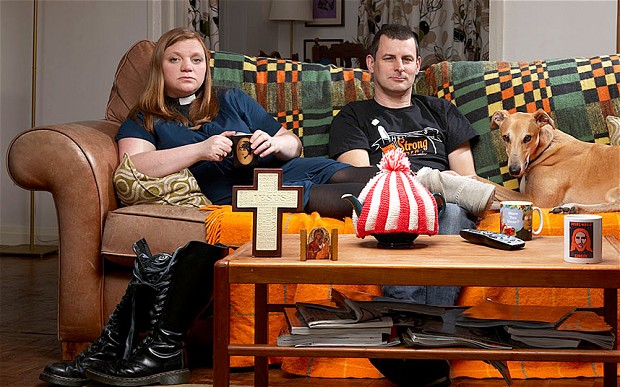
Those who watch Gogglebox are no doubt familiar with the Reverend Kate Bottley, whose ambassadorship for the Church of England probably reaches many millions more people than most bishops.

Should we be concerned, then, that one of the established church’s most high profile characters holds a seething contempt and hatred for one of our country’s two main political parties?

Archbishop Cranmer lays down the charge, based on Bottley’s recent on-air admission that “I hate it when I agree with a Tory”:

She wasn’t wearing her dog collar this week, but she doesn’t need to: the whole country knows (and so do Channel 4 editors and producers) that she is a Church of England vicar and a minister of the Word. And she is very well liked and respected: there is no hint of moral or doctrinal delinquency, but national admiration for her personal spirituality and great teaching capacity. She is a manifestly gifted, active communicator who is dedicated to serving her parish.

But ministry isn’t simply service, for that is the whole of Christian life. Her task as a vicar is distinctively liturgical, catechetical and pastoral, principally for the needs of the whole Christian community, including Tories. As an ordained priest, she is both servant and shepherd among the people to whom she has been sent, and that includes Tories. Her task is to proclaim the Word of the Lord and to watch for signs of God’s new creation, including in Tories. Her vocation is to teach, admonish, feed and provide for her flock, which includes Tories.

The majority of England is instinctively conservative: it appears to be a natural disposition; an affinity with the natural order; part of the psyche of essential Englishness. The Rev’d Kate Bottley is by no means obliged to approve of that: indeed, she is free to repudiate its consoling power and turn her religious fervour to more meaningful transcendent bonds. But you’d think there might be some sensitivity to the political-philosophical implications for mission praxis. Why should those Tories who attend her church bother to listen to her tell the story of God’s love, if all the time she is pinching her nose at their spiritual halitosis? Why should all those Tories who watch Gogglebox even consider walking with her in the way of Christ, hoping to be nurtured and encouraged in their faith? Why should they gather round the Lord’s Table if their vicar deems them to be unworthy or unable to resist the evil philosophies of men?

Bottley is far from an isolated case. Seething anti-Tory sentiment clearly exists much higher up in the church hierarchy, too, judging by the Bishop of Manchester’s decision to play host to Jeremy Corbyn and a left-wing rally coinciding with the Conservative Party conference taking place in the city.

Long gone, it seems, are the days when the Church of England was commonly known as the Tory party at prayer. And with church personalities using their pulpits to inveigh against right-wing policies and pontificate on the supposed dangers of Brexit, the time has come to urgently look again at the privileged position which the partisan established church holds in our constitution.


Church of England in Parliament - Church and State

Agree with this article? Violently disagree? Scroll down to leave a comment.

Follow Semi-Partisan Politics on TwitterFacebook and Medium.

The Bishop And The Brexit Debate

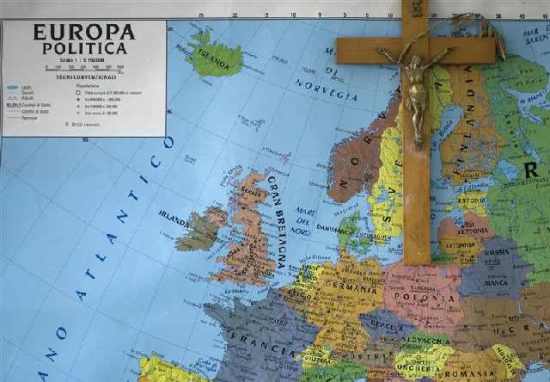
christianity-europe-eu-brexit-3.jpg

Apparently, Brexit constitutes a “nightmare scenario” for the Bishop of Guildford. No surprise, coming from an established church with such a dubious record on democracy

Should bishops in the Church of England (or indeed the leaders of any other religious denomination) be free to speak their minds on the subject of Brexit and in advising their flocks how to vote in the coming EU referendum?

Of course they should. To suggest otherwise would be an unconscionable encroachment on religious liberty – the only exception being the intolerable Lords Spiritual whose anachronistic and unwelcome presence in the House of Lords makes Britain, like Iran, a technical theocracy.

But while non-political bishops have every right to express an opinion on Brexit, so we have the right to criticise their thinking on the subject, which tends to be woolly at best, and arrogant with a twist of elitism at worst.

King of the woolly thinkers is the Bishop of Guildford, who shared this recent gem on Twitter:

Adrian Hilton of Archbishop Cranmer dissects the Bishop of Guildford’s europhile ramblings over at Reimagining Europe:

So we read that the Brexit “nightmare” would be “very sad” because it would mark a return to “competing nationalisms” and “very dangerous times”. The EU has been “integral in delivering seven decades of peace and economic security”.We must resist the “widespread rise of populism” because “we are European” and “have nothing to fear or to lose if we remain so”. The Bishop of Leeds, Nick Baines, wants a ‘Third Way’, but that isn’t on the ballot paper. And the Bishop of Willesden, Pete Broadbent, aims directly for the Tories, but this isn’t a general election. As you see, it’s all impeccable political neutrality with rigorous episcopal impartiality.

The laity and other clergy will, of course, make up their own minds, but what manner of neutrality is it when CofE comms tells the media that the institution is neither for remaining nor leaving, while many in the House of Bishops preach the Gospel of Remain? Would a bishop ever tweet that his (or her) “nightmare” would be to wake up to a Corbyn premiership? What guilt does the prospect of voting for the Bishops’ (it probably is plural) Brexit “nightmare scenario” inculcate in the spiritually-discerning democratic intellect of the laity and subordinate clergy?

And here is the crux:

Some say we’d be poorer; others that the cost of holidays would rise; still others that our power stations would go dark and terrorism would increase. There is equal expert opinion to the contrary in every case, and it’s hardly four-horsemen-of-the-apocalypse stuff, is it? The matter of whether our national destiny is to be bound in perpetuity to an anti-democratic United States of Europe which is creeping, ratchet-like, toward continent-wide assimilation and uniformity cannot simply be distilled to short-term economic interests or security scaremongering.

I can understand Bishop Andrew’s desire to sustain a political union which is ostensibly based on sound Christian principles such as subsidiarity and solidarity. But, as Philip Booth has shown, the EU is antithetical to the very concept of localism, notwithstanding the letter of Maastricht. And I feel sure that the Greeks, Spanish, Italians and Portuguese might balk at assertions that the EU project is any longer concerned with fraternal solidarity, mutuality and social harmony.

This isn’t an organic social contract for diversity, liberty and limited state power, but a fabricated mechanism for the enforcement of national assimilation. When you’re locked – seemingly irrevocably – into a model of “economic governance” which hinders growth, destroys jobs, increases poverty, and leads mothers to abandon their children on the streets and fathers to commit suicide, I have to put to Bishop Andrew that his Brexit “nightmare scenario” would be welcomed by millions of Greeks as a dream of Grexit bliss.

The bishops’ willingness to swallow pro-EU talking points and then arrogantly sound off in public about how the EU has “kept the peace” and “delivered prosperity” is not just intellectually lazy. I would charge that it is a failure in their duty of pastoral care to all Christians in their flock, to accuse those who want Britain to leave the EU of trying to bring about a “nightmare scenario”.

Since when did believing in national democracy and sovereignty based at the level of a commonly understood demos represent a “nightmare” for the Church of England? Since when did the concept of self-determination (as opposed to slavishly following a pre-determined path toward unwanted European political integration set in motion decades ago) become unwelcome? And why is the Church willing to wring its hands and worry about human rights abuses and dictatorship abroad, but turn a blind eye when the rights of its own fellow citizens to determine the course of their own future is suppressed by Brussels?

At its root, the pro-European instincts of many bishops seem to rest in a desperate, stubborn insistence in seeing the world – and the European Union – as they would like it to be, rather than how it actually is. As Hilton suggests, the idea of the bad aspects of nationalism being eroded and replaced by shared European values of a vaguely left-wing bent of “subsidiarity and solidarity” is all well and good. But there is no European demos, and the relentless march toward further integration in the absence of a shared feeling of European-ness above national identity will only compound the simmering resentment.

The Church of England would clearly love nothing so much as to operate in a world where the nation state was consigned to the history books, and where we are primarily governed at a European level – no doubt as a stepping stone toward one world government. And they are entitled to that worldview, premature and perverse though it is.

But the Church and her bishops should at least show some embarrassment and contrition at the fact that by casting any concern for democracy aside and throwing their lot in with the European Union, they are helping to impose an elitist vision of a politically united Europe which more people vehemently oppose than have been scared and bullied by the Remain campaign into meekly supporting.

It is not the job of any Christian (least of all me) to judge another’s adherence to and practising of their faith, and so I will pass no comment on whether Andrew Watson’s gnawing fear that the British people might vote for self-government makes him a bad Christian.

But I will say without hesitation or apology that it does make him a bad citizen, a weak example of a community leader and an emblem of everything that is wrong with the established church’s continued role in the political life of our country.


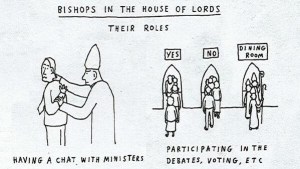
Church of England - Church and State - Parliament - Lords Spiritual - Cartoon - 2

Bottom Image: Abbreviated cartoon by Dave Walker

Agree with this article? Violently disagree? Scroll down to leave a comment.

Follow Semi-Partisan Politics on TwitterFacebook and Medium.