Virtue Signalling Celebrities – Silly. Virtue Signalling Government – Dangerous

Benedict Cumberbatch - Virtue Signalling - Syria - Refugees

When celebrities indulge in open virtue-signalling and Something Must Be Done-ery, it is irritating but ultimately harmless. But now political leaders and governments are doing the same thing, and it is deadly serious

Tony Parsons – who only last year bravely admitted to being “Tory Scum” – has a great new piece in GQ magazine, blasting the prevalence of virtue-signalling behaviour among the celebrity and political class.

After ridiculing certain actors and celebrities, whose Something Must Be Done-ery and hand-wringing at the existence of the Evil Tories is misguided but ultimately harmless, Parsons goes on to warn that it is much less funny when political leaders and entire governments are engaging in the same virtue signalling exercise.

His conclusion is worth quoting at length:

All this smug, self-satisfied, shockingly empty posturing would be merely laughable if it was confined to a few pompous luvvies who make clods of themselves every time they say a line that isn’t written by someone far smarter than them. But the desire to demonstrate moral purity now extends its cloying reach all the way to Downing Street, where even pink-faced Tory boys strain to prove their liberal credentials.

Many civilised nations such as Australia, Canada, France, Japan and Ireland have vastly reduced their foreign aid budgets after reaching the conclusion that shovelling billions to the developing world does nothing but encourage corruption, erode democracy and throw away taxpayers’ hard-earned money like a sailor on shore leave.

But in our own country the commitment to spend 0.7% of gross national income on foreign aid has been enshrined in law. The UK spent more than £12 billion on foreign aid last year, at a time when almost every other area of public spending was being slashed. Only the NHS and foreign aid were spared George Osborne’s cuts.

How can this be? How can a new private plane for a developing world despot be more important than the police, or the armed forces, or benefits for the disabled? How can it be rational, or even sane, for a country to care more about flood defences in Congo than it does about flood defences in Carlisle?

Because it doesn’t really matter if that £12bn a year in foreign aid itself is effective. It is not about feeding hungry mouths. Foreign aid is purely about demonstrating impeccable liberal goodness. Cameron’s Conservatives need to demonstrate that they are kind, decent and virtuous, need to show that they bought “Do They Know It’s Christmas” when they were at Eton and Westminster. Our foreign aid budget – millions of it shipped to nations where the British are despised – is meant to be conclusive evidence that the Tories care.

Virtue signalling begins and ends in the developing world. So Benedict Cumberbatch can’t give a thought to a small German town like Sumte (population 102) that finds its infrastructure collapsing under the burden of giving a home to 750 migrants. Sherlock can only prove his liberal goodness by fretting about Syrian refugees.

There is a debate to be had – and it is the debate of our age – about how we manage our moral obligation to our own people with our humanitarian impulse to help the world. But you will never hear that difficult subject broached among the virtue signallers who scream their pious certainties and wag their censorious fingers at the wicked Tories – which is bitterly ironic as David Cameron is the biggest virtue signaller of them all.

This blog dissents from the suggestion that the bulk of the foreign aid budget should not have been returned to taxpayers but merely reallocated to an unreformed NHS and welfare state, but the main thrust of Parsons’ argument – that we are essentially spending nearly one percent of our GDP not to do good but rather to look good – is devastatingly accurate.

And since those who disagree with the Conservative government are already determined not to see it as merely politically misguided but as a sociopathic millionaire’s club actively seeking to hurt the poor, there is little point in continuing to ringfence international aid spending as part of a PR exercise which has already failed.

Virtue signalling when practised by lame comedians and other assorted commentators angling for a cheap laugh is tiresome but essentially harmless. But when our elected government signals its virtue with taxpayer money and national policy, it can be the difference between life and death.

Which is why David Cameron and George Osborne should focus on sound policymaking and (just for a change) conservative principle, leaving the compassionate handwringing to the more-than-capable Sherlock Holmes and Dr. Watson.


Postscript: None of this is to say that this blog does not sometimes agree with the causes fleetingly taken up by celebrities, even Benedict Cumberbatch.


Benedict Cumberbatch - This Is What A Feminist Looks Like - Virtue Signalling

Top Image: ITV

Agree with this article? Violently disagree? Scroll down to leave a comment.

Follow Semi-Partisan Politics on TwitterFacebook and Medium.

Opposing The EU Is A Calling Based On Evidence, Not Blind Faith

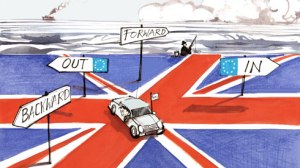
File photo of a Union Jack flag fluttering next to European Union flags ahead of a visit from Britain's Prime Minister David Cameron at the EU Commission headquarters in Brussels

Those who accuse Brexit supporters of being ideologically fixated and closed to alternative ideas are not only hypocritical – they have utterly failed to understand what makes eurosceptics tick

One of the drawbacks of being a committed eurosceptic and Brexiteer is that one tends to be painted as a swivel-eyed ideologue, someone whose opinion is not based on considered deliberation but on flawed, base gut instinct.

Thus the two most common insults hurled at eurosceptics – besides the cries of racism and xenophobia, which are sufficiently stupid that we can safely ignore them – are that we hate the European Union as an article of faith (or religion) rather than reason, and that we are closed minded and impermeable to new information (like David Cameron’s triumphant New Deal with Brussels).

Both of these accusations are unfair, although there is a grain of truth – many of us do indeed feel that our euroscepticism is a calling, or at least a cause important enough that we are willing to devote time, money and effort to its advancement.

When I attended the recent launch of The Leave Alliance, for example, it was one of the few times when I have actually been surrounded by large numbers of like-minded people on the Brexit issue, and it was rather humbling to be in the company of people whose curiosity and passion have led them to become experts on the history of the EU and the workings of international trade and regulation. Where it differs from religion, though, is the fact that our understanding of and distaste for European political union is not based on gut instinct or faith, but on a close reading of primary materials – treaties, statements, declarations, meeting minutes, autobiographies, trade journals, news articles – which those who support the European project can rarely match.

(I should note that I hardly consider myself to be such an expert – but through my involvement with The Leave Alliance I now have access to much better information and have shed much of the woolly thinking which clouded my previous euroscepticism).

So yes – we take our euroscepticism seriously. And those who see this as a flaw or a point of ridicule have generally failed to understand what it is about the European Union which offends us so greatly. They rhetorically ask what concessions might prompt us to change our minds – what it would take for us to stop worrying and love Brussels – thinking that by asking the question, they are revealing our blind, unthinking animosity to the harmless idea of countries coming together to trade and cooperate with one another.

Britain in Europe

In answer to this charge, Pete North has an excellent blog post from January, in which he begins with a simple fact – the signing of a protocol by Georgia and Turkey governing the electronic exchange of customs data for goods shipping – and masterfully spins it into a damning case against the European Union, proving that a harmonisation and integration-obsessed EU is actually a barrier to the kind of global co-operation which leads to economic growth and wealth creation.

Read the whole piece – entitled “The EU is not a trade bloc – it’s a power cult“.

Here is the key extract, which I will quote at length:

At the heart of it is a paranoia that without the EU the nations of Europe will once again be at war thus have set about creating a Europe that deprives nations of their democratic will to the ends of creating a single supreme government for Europe – one which actively prevents European nations speaking on their own behalf and getting the best for themselves and Europe.

And so when the question is posed as to what it would take for us hardline leavers to change our minds, we would have to address the central issue. Supranationalism. Were the EU to abandon supranationalism, to dismantle the institutions and cultural programmes designed to engender a single European demos, culture and government, to instead become a common forum for international progress, then I could change my mind. But then I would want to see it as a more open forum where our trading partners can also participate and shape the rules rather than having the EU dictating.

There are two basic problems here. Firstly, the entity a properly reformed EU would resemble already exists. It’s called the United Nations Economic Commission for Europe, and secondly, to demand reforms of this nature – of such era defining significance, we would effectively be calling for the dismantling of le grande project forever.

And so it remains the case that we are hard line leavers in that the EU cannot be reformed, will resist any attempt, and will never serve the best interests of its members – or even Europe. The EU is purely about the preservation of the EU political body that serves to advance the supranational agenda of its long dead architects.

The EU is not about trade, it is not about cooperation and it wouldn’t recognise multilateralism in a billion years. Everything it does is with the intent of affording itself more power and more control while passing the responsibility and the consequences on to member states to deal with. It is here where nuisance turns to malevolence and such an affront to democracy, based on a foundation of intellectual sand, should be resisted.

If we examine EU for what it really is, it’s a power cult – and one that will never stop until it holds all of the power. It confiscates our wealth then acts like some kind of benevolent Father Christmas, buying off all the institutions such as academia, NGOs and local authorities who would otherwise oppose it, so that when it comes to a popular vote the establishment will never turn on its paymaster.

It is for this reason true leavers oppose the EU with every fibre of their being. It is why opposing the EU is a spiritual call and a life obsession. It is why the issue will never go away and it is why a referendum will not settle the argument – because for as long as there are those who know what the EU really is, and its modus operandi, there will always be people willing to fight it to the bitter end.

And that pretty much sums up why committed eurosceptics – at least those affiliated with The Leave Alliance – take this issue so seriously, will not change our minds based on the evidence in front of us, and will not rest regardless of the outcome of the referendum on 23 June.

It comes down to the two S’s – supranationalism and sovereignty. Both cannot exist simultaneously – any key competence is either a sovereign matter or it is decided at the supranational level. And the European Union is an avowedly supranational organisation, spurning healthy intergovernmental cooperation in favour of the creation of a new layer of government over and above the member states.

Were the European Union content to fulfil the much more narrow remit claimed by many of its apologists (i.e. facilitating trade and cooperation) then an accommodation could potentially be reached. But as Pete North rightly points out, all of the evidence – and I mean all of it, to the extent that the Remain camp do not even bother to claim otherwise – is that the EU’s ambitions are much grander. They always were – that’s why the organisation which they pretend is just about trade and cooperation has a flag, an anthem and a parliament.

If anybody is being dogmatic and impermeable to patently obvious facts, it is in fact the Remain camp, who possess a superhuman ability to ignore the federalist facts staring them in the face, and somehow pretend to themselves that events of historical record and verbatim quotes from numerous EU officials did not happen and were not said. If one is not an enthusiastic European federalist, one has to be either ignorant or in extreme denial to believe that the EU as it stands is just a trading bloc, or that there is not far more integration planned for the near future.

So who is operating on blind faith here – the Remain campaign or those fighting for Brexit? While there are plenty of loud and ignorant people on both sides, those EU apologists who naively or deceptively cry “nothing to see here!” while all the edifices of a European state are brazenly built around them should be held in particular contempt.


European Union - United Kingdom - Britain - Flags

Top Image: REUTERS/Francois Lenoir/Files

Agree with this article? Violently disagree? Scroll down to leave a comment.

Follow Semi-Partisan Politics on TwitterFacebook and Medium.

Self-Entitled Young People For Remain

Students for Europe - EU Referendum - Brexit - European Union

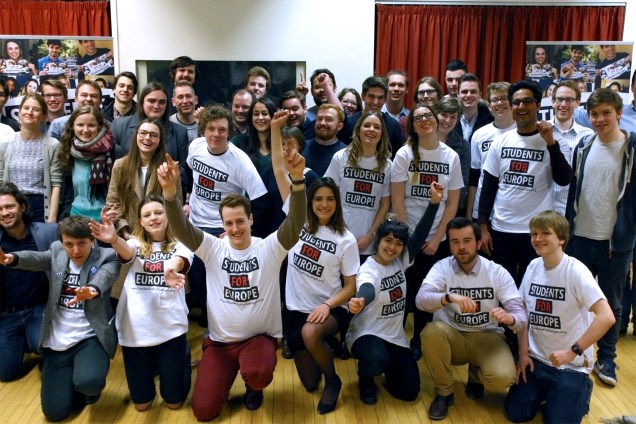
The EU’s young cheerleaders have lots to say about their own material self-interest, but fall strangely silent when it comes to democracy

After Abi Wilkinson’s petulant complaint that Leave campaigners attempting to restore British democracy are harming the job prospects of the young, we now have another youthful but clueless voice making the same case.

Presenting Richard Godwin in the Evening Standard:

I just feel European. I’m part of a generation that has had easy access to mainland Europe for both work and play.

I like Penélope Cruz and Daft Punk and tiki-taka and Ingmar Bergman and spaghetti and absinthe and saunas and affordable trains.

As sentimental as it sounds, Europe represents opportunity, cosmopolitanism, modernity, romance, enrichment, adventure to me

Cutting all that off — even symbolically — would feel both spiteful and arbitrary.

Quite why leaving the explicitly political construct of the European Union would mean that Richard Godwin is no longer part of the continent of Penelope Cruz and Daft Punk is never explained – because of course, it wouldn’t. We would be cutting off nothing, symbolically or otherwise, aside from the dead weight of a supranational political organisation which suppresses democracy in a misguided attempt to harmonise 28 distinct European countries into a single, new European state.

But then at least Godwin has the decency to admit that he is being driven primarily by instinct, unlike the hapless Abi Wilkinson who seemed to suggest that the pro-europeanism of the young is based on enlightened consideration while the pro-democracy euroscepticism of older generations is based on selfishness and whimsy (when of course youthful pro-europeanism is almost entirely the product of ignorance and selfishness).

Sadly, this does not stop Godwin from lecturing us about how young people – my generation – have a greater stake in the future:

It should go without saying that the young have more stake in the future but it’s also contrary to electoral logic. Only 34 per cent of over-65s are in favour of remaining, there are more of them, and they’re more likely to vote.

It means that young people end up in a death spiral, defeated by their own disillusionment. But my hunch is that the only way to change that is with an appeal to hearts rather than heads. Shouldn’t we always aspire to act together rather than alone?

Apparently Godwin’s only concern for the future is that he has the maximum chance of living in a big house with lots of shiny consumer goods to distract him from the fact that he no longer lives in a democracy, has no influence over the decisions which affect his life and has no way of removing the people who make all the key decisions.

In other words, Richard Godwin, like Abi Wilkinson, is thinking primarily as a consumer. Material considerations (job, house, iPhones) consume his every thought – at no point in his paean to the European Union did he even mention democracy or self-determination, or acknowledge any of the many and growing flaws in the EU’s governance.

And of course despite the scaremongering of the Remain campaign, there is no evidence to suggest that Britain would face economic ruin by leaving the EU – and every reason to believe that staying in the EU only perpetuates a discredited, anachronistic model of regional protectionism rather than the global regulation and removal of non-tariff trade barriers that are really needed to unleash global trade and unleash real prosperity.

But Godwin wouldn’t know about any of that, because he is too busy eating spaghetti, watching Penelope Cruz movies and congratulating himself for being such an enlightened, post-national, European citizen. He doesn’t care about the history, traditions or culture of the country which gave him life and liberty – or if he does, they are very much secondary thoughts compared to the ignorant and false assumption that he will no longer be able to work and play in Europe if we become an independent, self-governing country again.

Apparently Richard Godwin is happy to behave and be seen as a selfish consumer first and foremost, rather than an engaged citizen whose thoughts extend beyond his own narrow interest. And that’s actually fine. I hope that more Richard Godwins and Abi Wilkinsons come crawling out of the woodwork as this EU referendum campaign goes on.

Because every new spoilt millennial who comes blinking from their parents’ basement to complain that the evil Leave campaign is threatening their gilded future serves to prove that this campaign is about principled citizenship versus naked self interest.

Very few people are covering themselves in glory in this EU referendum campaign. But the European Union’s youthful cheerleaders from Generation Me Me Me are clearly intent on doing everything they can to make young people look as bad as possible.


European Union - United Kingdom - Britain - Flags

Top Image: Students for Europe

Agree with this article? Violently disagree? Scroll down to leave a comment.

Follow Semi-Partisan Politics on TwitterFacebook and Medium.

Attention, Thought Criminals: Glasgow Police Have You In Their Sights

Greater Glasgow Police - THINK - Social Media - Police State - Free Speech

Glasgow Police’s conception of public safety is plain old fashioned tyranny

Imagine the kind of dystopian police state you would have to inhabit for it to be normal for the authorities to routinely warn citizens to be careful about what they think or say, on pain of criminal prosecution and potential incarceration.

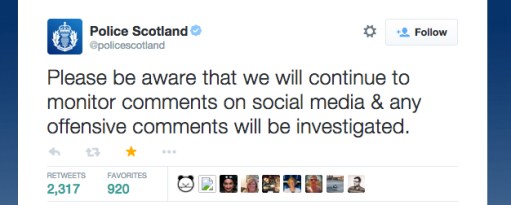
Well, you don’t have to imagine, because Police Scotland and the Greater Glasgow Police are busy constructing their own tribute to North Korea right here in the UK.

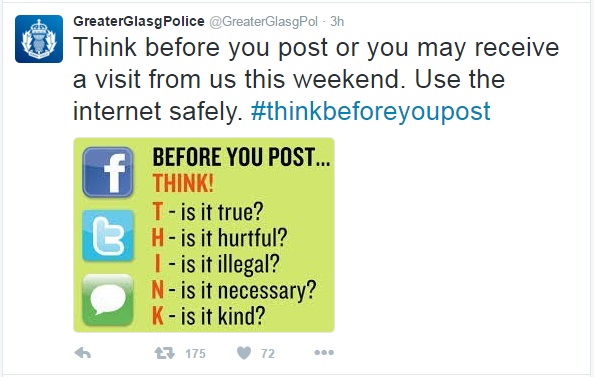
The tweet shown above was posted on twitter by the Greater Glasgow Police – unironically – this afternoon, along with the menacing hashtag #thinkbeforeyoupost.

Apparently before offering up our thoughts to the internet, whether they be on politics, cooking or sport, we are to ask ourselves whether what we are posting is True, Hurtful, Illegal, Necessary or Kind. The clear implication is that if our speech fails the THINK test, some snarling Scottish police officer will turn up on our doorstep to drag us away, much as the London Metropolitan Police did with Matthew Doyle last weekend.

This is something of a scope increase for the police, to put it mildly. Where once they largely confined themselves to preventing and solving crime, apparently having since eliminated all actual crime in our society (…) and finding themselves at a loose end, they are now eager to swoop in and punish speech which passes Britains’ already draconian hate speech laws but which happens to be arbitrarily perceived by others as hurtful, unnecessary or unkind.

Let’s call a spade a spade: this is tyranny. When an enforcement arm of the state can post jocular messages on social media warning citizens to be on their best, blandest and most inoffensive behaviour on pain of arrest, we do not live in a free society any more. And it is time that more of us acknowledged this, so that we can get on with the task of rolling it back and re-establishing our corroded right to freedom of expression.

Alex Massie thunders:

Whatever next? The monitoring of conversations in public houses? Why not? Twitter and Facebook, after all, are merely digital, virtual, gathering places. As the wags on social media have put it today, Thur’s been a Tweet and Detective Chief Inspector Taggart is on the case.

Beneath the necessary and hopefully hurtful mockery, however, lurks an important point. One that relates to something more than police stupidity and over-reach and instead asks an important question about the value placed on speech in contemporary Britain. The answer to that, as this and a score of other dismal examples demonstrate, cannot cheer any liberal-minded citizen. Such is the temper of the times, however, in which we live. Nothing good will come of any of this but you’d need to be a heroic optimist to think it will get any better any time soon.

What a country; what a time to be alive.

All very good points. If social media is fair game for the thought police, why not the local pub, too? What restraint should there be, besides time and resources, on blanket surveillance of everyone all the time in the pre-emptive battle against speech crime?

When will people finally start waking up to the sheer illiberality and the authoritarian nature of contemporary society?

When will people finally realise that weaponised offence-taking and the Cult of Identity Politics do not create a Utopian paradise of peace and harmony, that in behaving this way we are only driving bad ideas underground to fester and grow while punishing those who dare to think differently?

When will people get that having the state act as an overbearing, always-watching surrogate parent figure, monitoring our behaviour and punishing those who do no more than hurt our feelings, is creating a weak-minded and unresilient population who are unable to handle slights and setbacks without running to an external authority figure for redress?

In a healthy society, the author of that tweet by Greater Glasgow Police would have broken the law by using their position to threaten the right of the people to freedom of expression – a liberty which would be guaranteed in a written constitution enshrining our fundamental rights to life, liberty and the pursuit of happiness.

But we do not live in a healthy society, the police are free to do as they please without censure and there is no written constitution guaranteeing our liberties. Instead, we have a “make it up as you go along” constitution and form of government with a strong tendency to attempt to solve the immediate problem in front of it by taking power away from the people to act in their own interests and vesting those same powers in the state.

We are approaching the point where some kind of rebellion against this censorious, bullying, tyrannical behaviour by the police must be mounted – perhaps some kind of co-ordinated mass action whereby everyone tweets something “offensive”, gets a partner to report them to the police and vice-versa, the idea being to gum up the workings of the police and criminal justice system until the whole rotten edifice collapses in upon itself.

Semi-Partisan Politics is in very rebellious mood right now.


Police Scotland

Agree with this article? Violently disagree? Scroll down to leave a comment.

Follow Semi-Partisan Politics on TwitterFacebook and Medium.

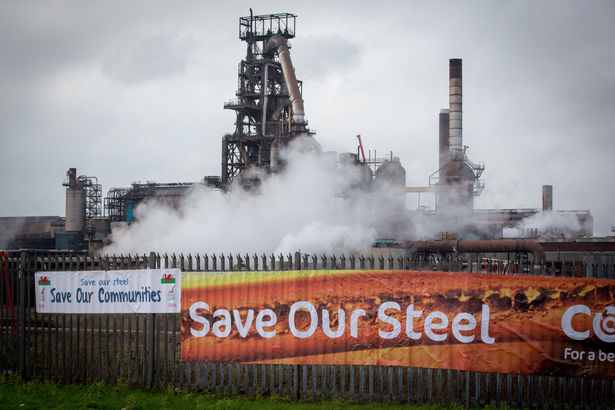
The National Security Implications Of Failing To Support The Steel Industry

Save Our Steel - Tata Steel - National Security

With so many other glaring weaknesses in Britain’s national security infrastructure, does the loss of domestic steel production really matter?

While everybody rends their garments about the threatened closure of Tata plants and other steelworks around the country, many commentators – from both ends of the political spectrum – are touching on the national security implications of failing to support our steel industry.

Arguing in favour of government intervention to support the British steel industry, the Daily Mirror quotes Labour MP Dan Jarvis:

The steel sector crisis rocking Britain could put our national security at risk, a top Labour MP has warned.

In a boost for the Daily Mirror’s Save Our Steel campaign, Dan Jarvis will tell the annual State of the North conference of the dangers of closing major plants.

“It undermines our freedom and our influence if we become overly reliant on other countries for essential resources that we will need in the future,” he will say.

“Deciding whether we preserve some of the best coke ovens and the largest blast furnaces in our country has implications for our national security as well as our future prosperity.”

While from the other side, Allister Heath writes in the Telegraph:

Then there are the strategic and military dimensions. There may one day be another major war, or a large emerging nation could go rogue. But we cannot run Britain on a war footing. The Government should engage in contingency planning: it could stockpile steel, or even set up a couple of mothballed plants. None of this is any justification for nationalising unviable businesses.

But how much of a hammer blow to Britain’s independent warmaking (or defensive) capability would the closure of our remaining steel plants actually be?

The argument in favour of retaining significant steelmaking capacity is that we might need it in case of urgent re-armament or replenishment of lost military hardware. But the lead time for the construction of a Type 45 destroyer is 3 years – compared to one year for the groundbreaking HMS Dreadnought in 1906 and thirteen months for the famous HMS Belfast in 1938. While the aircraft carrier HMS Invincible was built in seven years during the 1970s, HMS Queen Elizabeth – first of the Royal Navy’s two new aircraft carriers – will have been in production and trials for eleven years before finally becoming operationally ready in 2020.

If we found ourselves facing a dire security or military threat requiring additional naval ships, besides directing our ire at David Cameron – who has presided over a shameful degradation of the Royal Navy’s surface fleet – Britain would have little choice but to attempt to buy the requisite ships from a foreign navy (who may or may not be willing to sell to us). The lead time for commissioning a modern advanced warship is now so long that most conflagrations would be over by the time new ships were completed. And all the time they were under construction, the shipyards – and steelworks, and any other supporting industry – building them would be vulnerable to sabotage from within and aerial attack from without.

In other words, the days when we could melt down iron railings and salvage bits of scrap material to aid the war effort or rush produce a battleship in eleven months are over (to the limited extent that they existed at all). In any future major war, Britain will effectively go to war with the hardware it has available at the time, with little prospect of rapid re-armament – which is why we should all be concerned about this supposedly Conservative government’s failure to prioritise defence spending.

And it’s not just steel. Britain has almost no domestic supply of the rare earth minerals which are needed to manufacture the computer components which go into everything from vehicles, weapons and medical equipment. Sure, the government could keep stockpiles – though our government is too woefully inept to do so. But where does it end? When so many goods are the product of a disaggregated global supply chain, what do you insist is produced locally?

These are not easy questions to answer. But in answering them, policymakers have an obligation to delve deeper than the very two-dimensional “steelwork closures will mean that Britain is no longer a military power” level of debate we are getting so far. And they have an obligation – not that they are likely to fulfil it – to be honest with the public about the trade-offs which guide such decisions.

As it happens, this blog would like to see more critical national security infrastructure brought back under British control – energy independence for a start, and a strengthened military with a Royal Navy befitting a powerful island trading nation. But so far, I have yet to be convinced by anyone that the loss of domestic steel production weakens us as a country any more than the many other inevitable global interdependencies which undergird our ability to make war – never mind the Conservative government’s reckless vandalism of the armed forces, which was utterly avoidable.

And so I put this out there to those with strong opinions backed up by detailed knowledge: from a national security standpoint, with so many other glaring (and often recently self-inflicted) weaknesses in our national security infrastructure, does the potential loss of our remaining domestic steel production capacity really matter?


Postscript:

This is not to say there should not be some type of government intervention to delay the steelworks closures or mitigate their effects. Surely one of the lessons learned from Thatcherism is that no matter how essential industrial and economic realignment may be for long-term success, simply expecting people (particularly a coddled British population used to being helped by the government) to brush themselves off and start lucrative new careers after being made redundant is callous and wildly overoptimistic. The word “Tory” is still utterly toxic in some communities, over thirty years later, and we must avoid making it even worse.

People have no right to demand that the state (i.e. their taxpaying neighbours) permanently subsidise the loss-making industry which gives them employment, but we should provide those affected with transitional support through re-training and educational grants to equip workers with more lucrative skills. Failing to do so, either out of bumbling incompetence (David Cameron and Sajid Javid) or rigid ideology will only create more negative consequences of social deprivation and regional dereliction, which is morally wrong as well as more expensive in the long term.

This piece in Conservative Home explains the consequences of failing to provide such transitional support, and the advantages of doing so.


Tata Steel

Agree with this article? Violently disagree? Scroll down to leave a comment.

Follow Semi-Partisan Politics on TwitterFacebook and Medium.