By Failing To Back Brexit, Millennial Voters Are Failing Their Generation’s First Great Test Of Character

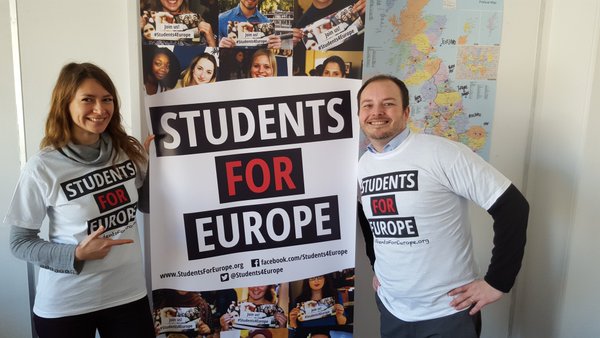
Students for Europe

Millennial voters who lazily but instinctively support Britain remaining in the European Union are letting down their country and their entire generation

Lately, this blog has been focusing on the younger, millennial generation and our unfortunate propensity to think as scared consumers rather than engaged citizens, and so overwhelmingly support Britain remaining in the European Union (even if many of us are too lazy to carry our opinions as far as the ballot box).

In taking this stance, I have encountered some pushback from readers, who have (rightly) pointed to the fact that older generations can be equally greedy and self-interested, but (wrongly) drawn a false equivalence between the two.

While not all young Remainers hold their position because of perceived material self-interest, those who completely ignore the democratic question to focus exclusively on their own material (typically career and travel) prospects – which would almost certainly be completely unaffected in the event of Brexit – are fully deserving of the criticism levelled at them by this blog and others.

The Guardian breaks down the latest polling data:

Government strategists and pollsters privately admit that the central problem for the Remain side is that its support for staying in the EU is strongest among young people, the group least likely to vote. Opinium found that in the 18-34 age group, 53% said they backed staying in, against 29% who wanted to leave. But only just over half (52%) in this age group said they were certain to actually go out and vote.

Among voters in the 55-and-over category, support for leaving was far stronger, as was their certainty to vote, offering a huge advantage to the Leave side.

Some 54% of voters aged 55 and over said they wanted to leave against 30% who wanted the UK to remain in the EU. But in stark contrast to younger voters, 81% of this group were certain to vote.

Perhaps our generation is in need of a wake-up call. This particular tirade (quoted below) is addressed to American millennials flirting with the presidential candidacy of Bernie Sanders, but parts of it apply equally to younger British voters indignant that the Leave campaign’s quest to restore democracy is interfering with their perceived career options springing from the munificent European Union.

Courtney Kirchoff writes over at Steve Crowder’s website:

Adulthood isn’t what we thought it would be. No, the economy these past several years hasn’t exactly been stellar, either. Okay? Okay.

My fellow millennials, for sure we have our challenges. Many of you were raised in broken homes. Many of you were exposed to divorce. It’s possible a lot of you didn’t live with your father or may not have known him at all. Combine home life with the rise of political correctness in school, taking its dangerous form of “self-esteem above all,” and no wonder you think life is unfair but you should have it all.

Look, I’m sorry life screwed you over in the early years. I’m sorry if you were shuffled to daycare day in and day out. I’m sorry if you don’t have memories of playing with your parents. But most of all, I’m sorry you were not instilled with the grand idea of personal responsibility. I’m sorry you were not empowered with the notion that YOU are the commander of your own life. If you take nothing else from this post, believe that no matter who you are, you can succeed. Without government.

Because guess what, my friends? You’re abject loyalty to socialism is going to tank our country. Your insistence on getting what you want and making other people pay for it, all under the guise of “fairness,” will lead to ruin. For everyone. Including you.

Switch out “socialism” and “government” and replace it with “the EU” and you have a perfect response to the EU’s millennial cheerleaders.

Yes, of course this is an age of anxiety. Just as the boomer generation seriously worried about imminent nuclear annihilation, so we worry about job security and career prospects. But we are hardly a uniquely benighted generation, though there are indeed many ways which our politics currently favours older voters – the government’s lack of a coherent housing policy being an obvious example.

But I’m sorry: growing up in economically uncertain times in an age where there is no guaranteed job for life does not absolve millennials – my generation – from thinking not only as self-interested consumers but also as engaged citizens who care about the country and democracy that they will bequeath to their own descendants.

The generation who spent their prime years fighting fascism – and who saw their contemporary Britain largely reduced to rubble and ruin in the process – could have abstained en masse from fighting the Nazi threat in order to buy a few more years of economic security and job stability through appeasement. But they were willing to go to war and risk what they had for principles which transcended material concerns.

By contrast, our generation is not called to risk or sacrifice nearly as much as our grandparents and great grandparents were to defend democracy and national self-determination – and in fact could have much to gain from British secession from the European Union, materially and otherwise. But by an overwhelming majority we are unwilling to take even that far smaller risk.

And history will long note this colossal failure of courage and character from Generation Me Me Me.
 

Hello I'm A Millennial

Agree with this article? Violently disagree? Scroll down to leave a comment.

Follow Semi-Partisan Politics on TwitterFacebook and Medium.

Tales From The Safe Space, Part 19 – Cardiff Students Hold “Inner Child Day”

Cardiff University Students Union - Inner Child Day - Infantilisation - Safe Space

Good mental health does not mean regressing back into childhood

One of the most insidious things to emerge from the Cult of Identity Politics taking over Anglo-American university campuses is the false equating of good mental health with a state of childhood.

Safe spaces, campus speech codes and trigger warnings all serve to infantilise students, in the belief that if only these young adults are coddled like children and protected from ever encountering a dissenting opinion or a negative word, it might just be possible to preserve their fragile mental equanimity.

One of the most overt recent manifestations of this trend is the “Inner Child Day” recently held at Cardiff University (the same institution whose students were so traumatised by the hateful presence of Germaine Greer on campus last year).

The ad promoting Inner Child Day encouraged Cardiff students to “embrace your inner child with a whole day of free fun in Y Plas in Cardiff University’s SU! Think inflatables, games, face painting and some 90s classics!”. Because apparently university is no longer a place to emerge into adulthood, but rather place to regress back to the habits and mentality of a toddler.

Johanna Williams paints an excruciating picture of the event in an article in Spiked:

It took place in the nightclub of the students’ union building and featured such mental-health managing strategies as biscuit-decorating, dog-petting, face-painting and jumping about on a bouncy castle. Students were able to work towards the holy grail of positive mental health by practising their forward rolls and uploading pictures of their newly ornamented biscuits to social media in return for the approval of their peers.

The nightclub was suitably decorated. There were balloons everywhere to appeal to the six-year-old children just waiting to burst out of the students’ twentysomething bodies. A giant screen at the front of the room showed a woman cradling a miniaturised version of herself as someone would cradle a child. Apparently, the phrase ‘Can your inner-child come out to play?’ was meant ‘to offer hope to sufferers’.

Watching this event unfold was like walking into a perverse version of Alice in Wonderland. Twentysomething adults were catapulting themselves towards a healthier state of mind on the bouncy castle with an abandon that would get them banned from any normal event involving bouncy castles.

This all sounds disturbingly similar to the Safe Space room set aside during a debate at Brown University in Rhode Island, in which students who felt “triggered” by what they heard during a voluntarily attended meeting were offered infantilising consolations such as puppy videos, snacks, soft furnishings and Play Doh, as well as an army of trained counsellors.

Williams concludes:

This attempt to fight insanity with insanity is worrying. The trend towards medicalising everyday moods, to treat, say, the homesick student as someone with a mental-health problem, has led to the creation of a bogus epidemic of mental ill-health on campus. This means that people who suffer from a genuine mental illness, such as schizophrenia, are missing out on support because too much attention is focused elsewhere.

These childish events will do nothing to help students who are genuinely unwell. What’s worse, they’ll make today’s pampered students even less likely to grow up.

Williams is right. This is dangerous stuff, inflating good mental health with a regression to a sanitised version of childhood, with face painting and cookies and puppy dog videos. And whatever transitory benefit it may provide to students who are not really mentally ill but are simply stressed or homesick, it will do nothing for – and in fact diverts attention and resources away from – the far smaller number who are genuinely in need of help.

True mental health comes about by building a healthy resilience to the kind of everyday emotional bumps and scrapes which characterise adult life. In the real world, people sometimes have completely contradictory views about fundamental issues, but must nonetheless live, shop and work together.

Safe space policy makes that harder by sending the message that students should not have to so much as glimpse opposing ideas, while the entire cult of Identity Politics is built on the notion of a backbiting Hierarchy of Privilege, where everybody is an oppressor and nearly everyone (except for cis white men at the top of the pyramid) is also oppressed.

This culture does not produce resilient, well-rounded adults. Rather, it is producing a generation of self-involved, narcissistic adult babies who worship at the altar of their chosen “identity” and demand that everybody else admire their idiosyncrasies, acknowledge their pain and massage their egos on pain of censorship or disciplinary action.

And if none of that stirs you to anger, then at least be outraged by Cardiff University Student Union’s cynical, tawdry trivialisation of mental health, and the suggestion that ten minutes on a bouncy castle and a spot of face painting are the cure for those students who suffer from genuine mental health issues.


Safe Space Notice - 2

Agree with this article? Violently disagree? Scroll down to leave a comment.

Follow Semi-Partisan Politics on TwitterFacebook and Medium.

Virtue Signalling Celebrities – Silly. Virtue Signalling Government – Dangerous

Benedict Cumberbatch - Virtue Signalling - Syria - Refugees

When celebrities indulge in open virtue-signalling and Something Must Be Done-ery, it is irritating but ultimately harmless. But now political leaders and governments are doing the same thing, and it is deadly serious

Tony Parsons – who only last year bravely admitted to being “Tory Scum” – has a great new piece in GQ magazine, blasting the prevalence of virtue-signalling behaviour among the celebrity and political class.

After ridiculing certain actors and celebrities, whose Something Must Be Done-ery and hand-wringing at the existence of the Evil Tories is misguided but ultimately harmless, Parsons goes on to warn that it is much less funny when political leaders and entire governments are engaging in the same virtue signalling exercise.

His conclusion is worth quoting at length:

All this smug, self-satisfied, shockingly empty posturing would be merely laughable if it was confined to a few pompous luvvies who make clods of themselves every time they say a line that isn’t written by someone far smarter than them. But the desire to demonstrate moral purity now extends its cloying reach all the way to Downing Street, where even pink-faced Tory boys strain to prove their liberal credentials.

Many civilised nations such as Australia, Canada, France, Japan and Ireland have vastly reduced their foreign aid budgets after reaching the conclusion that shovelling billions to the developing world does nothing but encourage corruption, erode democracy and throw away taxpayers’ hard-earned money like a sailor on shore leave.

But in our own country the commitment to spend 0.7% of gross national income on foreign aid has been enshrined in law. The UK spent more than £12 billion on foreign aid last year, at a time when almost every other area of public spending was being slashed. Only the NHS and foreign aid were spared George Osborne’s cuts.

How can this be? How can a new private plane for a developing world despot be more important than the police, or the armed forces, or benefits for the disabled? How can it be rational, or even sane, for a country to care more about flood defences in Congo than it does about flood defences in Carlisle?

Because it doesn’t really matter if that £12bn a year in foreign aid itself is effective. It is not about feeding hungry mouths. Foreign aid is purely about demonstrating impeccable liberal goodness. Cameron’s Conservatives need to demonstrate that they are kind, decent and virtuous, need to show that they bought “Do They Know It’s Christmas” when they were at Eton and Westminster. Our foreign aid budget – millions of it shipped to nations where the British are despised – is meant to be conclusive evidence that the Tories care.

Virtue signalling begins and ends in the developing world. So Benedict Cumberbatch can’t give a thought to a small German town like Sumte (population 102) that finds its infrastructure collapsing under the burden of giving a home to 750 migrants. Sherlock can only prove his liberal goodness by fretting about Syrian refugees.

There is a debate to be had – and it is the debate of our age – about how we manage our moral obligation to our own people with our humanitarian impulse to help the world. But you will never hear that difficult subject broached among the virtue signallers who scream their pious certainties and wag their censorious fingers at the wicked Tories – which is bitterly ironic as David Cameron is the biggest virtue signaller of them all.

This blog dissents from the suggestion that the bulk of the foreign aid budget should not have been returned to taxpayers but merely reallocated to an unreformed NHS and welfare state, but the main thrust of Parsons’ argument – that we are essentially spending nearly one percent of our GDP not to do good but rather to look good – is devastatingly accurate.

And since those who disagree with the Conservative government are already determined not to see it as merely politically misguided but as a sociopathic millionaire’s club actively seeking to hurt the poor, there is little point in continuing to ringfence international aid spending as part of a PR exercise which has already failed.

Virtue signalling when practised by lame comedians and other assorted commentators angling for a cheap laugh is tiresome but essentially harmless. But when our elected government signals its virtue with taxpayer money and national policy, it can be the difference between life and death.

Which is why David Cameron and George Osborne should focus on sound policymaking and (just for a change) conservative principle, leaving the compassionate handwringing to the more-than-capable Sherlock Holmes and Dr. Watson.


Postscript: None of this is to say that this blog does not sometimes agree with the causes fleetingly taken up by celebrities, even Benedict Cumberbatch.


Benedict Cumberbatch - This Is What A Feminist Looks Like - Virtue Signalling

Top Image: ITV

Agree with this article? Violently disagree? Scroll down to leave a comment.

Follow Semi-Partisan Politics on TwitterFacebook and Medium.

Tales From The Safe Space, Part 18 – At Edinburgh, The Revolution Eats Its Own

Imogen Wilson - Edinburgh University - Students Union - Safe Space Policy - Identity Politics

Censured for raising her hand and shaking her head in a student council meeting, but don’t feel sorry for her – this student fully supports the draconian Safe Space policy which saw a complaint raised against her

Edinburgh University has long been one of the dodgiest academic institutions in the country when it comes to tyrannical student activism and the suppression of free speech.

The university has consistently scored Red in the Spiked Free Speech University Rankings, with the student union’s bizarre rules banning “hand gestures which denote disagreement” or applause when a motion fails to pass marking the institution as a particularly insufferable place to take a degree.

(It’s amazing that they tolerate applause at all).

Therefore, in such a sanctimoniously authoritarian atmosphere, it was only a matter of time that the Identity Politics revolution which currently subjugates Edinburgh University claimed one of its own revolutionaries. And in this case, the victim is a student union officer (vice President of academic affairs) named Imogen Wilson, someone no doubt more used to doling out punishment for thought crime than being on the receiving end.

Wilson’s crime? Raising her hand to speak during a meeting of the student council, and then later – pass the smelling salts! – shaking her head in disagreement with something which was said.

The Daily Mail reports:

A student was almost kicked out of a meeting after she violated a ‘safe space’ by raising her arm at Edinburgh University.

Imogen Wilson wanted to make a point at Thursday’s student council session when she was told off by officials.

The vice-president for academic affairs at the university’s Student Association was accused of failing disabled students by not responding to an open letter.

She immediately raised her arm to disagree but was made the subject of a ‘ludicrous’ complaint and told not to make the gesture again.

Imogen was also warned for shaking her head during the meeting as it again breached the ‘safe space’ which is part of the university’s Student Association rules. 

But before you feel too sorry for Imogen, bear in mind that she is an enthusiastic proponent of Safe Space policy and the whole range of illiberal, stultifying policies which are crushing freedom of thought and expression at her university.

The Huffington Post explains:

Wilson later shook her head whilst someone was speaking, and was threatened with another safe space complaint.

“I completely understand the importance of our safe space policy, and will defend it to the ground, but I did not think that was fair, and had it gone further I would have either left or argued against it,” she said.

So Wilson was more than happy for the speech and behaviour of others to be strictly regulated and censored while on campus, but is now throwing a petulant tantrum when she herself accidentally steps on one of the very Identity Politics landmines that she and her student tyrant comrades have been busy laying throughout the political and social discourse, and in the students union rulebook.

This is also hilarious:

A fourth-year student at the meeting, who wished to remain anonymous, told HuffPost UK: “The whole thing was a ludicrous abuse of the entire intent of safe space.

“We were having one of the most emotionally tense councils of the year, with the vote on the BDS movement and people speaking who live in Palestine or are Israeli on both sides of the issue.

“There was ample risk of there being an actual safe space issue taking place—an anti-semitic or islamophobic comment for instance—but the whole debate was actually remarkably civil despite how emotional it was.

“So for someone to have abused the very legitimate purpose of safe space rules to get at someone they politically disagreed with was pretty low.

Gosh, so there was a real danger of an “actual safe space issue” occurring – the possibility that someone might have said something a bit crass or offensive about Palestinians or Israelis, thus immediately shattering the fragile psyches of the adult babies studying at Edinburgh University. How terrifying.

(And as always, it is great to see a students union spending its time debating the issues which really affect the day-to-day life of students on campus – like the BDS movement, whose principle agents will surely be quaking in their boots awaiting the verdict of a bunch of jumped-up student activists in Edinburgh).

But funniest of all is the fourth-year student’s complaint that in targeting Imogen Wilson, her accusers had “abused the very legitimate purpose of safe space rules to get at someone they politically disagreed with”.

Well, who would have thought that such cynical behaviour might be a consequence of laying so many verbal and behavioural traps everywhere? Who could have anticipated that by making so many rules governing who is allowed to speak and what they are allowed to say, it might provide an irresistible temptation for students to manipulate those rules to their own benefit, or to spitefully punish someone with whom they disagree? Who could possibly have foreseen such a shocking development?

Clearly not the adult babies of Edinburgh University, who – when they are not high-mindedly resolving the Middle East peace process on behalf of grateful Israelis and Palestinians – are so busy trying to entrap one another with their precious Safe Space / Identity Politics rules that they totally lose sight of why they are at university in the first place.


Safe Space Notice - 2

Top Image: Daily Mail

Agree with this article? Violently disagree? Scroll down to leave a comment.

Follow Semi-Partisan Politics on TwitterFacebook and Medium.

Opposing The EU Is A Calling Based On Evidence, Not Blind Faith

File photo of a Union Jack flag fluttering next to European Union flags ahead of a visit from Britain's Prime Minister David Cameron at the EU Commission headquarters in Brussels

Those who accuse Brexit supporters of being ideologically fixated and closed to alternative ideas are not only hypocritical – they have utterly failed to understand what makes eurosceptics tick

One of the drawbacks of being a committed eurosceptic and Brexiteer is that one tends to be painted as a swivel-eyed ideologue, someone whose opinion is not based on considered deliberation but on flawed, base gut instinct.

Thus the two most common insults hurled at eurosceptics – besides the cries of racism and xenophobia, which are sufficiently stupid that we can safely ignore them – are that we hate the European Union as an article of faith (or religion) rather than reason, and that we are closed minded and impermeable to new information (like David Cameron’s triumphant New Deal with Brussels).

Both of these accusations are unfair, although there is a grain of truth – many of us do indeed feel that our euroscepticism is a calling, or at least a cause important enough that we are willing to devote time, money and effort to its advancement.

When I attended the recent launch of The Leave Alliance, for example, it was one of the few times when I have actually been surrounded by large numbers of like-minded people on the Brexit issue, and it was rather humbling to be in the company of people whose curiosity and passion have led them to become experts on the history of the EU and the workings of international trade and regulation. Where it differs from religion, though, is the fact that our understanding of and distaste for European political union is not based on gut instinct or faith, but on a close reading of primary materials – treaties, statements, declarations, meeting minutes, autobiographies, trade journals, news articles – which those who support the European project can rarely match.

(I should note that I hardly consider myself to be such an expert – but through my involvement with The Leave Alliance I now have access to much better information and have shed much of the woolly thinking which clouded my previous euroscepticism).

So yes – we take our euroscepticism seriously. And those who see this as a flaw or a point of ridicule have generally failed to understand what it is about the European Union which offends us so greatly. They rhetorically ask what concessions might prompt us to change our minds – what it would take for us to stop worrying and love Brussels – thinking that by asking the question, they are revealing our blind, unthinking animosity to the harmless idea of countries coming together to trade and cooperate with one another.

Britain in Europe

In answer to this charge, Pete North has an excellent blog post from January, in which he begins with a simple fact – the signing of a protocol by Georgia and Turkey governing the electronic exchange of customs data for goods shipping – and masterfully spins it into a damning case against the European Union, proving that a harmonisation and integration-obsessed EU is actually a barrier to the kind of global co-operation which leads to economic growth and wealth creation.

Read the whole piece – entitled “The EU is not a trade bloc – it’s a power cult“.

Here is the key extract, which I will quote at length:

At the heart of it is a paranoia that without the EU the nations of Europe will once again be at war thus have set about creating a Europe that deprives nations of their democratic will to the ends of creating a single supreme government for Europe – one which actively prevents European nations speaking on their own behalf and getting the best for themselves and Europe.

And so when the question is posed as to what it would take for us hardline leavers to change our minds, we would have to address the central issue. Supranationalism. Were the EU to abandon supranationalism, to dismantle the institutions and cultural programmes designed to engender a single European demos, culture and government, to instead become a common forum for international progress, then I could change my mind. But then I would want to see it as a more open forum where our trading partners can also participate and shape the rules rather than having the EU dictating.

There are two basic problems here. Firstly, the entity a properly reformed EU would resemble already exists. It’s called the United Nations Economic Commission for Europe, and secondly, to demand reforms of this nature – of such era defining significance, we would effectively be calling for the dismantling of le grande project forever.

And so it remains the case that we are hard line leavers in that the EU cannot be reformed, will resist any attempt, and will never serve the best interests of its members – or even Europe. The EU is purely about the preservation of the EU political body that serves to advance the supranational agenda of its long dead architects.

The EU is not about trade, it is not about cooperation and it wouldn’t recognise multilateralism in a billion years. Everything it does is with the intent of affording itself more power and more control while passing the responsibility and the consequences on to member states to deal with. It is here where nuisance turns to malevolence and such an affront to democracy, based on a foundation of intellectual sand, should be resisted.

If we examine EU for what it really is, it’s a power cult – and one that will never stop until it holds all of the power. It confiscates our wealth then acts like some kind of benevolent Father Christmas, buying off all the institutions such as academia, NGOs and local authorities who would otherwise oppose it, so that when it comes to a popular vote the establishment will never turn on its paymaster.

It is for this reason true leavers oppose the EU with every fibre of their being. It is why opposing the EU is a spiritual call and a life obsession. It is why the issue will never go away and it is why a referendum will not settle the argument – because for as long as there are those who know what the EU really is, and its modus operandi, there will always be people willing to fight it to the bitter end.

And that pretty much sums up why committed eurosceptics – at least those affiliated with The Leave Alliance – take this issue so seriously, will not change our minds based on the evidence in front of us, and will not rest regardless of the outcome of the referendum on 23 June.

It comes down to the two S’s – supranationalism and sovereignty. Both cannot exist simultaneously – any key competence is either a sovereign matter or it is decided at the supranational level. And the European Union is an avowedly supranational organisation, spurning healthy intergovernmental cooperation in favour of the creation of a new layer of government over and above the member states.

Were the European Union content to fulfil the much more narrow remit claimed by many of its apologists (i.e. facilitating trade and cooperation) then an accommodation could potentially be reached. But as Pete North rightly points out, all of the evidence – and I mean all of it, to the extent that the Remain camp do not even bother to claim otherwise – is that the EU’s ambitions are much grander. They always were – that’s why the organisation which they pretend is just about trade and cooperation has a flag, an anthem and a parliament.

If anybody is being dogmatic and impermeable to patently obvious facts, it is in fact the Remain camp, who possess a superhuman ability to ignore the federalist facts staring them in the face, and somehow pretend to themselves that events of historical record and verbatim quotes from numerous EU officials did not happen and were not said. If one is not an enthusiastic European federalist, one has to be either ignorant or in extreme denial to believe that the EU as it stands is just a trading bloc, or that there is not far more integration planned for the near future.

So who is operating on blind faith here – the Remain campaign or those fighting for Brexit? While there are plenty of loud and ignorant people on both sides, those EU apologists who naively or deceptively cry “nothing to see here!” while all the edifices of a European state are brazenly built around them should be held in particular contempt.


European Union - United Kingdom - Britain - Flags

Top Image: REUTERS/Francois Lenoir/Files

Agree with this article? Violently disagree? Scroll down to leave a comment.

Follow Semi-Partisan Politics on TwitterFacebook and Medium.