Brexit Catastrophisation Watch, Part 8 – A Song For Europe

When all else fails, sing a song for Europe

From a Remainer perspective, the drawbacks and perils of honouring the unexpected EU referendum result and actually leaving the European Union, as demanded by the British people, are endless.

Already we have heard that Brexit will leave elderly people housebound and uncared for (though perhaps the old gits deserve it, for not appreciating the EU enough), prevent artists from collaborating across borders, herald the triumph of “post-factual politics”, endanger the nation’s fluffy kittens and lead to people being lynched for speaking German in London.

Given the harsh, fascistic dystopia in which EU supporters now find themselves, one might fully expect many of their number to feel depressed, hopeless, withdrawn and resigned to defeat. Not so, though. One woman is fighting back, through the medium of music. And her latest weapon is a cover of Mariah Carey’s classic, “All I Want For Christmas Is You”, reimagined as a wistful ode to the European Union.

The singer is one Madeleina Kay, an “an artist, writer, musician and social activist from Sheffield” who is “committed to using the arts to address important social and political issues and challenge destructive ingrained cultural attitudes”. Yes, she’s a Social Justice Warrior.

We’ll be generous and ignore the fact that the track Madeleina Kay hopes to make Christmas #1 sounds like a worn-out cassette recording of Zooey Deschanel’s inexplicably tone-deaf ghost playing on a battered Sony Walkman with dying batteries running at half speed deep underwater – let’s take a look at the lyrics:

I don’t want a lot for Christmas

There just one thing I need

I don’t care about the presents

In a country fuelled by greed

I just want for us to remain

Yeah, I want things to stay the same

Make my wish come true –

Baby all I want for Christmas is EU.

Because today’s generation of coddled, entitled millennials are actually profoundly conservative, inasmuch as they “want things to stay the same”, preserve and protect their own entitlements and value stability over opportunity.

A country fuelled by greed? Would that be the greed of young people brainwashed into believing that international travel and careers are possibly only through the munificence of the EU, and who then voted to Remain based purely on material concerns affecting them? The young people who claim to be citizens of the world but who make wretched citizens of their own country?

oooooh yeeeeah

I don’t want a lot for Christmas

Especially any new trade pacts, oh

I won’t be deceived by lies

I’m only concerned with the facts, oh

I don’t want my stocking filled with

A gift from Theresa May

Santa Claus won’t make me happy

With another border on Christmas Day

I just want for us to remain, etc.

And here is the customary allusion to the idea that Remainers voted in the EU referendum based on a high-minded, dispassionate review of the facts, basing their decision based on pure reason, while Brexiteers supposedly voted based on ignorant, racially-tinged superstition and emotion.

You and I may have blundered blindly into the voting booth, heads stuffed full of lies told by Boris Johnson and Nigel Farage, but Madeleina Kay and her Remainer friends painstakingly considered every piece of available evidence, every testimonial and every possible angle (economic, diplomatic, political, cultural and historical) before deciding that the European Union is just super, and that Britain should remain a member state forever.

And Kay clearly hates the Evil Tor-ees so much (more on that later) that she would refuse a gift from Theresa May if one were offered. We are clearly dealing with a young lady of great wisdom and principle here.

I won’t ask for much this Christmas

I won’t even ask Jeremy Corbyn to go

I just want to share the love so

I’ll wait beneath the mistletoe

I won’t make a list of demands

To send to Boris Johnson or Saint Nick

I won’t even try to chase away

Nigel Farage with a large stick, oh

For the sake of peace I will fight

Until we have seen the light

What more can I do?

Baby all I want for Christmas is you.

Okay, so Madeleina is a trendy lefty, but not of the Corbynista variety. Good to know. And it is also encouraging to know that the songstress intends to wage unrelenting war in the cause of “peace” – the peace that only the EU can give.

Oh the red bus driving

Spreading lies everywhere

And the sound of NHS patients’

Crying fills the air

And everyone is doubting

The lies they kept on shouting

Santa won’t you bring me the things I really need?

Like compassion, tolerance, multiculturalism

And a fair democracy?

Obligatory reference to Our Blessed NHS (genuflect)? Check.

Because of course every single patient in the NHS is lying in their hospital bed, their kidney transplant utterly dependent on the instant £350 million windfall that we all totally believed would land in our laps the moment we voted for Brexit, weeping at having been so cruelly betrayed by Vote Leave. And again, the only lies uttered in this campaign were those told by the official Leave campaign. Remainers possessed a virtuous monopoly on truth at all times.

And who can argue with Kay’s assertion that compassion and tolerance have been sucked out of Britain ever since the EU referendum? Personally, as a Brexiteer I delight in witnessing the suffering of others and adding to it wherever possible, and am incredibly intolerant of dissenting viewpoints, seeking to squash free speech, shame and intimidate people into fearful silence – quite the opposite of enlightened Remainers.

I don’t want a lot for Christmas

This is all I’m asking for

All my European friends singing

Stille Nacht outside my door

Oh I just want for us to remain

Yeah, I want things to stay the same

Make my wish come true

Baby all I want for Christmas is you.

Well, at least Madeleina correctly recognises that Germany is the dominant force within the European Union, that community of (ahem) equals based purely on “friendship” and “cooperation”.

But it gets better. It turns out that Madeleina Kay is also a rather prolific cartoonist, expressing many of her stridently superficial pro-EU sentiments through numerous political cartoons. Much of her artwork seems to channel a bizarre Wizard of Oz obsession, in which EU supporters are portrayed as childlike innocents while any conservative or pro-independence politician is generally depicted as a snarling, fanged monster (Theresa May becomes the Wicked Witch of the West):

And no prizes for guessing who this X-Files monster is supposed to be:

I am strangely drawn to Madeleina Kay’s art because it represents very simply and honestly the simplistic thinking of leftists and Remainers alike. When she draws winged demons snatching the “Future Opportunity”, “Life Chance” and “Hope” from helpless children, she reveals how leftists genuinely see the British people – as feeble lemmings in need of constant nurturing and support from government, utterly adrift when faced with separation from the European Union which seeks to be an auxiliary parent to us all.

So this is much less a criticism of Kay, and more an attack on the stunted, juvenile thinking of those politicians and commentators who frequently express in words the same ideas and sentiments that Madeleina renders in crayon. Kay, after all, is young and naive.

I myself was a drooling europhile in my student days only a decade ago, a committed euro-federalist with an EU flag adoring my university dorm room. Wider reading and real life experience eventually disabused me of these dangerous notions, and Madeleina Kay may yet go through a similar conversion and learn to put down the guitar and the Crayolas in pursuit of something more worthwhile.

But until then, at least we can sing along to “All I Want For Christmas Is EU” – either wholeheartedly or ironically, according to our position. And to be fair, it’s no worse than that ghastly, sycophantic NHS worship song we bizarrely saw fit to make Christmas #1 last year.


Postscript: Now you can buy anti-Brexit Christmas cards designed by Madeleina Kay. An essential purchase for all virtue-signalling Remainers who don’t have the first clue what the EU is or how it works, but who need to show their friends that they are very much against leaving.


Hat tip: Pete North
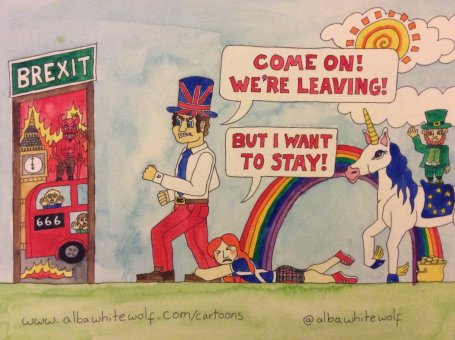
madaleina-kay-european-union-brexit-cartoons-unicorns-and-leprachauns-2

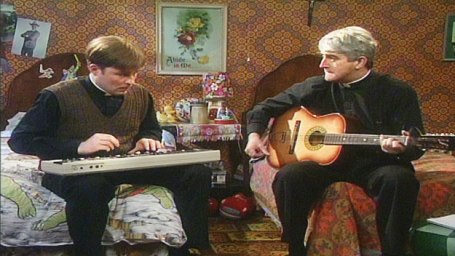
father-ted-a-song-for-europe

Bottom Image 1: Madeleina Kay / Twitter

Bottom Image 2: Channel 4

Support Semi-Partisan Politics with a one-time or recurring donation:

Agree with this article? Violently disagree? Scroll down to leave a comment.

Follow Semi-Partisan Politics on TwitterFacebook and Medium.

Brexit Catastrophisation Watch, Part 7 – Don’t Speak German In Public, Or You Will Be Lynched

Proper Food in London

Hand-wringing, self-pitying Remainers see racism and xenophobia on every corner of post-Brexit Britain, and publicly fret that the country has suddenly become an “unsafe space” for European immigrants

We knew things were bad, but not this bad.

Apparently Britain is such a seething hotbed of overt, suddenly-legitimised racism since the EU referendum took place that it is no longer safe for Germans living in London to openly speak their native language, lest they meet a violent end.

Peddling an extraordinarily irresponsible piece of hysterical speculation originally published in Die Welt, the Evening Standard reports:

Germans have been advised not to speak their native language in London following the Brexit vote.

Lawyer Carmen Prem, who has lived in the capital for 13 years, offered the advice for an article in German newspaper Die Welt.

The piece claimed foreigners were feeling “stronger xenophobia” since the referendum.

According to the article, there is now “a new bitterness, an anger which hardly any of the countless non-British on the island expected”.

And Carmen Prem, a mother-of-two, told the paper: “If you are out with the children, maybe don’t speak German too loudly at the moment.”

Yes. Britain is now so unsafe and hostile to foreigners that it is dangerous for parents to speak German to their children while out in public. In London, that great bastion of euroscepticism, nativism and xenophobia.

This is ridiculous. The absurdly, unthinkingly high level of support for the European Union within the nation’s capital was the only thing that made this referendum outcome a remotely close result for the Remain campaign. Take London away and Britain might actually be living in some kind of Nigel Farage funland right now. And yet we are supposed to believe that the capital city of the early 21st century world, which staunchly voted to remain in the EU during the referendum, is somehow hostile to European foreigners who live and work here?

Well, somebody needs to tell the half of France who seem to be living in my own corner of London, West Hampstead. None of them seem particularly perturbed by the oppressive air of racist doom which apparently now hangs over them; nor have they been reduced to only speaking their language from within the safety of secret societies or covert meeting places in cellars and basements – French is easily the second most spoken language on the high street and in the cafes.

More:

In the same article, German professor Mischa Dohler, who works at King’s College London, said he was seriously considering moving abroad.

The academic said he had received countless job offers but had turned down a role in Cambridge because of uncertainty following the Brexit vote.

He said: “Many non-British academics simply see no future here.”

No future. Okay. Sure, because there is simply no way that immigrants can live in another country unless those two countries are bound together as part of an ever-tightening supranational government, right? It simply couldn’t happen. The EU is the only thing which makes friendly cooperation and immigration between countries possible. I myself would never have been able to work in Chicago for a year were Britain and the United States not part of the same continental political unio — oh wait. Yes I was.

And the fact that so many weepy British europhiles and EU residents of Britain see their lives and futures as being dependent solely on the EU, of all things, only shows how effective forty years of relentless pro-EU propaganda, toothless media coverage and incoherent political opposition have been in making their creepy supranational project seem central to European peace and prosperity when in fact it has been marginal at best and an active drag at worst.

The idea that there is some kind of imminent pogrom against foreigners living in Britain is ludicrous – and all the more so when the people making the charge live in London, the most cosmopolitan corner of the UK (and probably the whole of Europe). But that’s not to say that there have not been isolated and deplorable acts of referendum-related bigotry and even violence.

Tragically, my hometown of Harlow, Essex managed to distinguish itself by playing host to what some people rather hysterically termed the first Brexit-related murder in the country, a young Polish factory worker set upon by a group of teenage hooligans and beaten to death. However, from my recollection and personal experience of being set upon by feral youths in that town, the kind of mindless young thugs who wander around Harlow late at night looking for a brawl are so completely brain-dead that I would be surprised if any of them even realised that a referendum had taken place. Current affairs tends not to be their forte.

And so we find ourselves in an absurd situation. We have been continually told – quite rightly – that we must refrain from forming any negative opinions about immigrants based on the bad actions or non-assimilation of a few. Yet apparently immigrants from the EU are being encouraged to form negative opinions about the whole of Britain based on one or two rather dubious-sounding anecdotes offered by by German professionals?

If anything is harming Britain right now, it is the ongoing attempts to catastrophise Brexit being fomented by bitter Remainers – people who would seemingly rather Britain descend into some dark, dystopian future and be vindicated in their doomsaying than help their own country to present a positive, open and internationalist face to the world.

We should not be surprised. In an age where looking good (and signalling virtue) is more important than actually doing good, there is every incentive for Remainers to continue seizing on every morsel of bad news, overlooking every positive development and generally acting hysterically, so long as their precious internal narrative – that They Virtuous Few stood alone against the “dark forces” of racist Brexit – is not disrupted.

Personally, I find it despicable, but good luck to them.


European Union - United Kingdom - Britain - Flags

Top Image: Pinterest

Support Semi-Partisan Politics with a one-time or recurring donation:

Agree with this article? Violently disagree? Scroll down to leave a comment.

Follow Semi-Partisan Politics on TwitterFacebook and Medium.

Meet Baroness Henig, Stoking Fear Of Terrorism To Benefit Her Private Security Business

baroness-ruth-henig

Baroness Henig’s exploitation of the Paris Attacks anniversary to advocate new laws demanding that concert venues invest more in security – while herself employed as chair of a private security firm which just so happens to provide these services – showcases British politics at its most tawdry and corrupt

There are innumerable reasons why the House of Lords in its current state is an utterly intolerable affront to democracy and ethical decision-making, but an example from today really takes the biscuit.

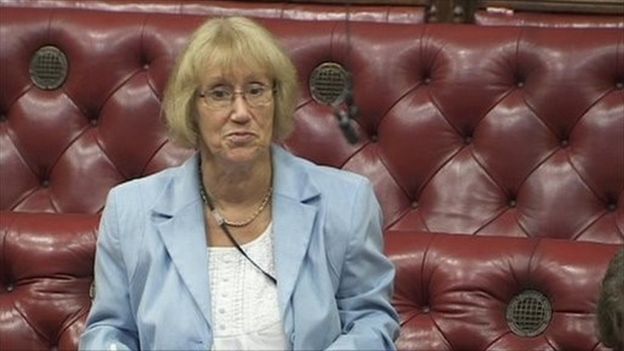
We are coming up on the one year anniversary of the heinous coordinated terrorist attack at the Bataclan concert hall and across Paris, and Baroness Ruth Henig – a Labour peer appointed in 2004 – decided that today would be the perfect day to pop up on the BBC News Channel to declare that private concert venues should do more in terms of anti-terrorism security and training, enforced by law through a potential change to the Licencing Act 2003.

From BBC News:

Licensing laws should be changed to force entertainment venues around the UK to undergo counter-terror training, a private security expert has said.

Baroness Ruth Henig told the Victoria Derbyshire programme that some venues did not take such training “seriously”. The former chair of the Security Industry Authority now plans to table an amendment to the 2003 licensing act, to include counter-terror training. Her comments come nearly a year after 130 people died in attacks in Paris.

[..] Baroness Henig said: “There are clearly a number of venues, often the larger venues, I think, but not always, who have airport-style security, who, for example, do have metal detectors, who do have very well-trained security personnel and they top up this training regularly.

“But I think at the other end there is a tail of venues who aren’t taking it seriously, we know this from the police, who don’t co-operate, who don’t take up the offers that are made to them and where I think there are some concerns.

“And the issue is how do you get to that tail of venues who are perhaps not doing as much as they should be about security.”

So far, so noble, you might think. After all, Baroness Henig only recently completed two terms as chair of the Security Industry Authority (SIA), the government regulator for private security firms run under the auspices of the Home Office. Who better to make a reasoned, fact-based case for more necessary security regulation than somebody who was in charge of holding the industry to account?

Only that is no longer Baroness Henig’s role. Rather than regulating the industry and ensuring that professional standards are upheld, Ruth Henig can now be found on the board of SecuriGroup, a private security consultancy and provider itself regulated by the SIA – and not just as any board member, but as the Chair of that organisation.

Here’s her official company bio:

Baroness Henig joined SecuriGroup after completing two successful terms as Chair of the Home Office Regulator, the Security Industry Authority (SIA). Baroness Henig’s commitment to security and policing is well documented having held the post of Chair of Lancashire Police Authority and the Chair of the Association of Police Authorities in England and Wales which led to the award of a CBE in 2000 for services to policing. The Baroness also served on the National Criminal Justice Board and Street Crime Action Group, chaired by the then Prime Minister, Tony Blair.

She was appointed as Deputy Lieutenant for Lancashire in 2002 and made a life peer in 2004 as Baroness Henig of Lancaster. As a Deputy Speaker of the House of Lords, Baroness Henig takes her place on the European Security Committee on Foreign Affairs and is a member of the Independent Policing Commission.

And most conveniently, some of the services offered by SecuriGroup include counter-terrorism strategy training, security guarding, door supervision and event security. One might say that SecuriGroup are perfectly poised to provide the very services that their CEO is currently insisting are made mandatory from her unelected seat within the UK Parliament.

To move instantly from a position regulating an industry to the chairmanship of one of those companies being regulated is concerning in and of itself. In fact, the free flow of individuals back and forth between regulator and regulated organisations is one of the primary symptoms of “regulatory capture,” a phenomenon whereby a government body established to regulate an industry “instead advances the commercial or political concerns of special interest groups that dominate the industry or sector it is charged with regulating”.

In this context, Ruth Henig’s sudden concern that smaller music venues are not stumping up for expensive anti-terrorism security countermeasures starts to look a lot less like high-minded public interest and a lot more like grubby concern for the bottom line. Is Henig worried about “that tail of venues who are perhaps not doing as much as they should be about security” because the safety of concertgoers has been keeping her up at night, or because a valuable revenue stream for SecuriGroup has been going unexploited? Given that she now derives her pay cheque from a private security firm, one has to assume that it is at least partly the latter.

Henig tries to cast herself in a virtuous light by pointing out the fact that the initial police consultations with event venues offered as part of Project Griffin are free. And so they are. But when the risk-averse police advise small venues operating on shoestring budgets that they need to pay for additional private security (by hiring the services of SecuriGroup or its competitors), that certainly will not be free. The sums of money involved would likely shut down or severely restrict the operations of many of Britain’s smaller music venues.

Of course there is nothing surprising about a Labour politician downplaying the cost of regulatory compliance – this is their bread and butter. But to do so because one has a direct financial interest in more stringent regulation is morally grey at best.

And this is one of the main problems with the House of Lords. Henig’s case is far from unique. It is just particularly disgusting, because it involves taking advantage of the anniversary of the terrorist murder of more than a hundred people to help drum up more business for SecuriGroup. But regulatory capture is an inherent feature of an appointed House of Lords, not an awkward and unintended quirk.

When governments appoint people to the upper legislative chamber based often on their industry experience (and that’s a best case scenario, assuming they aren’t simply cronies being rewarded for political services rendered), those people will naturally retain extensive links to the industries in which they built their careers and reputations. Sometimes this can be a good thing and lead to better, more considered lawmaking. But if the legislator in question is still working (or intends to return to work) in that field, then their judgment is inherently compromised.

Unfortunately, rather than realising the glaring conflict of interest and recusing herself from debate on the subject, Baroness Ruth Henig decided instead to roll up her sleeves and abuse her position as an unelected peer to further the interests of the company she runs – and all in the run-up to the anniversary of a terrorist attack which killed 130 innocent people.

Britain is crying out for proper constitutional reform to build up the public’s diminished faith in our democratic process. Part of that means proper reform of the House of Lords – making it a fully elected chamber (with term limits, length of terms and the candidate pool open for discussion, so long as we produce a more deliberative body), ending the “elected dictatorship” of the primacy of the Commons, kicking out the theocratic Lords Spiritual and drastically shrinking the membership.

But it also means cracking down on the kind of morally dubious behaviour exhibited by people like Baroness Ruth Henig. We must end the revolving doors which currently exist between Parliament and industry, Parliament and lobbying and between regulator and regulatee. Somebody who just completed two terms regulating the private security industry should not then immediately be allowed to go and work in that same sector. Just because it is commonplace and seen by the establishment as a “deserved reward” for having previously slummed it on the public purse does not make it right.

Using the anniversary of the November 2015 Paris Attacks to promote a bill making it mandatory for even the smallest of music venues to invest heavily in additional security is politics at its most cynical – particularly when you consider that heavily armed and well trained gunmen such as those who committed the Paris Attacks (and the previous attack on Charlie Hebdo) would hardly be deterred by the presence of additional unarmed security guards.

But promoting an ineffective course of action which also happens to result in significant monetary gain for one’s outside business interests is about as low as it is possible to get. By all account, Baroness Henig’s career thus far has been distinguished and honourable. She should reverse course and either give up her chairmanship of SecuriGroup or otherwise immediately recuse herself from any further part in legislating security issues – or risk tarnishing that good reputation forever.


baroness-ruth-henig-securigroup

concert-venue-security

Top Image: BBC

Bottom Images: Pixabay, Twitter / SecuriGroup

Support Semi-Partisan Politics with a one-time or recurring donation:

Agree with this article? Violently disagree? Scroll down to leave a comment.

Follow Semi-Partisan Politics on TwitterFacebook and Medium.

Expanding Heathrow Is A Start, But Now We Must End The War On Aviation By Cutting Air Passenger Duty

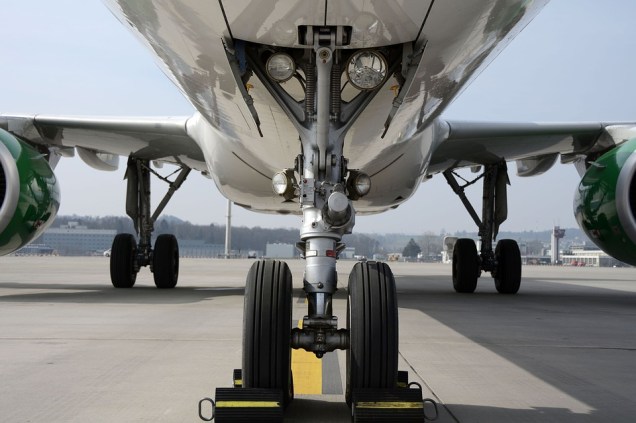
airplane-aeroplane-wheels-chocks-2

THIS ARTICLE WAS FIRST PUBLISHED AT CONSERVATIVES FOR LIBERTY


With the government’s announcement that Heathrow will finally get a third runway, it is time to end the decades-old war against aviation by slashing Air Passenger Duty too

About this time every year, my Texan wife and I glance at the calendar and realise, with dread, that the time has come to book plane tickets to the States for Christmas. To be clear, the dread has nothing to do with visiting my in-laws, whom I love very much – no, what ties my stomach in knots every autumn is the nagging question of how much money the British government intends to extort from me for the privilege of flying away from this rainy island for a couple of weeks of Texas sunshine.

Every year, Air Passenger Duty – that invidious, regressive, anti-business tax – creeps ever upward. And while the government may deign to excuse certain people from this extortion (children under sixteen were made exempt this year, in a blaze of self-congratulatory glory), for the rest of us APD keeps on inching upward. At a time when falling oil prices should mean that air fares reach historic lows, in Britain at least the cost of air travel is kept artificially high thanks to this ill-conceived tax – by far the highest in the developed world.

And why? Primarily as a sloppy wet governmental kiss to environmentalists, who some time ago decided that nothing poses a greater threat to the Earth than a working class person enjoying a holiday in Florida, or taking a cheap excursion to one of the sunnier parts of Europe. Air Passenger Duty is nothing so much as the collective howl of outrage from well-heeled leftist environmentalists that poor people are forgetting their place (i.e. receiving benefits and being thankful for them) and daring to travel the world as wealthy people did before them.

Remember the leftist credo, everybody: Fashionable celebrities flying private jets to Davos to moralise about carbon emissions made by the rest of us = good. Nasty working class folk flying Ryanair for a fortnight in Lanzarote or a stag weekend in Riga = bad.

Now that the government has taken the painful and very belated decision to proceed with the expansion of London’s Heathrow Airport (something which should have happened a long time ago) there will be inevitable calls for punishing new environmental levies to offset the terrible “damage” that is supposedly wrought when the state takes its jackboot off the throat of the aviation industry. There will likely be calls to raise Air Passenger Duty even further to help pay for this crucial national investment, even though the exorbitant tax already places Britain at a huge comparative disadvantage.

The government must resist any and all calls to raise APD. In fact, there could be few clearer signs that this government is committed to championing UK aviation and supporting the economy through the uncertainty of Brexit than a bold, dramatic cut in Air Passenger Duty from the current level of £13 short haul / £ 73 long haul / £146 premium cabin rates back down to the single digits. When my wife and I connect in Houston or Dallas Fort Worth on our way from London to the Rio Grande Valley, we pay the state of Texas no more than a few dollars for the privilege of transiting through DFW or George Bush Intercontinental airport – and both of those hubs put London’s Heathrow and Gatwick to shame.

At a time when the government is considering cutting Corporation Tax as low as 10% as an incentive to firms to invest, grow and remain in the United Kingdom, we should not be discouraging business executives and holidaymakers (72% of whom come to the UK by air) from choosing Britain by mugging them before they even step off the jet bridge. Cutting Corporation Tax is great, but the government should not forget individuals, who currently labour under all manner of punitive stealth taxes and would greatly welcome the relief. Neither should the government forget the aviation industry, which is every bit as vital as shipping to an island nation, and which for too long has been stymied and suppressed by cowardly politicians who refused to take critical decisions in the national interest.

With the long-overdue decision to build a third runway at Heathrow Airport, the government has finally called an end to years of dithering and inaction and made a necessary decision in support of the economy. But the benefits of this decision could yet be killed in the crib unless Britain also signals its intention to stop being the high-tax, anti-aviation country which prioritises impractical, virtue-signalling environmentalism over necessary infrastructure investment and tax reform.

There is no earthly reason why you or I should have to pay £73 for the privilege of taking off from Heathrow Airport, whether it has two runways or three. And if Theresa May and Philip Hammond are serious about signalling that Britain is open for business then slashing this one small but immensely harmful tax would be a great place to start.


THIS ARTICLE WAS FIRST PUBLISHED AT CONSERVATIVES FOR LIBERTY


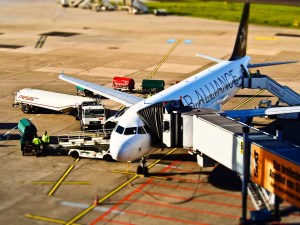
aviation-airplane-on-tarmac-at-airport

Top and Bottom Images: Pixabay

Support Semi-Partisan Politics with a one-time or recurring donation:

Agree with this article? Violently disagree? Scroll down to leave a comment.

Follow Semi-Partisan Politics on TwitterFacebook and Medium.

Britain’s Leftist Open Borders Zealots Have Turned Migrants And Refugees Into Political Pawns

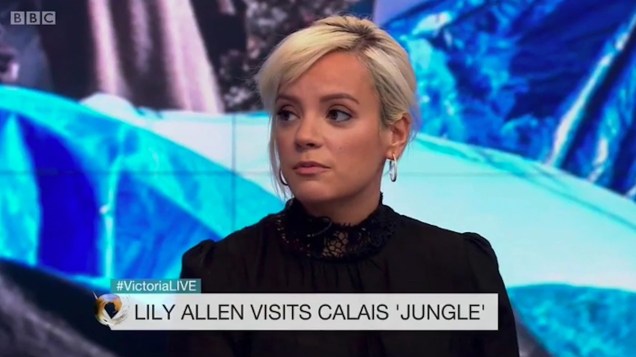
lily-allen-calais-jungle-child-migrants-refugees-2

The migrant crisis is too great an opportunity to ignore for many virtue-signalling members of Generation Me, Me, Me

Brendan O’Neill hits the nail on the head with his latest criticism of sanctimonious celebrity campaigners for open borders, in a piece entitled “You’re so vain, you think the refugee crisis is about you”.

O’Neill writes:

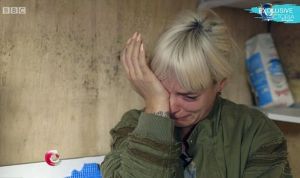
Narcissism runs through the discussion. The question these refugees raise is ‘What kind of people do we want to be?’, says one columnist. The keyword here: ‘we’. On the supposedly pro-refugee side, the game of self-reflection has been intense. Witness Allen’s TV-camera tears when she was chatting to an Afghan boy in Calais, after which the entire discussion became about her. Her image was everywhere. There was a thinkpiece war, some saying ‘Allen was right’, others saying ‘Allen was wrong’. It became about the role of celebrities in public life and whether emotionalism has a part to play in political decision-making, with the migrants reduced to mere objects of our self-reflection, and our tears, not the subjects of their own story.

Then there was Stella Creasy, the self-promoting Labour MP, interviewed in the London Evening Standard, promising to stand up for these child migrants regardless of how much flak she will get (shorter version: ‘I am brave’). The piece was accompanied by a massive picture of Creasy: no image of refugees, just her, because this is about her, not them. Then the story became all about Lineker, after he tweeted his concern for the refugees and was blasted by the Sun for doing so. What is the role of BBC people if not to be morally switched-on, a thousand op-ed scribblers asked, because this is about the Beeb, and the media, and us, not them. Jeremy Corbyn got stuck into the discussion of ‘what kind of people we want to be’ by praising Allen and Lineker for showing ‘Britain at its best’. It was a surreal illustration of the evacuation of substance and seriousness from public debate and their replacement by The Spectacle, largely of emotion: a political leader hailing media representations of sorrow for migrants over anything solid or concrete in relation to the actual lives of the actual migrants.

The media discussion has provided a striking insight into what being pro-migration largely means today: that you – the keyword being ‘you’ – are compassionate. Migrants are latched on to, not because of a genuine commitment to the idea of free movement (witness Creasy saying of course some migrants will have to be kept out), but rather as a means of self-distinction. To be pro-migrant is to be superior to those badly informed Others, who have a name now: Brexiteers. This is why so much of the child-refugee discussion has become bound up with Brexit-bashing. ‘What do we see each morning, post-Brexit, when we look in the mirror?’, asked a Guardian columnist of the child-refugee situation (keyword: ‘mirror’). He says we see a nation ‘hollowed out in terms of compassion’, but of course he means that is what ordinary, ugly, Brexit-voting Brits see in the mirror, not the migrant-loving Brits at the Guardian.

My emphasis in bold.

To be fair, Brendan also accuses many of the most strident anti-migrant voices of the same sin; I do not want to misrepresent his piece. But then Brendan O’Neill and Spiked (bless them) are enthusiastic advocates for completely open borders and the free movement of people everywhere – “it doesn’t matter if they’re kids, teens or adults: the length of their journey and the strength of their desire to live and work on Britain are surely sufficient to grant them access” – an idea rather ahead of its time (not to mention politically toxic so long as such disparities of wealth, culture and values persist).

But Brendan is absolutely right to note that the people of the Calais Jungle – genuine refugees and economic migrants alike – have largely been become political pawns in the ongoing British immigration debate. What matters to many people is how they are seen to talk about the migrant crisis rather than there being found an effective solution – as we saw only this week when Labour MP Chi Onwurah got upset about a poster mocking leftist credulity about migrants posing as refugees, claiming that it was “offensive” when it in no way targeted genuine child refugees.

O’Neill also writes perceptively of the “moral thrill” experienced by many of the “let them all in” camp, and indeed you see it coursing through numerous posts on social media, the intent of many seems far more to do with aggrandising the poster than trying to reach a reasonable compromise with those who do not want to let every last person into Britain unquestioningly.

But to his criticism of the political right:

The narcissism of the other side is striking, too. It is hard to believe that these right-leaning observers really believe that 70 young people coming to Britain will have any kind of terrible impact. And yet they demand that the arrivals’ teeth be checked to see how old they are, and furiously tweet photos of the young men with adolescent moustaches and mobile phones as if to say: ‘See! They’re grown-up! They’re dangerous!’ This is a performance of toughness, of security, to match the performance of compassion of the other side. Just as the pro-refugee side sidelines serious debate about freedom of movement and the role of their beloved EU and its Fortress Europe in creating this crisis, so the anti-refugee side dodges difficult questions of what is really causing a sense of insecurity in 21st-century Europe in favour of turning a handful of young refugees into symbols of existential disarray. Indicators, symbols, mirrors – that’s all these people are, to both sides.

I don’t see it that way at all. While some people do demand that Britain stop accepting any further refugees, a majority would be happy, I believe, if the UK government was simply a little less credulous and a bit more discerning about the people we do accept – both as to their age and the validity of their status as refugees rather than economic migrants.

The pictures do not lie – many of those already brought to Britain from the dismantled Calais Jungle camp are clearly adults. Does that automatically mean that they are not deserving of help? No, and I don’t think that anybody serious has claimed otherwise. But if this country is accepting fully grown men who claim to be children, what is to say that other levels of scrutiny which are supposedly taking place – like checking that entrants are not violent jihadists – are any more reliable? If the UK government is squeamish about insisting that child refugee applicants submit to dental tests to verify their age, have they also been reticent to ask whether the people they are ferrying from Calais to Croydon intend to wage jihad from inside their adoptive country? The incompetence we have already seen rightly makes us wonder about the incompetence which is being kept hidden from us.

These are perfectly legitimate questions to ask, and they do not constitute virtue signalling in the same way that the Left have seized on the migrant crisis to portray themselves as saints and the rest of us as sinners. Particularly in the context of the recent bloody history of ISIS using the migration crisis as a cover to slip Islamist extremists into Western countries, a basic level of scrutiny should be one of the first duties of government – yet there is now legitimate cause to fear that this scrutiny is not being applied for fear of causing “offence”, either to the migrants themselves or (more likely) to their powerful left-wing cheerleaders.

And here’s the thing.

Far right-wing rhetoric may be much more unpleasant to the ear than trendy lefty dronings about a borderless world of people holding hands beneath a rainbow. But leftist rhetoric and actions when it comes to the migrant crisis have killed far more people than anything said or done by those who are sceptical of accepting every last economic migrant who fancies a new life in Britain.

It was the leftist cheerleaders of Angela Merkel’s “open doors” policy who encouraged thousands more people to make the treacherous journey across Europe, some in genuine fear of imminent harm but many simply seeking a better life.

It was the leftist campaigners who accused sceptics of heartlessness for wanting to start turning boats back as a disincentive to make perilous the sea voyage who tacitly encouraged many more people to do so, and drown in the process.

And it was the false hope given by leftist agitators that Britain would ultimately accept a trumped-up moral obligation to accept thousands of people already enjoying the protection of France, hardly the most dangerous country in the world, which encouraged even more people to flock to the Jungle and remain there.

And yet we are supposed to believe that open borders zealots and sceptics are equally at fault when it comes to virtue signalling about the migrant crisis? Absolutely not. Exploiting migrants and refugees to burnish their own compassion credentials is the Left’s bread and butter, and it is an emotional comfort blanket whose cost can be measured in human lives.

So let’s not pretend that there is any moral equivalency in terms of blame for the suffering of migrants holed up in Calais. There is none. This is a crisis manufactured by the Left and encouraged by the Left for the benefit of the Left. They own it.

And all of Lily Allen’s tears will not wash away their culpability.


lily-allen-calais-jungle-child-migrants-refugees

Support Semi-Partisan Politics with a one-time or recurring donation:

Agree with this article? Violently disagree? Scroll down to leave a comment.

Follow Semi-Partisan Politics on TwitterFacebook and Medium.