Tales From The Safe Space, Part 27 – Ohio University, Tear Down This Wall

Ohio University - Trump 2016 - Chalk - Hispanic Latino Student Union - Cultural Sensitivity

At Ohio University, mortal offence is in the eye of the beholder

Another day, another American university cravenly submitting to the identity politics bullies and their weaponised mental weakness.

Now, the president of Ohio University has apologised to students in a letter because unknown other students dared to exercise their First Amendment rights by spraying a political sentiment (expressing support for Donald Trump – pass the smelling salts!) on the university’s famous Graffiti Wall.

The Athens Post reports:

The graffiti wall by Bentley Hall was found painted over with the words “Trump 2016” and “Build The Wall!!” on Thursday.

Some Ohio University students were upset by the display.

“I felt disgust, frustration and I expected more from this campus,” Joshelyn Smith, a senior studying communication and public advocacy, said.

The Hispanic and Latino Student Union at OU put together an emergency meeting that took place in OU’s Multicultural Center after finding out about the mural and ultimately painted over it at 3 p.m. Thursday.

“The goal of the meeting was to start a discussion,” Carla Triana, Hispanic and Latino Student Union president, said. “We heard about (the mural) at 9 this morning, and we had to do something instantaneously. We had to educate people on why this was offensive.”

Yes – clearly nothing was more important than holding an “emergency meeting” to explain why declaring support for a political candidate on a wall honouring free speech is so “offensive” as to warrant seeking out and punishing the perpetrators.

Sadly, much as we saw with the college Equal Opportunities administrators who gleefully shredded the US Constitution in an attempt to soothe the hurt feelings of a student (really an undercover reporter) who claimed to feel “triggered” by the document, Ohio University was lightning quick to apologise to the outraged students.

Even though these students are nothing but bullies, attempting to use their hurt feelings as a weapon to shut down the fundamental free speech rights of others, Ohio University leaders could not find it within themselves to stand up to the identity politics cultists and tell them to grow a thicker skin.

Campus Reform reports:

The president of Ohio University sent a campus-wide email expressing sympathy for those “hurt” by pro-Trump slogans written on a free speech wall last week.

[..] The Hispanic and Latino Student Union called an emergency meeting—attended by university president Roderick McDavis— to “start a discussion … on why this was offensive,” after which they decided to paint over the messages.

[..] McDavis assured attendees that he shared their concerns, and was working to accelerate the development of a cultural competency element for freshman orientation, following that up the next day with a message to the campus community discussing the “beauty and power” of words in the context of sympathizing with those offended by the Trump-inspired messages.

“Yesterday, I met with students and members of our Hispanic/Latino community who saw words that troubled them on the Graffiti Wall,” McDavis wrote. “Indeed, this wall is a place of free speech and expression; however, the words painted were troubling because they had a very different meaning to some than they may have to others viewing the message or even to those who painted the message.”

But this frantic attempt by McDavis to mollify the angry students by adopting their identity politics language and accepting the premise of their complaint is exactly the problem. When you move away from an objective standard of what constitutes unacceptable (or “problematic”) free speech toward a worldview where speech can be restricted or punished based on the subjective feelings and interpretation of certain third parties, then you no longer have anything like freedom of speech.

If the words “Trump 2016” or “Build the Wall” were troubling to some students because they chose to interpret them as “I hate Hispanic/Latino people” rather than “let’s adopt this policy in a (counter-productive) attempt to enforce our border”, does this mean that the political idea can no longer be expressed for fear of upsetting those who apply the worst possible interpretation of the words in their minds?

What about other political statements? If one follows this logic, do we not end up in a situation where any conservative sentiment is liable to be banned after being wilfully misinterpreted by angry students wielding their fragile “mental safety” as a weapon?

(And incidentally, although it does not excuse Trump’s worst rhetoric about immigration, the fact that the identity politics practising American Left immediately interpret any call for immigration control as smoking gun evidence of deep racism – meaning that the political opinions of countless people are effectively made taboo – is one of the reasons why Donald Trump is now serving as such a successful and dangerous pressure release valve for years of previously unchannelled anger).

This is a textbook case of how not to respond to an identity politics-based student power grab on campus. As soon as university administrators conceded the premise of the complaint – that words spoken, written or painted can cause “harm”, and that this is unacceptable even if the harm is only incurred by applying the worst possible interpretation of the speech in question – they lost the war. They frantically scrambled to mollify the students in an attempt to buy themselves peace, but they will only succeed in emboldening the student activists to take offence even more easily and demand even greater concessions in future.

One can predict with reasonable confidence that there will now be one or more forced resignations from the Ohio University faculty or administration in the coming year, either as a result of what has already happened or because of some future non-existent transgression against the student population. And it will be richly deserved, for those who fail to defend academic freedom and free speech have no place running our universities.


Safe Space Notice - 2

Agree with this article? Violently disagree? Scroll down to leave a comment.

Follow Semi-Partisan Politics on TwitterFacebook and Medium.

Republicans Are In No Position To Mock The Democratic Party Primary Debates

In his Morning Briefing email today, the National Review’s Jim Geraghty disparaged last night’s latest Democratic Party primary debate between Hillary Clinton and Bernie Sanders with these words:

‘Yeah, There Was Another Democratic Debate.’ (Stifles Yawn)

Thursday night’s Democratic debate in Brooklyn basically amounted to Bernie Sanders’s repeating all of his familiar attacks against Hillary and her insisting they’re baseless; and her charging that he doesn’t know what he’s talking about, at which point he would counter-charge, “THE GREED AND THE RECKLESSNESS AND ILLEGAL BEHAVIOR OF WALL STREET BROUGHT THIS COUNTRY INTO THE WORST ECONOMIC DOWNTURN” — sorry for the all caps, it’s the only way to accurately capture the volume of Sanders’ high dudgeon voice — “SINCE THE GREAT RECESSSION OF THE THIRTIES, WHEN MILLIONS OF PEOPLE LOST THEIR JOBS AND THEIR HOMES AND THEIR LIFE SAVINGS, YOU’VE GOT A BUNCH OF FRAUDULENT OPERATORS AND THEY’VE GOT TO BE BROKEN UP!”

Below are a couple of highlights, to the extent there were any:

Clinton, last night, defending her judgment: “President Obama trusted my judgment enough to ask me to be secretary of State for the United States.”

Yeah, that line may work really well in a Democratic primary, but you can apply the same “hey, if Obama picked me, I must know what I’m doing” argument to former HHS secretary Kathleen Sebelius, VA secretary Eric Shinseki, short-lived Secretary of Defense Chuck Hagel, all of those wealthy donor ambassadors who knew nothing about the countries where they would represent the U.S . . .

Hillary Clinton: “It may be inconvenient, but it’s always important to get the facts straight. I stood up against the behaviors of the banks when I was a senator.

I called them out on their mortgage behavior. I also was very willing to speak out against some of the special privileges they had under the tax code.”

Bernie Sanders: “Secretary Clinton called them out. Oh my goodness, they must have been really crushed by this. And was that before or after you received huge sums of money by giving speaking engagements? So they must have been very, very upset by what you did.”

I’m sorry, does a political debate no longer count as interesting or exciting unless a deranged mob of populist Republicans are flinging feces at each other or comparing the size of their junk?

Are Sanders and Clinton repeating themselves a lot? Yes – as someone who is deluged by campaign emails and briefings from both sides, that much cannot be denied. But at least the things that they are saying actually matter. They relate to foreign policy, trade policy, crime and punishment, campaign finance and the influence of Wall Street.

The argument in the GOP primary has devolved into little more than pledges to revoke ObamaCare faster than the other (“I’ll abolish ObamaCare by executive order at the beginning of my inaugural address!”) and competing visions for exactly how high the wall should be between the United States and Mexico.

Debates on both sides probably shed a lot more heat than light, but anyone who has watched a few of these things in the 2016 cycle would have to admit that more of substance has been learned on the Democratic side than the Republican side this time round – with the same going for 2012 too, when the Republicans treated us to Michelle Bachmann and Herman Cain.

There is a group – and I can’t say how large it is, but I know it exists from my time living in America – of liberty-minded conservatives out there who are thoroughly disgusted with the Democrats’ record in office and the general direction of the country, but who will stay home or hold their nose and vote for Hillary Clinton before they see Donald Trump or even Ted Cruz in the White House.

(And to those Trump supporters who protest, I would simply say that fighting back at the establishment and sticking it to the man does not have to mean vocally supporting torture and eroding the constitution. In fact, as Britain’s Nigel Farage discovered, it is actually better when the establishment come at you equally hard for holding mostly reasonable position, as their desperation to kill the challenge to their power is then exposed for what it is).

Though I am not yet a US citizen, if I had voted in the 2008 election I would have voted without hesitation for Barack Obama over the John McCain / Sarah Palin freak show. Many others did the same. So forget trying to attract massive new demographic groups to the side of the Republican Party – maybe the GOP should focus more on simply not alienating those people who will reliably vote for any serious-minded conservative, but who are constantly chased away from the party by the carnival of idiots who keep making it to the primary debates.

You can sneer that it is cultural snobbishness at work (and a bit of it is – though not the majority), but it goes deeper than that. And the good news is that the Republican Party will soon have another chance to reinvent itself for a new era as they spend another presidential term in dreary opposition. Hopefully they will not repeat the mistake of 2008, and actually have serious discussion this time about who they want in the party and who they want out, and whether they want to appeal to the better angels or the darkest fears and prejudices of those who are invited to remain.

That process can begin soon. But in the meantime, let’s not get cocky about the Democratic Party primary process, which has seen left-wing politicians with substantially different worldviews tearing chunks out of each other on policy and substance – which is precisely what should happen.

That is the debate that the GOP should have been having this election cycle were they still a functioning party, and were they not now being forced to pay in a lump for every cynical act of alarmism, obstructionism and posturing they have taken since the inauguration of Barack Obama.


Donald Trump - Make America Great Again

Agree with this article? Violently disagree? Scroll down to leave a comment.

Follow Semi-Partisan Politics on TwitterFacebook and Medium.

Tales From The Safe Space, Part 26 – Literally Shredding The Constitution

There is seemingly no limit to what coddling and overindulgent (or scared and intimidated) university administrators will do to keep identity politics-wielding student cultists happy and quiet

Watch this video.

Late last year, an undercover reporter from Project Veritas posing as a student went to university administrators in several colleges to complain about somebody handing out copies of the US Constitution on campus. The Constitution, explains the student, is having a triggering effect and causing her panic attacks because of the document’s inherent racism and oppression.

We all know what comes next. Naturally, the university administrators tell the student to grow up and stop being silly, and that even if the United States Constitution (with all its brilliance and acknowledged flaws) was not an almost sacred document and the guarantor of every single one of their liberties, they would no sooner ban it from campus than they would ban any other book or document.

Except that that isn’t close to what actually happened. In real life, infantilising student welfare administrators listened with concerned attention to the undercover reporter’s tale about being made to feel unsafe by America’s foundational document, nodding along sympathetically at every turn.

And not only did these professors and equal opportunities directors fail in each case to push back against the reporter’s tremulous plea for their respective colleges to create a safer space by removing all copies of the Constitution from campus, in one case they actually offered – unprompted – to destroy the document there and then as a means of providing catharsis and healing to the student.

At Vassar College in New York state, the “student” told Kelly Grab, the Assistant Director of Equal Opportunity:

Last week something kind of happened on campus that kind of really upset me and I ended up having a panic attack.

[..] They were handing the Constitution out on campus. I don’t know, they were handing it out and as soon as I saw it, you know, I started to not be able to breathe, hyperventilating. My vision went blurry and I just – kind of just lost control.

[..] I didn’t think that this would happen, but I realised that the Constitution is kind of a trigger for me.

And rather than telling the undercover reporter to take a hike, Grab responded:

So what I think you are sharing with me is that your interaction in receiving this was harming, right? And that’s what we certainly want to avoid. We don’t want to limit people in exchanging ideas or having opposing viewpoints, but when it’s disruptive or causing harm…

While at Oberlin college in Ohio, Professor of History and Director of Gender, Sexuality and Feminist Studies, Carol Lasser, tells the person she believes to be a student traumatised by the Constitution:

The Constitution is an oppressive document. The Constitution makes change slow, it intends to make change slow.

And then adds, sotto voce:

Right now, given who is in charge of the US House of Representatives, I think it’s a good thing.

Darn that pesky Constitution and its checks and balances for making it hard to impose the latest left-wing thinking on an uncertain America all at once. But at least it is also making it harder for those evil, knuckle-dragging Republicans to kill anyone who is not white, male and on at least $100k a year. Amiright?

But the best response comes from Colleen Cohen, then Director of Affirmative Action and Professor of Anthropology at Vassar College:

It’s horrible that this is something that has caused you such pain. And unless the people are from off campus we can’t keep them from disseminating it.

[..] Can I destroy this? Or do you want to hold on to it?

We already knew that there is a dramatically expanding “equal opportunities” sector within (particularly American) academic institutions, with faculties growing to accommodate ever more impeccably credentialed and highly paid experts brought in to help universities submit more quickly and smoothly to the identity politics revolution.

But until now, many of the horror stories had an apocryphal feel to them – or worse still, they smacked of Daily Mail alarmism. No more. Now, we have hard evidence of exactly how these inclusivity gurus interact with students, and the extreme trade-offs they are willing to make between academic freedom and the rights of the “oppressed”.

And in a battle between the foundational document of the United States government and the rights of any random student to have things which they dislike purged from campus, it turns out there is no contest. The Constitution literally goes in the shredder, while the tearful student (in these instances an undercover reporter) is continually validated and told that they have every right to be upset and to want censorship in response.

Goodness knows how many other similar conversations have been taking place on other university campuses, only with real students. In order to emphasise their own message, Project Veritas deliberately chose very liberal colleges as their guinea pigs – the undercover reporter certainly would have received a much more refreshingly forceful reaction had they attempted the same stunt at Oklahoma Wesleyan University, for example.

But regardless of the obscenity of college administrators actually shredding the United States Constitution (certainly doing so is itself a protected act of free speech), something is seriously wrong when those in authority either buy in to the same identity politics dogma as their students and see eye to eye with them, or when they perhaps vehemently disagree with their students but are too afraid for their jobs to stand up to the students and call them out for behaving in a manner utterly inconsistent with the ethos of a university.

So forget the shredding of the Constitution itself. Far more worrying in practical terms is the fact that when dealing with student complaints, the default response from university administrators is that the student’s feelings, whatever they happen to be, are sacrosanct, and that anything which they perceive as a threat or an insult should be treated as such by campus authorities.

And at this point, you have to defer to age – it is the older adults in charge of universities and campus diversity schemes who should exhibit the wisdom and character to push back on ludicrous student demands when they are made, and tell the adult baby students that their own personal feelings are in fact not the overriding concern of the university authorities. Right now, they are failing in this most important responsibility, and the thought of any university administrator dispensing much needed tough love is apparently completely unrealistic at Vassar and Oberlin colleges.

This undercover reporter managed to get at least three separate copies of the US Constitution shredded – literally fed into a shredder machine and destroyed while she stood and watched approvingly – simply by claiming that the document made her feel threatened and oppressed. Imagine the emboldening effect experienced by real students every day when their equally ludicrous demands are taken deadly seriously and cravenly pandered to by those in charge. Imagine the sense of entitlement and self-regard that it must build.

And imagine the almighty collision with reality which these students face when they graduate and (some of them, at least) enter the real world.


Postscript: This insufferable Vassar student’s aggrieved response to the Project Veritas undercover filming shows the level of intellectual disconnect here. The student is utterly incapable of understanding the reason for conducting the undercover filming, perceiving it as an attack on the confidentiality of real students (none of whom had anything more than a walk-on bit part) and the mental wellbeing of the very administrators who were so happy to destroy the US Constitution.

I don’t know how one can possibly reason with people like this, or communicate meaningfully with anybody who has percolated for so long in a victimhood culture, and who speaks only in the hierarchical grievance language of identity politics.

While there are things we can do now to change the way we raise kids, like re-learning the importance of building resilience and anti-fragility – what doesn’t kill me makes me stronger – in our children, it is hard to view the current cohort of identity politics practising students (appreciating that they are hopefully just about still a minority among their peers) as anything other than a lost generation, whose best and last hope rests on a harsh but highly instructive collision with the real world after graduation.

That is, if they survive the impact.


Safe Space Notice - 2

Agree with this article? Violently disagree? Scroll down to leave a comment.

Follow Semi-Partisan Politics on TwitterFacebook and Medium.

Introducing Camsurf Safespace – The Social Network For Safe Space Dwellers

Camsurf Safespace

Behold our victimhood culture’s latest creation: a new G-rated social media platform for those too delicate to use Facebook, Twitter, Snapchat, Instagram, WhatsApp, Tumblr, Chatroulette…

Well, here it is – the logical end result of a victimhood culture in the grip of an identity politics feeding frenzy. Camsurf present to you their new Safespace social network – a heavily monitored video chat site for people (including grown adults) for whom all of the existing online platforms are simply too unsafe to ever contemplate using.

Camsurf describes Safespace in these terms:

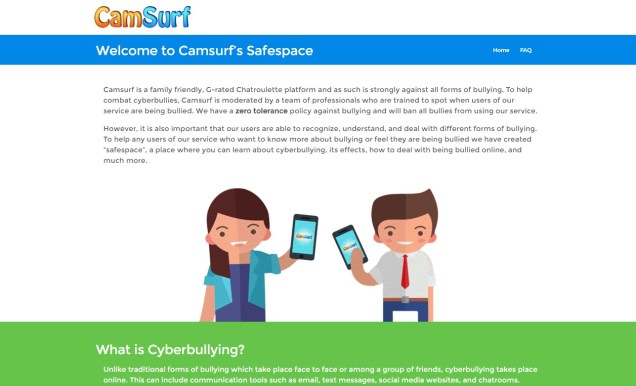
Camsurf is a family friendly, G-rated Chatroulette platform and as such is strongly against all forms of bullying. To help combat cyberbullies, Camsurf is moderated by a team of professionals who are trained to spot when users of our service are being bullied. We have a zero tolerance policy against bullying and will ban all bullies from using our service.

However, it is also important that our users are able to recognize, understand, and deal with different forms of bullying. To help any users of our service who want to know more about bullying or feel they are being bullied we have created “safespace”, a place where you can learn about cyberbullying, its effects, how to deal with being bullied online, and much more.

While the press release notes:

Camsurf is delighted to announce the launch of the world’s first ‘Safe Space’ social network, an innovation designed to put a stop to cyberbullying through education and active participation. The idea behind the campaign stems from the rise in bullying and harassment on the web, specifically on social networks such as Facebook, Snapchat and Twitter, a phenomenon which has grown rapidly in recent years to become more prevalent than bullying in the real world.

Users of Camsurf, and anyone else who feels overwhelmed by the rise in cyberbullying, can access the online arena and find a range of educational material and statistics, ask questions anonymously, and interact with other users in a safe and understanding environment. Participation in ‘Safe Space’ is solely focused on putting a stop to cyberbullying and all forms of online harassment. It is the first social network to openly place an emphasis on discussing and eliminating cyberbullying in a dedicated environment.

Camsurf Safespace is not merely a social network which takes a strong stance against cyberbullying. The whole ethos of the site sits in the shadow of cyberbullying – the “About” page says almost nothing about the technical or social features of the site, focusing exclusively on all of the measures in place to protect their oh-so-vulnerable users from ever being made to feel “uncomfortable” (a word that crops up frequently in the FAQs). And it freely uses the university campus-derived, identity politics terminology of safe space theory to promote itself.

But note the picture on the front page. These are not teens or tweens shown using the site, but fully grown adults – the woman is dressed in distinctly professional-looking attire, and the man is likewise dressed for work a shirt and tie. Safespace is not targeted specifically at schoolchildren (the group most likely to suffer from legitimate cyberbullying), but at people with jobs and mortgages and maybe even kids of their own – people who presumably shoulder all of the normal burdens of life, and yet believe themselves unable to participate in the same social networks as the rest of us for fear of being made to feel uncomfortable.

In fact, Safespace goes to great lengths to emphasise that adults are often the victims of “cyberbullying” too:

Q. Are teens the only people who get cyberbullied?

A. Not at all. Cyberbullying is a problem that affects both teens and adults. Although many adults would not like to admit it, cyberbullying is said to affect up to 40% of adults who use the internet. Cyberbullying transcends age or sex and anyone can be the victim of an online bully. In fact, many adults who are cyberbullied lash out by becoming bullies themselves. It is therefore extremely important to confront the problem by taking to someone rather than keeping it all locked up inside.

Yes, Safespace would have you believe that nearly every one in two adults are being persecuted online by nefarious cyberbullies right at this moment (of course, the term “bullying” has been defined downward to the extent that it includes any interaction which sees the victim come away with anything less than warm and fuzzy feelings of contentment).

And worse still, if these adult victims fail to take the correct protective actions and run to an authority figure (either a Safespace moderator or perhaps a trained counsellor) then they are at the risk of turning into a cyberbully too. Apparently being a cyberbully follows the same contagion principles as becoming a zombie.

Fortunately, Safespace has all manner of tools at its disposal to ensure that nothing remotely interesting or controversial ever takes place within its boundaries:

How Camsurf is Standing Up to Bullies

Our aim at Camsurf is to create a bully-free and family-friendly environment that is welcoming to all. As part of that mission we are taking a stand against cyberbullies by implementing various schemes to catch bullies and bar them from our service. We employ a team of moderators who monitor the chat platform for nudity, inappropriate behavior, and signs of bullying. All of our moderators undergo a course in understanding online bullying and how to spot the signs of someone who is being bullied. We are also implementing a series of informative articles and guides to help any victims of bullying and to educate our users to spot the signs of bullying. By taking these steps we will create the safest and friendliest Chatroulette platform online.

And they are very clear that when in doubt, users should err on the side of banality:

Q. Am I a cyberbully if I engage in an argument on Camsurf?

A. Not necessarily. It is important to distinguish the difference between talking to someone about a topic you disagree on and cyberbullying. On Camsurf you can meet thousands of strangers from around the world, all of whom have different opinions and views of the world. On some occasions you might find someone who disagrees with you about a certain topic. If you discuss this topic with them in a civilized manner where both of you can get your points across then it is not bullying. However, if you use insults and hurtful language while discussing issues then you may offend someone or hurt their feelings. This is the line between cyberbullying and talking about a topic you disagree on. The best way to avoid this is to stick to talking about topics you and the person you are chatting with are interested in. Remember, Camsurf is about having fun while meeting new people!

Cue lots of talk about the weather, and not quite so much about a certain American presidential candidate, then.

Note too the defining downwards of the concept of bullying, along the lines described by Jonathan Haidt and Nick Haslam in their recent excellent Guardian OpEd:

When research on bullying began in the 1970s, an act had to meet four criteria to count: it had to be an act of aggression directed by one or more children against another child; the act had to be intentional; it had to be part of a repeated pattern; and it had to occur in the context of a power imbalance. But over the following decades, the concept of bullying has expanded in two directions.

It has crept outward or “horizontally” to encompass new forms of bullying, such as among adults in the workplace or via social media. More problematic, though, is the creeping downward or “vertically”so that the bar has been lowered and more minor events now count as bullying. For example, the criteria of intentionality and repetition are often dropped. What matters most is the subjective perception of the victim. If a person believes that he or she has been made to suffer in any way, by a single action, the victim can call it bullying.

So this is what it has come to. Grown men and women forswearing online forums where they might potentially encounter a boisterous or rude opinion in favour of a “walled garden” where their every interaction is monitored by watchful moderators looking out for their “safety”. Everyday human interaction is now being presented as so fraught with peril that it is best not attempted at all without external supervision.

Fortunately, Safespace doesn’t have the feel of a platform that will be with us for very long, or challenge the major social networks for pre-eminence. But the mere fact of such a site’s launch is sufficiently alarming that we must take note.

Bear in mind that one of the key reasons why heavily moderated, anti free speech platforms are not challenging more aggressively for market share is because the big beasts – particularly Facebook – are choosing to respond to pressure to deal with cyberbullying in almost as draconian a way.

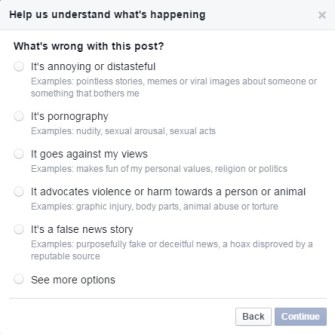
These are the options currently presented to users who want to report something on Facebook which they find to be offensive:

Facebook Report Post - Anti Free Speech

Note the third option – “It goes against my views” – which is now legitimate grounds to report someone else’s post as being offensive and deserving of removal from Facebook.

It can be tempting to make light of sites like Camsurf Safespace, regarding them as a sheltered playground for children, unrepresentative of the mainstream. But when the world’s pre-eminent social network treats its users in the exact same way, it is no laughing matter.

Cyberbullying is a real and concerning phenomenon where it occurs. But the idea of a fully grown, mentally capable adult being “bullied” is absurd, as are these incremental but damaging steps toward regulating and monitoring all of our online interactions to ensure that we are using the internet “safely”.


Safe Space Notice - 2

Agree with this article? Violently disagree? Scroll down to leave a comment.

Follow Semi-Partisan Politics on TwitterFacebook and Medium.

‘White Girl Asian Food’ Reaction: Cultural Appropriation Police Want to Control What People Think

White Girl Asian Food and Breakfast Tacos

Identity politics zealots will not rest until they control the thoughts, as well as the behaviour, of everyone else

Taking a break from writing something more serious on the subject of identity politics (watch this space), I spent some time today amusing myself by reading some of the apoplectic reactions to the White Girl Asian Food truck in Austin, Texas.

Some of the sentiments expressed were hateful and vile, while others tended towards hand-wringing incredulity.

This blogger has trouble balancing her desire to praise a female entrepreneur with her clear uneasiness at the “cultural appropriation” at work:

On one hand, I’m glad it doesn’t claim to be authentic Asian food. According to an interview with Vice, she changed the name of the food truck from “Com Bun Yeu” to “White Girl Asian Food,” so people would stop assuming she sells authentic Vietnamese food. Her goal was to make it clear that she was “a white girl cooking [her] rendition of Asian cuisine [and she] couldn’t think of a name that was more honest and straight to the point” than “White Girl Asian Food.”

I also respect her and her family for leaving their home and living out their dreams of owning food trailers – that takes a lot of guts. It’s also amazing that she’s part of the 26% of female-owned food establishments. You go, girl.

But, on the other hand, I’m irritated that she combines the bare bones of a few cuisines and shuffles them under the umbrella of Asian food. There will be people who eat at this food truck and assume this is what Asian food is all about when this is a false representation of an extraordinarily broad cuisine.

At the end of the day, I think the food truck should stay if it receives a large helping of cultural humility. But changing its name (again), in English and Vietnamese, to better represent the food served would be a great next step.

This is certainly one of the more measured responses, but still it reveals everything which is ultimately wrong (and doomed to create more problems than it solves) about the broader identity politics movement.

At one point, the author – Jocelyn Hsu from UC Berkeley – frets that “there will be people who eat at this food truck and assume this is what Asian food is all about.”

So what? Every day there are people who eat at places like Wagamama or P.F. Chang’s and lazily believe that they are having an authentic culinary experience. They happen to be wrong (not that there is anything wrong with P.F. Chang’s – I would pay good money if they opened a restaurant here in London), but their misapprehension in no way impacts on anybody else.

At most, one could argue that by splashing around in the paddling pool of more Westernised interpretations of Asian cuisine they are denying themselves the opportunity to experience the authentic food of another culture. But even if this is so, the cultural appropriation police are still light years away from establishing a link between one person’s ignorance and another person’s harm.

In his epic debates against the religiously inclined, the late Christopher Hitchens would often say that even accepting the deist view that there is a God, the faithful still have all their work ahead of them in order to prove that God has indeed revealed himself to mankind, and that certain chosen people have been favoured with knowledge of God’s nature and detailed commandments for how we should live our lives. Similarly, even accepting the idea that cultural ignorance harms the culturally ignorant, the identity politics cultists of today still have all their work ahead of them to prove that a white American’s assumption that chop suey is a commonly eaten dish in China in any way harms Chinese or Asian American people.

Unless, that is, one believes that minority groups can be harmed by even the unexpressed thoughts and beliefs of another person. If you believe that it is possible to inflict grave harm merely by misunderstanding the cultural history and “lived experience” of another identity group in your own head, then the anger and paranoia start to make more sense.

And of course this is exactly what the cultural appropriation protesters do believe. To them, it is not enough for other people to think their own private thoughts unmolested, facing criticism only when they commit an act of overt prejudice. Rather, all unknowing heretics must be badgered into thinking the “correct” thing, even if they were not themselves spreading misinformation.

By applying this extremely high standard for cultural awareness, minority groups will not stop incurring real harm until every last septuagenarian in Des Moines understands that the Panda Express drive-thru they visit every Thursday lunchtime is in fact not typical Szechuan cuisine.

There may be an academic term to describe this frantic need to control and tweak the thoughts of other people, though I have not yet come across such a phrase in my reading of Haidt, Haslam, Campbell or Manning.

But I would call it a plain old inferiority complex – and a quite unnecessary one at that, for every cuisine and culture possesses its own inherent value, cannot be “invalidated” by the ignorance or even derision of others, and does not require the full understanding and approval of white America in order to exist.

There should be room on this Earth (and in America) for the White Girl Asian Food truck and authentic Asian cuisines to peacefully coexist. Ironically, the only ones arguing otherwise are the people who march under the banner of tolerance.


White Girl Asian Food - Oppression

Safe Space Notice - 2

Top Image: Scoopnest

Bottom Image: FirstWeFeast.com

Agree with this article? Violently disagree? Scroll down to leave a comment.

Follow Semi-Partisan Politics on TwitterFacebook and Medium.