Ten Years Ago Today, In London

St Pauls Cathedral - London - 7 July Bombing - Memorial Service - Petals


In an age when our politics feels depressingly small and our politicians often seem ineffectual and powerless in the face of events and forces beyond their control, it seems we cannot rely on our elected leaders to grapple with the weighty issues of our time, or to present a clear vision of the country and world we should be striving to build.

This is especially so on the issue of terrorism, the threat from radical Islam and the ongoing crisis of western values. Today is not a day for politics, but this essay by Frank Furedi in Spiked magazine is essential reading in terms of outlining the extent to which we are almost wilfully focused on the wrong issues.

In this context, it is refreshing to hear words of genuine wisdom, comfort and hope, especially coming from a religious figure at a time when religion is sliding toward irrelevance for many, yet held largely responsible for the wave of terrorist mayhem sweeping the world.

The Bishop of London, Richard Chartres, excels in his role preaching sermons on important national occasions – most recently at the memorial service for Margaret Thatcher. Chartres was back in the national spotlight again today, at St. Paul’s Cathedral in London, where he preached the sermon at the memorial service to mark ten years since the July 7 bombings of 2005.

Continue reading

Why Should Britain Help Germany Reform The EU?

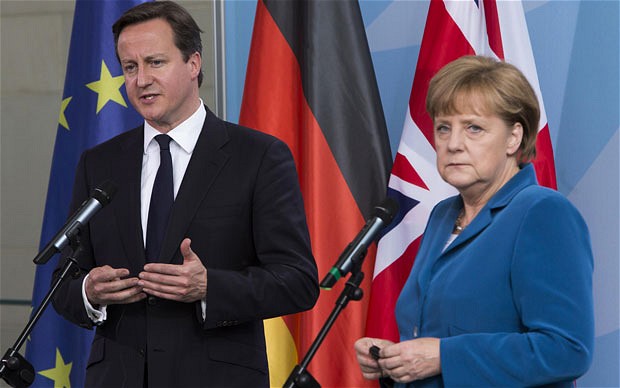
David Cameron - Angela Merkel - EU - 2


You have to hand it to Michael Fuchs, deputy chairman of Angela Merkel’s CDU party in Germany. If you genuinely want Britain to remain part of the European Union – for intentions noble or otherwise – the best way for other countries to achieve that outcome is by convincing the British people that they too are frustrated by Brussels bureaucracy, that they yearn for real reform, and envisage our humble selves at the heart of this great effort.

And this is exactly what Fuchs has done, presenting the face of German concern about Britain’s place in the EU while his ally Angela Merkel is preoccupied with the far more pressing matter of the Greek crisis.

From the Telegraph:

“I want the UK to stay in the EU, and I cannot even imagine an EU without the UK. I don’t want to imagine it,” [Fuchs] said.

“In particular, for us it’s not good because the UK is a partner promoting a free-market economy, much more than the southern hemisphere in Europe. [Some of these countries] want to have a more state-regulated economy, and the UK is more like us, for instance, like Holland and the northern hemisphere, so we would not be very happy to see it go.”

Mr Fuchs described Brussels as a “huge” bureaucracy that needed to be scaled back. “I fully agree with certain statements of [Prime Minister] David Cameron saying that Brussels need not be such a huge bureaucracy, with so much red tape.

“That’s quite important, I think, and we need Cameron’s help to change it.”

Unfortunately, when someone you normally expect to be an antagonist starts acting very friendly, there is usually an ulterior motive at play. Feigning concern for and agreement with a difficult negotiating partner is straight out of Hostage Negotiation Strategy 101, and just as the man in the FBI jacket doesn’t really care that your wife left you and isn’t really going to arrange that escape airplane filled with cash, so Germany isn’t really about to let awkward old Britain stop the wheels of an EU juggernaut which has been rolling and gaining momentum since the 1950s.

Continue reading

Oxi: Greek Referendum Result Is A Damning Indictment Of EU Imperialism

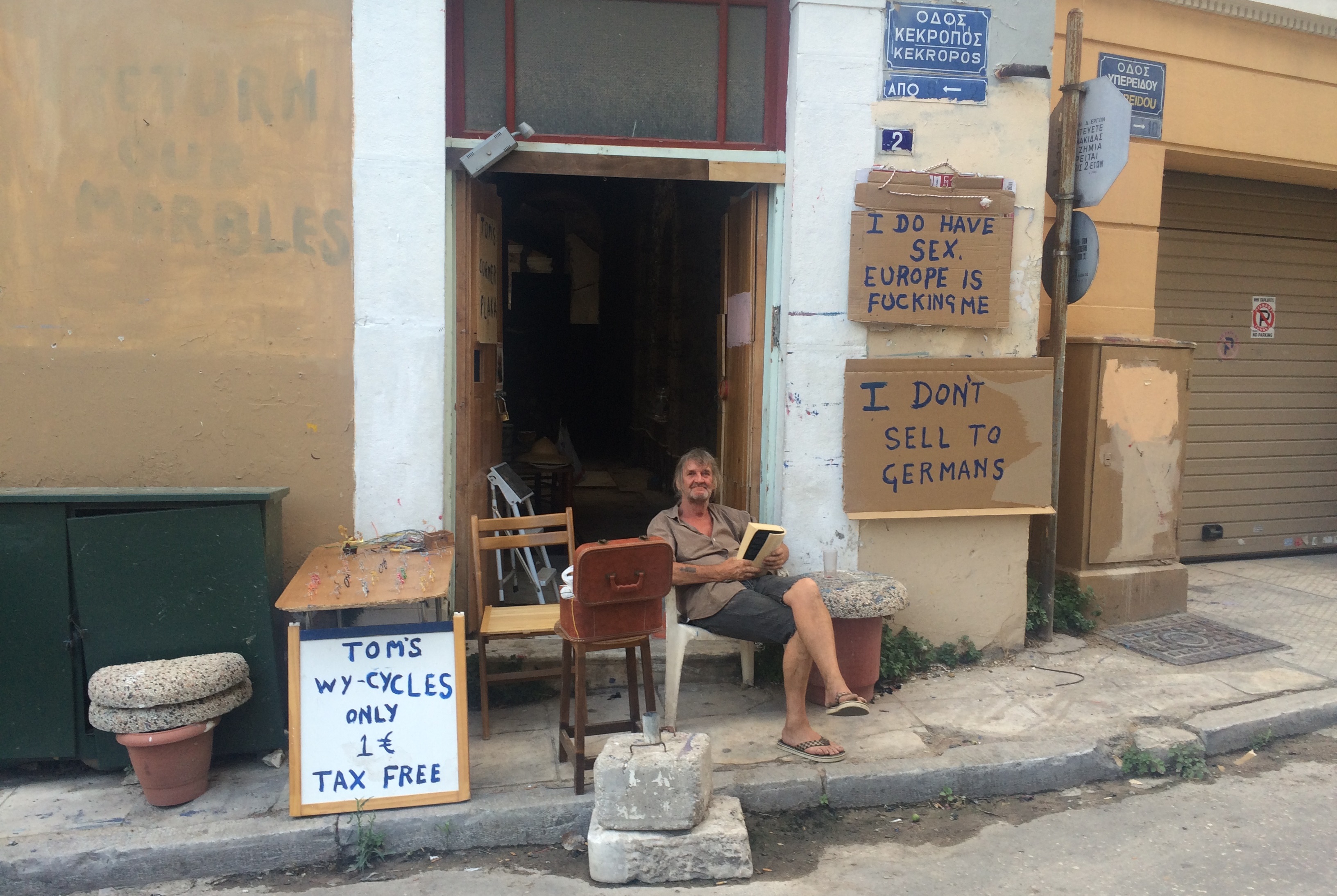
Bookshop - Greece - EU - Euro Crisis - Germany


Final referendum result: Yes – 38.7%, No – 61.3%

If nothing else happens as a result of the dramatic “Oxi” (no) vote in Greece’s referendum today, can we at least finally disabuse ourselves of the notion that Angela Merkel, Germany’s chancellor, is somehow a formidable and effective world leader?

We hear time and again how Merkel is the most powerful woman in Europe (or sometimes the world), and how she is such a shrewd and canny operator, driving hard bargains in the EU and commanding respect on the world stage. But Margaret Thatcher she ain’t. The European Union may like to think of itself as a warm, fuzzy family of nations, but in reality there is only one country, Germany, which plays the role of parent when it comes to economic matters, particularly within the eurozone. And Angela Merkel’s “bad cop” Pyrrhic victory in keeping the door closed to any form of debt relief for Greece, even in the face of entreaties from President Obama and mounting evidence that some form of debt restructuring is an essential precursor to the return of growth, has just driven Europe off a cliff.

As the eurozone goes into meltdown and the European Union faces what could become an existential crisis, everyone is looking to cover their backs as the recriminations fly. And Lord knows that Greece shoulders some of this blame, having governed itself irresponsibly over many successive decades and governments, as this blog has repeatedly acknowledged. But what excuse do the sharp-suited EU bureaucrats and eurozone politicians have for their collective failure to contain the Greek situation? What excuse does Angela Merkel have?

Continue reading

Let Freedom Ring


Kelly Clarkson performs “My Country, ‘Tis of Thee” at the second inauguration of President Barack Obama on 21 January 2013.


My Country, ‘Tis Of Thee

My country, ’tis of thee,

Sweet land of liberty,

Of thee I sing;

Land where my fathers died,

Land of the pilgrims’ pride,

From ev’ry mountainside

Let freedom ring!

My native country, thee,

Land of the noble free,

Thy name I love;

I love thy rocks and rills,

Thy woods and templed hills;

My heart with rapture thrills,

Like that above.

Let music swell the breeze,

And ring from all the trees

Sweet freedom’s song;

Let mortal tongues awake;

Let all that breathe partake;

Let rocks their silence break,

The sound prolong.

Our fathers’ God to Thee,

Author of liberty,

To Thee we sing.

Long may our land be bright,

With freedom’s holy light,

Protect us by Thy might,

Great God our King.


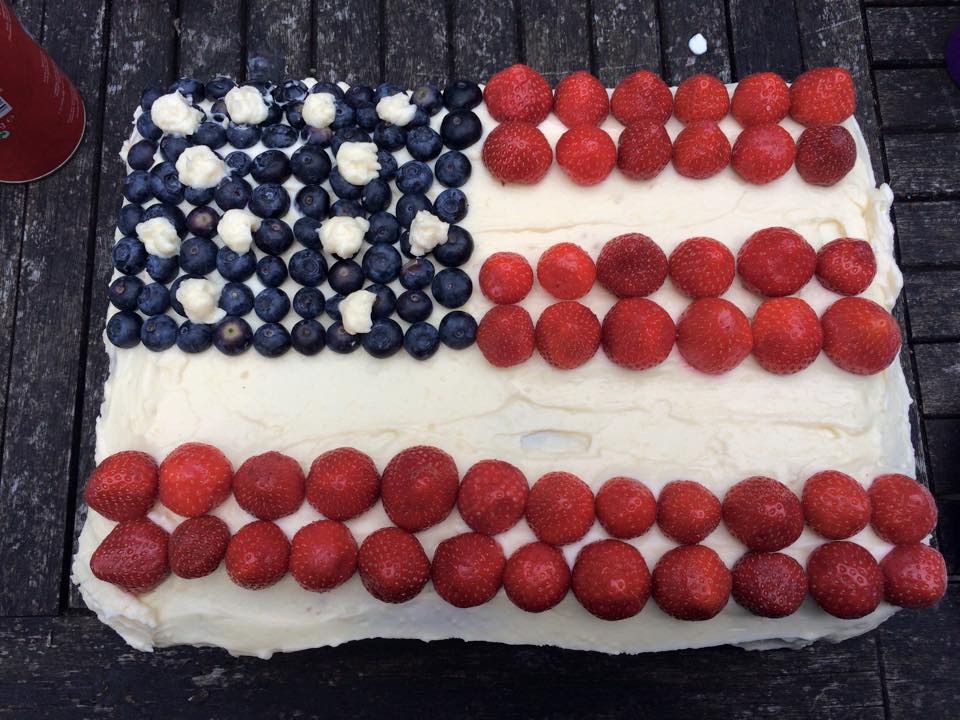
US Flag - Fourth Of July Cake - Independence Day - Baking - Let Freedom Ring


Happy Independence Day. Let freedom ring!

When Is The Islamic State Not The Islamic State?

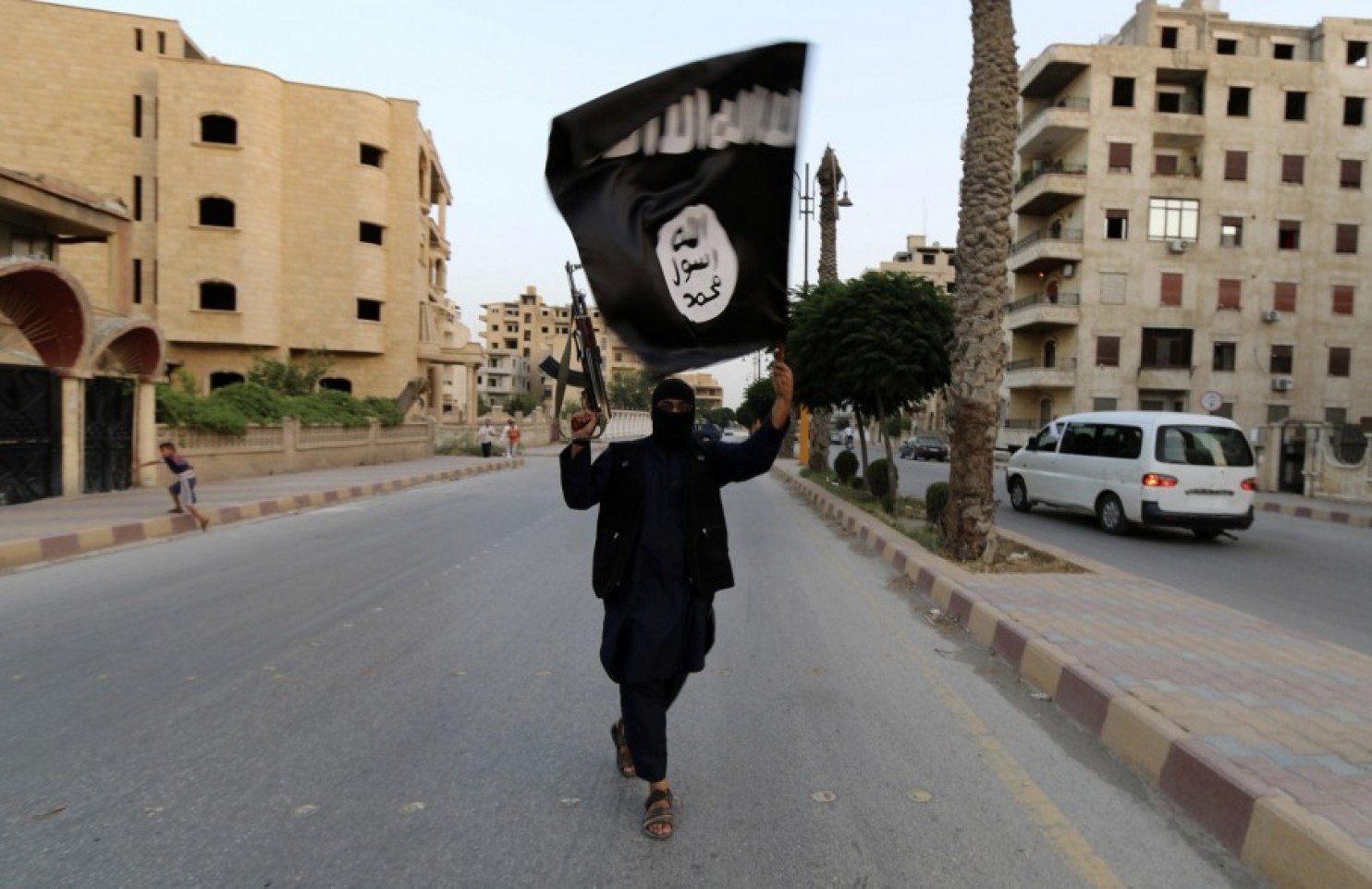
Islamic State - ISIS - Islam - Daesh

Rather than tackle an intractable issue and mortal enemy, our superficial politicians are quibbling over the language we use in describing it

When is the Islamic State in Syria – ISIS – not the Islamic State in Syria?

Apparently the answer to this question is: since a couple of days ago, when the hive mind of lazy politician groupthink decided that we must bend and warp journalistic practice – and the English language itself – in order to make it clearer that the majority of us do not condone the activities of that brutal, backward-looking group of primitive fundamentalists.

My attention has been elsewhere lately – freshly returned from a relaxing and eventful trip to Greece but otherwise more focused on domestic than foreign affairs. So it was surprising to find my attention drawn back by the furious row between the government and the BBC over exactly how the public service broadcaster should refer to the nascent medieval kingdom seeking to establish itself in the middle east.

The Spectator is – quite rightly – having none of it:

‘Isis’ is an acronym of Islamic State in Syria. ‘Isil’ – an acronym of Islamic State in the Levant. Isil is the better translation of the group’s Arabic name al-Dawla al-Islamiya fil-Iraq wa al-Sham – where ‘Sham’ represents greater Syria or ‘the Levant’ as we would say in English.

As for ‘Daesh’, it has the small propaganda advantage of reminding Arabic speakers of Daes (‘one who crushes something underfoot’) and Dahes (‘one who sows discord’). But beyond that childish word association it is no help at all, for ‘Daesh’ is just the Arabic abbreviation of al-Dawla al-Islamiya fil-Iraq wa al-Sham – or the Islamic State in Iraq and the Levant.

All the euphemisms politicians demand we must use to avoid calling Islamic State ‘Islamic State’ therefore call Islamic State ‘Islamic State’. How can they not, for that is its name? And it is no more up to outsiders to change a group’s name than it is up to you to change the names of your acquaintances. Assuming the politicians know what they are doing, they must believe that many voters will not know what ‘Isil’ and ‘Isis’ stand for, or only Arabic speakers will understand the meaning of ‘Daesh’. In other words, they are relying on ignorance and hoping to foster ignorance too.

Never mind the obvious undesirability of government telling the state-owned broadcaster what to report and how to report it – thus proving the central argument against government ownership of the media. Of far more concern is the fact that politicians – specifically our current generation of uncharismatic, uninspiring, superficial leaders – seem to believe that expending time and energy arguing about what to call the Islamic State is more important than doing anything about ISIS in the real world.

Continue reading