Mandatory Reselection Of MPs Should Be The Norm For British Political Parties, Not A Scandalous And Controversial Idea

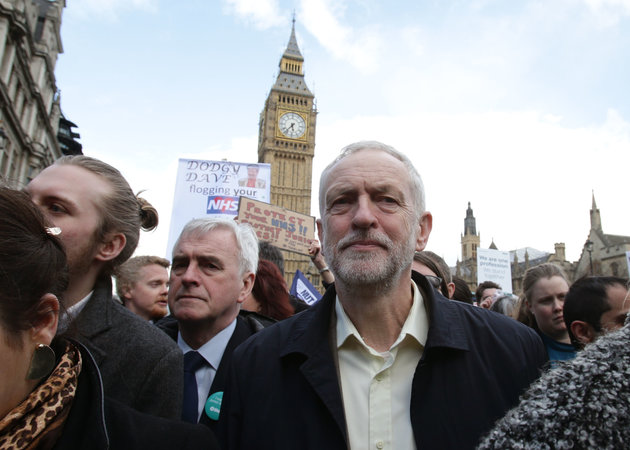
Jeremy Corbyn - Mandatory Reselection Labour MPs

MPs do not have a divine right to represent their constituencies forever once selected by their local party, Jeremy Corbyn is quite right to consider mandatory reselection for MPs and all political parties that profess to care about democracy should follow his lead

The Telegraph leads today with a breathless piece warning of Jeremy Corbyn’s intention to press for mandatory reselection of MPs whose constituencies are changed as a result of the coming boundary review, assuming he prevails in the Labour leadership contest.

Jeremy Corbyn’s allies are planning to end the parliamentary careers of dozens of critical Labour MPs by approving plans for mandatory reselection by the end of the year.

The Telegraph understands his supporters will use their increased majority on the party’s ruling body to clarify rules about which MPs can stand for election after the 2018 boundary review.

Rhea Wolfon, elected to the Labour’s National Executive Committee [NEC] this week, hinted at the move by saying the party must have a “conversation” about “mandatory reselection”.

However Andy Burnham, Labour’s new mayoral candidate for Greater Manchester, said it would “pull the rug from under our MPs” and fuel a “climate of distrust”.

While Politics Home reports that Steve Rotheram, Jeremy Corbyn’s PPS and now Labour’s candidate for the Liverpool city regional mayoralty, has also made approving noises about challenging the “divine right” of MPs to remain in their position come what may:

Steve Rotheram, who serves as Jeremy Corbyn’s parliamentary private secretary, said elected politicians should not think Westminster is the “repository of all the best ideas”.

It comes after Rhea Wolfson, a newly elected member of Labour’s ruling National Executive Committee, said the party should have a “conversation” on the mandatory reselection of MPs.

When asked whether he was in favour of such a proposal, Mr Rotheram said he was “attracted” to Tory MP Zac Goldsmith’s 2014 plan that would see misbehaving MPs face a by-election if 5% of constituents signed a “notice of intent to recall” and 20% then sign a “recall petition”.

He said he did not support Mr Goldsmith’s defeated amendment to the Recall of MPs Bill amid concerns about the exact motion he was putting before the House of Commons.

The MP for Liverpool Walton added: “But yes, I think that MPs should reflect what the membership who select them are putting them into parliament to do. We shouldn’t believe that we’re down here and that we’re the repository of all the best ideas.

“We really should be looking at what our members are telling us to do and I think that’s part of the role as a Member of Parliament.”

Cue shock, horror and clutching of pearls from the political establishment – Andy Burnham, himself about to jettison a Westminster career cul-de-sac in the hope of municipal glory in Manchester, says that it would be “pulling the rug” out from underneath MPs. Well, perhaps MPs need to have the rug pulled out from underneath them. Perhaps they need the rug to be yanked hard enough so that they either become genuinely responsive to the party activists who work to get them elected or quit the field of play altogether.

The great thing about democracy at its best is that it rewards those who show up when the times comes to choose. Old people reliably vote in large numbers, therefore government policy when it comes to housing, welfare spending and any number of other policy areas is generously skewed in their favour. If only young people could put their Pokemon Go games down for long enough to make it to a polling station, government policy might begin reflecting their concerns too. But they don’t, so it isn’t.

Unfortunately, the way MPs are currently selected by Britain’s main political parties takes this important aspect of democratic responsiveness and throws it out the window. Once an MP has been chosen as their party’s nominee, they have very little use for their own party activists. These dedicated and principled people are hardly likely to ever support a candidate from another party, and therefore an unscrupulous MP can abuse and betray them to their heart’s content knowing that they automatically qualify as their party’s parliamentary candidate the next time a general election rolls around.

And inevitably this can lead to a growing gulf between the political stance of a constituency party and the views espoused (and votes taken) by that constituency’s Member of Parliament. This is what we now see happening to the Labour Party, where depending on your view either the parliamentary party has shifted to the right or the membership has shifted dramatically to the left (in reality a bit of both) and no longer stand for the same principles.

The brutal truth right now is that many Labour MPs, including some quite prominent ones like former leadership contender Angela Eagle, are now irreconcilably out of step with their own local parties. Why, therefore, should they have the automatic, divine right to continue to represent local parties who despise them and wish to put forward someone for parliament who more closely reflects their own priorities and positions?

When viewed this way, Jeremy Corbyn’s proposal seems quite tame. In fact, this blog would go further – MPs should not only face mandatory reselection in the case of constituency boundary review (the specific circumstance currently under discussion) but every five years ahead of a general election. This would bring Britain into line with other countries like the United States, where Representatives and Senators do not have “jobs for life” and must compete in party primaries if they wish to run for their seat at the next election. Such a move would put the wind up an often self-entitled political class, forcing MPs to justify their worthiness of a place on the ballot at regular intervals and forcing many of the older, less useful bench warmers off into retirement.

No constituency should be lumbered with a doddering old MP who doesn’t care any more, or a sharp-elbowed go-getter who ignores their constituency as they focus on climbing the greasy pole. Mandatory reselection goes a long way to solving those problems.

The current system, by contrast, is an abomination – incumbent MPs, often initially selected to stand for parliament in their constituencies through dubious, opaque or even downright corrupt means are then largely free from scrutiny by their own party for the rest of their career. As soon as they enter parliament they are enveloped in the Westminster self-protective cloak which serves to insulate parliamentarians from the consequences of their behaviour and political decisions.

If you know that nothing you can do will ever get you fired – if there is no political betrayal (like, say, pretending to be a eurosceptic during selection and then turning around and supporting the Remain campaign) for which you will ever be held to account – then there is every incentive to lie about your real political beliefs and motivations during selection, and then behave in as abominable and self-serving a way as you please as soon as your are elected to the Commons.

The status quo needs to change, and whatever else one may think of Jeremy Corbyn (and however self-serving his motivations may be), he should be applauded for taking a stand for democracy and accountability and against the entrenched privilege of the political class.

If political parties are to be accountable to their supporters then there needs to be an established process for the base to hold their candidates to account for decisions taken in office. Mandatory reselection – together with a proper right of recall, empowering constituents to recall a failing or unpopular MP subject to a certain percentage of the local electorate signing a petition – is an important aspect of that process.

Under a properly democratic system, MPs should fear the wrath of their local constituency party and be closely responsive to their priorities and concerns. At present, too many MPs take their local party for granted as soon as their selection is assured, shunning the activists who knock on doors and deliver leaflets on their behalf in order to cravenly pander to the centre.

This needs to change. This can change. And Jeremy Corbyn should be commended for trying to do something about it.
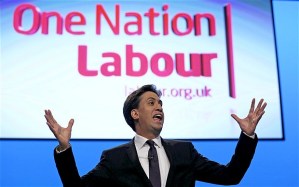
 

Ed Miliband Labour One Nation

Top Image: Huffington Post

Support Semi-Partisan Politics with a one-time or recurring donation:

Agree with this article? Violently disagree? Scroll down to leave a comment.

Follow Semi-Partisan Politics on TwitterFacebook and Medium.

Many People In Britain Deserve Sympathy. Labour’s Centrist MPs Do Not.

The sycophantic Westminster media identify and empathise much more with Labour’s centrist MPs than the ordinary people who make up the party membership. And it shows.

In a rather nauseating review of Theresa May’s first outing in Prime Minister’s Questions, The Spectator’s Steerpike column gushes with sympathy for the rebellious Labour centrist MPs perched behind (and around) Jeremy Corbyn:

In recent weeks, Jeremy Corbyn’s popularity has hit a new low with the Parliamentary Labour Party. Things are so bad that he is unable to assemble a full Shadow Cabinet — instead having to assign some people with more than one position.

So, it was an interesting move of the Labour leader to bring up job insecurity and difficult bosses at today’s PMQs. Corbyn suggested that Theresa May had much work to do when it came to making employment rights fairer. Alas, the Prime Minister was unimpressed with Corbyn’s complaints. Channeling her inner Thatcher, May went on to suggest that it was he who was the guilty one when it came to inequality in the work place.

The Spectator goes on to quote the new prime minister’s (admittedly very effective) withering putdown of Corbyn:

‘I’m interested that he refers to the situation of some workers who might have some job insecurity and potentially unscrupulous bosses. I suspect that there are many members on the opposition benches who might be familiar with an unscrupulous boss.

A boss who doesn’t listen to his workers. A boss who requires some of his workers to double some of their workload. Maybe even a boss who exploits the rules to further his own career. Remind him of anybody?’

This is all part of a dismally familiar effort in the Westminster media to paint Labour’s rebellious centrist MPs as the wronged and oppressed group, and Corbyn as their unlikely tormentor in chief (when if anything it is clearly the other way around).

The Spectator – and they are far from alone – expect our hearts to brim over with sympathy for the poor Labour centrists whose ineptitude made Jeremy Corbyn’s rise possible in the first place, and who now stomp around Westminster mutinously, trying to destroy the mirror which Jeremy Corbyn holds up to their faces, showing them their own vacuity.

This is a fawning, sycophantic attitude which screams “screw the people and the Labour Party membership! What really matters are the hurt feelings and stymied career aspirations of 230 members of the Westminster political class, people who didn’t go to Oxbridge, secure prize political internships and shimmy their way up the greasy pole only to find their dreams of a Cabinet career dashed because their party is locked out of power for a generation.”

That’s not to say that Corbyn is some kind of faultless, saintly figure. Far from it. But while his ideology may have been plucked unreformed from the 1970s, it is at least coherent and sincerely felt. The same cannot be said for the restive cohort of centrists who are so busy trying to find an “electable” alternative that policy and passion and principle barely register at all.

Post-Brexit, it seems to be fashionable for well-connected journalists, commentators and intellectuals to publicly muse about the possible reasons for the anti-establishment rage simmering at the surface of British politics. Why oh why have the British people stopped listening to the expert opinion of their betters in the Establishment, goes the frequent cry. Why have the people lost faith in the political class?

Hint to the Spectator: journalists openly fretting about the mental welfare of supposedly poor, downtrodden centrist Labour MPs rather than the genuinely poor and downtrodden squeezed middle and working classes goes a long way toward explaining this impenetrable riddle.


Jeremy Corbyn - PMQs

Support Semi-Partisan Politics with a one-time or recurring donation:

Agree with this article? Violently disagree? Scroll down to leave a comment.

Follow Semi-Partisan Politics on TwitterFacebook and Medium.

Where Is The Passion For Or Against Brexit From Our Elected Representatives?

When it comes to voting and speaking their conscience on Brexit, British MPs should do as former American congressman Anthony Weiner said…but perhaps not as he did

When the British parliament gets rowdy, it tends to be the braying backbench donkeys at Prime Minister’s Questions making the noise, usually in response to some tenuously witty put-down from David Cameron.

What you see far less in parliament are individual politicians getting angry or visibly passionate about particular issues (Mhairi Black’s vastly overrated maiden speech notwithstanding). Perhaps this is partly because of our British reserve – though this is a comity which notably does not seem to extend to social media.

The parliamentary debate following the announcement of David Cameron’s pitiful renegotiation deal with the European Union was a case in point, and the following drip-drip of MPs and ministers once considered to be dependable eurosceptics dutifully lining up behind the prime minister was especially depressing.

Even when solid arguments were made for or against Britain’s continued EU membership, much of the debate was conducted in that dry, technocratic and risk-averse style which does so much to turn people away from politics.

Thus the media expended many more column inches writing about whether David Cameron felt “betrayed” by Michael Gove’s decision to support Brexit, and what kind of punishment Boris Johnson might expect for doing the same. In the near complete absence of really passionate and full-throated arguments on either side (except in the thriving Brexit blogosphere), the Westminster media focused on the court drama and palace intrigue rather than the policy.

It needn’t be so. It is possible to show passion and wear one’s heart on one’s sleeve in a political debate, and doing so (provided that it is genuine) can actually foster greater trust between the people and politicians who are actually perceived as standing for something.

Former New York representative Anthony Weiner resigned from Congress in disgrace, but during his time in Washington he built just such a reputation as a firebrand, with floor speeches which frequently went viral and broadened the reach and appeal of politics.

One such speech – in which Rep. Weiner excoriated Republicans for hiding behind procedural rules as cover for voting against providing healthcare to 9/11 first responders – is particularly applicable to the Brexit debate as it is now being conducted in Westminster:

You vote yes if you believe yes. You vote in favour of something if you believe it’s the right thing. If you believe it’s the wrong thing, you vote no.

You would think that this would be stating the obvious, but apparently not, judging by the number of committed europhile MPs who are quick to reel off all the things they hate about the EU rather than make a full-throated defence of Brussels, and the eurosceptic turncoats who have suddenly come up with implausible-sounding pressing reasons why now is not the right time for Brexit.

Am I the only one who would like to see a bit more genuine passion (as opposed to the creepy “passion” of Ed Miliband, or David Cameron pretending to be “bloody lively”) in our politics, rather than the same old consensual blandness?

Of course, for fiery debates like this to take place in the House of Commons, certain stultifying rules would need to be relaxed (though PMQs and the reaction to SNP MPs clapping shows just how arbitrary the enforcement of these rules already is).

But more than that, to have Anthony Weiner style passion in our politics, and the Brexit debate in particular, we would need more of our elected representatives to do the following:

1. Dare to make the honest, non-technocratic or fearmongering case for or against Brexit (with the europhiles ceasing to deny their desire and preference for European political union), and

2. Place their sincerely held beliefs over and above thoughts of career advancement.

But partly because the legislature and the executive are intertwined in the British political system, career-minded MPs are not currently incentivised to build a reputation as passionate and independent-minded firebrand legislators, as to do so would immediately mark them out as “troublemakers” to be passed over for promotion.

There is, at present, no attractive or lucrative career path in Westminster politics that does not lead inexorably away from legislating and toward joining the government, and the warping effect that this has on our lawmaking process cannot be overstated.

Yet another reason for comprehensive constitutional reform in Britain, to separate the executive from the legislature so that both are better able to do their jobs.


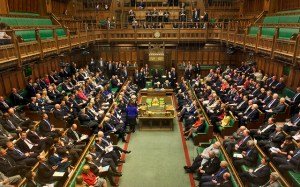
Parliament - House of Commons - Debate

Agree with this article? Violently disagree? Scroll down to leave a comment.

Follow Semi-Partisan Politics on TwitterFacebook and Medium.

David Cameron Is At His Arrogant Worst When He “Wins” PMQs

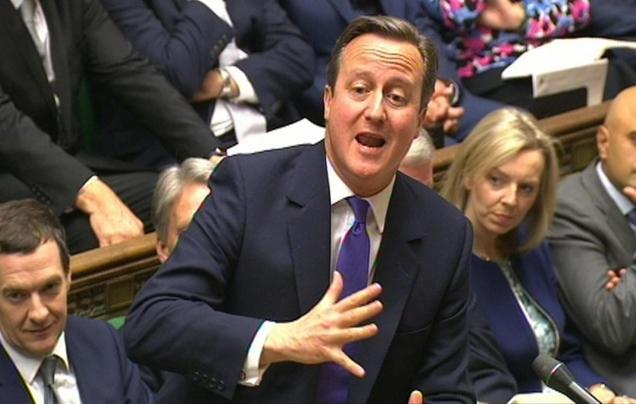
David Cameron - PMQs - Prime Ministers Questions

Since he has proved himself incapable of cleansing the Tories of their unfair reputation as the “nasty party”, what exactly is the point of David Cameron?

The media is abuzz today with talk of David Cameron’s withering put-down of Jeremy Corbyn at Prime Minister’s Questions.

The Spectator breathlessly reports that “Cameron delivers a knockout blow to a struggling Corbyn“:

This could have been a tricky PMQs for David Cameron. Instead, it will be remembered for Cameron ventriloquising his mother and telling Corbyn ‘put on a proper suit, do up your tie and sing the national anthem’.

What gave this jibe its potency, is that it sums up what a lot of voters think of the Labour leader. It was not quite as Flashmanesque as it sounds. For it came in response to a Labour front bench heckle asking what Cameron’s mother would say about cuts in Oxfordshire.

Even before Cameron floored Corbyn with that line, the Labour leader was struggling. He chose to go on the NHS and the junior doctors’ strike. But even on this subject, he couldn’t make any headway. Worryingly for Labour. Corbyn’s PMQs performances are—if anything—getting worse. You can tell that Cameron is now just cruising through the Labour leader’s questions.

Responding to a heckle from the Labour benches about his mother, Mary Cameron (who signed a petition opposing local public service cuts), the prime minister let loose with all of the pent-up frustration he feels at Jeremy Corbyn’s refusal to play the traditional role of Generic PMQs Sparring Partner.

Here’s Cameron’s quote in full:

“I’ll ask my mother. Oh I think I know what my mother would say, I think she’d look across the dispatch box and she’d say put on a proper suit, do up your tie and sing the national anthem.”

If this is what “winning” Prime Minister’s Questions now looks like, then both the tone and content of our political debate – even by the low standards set by Parliament – is in far worse a state than even I have been lamenting.

And Tim Montgomerie’s decision to leave the Conservative Party is vindicated, as David Cameron’s latest flash of temper reminds us that under his leadership, the Tories are not interested in enacting radical conservative reform in the model of Thatcher, but rather seek to wield power just for the sake of it, while ridiculing everybody else from their lofty perch. Why else refuse the opportunity to respond directly to criticism and defend his record in favour of delivering smarmy, schoolboy jaunts directed at the Leader of the Opposition?

People who defend David Cameron’s rootless, opportunistic leadership of the Conservative Party love to claim that by steering such a centrist, New Labour-friendly course, the prime minister is in some way helping to “de-toxify” the Tory brand.

The clear implication of this is that we should shut up and accept the fact that there is almost nothing conservative about this Conservative government, because bland centrism and the failure to advance conservative principles is the price we have to pay whilst conservatism’s reputation is cleansed of the “stain” of Thatcherism. And to be fair, with so little else to recommend Cameron’s government other than the fact  it is not Ed Miliband’s government, they have a point. Detoxification is all that the Tories have going for them at the moment.

Except they don’t even have that. We live in a political climate where anti-Tory activists will daub “Tory Scum” on war memorials, spit at innocent people attending the Conservative Party conference and indulge in all manner of overblown rhetoric about the heartless Evil Tories coming to take away your human rights and cast your disabled relatives out onto the streets to die of exposure. If the past few years are supposed to have been an exercise in image rehabilitation for the Tories, they have been the most abject failure and waste of political capital.

Yet David Cameron is supposed to be our Great White Hope, the man who delivers Conservative majority governments at general elections by running away from any policy or principle which might be seen as “nasty” or right wing.

It is all the more surprising, then, that Cameron consistently chooses to be so nasty and unnecessarily aggressive at PMQs – not just putting his points across or counter-attacking forcefully, as PMQs requires, but actively relishing in delivering the most personal put-down or remark possible. Less Tony Blair’s devastating but above-the-belt “weak, weak, weak” jibe at John Major’s expense, and more “you’re too poor to buy nice clothes”.

Seriously, how did David Cameron think that his “proper suit” comment would play once it seeped beyond the Westminster and media echo chamber and into the public consciousness? Sure, it won a big laugh and sustained mockery of Corbyn in the House of Commons chamber, but replayed on television it just looks like a cheap and nasty stunt from a man who would rather resort to personal insults than answer a straightforward question.

People sitting at home – those few who actually pay any attention to the outcome of Prime Minister’s Questions, at any rate – will not have seen a clever and likeable prime minister slapping down an angry, extremist left-winger. They will have seen a haughty, self-important Old Etonian standing at the dispatch box and making cutting personal remarks about the sartorial choices of a slightly befuddled but harmless-looking professor type.

Even when David Cameron “wins” Prime Minister’s Questions (as he did today) he loses, because he is fundamentally incapable of winning his exchanges with the Leader of the Opposition without morphing into the most ridiculous caricature of a snobbish public school boy imaginable in order to do it.

And hey presto, Labour’s work is done for them – smoking gun evidence that the Tories are a party of arrogant toffs, and that if they had their way then politics would only be for impeccably dressed people from establishment families, wearing Savile Row suits and speaking the Queen’s English. And all Jeremy Corbyn had to do in order compound this perception in the public consciousness was wince through David Cameron’s latest smarmy insult.

Remind me: what was David Cameron’s essential winning quality, again?


Jeremy Corbyn - PMQs

Agree with this article? Violently disagree? Scroll down to leave a comment.

Follow Semi-Partisan Politics on TwitterFacebook and Medium.

Harriet Harman, Celebrated Feminist, Calls Margaret Thatcher A ‘Witch’

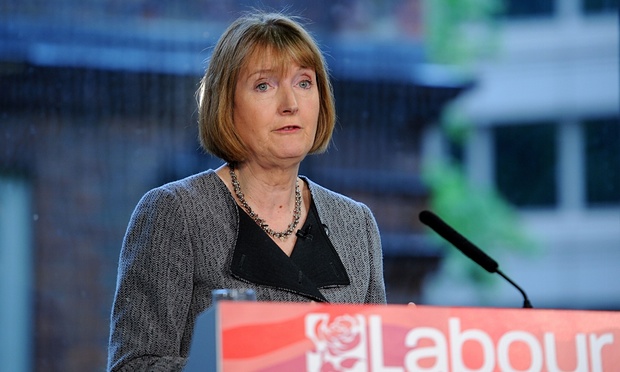
Harriet Harman - Margaret Thatcher - Witch - Feminism - Sexism

Acting Labour Leader Harriet Harman gave a very revealing interview to the Guardian this weekend, looking back on her career as she prepares to return to the backbenches after serving in the party leadership since 2007.

Whilst one can – and should – strenuously disagree with Harman’s politics, no one can deny her role in the feminist movement or the trail she blazed by standing up to the horrifically sexist club that Parliament was when she was first elected in 1982. Given these accomplishments, it is a shame that she now ends her frontbench career presiding over a farcical leadership contest and the potential splitting of her party.

But the most memorable part was when Harman spoke about how terrified she was of then Prime Minister Margaret Thatcher that she actually hid round a corner in the Houses of Parliament in order to prevent the approaching prime minister meeting her newborn baby:

Couldn’t the then prime minister Margaret Thatcher have taken her [to the Strangers’ Bar in Parliament]? Harman recoils. She wouldn’t have dreamed of socialising with her, she says.

“Very early on, I brought in one of the babies to the Commons and I saw her at the other end of the corridor. She was bearing down on me with two adoring parliamentary private secretaries trotting at her side, and she looked as if she was going to come and admire the baby. I had this terrible feeling of thinking, ‘I don’t want her to look at the baby’, almost like one of those cartoons where the witch looks at the baby and the baby shrivels. I didn’t want my perfect baby to have Thatcher’s eyes upon him.” Did she hide her baby from Thatcher? “No, I just shot off down a side corridor. It was very visceral, very heartfelt.”

I’m not sure quite what Harriet Harman intended this little vignette to reveal about herself, but it speaks volumes about the way many in the Labour Party see themselves and view their conservative opponents.

Continue reading