An Open Letter To UKIP Voters

Open Letter to UKIP Supporters - Brexit - Immigration

Dear UKIP Supporter,

There’s no easy way to put this, so I’ll just come right out and say it. If you truly want Britain to vote for Brexit and independence from the European Union in the coming referendum – if that is your top priority right now, as it is mine – then we need to drop our demand to scrap the free movement of people between Britain and Europe and stop calling for stricter immigration controls on people wanting to live and work here.

Before you dismiss me as some pro-European mole from the Remain campaign sent to deceive you, hear me out. I voted for UKIP in the 2015 general election after much soul-searching, because I share your disillusionment and disgust with the political establishment and three main legacy parties – all of which are pro-EU to their core, and all of which have lied to us for decades about the European project and ever-closer political union. I also have admiration and respect for Nigel Farage, without whom we would not be having this referendum at all.

But this is our last chance to save Britain from being absorbed into a European state, and I am terrified of waking up on the morning after the referendum only to find that by insisting on every single one of our demands – particularly on immigration, which is a controversial topic with strong feelings on both sides – we scare the public, lose the vote and squander our only chance of escaping from ever-closer political union.

By asking people to vote to leave the EU, we are already asking them to place a lot of trust in our shared vision for a stronger, more prosperous independent Britain. Unfortunately, many people are swayed by the Remain campaign’s pro-EU propaganda, which relentlessly tells them that Britain is too small and weak a country to succeed on its own. You and I know that to be nonsense, but we already have an uphill battle on our hands to overcome the establishment’s formidable misinformation machine. And demanding an end to the free movement of people within the European Economic Area on top of everything else is just a step too far. People are naturally risk-averse, and keeping this issue on our list of demands is one thing too many.

I know that having secured the referendum from a reluctant David Cameron, it seems like total victory is within your grasp – that you are on the verge of getting everything that you have wanted for so long. And I know that despite the difficult general election result, there are enough indicators to convince you that the tide is turning in your direction, that the entirety of UKIP’s agenda can one day be achieved.

But I implore you to remember what happened to overconfident Labour supporters at the general election. They imprisoned themselves in an ideological bubble of their own making, used social media to talk to each other rather than convincing undecided voters, were hypnotised by their partisan Twitter feeds and drew the false conclusion that the country was about to make Ed Miliband the next prime minister. Their hearts were broken on May 8. Don’t make the same mistake.

I’ve seen some of the UKIP discussion groups on Facebook and the online newspaper comments sections, and I know you have, too. Yes, there are good points made here and there, and some very honest and decent people. But there is also an obsession with immigration that borders on the fanatical. To win the Brexit referendum, we need 51% of the country to vote with us, and like it or not, too many people simply don’t consider immigration a burning issue. They do, however, think that harping on the subject too much strays very close to xenophobia, and if our movement is portrayed as racist or xenophobic in any way, then it’s game over.

Besides, is immigration itself really the problem, or is it the negative side effects of immigration which need to be tackled – the impact on schools, housing, public services and community cohesion? Because there are ways that we can address these issues other than campaigning on a platform of ending free movement and enforcing strict limits on immigration, thus scuppering any chance we have of winning the referendum.

We can look at making our welfare system work on a much more contributory basis, and we can do more to ensure that local areas feeling the greatest strain of inward migration are given significantly more money and resources to help them cope. We can invest properly in adult education, reskilling our workforce for the jobs of the future so that hardworking British people are never left behind at the mercy of cheap overseas labour. And yes, we can also have that important conversation about British values, so that everyone who lives on these islands respects the unique culture and heritage which make Britain so special. Many of the levers to help mitigate the impact of immigration are not possible under EU law, but they would be if Britain were an independent country again.

But by insisting on ending the free movement of people within the European Economic Area as part of our demands for Brexit, we are letting perfection be the enemy of the good. At the risk of using too many clichés, ending free movement is the straw which will break the camel’s back and end our dream of leaving the European Union. Why? Because there are not enough votes in an anti-immigration stance to win, and because opposing free movement loses us nearly as many votes as it gains.

By insisting on ending the free movement of people as part of Brexit, 25% of the electorate will shun us because no matter how misguided they are, they hear “immigration controls” and think “racism”. And another 25% will be very wary of us because they are young, pro-European professionals or students who like the idea of easily being able to live and work in Rome or Paris if they want to, and understandably don’t want to jeopardise their own life chances. That leaves us with no margin for error – we would have to win every single other vote out there, which is just impossible.

But if we campaign for Brexit while promising to respect the free movement of people for the time being, we take away our opponent’s greatest weapon – the false and ludicrous accusation that we are Little Englanders who want to pull up the drawbridge because we are somehow scared of Johnny Foreigner.

Truth be told, you didn’t begin supporting UKIP just so that you could talk about immigration all the time, important though it is. Like me, you recognised that something fundamental is at stake when it comes to our relationship with the EU. Are we to continue sliding down the greasy slope toward European political union, where so many key decisions are taken in Brussels that the idea of Britain as a sovereign state with unique national interests becomes a laughable absurdity? Or are we finally ready to do what every major non-European country does, and face the world as a fully engaged, globally connected and influential world power? Will we continue to be governed by laws and policies set in Brussels where we have just 1/28th of a voice, or are we mature enough to govern ourselves?

At the end of the day, it comes down to one small word – democracy.

Like me, you supported UKIP because you saw Nigel Farage standing up for democracy when it seemed like nobody else cared. And the country owes you a debt of gratitude for what you did. I know many of you have received insults, abuse and worse for daring to vote differently than your friends and family, but your courage has brought us to a place where the dream of independence from the European Union and the return of democracy to Britain are within our reach.

Having got this far, it is all too tempting to assume that the same strategy which forced David Cameron to offer the referendum in the first place will also help us win it. But this is just not so. Nigel Farage did an amazing job turning UKIP’s 3% at the 2010 general election into 13% in 2015, but that still leaves us a massive 38 percent away from winning the referendum. And you just can’t make up that kind of gap by shouting the same message with a louder voice.

Bearing this in mind, I ask you to consider that no great endeavour is won without great sacrifice, and that something major has to change if we are to win the referendum and secure freedom and democracy for our country. And at this critical juncture, like it or not, the sticking point for the electorate is immigration and the free movement of people. Accept the status quo on the free movement of people for the time being and we have a fighting chance of extricating ourselves from the tentacles of Brussels. But stubbornly insist on getting everything we want, and we will be left with absolutely nothing.

This is a difficult and unwelcome message to hear, I know. But making this one sacrifice, and taking this one leap of faith – on the understanding that as an independent country we will seek to deal robustly with the negative consequences of immigration – will put victory within our grasp.

And just think of what we gain by being more flexible on immigration:

The young first-time voter who has only ever been taught good things about the EU and immigration will no longer be scared away by our campaign, and can then be engaged with our arguments about democracy and persuaded to vote for Brexit.

The young professional couple living in Manchester or London will be forced to pick between one side which wants remote and unaccountable government in Brussels and another side which wants laws made by the people they affect. And when they no longer have to worry that their freedom to live and work in Europe is in jeopardy, they will be much more likely to side with us.

Small and large business owners who are naturally eurosceptic but fear the potential uncertainty of labour supply or harm to the economy will be free to follow their hearts and vote for Brexit, knowing that there is no risk to their livelihoods.

Meanwhile, the sneering europhiles of the Remain camp will be dumbfounded, and their campaign left in utter chaos. Their whole argument is built on lying to voters and insisting that people like us only oppose the European Union because deep down we hate foreigners and want to see a complete halt to immigration. This is a golden opportunity to show them – and the country – that they are wrong, that while we have legitimate concerns about unrestricted immigration, we support Brexit because we are on the side of democracy first and foremost.

And ultimately, it is our faith in democracy – not our policies on immigration or anything else – which is our greatest strength, and the greatest weakness of our opponents. Unlike the europhiles, we can look voters in the eye and tell them that Brexit is about trusting them to make the right decisions for themselves and for our country. The Remain campaign has nothing to say about democracy, because they distrust the British people so much that they simply don’t believe we can run our own affairs.

So there it is.

We can win this referendum and secure Britain’s future for our children and grandchildren. But nobody said that it would be easy, or that this victory would be possible without sacrifice. Therefore we must be adaptable and willing to look at plans which have a chance of winning over undecided voters while simultaneously de-risking Brexit, even if it means that we don’t get everything that we might want.

And remember: democracy is key. If we win the referendum and keep Britain from being irreversibly absorbed into a political union, we preserve our freedom to revisit any and all other agreements with the EU in future, and to stand up for our national interest. But if we allow our greed to lose us the referendum, then Britain will soon be unable leave or change the terms of our membership, even if we want to. Dropping our demands on immigration is the safest thing to do, and it is also the right thing to do.

I hope that you will consider what I have to say, and bear it in mind as we respond to demands to show our plan for Brexit. Thank you for hearing me out.

With best wishes,

Sam Hooper

British citizen, former UKIP voter, Brexit campaigner

Open Letter

Agree with this article? Violently disagree? Scroll down to leave a comment.

Follow Semi-Partisan Politics on TwitterFacebook and Medium.

Oldham, UKIP And The Soft Bigotry Of The Guardian

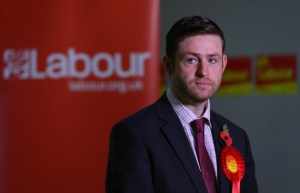
Jim McMahon - John Bickley - Labour Party - UKIP - Oldham by election

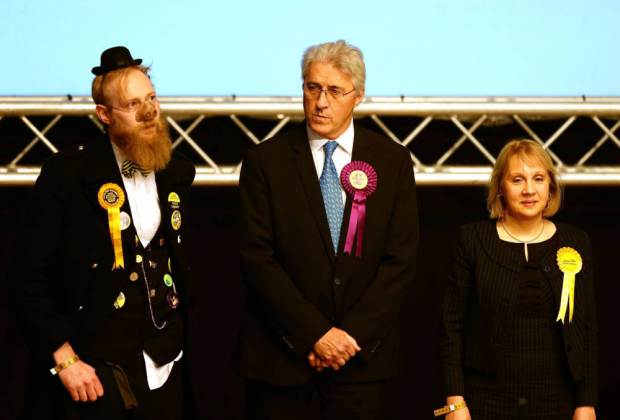
In their smugness at the Oldham by-election result, the Left are in danger of learning the wrong lessons from UKIP’s failure to gain traction

It goes without saying that the by-election result in Oldham is of great reassurance to Jeremy Corbyn and a bad, bad outcome for UKIP.

Much is already being written about how the result provides breathing space for Corbyn after a difficult week marked by the Syria vote. But one piece of commentary caught my attention, specifically this throwaway line at the bottom of the Guardian’s analysis:


Ukip can take no joy from failing to win in a racially charged area.


In this short, throwaway sentence lies all of the sneering anti-UKIP bigotry which has come to typify the new middle-class left-wing clerisy and their house journal, The Guardian.

Why would UKIP “take joy” from winning in a racially charged area? The Guardian clearly accepts this idea as gospel, but why would any decent human being be actively thrilled to profit from racial unrest and community tension?

That’s not to say that UKIP do not benefit from these conditions when they occur. But as newspapers like the Guardian usually love to point out, UKIP actually tend to do best in areas where there are fewest immigrants but where local deprivation is high. If anything, the ideal target constituency for UKIP is not somewhere awash with hardworking Polish immigrants, but a run-down, faded and economically dying coastal or northern town with few job prospects and even fewer immigrants.

No decent person would arrive in a constituency marred by racial tension, rub their hands in glee and look forward to collecting the electoral dividend. But this is precisely what the Guardian accuse UKIP of doing. Because they don’t believe it is possible to be decent and a Ukipper. First they continually equate UKIP’s opposition to unlimited EU immigration with racism, which it categorically is not, whatever the other rights and wrongs of their position. And then they write about UKIP taking joy from exploiting racial tension as though they were the BNP in tweed.

Last week while campaigning in Oldham, Labour’s shadow chancellor John McDonnell stood in front of a crowd of supporters and called UKIP (and, by extension, the party’s supporters and sympathisers) “evil”. That was an incredibly insulting, ignorant and offensive thing to say, as well as being factually inaccurate. But at least we all know where John McDonnell stands and exactly what he thinks of people who believe in democracy, quiet patriotism and the nation state.

The Guardian would never be so gauche as to explicitly say that UKIP are evil. But they don’t need to. Their typical reader assumes it to be true, and so will nod along unthinkingly at a line about UKIP being supposedly disappointed not to have successfully exploited racial division.

Unfortunately, this is just further evidence of the Left assuming a very two-dimensional, cartoon caricature image of people who disagree with them. Conservatives can never disagree with socialism due to honest differences in outlook, they must be selfish Tory Scum. And Ukippers cannot have legitimate concerns over democracy and immigration, they must simply be racist.

We saw this same inability to empathise, to think from the perspective of the other person, when Channel 4 aired their ridiculous mockumentary “UKIP: The First 100 Days”, where Ukippers were portrayed by London-dwelling middle class film makers as two-dimensional, foul-mouthed, racist simpletons with working class accents.

There’s no doubt that the Oldham by-election was a very bad result for UKIP. Either UKIP have reached a natural ceiling in their support, their current electoral strategy is wildly misfiring, or the party’s reported financial troubles are so severe that they prevented the deployment of any serious ground game and voter mobilisation effort. The reality is likely to be some combination of all three.

But sneering that UKIP lost because they failed to exploit racial tensions – as though that goal is what motivates the party, and as though Nigel Farage were just another Nick Griffin – is wrong and ultimately counterproductive to the Left’s attempt to defeat the UKIP challenge.

Lasting victory can only ever come via a thorough understanding of one’s opponent. And the Guardian’s response to Labour’s by-election victory in Oldham proves that the Left are still a long, long way from understanding UKIP.

Labour Launch their Oldham West and Royton By-election Campaign

Agree with this article? Violently disagree? Scroll down to leave a comment.

Follow Semi-Partisan Politics on TwitterFacebook and Medium.

Mao-Quoting IRA Apologist Calls UKIP An ‘Evil Force In Society’

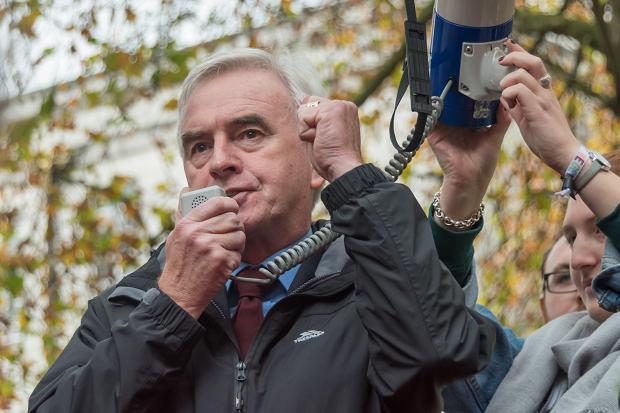
John McDonnell - UKIP - An evil force in our society.jpg

Labour’s shadow chancellor has all the time in the world for IRA terrorists, and only praise for their murderous actions. But John McDonnell thinks that UKIP voters and people who believe in national sovereignty are “evil”

While speaking at a Momentum campaign dinner this weekend, John McDonnell took a break from quoting Mao Tse-Tung and spoke instead about his view of UKIP:

But actually, winning for Labour is important but beating Ukip is just as important as well.

We can not allow what I think is an evil force within our society – that divides society often on the basis of race, often on the basis on some of the crudest policies that you can imagine any political party advocating. We cannot allow them to get any form  of toehold within our political system and that’s why it’s about defeating them but more importantly, defeating them — a clear contrast in terms of a sincere, local committed socialist candidate.

This, of course, is in the context of Labour’s loosening hold on the constituency of Oldham, where UKIP may overturn the 14,000+ majority won by the late Michael Meacher back in May.

And it’s good to know exactly what the Labour leadership thinks of those British people who believe in democracy, national sovereignty and self-determination – people who dare to be quietly patriotic instead of angrily insisting that there is any moral equivalence between Britain and the forces of terrorism, religious fundamentalism and communist dictatorship.

But of course we already knew what the Labour leadership thinks of those people. Since the beginning of Ed Miliband’s vacillating, sanctimonious leadership of the Labour Party back in 2010, the Labour Party has strutted around as though they are the sole custodians of the nation’s conscience and morals, the only ones with a soul – while the rest of us are evil Tory Scum who delight in persecuting the poor and the sick.

Even an unprecedented rejection at the ballot box in May and a leadership election did nothing to shake the confidence of the party base that they were enlightened and virtuous souls voting for society, while the rest of us were greedy, avaricious racists, voting for our wallets and a return to the 1920s. This may be the marching song of the Corbynites, but it is a self-flattering myth believed by other more moderate factions of the Labour Party, too.

As it goes with domestic policy, so it is with international affairs and Britain’s place in the world. The slavishly pro-EU stance of the Labour and the British Left are portrayed as the only “enlightened” or “moral” opinion to hold, while anyone who questions whether Britain should continue to participate in a tightening supra-national political union that nobody wanted or voted for is somehow reactionary or old-fashioned.

And that’s before we even mention immigration. The Labour Party are at their thuggish worst when they seek to smear anyone who questions the wisdom of unlimited intra-EU immigration as a bigot or racist. And John McDonnell proves that he is more than willing to do this, when he speaks about the danger of a political party which “divides society often on the basis of race”.

The irony, of course, is that whatever the other rights or wrongs of UKIP’s immigration policy, theirs is inarguably the least racist policy of all the main political parties, including Labour. The Labour Party, together with all others, are fully wedded to Britain’s continued membership of the European Union and the continued free movement of people within that union. Which is lovely for hard-working southern and eastern Europeans with no qualifications, who out-compete unqualified Brits in the labour market, but less so for highly skilled Indian, Pakistani, Chinese or Brazilian workers who may have a huge amount to contribute to our economy but face significant obstacles to working and settling here.

The Labour Party has no response to this fundamental truth. They know that their fixation on continued British membership of the European Union promotes racial discrimination against non-Europeans when it comes to immigration policy, as well as dooming underqualified Brits to a life of minimum wage drudgery. But the socialist, internationalist pipe dream of European government trumps real concern for working people every single day. So they assuage their guilty consciences by ostentatiously pretending to be great anti-racism campaigners, and accusing everybody who sees through their cheap, tawdry tricks of being tantamount to a white supremacist.

It’s cheap and it’s pathetic, and it’s being pimped out by a despicable Labour shadow chancellor who praised the use of terrorism – the bomb and the bullet – against innocent British citizens.

Six months after a general election at a time of Conservative government missteps and scandals, and Labour are struggling to defend a 14,000 seat majority in the safest of safe seats. Those votes are bleeding away in no small part to UKIP, who are convincing many wavering Labour voters that Nigel Farage’s party is now better placed to defend their interests than a Labour Party which has been captured first by substance-free Milibandism and then by Islingtonian, Jeremy Corbyn-style moral hectors.

And Labour’s response? The same response they always give when they are backed into a tight spot – shroud themselves in the white robes of virtue and scream “racism!” at anyone who points out just how morally and intellectually bankrupt they really are.

A humiliating UKIP victory in Oldham – and the banishment of John McDonnell back to the swamps of vile far-left obscurity where he belongs – cannot come soon enough.

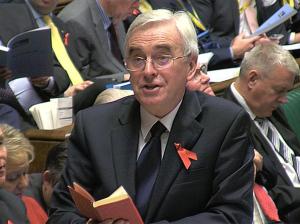
John McDonnell - Little Red Book - Mao Tse Tung

Agree with this article? Violently disagree? Scroll down to leave a comment.

Follow Semi-Partisan Politics on TwitterFacebook and Medium.

Interview With Nigel Farage

UKIP leader Nigel Farage on UKIP’s post-election party conference, and the long term prospects for the party beyond the EU referendum

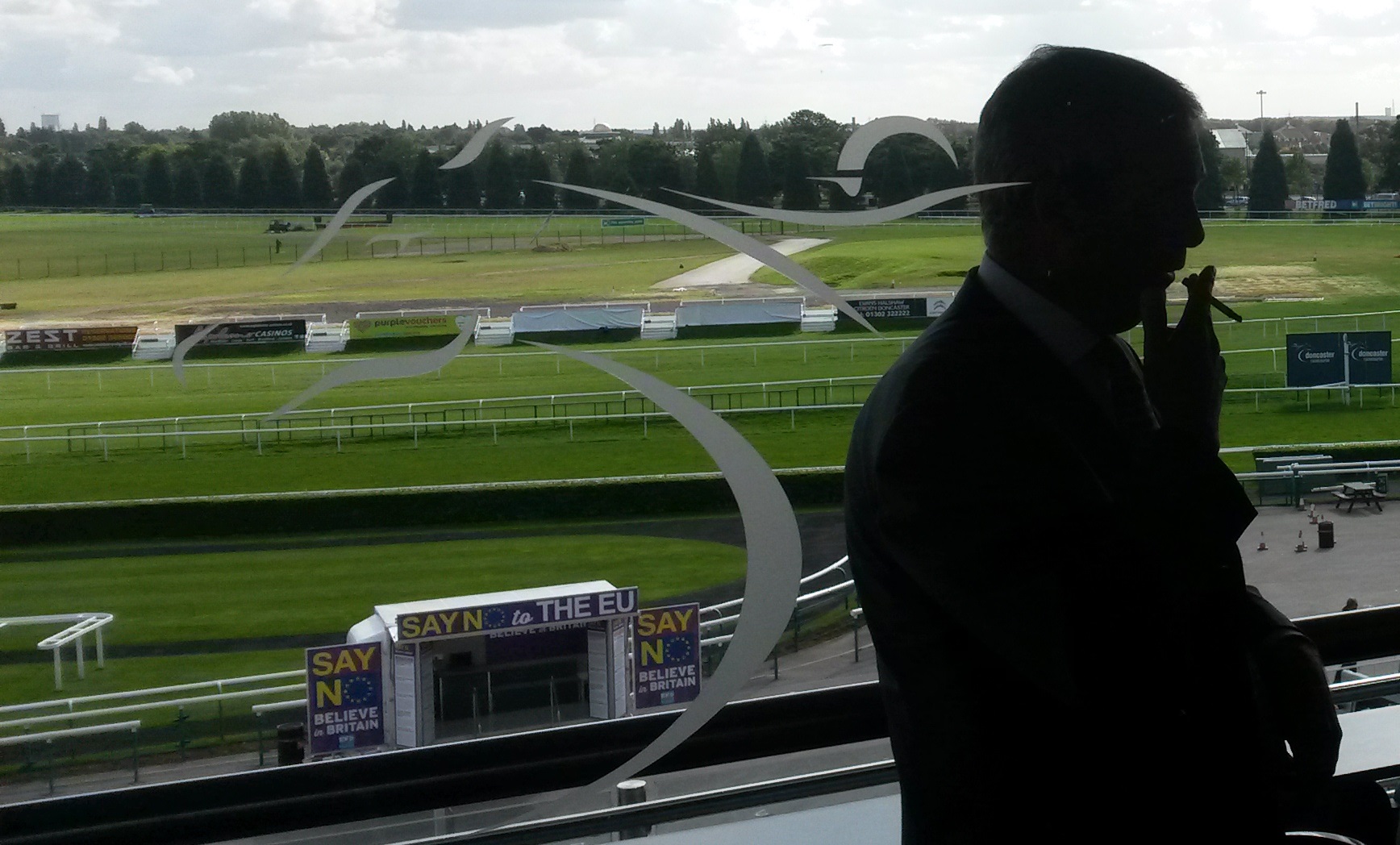
While covering the 2015 UKIP party conference in Doncaster last month, I was able to grab a quick interview with the party leader, Nigel Farage, fresh from the stage after delivering his keynote speech.

This was immediately after what was a successful but fairly unremarkable speech by Farage’s standards, and before Day 1 of the UKIP conference was overshadowed by the row between donor Arron Banks and the party’s sole MP, Douglas Carswell.

As with my interview with Douglas Carswell, I wanted to get Farage to open up about his thoughts for the party looking beyond the Brexit referendum, and how UKIP’s current diverse coalition of different voters could be held together once the unifying goal of the EU referendum has been and gone.

Here is a transcript of my interview with Nigel Farage:

QUESTION: A different tone to this year’s conference. Obviously last year we had the defection of Mark Reckless, looking forward to the election, a bit different this year. Are you pleased with how it went, and are you pleased with the shape of UKIP as you’re fighting the referendum, looking ahead?

NIGEL FARAGE: The general election was very tough for us, you know, a massive amount of effort. Four million votes, very creditable in the circumstances and one seat, so pretty tough. And we’ve had, you know, a summer of regrouping and getting our finances back in shape, we’re now rocking and rolling and ready to go, we’ve got loads of elections to fight next year, but I think winning the referendum matters more than anything and I felt the response I got from the party membership is that they feel the same way too. And we’re going to join hands with the Arron Banks consortium Leave.EU and there’s going to be a united front for those who want to leave the European Union.

QUESTION: Obviously the referendum looms large at the moment, but looking beyond that, how well is UKIP positioned do you think to keep together its diverse support base of ex-Tories, ex-Labour types, libertarians, after the election when that common thread of the referendum is no longer there to hold everyone together?

NIGEL FARAGE: Well you know, there are still plenty of things that will unite us beyond just the European question. A society in which people can aspire to do well, a society where through selection in education we can narrow some of the class gaps, there are lots of things that unite UKIP and I actually think that with Mr. Corbyn as Labour leader there is an even bigger potential marketplace for us there.

To be fair, Farage did not deflect the question, or seek to answer it with some pre-rehearsed talking point. So kudos for that. But his responses did little to change my overall impression of the conference – that UKIP (or at least the party leadership) are so fixated on achieving their long-cherished goal of British secession from the EU that they are willing to let some of the divisions and inherent contradictions within the party go unaddressed for the time being.

From my summary in Day 1 of my UKIP Conference live blog:

There is definitely a degree of Matthew 6:34 to this particular conference (“Take therefore no thought for the morrow: for the morrow shall take thought for the things of itself. Sufficient unto the day is the evil thereof”). And one can understand the strong desire to strive onward to the long-cherished goal of gaining independence from the EU. But I can’t help wondering if UKIP might not pay a price in 2017 or beyond for failing to pay enough heed to the type of party they want to be – and the type of supporters they want – by the time of the next general election.

Time will tell whether this strategy is correct.

Interestingly, both Nigel Farage and Douglas Carswell mentioned the newly-elected Labour leader Jeremy Corbyn, quite unprompted by me. UKIP clearly sees massive potential to win over even more ex-Labour voters, people who may never vote Tory in a million years but who are concerned and repulsed by Labour’s leftward march under Corbyn.

UKIP of course is already the runner-up in well over 100 constituencies, many of them Labour seats in the Midlands and the North. If UKIP are able to stay organised and maintain message discipline – by no means guaranteed – then Labour may well have something to fear on this count.

My live blog from Day 1 of the UKIP 2015 party conference is here.

My live blog from Day 2 of the UKIP 2015 party conference is here.

Nigel Farage - UKIP Conference 2015 - Silhouette - 3

Follow Semi-Partisan Politics on TwitterFacebook and Medium.

Interview With Douglas Carswell

Douglas Carswell on UKIP’s momentum after a bittersweet 2015 general election result, and the long term prospects for the party beyond the EU referendum

While covering last month’s UKIP party conference in Doncaster, I caught up with Douglas Carswell, UKIP’s sole MP at present, as he roamed the conference venue chatting with delegates and posing for the inevitable selfies.

I was interested to hear the MP for Clacton’s thoughts on how UKIP might regain its momentum after a stratospheric rise in support was kept unfairly in check by the UK’s first-past-the-post electoral system, as well as what future the party might have following the referendum, once Britain has either voted to leave the European Union or repudiated UKIP’s entire world view by voting to remain.

Here is a transcript of my interview with Douglas Carswell:

QUESTION: What would constitute a win for UKIP conference this year? Obviously it’s a bit lower-key this year than last year when you were able to announce the defection of Mark Reckless, so what’s the ultimate goal this year?

DOUGLAS CARSWELL: Well actually, the interesting thing is everyone said it was going to be quite low key. I’ve been here for ten minutes and it’s been pretty full on, there’s a real buzz. I think there’s a feeling of real excitement. We’re going to have this referendum. We’ve been campaigning for it for twenty years, and it’s happening, and we can win, but we can only win if we work together and I think that is beginning to happen and it’s incredibly exciting, it’s wonderful to be here.

QUESTION: So looking beyond the referendum, in five years at the next post-election conference the referendum will have happened, we might have another government. What does UKIP need to do to stay relevant in that time, other than the Brexit referendum?

DOUGLAS CARSWELL: There are a whole range of policy areas from forced adoption to a lack of bank reform to the great energy cartel – there are a whole range of policy issues that we need to address, and we are addressing. And we’re making it clear that Comrade Corbyn’s Labour Party doesn’t offer any credible change, the Conservative’s won’t change because they are part of the cartel, UKIP stands for change. These are a whole range of areas besides the Europe question, but you know we were founded twenty-something years ago to ensure that Britain left the European Union. Let’s rise to the occasion and win that referendum.

QUESTION: And finally Douglas, UKIP is an interesting coalition of different voters at the moment. You’ve got disaffected Labour voters, you’ve got right wingers and libertarians and others. How do you keep that coalition together once the unifying factor of an EU referendum is passed?

DOUGLAS CARSWELL: It’s actually surprisingly easy. If you look at some data that appeared in the New Statesman recently, it showed very clearly that the Labour voters that Jeremy Corbyn needs to connect with actually have a view on the free market that is far more closely aligned to the unapologetically free market views of UKIP. We are in a much better position to appeal to ordinary working class people in this country who will never vote Conservative but who realise that Jeremy Corbyn’s welfare-ism, open borders policies and deficit denial are not credible. UKIP can come up as a credible voice for change, as a party that will break open the political cartel and tackle the corporatist economic injustices that are so prevalent in the country today. But the way to do that is not to offer reheated socialism – not Ed Miliband Mark Two. The way to do that is to be unapologetically free market.

You’re filming this from an iPhone. An iPhone that is the collective endeavour of tens of thousands of people across the planet. We need to be a party that believes in the market, in free trade, in taking the best and the brightest from around the world in order to raise living standards. And that is something that I think people right across the political spectrum recognise as credible.

My live blog from Day 1 of the UKIP 2015 party conference is here.

My live blog from Day 2 of the UKIP 2015 party conference is here.

Douglas Carswell - UKIP Party Conference 2015

Follow Semi-Partisan Politics on TwitterFacebook and Medium.