Nepotism Alert – Emily Benn

emily benn tony benn


“People might ask how I can know anything about ‘the real world’ given who my family are and the fact I am the granddaughter of Tony Benn” – Emily Benn


First it was Stephen of House Kinnock. Then came Will of House Straw. Euan of mighty House Blair waits in the wings. And now it is official – Emily Benn, fifth generation of her line, has been selected as Labour’s parliamentary candidate for Croydon South.

At one time, this depressing nepotistic spectacle was mostly a Tory party phenomenon – the Conservatives still boast a grandson of Sir Winston Churchill, Nicholas Soames, among their MPs. But as the ideological gap between the main parties has narrowed and the background of one party’s parliamentary intake has gradually become indistinguishable from another’s, we can only expect cases like this to become more frequent.

Is it necessarily bad to have someone from a political family, a woman in her early twenties, in Parliament? Of course not. Since the interests and priorities of young people are often scarcely acknowledged by Britain’s political leaders, more young faces in the halls of Westminster can only be a good thing. In particular, at a time when huge areas of government spending have been strictly constrained, virtually nothing has been asked of Britain’s pensioners or soon-to-be retirees, so great is the power of the grey vote. More young voters and a few twentysomething MPs are not the whole solution by any means, but it couldn’t hurt.

But is this really best that today’s Labour Party can do, in the age of Miliband? When every other speech from the Labour shadow cabinet (generic ranting against austerity aside) bemoans the lack of opportunities available to disadvantaged young people and the vital importance of listening to them, how will electing a privileged young woman from a dynastic family, almost completely divorced from real life, help to redress the balance?

Emily Benn, of course, is falling over herself to emphasise her humbler side and the extent to which she shares in the same trials and tribulations as the rest of us. In a piece in the Telegraph entitled “What I can offer British politics”, she insists:

“I get up and go to work every day (in the private sector). I have the same friends as everyone else and use the same buses, tubes and trains to get around town. I procrastinate on Facebook, just like the rest of our digitally savvy society, and struggle to find a house I can afford. And right now I am using the very same NHS hospitals as you would, while I accompany my mother to appointments in her cancer battle.”

But while it is true that this routine does indeed mirror the lives of many Britons, it would bring absolutely nothing new to the socioeconomic makeup of the House of Commons. Emily Benn’s career path has essentially been that of any other young(ish) Labour MP: university graduate (Oxbridge was helpful), premium graduate job (working for UBS investment bank, in Benn’s case), dabbling in lower level local politics to show a willingness to “help out”, followed by the nimble leap to national political party life. The only thing that differentiates Emily Benn from the other women in the Labour parliamentary party is the speed at which she achieved the holy grail of being selected by a constituency association – a victory which, if she were to be honest, is entirely attributable to her surname.

Contrast the embryonic career of Tony Benn’s granddaughter with the likes of Owen Jones, the young and telegenic left-wing campaigner, author and talking head. While one can disagree with his politics (this blog certainly does), it is hard to deny Jones’ very tangible accomplishments: a bestselling book that made people stop and think and which influenced the national political conversation, another book on the way, and a respectable track record of grassroots activism to back it up. Jones is often encouraged, even begged by some supporters, to stand at the next general election – though to his credit, he demures and remains non-committal. And few would doubt that Owen Jones would make an energetic, engaged, articulate and highly effective MP were he ever to run.

When has Emily Benn made people stop and think anew about a longstanding social problem? How many people turn out at events to hear her speak passionately on an issue close to her heart? How many newspaper articles does she have to her name, how many books has she published, how many times has Emily Benn’s media profile or debating ability led to invitations to appear on Question Time? In short, aside from her brief tenure as a local councillor, what has she done (aside from graduating university and getting a job like the rest of us) that in any way suggests an ability and promise so great that they earned her the right to carry the Labour Party banner into the 2015 general election?

When The People’s Assembly skulked through London in protest against austerity, this blog contended that a national movement which chooses Russell Brand rather than the likes of Owen Jones as its figurehead should not be surprised when it is generaly dismissed as irrelevant and unserious. The same criticism must now be levelled at the Labour Party, and the way in which local Labour associations are selecting their parliamentary candidates. If Labour insists on choosing famous names, and favouring style over substance, why should voters give them the time of day?

Ultimately, Emily Benn must ask herself this question – are her potential abilities as a future Member of Parliament so great and so unique that her contribution to British political life will outweigh the harm that she is doing by perpetuating yet another exclusionary British political dynasty?

But we cannot expect Ms. Benn to reach the difficult, truthful conclusion on her own. Therefore, it falls to the constituents of Croydon South to ensure that genuine promise beats hereditary entitlement in May 2015.

British Conservatives Must Show The Courage Of Their Convictions

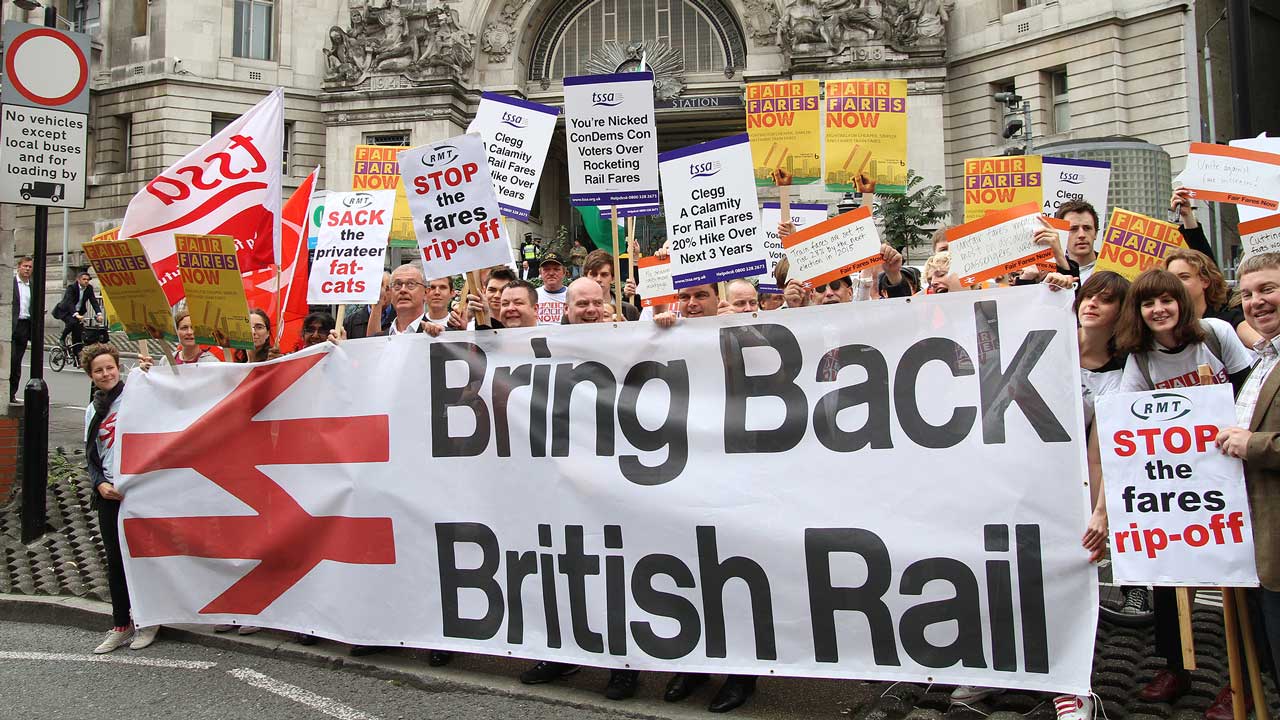
Bring Back British Rail


David Cameron’s cabinet reshuffle dominated the news over the past week – at least, until it was totally overshadowed by world events in Gaza and Ukraine. But the punditry and speculation about who is up and who is down, who succeeded in clawing their way into Cameron’s inner circle and who was excommunicated to the fringes, generally lacked a certain something. Call it relevance.

Beware of anyone offering a neatly packaged, coherent analysis of David Cameron’s cabinet reshuffle so early in its aftermath. There’s a lot of ready made narratives out there – Ken Clarke’s departure heralding the death of the big beasts, the timely promotion of women to the cabinet, the opportunistic promotion of women to the cabinet, the misogynist promotion of women to the cabinet, the triumph of social conservatives, the social conservative purge and the elevation of arch-eurosceptics, to name just a few. The only thing uniting these narratives is that they are quite contradictory, and that they are already out of date.

If you insist on looking for a consistent theme in the Cabinet reshuffle in place of the dull reality (a series of largely independent political calculations by a cautious government), it is not the glaring fact that this was a political reshuffle – paging Captain Obvious – but that it was such a defensive political reshuffle in the run-up to the general election.

With less than a year left of the current coalition government, there was really no point in having a reshuffle at all, from a policy perspective. Little real governing will be done with the coalition partners both manoeuvring to define themselves against each other and take credit for past accomplishments, meaning the only real work left to be done is the cementing and locking down of reforms that have already been made. For all intents and purposes, we are now entering a lame duck session of Parliament.

Given this fact, the most sensible thing for David Cameron to have done – both to achieve the goals of cementing existing government policies and publicly standing behind them – would have been to not have a Cabinet reshuffle at all. But resoluteness and steadfastness was not on David Cameron’s list of priorities. In far too many cases, the personnel changes suggested an apology for successful conservative policy and right-wing thinking in general.

The plain truth is that the conservative agenda – enacted properly and with consideration – works. Privatisation works, welfare reform works (as Fraser Nelson forcefully argued last week), conservative education reform works. Though we should rightly acknowledge and mitigate the negative side effects of weaning people off government aid – and be blunt that these are often counted in terms of human suffering – conservatives should stand unapologetically behind their record, and the ideology which underpins it.

But just when the Conservative Party should be standing up for its beliefs and accomplishments, the coalition government seems more eager to run away from them, to excuse them in the context of “tough decisions to pull the country out of recession”, or to reveal their fear by preventing the proper scrutiny of opposing ideas.

Take the Commons vote to allow the Office for Budgetary Responsibility to audit and pass judgement on Labour Party budget proposals. A confident Tory party that stood behind its accusations of thoughtless left-wing spendthriftery would welcome the harsh spotlight of a non-partisan body like the OBR being shone on official Opposition proposals, but instead the Conservatives made it known (with dubious reasoning) that they were against the proposal.

(It should be noted that in the United States, the equivalent Congressional Budget Office scrutinises draft legislation submitted by both Republicans and Democrats, which further helps to cement its reputation as a non-partisan body).

Look also at the question of railway renationalisation. Pushing an even greater proportion of the British economy into the dead hands of the state is generally a terrible idea, but reflexive Tory opposition to what Ed Miliband and Labour are proposing is counterproductive. Firstly, it glosses over some of the legitimate flaws in the way that the rail privatisation was carried out, and the way in which the privatised railway system is structured. Ignoring legitimate criticism is never the path to good future governance. But secondly, it suggests a lack of confidence in the Tories’ own ideology. If the private sector is so darn efficient and dynamic, what worry should private firms have if the bloated, inefficient state tries to bid for their train franchises, when surely they would lose every single time?

And in the most high profile case of conservative reshuffle apologetics, Michael Gove – one of the few Conservative ministers to successfully enact genuinely bold conservative reforms – was moved away from the Department of Education and demoted to the position of Chief Whip (those arguing that it was not a demotion should compare the salaries of the two roles).

Alarmingly, much of the reaction to Gove’s departure suggested that he was moved on not because his reforms had failed, but because he hadn’t flattered people with enough platitudes while successfully enacting them. The truth about Mr Gove can be discerned by parsing the reaction of Russell Hobby, general secretary of the National Association of Head Teachers. The Telegraph reports Hobby’s view:

“Michael Gove had a radical and sincere vision for transforming education but he often failed to bring the profession with him.

“His diagnosis was frequently astute but his prescriptions were hard to swallow. It is now time to rebuild trust and confidence between government and teachers so that improvements can endure.”

Translated, this means that Gove’s ideas and reforms were quite sound, but he rubbed too many powerful special interests up the wrong way in the course of implementing them. With his removal by Cameron, good policymaking was subordinated to public sector union ego-stroking.

The unions clearly felt that Michael Gove did not respect them – time and time again, in interview after interview with cheerful teachers, this was the constant refrain. After the dust settles, perhaps people will start asking when the pride of the teachers unions and the egos of individual teachers became more important than implementing the best possible education policy for Britain’s children.

At the recent Margaret Thatcher Conference on Liberty, organised by the Centre for Policy Studies think tank, former Australian prime minister John Howard made an important observation. Reflecting on his three successive election victories, Howard said: “The worst way to try to win office is to pretend you’re not too different from your opponents.”

If David Cameron and the Conservative Party are to succeed in their audacious goal of winning an outright majority in the 2015 general election, the path to victory does not lie in pretending to be Ed Miliband’s mollycoddling Labour Party with a small added dose of fiscal realism. If people want a fiscally irresponsible government pledging obsequious servitude to the public sector unions and buying into their pretence of representing the public interest, they will vote for the real thing, not a pale imitation. The Conservative Party must stand behind their limited successful reforms, and promise to double down if they are re-elected to government in 2015.

With the general election less than ten months away, this is no time for small government conservatives to falter.

The Very Model Of A Modern Citizen Politician?

George Washington


Dan Byles, the Conservative MP notable for holding the party’s most marginal seat (North Warwickshire, majority of 54 votes) has announced his intention to stand down at the 2015 general election.

In a statement published on his website, the MP notes:

Before becoming an MP I served in the Army for nine years, deploying on operational tours in Bosnia and Kosovo. By the time of the 2015 General Election, serving my country will have been the primary focus of my professional life for some 14 years. For myself and for my family, whose support and understanding have been unerring throughout, I believe it is now time to move on to new challenges. I will therefore not be standing for re-election in 2015.

While it is sad to see Parliament lose a member of such evident patriotic devotion as Mr. Byles, more than anything else, the news comes as a tremendous surprise because it is so rare to see someone give up power and office so gracefully in modern British politics. Unless they are so unfortunate as to lose their seat in an election, MPs usually cling to their Westminster offices like barnacles to a ship’s hull.

Having undertaken whatever questionable manoeuverings were necessary to be selected as a candidate and then elected to Parliament in the first place, many MPs choose to stay in the politics game for the rest of their careers. And just as the baby boomers delaying retirement creates a lack of entry-level openings at the junior end of the job market, so the legion of sixty and seventy-year-old MPs refusing to step off the gravy train prevents any significant injection of young blood into the senior levels of British politics.

Of course, not all legislators can (or should) breeze into Parliament for a single term as a mere sabbatical from their real-life careers. Parliamentary business (particularly the important, mostly unseen work done in committees) depends on there being knowledgeable, experienced veterans able to see through the nonsense and bring their vast wisdom to bear on proceedings. Just as it would be damaging to have a Parliament exclusively full of big beasts and old-timers, so a Parliament of young and ambitious whippersnappers with their eye on a Cabinet position (or higher) would also be harmful.

But Dan Byles represents a type of politician that is far too rare in Britain – someone willing to serve his constituents in our national legislature with seemingly no further ambition to climb the greasy pole or to engage in Westminster’s devious games.

Sure, there are other young politicians who stay in Parliament for only a short term – as the BBC rightly notes, Byles represents the 23rd Conservative MP to stand down 2015, a significant number of whom also come from the 2010 intake. But this is not the dawn of the citizen politician that it appears to be – the ranks of the departed include those such as Louise Mensch, who arrived with expectations of power and rapid promotion, chafed at the club-like nature of Westminster and the unglamorous life of a backbencher, and departed early after focusing too much on what their government could do for them, as opposed to what they could do for their government.

Think also of the one-time rising stars of the New Labour governments such as James Purnell, who leveraged his brief ministerial career and failed attempt to destabilise Gordon Brown to secure himself a plum job at the publicly-owned BBC (after a spell as chairman of a think tank and public sector advisor to a global consultancy firm).

While there is very little to praise in a long life lived out on the backbench easy street, or a brief incandescent Parliamentary career aborted when the office holder realised there was no room for further personal advancement, there is a lot to praise in someone devoting a limited period of their life – either relatively early in their career like Dan Byles, or later in life at the apex of their career – to serve their constituents and countrymen.

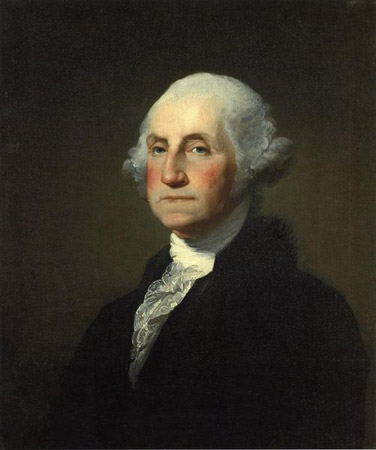
George Washington, the first President of the United States, retired from the presidency in 1797 to tend to his farm and his business interests. True, there was not the same temptation to found self-aggrandising global initiatives, join the ranks of the lobbying industry or make the transition into television punditry back in the late eighteenth century – but even if there were, one suspects that George Washington would have had none of it. After a lifetime of service to his newly born country, he was happy to dissolve back into civilian life. How glib, shallow and egotistical do so many of our contemporary leaders and politicians appear when compared to this Washingtonian ideal of the citizen politician?

It may be the smallest of beginnings, but let the national service and brief Parliamentary career of Dan Byles be a reminder to others – particularly those who hold the most sway over candidate selection, both in the constituencies and in Westminster – that while there is no one model political career, that of the citizen politician is one to aspire to, and one to respect.

As MPs Debate Making Eid and Diwali Public Holidays, The Wall of Separation Is Under New Threat

Leicester Diwali celebration


The wall of separation between church and state is under threat once again.

Not officially, of course. We in Britain have no written constitution, no final recourse to turn to in the event of gross government or judicial overreach, or the flagrant violation of our natural rights. But nonetheless, just as progress is being made elsewhere in placing religion in mutually beneficial quarantine from government, the parties of God (a term coined by the late Christopher Hitchens) are launching a counter-attack. And this time the attack comes not from the aggrieved Christian plurality, but the Muslim and Hindu minorities.

The BBC reports:

MPs are set to debate an e-petition aiming to make Eid and Diwali public holidays in the UK.

The e-petition is being championed in Parliament by Conservative MP Bob Blackman, after being signed by more than 120,000 people.

It is only fair that Muslims and Hindus have “the most important days in their faiths recognised in law”, the petition argues.

It should be noted that the government has already rejected the petition. But the fact that a Member of Parliament (and a conservative one at that) is willing to publicly go against the grain and argue for greater, not less government enforced religion in the lives of the people is worrying, and a sign that must be watched carefully.

The reasons for not widening the UK’s current public holidays are many, the first being the fact that shoehorning in another two religious public holidays which are set according to religious timetables rather than the economic rhythm and needs of the nation will only further exacerbate the current skewed system. At present, the UK’s bank holidays are concentrated very unequally in the early part of the year: a brace over the Easter weekend, a volley in May, a last hurrah in August and then the long, slow autumnal death march through the rest of the year until the people are saved by the Christmas holidays. This does little to take into account the needs of businesses (who lose their labour for a day), or for people who might wish the days to be spaced out more evenly.

Secondly, unlike many other countries, none of Britain’s public holidays are used for the beneficial purpose of celebrating our entire nation, our shared culture (as opposed to niche interests – a category under which Christianity increasingly falls) or our collective accomplishments as a British people. Unlike the United States, we have no equivalent to Independence Day, when we can all celebrate being British and indulge in an important exercise in positive patriotism. Unlike France, we have no Bastille Day, celebrating pivotal moments in our national history.

Aside from the fact that recognising pivotal days in our nation’s history helps to nurture the ties that bind us all together, it can be a money-maker too – the American economy may lose a day of labour every year on July 4 and Thanksgiving, but how much is injected into their economy through family gatherings, travel and public celebrations? And how great are the non-monetary benefits of fostering a shared sense of collective identity – one which Britain sometimes sorely lacks?

Thirdly, expanding the public holiday schedule to include more religious days would ignore the simultaneous (and popular) campaign underway to make St. George’s Day a national holiday. The saints days for the home nations are not recognised as UK-wide public holidays, which only fosters internal resentment and fuels the nationalist separatist causes which threaten the balkanisation of Britain.

And finally, written constitution or none, Britain urgently needs to raise a wall of separation between religion and our government, a cause that would be significantly set back by bestowing official government sponsorship on even more faiths. That is not to denigrate the great good that many religious congregations, parishes, charities and organisations do every day. But this social good cannot be used as a bargaining chip to blackmail the rest of the country (an increasingly secular one, for good or ill) into following the same lifestyle practices, moral codes or days of observance as the faithful.

Taken to its logical conclusion, ceteris parabus, this would mean the disestablishment of the Easter and Christmas public holidays. But this would not be a good idea. The Christian holidays, by virtue of having been part of our national fabric for so long, now occupy a place in our culture which transcends their religious origin. Many millions of people celebrate Christmas and Easter who have never set foot in a church, and could not name even the most fundamental tenets of the Christian faith. Furthermore, businesses and organisations around the world – especially in Britain’s main trading partners in North America and Europe – also observe these days as public holidays, making it unwise for Britain to deliberately put itself out of sync. Thus, because the Christian holidays are so embedded in our national life, and are an important reminder to our nation’s history and Christian heritage, there should (and will likely never) be no move to end these holidays.

(This is in no way to suggest that religious festivals and holidays cannot or should not be observed in other ways. The annual Diwali celebration in Leicester, for example, is rightly acclaimed as one of the finest in the world – though such celebrations should at all times be privately funded through sponsorship, and never from public money).

Race, culture and religion often make a volatile, contentious mixture. By granting special rights and favours to some, it can only lead to resentment among the unfavoured, and embolden the beneficiaries to ask for yet further recognition in the future. We already live in an age of religious persecution complexes and exaggerated victimhood – from the mild culture war still fought by the socially conservative Christian rearguard in Britain to the disillusioned British youths jetting off to fight for their so-called faith in Syria – and the very last thing we should be doing is anything that fans the fames of discord at home.

The UK’s Hindus and Muslims (and Christians, and everyone else) are all equally British under the law, and have an equal, important stake in our society, to the extent that they are willing to be British first and foremost. Only recently in the Birmingham schools scandal we have seen the damage that can be done to education and to young minds when religion is placed on a pedestal and sycophantic multiculturalist apologists are too petrified of causing offence to stand up for British values against religious extremism.

Rather than debating the admission of two more exclusionary, religion-oriented public holidays to the British calendar, Parliament should be debating a root and branch review of all our existing holidays as part of a broader effort to make our days off count for something more than a chance for a long weekend and an excuse to jet off out of the country.

What if together we celebrated the Acts of Union which created Great Britain? Or Nelson’s victory at Trafalgar in the Napoleonic wars? Victory in Europe day? Or any one of many other days that could plausibly be used to draw us together as people of a United Kingdom rather than a fractured coalition of different faiths, interests, grudges and resentments?

For the sake of our fraying national unity, admitting more faiths into the elite club of state sponsorship and approval must be rejected as the misconceived idea that it is.

Strike!

SPS strike protest 0b


Did life as you know it come grinding to a halt during yesterday’s strike?

Probably not, unless you are a parent who had to make last-minute childcare arrangements because of the teachers walkout and school closures, or you were one of the zero reported cases of people whose houses burned down in the temporary absence of the fire brigade.

The failure of the strikers and the public sector unions to capture the public imagination and win their support is largely down to the fact that the majority of Brits generally accept the need for pay restraint and fiscal conservatism on the part of government, even if they also acknowledge that the clumsy imposition of “austerity” is causing unnecessary hardship and suffering for some of the people most reliant on a big-spending government.

As this blog argued yesterday, it is not enough for opponents of austerity to rail against the “bankers, toffs and Tory scum”, the usual bogeymen of the Left – not if they want to win the next general election. Voters rarely kick out incumbent governments when the economy is on a positive trajectory, and particularly not when the opposition struggles to articulate a convincing vision of how different life would be under their rule.

What, precisely, do the strikers and anti-Austerity demonstrators want? Is it simply a return to pre-austerity 2010 levels of government spending, as though Gordon Brown were still in office? Is it that plus inflation-busting public sector pay raises (at a time when many in the private sector cannot hope for the same)? Or is it something bigger, along the lines of the joyful hippie revolution called for by Russell Brand?

From observing and talking with some of those on strike and others supporting them, it was clear that they have no single answer, no solid idea to rally behind other than to point at the Conservative-led coalition government and say “down with this sort of thing!”

One cannot necessarily expect the grassroots and those on the cutting edge of austerity to be articulate creators of alternative government policy, but from the Labour leadership’s awkward dance around whether they supported the strikes or not, it is clear that they are also stumped for a workable, electorally viable alternative.

With the general election less than 10 months away, the opposition (both official and the activist base) looks and feels very much divided and conquered.

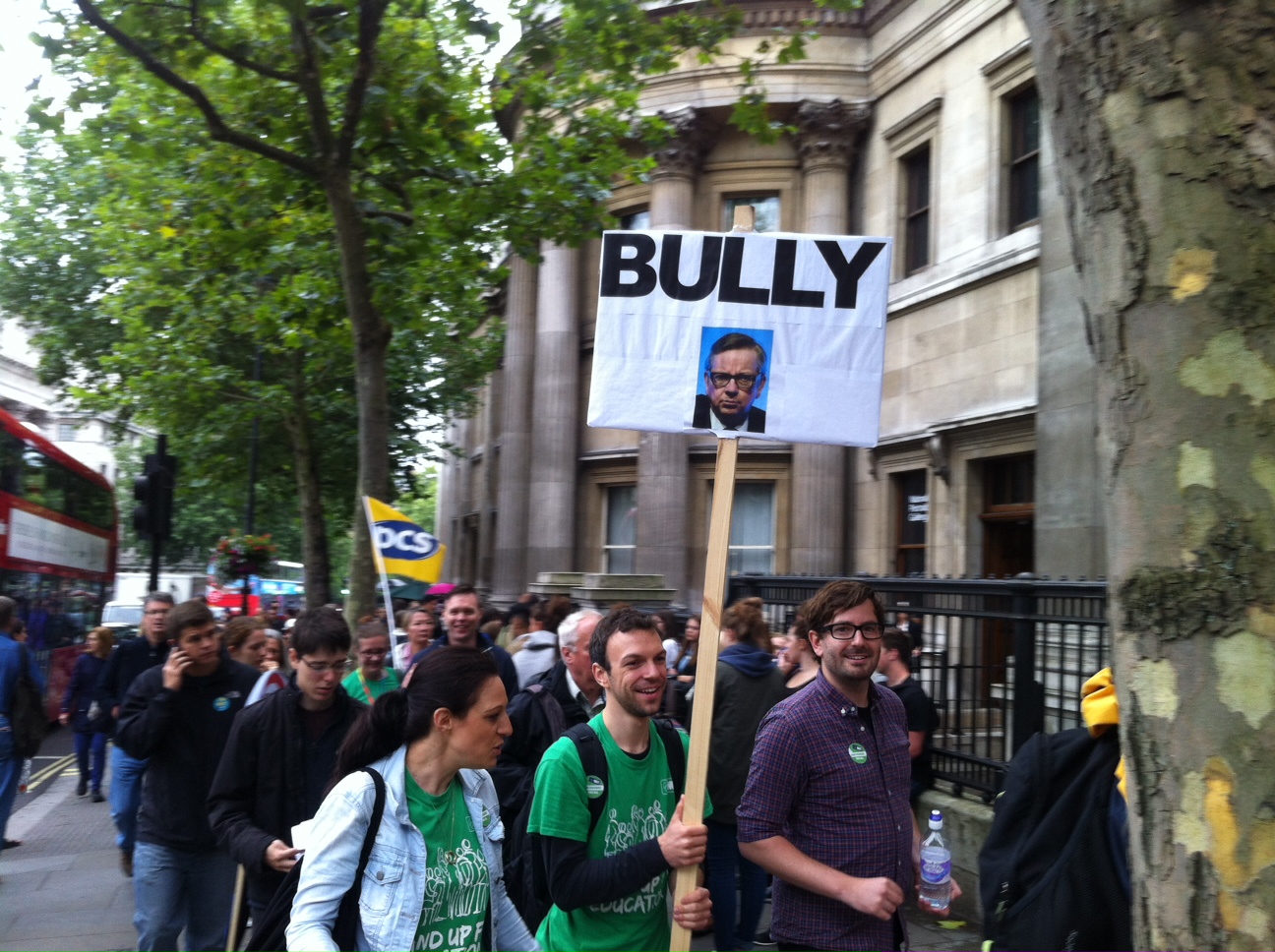
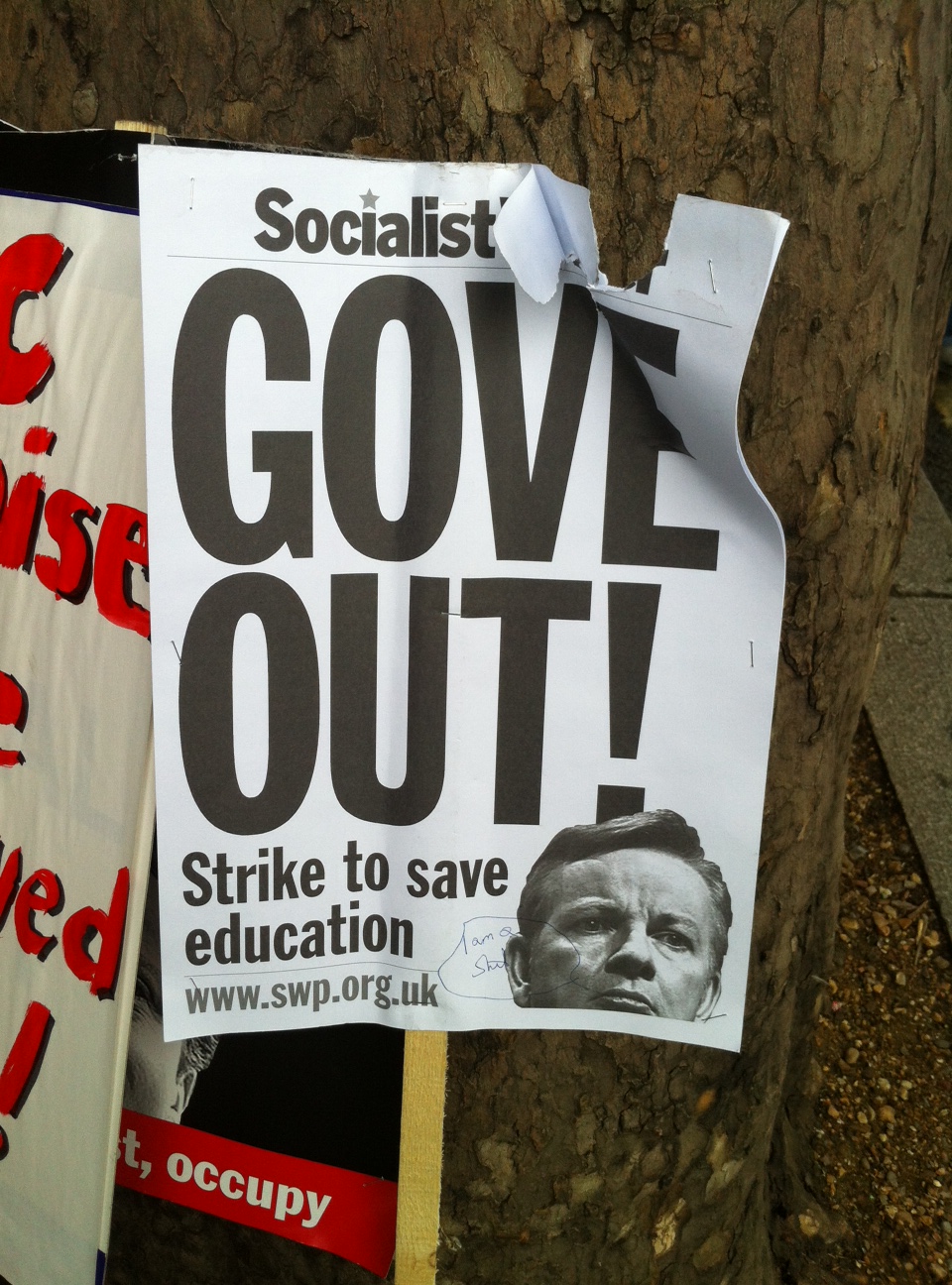
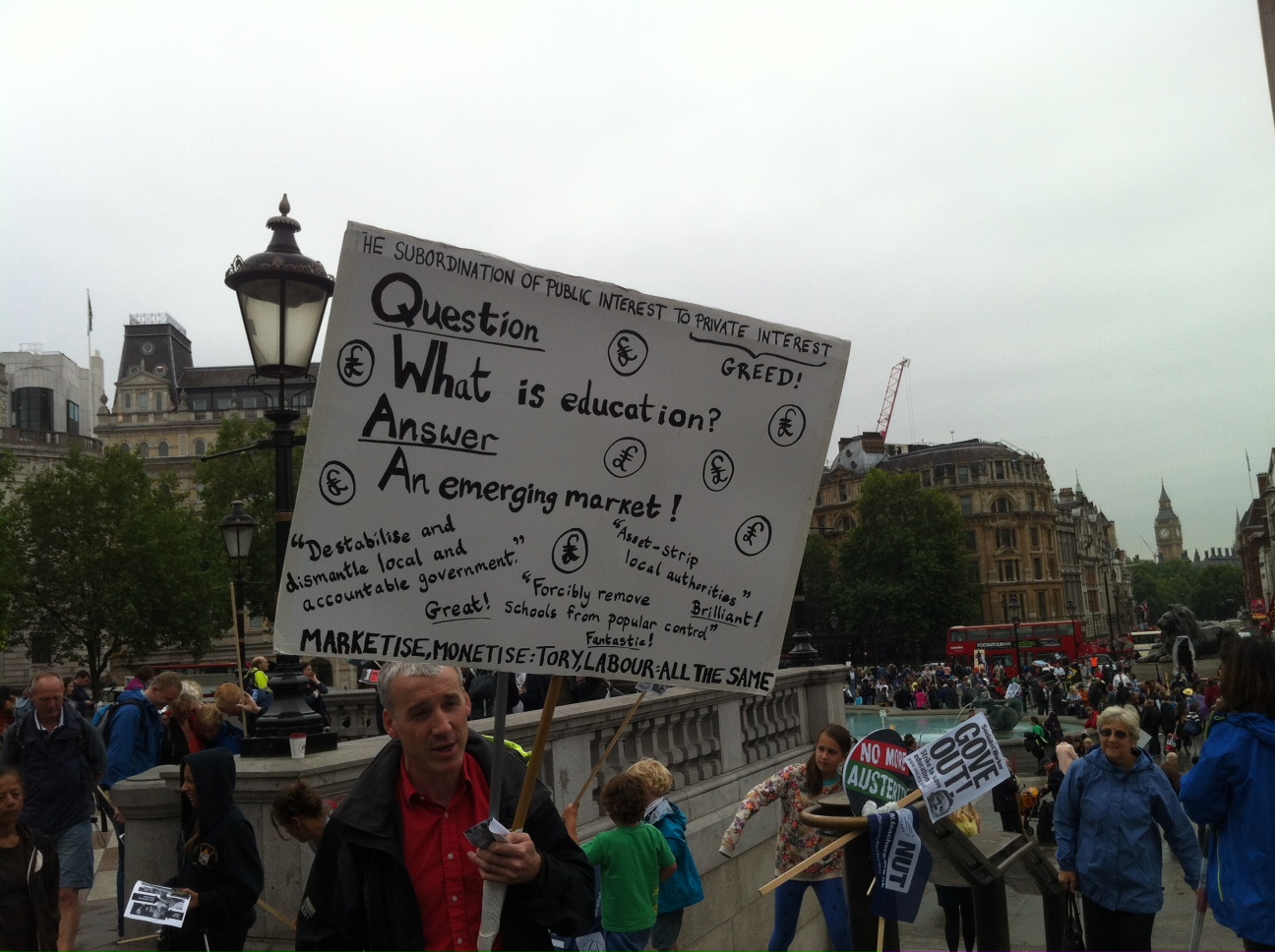
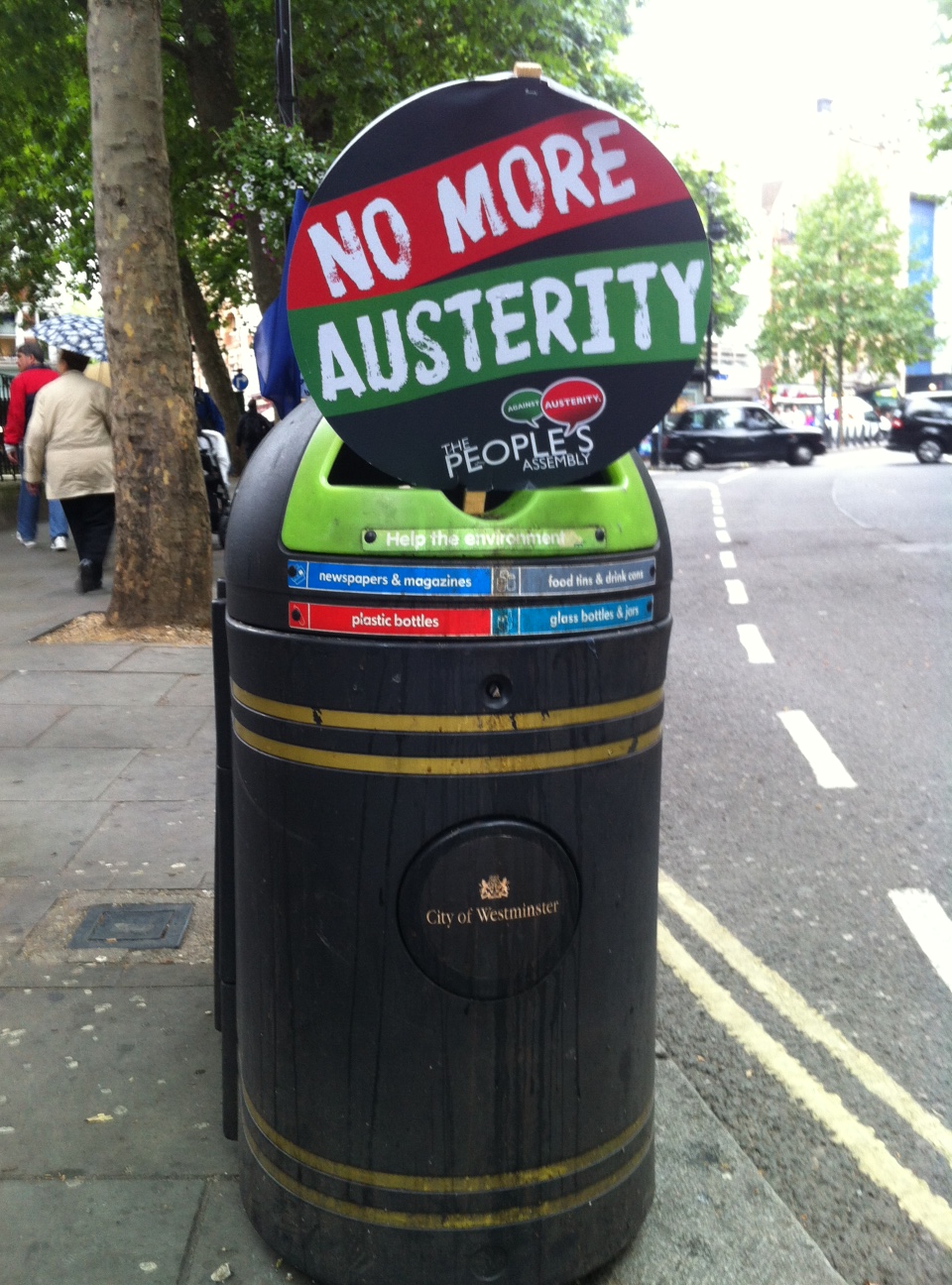
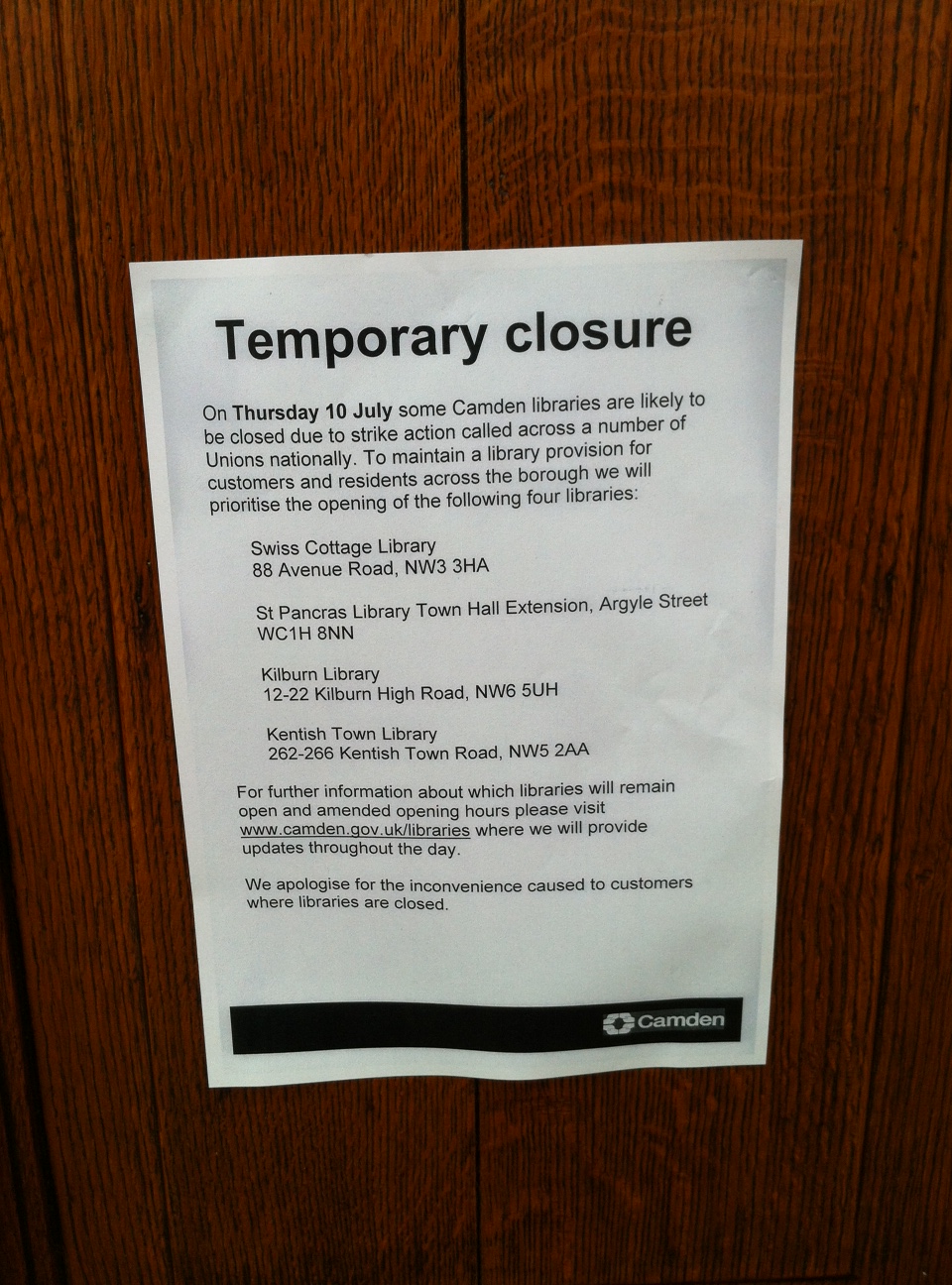
Here are some telling images from the strike which sum up the prevailing atmosphere, taken in London by Semi-Partisan Sam:

SPS strike protest 3 SPS strike protest 4 SPS strike protest 5 SPS strike protest 6 SPS strike protest 7 SPS strike protest 8 SPS strike protest 9