Why The United Kingdom Is Coming Apart At The Seams

British Values word cloud


“The dogmas of the quiet past are inadequate to the stormy present” – President Abraham Lincoln, Annual message to Congress, December 1862

Nobody should be surprised that the Scottish independence referendum campaign has tightened so much in the closing days, and that we now face the very real prospect of our country breaking in two.

Though it is immensely painful for unionists to see the “Yes” camp boast even a viable chance of success, and the events of the past week seem like an unforeseen emergency, the roots of this crisis have in fact been sowed over many years.

The uncomfortable truth is that the Scottish independence referendum campaign became so close because it was allowed to generate into a mere political argument – left wing pipe dreams versus conservative continuity – rather than being built into a real debate about nationhood, nationality and belonging.

What little talk there was of national identity was ceded entirely to the pro-independence campaign. Within the SNP are a die-hard contingent of Braveheart-style zealots who would vote for independence come hell or high water, ruinous economic consequences be damned. But a far greater number, the ranks currently giving the “Yes” campaign a marginal lead, are formed of naturally left-leaning Scottish voters who do not know – because they have not been told – that this campaign is about anything other than advancing a left-wing political agenda to which they are sympathetic.

There has been almost no talk from the “Better Together” campaign of what would be thrown away and lost forever if the Scottish people vote to leave the United Kingdom. This is partly because it was felt that a campaign in which voters were forced to choose between their Scottish and British identities could only ever end one way, with Scottishness winning hands-down. This may or may not be the case. But it is also because the inhabitants of the British isles have gradually become unaccustomed to talking about our nationality, our shared sense of identity and purpose, at all.

When Britain is mentioned in political debates, it has been in the false context of how small and ineffectual a country we are, buffeted by economic and geopolitical forces beyond our ability to control or influence alone. Witness, for example, the debate about Britain’s continued membership of the European Union, where the political consensus among all main parties (save UKIP) is that Britain cannot possibly survive in the world without surrendering a huge portion of her sovereignty to the EU’s supra-national institutions.

This air of national decline and inferiority has been peddled so successfully and for so long that it is accepted unquestioningly as a universal truth by many of us, despite overwhelming facts to the contrary. The truth is that Britain remains one of the few truly consequential and influential nations on Earth – culturally, economically, politically and militarily. It has become fashionable to be blasé about this fact, or to deny it altogether, but pride in this fact is justifiable, indeed essential if we are to maintain the importance of a strong nation state as the best guarantor of individual freedom and prosperity.

And yet the importance of the nation state has been continually played down in Britain. Decisive action in the national interest is viewed as arrogant and unseemly, with undue reverence given instead to the nebulous notion of “international co-operation” which sounds wonderful on paper but inevitably means closed-door meetings and undemocratic decisions taken by ministers and heads of government with no real accountability. On some level the leftists realise this truth, as their growing opposition to the Transatlantic Trade and Investment Partnership (TTIP) reveals.

The concept of British nationality has been further undermined by well-intentioned but misguided dogmas which insist that all cultural behaviours within Britain’s wonderfully multiracial patchwork are valid and acceptable, even when they conflict strongly with traditional British values of tolerance, democracy, patriotism, fairness and equality before the law. Thus problems that manifest within non-assimilated minority communities go unaddressed for fear of violating the unwritten rules of political correctness, leading (in part) to scandals such as the Birmingham Trojan Horse schools scandal or the appalling, endemic sexual abuse scandal in Rotherham.

When politicians have raised concern about the lack of British values being taught in schools and promoted more generally in the culture, the petulant response from many quarters (mostly but not exclusively from the left) has been to negate British accomplishments and virtues, talking up the rest of the world while disparaging Britain at every turn.

Michael Rosen, writing in The Guardian, attacked then-education secretary Michael Gove’s call for schools to teach British values with all the smug superiority of a brainy sixth-former, and inevitably tinged with the usual list of left-wing resentments – some of which are fair, but none of which should be sufficient to negate his love of country to the extent that they clearly do:

I see you’re going to require all your schools to teach British values. If you think you’re going to have the support of all parents in this project, you’ll have to count me out.

Your checklist of British values is: “Democracy, the rule of law, individual liberty, mutual respect, and tolerance of those of different faiths and beliefs.” I can’t attach the adjective “British” to these. In fact, I find it parochial, patronising and arrogant that you think it’s appropriate or right to do so.

So let’s go through it. I like democracy. I don’t think you do. You’ve replaced the democracy of local government control over schools with the marketplace.A tiny number of speculators, debt-sellers, rate-fixers and gamblers have altered the lives of millions of people. No one voted them in. No one can vote them out. We have an unelected head of state and an unelected second chamber…

And so it goes on, ad nauseam.

But the problem is not confined to the likes of Rosen, or to the many Scottish nationalists who see independence only as a useful stepping stone to achieving the kind of far-left political settlement that they so desperately want.

The problem is that even many patriotic Brits from all corners of the United Kingdom are struggling to articulate the reasons why they desperately want to keep our Union together. The mayor of London, Boris Johnson, tried in his own unique way, but the result was nothing special. Various elder statesmen of British politics have tried, but none of them have managed to make the heart beat faster for love of Britain, either. And God knows that the people running the “Better Together” campaign have failed, focusing almost entirely on the risks of Scottish independence rather than the great benefits of continued union.

One of the few voices to really succeed in speaking up in favour of the United Kingdom, and arguing that Scottishness and Britishness need not be mutually exclusive, is Alex Massie. In a long piece in The Spectator – worth reading in its entirety – he writes:

The other day the historian Tom Devine remarked that all the Union has going for it is sentiment, family and history. Like that’s not enough? Those aren’twee things, they’re the things that make us who we are. The blood and guts, the bone and marrow of our lives. The tissue that connects us to our fellow citizens, the stuff that makes us more than an individual. The things from which you build a society.  You can have that in Scotland, alone and independent, too of course. But we also have it in Britain, right now, and we will lose some of that if we vote Yes. Or some of us will, anyway.

So I think of E Pluribus Unum and I think that’s a motto that applies to the United Kingdom too. And so does its opposite: within one, many. There’s ample room for many types of Britain. Not just Scots and Welsh and Irish and English but Pakistani-Scots, Jamaican-Welsh and Nigerian-English too. I think it’s the tensions and ambiguities inherent in all of this that makes Britain interesting; that makes Scotland interesting too.

The conclusion also offers a much-needed hint of British exceptionalism, and makes one see Britain as really being a country quite like no other:

Most of all, I like that when you get the train to Scotland from London or Peterborough or Newcastle north and you cross the border in the gloaming you feel your heart soar and you cry hurrah and yippee because you know you’re home now without having been abroad. I like that and think it matters. I don’t know if I know why it does or why it suddenly seems so valuable but I know I do. But that’s the Britain I know and like; a place in which I’m always Scottish but also, when it suits, British too. A country where you travel to very different places and still always come home without having been abroad.

Sadly, these kind of sentiments – though possibly quite common among British citizens from both north and south of the border – have been heard far too rarely in the debate, until the referendum is almost upon us and it may be too late to prevent a calamitous outcome. And there is no justification for the outraged surprise now pouring forth from unionist pundits and politicians. Britain is now reaping what her political and intellectual leaders sowed over the course of an entire generation.

This is what happens when an extreme, uncompromising brand of enforced multiculturalism is allowed to triumph over multiracialism.

This is what happens when we allow the perception to take hold that patriotism and pride in one’s own country is a dirty, shameful thing.

This is what happens when years of appalling education policies create a generation who do not possess a narrative history of their own country or have the faintest clue how it came into being, what it has stood for and how its institutions function.

This much is no exaggeration – your blogger took compulsory history classes at school until the age of 14 (at which point the subject was dropped thanks to the awful way it was taught), during which time the topics studied included the Tudors, the Vikings, the First and Second World Wars, and coal mining in Wales. Contrast this woeful failure to provide a comprehensive narrative history of Britain with the history education that an American student might expect to receive, and it makes a painful comparison.

Britain has been slowly waking up to these problems, but in a lazy, leisurely manner that is wholly inadequate to the urgency of the threat. Until now, our failure to nurture a common sense of shared national identity (something that the Americans do so well, and from whom we have much to learn) has led to unfortunate blips and political scandals such as the Birmingham schools Trojan Horse scandal or the repeated flying of a black, ISIS-style flag from the gates of a public housing estate in London. But these symptoms pale in comparison to the very real existential threat which seems to have crept up on so many politicians and pundits almost unnoticed.

Sure, failing to ensure that newly arrived immigrants integrate into the British way of life or allowing proponents of extremist Islam to gain a foothold in schools poses a medium-term threat to the security of the United Kingdom due to the possibility of future acts of terrorism. But the fallout from these failures does not have the potential to destroy our country overnight. On the other hand, our collective failure over at least the past thirty years to inculcate any sense of Britishness even among our own indigenous population could see our country effectively destroyed at the ballot box as soon as next week.

There is blame enough to go around for allowing this slow-motion calamity to come so close to fruition, but now is not the time. Right now, it must be all hands to the pumps in a final effort to save the United Kingdom from Alex Salmond’s chimerical fantasy of an independent Scotland serving as a socialist, egalitarian beacon for the world.

If we avoid disaster and are still fellow countrymen the morning after next Thursday’s referendum, we can then finally get to work shoring up our battered and frayed sense of nationhood, and by every means at our disposal. Educational reform, constitutional reform and government policy at the Westminster and devolved assembly levels will all have an important part to play, as well as a new constitutional settlement to iron out the unfairness of the many perks now being showered on Scotland as a desperate bribe for them to stay in the Union.

But even if the United Kingdom survives the referendum and its aftermath, it will still be for nothing if all 64 million of us British citizens cannot find a way to unlearn years of relentless teaching that there is nothing great about Britain.

All Hands To The Keyboards, To Save The United Kingdom


Stop talking about The Great British Bake Off for five minutes. Because in a couple of weeks time, there may no longer be a Great Britain at all.

If Scottish voters vote “yes” to independence in their coming referendum, that’s it – the end of the United Kingdom as we know it.

The Spectator magazine have taken the unprecedented step of announcing that this week’s cover story will be written not by journalists but by readers – it will be comprised of short letters from ordinary Britons, urging wavering Scots to vote to keep our country united.

Semi-Partisan Sam has already submitted a contribution, albeit a tortured piece that ran to 1,776 words, a number heavy with cultural and historic significance.

Though I feel unable to join in the opportunistic race to the left to compete with Alex Salmond, or the politicians’ desperate tactic of promising ever-more constitutional powers for Scotland alone rather than pledging to bring about the fully federal United Kingdom that I support, I wanted to say my piece and put on the record my love for my country in its unbroken, united form.

If you do nothing else political this year – and truly, the matter of our country’s ongoing survival transcends ordinary politics – take a moment to join in The Spectator’s campaign and say why the United Kingdom matters to you.

250 Words To Save The Union

Lincoln First Inaugural Scottish Independence 2


If your country faced annihilation by a foreign army, would you take up arms in its defence? Many would, and many have throughout our history – this year we honour the memory of the six million British men who fought in the First World War, many making the ultimate sacrifice for King and country.

But if your country was days away from a seemingly more banal kind of destruction – at the ballot box, following a largely dull and petty referendum campaign – what would you say to save it?

The Spectator has issued this challenge to its readers, asking them to submit letters to a wavering Scottish voter, imploring them to choose to remain in the Union. Entrants have complete freedom to say what they like within this broad remit:

You can make only one point, or make a bunch of them. The letter can be funny or deadly serious, clinically rational or a cri de coeur. The aim is to show that people in certain parts of Britain do care, very much, about the other parts – and that the Britishness which binds us together is worth fighting for.

The timing could not be better: a shocking new poll has given the “Yes” to independence campaign the lead for the first time, with 51% of respondents in favour of ripping up the Act of Union, and 49% preferring to maintain the bonds that tie us together. The Better Together camp long predicted that the polls would tighten as the referendum neared, but this latest poll is an absolute calamity, almost guaranteed to sew the seeds for further infighting and recrimination among unionists.

Immediately I got to work. I would gladly participate, I would find that elusive combination of words that would make Scottish independence supporters come to their senses and see reason. Where countless celebrities, politicians and statesmen had failed, I would succeed.

Four drafts later and I have nothing.

As a political writer and blogger I should be full of excitement and opinions about the latest opinion poll, and spend my time analysing the implications and wondering how each side will respond now that their fortune have apparently flipped. The Spectator’s Isabel Hardman does a typically fine job of this:

The question is who will this poll galvanise the most? Will it horrify wavering voters and send the Better Together campaign into a final frenzy to win over those lingering undecideds? One thing we can be certain of is more detail on what further powers Scotland would get if it stayed within the UK. Or will it give the SNP a final furlong spurt of energy? As we’re dealing with an expected turnout of around 80 per cent with voters who have never pushed a slip of paper into a ballot box before coming out to vote, no-one knows the answer. And that’s what makes tonight’s poll particularly terrifying for unionists.

I suppose I should also take the lead from many senior unionist politicians and pundits, and be ready and willing to say anything, do anything and offer anything by way of bribery or cajolement to convince wavering Scots of the readily apparent benefits of our United Kingdom. But I cannot engage in this flattery, just as I cannot engage in tactical speculation and analysis on this subject any more. The threat is too great and the imminent pain too real to treat the prospect of the end of the United Kingdom as just another political football.

I have written at length about my belief that our great country should remain united, and that we should not seek to create ever-smaller subdivisions on our small, crowded islands (though I strongly favour a federal United Kingdom). I have talked about the constitutional issues that would arise, and the fact that bespoke pandering to Scottish nationalists at the expense of the English, Welsh and Northern Irish is further unbalancing our constitution. I’ve argued in support of continuity for what has been proven to work in preference to an unresearched leap into the dark.

But at this point I have nothing left to say, not even 250 words. Not even in the face of the depressing news that Gordon Brown is to become the figurehead for the “No” campaign, further cementing the desperate idea that left wing bribes are all that wavering Scots want to hear.

If the Scottish people search their collective hearts and decide to destroy the United Kingdom in a bid for complete self-governance with no remaining ties to England, Wales and Northern Ireland, they should go. The UK will not be worth saving, because we will have forgotten who we are. We can await our diminished future as the fifty-first (and second poorest) state of America, or our balkanisation into soulless geographical regions by the European Union.

I watched the two awful televised debates between Alex Salmond and Alistair Darling. I watched as the Better Together camp made the ludicrous, doomed decision to compete with the SNP in devotion to left-wing, big government principles. I watched as the Yes camp peddled their denialist fantasy in which an independent Scotland walks away from its share of the national debt, uses the pound while influencing UK monetary policy in it favour, accedes immediately to European Union membership and funds its socialist utopia with limitless oil revenues from the North Sea.

How does one engage in a debate when one side argues for what should not be and the other side clamours for something that cannot possibly be?

The Better Together side’s latest grand idea is talking up the prospect of David Cameron being defeated in the 2015 general election, and holding out the prospect of a more appealing, left-wing alternative in Ed Miliband. But must we really now start to base our national identity according to the same brittle rationale by which we choose our newspaper habits and prune our social media feeds, seeking to insulate ourselves from contrary opinions and perspectives, and identifying only with those people who agree with us politically?

This is the toxic, petty world inhabited by the likes of George Monbiot, who believes that a Scottish “No” vote would be an “astonishing act of self-harm”:

What would you say about a country that exchanged an economy based on enterprise and distribution for one based on speculation and rent? That chose obeisance to a government that spies on its own citizens, uses the planet as its dustbin, governs on behalf of a transnational elite that owes loyalty to no nation, cedes public services to corporations,forces terminally ill people to work and can’t be trusted with a box of fireworks, let alone a fleet of nuclear submarines? You would conclude that it had lost its senses.

There is no point attempting to reason with the likes of Monbiot, a man so determined to see evil in everything the United Kingdom stands for and so willing to buy the Scottish nationalist snake oil. But there may yet be time to prevail upon those Scots who are not so embittered by the mere thought of capitalism, private enterprise and a strong nation state as our best model for human governance.

At a time when people from the four home nations of the United Kingdom sometimes look at each other and see no common bond left, we would do well to remember the example of our former colonies in the New World. Each of the fifty United States of America boasts its own distinct culture, accomplishments and economic strengths. Each fancies itself the greatest state in the union. But when push comes to shove, almost everyone in that great land proudly considers themselves to be an American – even if, in the case of the Lone Star State, they may call themselves Texan first and foremost.

An American born and raised in Kansas may never set foot in the state of California, but they would be rendered incomplete if the land of pacific beaches, the Golden Gate Bridge and the great Redwood forests were to wrench itself away and start governing itself for the benefit of Californians alone. Those in the American heartland may be different from their coastal cousins in as many ways as you can imagine – taste in food, fashion, approach to religion, views on social issues and love of firearms – but they share the same historical bond, forged in war and peace, that Scots share with the English (and Welsh, and Northern Irish) whether they like it or not.

I have no words of my own left to flatter or bribe my wavering Scottish cousins into preserving something so precious and yet apparently so undervalued north of the border. I can’t participate in the ideological race to the left, nor do I think framing the debate as a competition to promise Scots the most left-wing gimmicks is in any way helpful or illuminating. I can only offer the words of another, a great man who rose to the occasion when his country seemed destined to tear apart at the seams.

At his inauguration in 1861 and on the eve of the American civil war, President Abraham Lincoln reasoned and pleaded with the restive Southern states, seven of which had already declared their secession from the Union, in this way:

That there are persons in one section or another who seek to destroy the Union at all events and are glad of any pretext to do it I will neither affirm nor deny; but if there be such, I need address no word to them. To those, however, who really love the Union may I not speak?

Before entering upon so grave a matter as the destruction of our national fabric, with all its benefits, its memories, and its hopes, would it not be wise to ascertain precisely why we do it? Will you hazard so desperate a step while there is any possibility that any portion of the ills you fly from have no real existence? Will you, while the certain ills you fly to are greater than all the real ones you fly from, will you risk the commission of so fearful a mistake?

And as Lincoln said in closing to the rebellious American South, I can only repeat to the United Kingdom’s restless north:

I am loth to close. We are not enemies, but friends. We must not be enemies. Though passion may have strained, it must not break our bonds of affection. The mystic chords of memory, stretching from every battlefield, and patriot grave, to every living heart and hearthstone, all over this broad land, will yet swell the chorus of the Union, when again touched, as surely they will be, by the better angels of our nature.

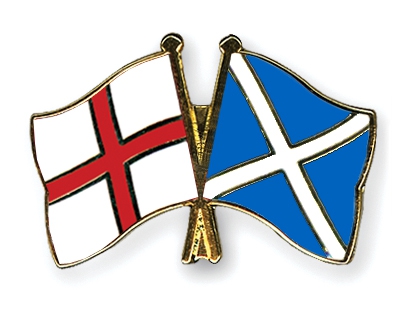
Scotland England crossed flags pin

The NHS Jarrow March Protesters, In Their Own Words

SOS NHS Jarrow March


It is easy to learn precisely what the people marching from Jarrow to London in support of the NHS do not want. To their credit, the protesters make their immovable red lines very clear indeed.

No privatisation, ever. Anyone who even thinks about delivering a healthcare service to the public must receive their pay cheque from the government and not a private employer.  No cutbacks, ever. Services can only ever expand and grow, even if they are poorly geographically located or less essential than they once were. And most importantly of all, no Tories are to go anywhere near the NHS.

By contrast, you have to search the internet long and hard to find examples of what the #MarchForNHS protesters actually support in any detail at all, beyond the most primal, inchoate instinct to keep spending money on an unreformed artefact from 1948.

The 999 Blog999 Call For The NHS’s collection of personal testimonies from the marchers – contains a lot of emotional accounts and expressions of gratitude for having been successfully treated in an NHS hospital, but it is generally deficient in explaining why privatisation is inherently bad and why centralised state ownership is the only model worth pursuing.

As this blog has already noted, many of the protesters have moved quite a long way from the founding vision of the NHS toward a more muscular but unthinking form of socialism that reflexively defends state ownership with almost no regard for health outcome consequences.

Since the British left’s most prominent politicians are unwilling to spell out exactly what they would do to improve healthcare in Britain – beyond preserving the unsatisfactory status quo for ever – the Jarrow marchers are some of the most credible voices from the left participating in the debate. Ed Miliband is certainly happy to exploit individual instances of NHS reorganisation to win strategic advantage in target constituencies, but good luck getting him to tell you his overall vision for the British healthcare system.

So, as the only voices on the left willing to express an opinion, what exactly are the NHS Jarrow marchers saying? Here is a summary, together with some essential counterpoints that should be considered by anyone who believes that good quality healthcare is more important than any emotional attachment to a government bureaucracy.

On a personal note, my youngest daughter was admitted to the special care baby unit when she was born with breathing difficulties. Without that care and support she would have died. Only the NHS can provide this. This service, like so many others in the NHS, was threatened with closure – Steven Sweeney, lifelong NHS employee

And more in the same style:

I know how the NHS has helped me. I was born in an NHS hospital with no complications for me or my mother. As a baby my elbow was dislocated, and an NHS doctor popped it back in place. As a toddler I was treated for severe asthma, which thanks to the NHS is no longer a problem for me. My father was treated for a heart attack and had life-saving heart bypass surgery.

Incredibly 10 years on, he is in excellent health. I have no idea how we could have possibly afforded to pay for his open heart surgery had the NHS not existed. And now I have the privilege of working with NHS doctors and scientists to hopefully find the next treatment for heart disease – Dr. Anusha Seneviratne

Fancy that. Someone was born in an NHS hospital and received treatment or minor ailments throughout their life without major incident, and from this heartwarming tale we are supposed to extrapolate that anywhere else in the western world, babies are routinely born in dumpsters and euthanised in the event that they dislocate a joint. This testimonial – from a doctor, most worryingly of all – is weak praise for healthcare in general, but has absolutely nothing to say about why the NHS is uniquely suited to deliver it.

In the day time on a ward there is a mass flurry of activity and a range of noises of people, equipment, talking, crying and laughter, and buzzers are muted, yet on a night the buzzers sound louder and appear to be rung often, and often. Whilst I sat with my dad I could hear staff moving around the ward making patients comfortable, caring and reassuring patients who felt scared for being there in the first place. I spent most of the night just listening to my dad breathe. It was reassuring – Rehana Azam, 999 Call For The NHS Co-founder

There is something almost unseemly about using the traumas and emotional family experiences of the general public to build support for a government bureaucracy in this way. What Rehana Azam describes here (in a moving account of her father’s hospitalisation and death) are the functions of any modern hospital, not just a publicly-owned and operated one. But taking this natural gratitude for lives saved or made more bearable and turning it into publicity for a campaign to prevent modernisation of Britain’s largest employer does nothing to advance the serious conversation that Britain needs.

We have a local vested interest in preserving the NHS as it is: the miners of Mansfield and district helped build it through their taxes, believing it would be there for themselves, their children and grandchildren and the common good – Sophie Hebden, bystander

Yes, we all “helped build the NHS” through our taxes – as we did the Navy, our schools, the road network and our nuclear deterrent. That’s how governments do things – they raise revenue by taxing the population, and then spend the revenues (hopefully) on services that promote the common good. But again (and this response seems typical of many bystanders who find themselves supporting the marchers without really being able to articulate why) it gives no reason as to why healthcare could not be provided free at the point of use using a different or improved model.

Yesterday I received a letter from my uncle in the US – “something to use for your campaign”. It contained his most recent medical bill for his cancer treatment. It made difficult reading, because it was such a stark reminder of how poorly he is. But it also made me angry on his behalf, and more determined than ever to fight this, and spread the word. Because there is a danger that we’re sleepwalking towards that situation here ourselves. I don’t want our healthcare to take even one step down that path – Emma Tyers, volunteer National Coordinator

No one in their right mind would advocate moving towards the example offered by the “best healthcare system on the face of the Earth”, as some myopic Americans wrongly view their awful creation. But the choice Britain faces is not some extreme binary contest between legions of undertreated uninsured people on one hand, and our tattered but plucky nationalised system on the other.

There are so many different ways in which the British government could provide its citizens with healthcare free at the point of use in perpetuity  – with either minor or major reforms to the NHS – but none of these can be discussed as long as the spectre of the American nightmare is held up to scaremonger and quell debate.

I am joining the March in Bedford & Luton as I cannot stand by and watch as the Tories systematically destroy and privatise our NHS — an NHS that was fought for by working-class people and represented a major step forward for the health of the nation. One Community. One goal. Save our NHS – Steven Sweeney

And here comes the ideology. No protest in defence of preserving the NHS in formaldehyde would be complete without the obligatory boasts from the left that they created the National Health Service, and warnings that only they can be trusted with it. And it is true – the NHS is far from the worst possible way of administering healthcare to a population, and represented a huge improvement on what came before. But again, we see too many people who are now more committed to the organisation itself than to the principles that it stands for (healthcare free at the point of use).

If you have been relying on the BBC for your news, you will have no idea that we now face the possibility of no longer having access to free healthcare by the next general election, and blunders could become the norm with a privatised health service, prioritising profit over welfare.

People from countries all over the world envy our national health service and yet our government is destroying it before our very eyes, just to gain lucrative business deals from their pals. If we don’t act now, our NHS will disappear and we could pay with our lives, literally. After all good health is not a privilege, it is a human right. So think to yourself, how has the NHS helped you and could you live without it? – Dr Anusha Seneviratne

Now the scaremongering really begins. Did you know that there might not be healthcare in Britain any more if the Tories win the 2015 general election? You didn’t? That’s because it’s not true, a blatant falsehood and fabrication deliberately and underhandedly put about to scare people into supporting the status quo.

Furthermore, encouraging people to think about how the NHS has helped them without pointing out that in its absence some other system would inevitably do a similar job is an intellectually dishonest approach to fostering debate. It could well be the case that universal healthcare free at the point of use was best delivered through a nationalised provider as Britain dragged itself through the post-war doldrums. But is this necessarily still the case? And why must people who dare to ask the question be labelled dangerous extremists who want to abolish healthcare altogether?

The latter-day Jarrow marchers will likely hate the comparison, but in their rigid, immovable opposition to healthcare reform of any kind, they are holding up the NHS as a paragon of better times past in the same way that Prince Charles waxes nostalgic about Regency architecture and despises anything modern. Just as the heir to the throne is convinced that Britain’s architectural heyday peaked in 1710 with the completion of St. Paul’s Cathedral and recoils from anything built of glass and steel, so it seems do many of the most ardent NHS fanatics believe that the NHS founding in 1948 represents the snapshot of Britain that should be preserved above all others.

The reality is that just as architecture went through many fashions and phases to leave the London skyline that we now recognise and love, government policy on healthcare also has to change and adapt to the times. St. Paul’s Cathedral is wonderful, but the building of Coventry Cathedral or the Shard did nothing to diminish its place in our hearts. Likewise, the NHS in its original form may have been the best option for Britain in 1948, but we should at least be allowed to talk about whether nationalised healthcare delivery is still be best way to go.

And we should be able to do so without being called callous, unfeeling, overprivileged elitists by those marching down from Jarrow.


Semi-Partisan Sam will be covering the final stage of the NHS Jarrow march live on Saturday 6th September, live-tweeting from the event and hopefully interviewing some of the marchers and the special guests at the concluding rally in Parliament Square. Stay tuned to @SamHooper on Twitter for real-time updates.


Cover Image: “South Shields MP joins protesters on modern Jarrow march”, Evening Chronicle, 20th August 2014

March For Better Healthcare, Not For The NHS

Peoples March NHS 3


There is something awe-inspiring yet disconcerting about walking into an NHS hospital. More than any other institution in the free world (with the possible exception of the Pentagon in the United States) a visitor to an NHS hospital in Britain is quickly made to feel that they are but one very small and temporary part of an unimaginably huge and powerful organisation, one which hums with a life and agenda entirely of its own, far bigger than – and not accountable to – any one person or office of state.

That’s not to denigrate the standard of care which may be provided, or the empathy shown every day by many NHS staff. And yet to sit in a waiting room and watch the crisply uniformed workers – from the lowliest cleaner to the highest-paid consultant – hurry about their business, it feels slightly Orwellian to know that the exact same scenes are playing out, with zero variation, in every town and city throughout the country. The uniformed defence chiefs in Arlington, Virginia may hold the power to extinguish all human life with the push of a few buttons, but as far as the British hospital patient is concerned, the power of a harried, middle-aged manager in the NHS is no less absolute.

Why does this matter?

Healthcare – the way that it is rationed, delivered and spoken about – is a hugely important issue, one which engenders unusually strong feelings among people, especially when their own use of the service gives them an added personal stake. It should follow, then, that our national conversation about healthcare is equal to the weight of the subject matter – that it is informed, reasoned, respectful and always guided by a few core principles to which we can all agree as relatively decent, rational human beings.

And the conversation should focus on those core aims – say, providing the best, most holistic healthcare to the entire population that our finite resources can buy – above all else, with lesser considerations such as tradition, vested interests and organisational or partisan loyalty coming a distant second.

It hardly needs stating that we in Britain are not currently having that kind of conversation.

Sure, there are ideological zealots on both sides. They may be few in number, but read enough newspaper online comment sections and you will find the odd absolutist libertarian arguing his lonely case that the intentionally uninsured person who developed cancer made their own deathbed and must now lie in it. But if you want to see ideological fervour and vested interests taking priority over rational thought on a truly large scale, you must look to the British political left – and specifically towards the sound of footsteps steadily marching south from Jarrow to London.

Peoples Assembly NHS March Demo


This weekend, a pressure group called 999 Call For The NHS will complete its People’s March For The NHS, a rolling demonstration that has been following the route of the 1936 Jarrow March with the aim of increasing the British people’s already sky-high approval of our nationalised healthcare provision – or to scaremonger and raise false fears about its imminent demise, depending on one’s perspective. From the group’s site:

The People’s March is a perfect opportunity to build support for the NHS and to join up with amazing NHS campaigners across the country. Following the basic route of the 1936 Jarrow Crusade, the People’s March for the NHS will head to Parliament. On route we aim to make the public aware of what the coalition government has been doing to our NHS and what has been happening to our hospitals and health services.

According to 999 Call For The NHS, our national healthcare provider is under mortal threat from the Conservative-led coalition government, who have worked tirelessly to undermine the nation’s health by (counterintuitively) increasing NHS spending every year since 2010, and ringfencing the organisation from any future spending cuts at the expense of almost every other department, including our national defence.

The group’s purpose is clear, and summed up perfectly by their name, 999 Call For The NHS. According to this inverted world view, we the people exist to serve the state bureaucracy (in this case the NHS) and come to its aid in an emergency, rather than the other way around.

It’s like a perverse reimagination of John F Kennedy’s inaugural address – ask not what the NHS can do to make you and your family well; ask what you can do to unthinkingly support this sprawling, inevitably flawed organisation, and all with a level of fervour more commonly seen among cult members.

That certainly was not the case when the NHS was founded. Back then, the focus was very much on the people to be served by the fledgling organisation, rather than the appropriate level of financial and human sacrifice to throw at an unreformed, unresponsive behemoth. As Aneurin Bevan said in his speech at the second reading of the NHS Bill in 1946:

The first reason why a health scheme of this sort is necessary at all is because it has been the firm conclusion of all parties that money ought not to be permitted to stand in the way of obtaining an efficient health service … It is cardinal to a proper health organisation that a person ought not to be financially deterred from seeking medical assistance at the earliest possible stage … Therefore, the first evil that we must deal with is that which exists as a consequence of the fact that the whole thing is the wrong way round. A person ought to be able to receive medical and hospital help without being involved in financial anxiety.

Not only is this the case, but our hospital organisation has grown up with no plan, with no system; it is unevenly distributed over the country and indeed it is one of the tragedies of the situation, that very often the best hospital facilities are available where they are least needed. In the older industrial districts of Great Britain hospital facilities are inadequate. Many of the hospitals are too small – very much too small … There is a tendency in some quarters to defend the very small hospital on the ground of its localism and intimacy, and for other rather imponderable reasons of that sort, but everybody knows today that if a hospital is to be efficient it must provide a number of specialised services. Although I am not myself a devotee of bigness for bigness sake, I would rather be kept alive in the efficient if cold altruism of a large hospital than expire in a gush of warm sympathy in a small one.

Even 999 Call For The NHS reference these founding aims in their own campaign literature:

In modern times it’s sometimes hard to have faith in what our politicians do and say. But not so long ago, politicians spoke about and acted on ideals. When Nye Bevan founded the NHS in 1948 it was formed on 3 core principles:
1. The health service will meet the needs of everyone
2. It will be free at the point of delivery
3. Healthcare will be delivered according to clinical need, not the ability to pay

This is how the NHS began. The dream of nationalised healthcare was a brave new world where a person’s financial means no longer determined their access to quality healthcare, and where poverty was no longer an implicit death sentence. There was less obsession over who delivered the services, and less paranoia about keeping certain types of undesirables as far away from the process as possible.

The emphasis then focused on the fact that healthcare was to be free at the point of use; today’s Labour politicians seem to care nothing at all about the healthcare itself, aside from their obsession that the person providing it must get their pay cheque from the government and not a private firm.

It is interesting to read some of these early speeches. Sure, many of them contain the same hyperbolic Tory-bashing that one now expects from Owen Jones or Polly Toynbee, but they are also lofty speeches that even political opponents can appreciate thanks to their nobility of purpose. These visionary statements make a stark contrast with today’s bitter, one-dimensional screeds accusing them (the evil Tories) of trying to take healthcare away from us (the good, decent folk).

And note the tough-minded defence of large, centralised centres of specialised service provision in Bevan’s speech. How many of the latter-day Jarrow marchers have also been involved in NIMBY-style protests and efforts to keep small, inefficient local services running at huge cost to the taxpayer and to the detriment of overall healthcare outcomes? This too, is in contravention of the NHS’s founding spirit.

Lest there be any doubt about the 999 protesters’ aim to preserve a 65-year-old institution for reasons amounting to little more than sentimentality, here is the movement’s hero, Owen Jones, in full rhetorical flight:

“It is not for us to allow our greatest national institution, built by the determination and courage of our ancestors, to be dismantled and privatised by a Tory party that did not even win the election. That’s why I’m backing this incredible march – which demonstrates we will not stand aside whilst our NHS is shredded by vultures.”

This is quite extraordinary. All this talk of ancestry, of national endeavour and shared heritage coming from the mouth of a UKIP or Tory voter would be immediately jumped upon as evidence of the worst sort of Little Englander mentality, and yet here is one of the doyens of the British left indulging in precisely the same rose-tinted nostalgia – albeit about a socialist cause célèbre.

Comparisons to a cult may seem overblown, but just look at the hagiography and aura of personality being carefully curated by NHS fanatics surrounding the life of Aneurin Bevan. As 999 Call For The NHS breathlessly boast on their own website:

A sister march and rally is being held in Tredegar, the birthplace of Aneurin Bevan. Organised by local people we’ll be linking with them via satellite.

When the socialist march to London is mirrored by a twin pilgrimage to the birthplace of the founder of the church, one cannot help but wonder to what extent this exercise is really about healthcare at all.

aneurin bevan hagiography


Reading the biographies of the 999 Call For The NHS Team, it is evident that a number of the movement’s leaders were spurred to organise partly because they felt they owed a “debt of gratitude” to the NHS for either having received treatment themselves, or through a loved one having done so. But this is a particularly poor reason to campaign for the status quo. The NHS (like any system or bureaucracy) has flaws and problems as well as good points, and it helps no one if people feel beholden to support an institution in its current form just because they once used the service that was on offer at the time.

Indeed, when considering the best way to administer healthcare to a nation of 63 million people and growing, any kind of sentimentality is probably best avoided. People may look with distaste at the work undertaken by NICE (and certain Americans may shudder and think of death panels), but these structures and organisations simply reflect the fact that there is unlimited demand for healthcare, and a limited supply. One way or another, from capitalist America to totalitarian North Korea, rationing decisions are made, be it by the invisible hand of the almighty dollar or the literal death panels of Pyongyang.

(It’s interesting that some on the left, more used to running Britain down and singing the praises of other countries and of international co-operation, have developed such a blind spot when it comes to the way that other, nominally more socialist countries such as France administer healthcare to their citizens).

But if sentimentality about the individual is an unfortunate distraction when planning healthcare delivery, sentimentality about the particular institutions and specific modes of provision is an almost unpardonable indulgence in 21st century Britain. In fact, the extent to which the interests of the latter are served will likely see a corresponding fall in meeting the needs of the former. Far better to serve the interests of human beings who think, breathe, bleed, laugh and cry than a soulless master built of bricks, mortar and organisation charts.

This doesn’t mean that ditching the NHS and making the abrupt transition to a completely different system is necessarily the right approach for Britain – it could well be the case that the costs of any such upheaval would outweigh the benefits, especially if made carelessly or in haste.

But to take to the streets in support of what is essentially just a government department (would that the Department of Agriculture had such devoted admirers), protesters should at least be clear of precisely what it is they like about the NHS, what needs to be preserved and what can go; and they should have a basic understanding of the costs and tradeoffs involved in all of these decisions. Seeing their opponents as more than evil, two-dimensional caricatures would also help.

To those people now marching south from Jarrow, and those many others who will join them in London on Saturday:

If you must be outraged at something, be outraged that a baby born in Britain is more likely to die before their first birthday than a child born in Brunei, Estonia, Greece, Italy, Israel, Portugal, Slovenia or eighteen other nations – if not more. And note that this was the case long before David Cameron entered 10 Downing Street.

If you feel compelled to take to the streets, grab a placard and protest the fact that British cancer survival rates stubbornly lag behind those of our western European neighbours, most of whom do not have nationalised health systems.

If you want to help the NHS trend on social media this weekend, invest some time looking at the healthcare systems of other successful countries and consider ways that Britain’s own arrangements could be reformed and improved, rather than preserved as close to their 1948 incarnation as possible.

But if you find yourself marching from Edmonton Green to Parliament Square on Saturday in support of the NHS in particular – and especially if you are one of the few who trudged the entire route from Jarrow in northern England to protest spending cuts that have not happened and to talk about delivery modes rather than outcomes – you have a solemn duty to make absolutely certain that you are really defending the interests of your fellow citizens rather than doing the bidding and furthering the ends of deeply entrenched special interests.

The protest’s organisers have failed to make a case for blindly “supporting the NHS” that is based on anything more than nostalgia at best, and scaremongering at worst – read their literature closely and dare yourself to reach any other conclusion.

This is no way to make policy. This is no way for politically engaged citizens to behave. This is no way to honour the legacy of Nye Bevan.