On Premier League Football And Income Inequality

Premier League Wages Income Inequality


Isn’t it awful? The English Premier League has just signed a new television rights deal with Sky and BT worth a cool £5.4bn, while some of their employees earn only the minimum wage. What a searing indictment of our society, of capitalism itself!

Except, of course, that it is no such thing.

Presented once again with a golden opportunity – an open goal, as it were – to talk about real, tangible ways to improve the living standards and life opportunities for those on low incomes, the British left did what it now does best: furiously ignore the real problem, forget actually helping the poor, while training all of their rhetorical guns on a few wealthy scapegoats.

From the Mirror:

Despite a £1.78 billion pay bill last year, not a single top-flight club has committed to giving all ground staff and suppliers the £7.65-an-hour “living wage”.

Pampered players can earn eight-figure annual salaries – with England and Manchester United striker Wayne Rooney, 29, pulling in £300,000 a week and Manchester City’s Argentinian forward Sergio Aguero, 26, £220,000 a week.

Veteran Labour MP Frank Field has written to all 20 Premier League clubs demanding action.

But he got just six replies – with not one club committing to the full rate. Sunderland said the issue “did not merit further discussion”.

Continue reading

No, Greece Is Not The Word

Greece Syriza Alexis Tsipras


Syriza’s emphatic victory in the Greek general election last week has seen many British left wing politicians and commentators embark on a series of gruesome little personal victory laps, as though the outcome of a vote in that small Mediterranean country represents some kind of teaching moment for the sixth largest economy in the world.

These delusions have generally taken one of two forms: either the hubristic belief that Syriza’s electoral success somehow lays bare the inherent shortcomings of capitalism in general, or that the installation of Alexis Tsipras as Greece’s new prime minister represents some long-awaited turning point in the fortunes of the European political left. Both of these exercises in wishful thinking are just plain wrong.

The leftists just about have a point, so long as one is content to think very simplistically and superficially about an urgent, festering problem. This line of argument basically says “Austerity is bad, and now that a strongly anti-austerity party has achieved electoral success elsewhere in Europe, all of our arguments in favour of increasing government spending levels forever have been vindicated”.

There is no shortage of this pound shop pseudo-intellectual grandstanding on display at the moment, from many of the usual suspects in the Labour Party and their sympathisers in the media. The Times of London reports:

Continue reading

The Overcrowded Centre: Tory MP Attacks Labour From The Left On NHS Privatisation

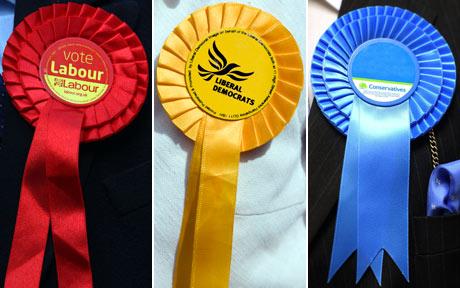
Tory Conservative Labour LibDem Liberal Democrat Rosettes


2015 is already proving to be a difficult year for those of us who would defend politicians from the accusation that they are “all the same”.

Nobody, save the most ardently partisan Kool-Aid drinkers, is seriously excited by any of the main political parties as they jostle for position in the overcrowded political centre. And as blue merges with red, and red pretends to be blue, who can blame voters for wanting to be rid of any candidate sporting a Conservative, Labour or Liberal Democrat rosette?

Case in point: Robert Halfon, the incumbent Conservative MP for Harlow (this blogger’s hometown constituency) is now openly attacking his Labour challenger for – of all things – being too supportive of private sector involvement in the NHS.

Round About Harlow reports:

Continue reading

Labour Ooze Hatred Of The Successful And Ignorance Of The Working Class

James Blunt Chris Bryant MP


We may as well just admit it: the Labour Party has a serious class problem.

Just as the memory of Ed Miliband’s hasty sacking of his ally Emily Thornberry for the crime of tweeting a picture of a white van was starting to fade from memory, the new Shadow Culture Secretary, Chris Bryant, found himself on the wrong end of a tongue-lashing from singer James Blunt after appearing to suggest that some of Britain’s most successful performing artists had succeeded at the expense of their working class peers.

Both the Guardian and the Telegraph sum up the story well enough, complete with blow-by-blow accounts of the duelling letters exchanged between Bryant and Blunt. And the Spectator is quite right to point out the irony of a Labour shadow minister decrying the lack of ladders to success for working class artists, when it was the Labour legacy of closing grammar schools that so contributed to the problem of lack of social mobility.

On the plus side, parts of James Blunt’s angry letter resemble the anti-Labour comeback that every Tory wishes that he or she could make, if only they could think a little quicker on their feet:

Continue reading

TV Election Debates? Empty-Chair The Lot Of Them


Behold our political leaders debating whether or not they should participate in televised debates ahead of the general election.

We have wasted an inordinate amount of time over the past two weeks worrying about the general election televisised party leader debates. Countless headlines and front pages have been devoted to the “will they, won’t they” game of brinksmanship being played out by David Cameron and the other party leaders. Ed Miliband wasted the better part of his Prime Minister’s Questions attack on the subject. And for what?

What are we really getting excited about when we feverishly speculate over whether the debates will happen, and which of the identikit politicians will bother to appear on stage? Do we actually expect to hear serious new policy initiatives being announced? An honest discussion about the budget deficit, and competing but realistic spending plans that will bring the public finances back into balance? A searching discussion about twenty-first century Britain’s place in the world?

Has anything happened over the past five years to give us cause to hope for these things? And here’s an even more important question: Why do we care about the debates anyway?

Continue reading