Why Isn’t Labour Working?

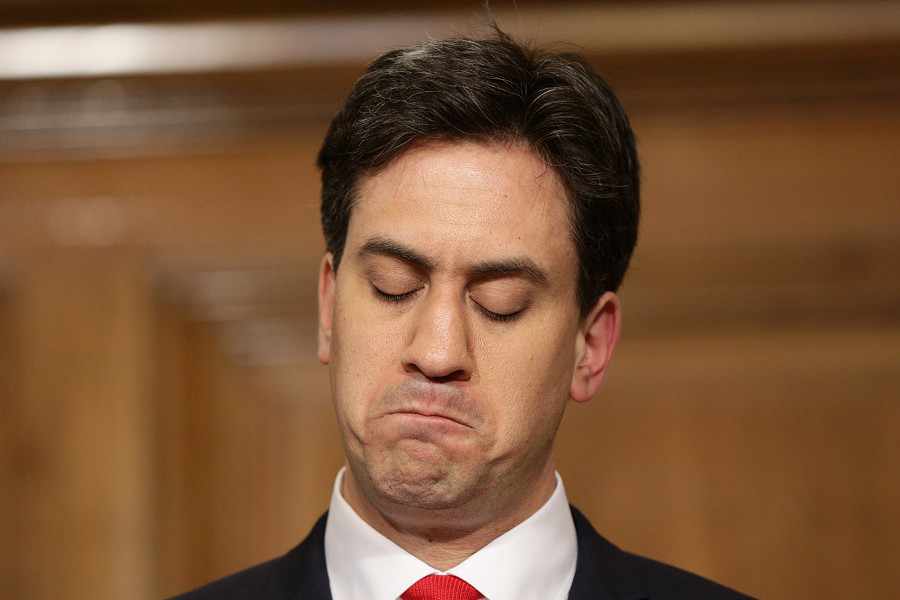
Labour Party - General Election 2015 - Ed Miliband Resignation

Why isn’t Labour working? Or more specifically, why did Ed Miliband so utterly and completely fail to make any inroads against what was at best a minimally popular coalition government and Conservative Party after five years of austerity policies?

Everyone seems to have woken up brandishing their own explanation  in the wake of David Cameron’s remarkable victory. Unlike this blog, many of these captains of hindsight could typically found cheering Ed Miliband and eagerly anticipating his victory in the preceding months and years – but some of their arguments are still worth considering.

Jason Cowley, editor of the New Statesman, comes late to the party in his realisation that Ed Miliband’s messianic view of himself as a transformative future leader of Britain masked a gaping chasm where his vision for Britain should have been:

He lost the election and the argument. If Labour doesn’t understand this, and adapt accordingly, it is in deeper trouble than even I believed.

Driven by a kind of messianic self-belief, Miliband was Labour’s most unashamedly Left-wing leader since Michael Foot, whose 1983 election defeat condemned the party to a long, painful period in the wilderness as Margaret Thatcher accelerated her transformation of Britain.

On the occasions when we met, he told me again and again that the financial crisis and the consequent Great Recession had created what he called a moment of great opportunity for the Left.

Absorbed by the work of Left-wing economists and philosophers, Miliband was convinced that the British people yearned for a more egalitarian society and a return to socialism.

Perhaps they did in Scotland, but certainly not in the seats in the Midlands, Home Counties and southern England that Labour must win if it is ever to return to power.

‘Under Miliband, we had nothing to say to the faraway towns of England,’ one senior Labour figure told me.

By which he meant, Miliband’s cerebral socialism might have been popular among metropolitan liberals but it emphatically did not resonate with the skilled working and lower middle classes in small towns in places such as Essex, Bedfordshire, Kent, Hertfordshire …

This is all true. There was a degree of intellectual superiority surround Ed Miliband’s rarefied vision of a post financial crisis Britain. And multiple journalists who have interviewed Miliband attest to this singleness of purpose and vision – albeit a purpose he never successfully explained to the British people.

But it is the misplaced stench of moral superiority, not intellectual superiority, which stands out as the most offensive of Labour’s characteristics as they fought the 2015 general election campaign.

Continue reading

General Election 2015: The Morning After The Night Before

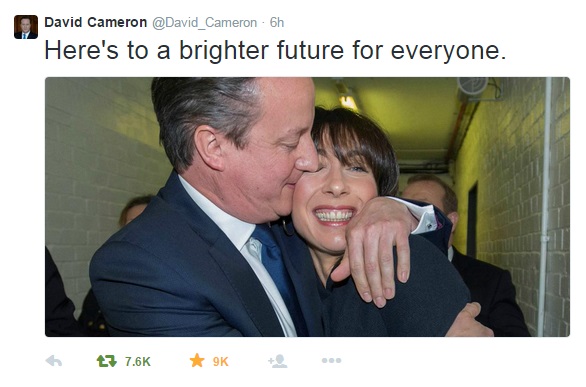
David Cameron - Conservative Party - General Election 2015 - Tories Win

On the eve of the 2015 general election, this blog complained:

David Cameron, the Prime Minister I supported for much of these past five years – and for whose party I voted in 2010 – spent the last day of the election campaign not making a powerful case for real conservative stewardship of the country, but by indulging in petty scaremongering about a Labour victory and pre-emptive expectation setting around the “legitimacy” of rival claims to power in the certain event of a hung parliament.

Well, inspiring or not, the Prime Minister’s strategy worked magnificently. David Cameron may have failed to inspire the British people with a burning, urgent vision for conservative government, but at least he managed (through endless repetition) to remind us that the economy is growing again under the Tories, and that a Labour-SNP coalition could put it all at risk.

And now, where only hours ago we expected the political parties to be commencing the first of many fraught rounds of coalition negotiations, instead we see David Cameron being driven to Buckingham Palace to meet the Queen, while the other parties (save the astonishing SNP) quickly and mercilessly dispatch their failed leaders.

First and foremost, this election result is a resounding defeat for Labour, and the confused non-values it stood for during the 2015 campaign. Having both repudiated the centrism of New Labour and failed to return the party to its ideological roots, putting himself in the ludicrous position of being against the Tories but not for a tangible vision of his own, Ed Miliband has brought Labour to complete and utter electoral ruin.

Ed Miliband went to his political Armageddon today flatly refusing to accept that Labour had made any mistakes during their last thirteen year spell in government, at least as far as the economy and public spending were concerned. The electorate took one look at this outright denial of reality and determined that the Son of Brown could not be trusted to take stewardship of the finances again.

But almost nobody expected the Labour Party to perform this badly against the Conservatives – poll after poll showed the Tories and Labour in a virtual dead heat. So when the exit poll results were announced at ten o’clock last night, people scarcely believed them. Paddy Ashdown confidently remarked that he would eat his hat if the Liberal Democrats were reduced to ten MPs. They currently have just eight. UKIP supporters (including yours truly) were convinced that UKIP would win more than two seats, picking up at least Thanet South or Thurrock. But only Douglas Carswell now remains, cutting a lonely figure.

Continue reading

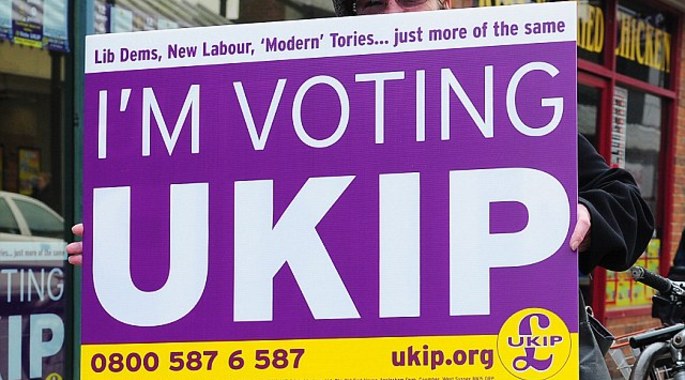
Why I’m Voting UKIP


David Cameron, the Prime Minister I supported for much of these past five years – and for whose party I voted in 2010 – spent the last day of the election campaign not making a powerful case for real conservative stewardship of the country, but by indulging in petty scaremongering about a Labour victory and pre-emptive expectation setting around the “legitimacy” of rival claims to power in the certain event of a hung parliament.

A real leader worth their salt would have been using those last precious hours to try to inspire people and positively win votes, rather than stoking fears about the other side and manoeuvring for position in the event of failure. But then David Cameron has repeatedly proven himself not to be a real leader.

From the London Times account of Cameron’s final pitch (+):

Speaking to reporters on his 36-hour tour of Britain, Mr Cameron accused Mr Miliband of ducking the question of whether he would refuse to enter No 10 rather than rely on SNP support.

“He has said so many different things about no deals or this or that. Basically what he’s doing is a con trick,” Mr Cameron said. “You can see what he’s doing: ‘Look at this strong language about no deals and no pacts, and ignore the fact that I can only become prime minister off the back of SNP votes.’

“The question he needs to be asked more directly is: ‘Are you saying that if there was a hung parliament, and Labour and the SNP had a majority of votes, you wouldn’t become prime minister?’ If asked that question, I suspect the answer is: ‘No, I’m not saying that.’

“At that moment he will in the eyes of the British people totally break with what he said about no deals and no pacts with the SNP. The last promise he made before the election will be the first promise he breaks after the election. He knows this and that’s why he is not answering this point. That’s why it’s the monkey he can’t get off his back.”

Incredibly, as the 2015 general election campaign draws to a close, all David Cameron can do is talk about Ed Miliband, Nicola Sturgeon and the SNP – not his own positive vision for Britain.

Continue reading

The Fiscal Profligacy Of The Labour Party Is Not A Myth

Tony Blair Gordon Brown - Labour Party


By Ben Kelly, blogger and editor of The Sceptic Isle.

The Labour Party did not cause the economic crash or the recession, this is undeniable. Still, it is becoming a great diversion technique for those who are attempting to abdicate the previous government of all responsibility to focus entirely on this simple fact, and to exaggerate the extent to which people actually believe that they directly caused the crash.

Often those who deny that Labour were at fault at all for their economic policies then, in turn, completely oversimplify the actual causes by saying “it was the bankers”.  Clearly the global crisis was multi-layered and had may root causes including irresponsible and amoral behaviour from the financiers themselves, the central bankers and regulators who allowed them to behave in such a way and poor government policy and supervision of the whole debacle. It may make it easier to understand to simply blame one entity, but that does not make it true, or reasonable.

Still, Ed Miliband continues to deny that the previous government over spent and makes no apologies for its economic policy. This is deeply concerning because he and Ed Balls worked in the treasury and now want to run the country. The recent Question Time audience were not impressed by Miliband’s refusal to accept that Labour overspent, it may transpire that the wider electorate are equally unimpressed. I used to think it was spin, pure politics, but now I think he genuinely believes that the debt and deficit crisis we are now suffering has absolutely no connection to his own actions, or those of his chancellor Gordon Brown.

Continue reading

Brendan O’Neill Is Right – Not Voting Can Be The Honourable Choice

Polling Station - Voter Apathy - Voter Disengagement - General Election 2015


It speaks volumes about the dire state of our politics and our democracy that best thing yet written about the 2015 British general election campaign is not a stirring paean to any of the political parties – not even one of the populist insurgents – but an angry, snarling article which mocks the illusion of voter choice and actively discourages people from bothering to vote at all.

And no, it’s not another Russell Brand intervention – he of The Trews sold out spectacularly this week, urging his legions of fans to vote Labour and install Ed Miliband in 10 Downing Street because apparently “this bloke will listen to us”. As if.

The true standard bearer for the politically engaged but fiercely indifferent contemporary British voter is Spiked editor Brendan O’Neill, who lets rip against the stale centrism of British politics with a powerful piece in The Spectator entitled “I’m not voting on Thursday – but don’t you dare call me apathetic“.

Directly contradicting the endless conveyor belt of career politicians who have been telling us incessantly that this is the most important election for a generation (as was the last, and the one before that), O’Neill writes:

Well, I’m not voting on Thursday, and don’t you dare call me apathetic. It isn’t indolence of mind — ‘sluggishness, laziness, love of ease’ — that’s keeping me out of the voting booth. On the contrary, it is an agitation of mind, a love of difficulty, that’s making me withhold my vote.

I, like many others, want my politics hard, existential, frightening even, addressing the biggest questions facing humanity: freedom, progress, morality, war, the future. But all we’re being offered is a choice between managers, primarily of Britain’s economic decline. ‘Who will YOU trust to shave the public deficit?’

Continue reading