The SpAdocracy And Theresa May’s Flawed Manifesto Plans For Social Care

The Thick Of It

Social care funding and other important policy questions are too important to be decided solely by a couple of Bright Young Things and Special Advisers ensconced in Downing Street

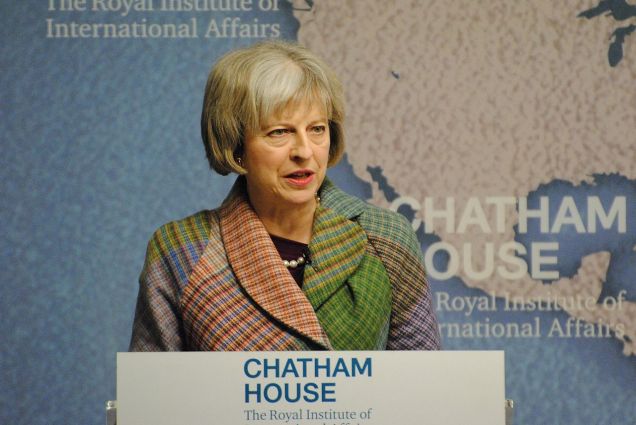
The problem with Theresa May’s disastrous, miscalculated decision to shoehorn dramatic changes to the funding of social care into the Conservative (In Name Only) manifesto – and then perform a humiliating U-turn live on TV – is that it was cooked up by a couple of her closest, most trusted advisers and then foisted on the Conservative Party and the country with zero wider consultation.

The Guardian lifts the veil on the dysfunctional Court of Theresa May:

The manifesto for Mayism was stitched together on an upper floor of Conservative campaign headquarters over the past few weeks by a tight-knit team of the prime minister’s most trusted advisers.

While May has been out on the road giving stump speeches nearly every day, her policy team has been holed up in Matthew Parker Street in Westminster composing a document intended to redefine Conservatism, drawing a line under the elitism of the Cameron era and the individualism of Thatcher.

The document is pitched as representing May’s firmly held world view, but it also has the fingerprints of Nick Timothy and Fiona Hill, her two co-chiefs of staff, all over it.

The pair, who reigned supreme over May’s Home Office, have been the subject of complaints from MPs that they act like deputy prime ministers instead of Downing Street aides. Now the election campaign has started, they run the show at CCHQ with a tight grip.

Who needs cabinet ministers, think tanks, non-profit organisations, lobbyists, the general public or anybody else in the political ecosystem when you have two loyal SpAds ready and willing to deconstruct and rebuild core functions of the state quietly, in the shadows?

More:

MPs have complained privately over the past 10 months about the centralised nature of Downing Street, with May, Timothy and Hill sucking policy decisions away from Whitehall departments and other ministers. It comes as no surprise to them that May’s campaign focuses on her personal leadership qualities to the exclusion of other senior figures in the party, with the case for that focus bolstered by the prime minister’s strong poll ratings.

Cabinet ministers say they are not being sidelined, although the reality looks somewhat different. Of 15 campaign events for the press held by the Tories so far, all but one have been fronted by May herself, speaking of “strong and stable leadership” and the need for a mandate to carry through Brexit at every opportunity.

A few – including Boris Johnson, Michael Fallon, Amber Rudd and David Davis – have been used for some media interviews, but they are mainly kept away at constituency visits. By Wednesday, senior cabinet ministers such as Philip Hammond, Johnson and Rudd had seen the manifesto and approved its contents.

But its composition was very much a matter for May’s inner circle.

It is quite frightening to realise just how quickly harebrained, incomplete and otherwise controversial policies can find themselves shoehorned into a party manifesto (and then swiftly become law) if they are adopted and pushed by a well-connected member of the SpAd-ocracy.

In fact, prior to calling the general election the Conservatives had planned to hold at least a basic level of consultation on reforming social care, but some bright spark apparently decided that it would be far simpler to ram the changes through by including half-baked ideas as firm manifesto pledges, as the Telegraph reports:

Politicians who will deliver the Conservatives’ new care policy if they win re-election were left in the dark about their manifesto commitments, it can be revealed.

Senior Government sources have told The Sunday Telegraph they were left “completely surprised” by the wide-ranging package of reforms announced this week.

A series of social care policies were due to be put out to consultation this summer, including some of those adopted by the party in its manifesto.

However the changes would have been followed by months of consideration with less political risk if they were dropped or altered after industry feedback.

As I type, Theresa May is scrambling to defend her social care policy and her broader judgment in a television interview with Andrew Neil (the closest that the prime minister will condescend to participating in a debate) and frankly failing miserably, all of which could have been avoided if her core team behaved less arrogantly and if British political parties sought to formulate and enact legislation in a more open, inclusive way.

When President Barack Obama sought to overhaul the American healthcare system early in his first term, he didn’t slap a fully worked-out, prescriptive solution for single-payer healthcare on the table and demand that everybody get behind the main principles “or else”. While American conservatives rightly point out that the extensive consultation exercise was partly cosmetic and not nearly as welcoming of right wing input as it was portrayed, the fact remains that when American political leaders wanted to change something which impacted millions of people and a significant share of the US economy, there was a consultation (or at least the pretence of a consultation) before the first draft was issued. Sure, congressmen were expected to vote on the final bill having had only a few hours to read it, if they could even be bothered, but this was after every aspect of healthcare reform had been discussed in excruciating detail in committees, public town halls and in smoke-filled rooms with the special interests who (rightly or wrongly) have the power to make or break reforms.

This style of policymaking seems to be anathema to the British system. When David Cameron won re-election in 2015 based in no small part on the promise to hold an EU referendum, he cooked up his own list of demands for the European Union and marched off  to Brussels to negotiate them (and we all know how well that worked out). Cameron and his team presumed to know – without engaging in any special consultation, public or otherwise – exactly what changes the British people wanted to see in our relationship with the EU, without once bothering to actually ask our opinion. The only thing more laughable than David Cameron deciding on our behalf what issues to raise with Brussels was the fact that they still sent him away empty-handed and humiliated. This arrogant, presumptuous approach to government was, and nearly always will be, a recipe for failure.

Few people would disagree that the way we fund social care needs to be tweaked at the very least, if not wholesale reformed. But doing so is an enormously complex process, involving the intersecting demands and interests of numerous groups and political principles. There are the interests of homeowners, taxpayers, council and private care providers, current and future care recipients, all of which will be in competition with one another and must be balanced to maintain a functional system.

But whatever one’s view on the ideal model solution, the manifesto pledge as it stands – together with recent panicked talk of a potential “cap” on care payments, made after four days of relentlessly negative headlines – seems politically naive at best. It is a blunt policy solution, a sledgehammer to crack a nut, and the kind of half-baked idea that would have been kept firmly away from the media had there been any serious ministerial input to the drafting of the Tory manifesto.

Now, there is nothing wrong in principle with having a core team of advisers and ideological kindred spirits aiding a new prime minister as she seeks to put her stamp on the party and the country. Margaret Thatcher did just that when she came to power in 1979, bearing the ideas of the Institute of Economic Affairs and the Centre for Policy Studies. As Leader of the Opposition she had read the famous “Stepping Stones” report which diagnosed Britain’s ailments and proposed radical solutions to lift Britain out of near-terminal economic decline.

But the emergency circumstances in which Thatcher pushed through her reforms were far different to today’s more benign environment. When the country faces existential threat, as we did in the late 1970s, some justification can be made for strong and decisive leadership which doesn’t wait around seeking to hand-hold and achieve consensus before acting. And while some people with a flair for the dramatic might claim that Brexit represents a similar crisis, Brexit and the rise of populism is far more a crisis of political legitimacy than economic survival – and political legitimacy is undermined, not improved, by ramming through ill-considered reforms to the social care system.

Ultimately, the cause of good policymaking is never well served when a couple of “Bright Young Thing” Special Advisers – often with wide but shallow portfolios, and no democratic mandate of their own – decide to rewrite government policy and plan to reshape our national institutions on the back of a napkin. I’m sure that Nick Timothy and Fiona Hill, Theresa May’s collective brain trust, are extraordinarily bright and capable people – on paper, at least. But the accumulation of evidence increasingly suggests that they lack street smarts, let alone a decent political radar, which is rather strange given their respective biographies. Ted Sorensen they are not.

Hopefully Theresa May will learn from this debacle. She intends to lead the country – never mind the Conservative Party – in a direction that many people have reservations about, some of them quite justified. To succeed in office, she will need to draw on the best that the entire conservative movement has to offer, including those wings of the party that she continues to vilify (cough, libertarians).

And for somebody like Theresa May, a self-confessed pragmatist with no overarching vision for government of her own, that means widening the circle and taking some more advice before tearing up the social contract, crashing out of the single market without a transitional arrangement or implementing Ed Miliband’s 2015 Labour manifesto by the back door.
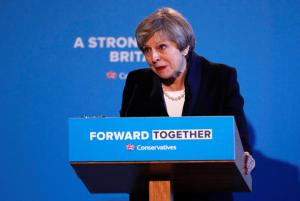
 

Theresa May - Conservative Party - General Election 2017 - Forward Together

Support Semi-Partisan Politics with a one-time or recurring donation:

Agree with this article? Violently disagree? Scroll down to leave a comment.

Follow Semi-Partisan Politics on TwitterFacebook and Medium.


What Is The Point Of Theresa May?

theresa-may

Right now, Britain needs a leader, not a placeholder – Theresa May needs to step up and set some ambitious national goals, or else be swept aside to make room for a real conservative leader

David Mellor doesn’t know what Theresa May stands for. And as Christopher Hope writes in the Telegraph, Mellor has good reason to be confused:

Theresa May is proving as Prime Minister that she is no Margaret Thatcher, a former Thatcherite minister has said, because she is not “seizing the initiative”.

David Mellor, who served under Baroness Thatcher for three years, said “the description of Theresa May as the new Margaret Thatcher is as wide of the mark as it could possibly be”.

Mr Mellor urged Mrs May to call a general election next year and win a larger House of Commons majority. The Tories have a consistently strong polling lead over Labour.

Mr Mellor was a minister in Lady Thatcher’s last government in four departments from 1987 to her resignation in November 1990.

He said Mrs May had shown herself “infirm of purpose”, most recently over the Christmas strikes at post offices, Southern Rail and Heathrow airport, where action will take place later this week.

He told Sky News’ Murnaghan: “When I was a minister for four years she treated me with even more disrespect than my mother did, but Margaret Thatcher knew what she wanted do and did it.

“I don’t think Theresa May knows what she wants to do. Her advisers appear to be the ones that create the headlines. I think she is sitting there and she is infirm of purpose, and she needs to seize the initiative.

“The main initiative she needs to seize is to have an election and get herself a mandate.”

This blog has never joined the calls for an early general election, not least because the laudable idea of having fixed term parliaments is rather undermined if we suspend the rule on the first occasion it becomes politically inconvenient. But if triggering a general election is what it takes to force Theresa May to really think about what kind of prime minister she wants to be (and hopefully give the British people a clue as well) then maybe we should just get on with it. Because right now Britain is idling in neutral at a time when we should be setting a firm course and all striving to pull in the same direction.

The underlying problem is that having succeeded to the office of prime minister unexpectedly in the most turbulent of times (in the wake of David Cameron’s resignation and Andrea Leadsom’s surprise departure from the following Conservative Party leadership contest), Theresa May evidently took office without ever having clearly thought about what it is that she wanted to achieve through her leadership of Britain (the recent Sunday Times interview is heavy on temperament and almost completely lacking in vision).

And it shows. Mellor cites Theresa May’s supposed “infirmity of purpose” when it comes to things like tackling the strikes on Southern Rail, but those are side issues. More troubling than May’s failure to get tough with striking railway workers is the fact that she used her first party conference speech as prime minister to declare war not on Labour and the vested interests of the Left, but on the libertarian Right.

What’s worrying is that Theresa May’s government has passed the Investigatory Powers Act 2016, dynamite for privacy and civil liberties, and is still toying with the idea of enforcing section 40 of the Crime and Courts Act and Part 2 of the Leveson Report, further curtailing freedom of the press. It is not just that we do not know enough about Theresa May’s agenda for Britain – what little we do no should give small government conservatives everywhere cause for concern.

Contrast this to the last great transformative Conservative prime minister, Margaret Thatcher, who had four years behind her as Leader of the Opposition in which to solidify her worldview and flesh it out with policy (notably from the Stepping Stones Report and Centre for Policy Studies think tank) before taking office. By the time Thatcher entered 10 Downing Street in May 1979, she had not only diagnosed Britain’s ailments but formed a fairly clear idea of how she intended to tackle them, even though the road ahead was inevitably marked by missteps and challenges.

Theresa May appears to have no such plan. If she has a burning ambition to change Britain from an X type of country to a Y type of country then she is keeping her cards very close to her chest, for there is no evidence of such a goal. All we have is her reputation of flinty-eyed authoritarianism and aversion to publicity, earned during six years at the Home Office, a grammar school fetish and some woolly words about focusing her government’s attention on helping the JAMs (people who are Just About Managing).

The danger, therefore, is that with Brexit on her plate, a populist rebellion afoot in the country and challenges abroad, Theresa May’s government will become so preoccupied with fighting fires and engaging in daily damage control that the big picture vision never emerges at all. Mellor is right to say that most of the useful tidbits of information about the government’s intentions have come not from the prime minister but from public spats between rival cabinet members. And who can be surprised that such turf wars are underway when there is no clear drumbeat emanating from Number 10?

Of course, Theresa May is by no means the first politician to reach 10 Downing Street without a plan for what to do in government. Gordon Brown famously spent so long plotting his own ascension and the downfall of Tony Blair that he cut a uniquely uninspired and uninspiring figure among world leaders, at least until the global financial crisis breathed some fire into his belly (even if his “solution” was hiking the top income tax rate up to an immoral 50 percent).

There are times when a bland and uninspiring individual, a technocrat, is the right leader for the moment – primarily when times are good and the key imperative is not to rock the boat. This scenario does not describe Britain in 2016. Brexit may be foremost of our challenges, but there are others, too. And from Theresa May’s cautious and unambitious start in office, it is difficult to see how she – and we – are to best confront them.


theresa-may-conservative-party-conference-2016-birmingham

Support Semi-Partisan Politics with a one-time or recurring donation:

Agree with this article? Violently disagree? Scroll down to leave a comment.

Follow Semi-Partisan Politics on TwitterFacebook and Medium.

Who Can Now Respect David Cameron The Liar?

David Cameron - Gloucester - EU referendum - Protected Status - Farming

A visceral, unyielding, slow-burning anger

Then looking darkly at him swift-footed Achilleus answered: ‘Hector, argue me no arguments. I cannot forgive you. As there are no trustworthy oaths between men and lions, nor wolves and lambs have spirit that can be brought to agreement but forever hold feelings of hate for each other, so there can be no love between you and me, nor shall there be oaths betweens us, but one or the other must fall before then to glut with his blood Ares the god who fights under the shields’s guard.

– Homer, Iliad

The process by which I fell out with the current Conservative Party has occurred in several stages.

First, there was the initial astonishment that David Cameron could not muster a proper election victory against a Labour Party led by Gordon Brown, of all people. Then there was the frustration of the coalition years, when it was not always entirely clear how much Nick Clegg and the Liberal Democrats might be shouting down and diluting the conservative “better angels” of the Tories. And then during the 2015 general campaign there was the incredulity bordering on rage that no, in fact the LibDems if anything had been a restraining influence on the more despicably authoritarian Tory tendencies, and that Cameron envisioned the same dismal society built on the continual feeding and worship of our public services (and sainted NHS) as Ed Miliband’s rootless Labour Party.

But until now, my beef with the Conservative Party leadership (and supportive rank and file) has been ideological, not personal. I had accused the Tories of selling out ideologically and failing to boldly make a proper conservative case to the country, but I still saw it in terms of political calculation.

No more. The EU referendum has awakened a rage against the Conservative Party within me that I do not know how I will manage to suppress when it comes to local and national elections, even (especially?) if it means handing victory to their enemies. Why? Because on the single most important political decision this country has to make in a generation, they lie and cheat and tilt the balance, and do so with such smug, smarmy condescension and aristocratic entitlement that it beggars belief. From the prime minister on down, with too few honourable exceptions, the Cabinet and parliamentary party are comprised of craven careerists who are in the process of selling out their country – and democracy itself – either out of laziness, ignorance, greed or a toxic combination of all three.

Now, in other words, my problem with the Tories is personal.

Case in point, David Cameron’s attempt to sow more fear, uncertainty and doubt in the minds of the British electorate by peddling false myths about Brexit. It now appears that the prime minister is going around the country coming up with tailored apocalypse scenarios for different voters and demographics in every region of the country.

Writing in the Gloucester Citizen, David Cameron warns:

In the South West alone, more than 60,000 are employed in agriculture and more than 28,000 in food manufacturing, with the region having received around £371million in EU Common Agricultural Policy grants in 2014 supporting those jobs.

Between 2010 and 2014, the total income from farming across the South West increased by 49 per cent, to £666million, as farmers – along with all British businesses – reaped the benefits of access to the single European market of 500million people.

If we leave the EU and our farmers have to operate under World Trade Organisation rules, things would be very different.

They could be faced with annual tariffs of up to 40 per cent and huge additional costs – for example, £240million for beef and £90million for lamb.

Protected status enjoyed across Europe by our unique products, such as Gloucestershire cider, Single Gloucester cheese and traditionally-farmed Gloucester old spot pork, will be lost.

In other words, if you so much as think warmly about Brexit and regained British independence from the EU, the commercially protected status of locally produced foods will be not only threatened, but definitively lost.

This is a lie. I’m sorry, but there is no other word for it. This blog is slow to anger and slow to impugn the motives and character of politicians, preferring to go for their ideas. But when he writes these words in a local newspaper, the prime minister is lying to us.

Richard North wearily explains over at eureferendum.com:

As usual though, the fear tactic relies on half-truths and deception – and the ignorance of the media and politicians. And not least of these deceptions is the omission of rather crucial information: the scheme also applies to third countries.

Applicants from outside the EU can register their products with their national authorities, which then pass on the details to the EU, where they are then – after due process – recognised as protected process.

The system can be seen at work here, when in May 2011 four Chinese agricultural products received protected status in the EU, bringing the total to five, with another five being processed through the system.

In a reciprocal move, the Chinese authorities set in motion the recognition process for “ten celebrated European products”. These were: Grana Padano; Prosciutto di Parma; Roquefort; Pruneaux d’Agen/Pruneaux d’Agen mi-cuits; Priego de Cordóba; Sierra Mágina; Comté; White Stilton Cheese/Blue Stilton Cheese; Scottish Farmed Salmon and West Country Farmhouse Cheddar.

Thus to represent British products being at risk when we leave the EU is a plain, outright lie. And even if the Prime Minister doesn’t know he’s lying, some of the people briefing him must know the truth. There is almost certainly calculated deceit being perpetrated here.

So the prime minister is blatantly lying. He is suggesting that protected status for foodstuffs is contingent on EU membership when this is clearly not so. And he is appealing to the basest instincts of Gloucester farmers, producers and citizens, hoping that they will unthinkingly vote for what he tells them is their personal interest without thinking for themselves.

Completely unable and unwilling to articulate a positive vision for the European Union of which he is so desperate to keep Britain a part, David Cameron is reduced to peddling outright falsehoods, deceptions and lies in local newspapers as his grubby Remain organisation trawls for votes.

North goes on to give the wider context, painting (as always) a vivid and fascinating picture of a world of global regulation and harmonisation in which the UK is constrained from fully participating by having to operate through the filter of the European Union:

Furthermore, these reciprocal arrangements are only the tip of the iceberg of what is, in fact, a vast global scheme based around the World Intellectual Property Organization (WIPO), administering what are known as “geographical indications”.

The scheme relies on a network of treaties and agreements, starting with the Paris Convention adopted in 1883, the Madrid Agreement of 1967, the Lisbon Agreement of 1958 and the protocol to the Madrid Agreement concluded in 1989.

These tie into the 1995 WTO TRIPS Agreement (Trade-Related Aspects of Intellectual Property Rights), which enable the system to be extended globally. Part of the WTO Doha round, this agreement is opening the way for other trading nations to protect their own traditional products and brands, to the same level enjoyed under EU law.

Despite this, there are complaints The EU is using its coercive power and the UK outside its system could provide a vital corrective, helping other nations to develop their own systems.

All pertinent information which is lost as soon as our prime minister opens his mouth or takes out his pen and begins lying to us – and when the press fail to do their own due diligence, either parroting his scaremongering as unquestionable truth or doing the Fox News “fair and balanced” thing where they allow two deceitful idiots to yell half-baked untruths at each other for five minutes in place of objective reporting.

But exactly how much of this tawdry and manipulative behaviour are we supposed to accept from our prime minister, and still reunite as a big happy Conservative Party family afterwards, let alone as a nation?

I for one have reached my limit. I never renewed my Conservative Party membership when I returned from the United States in 2011 out of suspicion that things would go this way, but I still expended time and energy defending David Cameron and his ministers on this blog, which I now bitterly regret. And to this day I still believe that my natural home lies within the Conservative Party – albeit a more Thatcherite version, rather than David Cameron’s lame Ted Heath tribute act. So I will remain here, hanging around on the margins, waiting to see if the Tories one day rediscover their soul and become again the party which saved this country from decline and permanent irrelevance.

But this present betrayal will not be forgotten, and if I am ever in a position to cause David Cameron and his band of lying, manipulative fellow Remainers within the Conservative Party even the slightest annoyance, inconvenience or frustration I will do so with great relish and personal satisfaction.

David Cameron has made an enemy of me – but not only me, also the thousands and even millions of Conservative voters who found their prime minister fighting against them on the wrong side of this EU referendum campaign. This may not trouble Cameron now, while his opponents on the Left remain largely incoherent and disorganised. But this lack of effective and united opposition will not last forever, and at some point in the future David Cameron will be in need of allies and ideological defenders.

And on that day, the prime minister will come to realise his mistake in recklessly and brazenly encouraging open hostilities on his right flank.


European Union - United Kingdom - Britain - Flags

Top Image: Gloucester Citizen

Agree with this article? Violently disagree? Scroll down to leave a comment.

Follow Semi-Partisan Politics on TwitterFacebook and Medium.

What Might A Post-Osborne Conservative Party Actually Look Like?

Britain Election

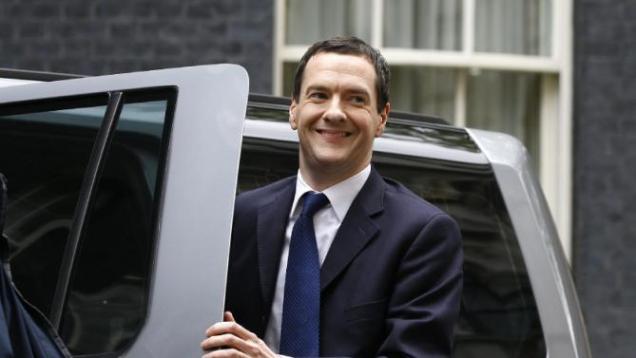
George Osborne has political enemies. But are they also ideological opponents?

What hope is there that the Conservative Party might realistically follow a different intellectual and ideological path after the Age of Cameron and Osborne?

While there have been precious few public signs of senior cabinet or backbench, leadership-calibre Conservative MPs willing to make a public stand for a smaller state and greater individual liberty, perhaps we should be encouraged by the fact that many Tory MPs apparently hold such a low opinion of George Osborne, the navigator largely responsible for the party’s current centrist course.

James Kirkup has been surveying attitudes to the Chancellor within the parliamentary party:

How much trouble is Mr Osborne in? Put it this way: Tory MPs who a few months ago were so wary of his power over their future that they flinched at the mention of his name are now speculating about whether he will keep his job.

By way of evidence, here are some things Conservatives have said to me about the Chancellor in recent days. Two of the quotes below come from serving members of the government. One is from someone who holds a senior office in the Tory hierarchy. One is a backbench MP who could easily have a prominent place in Cabinet in a year or two.

1. “No chance. None. Zero. Never going to happen. Dead. Deader than dead.”

2. “He has been found out. He doesn’t believe in anything and no one likes him. It was useful for people to support him when he was on the way up, but no one will stick with him on the way down.”

3. “The thing about George is that a lot of people think he’s a bit arrogant and rude, but that’s because they don’t really know him.

“Well I’ve worked with him pretty closely for several years now and so I know that the truth is that in person he’s actually much worse than that.”

Kirkup goes on to chart a path back out of the wilderness for Osborne, which is of far less interest to this blog, which ardently hopes that the Chancellor and his “New Labour Continued” strategy perish in the desert.

But there is no point looking forward to the departure of Cameron and Osborne unless there is a reasonable prospect of them being replaced by other, better alternatives – future leaders whose conservatism does not retreat at the first sight of negative headlines, and who know when the pain of public opposition is worth the gains (i.e. not in pursuit of a paltry £4bn of savings from Personal Independence Payments for disabled welfare claimants).

Back in November of last year, this blog pointed out that winning power only to implement Tony Blair’s unrealised fourth term of office was a waste of a Conservative administration, and that those who campaigned and voted Tory deserved better:

The fact that David Cameron and George Osborne are watching the slow implosion of the Labour Party and conjuring up plans to woo Ed Miliband voters – rather than capitalise on this once-in-a-century opportunity to execute a real conservative agenda unopposed – reveals their worrying lack of confidence in core conservative principles and values. If the Prime Minister and Chancellor really believed in reducing the tax burden, reforming welfare, building up our armed forces, shrinking the state, promoting localism and devolving decision-making to the lowest level possible (with the individual as the default option), they could do so. They could be building a new, conservative Britain right here, right now. Virtually unopposed.

But Cameron and Osborne are doing no such thing. They simper and equivocate, and talk about fixing the roof and paying down the debt while doing no such thing, and still they attract endless negative headlines for inflicting an austerity which exists primarily in the minds of permanently outraged Guardian readers.

If Britain is not a transformed country in 2020 – with a smaller state, more dynamic private sector and greater presence on the world stage – there will be absolutely nobody to blame other than the party holding the keys to government. The party with the word “conservative” in their name. The Tories will have been in power for ten years and have nearly nothing to show for it, save some weak protestations about having fixed Labour’s prior mismanagement of the economy.

That’s not the kind of party I want to be associated with. That’s not the party I campaigned to elect in 2010, back when it seemed possible that a new Conservative administration might aspire to being something more than a moderate improvement on Gordon Brown.

In other words, in order to make an exciting potential future leadership candidate, the Conservative MPs rolling their eyes as the Chancellor of the Exchequer self destructs (or uses up another of his nine political lives) must not simply dislike George Osborne – and there is increasing evidence that his support is a mile wide but an inch deep – but actually have an entirely different vision for the party.

That rules out all of the most obvious successors (Theresa May, Nicky Morgan, Philip Hammond, Michael Fallon, Jeremy Hunt) as well as those one-time Bright Young Things who have recently proven their unreliability by failing to come out in support of Brexit (Sajid Javid, Stephen Crabb, Matt Hancock, Rob Halfon).

Unfortunately, that mostly leaves a pool of potential candidates who are probably too new to Parliament to mount a credible leadership bid by 2020, or citizen politician types who have already publicly disavowed any future leadership ambitions. This blog took a warm liking to Chris Philp (if only he can be cured of his europhilia), David Nuttall (with some specific policy reservations) and James Cleverly when these MPs recently addressed a Conservatives for Liberty lobby event, and also Lucy Allan – though the latter’s social media exploits and alleged behaviour towards her staff raise some worrying temperamental questions.

Kwasi Kwarteng is also a sound conservative, advocating a return to a contributory welfare state as well as being an excellent author. Dominic Raab is very bright, and strong on individual liberty and meritocracy.

None are what you might consider to be household names at present. In some cases, that may have the potential to change by 2020, depending on what happens and whether any of these candidates are promoted into the cabinet as the Conservative Party approaches the end of David Cameron’s term.

But the green shoots of a British Conservative revival do exist. They are small and fragile at present, and no matter who is leading Labour in 2020, Cameron’s successor will have to contend with Tory Fatigue after ten years back in government, making the urge to tack to the centre even harder to resist than it is already.

Which is all the more reason why this blog believes it is now imperative to identify, support and champion those future leadership prospects who fit the profile of an heir to Thatcher rather than another disappointing, Cameron-style Ted Heath tribute act.


Conservative Party Logo - Torch Liberty - Tree

Agree with this article? Violently disagree? Scroll down to leave a comment.

Follow Semi-Partisan Politics on TwitterFacebook and Medium.

Dear Insert Name, Thanks For Your Generic Efforts, Love DC

David Cameron Robert Halfon Backbencher MP Conservative


Many people, Semi-Partisan Sam included, receive at least one round-robin letter, trumpeting the glittering achievements and detailing the tribulations experienced by far-flung branches of the family, in the run-up to Christmas each year.

Folksy newsletters of this kind have long-attracted a mixture of ire, derision and pity, but we grudgingly read them because were it not for this (and the real-time bragging that takes place on Facebook), we would otherwise have absolutely no idea what’s new with Aunt Cersei and Uncle Jaime in Kings Lynn or cousin Arya in her gap year travels around the world.

But the one thing we round-robin recipients never do is boast about having received the same mail-merged missive as every single one of our other extended family members. This only makes it more odd that Robert Halfon, the Conservative MP for Harlow, took to Facebook today with evident pride to share a letter purportedly written and sent by David Cameron to celebrate the government’s achievements in the year to date.

The mediocre, mail-merged round-robin letter is shown in its banal entirety below:

David Cameron Robert Halfon Backbencher MP Parliament Letter

Cameron’s attempt at a morale-boosting letter is full of the meaningless platitudes about securing a “brighter future for Britain” that one might expect from a tired politician going through the motions on a local radio interview at 6AM, but it is doubtful that the prime minister personally authored the letter whilst away on vacation in Portugal. Far more likely that the job was delegated to a junior special adviser or some other paint-by-numbers Downing Street aide.

But what is truly interesting about this seemingly dull letter is the fact that the only identifying marker tailoring the letter to Robert Halfon is the inclusion of his name after the word “Dear” at the top. From that point onwards, David Cameron’s missive takes a lazy ramble across the current political landscape, touching on high-level achievements rather than the particular work or campaigning issues of Halfon and his fellow backbenchers.

The prime minister proudly acknowledges the “difficult decisions” that were taken to stabilise and return the British economy to growth. With a fanfare he takes credit for reducing the deficit by a third – some credit, considering that the government fell far short of its target on deficit reduction, and that the national debt continues to grow.

In his summer hubris, Cameron goes on to take personal credit for falling unemployment, reduced immigration (again, far from achieving the targets set out in the 2010 general election campaign), improved schools and, at probability’s furthest stretch, the supposed repatriation of previously outsourced and off-shored jobs to Britain. And the memo ends with a limp call to action, exhorting the prime minister’s Westminster foot soldiers to continue fighting the good fight to keep Ed Miliband out of Number 10 Downing Street (and Cameron on the business side of the famous black door).

But would it really have been so hard to add even a dash of customisation before firing out these letters? The recipient in question, Robert Halfon, is a relative newcomer to Westminster having joined the 2010 parliamentary intake, and so does not have a huge stable of stories, anecdotes, policies or victories for a hapless intern to research. But he does have several solid achievements and bold stances to his name that could have been used, had anyone been bothered.

The top paragraph of the Cameron-O-Gram might have approvingly mentioned the successful Fair Fuel campaign led by Halfon, conveyed thanks for leading the way in advocating more youth apprenticeships, or pledged to work with the Harlow MP to address the problem of prohibitively high car parking prices at NHS hospitals. But it did none of these things. In fact, the standardised email to lowly backbenchers went even further in demonstrating its ignorance or indifference to the work of individual MPs by prominently hedging its bets:

“So a big ‘thank you’ for everything you have done to get us this far. And thank you too for your campaigning this past term – whether that be in the local and European elections in May, or in Newark last month, where our Party came together to win our first by-election in government for 25 years.”

“Whether that be…”? Shockingly, David Cameron and his office seem entirely ignorant as to which MPs contributed the most and the least to recent campaigns, despite Grant Shapps’ threat to shame and punish any MP who failed to pull his or her own weight on the campaign trail. People accuse Ed Miliband’s office of being out of control and unable to properly co-ordinate, but now it seems as though the Conservatives are rapidly falling to a similar dull point.

“Letter-gate” reveals a picture of a prime minister and a government that not so long ago fawned over restive backbench MPs to keep them sweet, but which now believes that they can be treated with any amount of contempt given the fact that they will need help from CCHQ to survive the 2015 general election, and will overlook the snub.

And there can be few better ways to showcase this contempt than spamming hardworking backbench MPs with a cheesy, internal and non-specific campaign memo – ostensibly to give thanks for backbench loyalty – which is hardly different to the regular mailing list bulletins “written” by various Tory ministers and still received by Semi-Partisan Sam as a former member of the Conservative party.

At this point in the life cycle of government, a proactive and attentive leader might take the time to properly shore up morale and accrue some goodwill among his troops heading into party conference season. At the very least, a good party leader might feign an interest in the constituency work or personal causes of their MPs. But Cameron seems unable to even fake this enthusiasm.

Ironically, the earnest and hardworking MP who was so delighted to receive this piece of junk mail from Number 10 – the political equivalent of a pizza delivery leaflet shoved through the letterbox – was chastising his constituents, charities and community groups for spamming / petitioning MPs and adding to their workload in precisely this automated fashion only 30 months ago. In February 2011, Halfon wrote:

So what’s the best way to persuade an MP to support your cause? It’s simple. When I get an invite to visit the local branch of an organisation, I will always go. When I get a personalised letter, hand-signed from a chief executive (as opposed to public affairs officer) that contains local statistics and information, how can I not fail to be interested? When a local constituent calls me asking for a meeting, to talk about his or her involvement in her charity, I will always do it. I remember particularly how I was recently lobbied directly in the Commons by a resident who was involved with a breast cancer charity. She had a profound effect on me. I was only too pleased to support her cause.

So my final advice to charities and the voluntary sector is this: forget the impersonal emails, move away from computer generated email campaigns, stop sending reams of paper by post. Make it personalised and local, and you will not just have my real support, but that of many other MPs as well.

To counsel constituents against using inappropriate forms of communication while lauding precisely the same impersonal tactics when executed by 10 Downing Street, as Halfon seems to be doing, is puzzlingly contradictory to say the least. And at a time when Conservative MPs defending narrow majorities most need the help of their leader to retain their seats in 2015, it is especially odd that at least one backbencher is not more offended at being condescended to in this manner.

As the sweltering Parliamentary summer recess rolls on, the question we are left asking is this: With potent threats from both UKIP on the right and Labour on the left, how on earth does David Cameron expect to lead the Conservatives party to a majority and victory in 2015, when he clearly has so little respect for his generals in the field?

A postcard from Portugal would have cost so little, but said so much more.