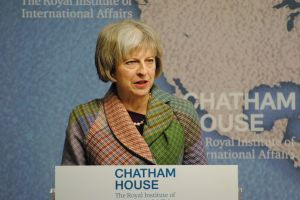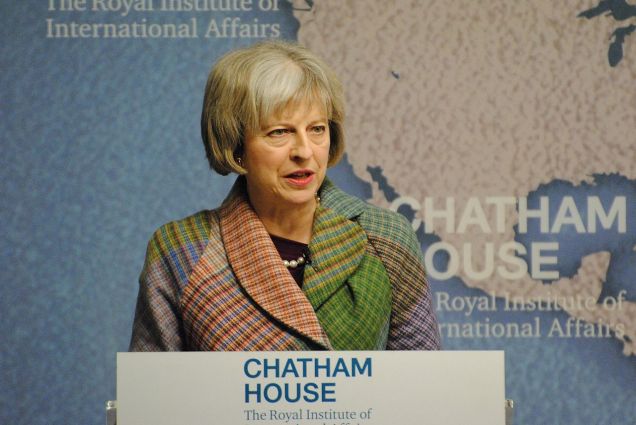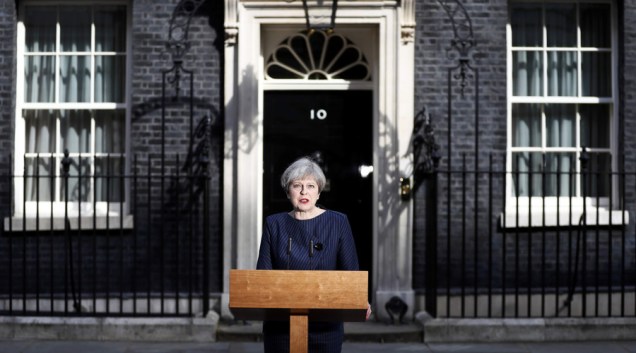
Theresa May Calls A General Election: First Reaction

Theresa May - Conservative Party - General Election 8 June - Parliament - Downing Street

Here we go again

Okay, here is my hot warm lukewarm tepid pretty cold take on Theresa May’s shock announcement that the government will seek to trigger a general election on 8 June.

After a Scottish independence referendum in 2014, a general election in 2015 and an EU secession referendum in 2016, can we really muster the energy and enthusiasm for another vote in 2017?

Well, now we don’t have a choice (not that thinking a bit about the issues and then strolling to your local polling booth is very difficult). Theresa May made a bold decision to reverse her earlier protestations to the contrary and call an early general election, and from a purely party political perspective it was the smart move. Besides the jubilant Liberal Democrats, many of the whiners and naysayers on the opposition benches are unimpressed, bordering on terrified.

Many on the Left have been trying to have it both ways, first by criticising our “unelected” prime minister for daring to lead without an electoral mandate of her own, and now by carping at her decision to go the the public to seek that very mandate. It appears that “put up or shut up” time has snuck up on them.

But how does each party stand to fare in a June general election?


Labour

First and foremost, this is a richly deserved disaster for the Labour Party. Dan Hodges has already taken to Twitter trying to pin the blame for the party’s coming annihilation on Jeremy Corbyn and his supporters, but this is to mistake the symptom for the disease.

Jeremy Corbyn won the Labour leadership and retained it following the coup attempt – both times cheered on by this blog – because unlike the third rate nonentities who currently make up the centrist wing of the party, the Corbynites clearly stand for something. You may not like what they stand for – indeed, opinion polls show that most of the country strongly dislikes the hard left agenda – but at least they have clearly demonstrable values and principles which extend beyond the acquisition and retention of power.

What have the Labour centrists offered since around 2005? Nothing but bland, focus-grouped banalities, preaching enlightened compassion while shoring up a failing consensus (pro-EU, pro-mass immigration, eager to reap the benefits of globalisation but even more eager to throw its victims on the welfare scrapheap rather than help them adapt to the new world) that betrays the interests of its core working class (and principled eurosceptic) vote.

The Corbynite revolution gave the indolent centrists a richly deserved kicking, but Corbynism – with is aversion to patriotism, obsession with nationalisation and statism, obsessively anti-American foreign policy and seething hostility toward wealth generation – is not the solution, but rather a fringe obsession. Throw in the fact that even many Corbyn true believers disagree with Corbyn’s principled euroscepticism (one of the few issues where he happens to be right), and there are more faults running through the Labour Party than they can possibly resolve in the weeks leading up to 8 May.

The key test will be the writing and release of the Labour Party manifesto. Under Jeremy Corbyn’s leadership, the Labour Party must quickly produce a compelling vision for the country that appeals to Corbynite true believers while not scaring off the rest of the country. Sounds impossible? That’s probably because it is.

And after the election? If (as seems likely) Labour end up treading water or going backwards, will that be the end of Jeremy Corbyn and Corbynism? Maybe, maybe not. You can pretty much find a pundit to tell you exactly what you want to hear on that question, depending on your own proclivities. But the centrists’ only hope is to hang the party’s impending defeat firmly around Jeremy Corbyn’s neck so as to discredit his worldview and leadership.

I half wondered whether some panicked shadow cabinet members might try to engineer another last-minute coup to depose Corbyn and replace him with a caretaker leader to see the party through 8 June, but it seems unlikely. The centrists have proven time and again that they lack all courage and conviction, and since victory seems impossible under any circumstances it is better from their perspective to let a general election defeat do what they themselves could not – rid the party of Jeremy Corbyn.

But if Labour does go on to lose the election and Corbyn then resigns, will what follows be any better? The last Labour leadership contest should tell you all you need to know about the calibre of individuals waiting in the wings to succeed Jeremy Corbyn.


Conservatives

One may not agree with Theresa May on all things – this blog certainly has sharp differences, particularly on the manner of Brexit and the role of the state – but one would be hard pressed to argue that she is an incompetent leader, particularly in comparison with the other party leaders. The public sense this too, which is why the Tories currently have a 20+ point lead over Labour in the opinion polls, why even many Labour supporters prefer Theresa May to Jeremy Corbyn as prime minister, and why the Conservatives will increase their majority following the election.

However, the Tories may not gain as many seats as their current commanding poll lead suggests. Some Tory MPs in staunchly Remain-supporting constituencies are vulnerable, particularly those who unseated Liberal Democrat MPs in 2015. Meanwhile, the Tories are potentially poised to pick up some seats from unapologetic Remainer Labour MPs representing constituencies which voted Leave, particularly in Northern England. Therefore we are likely to see a degree of musical chairs, where some formerly Tory seats go LibDem while the Tories pick up a number of seats from Labour. In my opinion, the net effect will favour the Tories (and the Liberal Democrats) at the expense of Labour, but the extent to which this is the case remains open for debate.

More interesting, though, is the likely impact on the composition and mindset of the Conservative Party following the election, assuming that they are returned to government. This will likely be a Tory party where some of its more pro-EU MPs are gone (excellent), but which also suffers from the loss of those MPs who otherwise exerted a more liberal influence on the government. The authoritarians and the head-in-the-sand hard Brexiteers will likely be strengthened and consolidate their grip over the party, which is a problem for anybody who wanted Brexit to act as a catalyst for further liberal reform and democratic or constitutional renewal in Britain.


Liberal Democrats

The LibDems did not deserve their electoral drubbing in 2015, in which they were essentially punished for finally behaving like a responsible party of government and abandoning an unworkable campaign pledge (on university tuition fee caps) in the face of fiscal reality. For this act – for graduating from a party of preening opposition to one of government – they were subject to endless hysterical screeds about “betrayal”, and lost the bulk of their parliamentary party in the process.

Just as the LibDems did not deserve the full extent of their defeat in 2015, so they will not have deserved their likely gains in 2017, which will be fuelled by marshalling hysterical establishment opposition to the outcome of the EU referendum. The party will likely pick up a brace of seats – many retaken from the Conservatives – based solely on their pledge to campaign against a “hard Brexit” they will be powerless to stop. At one time, the Liberal Democrats might have presented a potential fallback option for disenchanted Conservative voters unhappy at the more authoritarian direction of their party. No more. Under Tim Farron, the party has descended into screechy europhilia and blind hatred of that half of the country which voted for Brexit. Civil liberties and other one-time LibDem interests will take a back seat to their efforts to subvert Brexit.

As a further complication, the kind of Brexit that the LibDems now technically argue for is actually not inherently bad in the short term – retaining single market access, openness to immigration etc. But the LibDems are not to be trusted, because:

  1. Their true agenda is to reverse Brexit entirely, not merely to seek the best form of Brexit, and
  2. Rather than pushing for better models of European cooperation and trade regulation, the LibDems seek only to keep Britain as closely shackled as possible to the existing, failed systems. For a party which likes to present itself as the home of enlightened, grown-up pragmatism, the LibDems take their europhilia like a religion, worshipping the EU as something inherently good and never to be seriously questioned.

Finally, Tim Farron is already picking up a lot of flack in left-wing papers and on social media for his fundamentalist Christian beliefs, particularly as they pertain to homosexuality.

This is a shameful, ridiculous witch hunt. So what if Farron refused three times to say whether he considers gay sex to be a sin, as his moralistic tormentors are currently crowing in a bid to damage him? Does anybody seriously think that the Liberal Democrat manifesto is going to call for the recriminalisation of homosexuality, for putting sodomy laws back on the statute books? Be serious. There is a world of difference between private belief and public policy.

There has to be space for private religious belief in this country. Secularists have a fair point when they worry about the influence of religion on public policy, particularly given that we have a legislature where 26 unelected bishops of the Church of England sit in the upper house and meddle in our lawmaking. But religious faith should not and must not become an acid test of eligibility for public office, where anybody professing faith or traditional beliefs is portrayed as extreme and beyond the pale.

More than anything, this is a witch-hunt against Christianity, one which will be cynically used by the other parties of the left as they manoeuvre for political advantage. Interestingly, Islam also has a word or two to say about homosexuality, and one can argue that Islam has a lot further to go than Christianity in accommodating LGBT people and issues, certainly in this country. But one wonders how many of the perpetually outraged critics of Tim Farron would be as fervent in their criticism if Farron were a Muslim rather than an Evil, Backward Christian?


UKIP

I voted for UKIP back in the 2015 general election, not as an endorsement of that party’s more nativist, reactionary tendencies but as a means of expressing disgust in a Conservative Party which had drifted far from conservative principles under the leadership of David Cameron, and whose slide toward bland centrism did not deserve rewarding with my vote. I stand by that decision.

Needless to say, the landscape has changed in two years. Nigel Farage – a man with considerable political courage, if also numerous faults and demagogic tendencies – has retreated to the sidelines, if not quite sailed off into the sunset. And after a period of instability the party has settled on Paul Nuttall, who has shrunk into his leadership position, more of an inept clown than an existential threat to Labour’s Northern base.

Furthermore, the party’s raison d’être was essentially accomplished with last year’s referendum vote to leave the European Union. The party limps on, near bankruptcy and desperately insisting that its existence remains necessary as the guard dog of a hard Brexit, but most people either feel that the job is done following the triggering of Article 50 or realise that a party in such turmoil will be in no position to influence events any further, regardless.

The writing has been on the wall for some time. I attended the UKIP Party Conference in Doncaster in 2015, and spent my time interviewing various party figures and supporters about what role they saw for the party in a post-referendum Britain. Most senior UKIP figures, including Nigel Farage, spoke only in bland banalities.

Only Douglas Carswell had a plausible answer – a return to small-government, free trade, small-L libertarian platform – but this side was never likely to win out over the leftward turn to appeal to disaffected Labour voters. And indeed, Carswell has now left the party to stand as an independent candidate, firmly closing the door on any move in this direction.

At present, UKIP seem doomed to lurch incompetently to the Left, willingly shedding any remaining libertarian voters as they court the disaffected Labour vote by promising the same kind of consequence-free safety and security that Donald Trump promised to his supporters in America. A sad decline of a briefly promising political party.

Nobody can deny the influence that UKIP has had on our national politics. Nobody can say for sure that UKIP will not bounce back from their current political near death experience. But we can say with relative certainty that the party will fail to impress in 2017.

My take from the UKIP conference two years ago seems increasingly prescient:

I can’t help wondering if UKIP might not pay a price in 2017 or beyond for failing to pay enough heed to the type of party they want to be – and the type of supporters they want – by the time of the next general election.

I think it is fair to say that UKIP will now pay in a lump for their lack of foresight.


Scottish National Party

Nicola Sturgeon was quick to declare that Theresa May’s decision to call for a general election is a “political miscalculation”.

Sturgeon said:

“She [Theresa May] is clearly betting that the Tories can win a bigger majority in England given the utter disarray in the Labour Party.”

“That makes it all the important that Scotland is protected from a Tory Party which now sees the chance of grabbing control of government for many years to come and moving the UK further to the right – forcing through a hard Brexit and imposing deeper cuts in the process.”

Because in Nicola Sturgeon and the SNP’s mind, Scotland is a nation of adult-sized, diaper-clad babies requiring constant protection from the Evil Tor-ees, who are constantly threatening to do Bad Things like lower the tax burden and unleash free enterprise.

Will the SNP manage to sweep the three Scottish constituencies they failed to capture in 2015, or will they lose seats? One can only imagine that they will do very well again, and use their strong showing as an excuse to prance around acting as though the couple of million votes they received from a tightly concentrated part of the United Kingdom represent some God-given, stonking mandate to thwart Brexit for the rest of us or else attempt to sever Scotland’s historic union with the UK through another pointless referendum (they would lose, since the choice would be between remaining in the UK or being outside both the UK and EU).

At some point, one might hope that Scottish voters might look around them and realise what godawful, incompetent government they are receiving by lending such overwhelming support to the SNP. One might hope that those Scots who love liberty might balk at a party which introduces an authoritarian “named person scheme” giving the government oversight of every Scottish child, and whose decision to centralise the fire and police services into single unitary authorities is already costing lives. One might hope that Scots who are against independence or ambivalent about it might decide to stop rewarding a party which has abdicated any responsibility for government in favour of a single-minded obsession with independence, even after the 2014 referendum, to the extent that no legislation has passed the Scottish Parliament for over a year.

But all such hopes will be in vain. The SNP will perform well once again, racking up credulous low-information votes in defiance of their abysmal governing in Scotland and the scandal-plagued, ineffectiveTartan Tea Party in Westminster. By their actions and apparent preference for living in a one-party SNP statelet within the United Kingdom, Scottish voters are choosing to deliberately sever themselves from our shared national political discussion.

If the SNP is all but guaranteed to clean up regardless of their abysmal record in government and the ineffectiveness of their Westminster caucus, what incentive do the other parties have to make compelling pitches for Scottish votes, since these pitches will always be ignored? By choosing to half sever themselves from our United Kingdom with blind support for the SNP, Scottish voters are in danger of completely severing themselves from our national political discourse.

This is a tragedy, but it is a tragedy very much of Scotland’s own making.


Britain’s Rainbow, Unicorn-Spangled Progressive Alliance

Ah yes, the super-secret, silent progressive majority which is going to come together in the spirit of unity to lock the Evil Tor-ees out of Downing Street forever and save Britain from the evils of conservatism. Didn’t exist then, doesn’t exist now.

Disregard any breathless commentary about a Labour-LibDem-Green-SNP alliance.


Conclusion

One wonders what was the point in instituting a Fixed Term Parliaments Act if we were only to discard the idea of fixed terms for political expediency at the first opportunity.

Generally speaking, fixed terms of government are a good idea, but it must be acknowledged that they usually do not work well in a parliamentary system. Excuses can always be found to justify circumventing the normal timelines and going to the polls early, particularly when the government’s majority is small or when the country faces a particularly contentious issue which bisects normal party lines. The present situation meets both of these criteria.

Theresa May’s decision to call an early general election was clearly motivated by the opportunity to extend the Tory advantage in Parliament, with her stated rationale about “Westminster being divided while the country is not” being a convenient smokescreen. But that’s politics. If people didn’t like the idea of snap elections held for partisan reasons they had every opportunity to become more involved in campaigns for electoral and constitutional reform. Those who spend their time watching Britain’s Celebrity Horses Dancing On Ice and ignoring the nuts and bold of how their country is run have limited standing when it comes to complaining about outcomes they dislike.

Furthermore, those on the Left who spent the last nine months complaining that Theresa May has no mandate to govern can’t very well also complain when the prime minister responds to their wailing by seeking to claim an electoral mandate of her own. This applies particularly to snivelling Labour MPs (Liz McInnes) who seek to use the death of their own family members as political capital.

Brendan O’Neill perfectly critiques this attitude:

The speed with which Remainers went from saying “May doesn’t have a mandate for Brexit” to “How dare May seek a mandate for Brexit” is breathtaking. All that “no mandate” talk was such hogwash. They know there’s a mandate out there for Brexit — a historic, populous, swirling mandate — and they are horrified that it is being tapped into once again via a General Election.

It’s clear now that by “no mandate” they meant “ignore that mandate”. They thought they had wrestled the issue of the EU, and the whole question of Britain’s political and economic future, back from the people and into the hands of their expert friends and legal minds and level-headed lords and MPs. Wrong. Here come the people again!

When it comes to a summary of where we stand and predictions as to the likely outcome, Pete North makes the most sense as it relates to the election’s impact on Brexit:

If it is to be a shadow referendum then remain has already lost it given that their options are split and they’ve spent the last year telling most people they’re thick and xenophobic. I think it’s fair to say that the Lib Dems will achieve a restoration of a sort but there’s not much to get excited about. It is possible that they could form the next official opposition but by then Mrs May will have all the mandate she needs to do whatever she wants. There will have been a referendum, a parliamentary vote, article 50 and a general election. We are leaving the EU and that’s the end of it.

If I had to make a bet, I would predict that the next two months will see a lot of noise and intrigue followed by an electoral outcome not dissimilar to the one we have today, only with a slightly larger Conservative Party caucus gained at Labour’s expense and a moderately revitalised Liberal Democrat party who then go on to strut around as though their 30-odd seats represent some kind of stunning repudiation of the referendum result. UKIP and the Green Party will go nowhere, and by reaffirming Scotland as a de facto one-party statelet by rewarding the SNP for a job disastrously done, Scottish voters will continue to make themselves increasingly irrelevant to the UK-wide political debate.

Maybe I’ll be proven wrong. Maybe the Independent will come out with a hidden video recording of Theresa May murdering puppies a week before polling day, or maybe some of our EU “friends” will make some kind of infantile play to destabilise the British political situation for their own sadistic gratification. Perhaps Theresa May will astonish me and turn out to be pursuing an expanded Tory majority because she does in fact have an ideological backbone, and needs the wiggle room in Parliament to ram through a proper reforming Conservative agenda. Perhaps.

But if I had to guess right now, I would say that on 9 June we will be looking at “the same, but more of it”.
 

Theresa May - Conservative Party

Support Semi-Partisan Politics with a one-time or recurring donation:

Agree with this article? Violently disagree? Scroll down to leave a comment.

Follow Semi-Partisan Politics on TwitterFacebook and Medium.

On Article 50 Day

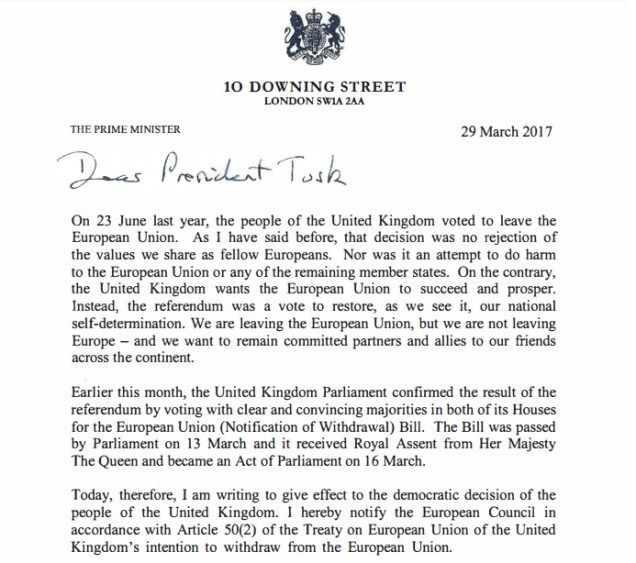
United Kingdom Britain EU Secession - Article 50 Letter - Downing Street - Theresa May - Donald Tusk - European Union

A genuine opportunity for democratic renewal – if we can keep it

Many believed – either through arrogance or hopelessness – that this day would never come.

Article 50 Day: the day that the British government triggered Article 50 of the Lisbon Treaty and formally signalled to the European Union our decision to secede from that dysfunctional, anachronistic and profoundly anti-democratic political union, conceived more than a century ago and constructed in a post-war age now almost completely alien to us.

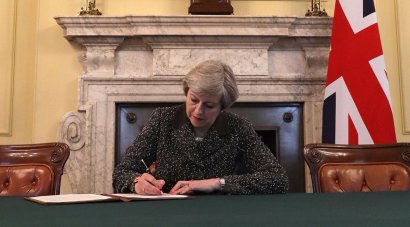
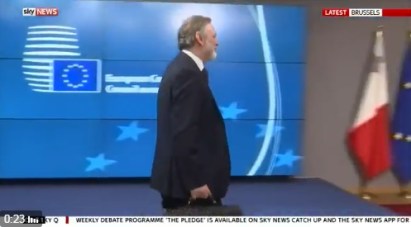
Of the many pictures which may come to represent “Brexit Day” in historical memory, the two images which struck me are the photograph of Theresa May signing the Article 50 notification letter in Downing Street last night, and the television footage of the British official (Ambassador Sir Tim Barrow) in Brussels, striding into the European Council building to deliver the note to president Donald Tusk.

Why? Because these images more than any other represent the astonishing triumph of democracy over the near-unanimous will of the political establishment.

Theresa May signing Article 50 Letter - Downing Street - Brexit - EU

Sir Tim Barrow - Article 50 letter - Brexit- European Union - Britain

Theresa May did not want to sign the Article 50 letter. During the referendum she campaigned, albeit half-heartedly and often nearly invisibly, for Britain to remain in the European Union before accepting the inevitable and promising to implement Brexit as she manoeuvred for the Tory leadership.

And the British civil service, foreign office and diplomatic corps, represented here by Tim Barrow, our Permanent Representative to the EU, certainly did not want to deliver the letter, so accustomed are they to thinking and operating only within the narrow tramlines of those competencies not surrendered to Brussels..

The generations of politicians, diplomats and bureaucrats who currently run Britain were raised on a narrative of national decline and inevitable dependence on the Brussels political union as the only means of amplifying our fading voice in world affairs. Their formative years were spent during the Winter of Discontent and marked by one post-war national humiliation after another. The tremendous post-1970s (Thatcherite) revival has failed to disabuse them of the utterly false, poisonous notion that Britain is a small and insignificant country, no longer capable of governing herself in the manner of other independent countries such as Canada or Australia, let alone as the fifth largest economy and major cultural, commercial, diplomatic and military power that we truly are.

By huge margins, these people were deeply wedded to Britain’s inevitable future as a European Union member state, and consider Brexit a huge mistake bordering on a tragic act of national self-harm. And yet Theresa May signed the letter, Tim Barrow delivered it, Article 50 was duly triggered and the process of Britain’s secession from the European Union was put into motion.

Why is this something to be celebrated? Because at a time when there is every reason for cynicism and doubt, it shows that at a fundamental level, the British people are indeed still in charge of their own destiny.

Theresa May did not want to sign the letter and Tim Barrow did not want to deliver it, but they did so because they retain a sufficient fear of (if not respect for) the public that they dared not abuse their power by overriding the results of a public referendum. Note that there is no such reticence about subverting democracy in the diminished union we are now leaving – unfavourable referendum results in member states (relating to EU treaties or the ill-fated constitution) have consistently been treated as unfortunate but minor setbacks and then sidestepped by the Brussels machinery, its leaders safe in the knowledge that they are so insulated from democratic accountability that they will suffer no consequences for their actions.

In Britain, however, there remained just enough fear of the people for our leaders to be forced to do the right thing, against their will. That’s not to say that they will get Brexit right, not by a long stretch – right up until Referendum Day, many Brexiteers were too busy hating the EU to identify the future relationship they wanted to have with it, while bitter Remainers did much to poison public and media opinion against the kind of transitional EEA deal which would have caused the least economic disruption. But given a mandate to take Britain out of the European Union our leaders are now doing so, however clumsily and against their will. This is as it should be.

Brendan O’Neill also gets it:

What we’re witnessing in Britain today, with Theresa May triggering Article 50, is something radical: the political class is going against its own judgement under the duress of the demos. The polite, peaceful duress of the demos, it should be pointed out.

We know that 73 per cent of MPs want to stay in the EU. We know many in the House of Lords are horrified by Brexit and were keen to hold it up. We know 70 per cent of business leaders wanted Britain to remain, and that some of them launched costly legal battles to try to stymie the Brexit momentum. And yet in the end, all of them, every one, has had to roll over and give in to the masses: to the builders, nurses, teachers, mums, old blokes, unemployed people and others who effectively said to the political class: ‘You’re wrong. We should leave’. To the people surprised that such a state of affairs can exist, that the political set can be made to do something it doesn’t want to by the mass of society, including even uneducated people: what did you think democracy meant? This is what it means.

Yes, this is what democracy means. To do anything else – to override or subvert the referendum decision for Brexit – would mean the triumph of technocracy  and well-meaning dictatorship over democracy.

We tend to forget, because it has not been this way within living memory for many citizens, but in a democracy the leaders are supposed to fear and respect the people and their judgment, not the other way around. As government relentlessly expanded and the bureaucratic state encroached ever more on our lives, we have unfortunately come to fear the government far more than government leaders fear the public – but not so with Brexit. Government ministers know that to defy the Brexit vote and seek to remain in the EU against the wishes of the people would visit such anarchy and destruction upon the country that they daren’t seriously even consider it (save inconsequential politicians such as Tim Farron). And so no matter how much they dislike it, today they implement our instructions.

Of course, Brexit is just one issue. In many other arenas of public life, officials have absolutely no qualms about defying public opinion and treating voters as polling units to be managed or placated rather than autonomous, thinking and engaged citizens to be feared and respected. We must take care not to merely repatriate powers from Brussels back into the arms of a power-hungry, over-centralised Westminster government that will fail to act in the interest of the UK’s diverse home nations and regions, and which carelessly surrendered its own powers to Brussels without democratic consent in the first place. Now, more than ever, we must hold our politicians and civil servants to account.

Brexit is the start of an opportunity for real democratic and constitutional reform, not an outcome in itself. Secession from the European Union makes the rejuvenation of our democracy possible, but by no means inevitable.

When queried by a stranger as to the outcome of the constitutional convention he was leaving, American founding father Benjamin Franklin famously replied: “A Republic, if you can keep it”.

Today, as Theresa May’s government (for all its many flaws) triggers Article 50 and serves notice on the European Union, we seek to reclaim our national self-determination and renew our democracy – if we can keep it. If we can rise to the occasion and collectively seize the great opportunity which now stands before us.


Theresa May signing Article 50 Letter - Downing Street - Brexit - EU

Support Semi-Partisan Politics with a one-time or recurring donation:

Agree with this article? Violently disagree? Scroll down to leave a comment.

Follow Semi-Partisan Politics on TwitterFacebook and Medium.

Theresa May’s Brexit Speech: Soaring Ambition On A Foundation Of Sand

A grandiose speech with little serious thinking to back it up

Well, if anything lures me back to blogging then it may as well be Theresa May’s speech outlining the government’s long-awaited plan for Brexit.

I must admit that I am rather conflicted. This blog is on the record as holding Theresa May in rather low esteem in terms of her commitment to small government, individual liberty and conservatism in general, but it cannot be denied – least of all by someone like me who routinely criticises political speeches for being dull and uninspiring – that from a purely rhetorical perspective, May’s speech was satisfying both in terms of emotion and ambition.

Here was a speech almost in the American political tradition – reaching back through history to affirm the roots of British exceptionalism, the challenge now before us and the promise that an even greater Britain can be ours if only we strive for it:

It’s why we will put the preservation of our precious Union at the heart of everything we do. Because it is only by coming together as one great union of nations and people that we can make the most of the opportunities ahead. The result of the referendum was not a decision to turn inward and retreat from the world.

Because Britain’s history and culture is profoundly internationalist.

We are a European country – and proud of our shared European heritage – but we are also a country that has always looked beyond Europe to the wider world. That is why we are one of the most racially diverse countries in Europe, one of the most multicultural members of the European Union, and why – whether we are talking about India, Pakistan, Bangladesh, America, Australia, Canada, New Zealand, countries in Africa or those that are closer to home in Europe – so many of us have close friends and relatives from across the world.

Instinctively, we want to travel to, study in, trade with countries not just in Europe but beyond the borders of our continent. Even now as we prepare to leave the EU, we are planning for the next biennial Commonwealth Heads of Government meeting in 2018 – a reminder of our unique and proud global relationships.

And it is important to recognise this fact. June the 23rd was not the moment Britain chose to step back from the world. It was the moment we chose to build a truly Global Britain.

The peroration was particularly good, as May eschewed the temptation to bribe the electorate with glib promises of riches today and instead asked us to consider the longer term good, as well as our place in the history books:

So that is what we will do.

Not merely forming a new partnership with Europe, but building a stronger, fairer, more Global Britain too.

And let that be the legacy of our time. The prize towards which we work. The destination at which we arrive once the negotiation is done.

And let us do it not for ourselves, but for those who follow. For the country’s children and grandchildren too.

So that when future generations look back at this time, they will judge us not only by the decision that we made, but by what we made of that decision.

They will see that we shaped them a brighter future.

They will know that we built them a better Britain.

When nearly every other major set piece speech in British politics is little more than a dismal effort to placate a restive and self-entitled electorate by promising the people Free Things Without Effort or Consequences (ask not what you can do for your country but what your country can do for you), here was a speech that set its sights a little higher and actually aspired to statecraft.

May’s criticism of the European Union and justification of the UK’s decision to secede from the EU was very good, particularly coming from someone who herself supported the Remain side and kept her head firmly beneath the parapet during the referendum campaign:

Our political traditions are different. Unlike other European countries, we have no written constitution, but the principle of Parliamentary Sovereignty is the basis of our unwritten constitutional settlement. We have only a recent history of devolved governance – though it has rapidly embedded itself – and we have little history of coalition government.

The public expect to be able to hold their governments to account very directly, and as a result supranational institutions as strong as those created by the European Union sit very uneasily in relation to our political history and way of life.

And, while I know Britain might at times have been seen as an awkward member state, the European Union has struggled to deal with the diversity of its member countries and their interests. It bends towards uniformity, not flexibility.

Without straying into undiplomatic language, May firmly placed responsibility for Brexit at the foot of a Brussels supranational government which is inflexibly committed to endless political integration by stealth, with member state individuality subordinate to European harmonisation.

The prime minister was also at pains to point out that dissatisfaction with the EU is by no means a uniquely British phenomenon, and that significant numbers of people in other member states hold many of the same legitimate grievances:

Now I do not believe that these things apply uniquely to Britain. Britain is not the only member state where there is a strong attachment to accountable and democratic government, such a strong internationalist mindset, or a belief that diversity within Europe should be celebrated. And so I believe there is a lesson in Brexit not just for Britain but, if it wants to succeed, for the EU itself.

Because our continent’s great strength has always been its diversity. And there are 2 ways of dealing with different interests. You can respond by trying to hold things together by force, tightening a vice-like grip that ends up crushing into tiny pieces the very things you want to protect. Or you can respect difference, cherish it even, and reform the EU so that it deals better with the wonderful diversity of its member states.

Of course this blog, unconstrained by any need for diplomatic restraint, would have gone further. Theresa May was at pains to state that a strong and united European Union is in Britain’s interest, which sounds magnanimous and sensible until you actually recognise the punch which is being pulled.

If the EU is an antidemocratic straightjacket imposing unwanted political integration on national populations who are ambivalent at best, why do we wish that the organisation prospers for decades to come? Do we not think our European friends and allies as deserving of democracy and the right to self-determination that we demand for ourselves? But this is nitpicking – the Brexit negotiations would hardly be served if May openly salivated at the prospect of the breakup of the European Union.

In her outreach to other European leaders, assuring them of Britain’s continuing goodwill, one almost hears an echo (okay, a very, very distant and diminished echo) of Lincoln’s first inaugural (“The Government will not assail you. You can have no conflict without being yourselves the aggressors…”) as May asserts that the UK government will negotiate in good faith so long as the EU reciprocates:

So to our friends across Europe, let me say this.

Our vote to leave the European Union was no rejection of the values we share. The decision to leave the EU represents no desire to become more distant to you, our friends and neighbours. It was no attempt to do harm to the EU itself or to any of its remaining member states. We do not want to turn the clock back to the days when Europe was less peaceful, less secure and less able to trade freely. It was a vote to restore, as we see it, our parliamentary democracy, national self-determination, and to become even more global and internationalist in action and in spirit.

We will continue to be reliable partners, willing allies and close friends. We want to buy your goods and services, sell you ours, trade with you as freely as possible, and work with one another to make sure we are all safer, more secure and more prosperous through continued friendship.

You will still be welcome in this country as we hope our citizens will be welcome in yours. At a time when together we face a serious threat from our enemies, Britain’s unique intelligence capabilities will continue to help to keep people in Europe safe from terrorism. And at a time when there is growing concern about European security, Britain’s servicemen and women, based in European countries including Estonia, Poland and Romania, will continue to do their duty.

We are leaving the European Union, but we are not leaving Europe.

All of this is good. So why am I not celebrating?

Because then the prime minister proceeded to outline her government’s plans and priorities for the upcoming Brexit negotiation. And at that point it became clear that we are not dealing with Abraham Lincoln but rather with James Buchanan.

In other words, the real problem with Theresa May’s speech came when she pivoted from the background context to the government’s 12-point plan (or exercise in wishful thinking).

Pete North says it best:

In just a few short passages May has driven a horse and cart through all good sense.

For starters May has misunderstood the exam question. The process of leaving the EU is to negotiate a framework for leaving and a framework for continued cooperation. Instead she has taken it as the process of securing a trade deal – which doesn’t even begin to acknowledge the depth and complexity of the task. Because of this Theresa May will ensure we pay the maximum price possible.

By any estimation there is no possibility of securing a comprehensive agreement in two years and if we reach any kind of impasse then all of the leverage falls to member states as we beg for an extension.

Worse still, May has fallen for the mantra that no deal is better than a bad deal and is prepared to walk away from the table. This would result in the WTO option and would be the single most egregious act of economic self harm ever recorded. As much as that is to be avoided there is now every chance that it will happen by accident as our time expires.

May has drunk deeply from the Brexiteer kool aid and Britain is about to find itself substantially poorer with fewer opportunities for trade. This will be the Tory Iraq. Blundering with half a clue and no plan and no real understanding of the landscape, resting the fate of the adventure on some overly optimistic patriotic nostrums that fold at first exposure to reality.

While the EU Referendum blog patiently explains why Theresa May’s declaration of intent is such a tall order:

Mrs May has set her face against a rational, measured Brexit and is embarking on a wild gamble, the outcome of which she has no way of predicting.

Such is her idea of pursuing “a bold and ambitious Free Trade Agreement with the European Union”, an undertaking which others have tried in the recent past – the most recent being Canada, which has spent eight years now in trying to bring an agreement to fruition, and we’re still waiting. The possibility, therefore, of the UK negotiating a deal (and getting it ratified) inside two years is, to say the very least, remote.

Nevertheless, there are those who think otherwise. They argue that, because the UK is already in the EU and achieved full regulatory convergence, transition from one type of agreement to another should be relatively straightforward and swift.

That, however, is completely to understate the complexity of modern trade agreements. In addition to regulatory convergence, there must be a dynamic arrangement that will ensure the automatic uptake of new regulation, and also the changes mandated by ECJ judgements. There must also be internal market surveillance measures, agreed conformity assessment measures, customs agreements, dispute settlement procedures, agreements on competition policy, procurement and intellectual property rights, as well as systems to deal with rules of origin.

These and much else, will require an institutional structure to facilitate communication and ongoing development, a form of arbitration panel or court, and a consultation body, which allows input into, and formal communication with the EU’s regulatory and institutional system.

And concludes:

This is my way of saying that to achieve a “bold and ambitious” free trade agreement with the EU inside two years is not just difficult. It is impossible. It cannot be done. And it doesn’t matter how many times it is discussed amongst the chattering classes, it still can’t be done.

It has been over eighteen months since this blog woke up to the fact that lazy Brexiteer tropes about quick-n-easy free trade agreements being the golden solution to every problem simply do not cut it in the face of such an unimaginably complex undertaking as extricating the United Kingdom from the European Union.

Since that time, it has become clear to me and many others that forty years of political integration cannot be unpicked within the two-year timeframe granted through Article 50 of the Lisbon Treaty, and that any attempt to negotiate a bespoke solution within this timeframe would see us hit the deadline without a deal in sight, leaving us at the mercy of the EU27 as we scramble for an extension or risk going over the cliff and resorting to WTO rules.

But what has been clear to this blog (since I first read of the Flexcit plan for a phased and managed Brexit with an eye to developing the new global single market which must eventually replace the parochial EU) and to a growing number of Brexiteers remains completely opaque and mysterious to Her Majesty’s Government:

So as a priority, we will pursue a bold and ambitious free trade agreement with the European Union.

This agreement should allow for the freest possible trade in goods and services between Britain and the EU’s member states. It should give British companies the maximum freedom to trade with and operate within European markets – and let European businesses do the same in Britain.

But I want to be clear. What I am proposing cannot mean membership of the single market.

European leaders have said many times that membership means accepting the ‘4 freedoms’ of goods, capital, services and people. And being out of the EU but a member of the single market would mean complying with the EU’s rules and regulations that implement those freedoms, without having a vote on what those rules and regulations are. It would mean accepting a role for the European Court of Justice that would see it still having direct legal authority in our country.

It would to all intents and purposes mean not leaving the EU at all.

And that is why both sides in the referendum campaign made it clear that a vote to leave the EU would be a vote to leave the single market.

So we do not seek membership of the single market. Instead we seek the greatest possible access to it through a new, comprehensive, bold and ambitious free trade agreement.

That agreement may take in elements of current single market arrangements in certain areas – on the export of cars and lorries for example, or the freedom to provide financial services across national borders – as it makes no sense to start again from scratch when Britain and the remaining Member States have adhered to the same rules for so many years.

But I respect the position taken by European leaders who have been clear about their position, just as I am clear about mine. So an important part of the new strategic partnership we seek with the EU will be the pursuit of the greatest possible access to the single market, on a fully reciprocal basis, through a comprehensive free trade agreement.

Okay, great. And you plan to accomplish this in just two years, at a time when we are rebuilding our national trade negotiation competency from scratch? And what about the numerous other aspects of our co-operation with Brussels that do not directly relate to the single market? What process is there to be for evaluating and renegotiating these?

Ministers clearly still view Brexit through the narrow lens of wanting to sever all of the ties that bind us to Brussels and hope that a “quick and dirty” free trade agreement will somehow be a good substitute for patiently considering and unpicking each individual strand of co-operation between London, Brussels and the EU27.

And unless Theresa May has another, top secret Brexit ministry devoted to unglamorous issues like mutual recognition of regulatory standards (rather than burbling inanities about tariffs) then we are in for a very rude awakening at some point within the next two years.

Look: I like the ambition and confident tone of Theresa May’s speech. I like some of the swagger and self-confidence. And if May had been speaking about any subject other than Brexit in this manner I would be on my feet, giving a standing ovation. But unfortunately the prime minister has chosen to be smug and blasé about the one topic where airy self-assurance alone cannot win the day.

The prime minister accurately summed up many of the problems with the European Union, and did a good job in reminding people what an indispensable country Britain really is to the future economic, cultural and geopolitical prospects of Europe. That’s great. But it doesn’t begin to explain how Britain is going to negotiate an entirely bespoke new relationship with the European Union within two years when far less extensive deals focusing purely on trade routinely take over a decade to complete.

Ambition is good, but it must be tempered with reality. When John F Kennedy dedicated America to landing a man on the moon and safely returning him to Earth before the end of the 1960s, the specific technologies and facilities needed to achieve the historic feat may not all have existed, but the competencies to invent and build them certainly did. Not so with Britain and the goal of a two-year bespoke Brexit deal.

Unpicking forty years of political integration within two years would be an unimaginably tall order at the best of times, even if the organisation into which we are subsumed had not gradually drained us of the critical competencies required to complete the task. Theresa May promising a clean Brexit given our current national capabilities and negotiating climate is like President Theodore Roosevelt promising a moon shot in 1903, when the Wright brothers rather than Wernher von Braun represented the pinnacle of aviation technology.

So mixed feelings. How nice to finally hear a political speech that is so outward-looking and ambitious in content, positive in rhetoric. How sad that this particular one is likely to end in disappointment and recrimination.


theresa-may

EU Renegotiation - Brexit - European Union

Support Semi-Partisan Politics with a one-time or recurring donation:

Agree with this article? Violently disagree? Scroll down to leave a comment.

Follow Semi-Partisan Politics on TwitterFacebook and Medium.

What Is The Point Of Theresa May?

theresa-may

Right now, Britain needs a leader, not a placeholder – Theresa May needs to step up and set some ambitious national goals, or else be swept aside to make room for a real conservative leader

David Mellor doesn’t know what Theresa May stands for. And as Christopher Hope writes in the Telegraph, Mellor has good reason to be confused:

Theresa May is proving as Prime Minister that she is no Margaret Thatcher, a former Thatcherite minister has said, because she is not “seizing the initiative”.

David Mellor, who served under Baroness Thatcher for three years, said “the description of Theresa May as the new Margaret Thatcher is as wide of the mark as it could possibly be”.

Mr Mellor urged Mrs May to call a general election next year and win a larger House of Commons majority. The Tories have a consistently strong polling lead over Labour.

Mr Mellor was a minister in Lady Thatcher’s last government in four departments from 1987 to her resignation in November 1990.

He said Mrs May had shown herself “infirm of purpose”, most recently over the Christmas strikes at post offices, Southern Rail and Heathrow airport, where action will take place later this week.

He told Sky News’ Murnaghan: “When I was a minister for four years she treated me with even more disrespect than my mother did, but Margaret Thatcher knew what she wanted do and did it.

“I don’t think Theresa May knows what she wants to do. Her advisers appear to be the ones that create the headlines. I think she is sitting there and she is infirm of purpose, and she needs to seize the initiative.

“The main initiative she needs to seize is to have an election and get herself a mandate.”

This blog has never joined the calls for an early general election, not least because the laudable idea of having fixed term parliaments is rather undermined if we suspend the rule on the first occasion it becomes politically inconvenient. But if triggering a general election is what it takes to force Theresa May to really think about what kind of prime minister she wants to be (and hopefully give the British people a clue as well) then maybe we should just get on with it. Because right now Britain is idling in neutral at a time when we should be setting a firm course and all striving to pull in the same direction.

The underlying problem is that having succeeded to the office of prime minister unexpectedly in the most turbulent of times (in the wake of David Cameron’s resignation and Andrea Leadsom’s surprise departure from the following Conservative Party leadership contest), Theresa May evidently took office without ever having clearly thought about what it is that she wanted to achieve through her leadership of Britain (the recent Sunday Times interview is heavy on temperament and almost completely lacking in vision).

And it shows. Mellor cites Theresa May’s supposed “infirmity of purpose” when it comes to things like tackling the strikes on Southern Rail, but those are side issues. More troubling than May’s failure to get tough with striking railway workers is the fact that she used her first party conference speech as prime minister to declare war not on Labour and the vested interests of the Left, but on the libertarian Right.

What’s worrying is that Theresa May’s government has passed the Investigatory Powers Act 2016, dynamite for privacy and civil liberties, and is still toying with the idea of enforcing section 40 of the Crime and Courts Act and Part 2 of the Leveson Report, further curtailing freedom of the press. It is not just that we do not know enough about Theresa May’s agenda for Britain – what little we do no should give small government conservatives everywhere cause for concern.

Contrast this to the last great transformative Conservative prime minister, Margaret Thatcher, who had four years behind her as Leader of the Opposition in which to solidify her worldview and flesh it out with policy (notably from the Stepping Stones Report and Centre for Policy Studies think tank) before taking office. By the time Thatcher entered 10 Downing Street in May 1979, she had not only diagnosed Britain’s ailments but formed a fairly clear idea of how she intended to tackle them, even though the road ahead was inevitably marked by missteps and challenges.

Theresa May appears to have no such plan. If she has a burning ambition to change Britain from an X type of country to a Y type of country then she is keeping her cards very close to her chest, for there is no evidence of such a goal. All we have is her reputation of flinty-eyed authoritarianism and aversion to publicity, earned during six years at the Home Office, a grammar school fetish and some woolly words about focusing her government’s attention on helping the JAMs (people who are Just About Managing).

The danger, therefore, is that with Brexit on her plate, a populist rebellion afoot in the country and challenges abroad, Theresa May’s government will become so preoccupied with fighting fires and engaging in daily damage control that the big picture vision never emerges at all. Mellor is right to say that most of the useful tidbits of information about the government’s intentions have come not from the prime minister but from public spats between rival cabinet members. And who can be surprised that such turf wars are underway when there is no clear drumbeat emanating from Number 10?

Of course, Theresa May is by no means the first politician to reach 10 Downing Street without a plan for what to do in government. Gordon Brown famously spent so long plotting his own ascension and the downfall of Tony Blair that he cut a uniquely uninspired and uninspiring figure among world leaders, at least until the global financial crisis breathed some fire into his belly (even if his “solution” was hiking the top income tax rate up to an immoral 50 percent).

There are times when a bland and uninspiring individual, a technocrat, is the right leader for the moment – primarily when times are good and the key imperative is not to rock the boat. This scenario does not describe Britain in 2016. Brexit may be foremost of our challenges, but there are others, too. And from Theresa May’s cautious and unambitious start in office, it is difficult to see how she – and we – are to best confront them.


theresa-may-conservative-party-conference-2016-birmingham

Support Semi-Partisan Politics with a one-time or recurring donation:

Agree with this article? Violently disagree? Scroll down to leave a comment.

Follow Semi-Partisan Politics on TwitterFacebook and Medium.

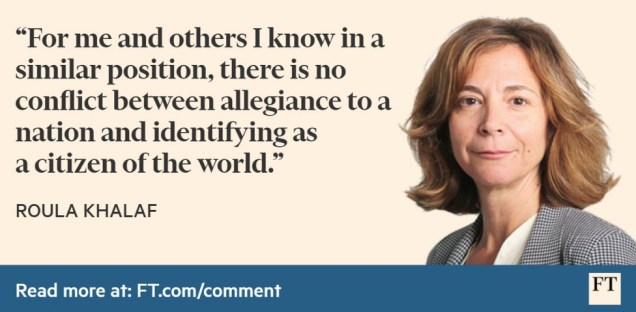
There’s Nothing Virtuous About Being a Rootless ‘Citizen Of The World’

citizen-of-the-world-roula-khalaf
Someone give that woman a medal

Most self-described citizens of the world are actually no such thing. They might enjoy the company of very similar people in increasingly similar global cities, but they probably couldn’t think of a single thing to say to somebody of different socio-economic status from a smaller town twenty miles down the road

Pete North explains perhaps better than anyone exactly why those people who style themselves as liberal “citizens of the world” are often no such thing – neither tremendously liberal, nor engaged citizens of anywhere, in any meaningful respect.

North writes:

In the end there is nothing especially virtuous about people who are well travelled and outward looking. A society needs all stripes to function. We need people to work the routine jobs and then we need a fluid workforce not tied down with responsibilities. Moreover, having dealt with more well pampered HR people than a person ever should, one thing I have noticed is that travel does not necessarily broaden the mind.

If you take an incurious person and lavish travel upon them you are wasting your money. Some of the most shallow, snobby and fatuous people I know would consider themselves liberal citizens of the world. Such people have no concept of what it is to be building or maintaining something with a long term plan. They latch on to the fashionable and socially convenient worldview that the EU is the manifestation of liberal values but it little more than virtue signalling.

And develops his argument:

What I find is that the broader your horizons, the harder it is to fit in wherever you go, and so there remains a polarisation between the settled and the travelled. It is then no surprise that there is an obvious demographic divide and opinion is split between the ages.

In this, the remain side of the Brexit debate seem keen to pour over these demographic studies to pathologise the leave vote, and consequently delegitimise it, as though you need to be of a particular set for your opinion to hold any worth. Democracy is lost on such people. The whole point of democracy is one person; one vote, where we take a sample of opinion and move together on the basis of compromise.

In something as binary as EU membership though there is only winner takes all. There is no third option on the ballot so we move with the majoritarian view which is to leave. For whatever reasons they voted for, they did so in accordance with their own views based on their own choices. Their worldviews are formed by what they see and hear in the media, but also in the street and in the workplace. They are the best judges of what is important to them. To suggest that choosing a more conservative lifestyle means you are not qualified to make such an estimation is to invite the very sentiment behind the leave vote.

What these people know better than anyone is that the frivolous and rootless people telling them how to vote are no better than anybody. I imagine the working classes would like nothing more than to live a more adventurous life but they don’t because they can’t afford it. It’s then a bit rich to tell them that the EU brings them freedom of movement and prosperity.

Earlier this year Theresa May said “If you believe you are a citizen of the world, you’re a citizen of nowhere. You don’t understand what citizenship means”. I smiled when I heard that. Nothing quite so succinctly demolishes the flimsy worldview that believing in the borderless homogenised EU, along with all the pompous garb that goes with it, is somehow enlightenment. May recognises that being a citizen is more than holding outwardly liberal views. It means making a contribution – to be part of something.

It takes no particular talent to drift through life going place to place – and in so doing all you’re likely to meet is others who have made the same choices or enjoy an extraordinary privilege. Far from broadening the mind it merely reinforces a particular mindset which is never exposed to the values of the settled community. It’s why self-styled “citizens of the world” have no self-awareness and do not for a moment appreciate just how naff they sound to everybody else.

In my experience, self-described citizens of the world have tended to describe their outlook in terms of what they get from the bargain rather than what they contribute to the equation. They call themselves citizens if the world because being so affords them opportunities and privileges – the chance to travel, network and do business. Very few people speak of being citizens of the world because of what they give back in terms of charity, cultural richness or human knowledge, yet all of the people that I would consider to be true citizens of the world – people like Leonard Bernstein or Ernest Hemingway – fall into this latter, rarer category.

What does it really mean to be a modern day “citizen of the world”, anyway, besides having a determinedly self-regarding outlook? Most of those who claim the title – either members of the ruling class or young hipsters whining that their futures and European identities have been somehow ripped away from them – are from the big cities, London most prominently. But to a large extent, many world cities are so alike in culture that one can negotiate and skip between them fairly easily,  even with a language barrier.

London has Starbucks, museums, galleries, bars and hipsters. So do Paris, Berlin, Copenhagen, Rome, Warsaw, Manchester, and everywhere else in Europe. In our interconnected world, large global cities are if not interchangeable then at least often share a common culture and vibe.

So you can successfully get smashed in Lisbon, Dublin, Stockholm and Munich? Congratulations, Mr. Citizen of the World. What do you want, a medal? Now go try to strike up a conversation with someone from your own country but from a different social class or region. Try going for a night out in Harlow or Wolverhampton or Preston. Your non-prescription hipster spectacles and quirky denim dungarees might buy you immediate entry to the trendy coffee shops of Amsterdam or the bars of Barcelona, but they’ll get you nowhere in Stoke-on-Trent.

And increasingly this is what it comes down to. We have a broad class of people with access to (and the desire to be part of) this emerging global tribe based in the top cities, and a class of people either cut off from this world or with little desire to participate in it. Now, we should certainly use economic policy to lift those who want to live more global lives into a position where they can do so, and avoid the urge to persecute or condescend to those who do not. But in general, we could all do with a bit less smugness and sanctimony from the Citizen of Starbucks Brigade.

For a start, the vast, vast majority of these people are such poor citizens of their own countries that they would feel adrift and culture-shocked, as though in a foreign land, if you lifted them from their home city and moved them to a smaller town thirty miles down the road. This is not some elite band of super-enlightened, non-judgmental, globally-minded, culturally-aware aesthetes, eager to experience new things. This is a pampered, cosseted tribe of relatively well-off millennials, many of whom are in thrall to the divisive Cult of Social Justice and Identity Politics, who barely understand their own compatriots yet arrogantly believe they are ready to be unleashed upon the world.

There is nothing particularly noble or praiseworthy about overcoming a language barrier to work and make friends with other people just like you who happen to live in other countries – which describes the vast majority of those people now tearfully painting the EU flag on their cheeks at anti-Brexit demonstrations and angrily declaring themselves “citizens of the world”.

Want to do something more challenging and actually worthy of praise? Try earning a reputation as somebody with friendships that span ages, social classes and other demographic indicators. Try living up to the ideal set by Rudyard Kipling:

If you can talk with crowds and keep your virtue,

Or walk with Kings—nor lose the common touch

And if you do so, you might not necessarily become a Man, my son. But at least you won’t be just another insufferable, identikit, cookie-cutter individual who conspicuously supports the European Union – despite barely comprehending what it really is – purely as a means of signalling your virtue to your insufferable, identikit, cookie-cutter fellow citizens of the world.

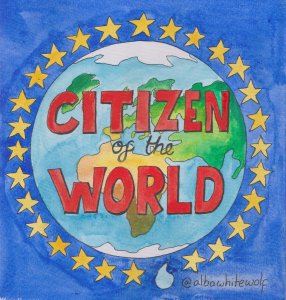
citizen-of-the-world-alba-white-wolf

Bottom Image: albawhitewolf

Support Semi-Partisan Politics with a one-time or recurring donation:

Agree with this article? Violently disagree? Scroll down to leave a comment.

Follow Semi-Partisan Politics on TwitterFacebook and Medium.