Britain Should Not Have To Sacrifice Our Democracy In The Name Of Franco-German Reconciliation

Francois Hollande - Angela Merkel - France - Germany - Reconciliation - EU Referendum

No, the EU did not “keep the peace” in Europe. And Britain should not be expected to sacrifice our own democracy in the name of Franco-German reconciliation

Continuing the apocalyptic hysteria now emanating from the intellectually bankrupt pro-EU Remainers, Jonathan Freedland has a particularly offensive piece in the Guardian, comparing Brexit to the election of Donald Trump as potential calamities on a similar scale before declaring that he would sooner see a President Trump than a newly independent Britain.

Freedland phrases his question:

What if the devil came to visit you in the dead of night? What if, dressed in a fine suit, his tail and pitchfork artfully concealed, Lucifer himself offered you a deal? Knowing the anxiety that was keeping you – a good, progressive type – up at night, he promised that he would grant you one, but only one, of your two deepest current wishes: you could either be sure that Donald Trump would lose the US presidential election or you could be guaranteed that Britain would vote to stay in the European Union. You could have one or the other, but not both. Which would you choose?

Because, of course, Guardian readers are saintly and virtuous while anybody with conservative instincts is intrinsically disordered in some way.

Freedland goes on to explain why he chooses President Trump over Brexit:

But the future viability of the UK is not the reason I’d be tempted to use up my one devilish wish to prevent Brexit. Nor is it the near-certain economic gloom that will befall this country, an outcome so obvious when you take a step back and consider any country voluntarily giving up its right to trade on advantageous terms with a market of 500 million customers.

No, the spectre that would haunt me as Satan drummed his fingers, waiting for my decision, would be much more elemental. It is the fear that the European Union, already battered by the eurozone crisis, simply could not withstand the departure of one of its “big three” members. We would not be tugging at a mere thread but yanking out a guy rope: the EU would collapse – maybe not straightaway, but eventually.

[..] Why should that bother us? We’d be well out of it by then. But remember the history of this continent. The story of Europe is the story of near-constant war and bloodshed. The 100 years war, the 30 years war, the Spanish wars, the Franco-Prussian wars, the two world wars of the last century: this is what the nations of Europe do to one another – unless they are held together in an arrangement that obliges them to settle their differences around a Brussels conference table, where the most mortal danger is tedium and late-night halitosis.

This is what the European project is about. Not just goods and services and trade and jobs, important as all those things are, and crazy as we would be to jeopardise them. But about life and limb. And make no mistake: if the EU’s 27 member states become Europe’s 27 warring nations, we will not be safely detached, serenely distant across the Channel. We will be drawn in, as we always have been.

In other words, Jonathan Freedland seriously believes – or at least is willingly to publicly say – that peace in Europe has nothing to do with economic growth, nothing to do with the atomic age and Mutual Assured Destruction, nothing to do with NATO or the Marshall Plan and nothing to do with the fact that economically advanced, liberal democracies just don’t tend to declare war on one another. No, in Freedland World, the only thing preventing Europe from instantly reverting back to 1914 is the grand projet by which our troublesome nation states are slowly being dissolved once and for all.

Freedland concludes:

It takes an extraordinary confidence to look at the last millennium of European history and gamble that the 70 years of peace that have held since 1945 – an exceptional, aberrational interlude – have had nothing to do with the existence of the European project. Do we really think it’s a coincidence that no two EU member states have ever fought each other? Do we want to roll the dice to find out? Do we feel that lucky?

What piffle. Don’t seek the restoration of nation state democracy and the repatriation of powers gradually frittered away to a largely unaccountable supranational government of Europe, because to do so might unleash a time warp taking us all back to 1914. Is this really what the pro-EU die-hards are now reduced to?

Pete North is having none of it:

Oh really? You don’t think that the peace came from the desire of the peoples to create the peace? Instead it had to be enforced by a sovereignty-confiscating artificial entity? Or could it be that the second world war era was not really concluded until the fall of the Berlin Wall?

Up to that point the peace was held in place by fear of mutually assured destruction. Nobody wanted to break the uneasy stalemate because of the lethal consequences it would unleash. I think it safe to say the EEC had precisely zero influence in maintaining or building the peace.

He says “let Britain remain, to prevent the 21st century being as drenched in blood and sorrow” but this really rather ignores the reality that peaceful democracies as a rule do not go to war with each other, and it is unlikely we will be fighting over those resources which the EU pooled. I don’t see a war over coal and steel, do you?

Moreover, if the peoples of Europe are prevented from influencing the laws they must live by without the possibility of reform or repeal, what do you suppose is going to happen? Are you saying that a strong supranational authority will maintain the peace by enforcing it? How is it going to do that exactly? And what sort of peace is that when it is an authority stifling a democratic correction? Tyranny that’s what it is. Peace at the barrel of a gun.

Everywhere we look in Europe we see stresses and strains with ever more resentment as the EU is caught up in its own institutional paralysis, failing to adequately respond to the many emergencies it has a hand in creating. This leads to increasingly unilateral action and the rise of the far right everywhere. That doesn’t end well in Europe does it? And there are of course two other supranational projects in Europe in the last century. Yugoslavia and the USSR. Remind me how well that worked out.

I agree wholeheartedly.

Jonathan Freedland seems to be suggesting that regardless of the economic question, Britain should willingly sacrifice her own democracy and right to self-determination in order to help preserve an apparently fractious peace in Europe. He is arguing that the inability of the British people to exercise meaningful control over those who lead us is a small price worth paying in this effort. He is, effectively, saying that democracy has little value.

In Freedland World, Britain should sacrifice her democracy happily and willingly to reduce even by a minuscule fraction the future possibility of France and Germany going at each other again. It’s self evident, apparently.

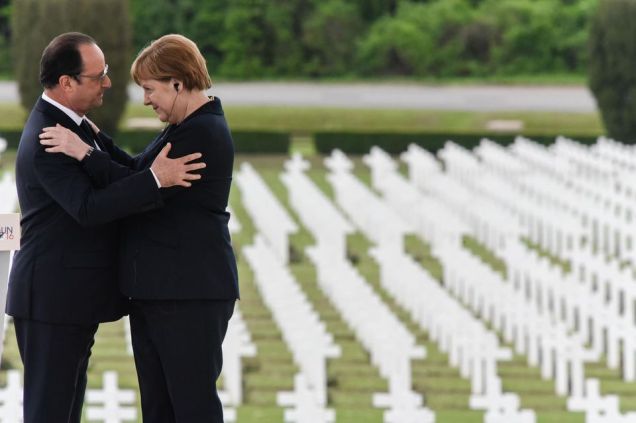
I’m sorry, but no. Any petty grudges or historic rivalries remaining in Europe are not a sufficiently good reason for me to throw away my right to live in a democracy. I’m glad that Francois Hollande and Angela Merkel shared that special moment together at the Verdun centenary memorial where they held hands, gazed into each other’s eyes and “forgave” each other for past national sins. Good for them. Still doesn’t trump our right to help elect the people who make the key domestic, trade and foreign policy decisions impacting our lives, and to kick them out of office if we disapprove of the job they are doing.

Every day that passes reveals in a new light the sheer disdain in which the pro-EU British Left hold the very idea of democracy. If they are not warning us portentously that returning power to Westminster might result in an elected British government doing things that it was elected to do (pass the smelling salts!) they are now suggesting that democracy is a mere trifle, something with which we should be happy to part in order to prevent other third parties from behaving in a self-destructive way.

I’m not having it. And the turning opinion polls suggest that the British people as a whole aren’t having it either – that in actual fact we like the idea of democracy, value it rather more highly than our “moral superiors” in the Guardian and resent the establishment’s coordinated attempt at scaring us into dropping our demands for self-determination.

And at some point after the EU referendum, whichever way it goes, the Jonathan Freedlands of this world (and the pro-EU British Left in general) will need to explain, account and hopefully atone for coming down so unapologetically on the wrong side of democracy.

 

European Union - United Kingdom - Britain - Flags

Top Image: Liberation

Agree with this article? Violently disagree? Scroll down to leave a comment.

Follow Semi-Partisan Politics on TwitterFacebook and Medium.

Peak Guardian: Mocking The British Public For Holding Street Parties To Mark The Queen’s 90th Birthday

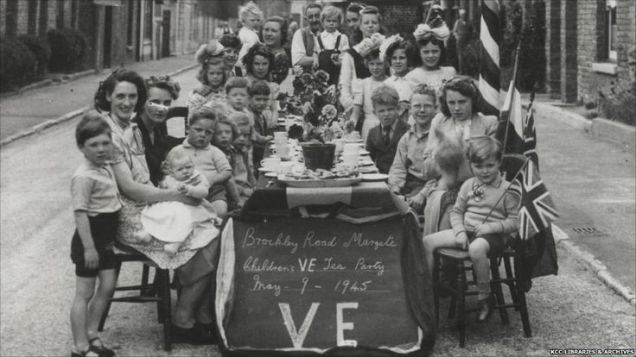
VE Day Street Party
Sickening, apparently

The Guardian’s lonely struggle against all of the things which unite us as a community and country finds a new source of virtue-signalling outrage

Today’s dose of Peak Guardian comes courtesy of Dawn Foster, who finds herself consumed with bitterness and resentment that many people will voluntarily choose to celebrate the Queen’s birthday this weekend – and in some cases commit the unforgivable crime of holding a street party to mark the occasion.

In a bitter tirade against the great British street party, nearly rivalling the sneering tone of the Guardian’s art critic Jonathan Jones (who castigated the Tower of London poppy exhibition as a tacky “UKIP-style” memorial to the fallen of the First World War), Foster seethes:

Friends of mine who live in areas where street parties are in the works have, without exception, reported that the people responsible are the perennially furious residents who spend most of their lives in a rage about parking. Shifting their attention from the contentious temporary ownership of asphalt, they have decided the neighbourhood needs to commemorate the birthday of a 90-year-old woman none of the residents have met.

The party will follow the usual template: tea, cupcakes, flags upon flags upon flags, wartime slogans and songs, and the performance of a very specific type of Englishness – the Englishness of Fry and Laurie rather than This Is England. One harks back to the empire while the other attempts social realism.

This kind of middle-class nationalism, rooted in a confected history of postwar austerity, has been resurgent in the years since the last royal wedding. The ubiquity of the Keep Calm and Carry On poster is the most obvious symbol. As the writer Owen Hatherley puts it, the cultish signifier points to the “enduring pretension of an extremely rich (if shoddy and dilapidated) country, the sadomasochistic Toryism imposed by the coalition government of 2010–15, and its presentation of austerity in a manner so brutal and moralistic that it almost seemed to luxuriate in its own parsimony”.

Nationalism now has two faces: that of the far right, signified by a certain sort of caricature of a football supporter and England flags, and now the middle-class right, posh enough to wear chinos while raising a glass to “her maj” in front of a Union Jack. The two aren’t entirely separate: the former is openly racist, the latter a frequent apologist for the British empire.

Can these perennially sour people never just take something at face value? Must the good-natured efforts of ordinary people to try to reconnect with that lost sense of community spirit embodied in the VE Day and Jubilee street party celebrations be so carelessly dismissed by sneering Guardian journalists as a corrosive form of middle class oppression?

Foster continues:

But this isn’t harmless. All the warm Pimms and cupcakes with corgi icing feed into a narrative that says the empire was a force for good, and its destruction is to be mourned. When people refer to the “blitz spirit” and say we should heed lessons from how Britain used to be, they usually mean two things: when it comes to austerity, suck it up; and Britain was better when it more resembled a monoculture.

It’s possible to be a good neighbour without indulging in these performative pastiches of community. Speaking to people on your street should be an everyday occurrence, not prompted only by an unreciprocated love for the unelected Queen. Enforced pageantry with nationalistic undertones and a forelock-tugging subservience towards someone who has succeeded in surviving nine decades mainly because she is fantastically wealthy is enough to make many people lock their doors, close the curtains and pretend they’ve fled for the weekend.

Foster uses the word “nationalism” in her piece, but we all know that it is garden variety patriotism in her cross-hairs. And apparently, in Foster’s alternate universe, only two kinds of patriots exist – the middle class ones that she deplores, and working class “far right” football supporters whom she fears and openly slanders as racist.

People wonder why the Labour Party lost the 2015 election, and still fails to gain significant traction despite facing a rootless Conservative government. Well, this is why. Because whole swathes of the Left have been captured by what Brendan O’Neill described as the middle class clerisy, who openly loathe the working classes and treat their interests, hopes, fears and dreams with derision. And the voters are perceptive – they can tell when they are being mocked or looked down on.

The British Left is presently dominated by people who think that Britain is a weak, insignificant and unremarkable place, a country whose past flaws overshadow any positive legacy or current contribution which we might give the world. Ask them to participate in an event praising their country and the middle class clerisy will chuckle nervously and exchange knowing glances with one another. The words stick in their throats.

In Dawn Foster’s mind, it is simply inconceivable that a working class person might be moved to celebrate the birthday of the person who (besides our families) has been the one constant in all of our lives. She simply cannot fathom why anyone other than upper middle class chino wearers or heavily tattooed EDL types might want to mark the Queen’s birthday. But that says far more about Foster than it does about those who will be celebrating this weekend.

This isn’t just the Guardian being insufferable, there is a real issue here. What will be left to bind us to our history, to our ancestors, if the Left continue to insist on heaping scorn on so harmless a thing as the humble street party? And what will bind us contemporary Britons to each other when the Left sees no value in inculcating a healthy sense of patriotism and a common national identity?

Religion and the Church of England no longer play the central role in our national life that they once did. Many in the Guardian are happy about that. But what new societal glue will replace it? We don’t yet know. This matters immensely when it comes to assimilating new immigrants in the kind of numbers that Britain has experienced in recent years, or when we need disaffected Muslim youths to grasp on to a positive shared vision of Britain rather than steal away to join ISIS (in mental allegiance, if not always in body). If we insist on tearing down the customs and rituals which define our culture because hectoring moralisers like Dawn Foster have decided that they are passé, what is left to bind us together?

The “blitz spirit” which Foster decries is something of which Britons should remain proud. And the fact that Foster chooses to compare the “austerity” of today (basically slightly less spending growth than the previous Labour government envisaged before 2010) to the mortal danger of the Blitz only goes to show just how hysterical the British Left have become in their anti-Tory fervour.

But more than that, the blitz spirit shames the Left because it reveals how the pursuit of left-wing policies has, in some ways, changed our country for the worse. An overly expansive welfare state, ratcheted upward in the decades since the Second World War and only partially restrained by Thatcher, has left us dependent on government rather than one another. This is good, to a degree – welfare should certainly not depend on arbitrary charity. But such is the scope of today’s hyperactive state (David Cameron won the 2015 general election on a creepy manifesto “plan for every stage of your life”) that the need for neighbours, communities and even families is being steadily undermined.

Similarly, the previous Labour government’s encouraging of record inward migration and obsession with the virtues of multiculturalism has led to an increasingly atomised and segregated society, preventing the melting pot from working and in some cases now actively feeding extremist and terrorist behaviour.

Amid all of this change, the quintessential British street party stands as testament to a time when no matter what other identities and affiliations a person may have held, one was expected (and agreed without a second thought) to be British first and foremost – a time when our national identity was a source of pride to people of all political viewpoints, not an embarrassment to the Left or an exclusive toy of the far Right.

Fast forward to 2016 and any event, celebration or ritual which calls to mind Britain’s history, heritage and achievements is immediately suspicious to swathes of the modern Left because it encourages pride where the middle class clerisy feel there should only be shame and embarrassment. Any event which suggests that we should look to our families or communities rather than government for friendship, advice, recreation, health and solidarity will be ruthlessly attacked, just as Dawn Foster quietly seethes when neighbours get together of their own volition in a civic act of positive patriotism.

This blog has long argued that the British Left will not taste power again until they learn to love (or at least accept) the country for what it is, until they cease being so openly contemptuous or downright hostile toward the smallest act of public patriotism. Remarkably, they seem to have gone backwards in six years, and are now even further away from this objective than they were in 2010.

One year since their second general election defeat and the critical lesson has clearly still not been learned. The vast majority of the Labour Party are actively advocating for a Remain vote in the EU referendum, in a campaign noted for its pessimistic, miserabilist view of Britain and unconcealed contempt for those (including many working class people) who yearn for Brexit. Meanwhile, the house journals of the middle class Left continue to pump out their unambitious, defeatist view of Britain, and are not above scoring blatant own goals – like tearing into the British public for daring to celebrate the Queen’s birthday.

How can the Left ever hope to lead this country again when they so clearly disdain it in every way?


Queens 90th birthday celebration

Agree with this article? Violently disagree? Scroll down to leave a comment.

Follow Semi-Partisan Politics on TwitterFacebook and Medium.

Worried Remainers Are Now Desperately Attacking The Norway Option For A Reason

European Union - EEA - EFTA

By openly slandering the EFTA/EEA “Norway Option” for achieving Brexit in the event of a Leave vote, the Remain campaign and their allies in the media show that they are terrified of this sensible approach

The Guardian is, of course, desperate for Britain to remain in the European Union. The vast majority of those who read or write for the paper simply cannot conceive why tiny, pathetic, insignificant Britain would want to walk away from an EU which is basically all about puppies, daisies, hand-holding, Saving The Earth and “co-operation”.

As such, the Guardian is desperate to trash any and all Brexit plans which have a whiff of viability and sense about them – and now they are gunning for the interim EFTA/EEA or “Norway” option, just as it starts to be seized upon by an increasing number of influencers and ordinary people tired by the amateur, haphazard campaigning of Vote Leave.

The Guardian’s strategy – to slander the interim EFTA/EEA option as some kind of betrayal of democracy, and to lump it together with other parliamentary tricks MPs might choose to spitefully play in the event of a Leave vote.

The article begins portentously:

Pro-European MPs and some government sources believe it may be possible to use the Commons to mount a guerilla campaign to minimise the impact of a referendum vote to quit the European Union – or even to reverse the decision if the negotiations with the EU on the UK’s exit terms produce a disastrous deal.

The government is not willing to discuss its reaction in the event of a vote to leave since its sole goal at this stage in the campaign is to emphasise the risk of such a vote by saying that the decision would be irreversible and would likely be met with a brutal response from Britain’s European partners, primarily the French.

But privately ministers have pointed out there is a large cross-party Commons majority for the UK’s continued membership of the EU, and it could be deployed once the hugely complex, detailed and contentious legislation necessary to leave the EU started to pass through parliament.

All of which would be shocking if the Guardian had actually uncovered evidence of a plot by MPs to nullify or ignore the result of the referendum. But this isn’t what they mean at all. What they mean is the following:

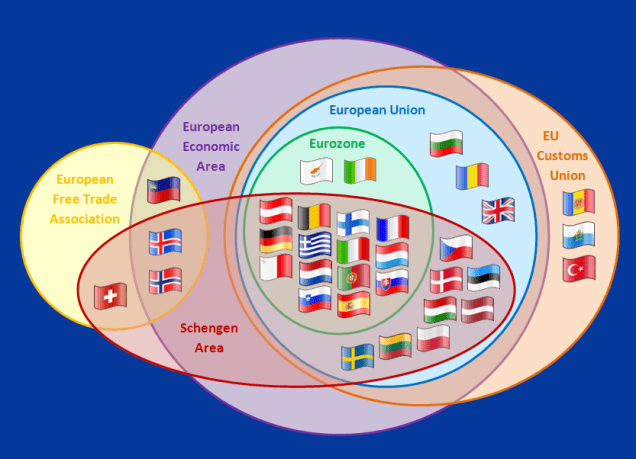
The first target is likely to be whether the UK could remain in the single market, while leaving the EU – so joining the European Economic Area, of which the non-EU countries Norway, Lichtenstein and Iceland are currently members. The single market guarantees the free movement of people, goods and services inside the EU.

The Guardian is trying to portray an eminently sensible – in fact, by far the most sensible – plan to leave the political construct called the European Union as some kind of grotesque subversion of the people’s will – which is pretty rich in itself, considering the contempt bordering on hatred felt by most Guardianistas toward those sympathetic to Brexit.

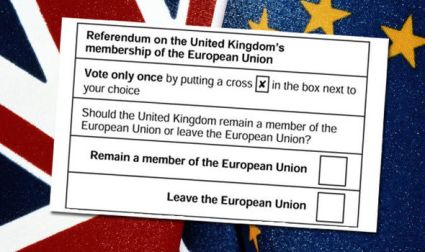
But let’s remind ourselves of the actual question on the ballot paper on 23 June:

EU Referendum Ballot Paper

That’s right – there is nothing on the paper whatsoever about the European Economic Area or “single market”. A vote to leave the EU is a vote for Britain to do exactly that – to leave an explicitly political, ever-tightening union of European countries all embarked on a journey to one day become a common state (as the EU’s founders and current leaders happily admit).

Many people are rightly now coming to the conclusion that the best way to achieve Brexit with the minimum of political and economic disruption is to exit to an “off the shelf” interim solution which already exists in the form of the EFTA/EEA membership enjoyed by Norway. This is why David Cameron has suddenly started talking about “a vote to leave the single market” over the past few days – it is a tacit admission that if we vote to leave the EU but remain in the EEA, every single one of the Remain campaign’s arguments are instantly negated.

Hence the ardently Remain-supporting Guardian’s desire to do everything possible to slander the interim EFTA/EEA option, painting it as some kind of unconscionable scam when in fact it is an utterly pragmatic and realistic way of leaving the European Union while completely avoiding all of the apocalyptic economic scenarios which the Remain camp love to throw around.

And now, other newspapers are joining in. From the Times’ daily Red Box email briefing:

The Times splashes on warnings that pro-Europe MPs will fight a rearguard battle to stop Britain leaving the single market even after a Brexit vote. With fewer than 200 of the 650 MPs in parliament in favour of leaving the EU, a series of votes could be staged to put pressure on the government to keep Britain inside the single market.

Undemocratic? Of course. Plausible? Absolutely.

Except, as we have seen, it is not “undemocratic” at all. The British people are being asked whether or not they wish to leave the European Union. By gosh, we spent long enough obsessing over the wording of the question. And Brexit to a position where we continue to maintain our access to the single market in the short to medium term while planning more beneficial arrangements for the future is well within the scope of a Leave vote.

It is a surprise to see the Times engaged in the same grubby dark arts as the Guardian in this case. And even more surprising to see the Daily Mail follow suit:

Pro-Remain MPs are plotting to ignore the will of the people by voting to keep Britain in the single market – even if the referendum results in a Brexit victory.

This would mean continued freedom of movement and would ignore public concern about mass migration.

Anti-Brexit MPs on all benches – Tory, Labour, Lib Dem and SNP – could use their overwhelming majority in the Commons to force a Norway-style relationship with the EU.

Out campaigners warned last night that such a move would spark a ‘constitutional crisis’ as it would counter the spirit of a pro-Brexit referendum.

But MPs on the Remain side said such a move – dubbed guerrilla tactics by one source – would be justified because the Leave side have not set out the nature of Britain’s trading relationship with the EU if we left.

Again, we see this short-termist, Brexit-as-an-event rather than the more realistic Brexit-as-a-process viewpoint needlessly closing the mind of the Daily Mail to an eminently pragmatic option.

Certainly immigration is a key issue in the debate – and indeed as a non-EU EEA country, Britain would have a more effective emergency brake than that secured by David Cameron in his pathetic renegotiation. But more importantly, once safely and securely outside of the EU’s political union, Britain could begin planning, negotiating and building support for a better longer-term solution. And we would have our democracy back, to boot.

The “out campaigners” mentioned by the Daily Mail as calling the Norway Option the catalyst for a constitutional crisis are no doubt the same Vote Leave luvvies and insiders who made the calamitous, strategic error of going into the referendum campaign without a Brexit plan of their own, drawing a huge amount of damaging fire from the Remain campaign in the process. They are clearly desperate to slander and diminish any plan which is not cooked up in their own laboratory, perhaps under the auspices of their resident mad scientist Patrick Minford.

The Guardian article continues, quoting Sam Bowman of the ASI:

Sam Bowman, the executive director of the rightwing thinktank the Adam Smith Institute, which has advocated the UK leaving the EU in stages, welcomed the possible intervention in the Commons.. He said: “This is a referendum on EU membership, not the single market, and MPs would be right to keep us in the single market if we vote to leave the EU. Keeping Britain in the single market would take the main economic risks out of leaving the EU, avoiding the doomsday scenarios outlined by the Treasury and others.

“The EEA option outlined in a recent Adam Smith Institute report would give the UK economic security while allowing it to leave the EU. In many respects it gives us the best of both worlds – indeed the remain side has emphasised little else of value about the EU during the campaign apart from the single market.

“The EU is not a prison, but the remain camp risks portraying it as such. It is possible to leave without risking serious economic harm, and staying in the single market as a step towards a long-term settlement would give the UK that safe route out.”

While it is heartening to see the Guardian suddenly discover Roland Smith’s paper “The Liberal Case for Leave” (and the comprehensive Flexcit plan on which it is based), it is entirely unsurprising that they choose to portray it in a negative light, choosing to lump it together with what they accuse of being undemocratic ways of de facto remaining in the EU.

Some of the other acts of democratic and national self-sabotage mentioned by the Guardian as being mooted by government and MPs are indeed more concerning:

David Cameron has said in the event of a vote to leave, he would immediately and formally notify the EU of its intention to quit under article 50 of the Lisbon treaty, kickstarting a two-year negotiation that could only be extended beyond the two years by a unanimous vote of the EU member states.

But lawyers advising the expert UK parliamentary committees dealing with Europe say there is no legal obligation to notify the EU immediately.

Michael Gove, the justice secretary and prominent leave campaigner, said: “Logically, in the days after a vote to leave, the prime minister would discuss the way ahead with the cabinet and consult parliament before taking any significant step.”

He added: “It would not be in any nation’s interest artificially to accelerate the process and no responsible government would hit the start button on a two-year legal process without preparing appropriately. Nor would it be in anyone’s interest to hurry parliamentary processes. We can set the pace.”

There is no need to push the button on Article 50 the day after the referendum in the event of a Leave vote. In fact, such a decision would be a spiteful and churlish act committed by an irresponsible government willing to damage the long-term interest of the country as “pay back” to the people for having disregarded their advice to vote Remain.

Similarly with the idea of a counter-offer from the EU followed by a second referendum in the event of a Leave vote, raising the possibility that Britain might end up in a kind of democratic limbo, having voted to leave the EU but rejected the subsequent terms of departure.

Messing around with either the invocation of Article 50 or the sneaky addition of a second referendum would indeed be undemocratic, or at least a wild act of constitutional vandalism. Adopting the only comprehensive Brexit plan in existence – and as we learned on Newsnight yesterday evening, the plan being actively considered by civil servants, who must obey the laws of reality, not partisan allegiance – does not fall into this category.

Failing to give the UKIP-element of the Leave campaign everything they want wrapped up with a pretty bow on 24 June is not evidence of some sinister plot or an attempt to subvert a democratically made decision to leave the EU. On the contrary, pursuing the Norway Option is the responsible way forward, the best means of securing precisely what the British people voted for – independence from the Brussels political union, and the freedom to make all subsequent decisions democratically for ourselves, including on immigration (within the constraints of realpolitik).

(And for newspapers which usually treat Brexit supporters with dripping contempt verging on hatred to suddenly care whether the Norway Option goes against the “spirit” of a Brexit vote – it doesn’t – is disingenuous at best. A child could see through their attempt at emotional manipulation.)

So we should beware the motivations of those campaigners and newspapers who suggest otherwise. In seeking to tarnish the only comprehensive Brexit plan in existence (Flexcit / the Norway Option) such people clearly have an agenda – once which brings together unlikely allies like the Times and the Guardian, and which sees the Daily Mail also taking up arms for different reasons.

Thinking Brexiteers whose first priority is extricating Britain from the common European state being slowly but relentlessly assembled in Brussels should ask themselves why so many people – from the prime minister on downwards – are suddenly so desperate to conflate the single market with the European Union, and to trash the Norway Option.

Hint: it is because without being able to threaten all manner of apocalyptic scenarios in the event of Britain leaving the single market, the entire Remain campaign – in all its negative, pessimistic, fearmongering glory – utterly falls apart.

These people are desperate to halt the growing public awareness that it is possible to disengage from political and judicial union in a manner that is reasonable, non-hostile, pragmatic and politically feasible without the risk of economic disruption.

Because that might mean actually leaving the EU!


European Union - United Kingdom - Britain - Flags

Agree with this article? Violently disagree? Scroll down to leave a comment.

Follow Semi-Partisan Politics on TwitterFacebook and Medium.

The Guardian, The EU Referendum And Britain’s Entrenched Sense Of Inferiority

Obama Merkel Cameron Renzi Hollande - 3

A cake-filled misery-laden grey old island…

When does the Guardian become an enthusiastic, uncritical cheerleader for US foreign policy?

Why, when the US president jets in to lecture us all on the importance of voting to remain in their beloved European Union.

Meanwhile, we know exactly what the Guardian thinks about Britain from this giveaway paragraph in their article hailing Barack Obama’s arrival:

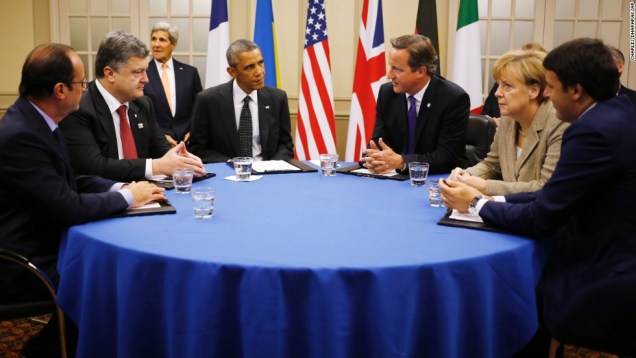
The importance of the UK as a key figure inside the EU club will be symbolically underscored when Obama again meets David Cameron, Angela Merkel, Mario Renzi and François Hollande in Hanover, Germany, on Monday to discuss Syria, Libya and the consequent migration crisis. The implicit message is that the UK outside the EU would not have been invited to such a high-level transatlantic conclave.

Oh gosh! How kind of Italy and France to allow Britain to take part in their Super Important Meeting with Germany and the United States. Of course, puny little Britain – the fifth largest world economy and pre-eminent European military power – would never normally be allowed to sit around the table with François Hollande and “Mario” Renzi, but for the fact that we are part of the same supra-national political union.

Is the Guardian serious? Sometimes it is hard to tell whether this dismal, miserablist attitude toward Britain is entirely genuine, or an attitude which is affected purely for the purposes of keeping our self-esteem just low enough that we don’t get ideas of national independence above our station.

The trouble, though, is that the Guardian is very much a thought leader in this area. Where the Guardian sighs, tuts and shakes its head at the hopeless prospects of puny, pathetic Britain, so many of its readers have been conditioned to automatically do the same. I’m frequently amazed by the number of conversations I have with otherwise intelligent, knowledgeable people who genuinely believe that Britain is a small and inconsequential nation.

It is almost as though someone distilled Britain’s despairing psyche when we were at our 1970s nadir into its purest, bleakest form, and then injected that dismal serum into half of today’s population. Once the infection takes hold, the feeble country that these National Inferiority Virus sufferers hallucinate bears absolutely no relation to the objective reality of modern Britain.

And these are the people who will be voting in the referendum on 23 June. These are the the pessimistic, resigned views which millions of people sympathetic to the Guardian’s position will carry with them into the polling booth. Citizens of a nuclear power, a P5 UN Security Council member, the world’s fifth largest economy and home to the financial and cultural capital city of the world, who nonetheless believe that it is only our membership of the EU which gives Britain’s prime minister the undeserved privilege of being in the same room as the leaders of Germany, France and Italy.

God help us.


European Union - United Kingdom - Britain - Flags

Top Image: CNN

Agree with this article? Violently disagree? Scroll down to leave a comment.

Follow Semi-Partisan Politics on TwitterFacebook and Medium.

Tales From The Safe Space, Part 4 – Guardian Article Or Satire?

Godfrey Elfwick - Gender - Identify as a carrot

Not The Onion

Just as Donald Trump’s presidential candidacy teeters on the line between brilliant satire and terrifying reality, so too does this Guardian-style headline from Godfrey Elfwick.

Stylistically correct in every respect, and steeped in the same self-obsessed, exhibitionist tone of Identity Politics as practised by Safe Space-dwellers everywhere, the mere fact that you can no longer dismiss Elfwick’s confected headline as satire without a second thought really says it all.

After all, if grown men can identify as six-year-old girls and teenage girls can identity as cats, what is to say that the 2020s will not be marked by the growth of the Vegetable Rights movement?

Notting Hill was very prescient.

And yes, sometimes our best weapon against this toxic Identity Politics culture is ridicule.


Safe Space Notice - 2

Agree with this article? Violently disagree? Scroll down to leave a comment.

Follow Semi-Partisan Politics on TwitterFacebook and Medium.