By most accounts, the SNP’s Mhairi Black – Britain’s youngest MP in several hundred years – gave a great and powerful maiden speech when she finally spoke during the Budget debate this week. And so it was, if you lower the bar for greatness so far that it encompasses earnest, occasionally witty, wide-eyed socialist babble.
Certainly many Labour MPs were enthusiastic, as the Guardian reported approvingly when the speech went viral:
In the anti-austerity speech where Black called herself “the only 20-year-old in the whole of the UK who the chancellor is prepared to help with housing” after the age limit imposed on housing benefit, she also called for a healing of relations with the Labour party.
“I have never been quiet in my assertion that it is the Labour party that left me, not the other way round,” she said in the speech where she also praised the lateLabour grandee Tony Benn. “I reach out a genuine hand of friendship that I can only hope will be taken. Ultimately people are needing a voice, people are needing help. Let’s give them it.”
Several Labour politicians seemed receptive to her call for cooperation. Praise for Black’s speech was tweeted and retweeted by Labour MPs including Tulip Siddiq, Diane Abbott and Sarah Champion, as well as Labour’s Madeleine Jennings, the parliamentary researcher for MP Stephen Kinnock.
This blog disagrees with almost everything that Mhairi Black believes in, but has no personal animosity toward the twenty-year-old parliamentarian. In many ways it is refreshing and long overdue for someone so young to be included in the makeup of parliament, especially at a time when government policy (and state largesse) so overwhelmingly favours older people, with their selfish attitudes and non-means tested benefits. It is only a pity that Mhairi Black doesn’t represent a serious political party but rather a group of zealous, moralising fantasists who would tear up a three hundred year old union in a fit of pique over ten years of Tory Lite rule. But so be it.
People of all political stripes sometimes say things they don’t mean, or come to regret, in the heat of passionate argument, either out of anger or just for dramatic effect.
Meanwhile, across the Atlantic, angry liberals threatened to move to Canada when George W. Bush was re-elected, while social conservatives – high on passion but lacking in international awareness – responded to the Supreme Court’s ruling legalising gay marriage by themselves threatening to move to Canada, that well-known bastion of homophobia and social conservatism.
So rhetorical hyperbole is not restricted to any one political party or any one type of outlook or worldview. But there is a certain type of political argument to which those on the political Left seem to resort far more often than their opponents on the Right.
When faced with electoral defeat and years in political opposition, those of a conservative mindset tend to lick their wounds for awhile and then set about the business of trying to re-acquire power and influence, however angrily or unsuccessfully. However, when those of a left-wing mindset are faced with rule by the other side, they are far more likely to view the situation as intolerable to the extent that even remaining part of the same country or political structure becomes undesirable.
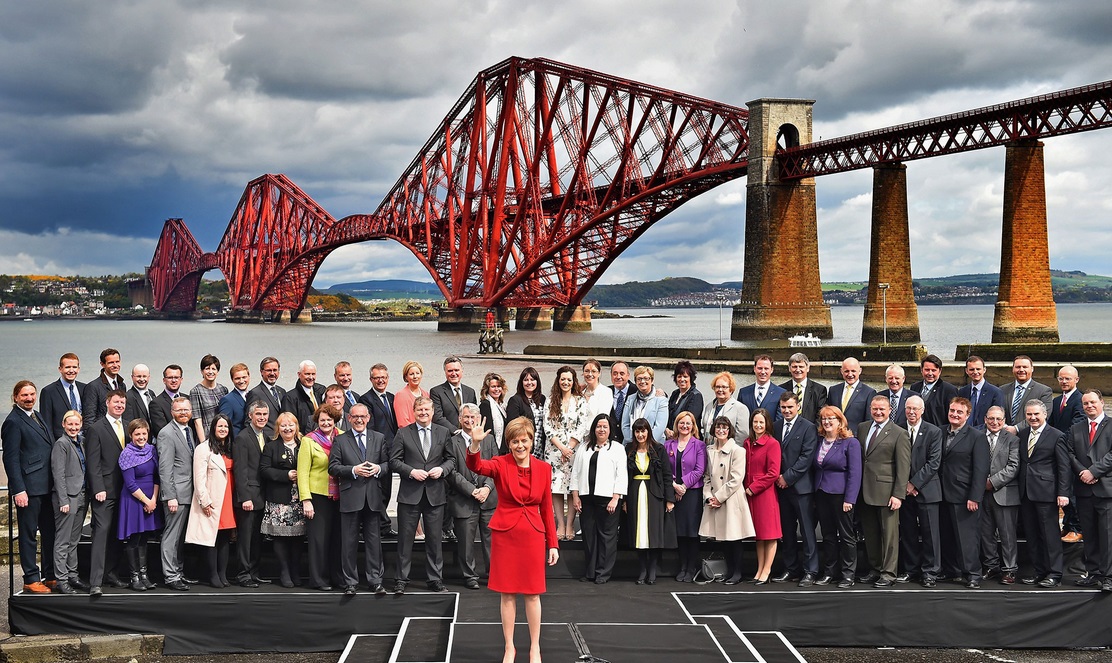
This is mostly hubris. The SNP will be sitting on the opposition benches, which means that they actually get to sit things out for the next five years, spectating rather than playing some kind of deep and meaningful role in government – that particular dream died the moment that Ed Miliband’s Labour Party self destructed north and south of the border.
But though the SNP landslide is largely thanks to irrational voting by Scotland – a collective hissy fit from a nation who increasingly consider themselves more enlightened and progressive than their southern neighbours, demanding higher government spending paid for by anyone but themselves – there will naturally be an impact on the way that Westminster operates.
In terms of accepting the new reality, this piece from Alex Massie in The Spectator is right on the money:
The referendum taught us that Scotland is a place beginning to dream bigger things; yesterday’s results confirmed that. The SNP’s victory is a reminder that trust is the most valuable commodity in politics. Because the SNP are trusted – rightly or not – to put Scotland’s interests first they are forgiven their sins, contradictions and inconsistencies. They are held – fairly or not – to a different standard than that applied to other parties. There is little point in whining about this; it is just the way it is.
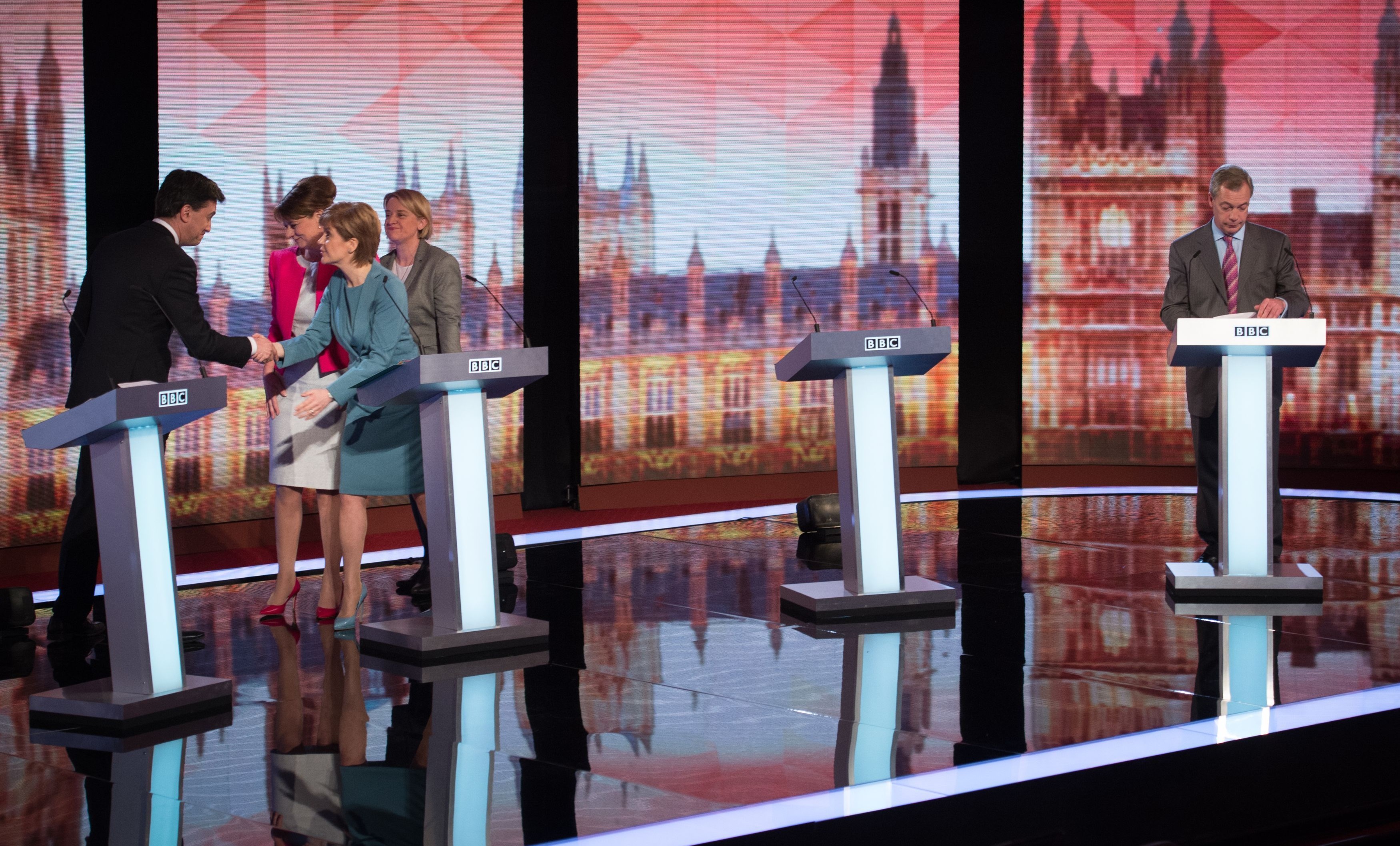
To watch the leaders of Labour, Plaid Cymru, the SNP and the Green Party plead with the audience – and each other – at last night’s BBC Election “Challengers” Debate, you would think that Britain faced the awful prospect of some fascist or totalitarian party seizing power on 8 May this year, thus requiring all decent people to put aside their differences and band together in solidarity against a visceral, urgent threat to our way of life.
But the hideous spectre conjured by Ed Miliband, Leanne Wood, Nicola Sturgeon and Natalie Bennett is not a latter-day Adolf Hitler or Joseph Stalin – or even a contemporary African tin-pot dictator. No, we are asked to believe that the mortal threat to Britain and her people comes in the pale, patrician form of David Cameron – who has already held the top job for five years without successfully summoning the apocalypse – perhaps propped up by the equally unthreatening Nigel Farage (Nigel being just the type of fearsome name that strikes terror into the heart of even the bravest soul).
The British left is used to preaching to the choir and percolating in its own intellectual laziness, having long ago purged from the bubble anyone who doesn’t reflexively Hate the Tories and abhor right-wing ideas. But today we witnessed Britain’s four left wing party leaders construct and imprison themselves in a bubble of their own making, right on the stage at Westminster Central Hall.
When the cornerstones of your argument are based on wishful thinking, whimsy and straight-up denial, they are quickly eroded in direct proportion to the level of attention and scrutiny they receive. And so it goes for Alex Salmond, his Scottish Nationalist Party and the rest of the pro-Scottish independence movement.
What started as a seemingly serious and passionate argument in favour of localism and self-determination has – with only the first stirrings of an intervention from serious business leaders and Westminster politicians – been revealed as an illogical and fundamentally unserious argument put forward by people who lacked either the courtesy or capacity to construct a real one.
Saltires, shortbread and scotch – an appealing combination but not a convincing basis for independence
Alan Cochrane, the Telegraph’s Scotland editor, sums it all up:
In the parallel universe inhabited by the First Minister of Scotland and his separatist supporters, their campaign to break up Britain is sailing towards victory. The reality, however, is somewhat different. On Sunday, José Manuel Barroso, the president of the European Commission, fired what was but the latest in a series of well-aimed torpedoes at the SNP’s attempt to win September’s referendum on Scottish independence.
And so it is, inside the SNP’s alternate reality. To look at Alex Salmond and the rest of the pro-independence group campaign, you would scarely notice that their argument has been comprehensively derailed or even encountered the slightest bit of turbulence. Aside from the now familiar petulant accusations of bullying or intimidation, they remain all smiles, convinced that the opposition of UK political parties to sharing the pound or of the EU to admitting an independent Scotland are minor obstacles that will quickly be overcome in the aftermath of a Yes vote.
Such is the power of denial.
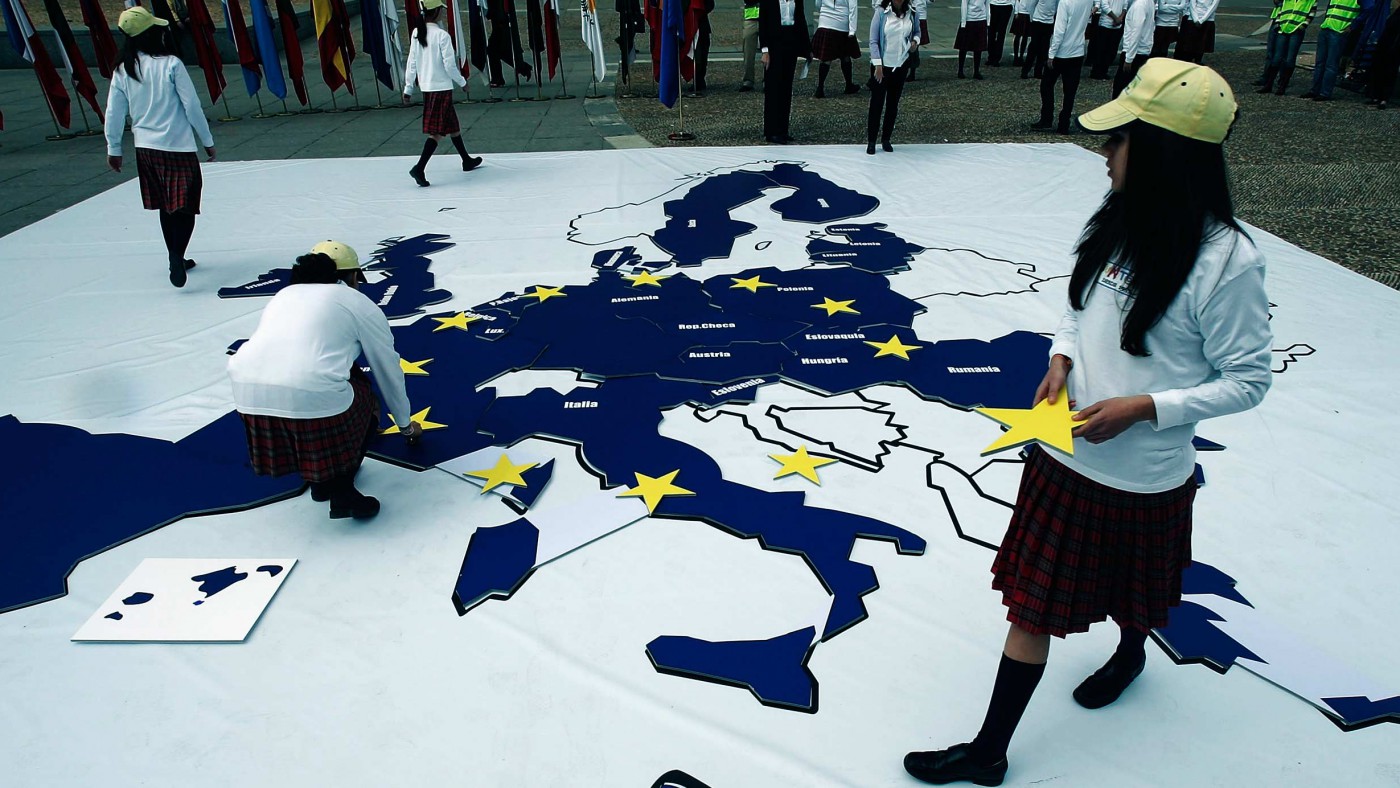
Salmond’s second-in-command, Deputy First Minister Nicola Sturgeon, is no better. Her response to indications that the European Union would look very dimly on the membership application of an independent Scotland? The assertion that to deny membership to the Scots would be ‘un-European’ – as though the EU were some kind of principled organisation that always dutifully followed its founding documents and operating guidelines to the letter.
She insisted the EU would not deny Scotland its right to be members of the EU since this would run counter to the principle of national self-determination – a founding principle of the EU.
Her remarks came after all three parties at Westminster said they would not allow an independent Scotland to remain in a currency union with the rest of the UK and the European commission president José Manuel Barroso said it would be difficult, if not impossible, for Scotland to join the European Union.
In pressing their ever-weakening case for separation from the United Kingdom, the nationalists are very good at putting words into the mouths of others – of course business leaders would demand that the UK government allow Scotland to continue using the pound, of course the European Union would stop everything that it’s doing to expedite Scottish accession – but ultimately find themselves being contradicted or slapped down nearly every time when those people ultimately speak for themselves.
It would be unrealistic to expect this denial to dissipate in the near future. Though the Saltires, shortbread and scotch whiskey postcard image of an independent Scotland endlessly promoted by Alex Salmond is increasingly being exposed as a farce, a tour-de-force in wishful thinking, intoxicating beliefs such as this are long-held and self-reinforcing, and do not vanish in a puff of smoke at their first exposure to reality.
But it must be disheartening for the nationalists that in response to firm UK positions on sharing the pound and strengthening EU rhetoric on Scottish accession, all Alex Salmond has in response is bluster and outrage. As Cochrane rightly notes:
But just as Mr Salmond dismissed [George Osborne and the shadow chancellor] for indulging in “bluff, bluster and bullying” over sterling, the best the nationalists could come up with yesterday in response to the head of the EU was that he was being “preposterous”.
Sound bites of this nature have become the stock-in-trade of the SNP leader, with his speech in Aberdeen yesterday littered with well-worn smart-Alex phrases about how those opposed to him had been indulging in, variously, “a destructive campaign” and were “undermining the democratic process”, “dictating from on high” and indulging in “caricatures”.
We can only expect to see more and more of this as the independence debate lurches toward its September conclusion. If Alex Salmond is not willing to articulate his Plan B, a detailed plan for how a newly independent Scotland would sustain itself and relate to the rest of the UK, to Europe and to the world – and all evidence thus far suggests that he is not able to do so – then playing the victim card is really the only option left open to him.
A pivot towards the argument/caricature of the plucky pro-independence Scotsman being bullied and browbeaten by the forces of British imperialism and big business would be entirely understandable in the waning days of the campaign, when the SNP high command finally acknowledges that all hope is lost. But to see this take place so early in the campaign is quite shocking. The nationalists can talk for Britain (or rather, for Scotland), but now they seem to be lost for words.
There are 211 days until the referendum on Scottish independence, and already it sounds as though the Yes campaign is giving voters a sneak preview of their post-defeat blame game. This is worrying for the nationalists, but should gladden the hearts of everyone who values the strength and integrity of our United Kingdom.





 Semi-Partisan Politics