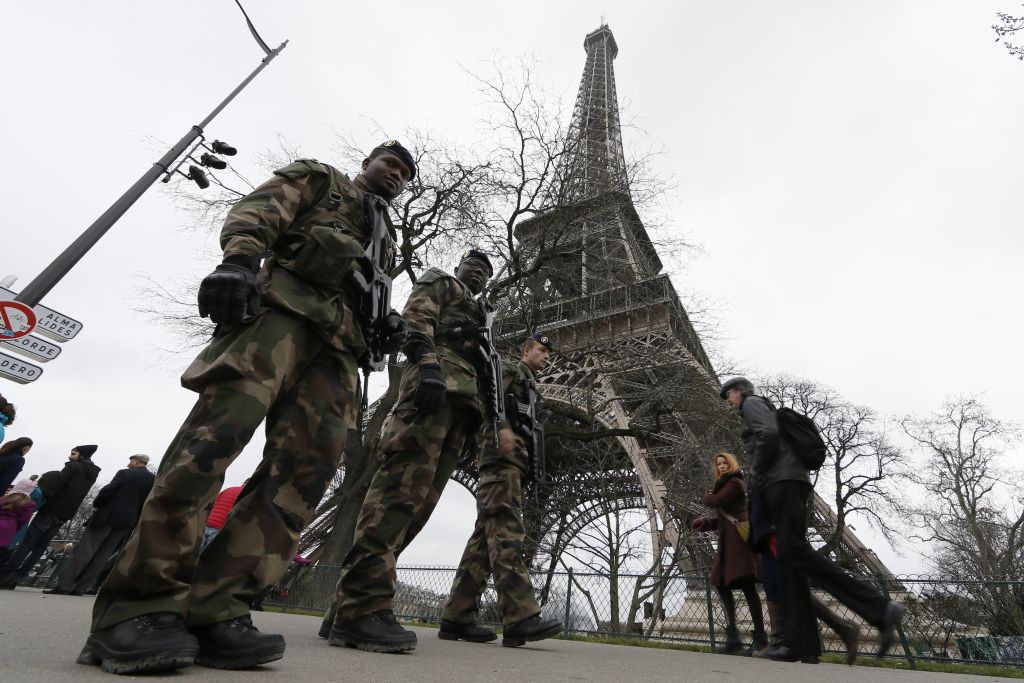
Paris Terror Attacks: More Government Surveillance Is Not The Answer

The surveillance state did not prevent Madrid, the 7/7 London bombings, Ottawa, Charlie Hebdo or the 13 November Paris attacks. Ramping it up yet further will not guarantee our safety either – but giving the intelligence services and their media apologists everything that they want will undoubtedly erode our freedom and change our way of life for the worse

In the early hours of 14 November, in the immediate aftermath of the appalling  and barbaric terrorist attacks in Paris, this blog wearily pointed out the well-worn sequence of events which would inevitably follow:

Day 0: Expressions of shock, sorrow, anger and solidarity

Day +1: Insistence that now is a time for mourning, not asking difficult questions about how or why the atrocities were committed

Day +1, later: The first difficult questions are asked, particularly of the government and security services

Day +2: The intelligence services dust off their wishlist of draconian new powers, and strongly hint that if only they already had these powers, the attack could have been avoided

Day +3: The official narrative is established – “we will defeat this terror by giving our intelligence services the tools they need, and making radical or hateful speech illegal”

So far, things are running like clockwork. We are certainly very good at the sorrow and solidarity phase of our response. Facebook timelines have been a sea of people updating their profile pictures to display the French tricolour (and, to a lesser extent, the inevitable virtue-signalling pedants inexplicably criticising them for doing so). Day +1 followed the normal pattern.

Day +2 is when we usually hear the first whispers of criticism about the intelligence services, when the identities of some of the attackers are revealed and it turns out that in many cases, they were operating under our noses undetected for some time. This is just starting to happen now – though it is being drowned out somewhat by criticism of Europe’s muddled borders and asylum policy, as it was reported that one of the attackers had a Syrian passport and entered Europe in Greece as a refugee.

And while it is slightly too early for the intelligence services themselves to come out and start agitating for new powers, this has not stopped some of their media cheerleaders from getting the ball rolling. We are officially still in that interregnum period after an attack when it is considered unseemly or inappropriate to have a real discussion about why the attacks happened, but there is an exception to this rule when it comes to demanding more surveillance powers for the state.

And climbing through this loophole today is Dan Hodges, writing before he thinks and letting his fear cloud any judgement or sense of proportion:

If we are serious in our expression of sympathy and solidarity, if we are serious about confronting those men who lined up the disabled patrons of the Bataclan and then gunned them down, then we must act. We must expand the same collective energy we utilise proclaiming “Je suis Paris” demanding concrete action. Or at least, not demanding inaction.

In the coming weeks the government’s surveillance bill will be passing through the Commons. If we truly believe in standing in solidarity with Paris, we must let it pass. We must demand it passes.

I’m surprised – I didn’t think we would see these calls for more unchecked government surveillance until the start of the new week. But hats off to Dan Hodges – by publicly freaking out in his newspaper column and calling for the Investigatory Powers Bill to be passed, he has opened the door for Theresa May, David Cameron and a parade of GCHQ ex-chiefs to hit the TV studios and make the same demands.

Of course, what Dan fails to do is explain how new government surveillance powers a) would have prevented the Paris attacks of 13 November, or b) might realistically prevent any such attack in future. And if you pushed him, I doubt that he could explain the scope of current surveillance laws in any detail, or describe the ways that the British security services currently do or do not make use of those powers.

Dan is (understandably) frightened following the Paris attacks. And when people are scared it is natural to demand more security, to insist that the authorities wrap us all in cotton wool, kill the Bad People, do anything to alleviate the gut-wrenching fear that next time it might be the concert hall that we attend, or our local neighbourhood restaurant in the line of fire. And that’s quite understandable from the perspective of a private individual, only concerned for their own immediate safety.

But coming from one of the most prominent, respected political commentators in the country, it is downright irresponsible. Everyone is entitled to have their own private freakout behind closed doors when civilisation is shaken – as Paris was – by Islamist barbarism. But what is unacceptable is taking to your keyboard whilst you are in that fearful state, and using your national profile to give the government carte blanche to do whatever it likes in the name of national security.
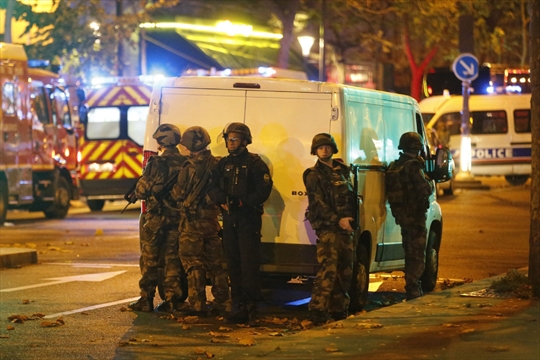
Paris Attacks - Military

Clamouring for the government to pass the snooper’s charter (the Investigatory Powers Bill) is not a wise and considered response to the Paris attacks, and neither is it a moral one – particularly when you cannot point to a single measure in the bill which would have prevented the horrific carnage we witnessed on Friday.

Spiked magazine sums up the illiberal measures contained in the bill:

The draft of the bill, published last Wednesday, sets out new and draconian powers allowing the security services to monitor, access and store our online communications data: IT and comms companies would be required to store information on the websites we visit for up to 12 months, and release them to the state when required; intelligence agencies would be given legal authority to hack into communications and bulk-harvest metadata; and the ability of companies like Apple and Google to encrypt individuals’ messages – putting their content beyond the reach of themselves and the spooks – will be severely curtailed.

Home secretary Theresa May has been quick to talk down the measures. She insists that the data retrieved from your web history is no more than a ‘shopping list’ of the sites you visit, rather than individual pages – a fine and utterly meaningless distinction. And while there has been much talk of the ‘safeguards’ guaranteed by the IPB, with judicial commissioners required to approve requests for interception warrants and wire taps, these are little more than formalities. Judges will only be able to reject Home Office requests on the principles of judicial review; as backbench Tory MP David Davis pointed out, ‘This is not the judge checking the evidence, it is the judge checking that the correct procedure has been followed’.

If Dan Hodges had ‘smoking gun’ evidence that the eight Paris attackers and their network of accomplices made extensive use of unbreakable encryption to plan their crime, or that the intelligence services always suspected the attackers but were constrained by law from keeping them under closer surveillance, then he would have the beginnings of an argument.

But Hodges has no such evidence. Instead, he wants to use the deaths of scores of innocent people to empower the government to keep us all under surveillance, all the time. He makes no proposal as to how the security services might pick out the terrorist needles in this new haystack of intelligence were they to gain access to it, and no idea of the trade-offs between combing through the communications of the entire citizenry rather than focusing on known threats.

Worse still, he is so unconcerned with the potential consequences for privacy and freedom that he doesn’t even bother to address them in his article. And still Dan Hodges feels qualified to tell civil liberties defenders that they are wrong, and to clamour for more government intrusion in our lives.

Clamouring for Parliament to pass the snooper’s charter two days after a horrific terrorist attack in Paris isn’t brave or level-headed – it is a response borne of fear. When we are afraid, our time horizon shrinks to zero and we are concerned only with avoiding immediate danger. If we believe we are in imminent danger of being shot or blown up, we would likely hand over a great deal of our future freedom to avoid that fate. But this instinct – which may be essential for an animal in the wild – is entirely inappropriate for citizens living in a modern democracy.
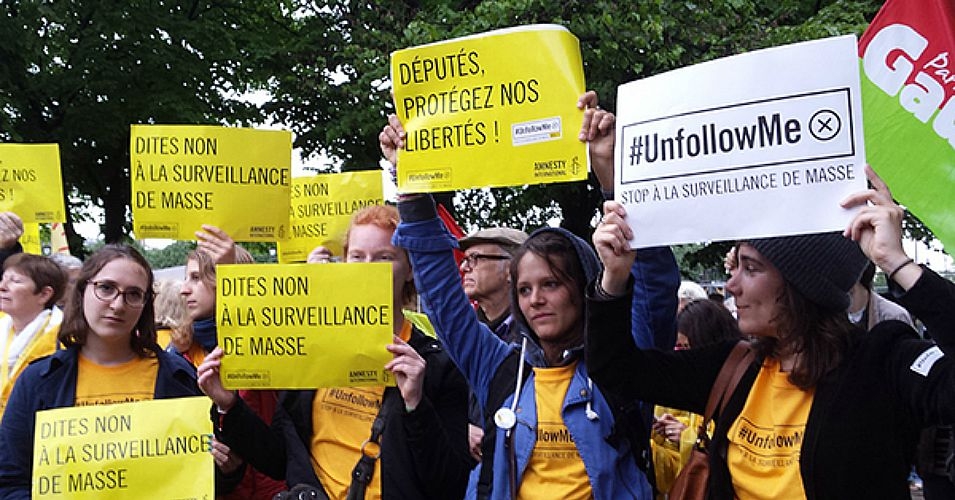
France - Mass Surveillance - Protest

When making laws and empowering the machinery of state, we need to consider not just the threats of today and the people who will wield those powers today, but also what threats may exist tomorrow and who will wield those powers when David Cameron, Theresa May and Jeremy Corbyn are no more than names in a history book. We have a duty to our children and descendants to think about the type of country and world we want them to inhabit when we shape the laws of today.

Unfortunately, ramping up the surveillance state at the expense of the right to privacy and civil liberties fails both tests – it does not provide a convincing response to the threats of tomorrow, and it takes no account of who might try to wield those powers for their own ends in the future.

Terrorists are smart – when attacking the secure West, rarely do they try the same strategy twice. Thus, since 11 September 2001 we have gone from airplane hijackers armed with not much more than boxcutters to shoe bombs, liquid bombs and surface-to-air missiles. Our own intelligence services, to whom Dan Hodges wants to grant sweeping new powers, are usually one step behind. Thus, although the guardians of our safety were never smart enough to think of these risks before they were tried by terrorists, we are still constrained in the liquids we can take on airplanes, and have our shoes checked for explosives before we fly. In fact, modern airport security theatre as a whole reads like a “lessons learned” list of all the cock-ups and clangers of forty years of intelligence failures, with almost no discernible foresight or forward thinking.

So it will be with any new surveillance measures. Technology changes so rapidly that any law passed today will almost certainly be obsolete in a decade, while terrorists will immediately adapt and stop using monitored channels. Human ingenuity will always defeat the clunking fist of government, because it always does. So granting the government the power to monitor who we talk to, go through our emails and hack our smartphones will only infringe on the freedoms of the law-abiding; the terrorists will simply find new technologies or revert to tried-and-tested analogue techniques.

As for the leaders of tomorrow, the thought of a future Prime Minister Theresa May is frightening enough. But what is to say that in a couple of decades, if we do not properly grapple with the scourge of terrorism or in the wake of a future economic crisis, a far more extreme politician may come to power? And if they do, how glad they will be that our present government – cheered on by people like Dan Hodges – passed laws like the Investigatory Powers Bill, granting the state the tools and the legal cover to do as they please.

Again: having these fears and wanting government to provide safety is a perfectly understandable instinctive reaction to terrorist horror, coming from a private citizen. But government will happily assume new powers forever if they are freely offered up by the people, and so newspaper columnists should know better than to provide intellectual and emotional cover in the wake of an atrocity.

I admire Dan Hodges enormously as a writer and commentator on left-wing politics, but these latest irresponsible comments – invoking the image of massacred disabled concertgoers at a Paris theatre to cheerlead for the expansion of the surveillance state – cannot go unchallenged.
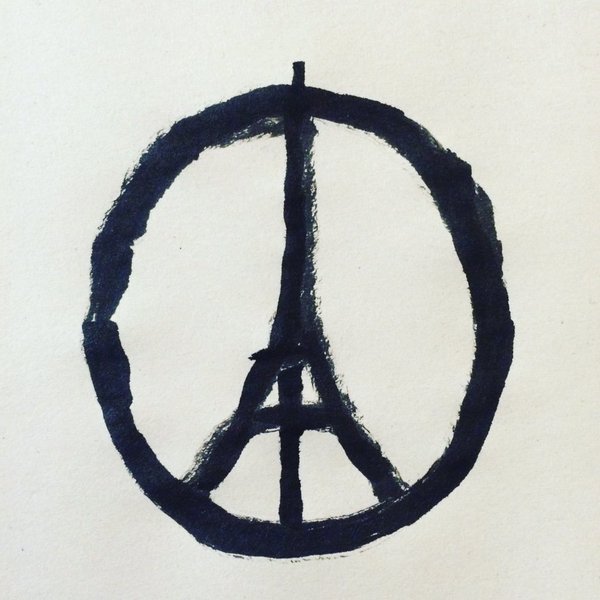
Jean Jullien - Peace for Paris - Paris Attacks

Bottom Image: Peace for Paris, by Jean Jullien

Agree with this article? Violently disagree? Scroll down to leave a comment.

Follow Semi-Partisan Politics on TwitterFacebook and Medium.

Paris Terror Attacks: The World Turns On Its Dark Side

Paris Terror Attacks - Eiffel Tower Dark - 2

Our hearts break for Paris and the French people. For the sake of the victims and their families, our response to these latest terror attacks must be more than the standard denial and clichéd mistakes

Since awful showpiece terrorist attacks like those that tore through the heart of Paris last night are becoming a regular occurrence, it is worth reminding ourselves of the standard political response in their aftermath. It goes something like this:

Day 0: Expressions of shock, sorrow, anger and solidarity

Day +1: Insistence that now is a time for mourning, not asking difficult questions about how or why the atrocities were committed

Day +1, later: The first difficult questions are asked, particularly of the government and security services

Day +2: The intelligence services dust off their wishlist of draconian new powers, and strongly suggest that if only they already had these powers, the attack could have been avoided

Day +2, later: Some brave soul pokes their head above the parapet and tries to start a discussion about the link between unlimited multiculturalism and homegrown extremism, to near universal c0ndemnation

Day +3: The official narrative is established – “we will defeat this terror by giving our intelligence services the tools they need, and making radical or hateful speech illegal”

And so, within a week, the status quo reasserts itself. More civil liberties infringements, more free speech crackdowns, more government surveillance – and then more terror attacks, weeks or months later.

The status quo is not working. As this blog noted shortly after the Charlie Hebdo attacks:

Attempting to start a meaningful conversation about the root causes of Islamist terrorism is, apparently, highly unseemly and inappropriate so soon after an attack. And yet those who make this claim never explain why talking about the root causes of Islamist terrorism in its immediate aftermath is opportunistic and wrong, while conveniently it happens to be the perfect time for governments to demand sweeping, draconian new powers. And that is exactly what we now see.

One thing should now be absolutely clear, though apparently it needs constant restating: There can never be enough surveillance, never enough restrictions on movement, never enough laws banning hate speech to prevent a small number of determined, radicalised citizens – and likely non-citizens who have taken advantage of Europe’s loose borders – from going on the rampage and causing the kind of bloody mayhem that we now see, again, in Paris.

With the exception of the Stade de France, these were soft targets. It is simply not possible to protect every restaurant, every corner bistro or every theatre from a jihadist army of two who turn up in a car, spray innocent people with bullets and speed off to their next target. Concrete road blocks, razor wire, metal detectors and CCTV are of no use against these nimble threats.

So whatever else is said in the aftermath of these latest Paris attacks, let no one pretend that more government surveillance and more draconian crackdowns on free speech – either that of the Islamists or the Islamophobes – are the right answer. At best, these policies – favoured by the French and British governments – are a sticking plaster on an open wound, addressing the symptom but not the problem.

And that problem is the same as it was on 7 January, when Islamist gunmen stormed the offices of Charlie Hebdo, massacring journalists and shoppers at a Parisian kosher supermarket. The problem is that there are people living among us – a very small, but determinedly growing number, either citizens or recent migrants – who may hold the same passports as us and walk the same streets as us, but who feel no connection with us.

Those who propose nothing but even more security would apparently be content to live in a society where a small, segregated minority still hate us, but are thwarted in their attempts to kill us by omnipotent security services. They would be happy to live in a divided, ghettoised, multicultural dystopia, so long as the terror plots are always successfully thwarted.

Those of us who believe in the western and enlightenment values of freedom and individual liberty should not be satisfied with this goal – which is unattainable anyway, since perfect security can never be achieved. We should want a society which is open and welcoming to those who wish to come and contribute, but not credulously undiscriminating in accepting everyone. We should want a society where people feel bonds of kinship and affection which transcend racial and religious boundaries, where a healthy sense of patriotism ensures that there are common shared values which unite us all. But when patriotism and a robust defence of western values is seen as gauche, unseemly and culturally insensitive, there is no way to transmit these essential values to those who most need to receive them.

No government action taken by France in the aftermath of the Charlie Hebdo attacks could likely have prevented these new attacks on Friday 13 November – simply not enough time has elapsed for any bold new government policies to have taken effect. But appallingly, neither have any bold new government policies been proposed, let alone implemented. France still struggles with the existence of economically deprived, socially isolated immigrant communities who feel no allegiance to the country where they live – people who often feel more Muslim than French. Weak to nonexistent border enforcement makes it impossible to properly who control who comes and goes.

Meanwhile, the West – and Europe in particular – is in the midst of its own identity crisis, increasingly uncomfortable defending the principles of liberal democracy, free speech and tolerance. Many would rather bury their heads in the sand and deny the existence of the problem than insist that everyone abide by certain values and standards of behaviour. Too often, a warped strain of Islam has been allowed to run side-by-side with Western culture in a dual, effectively segregated society. And the growing Western culture of victimhood only adds fuel to the jihadist fire.

As Frank Furedi wrote on the tenth anniversary of the 7/7 London bombings:

The redefinition of terrorism as an ideological competitor is linked to the decline in the self-belief of the West. Even before the events of 11 September 2001, never mind 7 July 2005, there was more than a hint of defensiveness about the ability of Western values to prevail over those of their hostile opponents. One conservative American observer gave voice to this sentiment, and concluded that ‘protecting Western culture from foreign assault requires domestic revival’. A decade before 9/11 he warned that ‘the 21st century could once again find Islam at the gates of Vienna, as immigrants or terrorists if not armies’. Today there is little evidence of a domestic revival. Indeed, Western governments are sensitive about their very limited capacity for inspiring their own publics. The problem of engaging the public and gaining its support is one of the most striking features of the post-9/11 political landscape.

[..] There are signs that, in the decade since 7/7, some sections of the British establishment have woken up to the fact that what drives homegrown jihadism is the failure of society to clarify its values and way of life. The constant calls from Cameron and others to teach British values in schools represents an indirect recognition of the absence of such values from young people’s lives. But the values that inspire must be lived; they can’t be recycled through a shopping list of good intentions. Until there is a more courageous attempt to address this problem, tragedies like the London bombings of a decade ago will always be a possibility. The real threat is not the poisonous ideology of Islamic State, but Western society’s failure to live out and stand up for the principles of liberal democracy.

As it is in Britain, so it is in France. Neither country has done enough to tackle the sense of alienation or the crisis of British / French values which make radicalisation possible.

Tim Stanley touches on these points in his moving tribute to Paris in the Telegraph following yesterday’s terror attacks:

The brutality of this attack shows that we are not dealing with an enemy that can be negotiated with, only confronted and beaten. Perhaps that confrontation will be existential. Are we doing enough to integrate everyone, enough to fight poverty, enough to eradicate prejudice? Are we confident enough about our own values to teach and promote them? Are our security measures appropriate? Do we all have to come to terms with living with permanent anti-terror measures (I hope not). And what will our society look like as a consequence of this conflict? Less free, perhaps?

Are we doing enough to integrate everyone? I don’t think that any French or British politician could say that enough is being done. Worse still, it isn’t even a top priority at the moment.

Are we confident enough about our own values? Clearly not – in many cases, we have so little confidence in our own values that we fail to insist that others (recent immigrants and segregated communities) abide by the enlightenment values which have served us so well. In fact, sometimes we make an ostentatious virtue of parading our tolerance of thoroughly anti-enlightenment values, in warped service to “multiculturalism”.

Are our security measures appropriate? Our intelligence services will walk a tightrope here, insisting that they do everything they can to keep us safe, while making clear that if we do not grant them additional powers, any future blood spilled will be on our hands.

But Tim Stanley’s final question is the most pertinent: Do we all have to come to terms with living with permanent anti-terror measures?

That question is best answered with another question: What concrete actions are we taking that might feasibly lead to the rolling back of the semi-permanent anti-terror measures and powers which are now a depressingly familiar part of life? What one single thing are we doing that might mean we need less security and less surveillance a decade from now?

The regrettable answer is that we are doing virtually nothing. The world continues to turn on its dark side, and we can reasonably look forward to a future of more random terror, more sombre presidential addresses and the familiar sight of militarised police SWAT teams crawling over our major cities. This is the new normal, and nothing we are presently doing is going to change that fact.

It is now Day +1. This time, can we break with rotten, failed convention and actually talk about root causes?

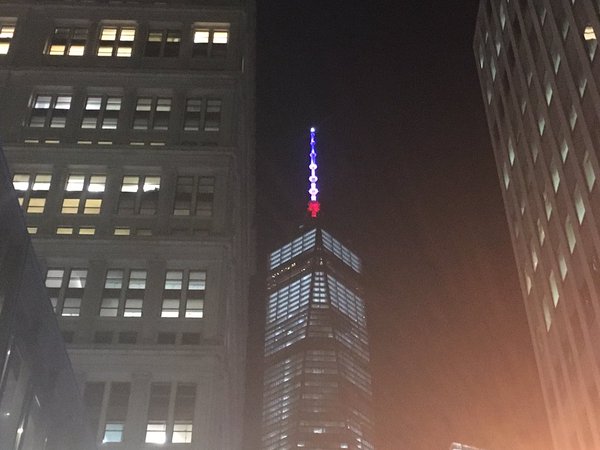
Paris Terror Attacks - One World Trade Center - New York

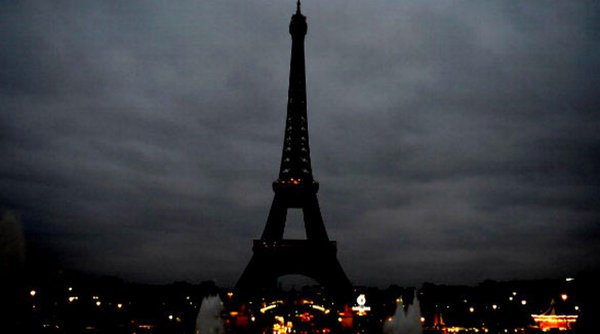
Top Image: Eiffel Tower, darkened after the 13 November attacks: Auskar Surbakti Twitter feed

Bottom Image: One World Trade Center, New York, lit in French colours: Jon Swaine Twitter feed

Scroll down to leave a comment.

Follow Semi-Partisan Politics on TwitterFacebook and Medium.

Can Jeremy Corbyn Redeem Himself On Tackling Extremism?

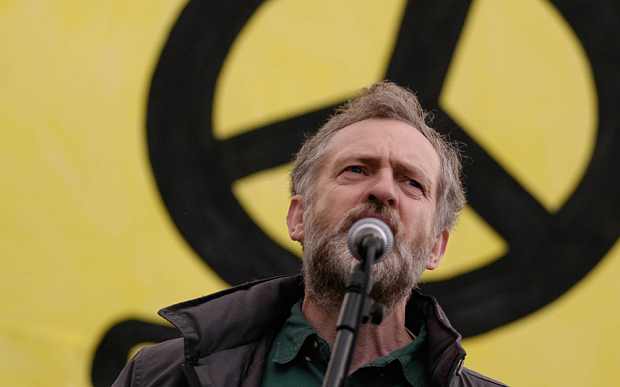
Jeremy Corbyn - Foreign Policy - Appeasement

Can Jeremy Corbyn rehabilitate his two-dimensional, anti-British foreign policy worldview?

Jeremy Corbyn’s red-blooded socialist domestic policies are generally flawed and counterproductive, but we can forgive him for that because he represents a legitimate strand of political thought that for too long has been marginalised and shut out of the political conversation in favour of the quisling, centre-left socialism of the likes of Ed Miliband.

What is much harder to forgive, however, are some of Jeremy Corbyn’s stances on foreign policy, where he has frequently espoused views and shared platforms with people of highly questionable character and motive. Whether it’s concerning Northern Ireland, Israel/Palestine or the Iraq war, too often Jeremy Corbyn’s public positions have drifted across the line separating conscientious objection from something much worse.

But now that Jeremy Corbyn is the leader of Her Majesty’s Opposition and burdened with one of the formal offices of state, what chance is there that reason, patriotism and propriety might assert themselves to moderate his well-known public stances?

Jonathan Russell, political liaison officer at the Quilliam anti-extremism think-tank, remarkably sees cause for hope:

Continue reading

Ten Years Ago Today, In London

St Pauls Cathedral - London - 7 July Bombing - Memorial Service - Petals


In an age when our politics feels depressingly small and our politicians often seem ineffectual and powerless in the face of events and forces beyond their control, it seems we cannot rely on our elected leaders to grapple with the weighty issues of our time, or to present a clear vision of the country and world we should be striving to build.

This is especially so on the issue of terrorism, the threat from radical Islam and the ongoing crisis of western values. Today is not a day for politics, but this essay by Frank Furedi in Spiked magazine is essential reading in terms of outlining the extent to which we are almost wilfully focused on the wrong issues.

In this context, it is refreshing to hear words of genuine wisdom, comfort and hope, especially coming from a religious figure at a time when religion is sliding toward irrelevance for many, yet held largely responsible for the wave of terrorist mayhem sweeping the world.

The Bishop of London, Richard Chartres, excels in his role preaching sermons on important national occasions – most recently at the memorial service for Margaret Thatcher. Chartres was back in the national spotlight again today, at St. Paul’s Cathedral in London, where he preached the sermon at the memorial service to mark ten years since the July 7 bombings of 2005.

Continue reading

When Is The Islamic State Not The Islamic State?

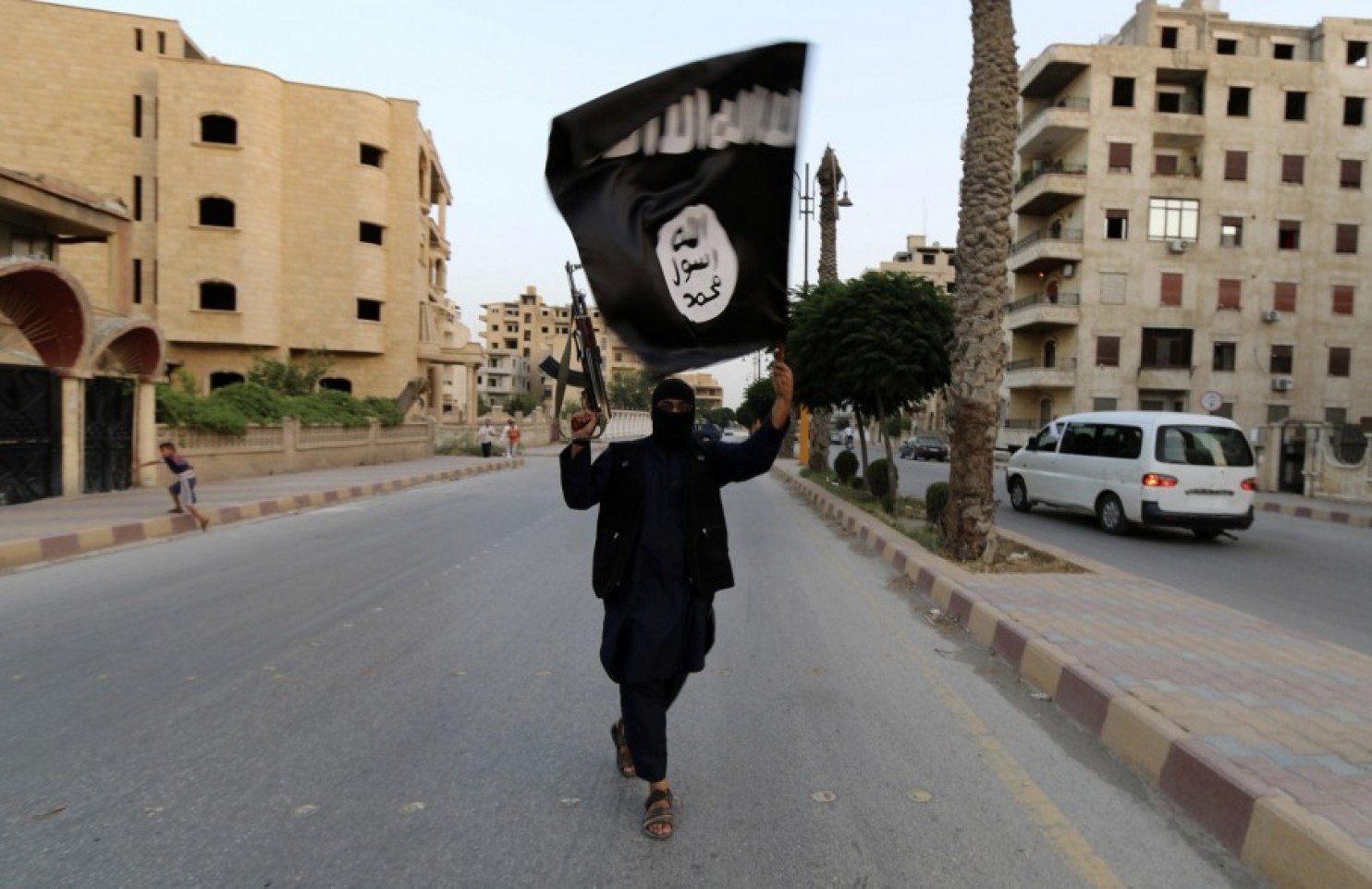
Islamic State - ISIS - Islam - Daesh

Rather than tackle an intractable issue and mortal enemy, our superficial politicians are quibbling over the language we use in describing it

When is the Islamic State in Syria – ISIS – not the Islamic State in Syria?

Apparently the answer to this question is: since a couple of days ago, when the hive mind of lazy politician groupthink decided that we must bend and warp journalistic practice – and the English language itself – in order to make it clearer that the majority of us do not condone the activities of that brutal, backward-looking group of primitive fundamentalists.

My attention has been elsewhere lately – freshly returned from a relaxing and eventful trip to Greece but otherwise more focused on domestic than foreign affairs. So it was surprising to find my attention drawn back by the furious row between the government and the BBC over exactly how the public service broadcaster should refer to the nascent medieval kingdom seeking to establish itself in the middle east.

The Spectator is – quite rightly – having none of it:

‘Isis’ is an acronym of Islamic State in Syria. ‘Isil’ – an acronym of Islamic State in the Levant. Isil is the better translation of the group’s Arabic name al-Dawla al-Islamiya fil-Iraq wa al-Sham – where ‘Sham’ represents greater Syria or ‘the Levant’ as we would say in English.

As for ‘Daesh’, it has the small propaganda advantage of reminding Arabic speakers of Daes (‘one who crushes something underfoot’) and Dahes (‘one who sows discord’). But beyond that childish word association it is no help at all, for ‘Daesh’ is just the Arabic abbreviation of al-Dawla al-Islamiya fil-Iraq wa al-Sham – or the Islamic State in Iraq and the Levant.

All the euphemisms politicians demand we must use to avoid calling Islamic State ‘Islamic State’ therefore call Islamic State ‘Islamic State’. How can they not, for that is its name? And it is no more up to outsiders to change a group’s name than it is up to you to change the names of your acquaintances. Assuming the politicians know what they are doing, they must believe that many voters will not know what ‘Isil’ and ‘Isis’ stand for, or only Arabic speakers will understand the meaning of ‘Daesh’. In other words, they are relying on ignorance and hoping to foster ignorance too.

Never mind the obvious undesirability of government telling the state-owned broadcaster what to report and how to report it – thus proving the central argument against government ownership of the media. Of far more concern is the fact that politicians – specifically our current generation of uncharismatic, uninspiring, superficial leaders – seem to believe that expending time and energy arguing about what to call the Islamic State is more important than doing anything about ISIS in the real world.

Continue reading