
It goes without saying that the loudest voices on the pro-European side are desperate for the coming EU referendum to be open to EU nationals currently living in Britain, as well as British citizens. From their selfish perspective, subverting our democracy in this way is a price well worth paying in order to inflict their desired outcome on the rest of us.
But now the europhiles are reaching for another rhetorical weapon in the fight: the fact that Britain, through a number of bizarre constitutional quirks and the pernicious rules of the EU, already allows select groups of favoured non-citizens the right to participate in our democracy.
Mihir Bose, writing in the Guardian, is already taking a gleeful victory lap on the subject, suggesting that eurosceptics are somehow being craven or ideologically inconsistent for objecting to the idea of EU citizens voting to keep Britain chained to Europe while not speaking out against these other cases of non-citizens receiving the franchise:
What [eurosceptics] neglect to mention is that even now you do not necessarily need to be a UK passport holder to vote in a general election. Indeed, for decades the UK has allowed citizens from other countries the right to select members of parliament, a right that even extends to citizens of three EU countries. They are part of a much larger group of 72 countries that includes all Commonwealth territories, British overseas territories and British crown dependencies. Fiji and Zimbabwe may be suspended from the Commonwealth but their citizens resident here have not lost their right to vote in UK elections. The three special EU countries are Ireland, Cyprus and Malta. They enjoy this privilege because while they may now be part of the EU, they once had an older allegiance to a much greater union: the British empire. The sun set on the empire long ago, but its legacy lives on.
What makes all this fascinating is that while Eurosceptics are happy to raise all sorts of scare stories about the EU, these other voters are an issue they are reluctant to discuss. Indeed, as far as the UK electoral franchise is concerned, this is now the great elephant in the room, as I was made well aware during the recent election. At one husting, I had the chance to raise this issue with three panellists from the main parties: Michael Gove for the Tories, Ivan Lewis for Labour and Baroness Kramer for the Lib Dems. Lewis disapproved of my even raising the issue. Baroness Kramer, who did not seem to know that non-citizens could vote, justified it on the grounds that this was a wonderful example of British eccentricity. Gove just said that he did not want to see any change in the franchise.
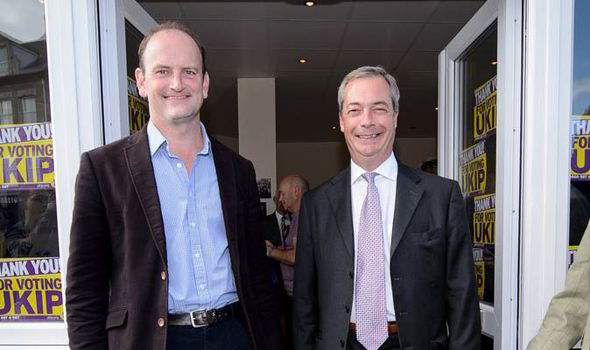
More fascinating was how Ukip reacted. Some weeks before the election, at a British Future event, Douglas Carswell, now the only Ukip member of parliament, made a very reasoned speech to show that Ukip was not an anti-immigrant party. But when I raised this issue, he made it clear that this was not a question Ukip would touch, remarking that the British system was so complex that to lift the carpet would mean all sorts of things would crawl out. How strange to hear this from a party whose leader, Nigel Farage, makes so much of the fact that he is prepared to go where no other politician dares.





 Semi-Partisan Politics