There Can Be No Rational Debate With Those Who Deceive Themselves About The EU’s Purpose And Destination

European Union - EU Referendum - Supranational Government - Brexit - Remain - Leave

I am no longer willing to indulge Remain supporters who insist on deceiving themselves (and others) that the European Union is a humble trading organisation with no pretensions to statehood or aspirations for ever more power

The question which exasperated EU defenders often ask when they (unsurprisingly) fail to win Brexiteers over to their side goes something like this: “But all these world leaders and heads of NGOs want Britain to stay in the European Union! Do you really think that you know better than all of these important people?”

And on the very surface it sounds like quite a disarming point – who are we, after all, to second guess the learned and wise decisions of our rightful rulers? But then one remembers that this is precisely what we are supposed to do. The very reason we moved beyond despotism and absolute monarchy is the fact that we do not want (and no longer have to suffer) a small, homogeneously educated “born to rule” class making decisions on our behalf unchecked; that the mere fact of occupying positions at the top of the establishment makes it likely that vested interests will begin to corrupt decision making, and that democratic checks and balances are the best means we have yet devised of guiding and restraining the behaviour of our very flawed, very human leaders.

This point is eloquently expanded upon in a new piece by Pete North, itself a response to a very smug and very ignorant piece in the Guardian by Nick Cohen, gloating at the unarguable ineptitude of the official Leave campaign.

Cohen simperingly asks:

There are dozens of good reasons for leaving the EU. Before endorsing them you should ask, do you feel that the Institute for Fiscal Studies, Bank of England, IMF, OECD and the hundreds of economists we survey this week are all lying? Do you feel that all our allies who are begging us to stay wish to lead us to our ruin? Do you feel that Boris Johnson is fit to be prime minister or any kind of minister for that matter? Do you feel that Scotland won’t leave? Do you feel that Irish politics won’t darken? Do you feel that Putin won’t rejoice? Do you feel the Leave gang will find answers in June to the questions it cannot answer in May?

In short, you’ve gotta ask yourself one question: do I feel lucky?

Well, do ya, punk?

To which Pete North replies:

In his closing remarks [Cohen] asks “do you feel that the Institute for Fiscal Studies, Bank of England, IMF, OECD and the hundreds of economists we survey this week are all lying?”

I think they are politically slanted toward the status quo. I think they are exploiting the weakness of Vote Leave to disingenuously cloud the issue. I think they are wilfully ignoring facts they don’t like thus lying by omission. And I also think they are wrong because (and I say this in full knowledge of how it sounds) I have examined it from more angles than they have, and have thought about it longer and harder than they have, and I have explored areas they are barely aware of. They are largely ignorant of the political and practical dynamics. Their forecasts are of limited use and only their short term forecasts based on the immediate aftershocks have any real worth. I will argue that til the cows come home.

Cohen then asks “Do you feel that all our allies who are begging us to stay wish to lead us to our ruin?”

This is a shallow question. Firstly who governs us is absolutely none of their business. But there is a consensus groupthink at the top of global politics where they believe their own rhetoric and the rhetoric upon which the EU stands. That drives their calls for Britain to remain. But this is not about what they want. That is why we are having a referendum. I also feel that Brexit threatens to disturb that cosy consensus and it threatens their agenda for the accumulation of power. I think that is a good reason to leave in its own right. Brexit is a message that the power belongs not to them but the people. And that’s what this is fundamentally all about.

Absolutely so. Remainers love to affect that they live in a world of hard-headed reality while those of us who support Brexit and the restoration of nation state democracy are either conspiracy theorists or dangerous fantasists. But in fact it is the other way around – we have seen how supporting Brexit in the face of a chorus of establishment opposition is not only understandable but absolutely necessary in order to prevent too much power accumulating among the elites at supranational level. And it is the Remainers who studiously ignore mountains of evidence in which the EU’s architects and leaders speak quite openly about their motivations and desire to create a common European state.

But of course this does not stop Remainers from prancing around as though the burden of proof were somehow on the side of the Brexiteers. Typically, this arrogance expresses itself through articles which read something like this:

Before we can even begin to think about leaving the EU, Brexit supporters have to answer these ten simple questions:

1. What categorical assurances can the Leave campaign give that there will not be a 3 point magnitude earthquake in Torquay if Britain votes to leave the EU?

2. Where is the Leave campaign’s fully costed plan showing Britain’s GDP increasing above current trends once we cut ourselves off from the world and hang up a big sign declaring that Britain is closed for business?

3. Where is the Leave campaign’s signed (in blood) declaration from Angela Merkel that British citizens will not have to pass an IQ test before entering Germany in the event of Brexit?

4. How many human sacrifices will Britain make to appease Barack Obama after angering the US president by ignoring his advice in the referendum?

5. Where is the Leave campaign’s signed (in blood) declaration from John Kerry that the United States will not close its embassy in London and suspend diplomatic relations with Britain?

6. Where is the Leave campaign’s statement, signed by 500 economists, standing behind an economic model which proves that the price of foie gras will remain stable if Britain leaves the EU?

7. Prove that average global temperatures will not rise in the event of Brexit.

8. Prove that France and Germany will not face off against one another precipitating a new world war in the event of Brexit. (And didn’t millions of soldiers perish in two world wars precisely so that a united, supranational government of Europe might one day arise in Brussels?)

9. Prove that the Evil Tory government will not pass a bill on June 24 abolishing maternity leave and establishing mandatory child labour if we leave the EU.

10. Produce a list of fifty elected heads of state, all of whom have clear political interests in the steady maintenance of the established international order and avoiding the slightest disruptions to (or distractions from) their domestic agendas, all declaring that they want Britain to leave the European Union (with which they must simultaneously maintain good diplomatic relations)

And when Brexiteers look puzzled and inevitably fail to answer each question in a way which satisfies the EU’s cheerleaders:

Aha! See, they don’t know what Brexit will look like! Can we really afford to take the risk? Etc. etc.

Personally, I’m done playing that game. Dancing to the sanctimonious tune of the EU cheerleaders does not interest me. I do not have to prove anything. Yes, in order to persuade a plurality of people that voting to leave the European Union is safe, there must be a comprehensive and rigorous plan. Such a plan already exists, and is finally being spoken of (in content if not always in name) by a growing number of Brexiteers and commentators alarmed at the childish incompetence of Vote Leave.

But beyond promoting this plan and urging people to read it, there is nothing further left for thinking Brexiteers to do in this regard. It will never be possible to give the EU worshippers the assurances they demand – to prove that the recipe for Nutella will never change if we leave the EU. And they know this. Definitively proving a counterfactual is not possible, and it is this con which is helping the Remain campaign to a consistent lead in the polls.

But it might be possible to respect Remain campaigners a little more if they were capable of being honest themselves about the organisation which they so eagerly defend. And so when asked by sneering Remainers to prove to 100% probability that the cabbage harvest will not wither in the event of Brexit, we should respond with some challenges of our own.

And this blog’s challenge to sincere, thinking Remain supporters is for them to complete the following statements in an honest and remotely plausible manner.

Statement 1: I understand that continent-wide supranational political union is not strictly necessary in order for countries and people to cooperate and work together to solve common challenges, but I still think Britain should remain in the EU because…

Statement 2: I appreciate that global bodies such as UNECE, Codex Alimentarius, the IMO and ILO are responsible for creating much of what goes on to become EU regulations and directives, but I believe Britain should remain in the EU rather than seeking to regain our seat and wield influence at the true top tables because…

And, of course:

Statement 3: I, [insert name], want Britain to remain in the European Union because in my heart I feel more European than British, and do not want to be torn away from what I really consider to be my true country.

Remain campaigners who repeat any of these statements straight into a television camera will have my grudging respect because they will be making a case for the European Union based not on airy wishful thinking about what the EU is and might become, but rather on truthfully admitting their understanding of and acquiescence to the EU’s eventual aim of becoming a unified European state.

Those who persist in pretending to themselves and the rest of us that the European Union is benign, super democratic and Just About Trade, however, can take a hike for the remainder of this referendum campaign.

I am no longer willing to debate this issue while the Remain side occupy a position of fundamental dishonesty as to their understanding and intentions. From 10 Downing Street to Canterbury Cathedral we are being lied to, and I will no longer do anything which remotely assists these invidious people in their shameful, dishonest work.

 

European Union - United Kingdom - Britain - Flags

Top Image: Telegraph

Agree with this article? Violently disagree? Scroll down to leave a comment.

Follow Semi-Partisan Politics on TwitterFacebook and Medium.

The Financial Times Makes A Worryingly Stupid Cheerleader For The EU

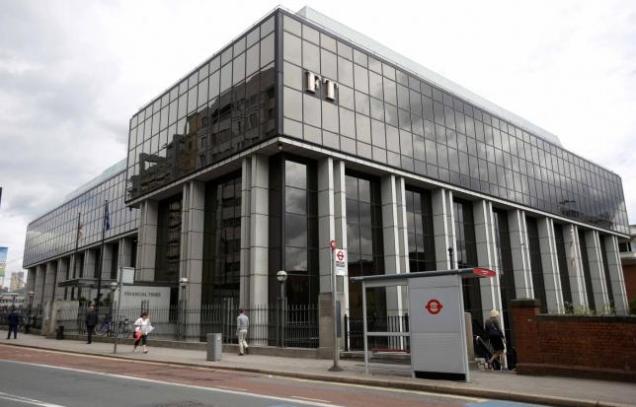
A company logo hangs on the headquarters of the Financial Times newspaper in London

The slavishly pro-EU Financial Times often displays a childlike level of understanding of how the European Union – and global regulation – actually works

Apparently the arguments for Brexit “do not add up”.

We have this from the most scrupulous and unbiased of sources, the Financial Times, so of course it must be true. Millions of Brexiteers, The Leave Alliance and little old me can pack up our things and go home, because Martin Wolf of the Financial Times has spoken.

Except that when Martin Wolf speaks on the topic of the European Union, he sounds like an idiot. This is his opening gambit:

If the UK voted to leave the EU, it would almost certainly be outside the arrangement organising the life of our neighbours and principal economic partners forever. Given this, the question is whether the option to leave should be exercised now. My answer is: absolutely not. To see why, let us examine popular arguments in favour of departure.

Oh dear. In his first sentence, Wolf inadvertently describes the overwhelming case for Brexit, before he can even launch in to his promised list of ten rebuttals. For he says that the EU is an organisation which seeks to “organis[e] the life of our neighbours and principal economic partners” – and indeed ourselves, since we are part of the union, too.

This is refreshingly honest, albeit unwittingly so. The EU does indeed seek to organise not only the lives of our neighbours and trading partners at the nation state level, but crucially (and most offensively) at the level of the private citizen too. Why? Because the EU does not see itself as some kind of a trading club. It sees itself as a government of Europe, sitting above national governments but gradually rendering them obsolete and irrelevant. The EU makes no secret of this fact – it is enshrined in the treaties, quotes from senior EU officials and even emblazoned on the wall of the European Parliament Visitors’ Centre, for those who care to look. It is only here in Britain where politicians and assorted EU apologists bury their heads in the sand and lie to themselves (and to us) about the real purpose of the European Union.

So Martin Wolf is quite correct – if Britain leaves the EU, we will absolutely be outside the arrangement which seeks to organise the lives of 500 million European citizens from every single member state. Power will be brought one step closer back to the individual citizen. And the fact that Martin Wolf and the Financial Times see this as a bad thing – that they visibly recoil from the idea that Britain should shed a superfluous layer of supranational government and seek to return power to the people – really tells you everything you need to know about whose side they are on. Hint: it is not the side of we the people.

The article then lurches from bad to worse, with a series of “rebuttals” of the Brexit case each one less supportable than the next. We are assured, for example, that a politically integrated eurozone is unlikely, despite the European Union doing everything but spell out in fireworks their intention to do exactly that.

Some of Wolf’s later points – particularly around immigration and trade agreements – are slightly more accurate. But this is only because he is creating straw man arguments to demolish, aided in his efforts by the hapless official Vote Leave campaign. The various spokespeople and figureheads of Vote Leave say enough stupid things between them to enable Martin Wolf to publish a ten point anti-Brexit rebuttal every day from now until polling day, but that is very different from Wolf managing to disprove or discredit the core arguments in favour of Brexit, most of which he pointedly skirts around.

Specifically, Martin Wolf never appears more out of his depth than when he attempts to show that there is no natural positive alternative to EU membership, and when he attempts to discredit the Norway (EFTA/EEA) option as an interim step. Thus we get utter bilge like this:

Seventh, it would be easy to agree on alternatives to EU membership. Yet those recommending leaving have no agreed position. There are three plausible alternatives: full departure with trade regulated by the World Trade Organisation, which would cost the UK its preferential market access to the EU; Swiss-style membership of a trade arrangement in goods, with bilateral deals in other areas, which is complex and would require the UK to retain free movement of people; and Norwegian-style membership of the European Economic Area, giving full access (except for having to abide by rules of origin in trade in goods) but would deprive the UK of a say on regulations. In all, the more sovereignty the UK wishes to regain, the less preferential access it retains. This trade-off cannot be fudged.

Enter Pete North, with a forensic and merciless dissection of Wolf’s position that genuinely make one wonder how it can be that North is the amateur blogger and Wolf the supposedly prestigious journalist.

North responds:

Wolf says that “There are three plausible alternatives”. This is where we are in straw man territory. He cites the WTO option which does not in any way address the multiple cooperation agreements or issues surrounding non-tariff barriers and in fact would likely cause asymmetric tariffs in the EU’s favour. If Wolf was a halfway credible analyst he would know that much. It’s a non-starter and would in fact case the very chaos that remainers have been talking up. So we are back to the age old question. Ignorance, dishonesty or both?

This means of exit is commonly associated with unilateral withdrawal, which no government intends to do nor would even consider it when faced with the practical ramifications. And so we can say with absolute certainty that we are looking at a negotiated exit.

With regard to the Swiss Option, comprising of membership of a trade arrangement in goods, with bilateral deals in other areas, Wolf is right to say it is “complex” and given that we have only two years under Article 50 to negotiate a settlement, we can safely assume that a bespoke deal is not on the cards. Talks may be extended but the tolerance for uncertainty will be short. Any UK government entering negotiations would rapidly be disabused of any fanciful notions of recreating the relationship from the ground up.

So actually, an off the shelf agreement based on the EEA is looking the most probable exit means and since it is the least disruptive for both parties and the most achievable, that is most likely what will be asked for and the only thing on offer. Having done a scoping exercise in advance of submitting our Article 50 notification, we can say with some confidence that a transitional deal could be arranged inside the mandated two years. To ensure it does not drag on, we will in all likelihood adopt most of the existing cooperation agreements as they are without opening them up fro scrutiny. We will swallow the lot. Wolf has it that the UK would have to retain free movement of people membership of the European Economic Area, which is true, but actually irrelevant.

At the end of negotiations what we end up with is more or less the same access to the single market and no real changes in the business environment. Cooperation agreements continue as before and nothing looks that much different on day one. This renders much of the speculation about Brexit entirely redundant. Wolf as much admits this.

Having taken Wolf to school on the fundamental about the most likely future model for UK-EU relations, North goes on to destroy Wolf’s fatuous but oft-repeated claim that an interim EEA/EFTA solution somehow means having no “say in regulations”:

In any area of regulation you care to look, the EU is a recipient of rules as much as anybody else. Its rules are subordinate to global standards and such standards from the basis of nearly all new EU technical regulation. Brexit not only gives us a right of opt out at the WTO/UNECE level, we would also enjoy EU consultation before any rules went as far as the EU parliament for what they laughingly call scrutiny. What that means is we will never again see the EU abusing its power to foist rules on us that we do not want.

Wolf is right however when he says that there are trade-offs. Asserting sovereignty in regulatory areas does have trade-offs. Because Norway has heavy protections on its own aquaculture and agriculture it is subject to tariffs. It remains that way because that is what Norway chooses to do. Their parliament examined the balance of issues and decided on a case by case basis whether the trade off was worth it. In more areas than one, Norway has concluded that sovereignty matters more. This would be that democracy thing. And the whole point of Brexit as it happens.

And while the regulatory regime doesn’t change that much, it does mean that we are free to change it where we deem change is appropriate. It categorically does not mean a huge administrative undertaking to establish a separate regulatory system. All it means is we can change it as and when we want to – and when we want regulatory reform, we have a direct line to the global bodies that make the rules rather than having the EU speak on our behalf. The clout we have in that regard in on the basis of what we bring to the table in terms of soft power and expertise which is considerable when you consider the UK’s many assets.

[..] The dinosaur hacks of the FT are fixated on “free trade deals”, many of which are not actually that useful to UK industry and we would benefit more from independent participation on global forums to remove technical barriers to trade. In that respect the traditional bilateral trade deal (or FTA as they insist on calling them) is obsolete. The future is the development of common regulatory frameworks that extend far beyond the confines of little Europe. Being independent of the EU ensures that we put the brake on the EU’s gold plating tendency while having first dibs in the global arena.

In so many ways, Brexit gives us the best of both worlds. The continuity of single market access along with trading agility, free association with global alliances and a functioning veto. All we get from the europhiles is that we can’t have our cake and eat it. It turns out we can eat the cake and ask for seconds if we so choose.

I cannot repeat this often enough: if you want sound analysis of the EU referendum question and an informed understanding what Brexit might look like, it is absolutely no good turning to the legacy media. They simply do not know what they are talking about because they have not invested the time to think through the issues clearly or to update their 1990s-era understanding of global trade and regulation. Worse still, they lack the humility to learn from those who have invested time and do know.

Martin Wolf airily tries to dismiss Brexit as a leap into the unknown, claiming that leaving the EU would entail moving toward one of three unpalatable future relationships, when it actually turns out that there is only one likely future model Brexit state given the political and economic constraints faced by both parties, and that one model preserves the single market access about which the FT and others rightly fret while extricating us from the unwanted political union.

Worse still, Wolf compounds his error by lazily asserting that this “cake and second helpings option” (as North puts it) would mean Britain having no say when it comes to shaping regulations, when in fact it is only by leaving the European Union that we are able to restore our voice at the real “top tables” where the rules are made.

We are now presented with a rather difficult set of possibilities. Either:

1. Martin Wolf and the Financial Times are so thoroughly incompetent and lacking in knowledge about one of the very subjects for which readers pay them for their expertise, or

2. Martin Wolf and the Financial Times do understand how global trade works and the true nature of the European Union, but deliberately keep this information from their own readers for some other sinister purpose (most likely because their corporate readership balks at the increased economic risk which inevitably accompanies any great enterprise worth undertaking – like Brexit)

Incompetence or malevolence. Pick your poison, but the Financial Times is undoubtedly guilty of at least one of these offences, if not both.


European Union - United Kingdom - Britain - Flags

Top Image: Reuters

Agree with this article? Violently disagree? Scroll down to leave a comment.

Follow Semi-Partisan Politics on TwitterFacebook and Medium.

If The Remain Campaign Succeed In Cheating Their Way To Victory, Their Joy Will Be Short Lived

EU Referendum - Divisive - Bitterness

There will be no kissing and making up on 24 June

Much like this blog, Pete North is angry at the conduct of this referendum campaign by the arrayed forces of Remain, and sees little point in hiding the fact:

We’ve had decades of their rule, decades of their orthodoxy and no means to challenge their political dominance. We’ve been watching and waiting for years. Watching as successive governments have ceded ever more power, ever more control and have insulated themselves from the wishes of the public. Well, now we’ve got our referendum. And now we see just how deeply the game is rigged.

So we’re angry to say the least. Angry at what has been done to us, done in our name, and angry that once again democracy is being trampled on to preserve the orthodoxy. And we do not take kindly to being lied to.

There’s an old saying that politics is between you, me and the swamp. Minorities on either side, playing games for the votes in the middle. But unlike classic politics, this is not a left vs right dispute. There are only those above the line and those below the line. Those who have the power and those who do not. In this estimation, the establishment holds all of the cards. It has always known a challenge to its legitimacy would one day come which is why it set out to bribe institutions in advance.

We Brexiteers on the other hand have what we have. An angry rabble with keyboards. And let’s face it, none of us are ever going on the front cover of Vogue. We’re a bunch of griping, moaning angry people who seem to hate just about everyone in politics and everything they do. We’re not helped by a pretty shoddy Leave campaign either, with some fairly odious spokesmen.

We are irredeemably spit. We all hate each other. I despise the Toryboys and I loathe Ukip. I hate all political tribalism. I’m not a joiner of clans. But there’s one thing that unites us all. All of us can articulate a better definition of democracy than any of those would would have us remain in the EU – and though we can’t seem to agree on coherent Brexit plan, we all know what democracy is, why we should have it and crucially why the EU is the absolute opposite of it.

And that’s why this referendum really settles nothing. The Remainers will play their little games, steal the referendum and carry on as before; feathering their own nests and consolidating their power. But we’re not going anywhere. We’re not giving up. And we are taking names. Us Brexiteers hold deep grudges. We are in it for the duration.

We will remember Cameron the fraud. We will remember Hague and Corbyn as turncoats. We will remember the frauds like Boris Johnson who used the cause for their own advancement. We will remember the parasites who had their fingers in the till. We will remember all those hacks and policy wonks who twisted the truth. We will not forget what was done here. And unlike 1975 – we have a full record of who said what. The internet never forgets.

And North’s blood-chilling conclusion:

In fact, we are going to be pure poison. If you thought the SNP were sore losers, you ain’t seen nothing. A remain vote will ensure domestic politics remains permanently toxic. While these part timers waft into to the Brexit debate with their tedious rhetoric about Brexiteers being little englanders and xenophobes, and venting their empty rhetoric of cooperation and internationalism, we have been here from the beginning. Will be here at the end.

You can stifle an idea, but you can’t kill one. Especially not that seemingly antiquated notion that the people should be able to refuse their government. The EU may be powerful but it is not stronger than the desire for democracy. And if it takes another generation to get what we want then that is what we will do. There is only one way this fight ends – Britain leaving the European Union. We will either do it amicably and by the book – or we will do it some other way. The general public may well go back into their political slumber, but we Brexiteers will be back – and in between, we are going to cause merry hell.

I should say that I agree with nearly everything in Pete’s piece – as always, his diagnosis of the flaws of the EU is spot-on, and his objections rooted not in shameless partisan positioning (like nearly every Remain supporter on the Left) but in a deep love and respect for democracy.

I can’t say that I look forward to the idea of being “pure poison”, or causing merry hell. But increasingly, I cannot see an alternative if, as is still likely, the Remain camp prevails on the back of a campaign based on sowing fear, uncertainty and doubt.

There are some political issues where I don’t get my way – in fact, as a libertarian / conservatarian living in Britain, it is pretty near all of them – where I am still happy to play the game according to the rules. I think personal taxes are too high, for example, as a result of decades of fiscal drag and Gordon Brown’s only partially-repealed spiteful hike. But I’m not going to take my toys and go home in protest, refusing to engage and participate in the democratic process because we don’t have a flatter tax system.

Likewise with the size of the state. This blog believes that government does far too much for far too many people – including many who are already self-sufficient and do not need government largesse, as well as many who could know self sufficiency if only they had the right short-term help and weren’t indefinitely coddled by the welfare state. But it is not the relatively unambitious and half-finished work of implementing Universal Credit which has enraged me against this supposedly conservative government.

On all manner of issues I’m happy to play for incremental progress, accept the victories as well as the losses for my side, and then move on to the next battle. But this is different. The European Union question is different.

The EU referendum is not about whether we want politics to be a little bit more left wing or a bit more right wing. It is not about tweaking tax policy, industrial policy, reforming benefits, or social issues. It is so much more fundamental than that, because whether or not Britain votes to remain in the EU says in a single gesture what kind of country we are, and what kind of country we want to be.

And the same thing applies at the personal level. I have never had a problem socialising and being friends with people from all across the political spectrum. Most of my social circle probably leans significantly to the Left, if anything, and while it leads to the occasional lively conversation there is always a full measure of respect. But – and I don’t take any great joy in writing this – I do not think I will be able to help thinking less of people who vote for Britain to remain in the EU.

Now, that doesn’t go for every Remain supporter. If I knew that someone is voting Remain because they truly believe in the European project, that they admit that political union is being brought about by stealth but that the ends justify the means, that they “feel” more European than British and want to forge a new combined European state, then I would profoundly disagree with them but I could respect that position. It is a positive (although distasteful to me) vision of Europe, and it is an honest one. I know several people who do take that position, and I am at my happiest when I am debating with them because I don’t feel like part of my soul is dying while I do it.

My problem is with those who either see supporting the European Union as some kind of necessary virtue-signalling act to be accepted in their social circle (oh, aren’t UKIP simply awful, darling?), and those who abrogate any notion of acting as an engaged and enlightened citizens with a responsibility to this country and to democracy, and so vote based solely on their wallets or other narrow personal interests. I will struggle to look upon such people in quite the same way after this referendum.

Maybe that is easy for me to say – I do not have a lot materially at stake in this referendum, financially or otherwise. My job is not dependent on EU funding, and the immediate interests of my family are not threatened by Brexit. All of these are mitigating factors – if my own salary and job security were directly or even indirectly contingent on staying in the EU, I concede that it would take a superhuman effort to overcome the instinct toward confirmation bias which would encourage me to seek out other facts and opinions supporting the Remain case.

But human beings are emotional creatures and the fact cannot be denied: I have a lot invested in this campaign, in terms of this blog and my other campaigning activities on the side. With such an early referendum and with the government doing everything short of stuffing ballot boxes with fake votes to assure a Remain vote, I remain pessimistic about our chances, though I fight to win. But if we lose, the behaviour and motivations of many of those agitating for Remain is such that I will be very angry for a very long time. And I will not be the only one.

(None of this should be taken as a Rebecca Roache-style, “unfriend all my Tory acquaintances on Facebook in a fit of moral grandstanding, virtue-signalling post-election leftist pique” piece of melodrama. But there will be a degree of real disappointment, if for no other reason than it will confirm that those who vote Remain and I clearly see the world in a profoundly, irreconcilably different way).

Britain should be ready for the wave of anger that is likely to break over our heads on 24 June. In the event of a Leave vote, expect a lot of short term hysterics from the virtue-signallers and special interests, most of which will die down once it becomes evident that Britain will be exiting to an EEA/EFTA holding position and maintaining single market access. But in the event of a Remain vote, given the underhanded way that the government has been fighting the referendum campaign, expect the SNP on steroids – a long, guerilla campaign of attrition directed against anyone and everyone who betrayed the Brexit cause.

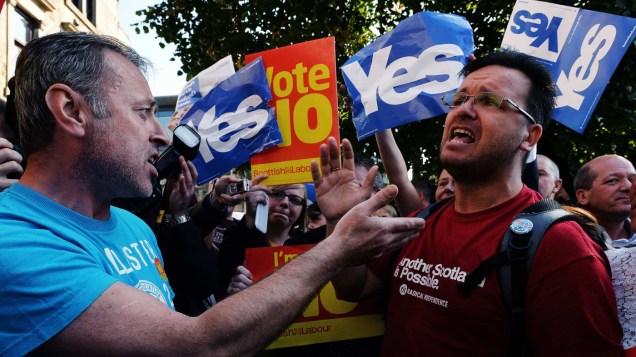
Chris Deerin painted a vivid and I believe accurate prediction of the future in a piece for CapX last year, comparing the likely fallout from the EU referendum to the aftermath of the 2014 Scottish independence referendum:

I have been bemused and fascinated by the number of English people telling me in recent weeks that “it won’t be like Scotland” – that this will be a more sedate affair, will inspire less passion, do less long-term damage. Well, perhaps. But, as we Scots say, ah hae ma doots.

What was most extraordinary about last year’s independence vote was the turnout: 84.5 per cent, the largest since the introduction of universal suffrage in the UK in 1918. Many of those voting were people who had never before even considered entering a polling station. What happened? There was certainly a long, noisy, impassioned campaign. There was global interest beyond anything we’d experienced before, but beyond this were two key factors that I believe drove this historic level of engagement.

The first was timing – the referendum came along after a decade in which every significant British institution had suffered either a scandal, a crisis of confidence or a loss of purpose, from Westminster to the media to the City to the military. The ties that bind had never been looser, respect for the status quo never lower.

Second, people were asked an existential question: who are you? This is not nothing. You will want to answer. You will want to answer on behalf of yourself and your family and your nation. Especially when you realise that the answer really matters – no safe seats to consider, no popular or unpopular incumbent MPs, no First Past The Post system ensuring only a few marginals get all the attention. Every individual counts. This is the big one, for keeps. So: in or out?

Deerin concludes:

Ultimately, we are about to ask the people of Britain an existential question: who are you? They will know that their voice counts this time, and that the consequences of the decision will be enormous and era-defining. They will think about themselves, their family and their country. They will get angry with the other side. Some very harsh words will be exchanged. Tempers will be lost and relationships fractured. And afterwards, whatever the outcome, the losers will be very sore, for a long time.

Not like Scotland? Don’t say you weren’t warned.

Like I say, I have no great desire to spend the next year walking around angry, holding nearly the entire political class in derision and many of my fellow citizens in open contempt. It does not warm my heart, in the same way that many left wing activists clearly revel in their anger and the righteousness of their cause, bleating about socialism and hating the Evil Tories.

But to my mind, there is a right way to vote in this referendum and a clearly, unambiguously wrong way to vote, and it is not hard to tell the difference between the two. The right way strikes a blow for democracy, self-determination and the normalcy of independence enjoyed by every single major country in the world outside Europe, while the wrong way would be to reward people who do not dare to advance their own positive argument for European political union, and so instead spend the bulk of their time pecking over the foibles, inconsistencies and other low-hanging fruit offered up by the hapless official Leave campaign.

In the event of defeat, then, the only question open to disappointed Brexiteers will be whether or not they use that anger and channel it toward some positive action to further the eurosceptic cause. This blog will do just that. Semi-Partisan Politics is in this for the long haul. Because as Pete North rightly says, you can stifle an idea like Brexit, but you cannot kill it.

I continue to fight this referendum campaign to win. But if we are fated to lose, I will not be going anywhere. If my generation is not to be the generation which restores democracy and self-governance to the United Kingdom then we can at least ensure that the flame of liberty is kept alive until it is time to try again – assuming that the doomed project does not implode under the weight of its own internal contradictions and the relentless pressure of global events, making the Brexit debate redundant.

And in the meantime, I and many others will make life as painfully difficult and unfulfilling as we can for all those in public life – particularly those in the Conservative Party – who come down on the wrong side of this referendum. That much I can promise.


European Union - United Kingdom - Britain - Flags

Top Image: CapX

Agree with this article? Violently disagree? Scroll down to leave a comment.

Follow Semi-Partisan Politics on TwitterFacebook and Medium.

When Deciding How To Vote In The EU Referendum, Do Your Own Research – All The Information Is Out There

It is becoming fashionable among the undecideds in the EU referendum campaign to complain about the supposed lack of available facts in the debate. But they don’t want facts – they want to be spoon-fed opinions and simultaneously reassured that these answers are unbiased

There is a rather nauseating new trend among those people who have somehow not yet come to an informed opinion on whether or not Britain should vote to leave the EU, whereby they blame their inability to reach a decision on the supposed lack of available facts handed down to them from on high.

We even see this cropping up in Question Time, as the Independent reports:

With 113 days until the EU referendum – that’s more than 15 weeks away – levels of stamina among the public for the flow of information being directed at them seem to be waning.

And when the opening question of BBC’s Question Time was on how much the referedum’s outcome would depend on “which side could scare us more”, one audience member put the problem laid before the country in very clear terms.

A young man said the decision to continue or terminate the 40-year relationship all rested on wondering who could be trusted to give impartial, accurate information.

“With all this scaremongering that’s going on in the media about this, I don’t see how us as the general public can make an informed decision,” he said, prompting nods from those around him.

[..] In the light of such risks, the audience member seemed to be concerned that he was given little information with which to make a safe and long-term decision.

“It’s just all sides saying different things and you just don’t know who to believe,” he said.

Boo hoo. It’s so difficult for undecided voters today, bombarded with passionate (but often fact-free) arguments from both sides. How can they possibly be expected to vote when the government and the meejah don’t give them a clear and unambiguous signal?

The amusing thing is that the young Question Time audience member asking the question would probably have absolutely no difficulty using the internet to research a complex and technical query relating to his malfunctioning Playstation or home cinema system. He is likely adept at finding YouTube tutorials which show how to disassemble and repair household appliances, and if he has a favourite sports team, band or celebrity he can quite likely find all manner of information about them online with no difficulty at all.

But when it comes to the workings and operation of his own country and the European Union which influences so many aspects of his life, it apparently does not occur to the questioner that he can use exactly the same skills he honed researching his fantasy football team to turn up some relevant, unbiased facts about the EU. The thought simply does not compute. When it is something glitzy and fun, he is more than willing to spend five minutes consulting Google and a few hours reading through the results that his search throws up. But on “boring” matters like the governance of the EU, what the European Union might look like in the future or how Brexit might actually be accomplished, he loses focus before he can finish typing a query into the Google search bar.

Of course he is not getting unbiased information from the media. Playing the role of high-minded, neutral arbiter has not proven to be very successful for most media outlets, nearly all of which instead churn out content which plays to the gallery of their readerships. That’s life. But it does not mean that the primary information needed to reach an informed and independent opinion is unavailable. It just means forsaking Monday Night Football or the Great British Bakeoff for one night and using the internet or local library to make oneself a more informed and engaged citizen.

EU referendum blogger Pete North has by far the best response to these aggrieved undecided voters who flaunt their ignorance of the debate as though it is an injury inflicted upon them by evil external authority figures withholding “the facts”:

I watched Question Time last night. I heard that whining bovine complaint once more “I just want to be given the facts”, expecting that it’s the government’s job to spoonfeed them with information, under the assumption government can and will. Could they be any more bovine?

As it happens, the facts are available insofar as anything is ever truly a fact. On something as comprehensive as the EU there is all the information you could possibly want. And while you can say a lot of bad things about the EU, one thing we can say is that it is transparent. It publishes most of what it does, the schedules, the regulations, the meeting minutes, the agendas and the agreements. It’s all there if you can be bothered to look for it. I didn’t learn what I know by reading John f*cking Redwood.

And when it comes down to it people say they want the facts but they don’t. You can give them the facts but it’s always “tl;dr”. So they want a digest version of the facts. So you provide them with that and it tells them things they don’t want to hear – and so they stick with their ridiculous notions that either we can pull out overnight and comes the dawn of a new utopia – or on the other side the europhiles pretend the European Union IS that new utopia.

What people mostly want is to be told what to think. To have someone else make the decisions. To not let the complexity of life disturb their comforting ignorance. It’s the “I pay politicians to do the politics” attitude. THAT is how we get in these messes to begin with. Politics is too important to be delegated to these bozos and if this referendum has revealed anything it is that most of our elected representatives are intellectually subnormal and know f*ck all about nine tenths of anything.

In the end, to have a proper democracy participation requires more than just turning up to vote. It requires that you educate yourself, keep yourself informed, keep yourself up to date and find the facts for yourself – and especially that you do not rely on the media – after all our media are very much part of that political class with even less clue than the morons we elect. If you can’t be bothered to engage on that level you really do deserve everything you get from your “leaders”.

It is a lazy, naive idea that we can outsource the running of our country to elected politicians and only perk up and pay attention once every five years or so when there is a general election. As Pete North rightly says, that is how we got into this mess in the first place – people failing to hold their leaders to any kind of account, while the politicians did as they pleased.

If you want to be told what to think by the government or those in authority, don’t complain when David Cameron comes back with a one-sided, pro-EU propaganda leaflet costing the taxpayer over £9 million to produce and distribute. That’s what you get for outsourcing your decision-making processes to people with vested interests.

But at least if you do so, you are in plentiful (I won’t say good) company. Neither the official Remain or Leave campaigns are exactly brimming over with deep expertise on the workings of the European Union, in which direction the EU will travel or the logistics of achieving Brexit.

Fortunately, there are those who stopped watching television for long enough to educate themselves on this important subject. A number of them have become experts in the subject, certainly far more so than the Westminster media with its superficial grasp of the facts, all while holding down day jobs. They are the the bloggers of The Leave Alliance, and the plan they promote for leaving the European Union in a safe, orderly and non-disruptive way is called Flexcit, or the market solution.

Start with that. Or start with the European Union’s own websites – as Pete North says, much of this information is “hidden” in plain sight. Begin your search for facts in any number of places, just don’t repeat the whiny, false complaint that there is no factual information available.


Postscript: The irony is that facts and figures supporting either side are not the most important thing in this referendum, while economic projections are particularly unreliable to the point of being pure fiction. This blog contends that the EU referendum comes down to more qualitative factors like democracy, sovereignty, governance and constitutional reform, which simply cannot be calculated in an Excel spreadsheet.


European Union - United Kingdom - Britain - Flags

Agree with this article? Violently disagree? Scroll down to leave a comment.

Follow Semi-Partisan Politics on TwitterFacebook and Medium.

Opposing The EU Is A Calling Based On Evidence, Not Blind Faith

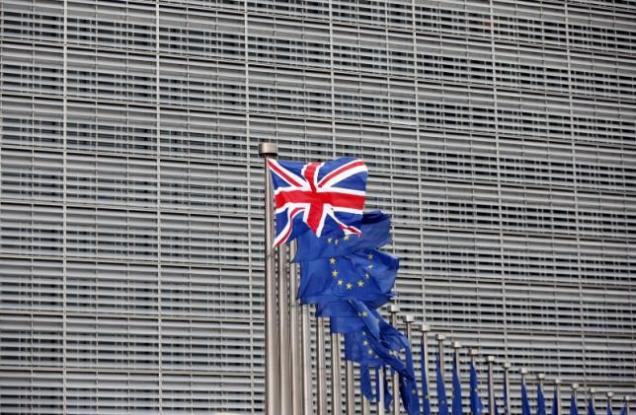
File photo of a Union Jack flag fluttering next to European Union flags ahead of a visit from Britain's Prime Minister David Cameron at the EU Commission headquarters in Brussels

Those who accuse Brexit supporters of being ideologically fixated and closed to alternative ideas are not only hypocritical – they have utterly failed to understand what makes eurosceptics tick

One of the drawbacks of being a committed eurosceptic and Brexiteer is that one tends to be painted as a swivel-eyed ideologue, someone whose opinion is not based on considered deliberation but on flawed, base gut instinct.

Thus the two most common insults hurled at eurosceptics – besides the cries of racism and xenophobia, which are sufficiently stupid that we can safely ignore them – are that we hate the European Union as an article of faith (or religion) rather than reason, and that we are closed minded and impermeable to new information (like David Cameron’s triumphant New Deal with Brussels).

Both of these accusations are unfair, although there is a grain of truth – many of us do indeed feel that our euroscepticism is a calling, or at least a cause important enough that we are willing to devote time, money and effort to its advancement.

When I attended the recent launch of The Leave Alliance, for example, it was one of the few times when I have actually been surrounded by large numbers of like-minded people on the Brexit issue, and it was rather humbling to be in the company of people whose curiosity and passion have led them to become experts on the history of the EU and the workings of international trade and regulation. Where it differs from religion, though, is the fact that our understanding of and distaste for European political union is not based on gut instinct or faith, but on a close reading of primary materials – treaties, statements, declarations, meeting minutes, autobiographies, trade journals, news articles – which those who support the European project can rarely match.

(I should note that I hardly consider myself to be such an expert – but through my involvement with The Leave Alliance I now have access to much better information and have shed much of the woolly thinking which clouded my previous euroscepticism).

So yes – we take our euroscepticism seriously. And those who see this as a flaw or a point of ridicule have generally failed to understand what it is about the European Union which offends us so greatly. They rhetorically ask what concessions might prompt us to change our minds – what it would take for us to stop worrying and love Brussels – thinking that by asking the question, they are revealing our blind, unthinking animosity to the harmless idea of countries coming together to trade and cooperate with one another.

Britain in Europe

In answer to this charge, Pete North has an excellent blog post from January, in which he begins with a simple fact – the signing of a protocol by Georgia and Turkey governing the electronic exchange of customs data for goods shipping – and masterfully spins it into a damning case against the European Union, proving that a harmonisation and integration-obsessed EU is actually a barrier to the kind of global co-operation which leads to economic growth and wealth creation.

Read the whole piece – entitled “The EU is not a trade bloc – it’s a power cult“.

Here is the key extract, which I will quote at length:

At the heart of it is a paranoia that without the EU the nations of Europe will once again be at war thus have set about creating a Europe that deprives nations of their democratic will to the ends of creating a single supreme government for Europe – one which actively prevents European nations speaking on their own behalf and getting the best for themselves and Europe.

And so when the question is posed as to what it would take for us hardline leavers to change our minds, we would have to address the central issue. Supranationalism. Were the EU to abandon supranationalism, to dismantle the institutions and cultural programmes designed to engender a single European demos, culture and government, to instead become a common forum for international progress, then I could change my mind. But then I would want to see it as a more open forum where our trading partners can also participate and shape the rules rather than having the EU dictating.

There are two basic problems here. Firstly, the entity a properly reformed EU would resemble already exists. It’s called the United Nations Economic Commission for Europe, and secondly, to demand reforms of this nature – of such era defining significance, we would effectively be calling for the dismantling of le grande project forever.

And so it remains the case that we are hard line leavers in that the EU cannot be reformed, will resist any attempt, and will never serve the best interests of its members – or even Europe. The EU is purely about the preservation of the EU political body that serves to advance the supranational agenda of its long dead architects.

The EU is not about trade, it is not about cooperation and it wouldn’t recognise multilateralism in a billion years. Everything it does is with the intent of affording itself more power and more control while passing the responsibility and the consequences on to member states to deal with. It is here where nuisance turns to malevolence and such an affront to democracy, based on a foundation of intellectual sand, should be resisted.

If we examine EU for what it really is, it’s a power cult – and one that will never stop until it holds all of the power. It confiscates our wealth then acts like some kind of benevolent Father Christmas, buying off all the institutions such as academia, NGOs and local authorities who would otherwise oppose it, so that when it comes to a popular vote the establishment will never turn on its paymaster.

It is for this reason true leavers oppose the EU with every fibre of their being. It is why opposing the EU is a spiritual call and a life obsession. It is why the issue will never go away and it is why a referendum will not settle the argument – because for as long as there are those who know what the EU really is, and its modus operandi, there will always be people willing to fight it to the bitter end.

And that pretty much sums up why committed eurosceptics – at least those affiliated with The Leave Alliance – take this issue so seriously, will not change our minds based on the evidence in front of us, and will not rest regardless of the outcome of the referendum on 23 June.

It comes down to the two S’s – supranationalism and sovereignty. Both cannot exist simultaneously – any key competence is either a sovereign matter or it is decided at the supranational level. And the European Union is an avowedly supranational organisation, spurning healthy intergovernmental cooperation in favour of the creation of a new layer of government over and above the member states.

Were the European Union content to fulfil the much more narrow remit claimed by many of its apologists (i.e. facilitating trade and cooperation) then an accommodation could potentially be reached. But as Pete North rightly points out, all of the evidence – and I mean all of it, to the extent that the Remain camp do not even bother to claim otherwise – is that the EU’s ambitions are much grander. They always were – that’s why the organisation which they pretend is just about trade and cooperation has a flag, an anthem and a parliament.

If anybody is being dogmatic and impermeable to patently obvious facts, it is in fact the Remain camp, who possess a superhuman ability to ignore the federalist facts staring them in the face, and somehow pretend to themselves that events of historical record and verbatim quotes from numerous EU officials did not happen and were not said. If one is not an enthusiastic European federalist, one has to be either ignorant or in extreme denial to believe that the EU as it stands is just a trading bloc, or that there is not far more integration planned for the near future.

So who is operating on blind faith here – the Remain campaign or those fighting for Brexit? While there are plenty of loud and ignorant people on both sides, those EU apologists who naively or deceptively cry “nothing to see here!” while all the edifices of a European state are brazenly built around them should be held in particular contempt.


European Union - United Kingdom - Britain - Flags

Top Image: REUTERS/Francois Lenoir/Files

Agree with this article? Violently disagree? Scroll down to leave a comment.

Follow Semi-Partisan Politics on TwitterFacebook and Medium.