Sandi Toksvig’s Hitler Joke & The Birth Of The British (Left Wing) Tea Party

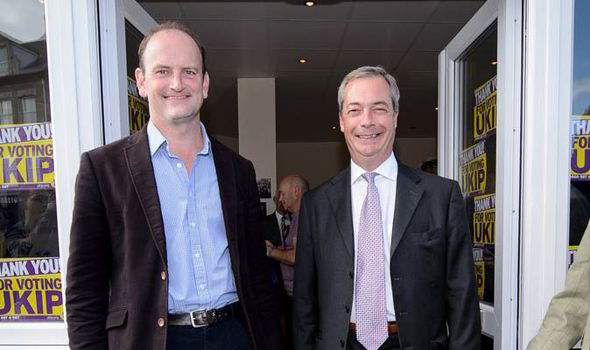
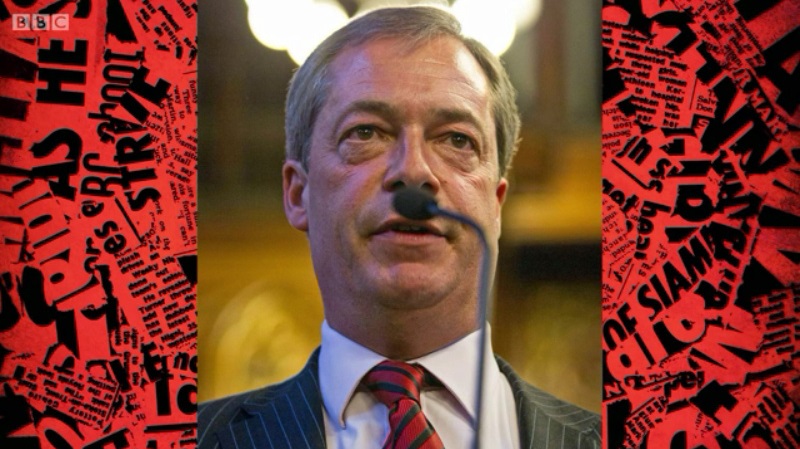
Nigel Farage - Hitler Moustache


When is it okay to make obscene Hitler comparisons and to mock cancer survivors, while still claiming to be an enlightened, privilege-checking, compassionate progressive?

Well apparently if your name is Sandi Toksvig and you are speaking at the Hay Festival – the “Woodstock of the mind“, according to Bill Clinton – then you have a license to do just that while still being taken seriously as a decent, responsible individual.

The Spectator gives an account of Toksvig’s inflammatory off-the-cuff remarks:

Toksvig saved her most cutting remarks for Nigel Farage. ‘I watched the count for South Thanet and I found myself cheering for the Tory candidate,’ she told the audience. ‘I hate Farage for that, I really do. He made me cheer a Tory, the b—-rd.’

She then went on to refer to the testicle the Ukip leader lost to cancer, joking about what Farage and Hitler have in common: ‘Farage kept having pictures of him defaced with Hitler moustaches. I mean he’s not really like Hitler. Okay, he has a German wife, he hates foreigners, he only has one testicle and he was defeated.’

Imagine now that Sandi Toksvig had launched a crass verbal tirade against a senior politician of any other party while living it up at the Hay Festival. Suppose that she had made a joke about David Cameron’s late son, Ivan, or chortled to herself as she regaled her audience with a wisecrack about Ed Miliband’s deviated septum. Hell, imagine that Toksvig had just made fun of Ed Balls’ mild stammer.

If Toksvig had done any of these things it would have been a national scandal – guaranteed front page stories in all the national newspapers. Forget any more lucrative gigs on BBC Radio, Toksvig would have counted herself lucky to work as a volunteer on hospital radio after so openly and tastelessly mocking an establishment party leader.

Continue reading

Voting UKIP – No Buyer’s Remorse Yet


Having made the immensely difficult decision to abandon the Conservative Party (which itself has largely abandoned its own conservatism in the successful hunt for centrist votes) and lend my vote to UKIP in the general election, I have been waiting expectantly for Ukipper buyer’s remorse syndrome to kick in with a vengeance.

Surely by now, in the cold light of day – and following a period of rather amateurish internal warfare over the party leadership – I should be consumed with confusion and shame at my actions? Well, two weeks on and I’m still waiting.

In some ways, this is only to be expected – UKIP actually declined in terms of Westminster representation, and to suffer buyer’s remorse one has to actually have gained something. And since a majority Conservative government was the least worst option of all the possible outcomes involving the major parties, again there is little cause for regret – we will finally have our EU referendum and a few more token efforts will be made to restrain the growth of the state.

But this isn’t why I have no regrets about my voting decision. I stand behind my choice because nearly every objection to UKIP’s policies – both in politics and the popular culture – is based on a two-dimensional cartoon villain caricature of what it is to be a small government eurosceptic, and because so very many of the people leading the anti-UKIP mockery are virtue-signalling simpletons who couldn’t construct a coherent political thought if one came packaged with IKEA-style self-assembly instructions.

Take this effort by Russell Howard, released just before the election, shown in the video above.

Continue reading

The Battle For UKIP’s Soul, Part 2

Douglas Carswell - Nigel Farage - Battle for UKIP's Soul


Only a few short years ago, this blog would never have imagined uttering the shocking words “I agree with Nigel Farage”. But in the ongoing internal warfare within UKIP, Farage’s latest intervention is a welcome one.

Yesterday, this blog wrote about the coming battle for UKIP’s soul, as evidenced by a growing movement within the party urging them to move to the political centre, a potentially fatal error of judgement.

This misguided movement should be distinguished from other calls to change the tenor and tone of the party’s messaging – this blog fully supports a calmer, more reasoning style of political engagement by eurosceptics and advocates for individual liberty, but not at the expense of jettisoning core commitments to smaller government and increased personal freedom.

And on this front, Nigel Farage’s latest statement gives some encouragement. From the Telegraph:

Nigel Farage has refused calls to move to the centre ground as tensions with his deputy and only MP grow ahead of meeting with MEPs this week.

The Ukip leader said he would continue to speak out on controversial topics like immigration, despite pressure from his deputy chairman Suzanne Evans and Douglas Carswell.

In television interviews on Sunday, Miss Evans had said that Ukip “needs to go” more into the centre ground, while Mr Carswell said Mr Farage had to moderate his “tone”.

But a defiant Mr Farage told The Daily Telegraph: “I will continue to lead Ukip as I have, broadening policies.

“They don’t want the party to attract opprobrium but if you take on the political class on tough issues you attract opprobrium.

Quite right too. The constant scorn and attacks, just for holding political opinions that would be considered perfectly common sense and mainstream in other countries such as the United States, can become wearing after a time. And as the ad hominem attacks increase the temptation to moderate the message can be very strong indeed. But it must be avoided – for now is the time for eurosceptics and believers in smaller government to stay the course, not dilute their message.

None of this is to argue that UKIP should not tone down the anti-immigration rhetoric or stop courting controversy where it can be avoided. For instance: though the impact of EU migration on the unskilled British workforce is undeniable, there is probably no further mileage to be gained from pointing this out. And though it may be quite right to insist that the National Health Service should cater for British citizens and taxpayers first and foremost, using the example of foreign HIV sufferers was always going to attract the ire of Britain’s virtue signallers and professional outrage-mongers.

So by all means, UKIP should stop doing the things which unnecessarily drive up the party’s negative ratings, and even prepare to take a back seat in the coming Brexit campaign if this will give the broader eurosceptic movement the greatest chance of success. But  it would be unpardonable to change the manifesto commitments to national defence, refocusing international aid, simpler and flatter taxes, welfare reform and smaller government just because they do not fit with a “centrist” political strategy.

Nigel Farage was quite right when he said that opposing the bland British political consensus will attract opprobrium – you know you’re really closing in on the target once you start taking heavy enemy fire. Perhaps UKIP’s leader has started following this blog, which said precisely the same thing (in almost the same words) only yesterday:

Suzanne Evans apparently now believes that UKIP and conservatives in general are to blame for the often hysterical response of many people to right-wing ideas, and that they need to change their “brand” so that people want to “sing and dance” about their beliefs rather than remaining shy Tories or shy Ukippers. But this misses the point. To avoid public opprobrium would be to adopt the same tired, worn-out centrist policies which have led the establishment parties to such unpopularity and irrelevance.

UKIP received just under thirteen per cent of the national vote in the general election because that is currently more or less the ceiling of support for eurosceptic, quasi-libertarian thinking in Britain. But the correct response to this fact is not for UKIP to change the policies to encompass a larger number of potential voters. The correct response is to engage in debate and win over more people to the pro-sovereignty, pro-personal freedom worldview – raising the ceiling rather than lowering the ambition.

UKIP’s future currently stands on a knife-edge, both in terms of ideological direction and the party’s continued political viability – though the two are inextricably linked. On the one hand, there is the impulse to welcome the new ranks of ex-Labour supporters by adopting a more left-wing, big government approach, but on the other is the fact that any move to the centre or embracing of the stale post-war consensus is likely to result in UKIP ultimately becoming seen as just “more of the same”.

The short term political benefit of reducing negative headlines and winning over fickle left-wing voters without doing the hard work of really changing hearts and minds in favour of an anti-big government, pro-freedom agenda is just that: a short term solution. It may temporarily increase support and polling numbers, but only at the expense of shredding UKIP’s hard-won claim to represent a genuinely different political choice.

Britain has more than enough parties eager to bang on about “our NHS”, mindlessly defend the public sector and blindly support the EU, all as part of their grubby quest for centrist support. We do not need another such party.

And UKIP must follow Nigel Farage’s lead and resolutely refuse to become just another party of centrist compromise and disappointment.

The Battle For UKIP’s Soul

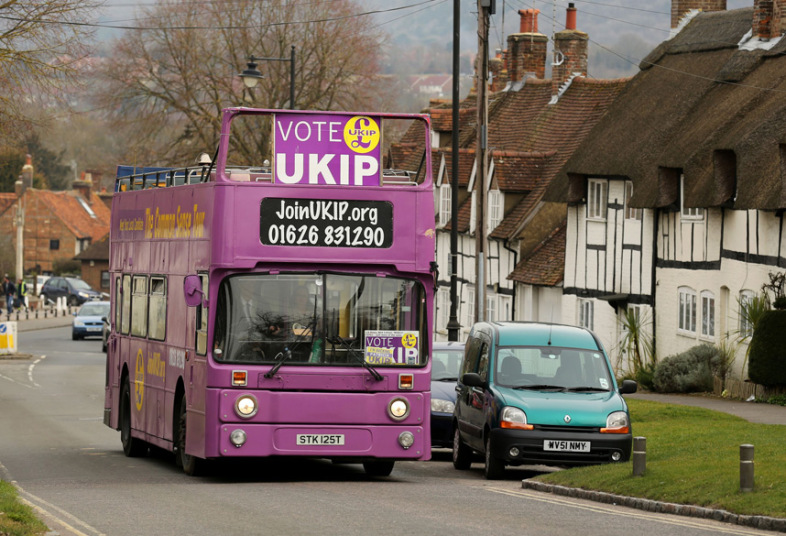
UKIP Battle Bus - General Election 2015


More concerning news about UKIP from today’s Guardian:

The author of Ukip’s general election manifesto has said the party should concentrate on “compassionate, centre-ground” policies, denying the party was riven with bitter infighting.

Suzanne Evans, the party’s deputy chairwoman, said the party’s post-election troubles were related to advisers who had now left. “I don’t think anyone hates anyone,” she said on Sunday […]

“I think if you look at the manifesto – and let’s not forget I wrote the manifesto – I think it was very compassionate, very centre-ground, very balanced and Nigel called it – bless him – the best manifesto ever written. So it was a great sort of feather in my cap. That I think is where he wants to take the party and where the party needs to go.”

On “shy kippers”, a phenomenon repeatedly alluded to by Farage during the campaign, Evans said it was crucial to find out why those people were reticent in showing their support for the party. She added: “If we’ve got it absolutely right and if our party brand is working at the moment, why don’t people want to sing and dance about it?”

This was always the danger for UKIP – not so much the bitter infighting, which is disappointing yet predictable, but rather the growing impulse to move further away from its guiding principles toward the political centre.

The frustration within UKIP is quite understandable – the party dramatically increased its level of support from 2010 to 2015, continuing an exponential rise over the past five years, but was rewarded with only one Westminster seat thanks to the diffusion of its support across the country.

And looking at the parties which performed well (namely the Conservatives and the SNP) it is easy to come away with the impression that the path to electoral success lies in wittering on endlessly about public services – the Tories because they only sold their Long Term Economic Plan on the basis that a stronger economy means more cash for things like the NHS, and the SNP because of their reflexive opposition to ever shrinking the state.

Smarting from the loss of half its Westminster representation and trying to keep a lid on very public infighting which threatens to make the party look foolish, the impulse to move to the political centre is clearly very strong. But it is equally misguided – the British political centre is already overcrowded, with the rudderless Labour Party and David Cameron’s Coke Zero Conservatives fighting over the same ground.

Suzanne Evans apparently now believes that UKIP and conservatives in general are to blame for the often hysterical response of many people to right-wing ideas, and that they need to change their “brand” so that people want to “sing and dance” about their beliefs rather than remaining shy Tories or shy Ukippers. But this misses the point. To avoid public opprobrium would be to adopt the same tired, worn-out centrist policies which have led the establishment parties to such unpopularity and irrelevance.

UKIP received just under thirteen per cent of the national vote in the general election because that is currently more or less the ceiling of support for eurosceptic, quasi-libertarian thinking in Britain. But the correct response to this fact is not for UKIP to change the policies to encompass a larger number of potential voters. The correct response is to engage in debate and win over more people to the pro-sovereignty, pro-personal freedom worldview – raising the ceiling rather than lowering the ambition.

Of course this won’t be easy. It takes time – and the gradual accumulation of evidence that the centrist policies pursued by the other parties are failing – to persuade people  that a radically different direction is needed. And in Britain, so accustomed to the post-war settlement policies of an active, interfering government and welfare state, persuading people that lower taxation and greater freedom can result in more prosperity rather than less is particularly challenging.

This means that despite the strides made by UKIP since the party was founded, dramatic electoral success was never going to come in 2015, and nor will it come in a rush in 2020. Weaning people away from big government is a long, difficult process – especially in a country where 52 per cent of the population receive more in government benefits than they contribute in taxes.

But selling out by becoming just another centrist party that drones on about “compassion” while failing to restrain the state and free the individual is the worst possible idea, and would represent a grave betrayal of all those people who were originally attracted to UKIP’s cause.

UKIP is clearly being moved by the impulse to make a comfortable home for the legions of former Labour voters who have switched their loyalty to Nigel Farage, and we are now witnessing the beginning of a battle for the party’s soul. But the answer is not to recreate the Labour Party under a purple banner – to do so would be hugely insincere, and would undermine the true foundation of the party’s support.

Four million votes in a general election is a huge accomplishment, and the temptation to exploit and artificially increase this number by repositioning to the left is immense. But a principled political party – the party to which this blog, after much soul searching, lent its support on 7 May – should not seek quick shortcuts to greater public favour.

Real progress is difficult, and comes slowly. UKIP’s warring factions must not forget this simple truth.
UKIP Must Step Back From The Brink

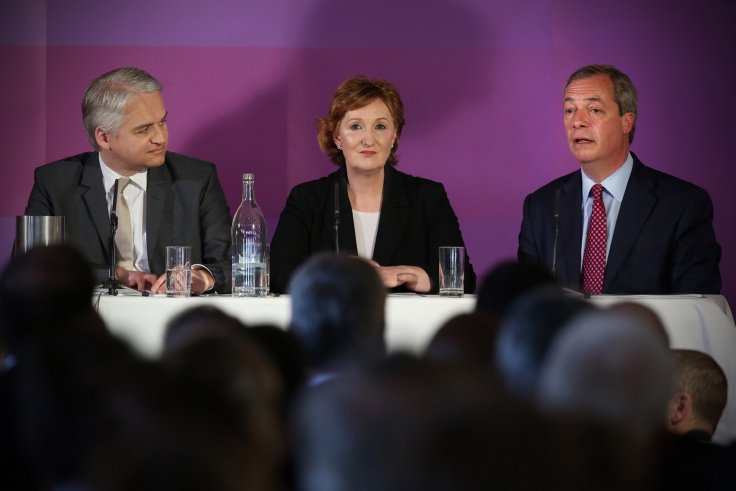
UKIP Leadership Crisis - Patrick OFlynn - Nigel Farage


It’s bad enough that the nearly four million people who voted for UKIP in the 2015 general election are represented by just one MP in Westminster, thanks to Britain’s punishing electoral system.

But now, some personalities within UKIP seem determined to put their own personal egos ahead of the eurosceptic cause at a particularly sensitive time for the still-maturing party, placing all of this hard work in jeopardy.

From The Spectator:

Ukip is doing a very good job of convincing voters it is not a serious party. After days of shadowboxing over the use of Short money to fund the party in Westminster, its economic spokesman Patrick O”Flynn has broken cover to attack Nigel Farage — and he certainly isn’t holding back. In today’s Times, O’Flynn says the Ukip leader has become ‘snarling, thin-skinned, aggressive’, instead of a ‘cheerful, ebullient, cheeky, daring’ politician. He goes on to describe the week of turmoil since Farage quit as leader, before withdrawing his resignation four days later.

And the Guardian:

Continue reading