Stik’s Street Art, Like His Life Story, Is Moving. But This Worship Of The NHS Is Dangerous

NHS worship - Stik - National Religion

In secular Britain, the only things left to worship are ourselves, government and the NHS. And boy, do we do it well

Here is an interesting variant on the usual deification of the NHS we are used to seeing and hearing from the organisation’s cult-like defenders.

From the Hackney Citizen:

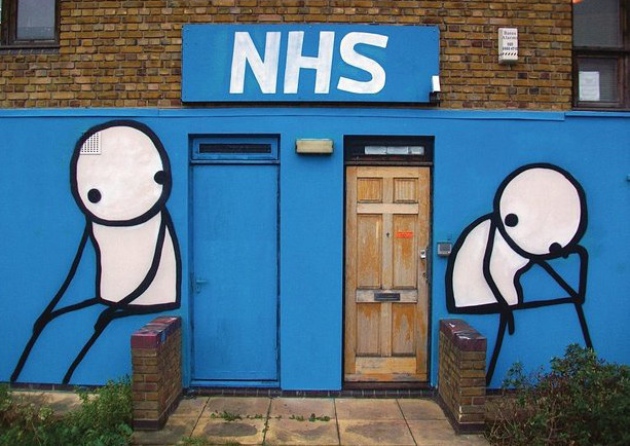
Stik, the once-homeless graffiti artist, whose stick-like figures adorn the streets of East London and beyond, has announced that a full set of his NHS Sleeping Baby print is to be auctioned at Christie’s later this month.

The prints, expected to sell for £2,000 to £3,000 as a set of four, will raise money for the Homerton University Hospital NHS Foundation Trust Art Charitable Fund.

This is not the first time Stik has used his art to help the hospital. The original ‘Sleeping Baby’ mural can be seen in the garden of Homerton Hospital itself, and last year Stik sold £50,000 worth of prints of the image with all the proceeds going to the Homerton Hospital’s art room.

The iconic image of a sleeping baby, painted in Stik’s usual style of block colour and thick-black lines, has since been adopted as a symbol by NHS workers. “It represents the vulnerability of the NHS and the feeling of fondness we have for it. The NHS is our baby and we have to protect it,” Stik says.

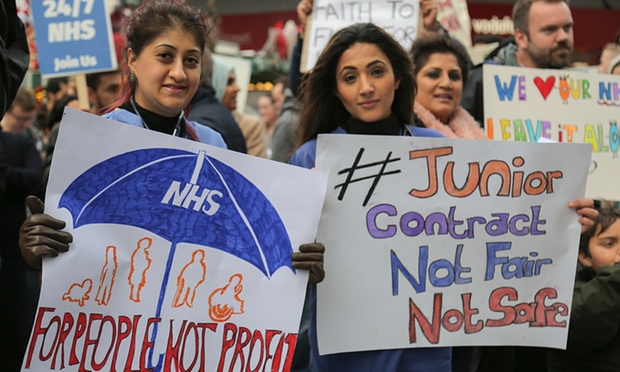
During the recent junior doctors strikes, the image was printed on placards with slogans such as ‘Hands off our NHS’ and ‘The NHS is our baby’.

To be clear: doing anything to raise money for hospitals is a selfless and noble act, to be applauded. That much is great. What is troubling are the sentiments expressed which accompany the philanthropic act – in this case, an almost slavelike devotion not to the idea of healthcare, hospitals or the work of medical professionals, but rather to one specific organisation, government department and method of healthcare delivery.

Speaking about the NHS as a vulnerable infant, almost like the Christ child, is not healthy behaviour. Nor is placing ourselves in the position of loving parents to this baby, charged with protecting it from all harm (though it does make a refreshing change from portraying ourselves as the children, being tended to by the watchful parent of big government).

Equally offensive is the way that NHS cultists presume to speak for everyone in the country, and routinely pontificate about things like “the feeling of fondness we have for it”. Oh do we, now? I’m fairly certain that NHS-loving drones are indeed in the majority, but I would also wager that there is a not insignificant number of people who fully support the idea of universal healthcare and are very grateful to doctors and nurses, but who have very little attachment to Britain’s unique model of centralised, government-owned delivery.

And yet the NHS cultists, much like the Princess Diana cultists nearly two decades ago, have the nerve to speak on behalf of us all. They declare on our behalf just how much we love the NHS and will fight to protect it from change, just as the Diana cultists wept into every passing television camera, sang along to Elton John and declared the entire nation to be in mourning.

Stik is a gifted artist, and many people find his murals poignant and beautiful. But we should not allow our respect for an artist and sympathy with his powerful life story to cause us to unquestioningly swallow NHS propaganda, hook, line and sinker. Other countries, without an NHS of their own, manage to build and operate hospitals too. Many of them provide their citizens with healthcare free at the point of use. Many also help the homeless, or indeed anyone in urgent need of medical care. Believe it or not, generosity, compassion and public spiritedness are not uniquely British values.

Whether we are allowing Stik to lead us in worship of the fifth biggest employer in the world, childishly painting the NHS logo on our faces, wearing it on our clothes or propelling a schmaltzy NHS Choir ballad to the Christmas No. 1 slot in the charts, in each cases we are disengaging our brains and allowing ourselves to be swept up in a cult rather than thinking rationally. Maybe the NHS was just what Britain needed back when we were struggling to pick ourselves up from the rubble of the second world war. But 68 years later, even in this age of globalisation, no other country has chosen to copy our approach. Not one. Shouldn’t that tell us something?

Faith is important*, but it is generally best applied to the spiritual realm. In the temporal realm here on Earth, we are able to look at evidence, test hypotheses and innovate new solutions when old ideas and ways of working become obsolete. Nowhere is this more true than the field of medicine. If we or a loved one were gravely ill, few of us would put our trust in a faith healer or wait for a divine miracle alone to provide a cure. Indeed, we tend to scorn and even prosecute those who do so.

And yet when it comes to the system of healthcare delivery we choose for our country, we proudly spurn new information and cling desperately to the familiar, seizing on any news story which confirms our present pro-NHS biases while simply ignoring heretical contrary evidence. In other words, we act entirely through (misplaced) faith, not reason.

Of course we should all hope that Stik’s Sleeping Baby prints raise much money for the Homerton University Hospital NHS Trust when they are auctioned – nobody disputes the worthiness of the cause. But in post-religious, increasingly secular Britain, we should be very wary of what we choose to fill the void once occupied by the Church. The human urge to worship has clearly not been vanquished, and venerating the NHS as we currently do is terrible for us, and calamitous for our flailing healthcare system.


* Long-time readers will recall that I am a Roman Catholic
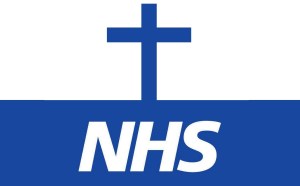
 

NHS Logo - Cross - National Religion - Worship - Idolatry

Top Image: London24

Agree with this article? Violently disagree? Scroll down to leave a comment.

Follow Semi-Partisan Politics on TwitterFacebook and Medium.

The Junior Doctors’ Strike Is A Tawdry Pay Dispute, Not A Principled Defence Of The NHS

NHS Junior Doctors Contract Strike

This strike is about money, not patient safety or the future of the NHS

James Forsyth speaks sense on the naivety and arrogance behind the ongoing junior doctors’ strike:

This walk out, the first all-out strike since the NHS’s creation, isn’t over some issue of high principle. It’s about money. The main sticking point in their negotiations with the government is that Saturday shouldn’t be treated as a normal working day.

The BMA’s suggestion at the weekend that it was prepared to call off the walk out if the government didn’t impose the new contract, but instead pilot it for a while, suggests that even the doctors themselves fear they’ll lose public sympathy by going ahead with this strike.

Yes. The fact that the final sticking point in negotiations is around money reveals all of the previous lofty, high-minded concerns about public safety and “tired doctors making mistakes” to be the cynical campaign rhetoric that it is.

Forsyth hammers home the point on pay:

Under the government’s offer, those junior doctors who are on duty one Saturday in four will receive a premium pay rate of 30 per cent. This means they are, on average, getting paid more for working on Saturdays than nurses, midwives and paramedics. The proposed deal is also more generous than what firefighters and police officers get for doing their job on a Saturday. This is hardly grounds for a walkout that will inevitably put lives at risk.

Junior doctors are right that they are paid less than doctors in some other countries. But this is, in large part, because the state has heavily subsidised their education. By the time a doctor has finished their foundation training, the state has already spent a quarter of a million pounds on them.

Until doctors are prepared to pick up more of this tab themselves, they shouldn’t complain that some of those working in other health systems are paid more than them. Indeed, it would be sensible of the state to actually require medical students to commit to working in the NHS for a certain number of years before funding their training—something that it doesn’t currently do. Junior doctors should also remember that if they stay in medicine and become consultants, they will find themselves in the top two percent of earners in this country.

This blog is no fan of the current Conservative government and no great proponent of the latest NHS reforms. But for the sake of decency, this strike needs to be broken. And then we need to have a long, hard national conversation about why an advanced democracy like Britain is facing a national strike of any kind in the year 2016.

Hint: if we did not still have a monolithic nationalised health service – the fifth largest employer on the planet serving the 22nd largest country by population – we could never be in the ludicrous position of suffering a strike of all the junior doctors in the land. Doctors would not all share the same employer, patients would not all rely on the same medical service and we would all be spared this drama.

Something to mull over as the accusations and counter-accusations fly.


Save Our NHS

Agree with this article? Violently disagree? Scroll down to leave a comment.

Follow Semi-Partisan Politics on TwitterFacebook and Medium.

Responding To The Junior Doctors’ Strike

An inspiring (if unattainable) example from across the Atlantic

How to respond to a national walkout by government employees who perform a critical job for a large organisation, and who cynically advance their demands for more money under the false banner of concern for public safety?

Ronald Reagan offers us one blueprint, from back in that dim and distant time when both Britain and America were blessed with leaders who (for their various faults and blind spots) were not afraid to lead, and to take bold and decisive action when necessary.

This is the speech Reagan gave in August 1981 when PATCO, the American air traffic controllers union, called an illegal strike (federal workers being prohibited from striking under the Taft-Hartley Act) demanding, among other things, a 32-hour work week:

This morning at 7 AM the union representing those who man America’s air traffic control facilities called a strike. This was the culmination of 7 months of negotiations between the Federal Aviation Administration and the union. At one point in these negotiations agreement was reached and signed by both sides, granting a $40 million increase in salaries and benefits. This is twice what other government employees can expect. It was granted in recognition of the difficulties inherent in the work these people perform. Now, however, the union demands are 17 times what had been agreed to – $681 million. This would impose a tax burden on their fellow citizens which is unacceptable.

I would like to thank the supervisors and controllers who are on the job today, helping to get the nation’s air system operating safely. In the New York area, for example, four supervisors were scheduled to report for work, and 17 additionally volunteered. At National Airport a traffic controller told a newsperson he had resigned from the union and reported to work because, “How can I ask my kids to obey the law if I don’t?” This is a great tribute to America.

Let me make one thing plain. I respect the right of workers in the private sector to strike. Indeed, as president of my own union, I led the first strike ever called by that union. I guess I’m maybe the first one to ever hold this office who is a lifetime member of an AFL – CIO union. But we cannot compare labor-management relations in the private sector with government. Government cannot close down the assembly line. It has to provide without interruption the protective services which are government’s reason for being.

It was in recognition of this that the Congress passed a law forbidding strikes by government employees against the public safety. Let me read the solemn oath taken by each of these employees, a sworn affidavit, when they accepted their jobs: “I am not participating in any strike against the Government of the United States or any agency thereof, and I will not so participate while an employee of the Government of the United States or any agency thereof.”

It is for this reason that I must tell those who fail to report for duty this morning they are in violation of the law, and if they do not report for work within 48 hours, they have forfeited their jobs and will be terminated.

Obviously such a feat could not be repeated by the British government in its dealings with striking NHS staff – though the case for banning strikes by national public sector workers becomes more compelling by the day.

But if repeating Reagan’s actions are not possible for political and logistical reasons (firing 11,000 air traffic controllers is much easier than firing 55,000 junior doctors, not to mention the fact that the junior doctors are operating within the current law), at least we might hope that the government will act in the spirit of Reagan. And in the spirit of Reagan, the government should refuse to give any further ground to striking public sector workers who are willing to cynically jeopardise public health in a dispute which now rests primarily on the question of Saturday payand is certainly nothing to do with patient safety or the continued existence of the NHS.

This blog firmly believes that the NHS model is broken and than a system conceived in the 1940s is barely adequate to the demands of the 2010s, and will be hopelessly inadequate to the demands of the 2040s. If we are to persist with a public option, then there is no reason why healthcare should continue to be provided by a monolithic government organisation, the fifth largest employer in the entire world (with all the baggage, internal politics and resistance to change which that stunning fact implies).

There is no good reason why we cannot look closely at the healthcare systems of countries such as France, Germany, Japan or Canada and redesign our system accordingly – if only we could rediscover our sense of national ambition and shed our increasingly unwarranted pride in the NHS. We could even still call the new healthcare system “the NHS” if our cult-like attachment to the brand really runs so deep.

The time is long overdue for Britain to have that national conversation, endlessly kicked down the road by politicians terrified of upsetting nervous voters and governments which have proved constitutionally incapable of daring mighty things. But first we need to overcome this peculiar, anachronistic industrial dispute – one which belongs more comfortably in 1976 than 2016 – and end the junior doctors’ strike, by imposing the current contract offered if necessary.

And in that effort, let the spirit of Ronald Reagan guide Jeremy Hunt.


NHS Worship - London Olympic Games 1

Agree with this article? Violently disagree? Scroll down to leave a comment.

Follow Semi-Partisan Politics on TwitterFacebook and Medium.

The Immaturity And Cynicism Of The NHS Junior Doctors’ Dispute

Junior Doctors Strike - NHS - National Health Service - Vigil

The junior doctors lost the moral high ground when they decided to portray a debate about pay and conditions as a high-minded effort to “save the NHS”

James Kirkup has a great piece in the Telegraph in which he charges that the junior doctors’ dispute has reached an impasse not because of government intransigence but because many junior doctors are arguing an inherently political case from a position of naivety and political inexperience, and so will not concede the validity of any opinions other than their own.

Read the whole thing. But it is worth noting these excerpts in particular:

Some of this is about basic competence. The doctors and their leaders have done a very poor job of explaining why they are striking, offering a range of confused and changing justifications. Many doctors seem unaware of the position taken in negotiations on their behalf by their trade union (short summary: if the Government had agreed to pay more for Saturday working, the BMA would have settled and there’d be no strikes) and believe their strike is not about money.

This in itself is quite damning. All the high-minded talk about patient safety and “tired doctors making mistakes” suddenly begins to look a wee bit cynical when it turns out that the BMA would have taken the deal if only there was more money on offer. Was the extra pay all going to be spent on Pro Plus and Red Bull? Unlikely.

But this is the really interesting point:

Yet the doctors’ failure of understanding goes beyond tactics into something more fundamental, an unwillingness or perhaps just an inability to appreciate that politics is about reconciling the diverse interests and desires, that no one gets things all their own way.

Simply they don’t understand the conflict they’re in. Many, engaged in politics for the first time, cannot understand why the Government will not do exactly as they want; for them it’s unthinkable that others would not accept the doctors’ word on how to fund and structure the NHS as final. Any course of action but theirs is not just unacceptable but immoral.

As for those on the other side of this dispute, there is apparently no possibility that their motives could be honourable. Throughout this dispute I’ve not yet seen a junior doctor admit even the possibility that Jeremy Hunt, NHS Employers, David Dalton, Bruce Keogh or any of the main players on the employer side might also be acting in good faith, doing things they believe necessary and in the public interest.

Instead, Mr Hunt and his officials are routinely accused of venality and self-interest, and worse. I keep a little file of choice emails and tweets from doctors. It contains evidence of members of the profession making statements in public forums that Mr Hunt is psychopathic or suffering from various other clinical conditions. (There were also a number of homophobic slurs aimed at Mr Hunt, but that was a senior consultant, not a junior.) I can only conclude that the doctors concerned are so convinced of their own righteousness that they cannot admit that those who take a contrary view are anything but immoral.

Here we have Labour’s self-righteousness syndrome all over again, but this time the patient is not a political party but a large and vocal special interest group within the public sector. Just as was the case with those convinced that the Tories are evil vampires and that Ed Miliband was heading for victory in last year’s general election, so the junior doctors and their supporters seem convinced that the government is motivated purely out of malice, and that they are unambiguously in the right. And we all know what happened on May 7th.

Kirkup continues:

Other doctors display an almost touching lack of insight into how some aspects of their own working lives (a job for life, steep pay progression, huge pensions) are simply unobtainable dreams for most workers, even those who also got good A-levels and spent years studying at good universities.  One junior doctor (again, I won’t name him) last week reprimanded me for writing about doctors’ £1 million pension pots on the grounds that the retirement such funds deliver is “comfortable” but “not extravagant”.

Likewise the tendency to overlook (or simply not know) the fact that many of their problems (antisocial hours, weekend working, growing workloads and static or falling workforces) are common to many other professions and trades, many of whom do not enjoy the same benefits as doctors.

What the junior doctors (and those who support them) fail to understand is that nearly every public sector industrial action is fought on the grounds of public safety while really being about something else. Relatively well paid people (compared to the average wage) walking off the job in a dispute about money and working hours does not elicit as much public sympathy as casting themselves as the only people willing to take on the government on a grave matter of public safety, so simple self-interest dictates that any union (including the BMA and junior doctors) will emphasise the latter over the former.

Consider: how many striking junior doctors living in London would have tutted with frustration during the last tube strike called by the RMT, and fumed to their friends that tube drivers are incredibly well paid, should be grateful for what they have and get back to work, Night Tube be damned? The RMT’s dispute was based in large part on safety concerns, just like the junior doctors. Are the tube drivers lying while the junior doctors are telling the truth? Is there something inherently more virtuous in a doctor than a train driver?

This, too, is worrying:

Spare a thought here for the impact this outlook has on the doctors themselves.  Having become so utterly convinced of the rightness of their cause, many suffer genuine distress when their cause meets resistance or challenge.  Some, sadly, are not robust enough to encounter such pressures without experiencing genuine harm. That harm should weigh heavily on the consciences of the BMA leaders who have encouraged young and politically-inexperienced people to seek out confrontation in the harsh arena of public debate.

This rings alarm bells, because it is the same way that we now speak of Safe Space-dwelling students, grown adults who by adopting a toxic ideology have come to see themselves as perpetually vulnerable victims in constant need of protection from higher authorities. One could take this sentence – “some, sadly, are not robust enough to encounter such pressures without experiencing genuine harm” – and apply it equally to those wobbly-lipped students who are now killing academic freedom and free speech on our university campuses.

In fact, we may now be witnessing the first major conflict between the Safe Space generation (many junior doctors have only recently graduated university) and the realities of the labour market and public sector wage restraint – only everything is made doubly toxic because the dispute involves the one subject about which almost no Briton is capable of thinking rationally: the NHS.

This blog contends that the mere fact that national collective bargaining is still making headlines in 2016 rather than 1976 shows that Thatcher’s work is far from finished, and that if we were not still lumbered with a national health service we would not be facing the prospect of an all-out national walkout by healthcare professionals. After all, nothing about public healthcare mandates that it must be provided through a monolithic state-owned organisation, despite the best efforts of NHS apologists to pretend that our options are the status quo or the American system.

Maybe the doctors holding candles in an overwrought silent vigil for the NHS (see cover picture) are entirely genuine. Maybe they have convinced themselves that this dispute really is purely about patient safety and “saving the NHS”, and nothing more. But the junior doctors can no longer plausibly claim that this is about patient safety, or “saving the NHS”, because we now know that these are side issues brought cynically into the debate by the BMA and credulous activists in a well worn attempt to drum up public support.

This does not mean that each one of the Conservative government’s intended reforms are sensible. The idea of a 24-hour NHS is more slogan than policy, while statistics about weekend deaths have been cynically misrepresented – that much we can concede to the BMA. But when your pay dispute is with one of the largest organisations in the world, and by far the largest employer in Britain, then everyone who pays for that service gets to have a say, including (or even especially) a government elected partly on a manifesto to make changes to that health service, whether or not those changes happen to be smart. By taking the public coin the NHS is inherently political, and those working for it cannot complain when those outside the organisation seek to wield their own influence.

And from a purely tactical standpoint, James Kirkup is right – the junior doctors and their representatives in the BMA have bungled this dispute badly. With their overwrought, hysterical claims that a new national contract will somehow be the end of the NHS when it turned out that the final sticking point in the negotiations was over nothing more noble than Saturday pay, their credibility is squandered. And neither they nor their supporters should not escape censure for their part in what is to come.


Save Our NHS

Top Image: Guardian

Agree with this article? Violently disagree? Scroll down to leave a comment.

Follow Semi-Partisan Politics on TwitterFacebook and Medium.

Love Our NHS? Prove It With Your Vote In The EU Referendum, Part 3

Vote Leave campaign rally - Save Our NHS - 350 million - Brexit

The Remain campaign are going to tell lots of apocalyptic, scaremongering and false tales about how leaving the European Union would destroy the NHS. But that does not mean that Brexit campaigners should stoop to their level

Vote Leave are going all-in with their risible, childish lies about saving £350 million a week in the event of Brexit, and offering the money as a sacrifice to Our Blessed NHS instead.

This is – to use the nicest words possible – completely amateurish and stupid.

Conservatives – especially real ones who aren’t all that keen on the state being a monopolistic provider of healthcare – don’t make very plausible knights in shining armour when it comes to defending the NHS, especially in the minds of voters conditioned by years of hand-wringing left-wing rhetoric that the Evil Tories are perpetually one step away from turning poor people away from hospital.

Besides, the high figure of £350 million fails the common sense test even for the lowest of low information voters. The risible suggestion will do nothing to persuade those who already mindlessly worship the NHS like some kind of secular new age religion and fear that Brexit will hurt their idol, while it offends the more intelligent voter by treating them as though they are stupid.

Richard North, much like this blog, is not having it any more:

What is unlikely to impress, to any one who has the first idea of the issues, is the sort of slogan shown above – the £350 million claim. Vote Leave know it isn’t true. That makes it a lie. Why they go ahead with a deliberate lie, I don’t know. They must think there is some advantage to it.

I find the lie offensive. But then the other side is lying as well. I also find that offensive, but it doesn’t worry me. In fact, I welcome it – it shows weakness, reduces their credibility and gives us leverage. It does worry me when our own side lies – for exactly the same reasons: it shows weakness, reduces our credibility and it gives the other side leverage.

Throughout my campaigning career, I’ve made a point of seeking accuracy – as best I can. For the very opposite reasons that the lie is a bad idea. It shows strength, it increases our credibility and it denies the other side leverage.

In other words, accuracy is the embodiment of good campaigning. The lie is the opposite. That matters. We don’t. We need people to grow up and realise that. There is far too much at stake for us to be playing these silly games.

For libertarians and conservatarians, one of the most depressing aspects of nearly all the Leave campaigns is the idea that any money saved through Brexit (and the sums we are talking are likely to be so small in either direction as to be insignificant) should not be handed back to the taxpayer in the form of tax cuts, but merely re-allocated to some other area of the state which is crying out for more funding.

Apparently there is precisely zero demand in this country for a campaign, or politicians, who dare to suggest that we should aim to reduce government expenditure in one area not to free up cash for another, but rather to return the money to the people who earned it and who create value in the first place. Therefore it is unsurprising that the NHS proved too shiny and appealing a target for the dilettantes at Vote Leave to resist. They know we worship the NHS uncritically, and so they think that we will be highly susceptible to any messages which link Brexit with the idea of helping the NHS.

Unfortunately, they also lack the intelligence to realise that making this campaign about our socialised healthcare system means fighting the EU referendum campaign on ground which is uniquely favourable to the mostly Remain-supporting Left. And there is simply no way that a Brexit campaign supported mostly by those on the Right wins a “Who Loves The NHS Most?” contest against the arrayed forces of the Labour Party and every virtue-signalling keyboard warrior in the country.

As this blog recently pointed out:

Whether we vote to leave the European Union or remain in the burning building, the NHS will continue to exist. We can’t seem to shake it. And it will continue to churn out moderately priced but increasingly substandard levels of care while nearly the entire population gathers round to uncritically praise the holy creation of St. Aneurin Bevan of Tredegar from dawn to dusk. Nothing, absolutely nothing, will change.

Do you really believe Britain Stronger in Europe when they suggest that “medical innovation” will cease or be harmed if Britain leaves the political construct known as the European Union? Exactly what is it about forsaking a foreign flag, anthem and parliament which will slow down the cure for Alzheimer’s?

Or do you seriously buy this idea that Brexit means that we can throw up a brand new hospital in every major British city within a year, and keep on doing that until the NHS is not only our largest employer but our only employer?

Don’t be taken in by this execrable, manipulative, transparently idiotic nonsense from the major Leave and Remain campaigns, all of which seem to be managed by B-student politicos and all of which are operating on the hopeful assumption that you are a frightened, credulous simpleton.

In order to have a shot at winning the referendum on 23 June, Brexit supporters must stop getting sidetracked by glitzy distractions like promising to funnel non-existent money towards the NHS, and focus instead on neutralising many voters’ fear of the potential economic impact of Brexit.

As Dr. North correctly points out:

The least important people in the referendum campaign are those of us who have already made up their minds which way they are going to vote, and will not change their minds under any circumstances.

[..] Those who matter are the people who are undecided or who think they have a position but are genuinely open to persuasion. Those are the people who will decide the referendum.

The EU is by no means beloved. If the Brexit campaign could only negate all of the mostly baseless economic fears surrounding Brexit, they would win the referendum by a landslide. But to do so means communicating a Brexit plan which clearly de-risks the process and shows people that it is quite possible to leave the political construct known as the European Union while still participating fully in regional and global trade.

Every day that those with the biggest platforms and media profiles waste their time making implausible and unconvincing promises about the NHS – hostile ground where the fighting is hugely favourable to the pro-EU Left – is a day which is not spent promoting a clear Brexit plan and neutralising the one issue (economic concerns) which is preventing this decision from being a landslide 65-35 in favour of leaving the EU.

In other words, fighting this referendum with Vote Leave hogging the limelight on the Brexit side is like – well, Geoffrey Howe (of all people) said it best in his 1990 resignation speech in the House of Commons:

It is rather like sending your opening batsmen to the crease only for them to find, the moment the first balls are bowled, that their bats have been broken before the game by the team captain.

With a captain like Boris Johnson and the hotshots at Vote Leave, all bizarrely exhorting us to leave the European Union in order to Save Our NHS, who needs a Remain campaign anyway?


More on the attempts by both sides to weaponise the NHS for the coming EU referendum here and here.


European Union - United Kingdom - Britain - Flags

Agree with this article? Violently disagree? Scroll down to leave a comment.

Follow Semi-Partisan Politics on TwitterFacebook and Medium.