NHS Heresy, Part 2

born-in-the-nhs-idolatry-national-religion-nhs-industrial-complex

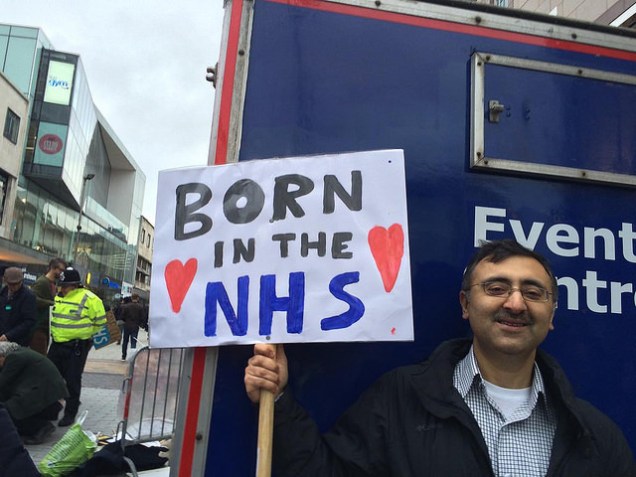
It takes real courage to speak out against the Cult of the NHS, particularly for people on the political left who are expected to be the biggest cheerleaders of all

From a brave commenter at Left Foot Forward, reacting to the same piece of sentimentalist NHS idolatry which prompted my article here:

I am disabled and faced horrendous treatment on the NHS when I unfortunately required help, I never once criticised staff individually but still every time I tried to talk about what I faced I was shouted at, told I hate the NHS, that I want to copy the US… I’ve seen the same thing happen to NHS staff whistleblowers. At this point it seems protecting “our NHS” from any and all criticism (that is not crouched in “don’t get me wrong, I love the NHS”) is more important than the wellbeing of both the patients and the staff and the functioning of the healthcare system.

I have since moved elsewhere in Europe to my husband’s country where the PUBLIC healthcare system (health insurance and private doctors are not a common thing here either), though it has flaws as everywhere does, functions as a healthcare system much better. If you want to change the pressures the NHS is under then it needs to become socially acceptable to talk about the NHS without referring to it as the “envy of the world” constantly or being accused of hating it and the staff working for it.

Heretic! Heretic!

BURN THE WITCH!

This statement takes courage, perhaps particularly from somebody who is clearly on the political left herself, and so is expected to be a particularly enthusiastic priestess of the Cult of the NHS. I admire her bravery – I fear that she (and others like her) will continue to be demonised for daring to acknowledge glaring reality.


Postscript: An alternative vision for healthcare in Britain, penned back in 2008 by Professor Karol Sikora, former chief of the World Health Organisation Cancer Program.


NHS Logo - Cross - National Religion - Worship - Idolatry

Support Semi-Partisan Politics with a one-time or recurring donation:

Agree with this article? Violently disagree? Scroll down to leave a comment.

Follow Semi-Partisan Politics on TwitterFacebook and Medium.

Mark Serwotka’s Emotional Blackmail On Behalf Of The NHS Industrial Complex

In a piece for Left Foot Forward, Mark Serwotka plays the “I’m on the waiting list for a heart transplant” card to heap even more uncritical praise on the NHS:

This is something I honestly think Jeremy Hunt and the Tories will never fully grasp, or don’t want to. They don’t have a genuine sense of how the whole NHS is run. Or our other public services, for that matter. They see them as bureaucracies, first to be vilified, the better then to be cut down to size.

I don’t know how long I’m going to be in here before my transplant, but my stay so far really has hardened my resolve to ensuring we defend our NHS with everything we’ve got.

That means defending the services from budget cuts and privatisation. And it means defending the health workers who have been treated appallingly, with their pay and pensions slashed, their contracts ripped up and even hints now that foreign doctors won’t be welcome in the UK in the future.

This last point makes me particularly angry because from day one, when I first started having problems in 2010, I’ve been looked after by fantastic and dedicated doctors and other professionals from all over the world.

We really can’t say it often or loud enough — our NHS is very special. The greatest achievement of a time of political optimism, when national pride meant public investment. Our health service is the envy of the world, and we can’t afford to let the Tories grind it down.

Really, we can’t say it often or loud enough? It certainly seems as though uncritically praising the NHS from dawn to dusk is all that some of us ever do, whether we are childishly painting the NHS logo on our faces, propelling a mediocre song to #1 in the Christmas charts or flaunting our virtuous NHS-love on social media.

The envy of the world? Tell that to the thousands of people whose cancer wasn’t spotted until it was too late or who could not benefit from the latest treatments, the people who died of hospital superbugs or the families of those left to starve in dysfunctional hospital wards run by psychopaths.

Mark Serwotka’s hymn of praise to the NHS mirrors every other piece of leftist propaganda designed to aid the NHS Industrial Complex. The template goes something like this:

  1. Talk about current or past grave illness to elicit sympathy
  2. Praise the “amazing care” received, as though heart transplants or chemotherapy are uniquely British
  3. Wax lyrical about how the unending bureaucracy of state healthcare and the fact that the NHS is the world’s fifth largest employer is actually a good thing, somehow
  4. Historical amnesia, where every other significant or inspiring British contribution to the world is forgotten or diminished while government-run hospitals are put on a pedestal and worshipped
  5. Attack the Evil Tor-ees for being insufficiently devout in their observance of Britain’s new national religion

One certainly wishes Mark Serwotka the very best, that a suitable new donor is available soon and that his upcoming transplant is a success. But as a people, we really need to stop being so gullible and open to emotional manipulation that we allow ourselves to be swept along by these “but the NHS set my broken arm / cured my case of Ebola / saved my premature baby” testimonials.

No, the NHS did not save your life. Doctors, nurses and modern technology saved your life. And guess what? In other countries, the systems that they wrap around those doctors, nurses and technologies often deliver better healthcare outcomes for their people than Our Blessed NHS (genuflect) is able to produce.

But what really damns Mark Serwotka and his NHS-loving amen chorus is the fact that they will not even allow the British people to look at the benefits of other healthcare delivery models. The NHS Industrial Complex has the British Left (and whole swathes of the Right) so wrapped around its fat little finger that to even question whether the NHS model should remain the One True Faith of these islands is to invite potential excommunication from political life.

And all it takes to perpetuate this nauseating Divine Office of praise for the National Health Service is for occasional feel-good stories like this one to make us wipe away a tear, lean back with a smile and know that we benefit from the Best Healthcare System In The World. So good, in fact, that it is replicated by jealous rivals in precisely zero other countries.

A reading from the book of St. Mark Serwotka.

Thanks be to Bevan.


NHS Logo - Cross - National Religion - Worship - Idolatry

Support Semi-Partisan Politics with a one-time or recurring donation:

Agree with this article? Violently disagree? Scroll down to leave a comment.

Follow Semi-Partisan Politics on TwitterFacebook and Medium.

NHS Heresy, Part 1

NHS RIP

Instituting a new feature on this blog, highlighting those rare, brave souls who dare to stick their heads above the parapet and suggest that Our Blessed NHS (genuflect) is no longer a sustainable model for delivering top quality healthcare to the British people

The Telegraph’s Jeremy Warner says the unsayable:

In a tax-funded health care system, the normal, self-limiting rules of supply and demand don’t apply. Where the service is perceived to be essentially “free”, demand can never be sated; it will just keep on growing until it breaks the system.

Three new elements have entered the equation in recent years to make an already grave situation much worse. One is the advent of mass communications. As people become more aware of potential threats to their health, and what treatments might be available to counteract them, they expect better and demand more.

Second, society is ageing. Most health care costs are incurred in the latter stages of life. Current demographics are delivering a double blow; more people are both moving into the high cost cohorts, and once in, they are surviving much longer than they used to.

And finally, there is the ceaseless march of technology, including the advent of “personalised medicine”, procedures and or treatments tailored specifically to the patient’s individual genome. Over time, this approach to medicine ought to become cheaper. It also already promises to make some existing and extremely expensive, treatments obsolete. But right now, it only piles on the costs. A personalised service is also quite alien to the NHS’s culture of uniformity. Even applying it will require radical change, never mind the small matter of how to pay for it.

Warner concludes, hopefully:

If the NHS was ever the “envy of the world” described by popular myth, it has long since ceased to be so. None of this is to denigrate those who work selflessly against the odds in British health care for the betterment of the UK public. It is merely to point out that the post-war model of funding no longer works and needs a radical overhaul. It would be a brave Prime Minister who questioned this sacred cow, but with meaningful Labour Party opposition all but vanished and the challenges and opportunities of Brexit likely to force change across the policy landscape, there could scarcely be a better time for some radical thinking than now.

This blog has no such optimism. Theresa May has earned her reputation as a somewhat traditionalist authoritarian for a good reason. She is already making noises about opening more grammar schools, thus establishing the new prime minister as a reinforcer of traditions rather than a slayer of sacred cows.

And the NHS, having passed its 68th birthday, is not just a British tradition – it is the British tradition, more integral to who we think we are as a people than Wimbledon, red telephone boxes or the Queen. You will see the monarchy abolished in this land before you see a system of private healthcare replace Our Precious NHS, at least under this government.

More to the point, Theresa May’s government already has its semi-competent hands full coming to terms with the scale of the challenge presented by Brexit. Unlike some of the cowboys in Vote Leave or Leave.EU, this blog never pretended that Brexit would be easy, and Theresa May’s Foreign Secretary and ministers for trade and leaving the EU are just now beginning to realise this fact.

Successfully negotiating the scoping of Britain’s negotiating position and then managing the initial two-year secession negotiations following the triggering of Article 50 will, whether Theresa May likes it or not, expend just about all of the political energy and capital that her government possesses this side of a general election, even if the Labour Party manages to continue being a slow-motion car crash right through til 2020. There simply will not be enough energy left for the fundamental restructuring of British healthcare, especially in the face of howling opposition from the NHS Industrial Complex, that vast web of vested interests which grows around the world’s fifth-largest employer like ivy on a crumbling building.

Neither has Theresa May shown any great interest in touching the super-charged third rail of British politics in any case. She kept Jeremy Hunt on in his role as Health Secretary, hardly a bold marker of intent to pursue a radically different course of action. Neither does a parsing of May’s past speeches reveal a yearning desire to enact healthcare reform bubbling beneath the cold, authoritarian exterior.

After the 2020 general election and in a post-Brexit environment, things may be different. This blog sincerely hopes that this is so – that Britain, buoyed by the fact that Brexit has (hopefully) been achieved without ushering in the apocalypse, might be in the mood to tackle other big challenges. But here we are on extremely flimsy ground – when nobody can comfortably predict the next month in British politics, it is foolish to daydream about what might possibly happen in four years’ time.

Yet everything that Jeremy Warner writes is true. At best, any government – even an NHS-worshipping Labour government under Jeremy Corbyn- could only paper over the cracks in our healthcare system. Relative performance on key metrics (like cancer survival rates) will continue to drift downwards, further away from our continental rivals, while NHS cheerleaders continue to point to value for money studies which suggest, on paper, that their idol is still the “envy of the world”. And the British people will continue to heap unending, unthinking praise on the NHS, literally killing themselves with their devotion to that giant bureaucracy.

It would nice to be able to write something more optimistic, but at this time there are absolutely zero grounds to expect that the situation will change for the better, short of a major crisis or unexpected political shock.


NHS Logo - Cross - National Religion - Worship - Idolatry

Top Image: Express

Support Semi-Partisan Politics with a one-time or recurring donation:

Agree with this article? Violently disagree? Scroll down to leave a comment.

Follow Semi-Partisan Politics on TwitterFacebook and Medium.

The Snarling, Vengeful Cult Of The NHS

Mid Staffs Hospital Scandal 2

Anger the priests and priestesses of our modern day NHS cult at your peril…

It takes some degree of courage to publicly speak out against the National Health Service, the unceasing praise and glorification of which has become the closest thing secular Britain has to a national religion.

In fact, one of the only things capable of jogging people out of their NHS-worshipping trance is bitter personal experience. And few experiences can be more bitter and heart-wrenching than that experienced by Martin Bailey, a fellow contributor to Conservatives for Liberty.

Martin Bailey’s grandmother died an awful and unnecessary death in November 2007, one of the victims of the death house that was Mid Staffs Hospital. His mother, moved to action by what happened, became a vocal and active campaigner for patient safety and NHS transparency, eventually being awarded a CBE for her efforts.

Sadly, drawing attention to the flaws and shortcomings of the NHS exacts fearsome retribution. But unlike whistleblowers drawing attention to failings in other industries or sectors, the retribution meted out to NHS critics comes not only from the formal hierarchy within the NHS, but also from medical professionals and members of the public who have been hypnotised into a state of blind devotion to our nationalised health service.

Bailey writes:

From the very beginning she has faced denial, disbelief and open hostility – such is the lot of anyone who dares to question the eternal virtue of ‘Mother NHS’. She has been hounded in the street, trolled viciously and incessantly online by both the general public and medical professionals, suffered hundreds of nuisance callers and been spat at in the supermarket. This November it will be nine years since my Nan’s death and my mother still has to clean faeces and graffiti off her gravestone.

Such is the level of devotion to the NHS, such is the illogical loyalty that both staff and public feel towards it that any criticism is brutally suppressed. This defence mechanism is ingrained into its very nature. Every story in the press that is anything but a paean of praise is immediately written off as right wing propaganda, part of the mainstream media conspiracy rather than the general public’s right to a transparent and reflective service.

When the Healthcare Commission published its initial report into Mid Staffs the trust’s first response was not to rectify the problems but to spend £1,000,000 commissioning Birmingham University to compile a rebuttal.

One million pounds! One million pounds that could have been spent on doctors and nurses, crutches and casts, Scalpels and forceps. Even a new coffee machine in the canteen would have been a better deal for the public than a study that refuted the claims of another Taxpayer-funded body, in turn making it even more difficult to highlight poor care through the haze of institutional ambivalence.

This is what some of the kind, virtuous people who Love Our NHS do – they “protect” the institution they love by defacing the grave of an innocent woman with graffiti and faeces. Many more will just happily imply that you are a heartless monster lacking in compassion, simply for daring to criticise one particular (and unreplicated anywhere else in the world) healthcare delivery model.

We should not be surprised. The British public is fed a constant diet of pro-NHS propaganda, from politicians, campaign groups and the health service itself. Like any large organisation – and the NHS is the fifth largest employer on the planet – the NHS has an independent life of its own, and moves to protect and defend what it considers to be its own interests (which are not always one and the same with the interests of patients). And it very much suits the purposes of the NHS to have millions of people childishly painting its logo on their faces, wearing it on t-shirts, proclaiming its glory on social media, buying schmaltzy NHS-themed Christmas songs and otherwise providing the kind of public lobbying which would cost any other organisation millions of pounds.

Martin Bailey picks up on this point about how we place the NHS, rather than then needs of the patient, at the centre of our healthcare debate:

Healthcare should be about the patient… and nothing more. While we have a venerated NHS this is impossible. The institution always comes first. It is too monolithic, too omnipotent for its identity ever to be subordinated to the needs of those it serves. In its current guise there will always be fanatics who will never admit to shortcomings no matter what evidence is put in front of them, ‘NHS Daesh’ who will never allow the truth to censure their ideology. In this culture true patient-centred care might as well be a pot of gold at the end of the rainbow.

Countries with systems based on universal health insurance do not experience the same problems. In France, Germany, The Netherlands, Belgium, Australia and Japan healthcare is not politicised and treatment is widely regarded as superior. An insurance based system healthcare costs as much as it needs to and is not constrained by the political tennis match that sees budgets ebb and flow, forcing the NHS into a permanent state of inadequacy, struggling to deliver 21st century services through a process of rationing that has changed little since the 1950s.

And makes this call to conservatives:

Conservatives have traditionally been coy on the topic for fear of reprisals at the ballot box, only daring to mention the dreaded ‘P’ word amongst close friends behind firmly closed doors.  But our reticence plays into Labour’s hands, easily construed as a hidden agenda. The left has owned the narrative on healthcare for far too long and it is time we had the courage of our convictions to speak freely and openly about the benefits of privatised healthcare.

So the next time a colleague starts talking about how wonderful the NHS is, don’t stare at your shoes, mumble and change the subject. Speak up, speak out and fly the flag proudly for the death of the NHS.

A noble aspiration, but for as long as the Conservative Party is in the hands of David Cameron and George Osborne, nothing much will change. Both men are carbon copies of Tony Blair, only with blue ties rather than red, and so the mealy-mouthed praise of the NHS will continue – not that this will stop Labour from screaming hysterically about the dismantling of Our NHS.

But Bailey is absolutely right – anybody who cares about the future of healthcare in Britain must immediately disenthral themselves from the Cult of the NHS and encourage others to do the same. This has nothing to do with being a hardcore libertarian or hating doctors and nurses. This is about applying the same unsentimental standards of objectivity to our analysis of healthcare as we do to any other industry or government service. It is about having the humility to learn from others, the courage to confront mistakes and the clarity of mind to focus at all times on the patient rather than the organisation.

In other words, it is not going to happen for at least another generation. And how many more Mid Staffs type scandals will have occurred by the time necessity finally forces us to confront reality and act?
 

NHS Logo - Cross - National Religion - Worship - Idolatry

Agree with this article? Violently disagree? Scroll down to leave a comment.

Follow Semi-Partisan Politics on TwitterFacebook and Medium.

Vote Leave: An Unhinged Fifth Column, Leading Brexiteers To Ruin

It’s time to declare open warfare on the malevolent idiots in charge of Vote Leave, if we are to minimise the further harm that they can yet inflict on the Brexit cause

Apparently the super-intelligent, well-connected, savvy people running the Vote Leave campaign think that this political broadcast, which aired today on national television, is a key part of some winning strategy to deliver 50%+1 votes on 23 June.

It certainly has a lot going on. There’s the slavish idolatry of “Our NHS” for a start, which actually might not be a bad tactic in NHS-obsessed Britain but for the fact that the Vote Leave campaign is mostly full of Tory types who didn’t exactly make a name for themselves by protesting their local A&E unit closure or otherwise worshipping at the altar of St. Aneurin Bevan of Tredegar. In other words, it strains credibility to think that Boris Johnson & co are fighting for Brexit because they are desperate to shower the health service with more money.

Ah yes, money. Then we see the flagrant, unapologetic repetition of the false £350 million claim, a number which does not take into account the UK rebate or EU funds disbursed back to Britain. Quite why the more accurate figure of £161 million could not be used is a mystery – perhaps because £350 sounded like a nice round number, and because it conveniently tallied with the cost of building a new hospital. And so the official Leave campaign goes charging into the last month of the referendum waving a headline figure which can be instantly disproved and mocked by any Remain campaigner with a functional brain, tarring the entire Brexit movement with their shameful idiocy.

I cannot stress this firmly enough – at this point, Vote Leave may just as well be part of the Remain campaign. They are essentially operating as a fifth column, actively doing more harm than good. They are wasting precious time and resources simply to ensure that their heavily eurosceptic base vote for Brexit even more emphatically than they already planned on doing, while appearing so shifty and unserious to undecided voters that they destroy our credibility – and with it, our chance of winning.

Therefore, the next month must be spent firing over, around and through Vote Leave. They are not our allies. They may as well be working for David Cameron and George Osborne. In fact, some of them quite possibly are doing just that.

At this late stage, Vote Leave will do nothing other than continue to burble unbelievable nonsense about building a brand new hospital on every street corner in Britain in their fantasy Brexit world; there is nothing we can do about that. But we are not powerless.

We need to go out there and talk about sovereignty and democracy.

We need to talk about the unappealing, authoritarian future of the EU.

We need to talk about the revolution in regulation and the emerging global single market, in which a free Britain can play a leading role.

But most of all, we need to get out there and do something, anything, to distract from the utter FREAK SHOW of an official Leave campaign being orchestrated by BoJo the Clown and his trusty sidekicks.

Glad as I am that they all seem to be having a roaringly fun time on the campaign trail, allowing the children to take the wheel unfortunately means that they are now running over the life’s work and dreams of many a committed eurosceptic and Brexiteer.

And they can not, must not be allowed to continue unchecked.


Postscript: This ad is even more idiotic. The cretin who put it together failed even to draw a link between the subject (possible future Turkish membership of the EU) and the conclusion (vote Leave to Save Our NHS), ensuring that the spot ends with that grating non sequitur. It’s almost as though the entire operation is staffed by not-very-bright nepotism beneficiaries and Westminster hangers-on…


Apparently the only reason now for wanting Brexit is to “Save Our NHS”. When did that happen? And when will the person who signed off on this strategy be made accountable for their utter incompetence?


Vote Leave - NHS 350 Million - Brexit

European Union - United Kingdom - Britain - Flags

Agree with this article? Violently disagree? Scroll down to leave a comment.

Follow Semi-Partisan Politics on TwitterFacebook and Medium.