Pathologising Donald Trump Supporters Will Not Diminish His Appeal

The voices in this New York Times video of Donald Trump supporters may be “unfiltered”, but they were chosen very carefully indeed to reinforce every negative liberal stereotype about people who have the temerity to support Donald Trump

It is hard to understand exactly the New York Times thinks it is trying to accomplish with videos like this one, published today, scornfully “studying” Donald Trump supporters with a keen anthropologist’s eye, while tarring his many moderate supporters by associating them all with the most intemperate, rude and racist characters that their camera can find.

The Times helpfully explains to its readers that “at Donald Trump’s rallies, some supporters express themselves with slurs and violent language”, before linking them to a video in which the absolute worst dregs of the Trump campaign are paraded before the Times’ liberal audience like it were some kind of Victorian circus freak show.

And sure enough, after the obligatory trigger warning from the Times, the video’s subjects make themselves look extremely stupid, as well as racist and misogynistic in places. But this in itself is hardly surprising – it is obvious that racists and other undesirables will be disproportionately (though not exclusively) drawn to a populist politician like Trump, but this does not mean that a majority of Trump supporters share these vile sentiments.

In fact, one wonders why the liberal media which goes to excessive pains to avoid linking all Muslims with the actions of Islamist terrorists, and which frets about broadcasting the names and biographies of mass shooting perpetrators suddenly loses all squeamishness when it comes to linking all Donald Trump supporters with the specimens shown in their video. Why does the Times titillate its readers by showing the worst side of the Donald Trump campaign rather than making a hard-hitting and informative piece  debating the issues with some of the many Trump supporters who turn up to his rallies minus white robes and burning crosses?

If anything, this video reveals the bias of the New York Times, and the desperate liberal (in the American sense of the word) need to paint anything contradictory to their own worldview as being seeded in intolerance, bigotry and hate. This bias is never clearer when the Times’ video attempts to portray Trump supporters as anti-immigration, period. At one point in the video, an editor’s caption reads “vitriolic language is often aimed at immigrants”.

If the filmmakers wanted to produce a respectable, balanced piece rather than juicy footage for their Trump freak show, they might have engaged those supporters in conversation. But had they done so, it would have quickly become apparent that the Trump supporters oppose illegal immigration, not all immigration. These days, of course, the decadent New York Times is completely incapable of distinguishing between the two. All immigrants are saintly figures holding hands beneath a rainbow to the Times, a newspaper which long ago ceased any mention of illegality and started talking about “undocumented” migrants instead (whoops, where did their documents go, one wonders). And so the camera rolls, the supporters chant “build the wall!” and New York Times readers are bolstered in their prejudice that anybody who opposes illegal immigration is a big fat racist who actually opposes all immigration.

And so it goes on, for issue after issue. Legitimate questions and concerns about Hillary Clinton’s conduct and record are ignored while footage of a Trump supporter shouting “Hillary is a whore!” feeds the narrative that Trump supporters are entirely unreasoning and uncouth creatures. Serious questions about how the American political establishment speaks about and responds to Islamist terror attacks are swatted aside so that we can focus on the redneck wearing a “Fuck Islam” shirt. Forget nuance. Forget the decent people who go to Trump rallies as a fun family day out. Just focus on the morons and reinforce the message: the people who support Donald Trump are as unacceptable as the candidate himself.

Watching the New York Times (and much of the establishment media) report on Donald Trump supporters is like watching a David Attenborough wildlife documentary in which the grizzled naturalist attempts to explain to us the feeding and mating rituals of some lower primate species – recognisably similar to us in some ways, but far more primitive and with rituals and customs which we civilised people cannot possibly understand without their expert interpretation.

Watch the video. I challenge you to watch it and come away feeling anything other than that this is an unbearably condescending hit piece on Trump supporters, a nauseating attempt by a Clinton-backing newspaper to “play to the gallery” with a compilation of all the worst Trump supporters imaginable rather than an attempt at serious journalistic enquiry.

I’ve said it before (in the context of the Brexit debate and, repeatedly, the US presidential election) and I’ll say it again: pathologising one’s political opponents and assuming (or at least publicly declaring) that they are motivated by hatred and malevolence is the sure path to defeat, and is no way to unite a fraying country. And prissy little video explainers like this one by the New York Times only serve to further divide Americans, giving liberals more reason to be smug and Trump supporters more reason to feel besieged.

Imagine that you are a wealthy, Times-reading East Coaster. Does this video make you question any of the beliefs which currently make you want to vote for Hillary Clinton? Does the video make you question whether the Trump supporters have even the kernel of a legitimate point about immigration, or trade, or national security? Or does the video boldly reinforce all of your existing prejudices about Trump supporters, reassure you that you are quite right to fear and despise them, and encourage you to keep shouting your own message louder and louder rather seeking dialogue with people the New York Times clearly portrays as being impenetrable to reason?

This is coastal elitist mockery of flyover country writ large. It is unbearably sanctimonious, and does nothing to further understanding and dialogue between Americans of different political and cultural backgrounds. It serves to further validate the accurate perception among Trump supporters that they are looked down on and belittled by the rest of the country. And, if another external economic, security or political shock turns this election into a dead heat between Hillary Clinton and Donald Trump, the high-handedly arrogant way in which the establishment media treats the insurgents could push Donald Trump over the line on Tuesday 8 November.

This blog has no time whatsoever for Donald Trump. But I have endless time for his supporters, the majority of whom are decent people – to think otherwise would be to write off a massive proportion of the country based on their political views. And while I firmly believe that Trump’s simplistic solutions, policy ignorance and prickly ego would do immense harm if set loose in the Oval Office, right now I am more offended by the New York Times’ portrayal of all Trump supporters as though they are somehow less than human, less intelligent, with less self control and possessed of unique and grievous character defects which are supposedly entirely missing from their more enlightened, liberal compatriots.

One expects this kind of two-dimensional, good vs evil, sanctimonious ra-ra nonsense from the Huffington Post or other leftist agitprop sites. But the New York Times supposedly aspires to something higher, something more closely resembling journalism.

Everything about this video fails that test.


Donald Trump Protesters - St Louis

Support Semi-Partisan Politics with a one-time or recurring donation:

Agree with this article? Violently disagree? Scroll down to leave a comment.

Follow Semi-Partisan Politics on TwitterFacebook and Medium.

There Is Nothing Noble Or Virtuous About Defending The EU

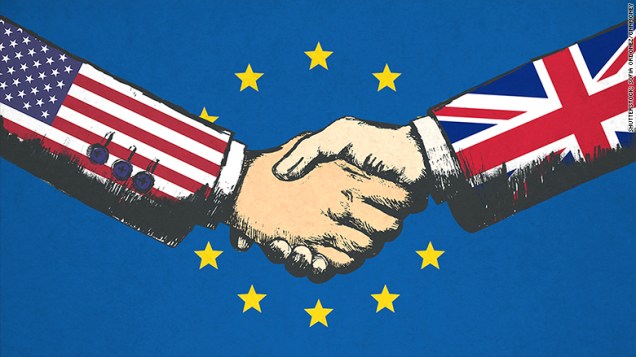
European Union - USA - UK British flags

The EU’s defenders in the middle class and political/cultural elite love to believe that they are supporting a grand and noble project, but close their eyes to the economic and democratic damage wrought by this failing supranational union

An opinion piece in the New York Times provides a welcome antidote to that newspaper’s fatuous, instinctive pro-Europeanism.

Tim Parks writes:

Had I had the right to vote, which I have lost after 30 years living in Italy, I would have voted to remain in the European Union. But I do not think it a scandal that others think differently. If it was a scandal that people voted to leave, then surely it was a scandal to have held a referendum at all. And if it is a scandal to hold a referendum on an issue central to the destiny of a nation and about which its people feel deeply, then I have misunderstood the meaning of freedom and democracy in the West.

So why the extraordinary incredulity and indignation? Why the sense of betrayal? Why do so many people find this result unacceptable? It seems that over the last 30 or 40 years the idea has taken hold that there can be no peaceful or productive future for Europe without the European Union. As a result, anyone who voted to be outside it must be discredited as pernicious or ignorant, perpetrator or victim of some sinister populism. In the United States, this unhelpful reaction has taken the form of likening the leaders of the Leave campaign to Donald J. Trump. But Britain is not America and this was not a presidential election. Immigration played a role, but no one in the Leave campaign was suggesting Muslims be banned from Britain. On the contrary, some Muslims supported the Brexit vote. To see the debates of other countries in terms of one’s own internal politics is always a failure of imagination.

All this shock, horror and kneejerk denigration might be understandable if the European Union were notching up important successes and resolving its member states’ many problems, or if, at the very least, it had a figurehead with whom European citizens could identify, someone of whom one might say, “However badly things are going, I have faith in so and so, I believe he or she really does have the interests of my nation at heart, really is concerned about unemployment in my town,” be it Newcastle or Naples.

Obviously the EU has no such figureheads. Its vaunted “founding fathers” are unknown and unloved by all but the most starry-eyed euro federalists, its parliament a fraud, its stolen anthem a joke and its leaders held in widespread contempt. It cannot appeal to any sense of collective destiny because the loyalty of the vast majority of EU citizens lies first and foremost with their own nation state.

And Parks is quite right to note that the EU is failing across most of the metrics by which one might reasonably judge success. Economic growth, employment and social cohesion have all been thrown under the bus in the name of European political union, while the countries most let down by the EU project remain within the union only because they suffer from a national form of Stockholm Syndrome.

Parks points out:

But the Union’s greatest failing is that after decades of regulations of every possible kind it has not brought the nations of the Continent closer together. Day by day Italians are told whether their government’s economic policy has been accepted or rejected by Berlin, but about the Germans they know little or nothing. In each country, we follow our own national news media and are locked into the agendas of our own political systems. We are separate nations but not sovereign nations. We obey the dictates of Brussels and read Jonathan Franzen and “Harry Potter.” We watch American films and follow the American elections far more closely than those of any other country in the European Union. Is this a community?

But best of all is when Parks turns his gaze on the middle class and political elites who remain the EU’s strongest defenders:

The middle classes, the cultured elite, love the idea that they are taking part in a historic project that will bring peace and prosperity to the Continent, put an end to war, take steps to defend the environment, protect Europeans from superpower ambitions and multinational depredations, etc., etc. I love this idea, too. Like so many others, I take comfort in this noble enterprise.

But when the project does not bring prosperity, when it does not do enough to protect the environment, when its protectionist trading policies systematically damage the economies of the third world, I, like everyone else, don’t want to think about it; we prefer to close our eyes. This is not the narrative we like to believe we live in.

[..] With Brexit this decades-old spell is set to break. And how does the liberal elite on both sides of the Atlantic react to this deafening alarm? They scream foul and blame the dumb British working classes for spoiling the party. It might be wiser to examine our own attachment to a narrative that is going nowhere.

But the defiant liberal elite will not let go of their false narrative, preferring to nurture a sense of grievance and display to the world a shameful contempt for democracy.

Just this weekend, grieving metropolitan Remainers held a “Picnic against Brexit” in Green Park, in what was billed as an opportunity for people to “heal” and “comfort” one another. Disappointed Remainers are literally treating their defeat in the EU referendum as a kind of emotional trauma, an unendurable shock to the system for a group of people who have had their way since 1973, came to rely on the EU’s comfort blanket and who simply cannot conceive of life as a citizen of an independent country.

An emotional reaction of this strength is only possible when one genuinely believes that one is fighting on the side of righteousness and possesses a monopoly on the virtues of wisdom, compassion and truth. It is much like the arrogance of tearful Labour supporters who simply could not understand why the country rejected Ed Miliband and re-elected the Evil Tories in the 2015 general election. The strong overlap between these two groups of people is no coincidence.

For people who make up a supposed intellectual and moral elite, the Remainers-in-denial are extraordinarily unperceptive. Even now, they can not accept that the 52% of their fellow citizens – including many working class voters – who voted to leave the EU might have a point, that their beloved European Union might not be the wonderful and benevolent force for good that they insist it is. On the contrary, they stubbornly continue to insist that those who voted for Brexit did so  either out of ignorance or malice, and work to prevent Brexit from happening.

This will not end well. Sneering contempt for the political opinions and values of ordinary people has not done the elites any good this electoral cycle, in Britain or America. If the elites are at all interested in bridging the divide and repairing their relationship with the rest of the country then they must start displaying the kind of introspection and empathy demonstrated by Tim Parks in his NYT article – and far fewer disdainful middle class picnics against democracy.


Brexit - EU - European Union Flag - Missing Star - Britain - UK

Top Image: CNN

Agree with this article? Violently disagree? Scroll down to leave a comment.

Follow Semi-Partisan Politics on TwitterFacebook and Medium.

Every American Should Support Brexit

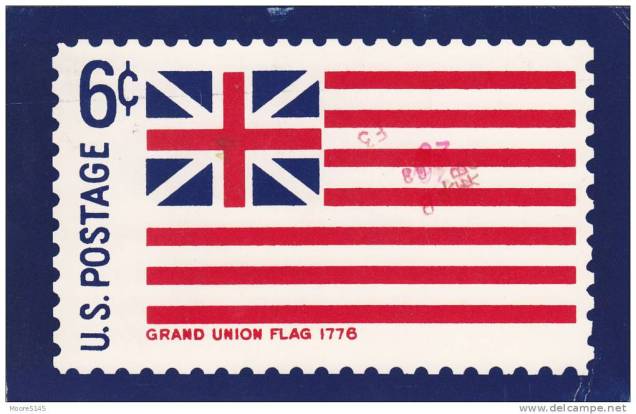
Grand Union Flag

Finally, the democratic case  for Brexit is explained to Americans

With many leading American voices so illogically hostile to Brexit, it is great that one of our own – Ben Kelly of The Sceptic Isle and the Leave Alliancehas seen his concise democratic argument for Brexit published in the New York Times.

Kelly patiently lays out the case for Brexit to an audience which has regrettably proved more likely to skip the democratic question entirely and wrongly view leaving the EU as an illogical, regressive act:

There are worrying levels of resentment in British society. People have little faith in their ability to bring about change through who they vote for and this breeds apathy and represents a grave threat to participatory democracy. And, no, not all of that can be blamed on the E.U., but we have now lost too many policy making powers and essential democratic safeguards. The E.U. maintain exclusive control of our trade policy, fishing and agricultural regulations, and is rapidly gaining power over British policies for foreign affairs, energy, environment, transport and telecommunications.

The E.U. is a supranational government with an executive body in the unelected European Commission, a legislature in the European Parliament and the Council of the E.U., and a powerful judiciary in the European Court of Justice. The “invisible hand” of its power operates through the husks of British political institutions: Our Ministers, MPs and councillors are constrained and must work within imposed parameters that are not conducive to new ideas and innovation. The E.U. hinders effective governance and disempowers and disconnects elected officials from the people who elected them.

When power is so far removed from the people, anger and disillusionment are inevitable. And democracies die when there is little connection between the electorate and those who rule them. Now, there is a pressing need to shift the balance of power back to the people and restore democratic accountability. It is the only hope for rebuilding faith in politics and quelling our current state of discontentment.

Restoring self-governance could inspire British society with a renewed sense of identity, vigor and pride. It means the construction of a new nation and a reversal of the degradation of our political culture. None of this can happen automatically and Brexit is not a silver bullet. But it unlocks the potential for change, and Britain should rise to the occasion.

It should not be necessary to explain these things to Americans, particularly those in the establishment most likely to want Britain to stay in the EU. These people, possessed of a solid understanding of their own nation’s history, should be our natural allies in wanting to free Britain from an increasingly powerful, antidemocratic and unrepresentative supranational government.

The rebellious American colonists because known for the phrase “no taxation without representation”. The EU has not yet – quite – reached the point of directly taxing its citizens, though the day may not be far off. But the phrase “no regulation without representation” applies very well to the Brexit cause. In an age of globalisation, when regulatory harmonisation is important to promote further economic growth, it is more important than ever that the people have an input into the process of making global regulations – particularly when that process has the power to wipe out entire industries at the stroke of a pen.

An independent nation state can wield its “right of reservation” as a last resort, exempting itself from new regulation which it deems particularly harmful to the national interest. A member state of the EU, like Britain, has no such power. The EU has exclusive competency on matters relating to trade, and we must swallow whatever the European Commission agrees on our behalf.

Those roles and institutions within the EU which are directly elected are nothing more than democratic fig leaves. The European Parliament is a toothless rubber-stamping institution which cannot propose new legislation or strike down old. And those who claim that the Council of Ministers or European Council allow national interests to be exerted forget that governing elites from the 28 member states often have far more in common with each other than they do with the ordinary people they represent, and will always face the tendency to do what is best for themselves and the European Union which they serve rather than what is best for the people who put them in office.

In every single way, the European Union as it currently stands should be offensive to the American national psyche. That it is widely popular among American opinion-formers reflects a failure on the part of Brexiteers to do a better job co-opting an important international ally. But more than that it represents a failure of the American elites, who having lost faith and confidence in their own country expect that we should do the same with ours.


USA Declaration of Independence Lying on Grungy Betsy Ross Flag

European Union - United Kingdom - Britain - Flags

Top Image: delcampe.net

Agree with this article? Violently disagree? Scroll down to leave a comment.

Follow Semi-Partisan Politics on TwitterFacebook and Medium.

The American Establishment, Having Lost Faith In Their Own Country, Naturally Oppose Brexit Too

Declaration of Independence - United States of America - Founding Fathers - Brexit

How quickly they forget

If there was one country in the world which you might think would understand the importance of democracy, the right to self determination and freedom from unaccountable government, it would be the United States of America.

And so it has been particularly depressing to watch politicians and commentators from the United States dutifully line up to support the European Union and condemn Brexit as some sort of frivolous and deliberate act of economic self-harm with no potential upsides whatsoever.

Latest to join the fray are the Washington Post (in a piece now being widely shared on social media by Remainers) and the New York Times, both of which condemn Brexit as an isolationist fantasy without showing any evidence of having researched the issue in any detail.

First, the Washington Post, which claims that advocating Brexit is to “flirt with economic insanity”:

Countries usually don’t knowingly commit economic suicide, but in Britain, millions seem ready to give it a try. On June 23, the United Kingdom will vote to decide whether to quit the European Union, the 28-nation economic bloc with a population of 508 million and a gross domestic product of almost $17 trillion. Let’s not be coy: Leaving the E.U. would be an act of national insanity.

[..] What this debate is really about is Britain’s place in the world and its self-identity. Britain has long been of Europe but also apart from it. The British Empire was once the world’s largest. To be simply another member of a continental confederation, albeit an important member, offends this heritage. The nostalgic yearning is understandable, but it is not a policy.

Ironically, leaving the E.U. would confirm the U.K.’s reduced status. The U.K. would have to renegotiate its trading agreements with the E.U. and dozens of other countries. A deal with the E.U. is essential. For the U.K., the best outcome would be to retain much of its preferential access, which — as a practical matter — would mean continuing contributions to the E.U. budget and abiding by most E.U. regulations. The status quo would survive, except that the U.K. would have no influence over E.U. policies. Anything less than this would have the E.U. putting its own members at a competitive disadvantage.

One could drive an entire convoy of trucks through the holes in this argument – like the implied assertion that maintaining EEA access would require “abiding by most EU regulations” when in fact it would only mean following those directives and regulations which pertain to the single market (well under half of the total).

Note, too, the dismissive attempt to make euroscepticism sound like a nostalgic hampering for empire. What is really outdated, though, is the WashPost’s antiquated belief that membership of “continental confederation[s]” or giant regional blocs is somehow necessary for national prosperity, despite the Cold War having ended a quarter of a century ago. The Post has made no effort to actually understand what motivates Brexiteers – be it the “liberal leavers” like this blog, or the more traditionalist types in UKIP – and instead falls back on a bed of platitudes and outdated assumptions.

This is the New York Times’ distilled view of Brexiteers:

The euroskepticism that has led to the British referendum, and that forms a strong component of the right-wing nationalist parties on the rise in many European countries, is not about efficiency or history. It is about ill-defined frustration with the complexities of a changing world and a changing Europe, a loss of faith in mainstream politicians and experts, a nostalgia for a past when nations decided their own fates and kept foreigners out. To those who hold these views, the European Union is the epitome of all that has gone wrong, an alien bureaucracy deaf to the traditions and values of its members. Not surprisingly, Mr. Trump and the French politician Marine Le Pen both favor Brexit.

What a condescending view of all Brexiteers, with an insidious Donald Trump comparison as a snobby garnish. The Times is utterly oblivious to the real world of global trade and regulation, and the slowly emerging global single market which is making the EU obsolete, as this blog pointed out yesterday while criticising the Economist’s unsurprising decision to support Remain:

The bloggers of The Leave Alliance in particular have exposed the fascinating world of international trade and regulation, and the slowly emerging global single market – comprised of the real global “top tables” – of which Britain could be a part, if only we had the national confidence to stop hiding behind the euro-parochialism of Brussels.

Meanwhile, the Washington Post concludes:

Viewed this way, Brexit is an absurdity. But it is a potentially destructive absurdity. It creates more uncertainty in a world awash in uncertainty. This would weaken an already sputtering global economy by giving firms and consumers another reason to pull back on spending.

It would be better for the U.K. to stay in the E.U. It would also be better for the E.U., because Britain provides political and intellectual balance. Finally, it would be better for the United States, which doesn’t need a major ally — Britain — to go delusional.

Ah, so that’s what this is really all about – stability and predictability for the United States. It would have been much more honest if the Post had simply admitted this upfront, rather than squandering credibility by feigning concern for Britain’s economic and geopolitical welfare – and then advancing the bizarre notion that America’s strongest and closest ally should continue to tolerate infringements on her democracy which the United States would never accept for itself.

But in one sense the Washington Post is quire right – Brexit would indeed cause some short term uncertainty. That is inevitable when we are dealing with such consequential matters of state. It’s just that some things matter more than the fear of precipitating a period of short term uncertainty. Why should Britain, like a frog placed in cold water, remain fearfully in situ as the temperature increases and the water starts to boil? Because jumping out of the water into dry land would be a “leap in the dark”? Because it would be a departure from the status quo? Well, yes, so it would. But the EU, a relentlessly integrating political union beset by crises of currency, mobility and democratic legitimacy is the proverbial vat of boiling water. “The devil we know” hardly seems to apply here.

The New York Times is no better, beginning with a most ludicrous proposition:

It was Queen Elizabeth’s official 90th birthday celebration last Sunday, and tables for 10,000 guests were set along the Mall in central London. Steadily the rain fell, dripping out of the tubas of the bands and softening the sandwiches, but Her Majesty’s subjects munched on with stoic British spirit, standing up to cheer as she passed.

In her fuchsia coat and matching hat, she waved and grinned as if nothing had changed and never would. But next week, a very great change may come.

On Thursday, Britons will vote in a referendum on whether their country should stay in the European Union or leave it. If a majority opts for “Brexit,” a long earthquake begins. It will topple the old facade of Britishness. It will disrupt, perhaps mortally, the foundations of European unity. The sense of a fateful moment suddenly peaked on Thursday, when, the police say, a young Labour member of Parliament named Jo Cox was shot to death in her West Yorkshire district by a man who is said to have shouted, “Put Britain first!” and to have been involved in the white-supremacist National Alliance in the United States.

All campaigning was suspended for a day of appalled mourning, amid fears that widespread anxiety about European immigration was being inflamed into violent racialism. Ms. Cox was a rising star, admired in and outside Parliament for her selfless energy on behalf of refugees and the poor. Her friends hope her death may cool referendum passions, reminding sullen voters that “not all politicians are in it for themselves.”

Royal ceremonies offer a brief, reassuring illusion of continuity, but at the back of many minds on the Mall was this thought: Could we be saying goodbye not just to this beloved old lady, but to a certain idea of nationhood? An outward-looking, world-involved Great Britain may soon shrink into a Little England.

It is frankly hilarious that the New York Times is trying to portray Brexit as some kind of grievous departure from the proper trajectory of history by referencing the Queen, when Queen Elizabeth II was on the throne several years before the European Coal and Steel Community was even formed, and decades before Britain finally joined the European Economic Community.

In other words, it is the European Union and its hateful, antidemocratic model of supranational governance which is the departure from historical norms, and Brexit the antidote which aims to restore the nation state as the proper guarantor of our basic rights and freedoms. That the New York Times is unable (or unwilling) to admit this only shows just how deeply they buy into the carefully cultivated “inevitability” of the EU.

The venerable Times tarnishes its reputation even further as it moves on to the topic of immigration:

Is it a baseless panic? Many European countries tolerate far higher levels of immigration. Scotland, with a new community of some 55,000 Poles, actively encourages it. In England, support for Brexit and for the xenophobic U.K. Independence Party is often in inverse proportion to the scale of the problem: The fewer immigrants there are in a town, the louder the outcry against foreigners. In contrast, polling in inner London, where about four out of 10 inhabitants are now foreign-born, shows a clear preference for staying in Europe.

This is just appalling journalism. Does UKIP attract a slightly higher proportion of xenophobes than other political parties. Yes, probably. But does that make the party “xenophobic”, as the New York Times casually claims? Absolutely not. One wants to ask Neal Ascherson (the author of the piece) how UKIP’s policy of a points-based immigration policy which stops discriminating against mostly white Europe in favour of a level playing field for immigrants from all countries can possibly be xenophobic. But of course, he would not be able to answer. It is received wisdom that UKIP is a borderline racist party, and so prestige publications like the New York Times are happy to print as much.

The New York Times then makes its own patronising reference to empire:

But there are deeper motives here than anxiety about the exchange rate or banks in London decamping to Frankfurt. Behind Brexit stalks the ghost of imperial exception, the feeling that Great Britain can never be just another nation to be outvoted by France or Slovakia. There’s still a providential feeling about Shakespeare’s “sceptred isle” as “this fortress built by Nature.” Or as an old Royal Marines veteran said to me, “God dug the bloody Channel for us, so why do we keep trying to fill it in?”

And swats away growing public dissatisfaction with political elites as an inconvenient nuisance:

English nationalism, though inchoate, is spreading. For older generations, it was cloaked in British patriotism. But now, having watched the Scots and the Welsh win their own parliaments, England — with no less than 84 percent of Britain’s population — feels aggrieved and unrepresented. And so the English have gone in search of their own identity politics, finding common cause with the general impatience with old political elites that is flaming up all over Europe.

For now, their angry sense of powerlessness is aimed at the European Union. But the truth is that it’s from bloated, privileged London, not Brussels, that the English need to take back control. The Brexit campaign orators, themselves members of that metropolitan elite, have carefully diverted English fury into empty foreigner-baiting. In France this month, English soccer hooligans’ chant was “We’re all voting Out!” as they beat up fans from other nations.

Presumably the New York Times supports the American system of government. One might think that this would lead them to reflexively support a strong and independent nation state organised on the federal model – or something like Brexit followed by constitutional reform to give equal powers and representation to the four home nations of the United Kingdom. And yet in this snivelling OpEd, they search instead for every reason imaginable, however slight, to criticise Brexit and overlook the manifold failings of the European Union. And they deny the independence and model of government which they themselves enjoy to the inhabitants of their strongest and closest ally.

And then comes the “convenience for the United States” argument, underlined with a threat:

It is certain that Brexit would do gross damage to both Europe and America. For the United States, it would mean the failure of many years of diplomacy. Britain would become at once less useful as an ally and less predictable. Washington would turn increasingly from London to Berlin.

Really, to Berlin?

Which is the nation with a blue water navy and armed forces capable of projecting global reach?

Which nation hosts the world’s capital city and leading city of finance?

Which nation is the declared nuclear power and UN Security Council P5 member?

Which nation shares a language and many elements of a culture with America?

There’s been a lot of bluster in this EU referendum campaign, but the notion that the United States would turn away from its only real dependable (and contributing) ally in the world to shack up instead with Germany is, frankly, laughable.

Both of these editorials – Washington Post and New York Times alike – seek above all to problematise the Brexit process, to burden it with what-ifs and doubts and problems while furiously overlooking the many problems with the status quo and the soon-to-be problems about to beset the European Union. They do not begin from a place of objectivity and a willingness to follow the facts. They do not even do justice to America’s own founding values, which would rightly balk at ever joining a democracy-sapping supranational government like the EU.

But most of all, they make it sound like Brexit is just too difficult. That whatever the merits, difficult things are now beyond our capabilities and that we must muddle through with the failing mid-century institutions bequeathed to us by our grandparents. This is fatalistic and depressing in the extreme, but it accurately represents the viewpoint of the establishment in both Britain and America, both world-leading countries which have markedly lost their way in recent years.

President Kennedy once entreated Americans to go to the moon and do the other things not because they are easy, but because they are hard – and because the striving toward an ambitious but difficult goal would be the best way to organise and measure the capabilities of the nation. And before that decade was out, Americans had walked on the surface of the moon.

Now, the two most prestigious newspapers in America are frantically counselling Britain not to reach for the metaphorical moon, not to reach for independence from a suffocating and failing European political union, not to do anything which might in any way rock the boat or stem our slow decline into euro-parochialism and global irrelevance, because doing so would be difficult and would create (shock, horror) a period of uncertainty.

In other words, the American establishment is looking upon Britain as though we have taken leave of our senses even by having this referendum. They, having lost faith in the strength and capability of their own country, expect Brexiteers to similarly write off our own.

But it is not we Brexiteers who are flirting with insanity, as the Washington Post so arrogantly claims. It is America which has lost its way, and the American establishment and political class which could learn something from the scrappy, underdog campaign to free Britain from the EU.

 

European Union - United Kingdom - Britain - Flags

Agree with this article? Violently disagree? Scroll down to leave a comment.

Follow Semi-Partisan Politics on TwitterFacebook and Medium.

Who Really Wants A Free Press?

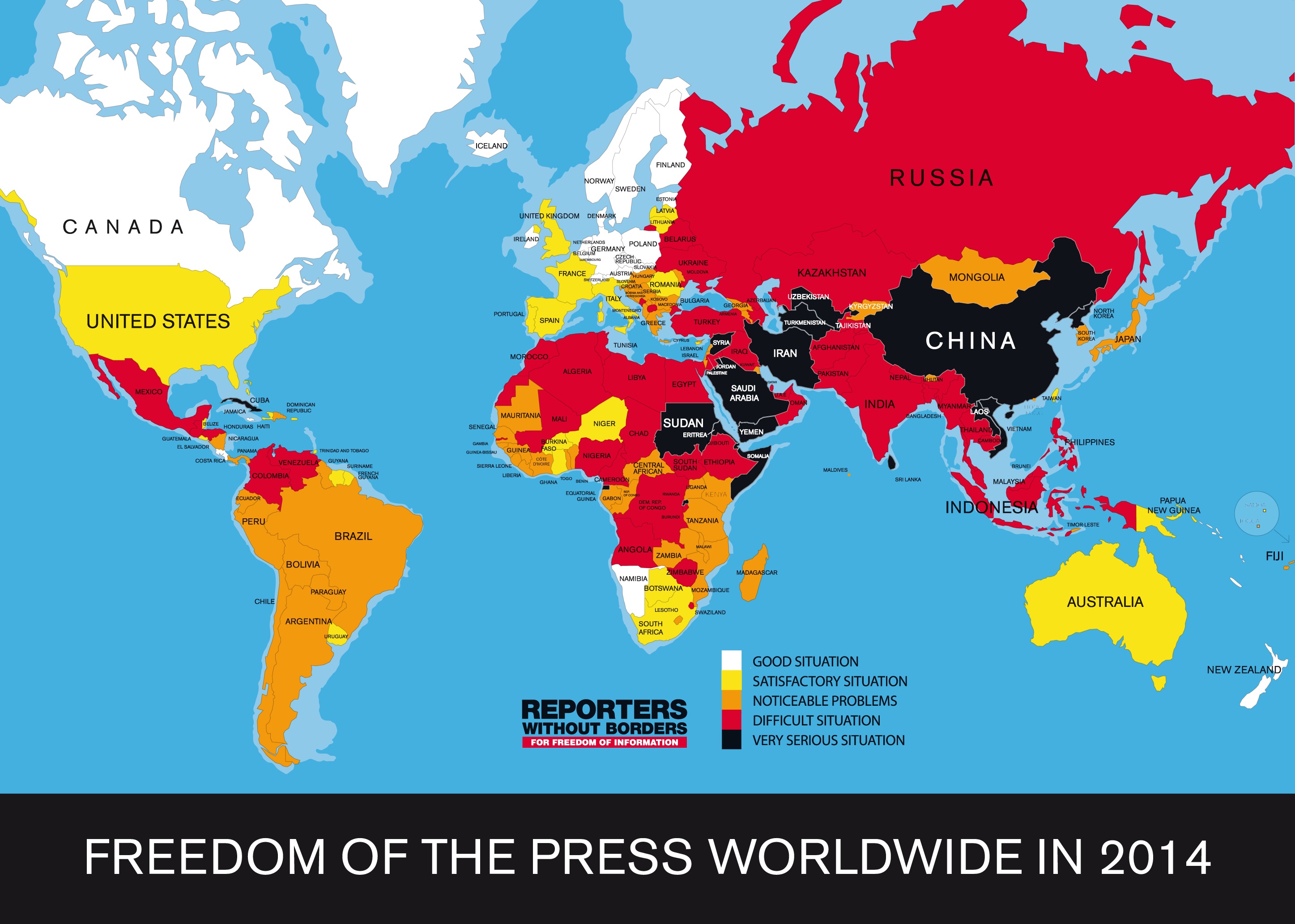
MapRSF


The United Kingdom has fallen from 29th to 33rd in the world in the World Press Freedoms Index 2014.

The report, compiled annually by Reporters Without Borders (RSF) is scrupulous in methodology and incorporates both qualitative and quantitative data. And for a country like Britain, which likes nothing more than to strut around the world proclaiming its comparative virtues, it makes for some dismal reading.

RSF’s summary of Britain is dominated by the British government’s chilling and bullying treatment of the Guardian newspaper as it sought to suppress the publication of information based on the NSA leaks by Edward Snowden, as well as the fallout from the Leveson Enquiry into the press behaviour and the prospect for further stultifying regulation of the industry:

In the United Kingdom, the government sent officials to The Guardian’s basement to supervise destruction of the newspaper’s computer hard disks containing information from whistleblower Edward Snowden about the practices of GCHQ, Britain’s signals intelligence agency. Shortly thereafter, the partner of Glenn Greenwald, the former Guardian star reporter who had worked closely with Snowden, was held at Heathrow Airport for nine hours under the Terrorism Act. By identifying journalism with terrorism with such disturbing ease, the UK authorities are following one of the most widespread practices of authoritarian regimes. Against this backdrop, civil society could only be alarmed by a Royal Charter for regulating the press. Adopted in response to the outcry about the News of the World tabloid’s scandalous phone hacking, its impact on freedom of information in the UK will be assessed in the next index.

Britain isn’t always called out by name, but there can be little doubt which European country was the intended target of this particularly barbed comment:

These developments showed that, while freedom of information has an excellent legal framework and is exercised in a relatively satisfactory manner overall in the European Union, it is put to a severe test in some member countries including those that most pride themselves on respecting civil liberties.

How true this is. Britain has long been (and has long considered itself) a stalwart defender of free speech, but the recent thuggish attempt to use anti-terrorism laws to detain a relative of a journalist and to threaten a national newspaper with closure unless it destroyed information which had the potential to embarrass the government are more worthy of Vladimir Putin’s Russia than the land of Magna Carta.

The New York Times, on the other hand, looks at the same report and seems to take succour from it, which is very surprising given the fact that their journalists have worked so closely with their beleaguered colleagues at The Guardian.

Their editorial board is celebrating the 50th anniversary of the landmark New York Times vs. Sullivan case, which set the bar for winning libel or defamation claims much higher than in Europe and thus created a bulwark protecting press freedom in the United States. This excerpt from the majority opinion in that case should be mandatory reading for all British politicians and those involved in public life, who are often all too keen to clamp down on free speech at the first sign of discord:

The Supreme Court voted unanimously to overturn that verdict. The country’s founders believed, Justice William Brennan Jr. wrote, quoting an earlier decision, “that public discussion is a political duty, and that this should be a fundamental principle of the American government.” Such discussion, he added, must be “uninhibited, robust, and wide-open,” and “may well include vehement, caustic, and sometimes unpleasantly sharp attacks on government and public officials.”

While the New York Times is absolutely right to recall and celebrate this landmark victory – libel laws in many other countries, especially Britain, are far too plaintiff-friendly – they seem all too willing to ignore the negative actions that have chipped away at this victory in the intervening half century, the various acts of craven self-censorship or collusion with imperial government overreach or the undermining of factfinding by the ongoing war on whistleblowers.

This selective amnesia leads to the following self-congratulatory pronouncement by the Times editorial board:

Still, American press freedoms rank among the broadest in the world. Citizens and media organizations in countries from China to India to Britain do not enjoy the same protections. In many parts of the world, journalists are censored, harassed, imprisoned and worse, simply for doing their jobs and challenging or criticizing government officials. In this area of the law, at least, the United States remains a laudable example.

The only problem with this statement? The United States ranks thirteen places behind the United Kingdom, at 46th in the world.

Fortunately for the New York Times and the reputation of the American press, the RSF world press freedom index does not take quality of journalism into account, only the ability of the journalist to practice their trade freely – otherwise they could have found themselves docked another few positions for that howler of an America-must-be-best presumption.

The truth is that neither Britain or America have anything to be proud of faced with this latest report. In an ideal world, David Cameron and Barack Obama would be held to account and hauled over the coals for presiding over such a poor performance. A backbench MP looking to bolster his or her civil liberties credentials could do worse than to ask the prime minister to defend or account for his government’s performance on press freedom at Prime Minister’s Questions this coming Wednesday.

But regrettably, a place in the mid-low 30s ranking is exactly where David Cameron, Barack Obama and many of those in power in Britain and America want their respective countries to sit. It allows for a press that is boisterous and noisy in all of the areas that don’t really matter (and so showing every outward appearance of being free), but that meekly tows the line when it comes to critical issues such as national security, civil liberties and holding those in power to account for their actions.

We in Britain or America may not think of countries such as Finland, Norway, Luxembourg or Liechtenstein as shining role models to emulate, if indeed we ever think about them at all. But in some key aspects, it is they who now carry the torch for freedom of speech and the free press, not the traditional Anglo-American partnership who held it aloft so dutifully for so long.