Brexit Opposition And The Quiet Death Of Citizenship

It is difficult to have a serious conversation about citizenship in the Age of Brexit when so many people hold a such transactional, materialistic and reductionist definition of the concept as meaning little more than benefits received in exchange for taxes paid

One interesting and overlooked aspect of the Brexit debate is the extent to which the basic concept of citizenship has decayed and virtually evaporated from our public discourse, right under our noses, with barely any note of alarm being sounded in the process.

This decay reveals itself in manifold ways, from the furious pushback one inevitably receives when pointing out the obvious fact that citizens should (and do) have more rights than non-citizens to the outraged, moralising vitriol hurled at anybody who dares to suggest that illegal immigrants are technically lawbreakers and therefore maybe not universally worthy of respect, sympathy or amnesty.

These are now controversial positions to hold. To be steadfast in the belief that British citizenship confers more rights than those held by permanent residents or temporary visitors is to mark oneself out as something of an extremist, at least as far as the media and chattering classes are concerned. Yet many politicians in Britain and America who now wrap themselves in the mantle of conspicuous compassion for all illegal immigrants and effectively agitate for open borders could themselves not so long ago be found calling for tougher immigration enforcement.

This applies to the likes of Hillary Clinton in America, who once supported and voted for the same strengthening of the United States’ southern border which she now denounces as being tantamount to racism. Of course, Clinton has since positioned herself as a tireless champion of the “undocumented”, together with virtually all of the American Left. Similarly in Britain, many commentators who once dared to express reservations about uncontrolled immigration from within the EU have now taken up rhetorical arms against anybody who proposes a more rigorous immigration policy.

In both countries, but particularly in Britain, citizenship is increasingly regarded (to the extent that people think of it at all) as a transactional affair, services rendered for taxes paid – or even rendered with no reciprocity at all in the case of the modern welfare state. The argument goes that by the sole virtue of paying taxes or drawing benefits here one deserves a full voice in the country’s affairs, even if one is a non-citizen or is present in the country illegally.

This very transactional approach has frayed the contract or bond between citizen/resident and the state. Of course, people still expect the state to protect them from foreign foes, guard against domestic security threats, provide healthcare, offer a welfare safety net and distribute various domestic and EU services. But even as they make these demands they offer rapidly diminishing loyalty to the state in which they live. People are increasingly insatiable for the benefits while being less and less willing to accept the responsibility.

This responsibility goes much deeper than just paying one’s taxes. It means making a serious commitment to community and, ideally, the enthusiastic acceptance of and assimilation into one’s home (or adopted) culture. Traditionally, the sign that an immigrant was willing to accept these broader responsibilities was their decision to apply for naturalisation as a citizen. Historically, if an immigrant were to build a life in another country, working and raising a family there, they would ultimately become a citizen of that country in most cases.

But today, many people demand the perks without accepting the responsibilities – hence the outrage of and on behalf of EU citizens who have built permanent or semi-permanent lives here yet refuse to see why they should formalise that commitment through the naturalisation process (or at least the acquisition of permanent residency following Brexit). They forget that the European Union is an aberration, that nowhere else in the developed world would countries offer so much while asking for virtually nothing in return.

Yet to point this out is to invite accusations of callousness and amorality. Of course there are exceptional cases where joint citizenship cannot be taken or some other bureaucratic or financial obstacle stands in the way of an EU migrant formalising their commitment to the United Kingdom. Such cases should be treated generously, with the aim of reducing any uncertainty for the migrants involved.

But this blog has very little sympathy when people demand something for nothing. Freedom of movement and other EU benefits are political entitlements. They are not – repeat, NOT – fundamental, inalienable rights.

A fundamental right is intrinsic to one’s humanity, as applicable to somebody in China, Russia, North Korea or Venezuela as to someone living in Britain. These are best summed up in the US Declaration of Independence as “life, liberty and the pursuit of happiness”, though one can also drill down a level further and acknowledge the universal human right to property, due process under law and so on. Fundamental rights are inherent; political entitlements are nice-to-haves, often given (in the EU’s case) partly as a means of securing support for a dubious political project which would otherwise be utterly unloved.

Of course we should have a degree of natural sympathy for anybody at risk of losing their current political entitlement to live and work in the United Kingdom without going through the arduous and expensive process of applying for permanent residency or citizenship – though a deal between Britain and the EU to secure reciprocal ongoing rights for UK and EU citizens is all but inevitable. Personally, I would offer expedited indefinite leave to remain to all current EU migrants at a greatly reduced fee. But others’ rights as EU migrants do not trump the sacrosanct (though not quite exclusive) right of British citizens to participate in our democracy and determine the course of the country.

The decision of the British people to secede from the European Union can not and must not be vetoed by or on behalf of people who refuse to assume the responsibilities and privileges of full citizenship. That such an obvious statement now sounds harsh or controversial is itself an indicator of how deeply corroded and devalued the concept of citizenship has become in our society. Yet this would have been the mainstream view in Britain a decade or more ago, and still very much is the accepted wisdom nearly everywhere else in the world.

Many Brexiteers – myself among them – did not spend 2016 tirelessly campaigning for Brexit because they hate immigrants, want to kick out existing migrants or even significantly lower net migration. But neither will we allow the protestations of those who refuse to share the commitment and mutual connection of citizenship with us to overshadow or overrule our vote.

This is not extreme, nor is it unreasonable. It is merely the consequence of adhering to the same traditional definition of citizenship which allows us to flourish as a society precisely because we are all bound to one another by something deeper than momentary convenience.

It remains to be hoped that Brexit will spark a renewed discussion about citizenship and the proper relationship between citizen, resident and government – indeed there are some early encouraging signs that such conversations are starting to take place.

But the furious reaction of the establishment Left to political developments both in Britain and America suggests that defenders of the concept of citizenship will be starting at a considerable disadvantage.


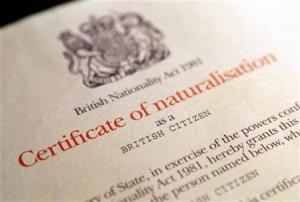
A British citizenship certificate is seen in London

Support Semi-Partisan Politics with a one-time or recurring donation:

Agree with this article? Violently disagree? Scroll down to leave a comment.

Follow Semi-Partisan Politics on TwitterFacebook and Medium.


Citizenship And The Nation State Remain Relevant, Despite The Efforts Of Their Detractors

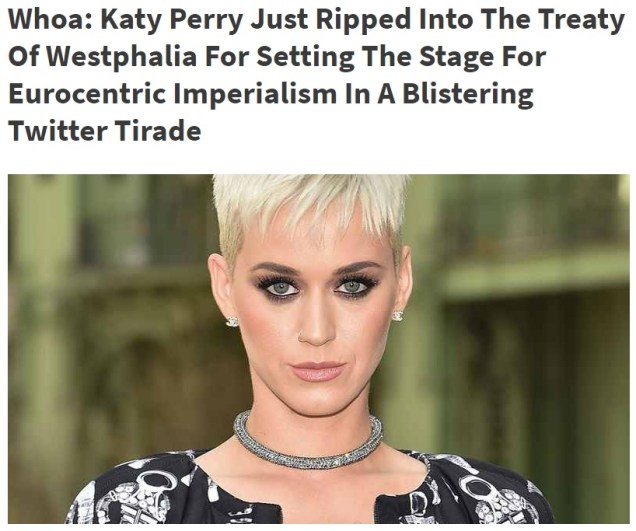
Katy Perry - Treaty of Westphalia - Nation States

There’s life in the humble nation state yet

As the backlash against Brexit grows ever stronger and the Cult of Social Justice and Identity Politics eats away at our national fabric from within, there are many legitimate reasons to fear for the future of patriotism, citizenship and even the nation state itself.

However, there are also a few reasons for optimism, and Rebecca Lowe Coulson sets some of them out in Conservative Home. But first she paraphrases the question that many people are now asking about the continued relevance of the concept of citizenship:

In an increasingly globalised world, however — in which the Westphalian order of nation states is regularly criticised as inward-looking — citizenship is repeatedly denounced as an outdated representation of division and exclusion. It hardly seems necessary to comment that such denouncements typically come from the privileged, within the most economically and politically secure nations. And that, like those Britons angered at the imminent loss of their EU citizenship after Brexit, few “global citizens” seem keen to give up the privileges of their current national citizenships.

Of course, what many of those citizenship-snubbers truly want (like most of the rest of us) is for their own privileges to be extended to those living in less secure places. It is undeniable that great global imbalances remain, even though living standards continue to rise across the world. But then, the question should not be whether the concept of citizenship precludes opportunities in the sense that being a member of one state can be highly preferable to being a member of another, but whether it is still the case that one’s rights and opportunities are best protected and afforded through membership of an individuated state. In a world in which secure states increasingly offer extensive rights to non-citizen inhabitants, aCitind less secure states need more substantial upheaval and help than an improved understanding of the intricacies of membership rules, is the concept of citizenship relevant?

Coulson Lowe then goes on to explain exactly why the concept of citizenship remains relevant, and will not be undermined despite the best efforts of those who see the nation state as an obstacle to be overcome rather than a crucial guarantor of rights:

We all remember how, in her 2016 Conservative Party conference speech, Theresa May said that “citizens of the world” were “citizens of nowhere”. The comment has become symbolic of an approach for which she has been widely criticised: an approach seen both as arrogant, and as attempting to appeal to those on the further right of her party.

At the time, I felt her tone mistaken, in that I would have preferred a use of language implying greater keenness to heal, or at least address pressing divisions within the country. General criticisms of the comment often overlook the argument May was setting out, however. The words came within a section about the “spirit of citizenship”, and read, in full: “But if you believe you’re a citizen of the world, you’re a citizen of nowhere. You don’t understand what the very word ‘citizen’ means”. Surely, it is that forgotten second sentence that is key, here. And that the point May was in the midst of making was about the importance of “respecting the bonds and obligations that make our society work”.

The state, and the society that exists within it, still matters profoundly to those people who aren’t happy with the countries they call home .. Official membership of such societies is conferred in different ways: from the automatic rights of familial lineage to the successful passing of a test. But the standard way of gaining the citizenship of a state is by being born and growing up in it. For those of us fortunate to count somewhere like Britain or Australia as that place, it can be easy to take for granted the relative privileges this affords us.

Yet most of us see that the uncertainties and risks of life make it expedient for us to live together in societies, and that, as social creatures, it is natural for us to want to do so, over and above that expediency. The advancements of the past centuries — in communication, travel, science, military capabilities, commerce, and on — have made it impractical for societies to remain limited to the family groups, villages, or cities they once were. The continuation of that advancement does not mean that our embrace of the nation state must also become outdated, however. For simple reasons of functionality — not to mention the more complex, such as those related to culture or national identity — it is hard to see how bigger blocs or idealist internationalist approaches could work.

This is what many on the Left fail (or are unwilling) to grasp. The Westphalian concept of statehood and sovereignty (combined with 19th century concepts of nationalism) survive the test of time because they work with the grain of human nature rather than against it. Rather than pretending against all available evidence that somebody from country A has as much in common with someone from country Z as their next door neighbour, the system of nation states is a tacit admission that the human instinct to be part of a social communities mean that harmony is best achieved when systems of government are aligned with societal boundaries. And indeed, when there is a mismatch between government and society, nation states have often split and reformed in response.

But the bigger blocs and non-state actors championed by the nation state’s detractors will not become a viable replacement in the foreseeable future, precisely because an entity’s democratic legitimacy and popular support are derived from having a demos which identifies as a cohesive whole and consents to being governed at that level.

The United States works as a country because US citizens see themselves as American first and foremost, and not Californian, Texan, Iowan, Alaskan or North Carolinian. The United Kingdom survived the 2014 Scottish Independence referendum because a majority of Scots (just about) considered themselves British as well as Scottish, if not more so.

Supranational blocs do not command this sense of loyalty or commonality among the people they nominally represent, as the European Union discovered with Brexit and will continue to discover as member states chafe against one-size-fits-all dictation from Brussels. Brexit occurred because the European Union’s drive for ever-closer union and a grander role on the world stage was plain for all to see, and the majority of voters who consider themselves more British than European wanted no part of it.

The “if you build it they will come” approach – where ideological zealots construct all the trappings of a supranational state in the hope or arrogant expectation that a common demos and sense of shared purpose will follow on automatically – has been proven to be nothing more than wishful thinking.

And this is a good thing, because as Rebecca Lowe Coulson correctly observes, supranational and non-state actors have generally proven themselves far less able to effect change than unilateral, bilateral or multilateral efforts by nation states with common purpose. The very nature of trying to shoehorn the competing national interests and priorities of multiple countries into a “common” foreign, fiscal or defence policy gives rise to resentment, suboptimal outcomes (such as stratospheric youth unemployment in Southern Europe) and inevitable net losers.

And yet the myth persists – amplified by bitter Remainers and much of the corrupted civil liberties lobby – that cooperation between countries is only possible under the umbrella of supranational government, and that these non-state actors are somehow a better guarantor of individual liberties than nation states themselves.

Take this hysterical email recently sent out by “civil liberties” organisation Liberty:

Yesterday we took another huge step towards our withdrawal from the European Union as the Government published the Repeal Bill.

If the Bill passes in its current state, people in the UK will lose rights after we leave the EU. It’s that simple and the stakes are that high.

The vote to leave the European Union was not a vote to abandon our human rights.

Yet the Repeal Bill includes worryingly broad powers for ministers to alter laws without parliamentary scrutiny and contains no guaranteed protections for human rights. Worse, it takes away the protections of the Charter of Fundamental Rights without ensuring that we will continue to protect all of those rights in the UK after Brexit.

Every single right we have now needs to stay on our statute books – from those contained in the EU Charter of Fundamental Rights, to equality protections we’ve gained from our membership.

Liberty – and other groups who are content for British citizens to have “rights” imposed on them from above rather than argue for and win them at a domestic level – see supranational organisations as a convenient bypass for national democracy. If the stupid British people are too dumb to vote for more employment protections and other government treats, this line of thinking goes, then advocacy groups who know better should just go over their heads to the EU. This is profoundly undemocratic, but more than that it only affirms the dangerous idea that our rights should be granted by government (at any level) rather than being innate and inalienable.

This is utterly wrong, as I explained back in 2015:

The new, emerging institutions which will replace them are being designed behind closed doors by small groups of mostly unelected people, as well as the most influential agents of all – wealthy corporations and their lobbyists. We have almost no idea, let alone influence, over what they are building together because instead of scrutinising them we spend our time arguing over the mansion tax or the NHS or high speed railways, which are mere distractions in the long run.

The liberties and freedoms we hold dear today can very easily slip away if we do not jealously guard them. By contrast, power is generally won back by the people from elites and powerful interests at a very heavy price – just consider Britain’s own history, or the American fight for independence from our Crown.

The yawning gap in the argument of those who would do away with the nation state is how they intend to preserve democracy in its absence (assuming they even care to do so). Even many of the EU’s loudest cheerleaders concede that the current institutions are profoundly undemocratic and unresponsive to popular priorities or concerns – this tends to be expressed through an exasperated “of course the EU needs reform!”, sandwiched between odes of love and loyalty to the very same entity, as we witnessed countless times during the EU referendum.

But what that reform actually looks like, nobody can say. Or at least, those few tangible visions for a future EU which do exist are so unmoored from reality as to be little more than idle curiosities – see former Greek finance minister Yanis Varoufakis’ DiEM25, which contends both that the European Union can be persuaded to undertake meaningful reforms (ha!), and that this reformed EU should then amplify left-wing priorities to the exclusion of all others (how very democratic).

If you want to do away with the concept of the nation state or actively agitate for its demise then I think you have a responsibility to state clearly and unambiguously what you would have in its place before pushing us all into the undiscovered country. Yet the assorted citizens of the world, so anguished by Brexit, refuse to come up with an answer – at least not one which they are willing to utter in public.

The European Union is not a static entity – it is an explicitly and unapologetically political project moving relentlessly (if erratically) toward the clear goal of ever-closer union. If this is not their preferred outcome for Britain and all other nation states (and few pro-EU types will admit that this is what they want) then it is incumbent on them to offer an alternative goal with a politically viable means of achieving it.

And until they do so, the assorted enemies of the nation state do not really deserve a hearing.

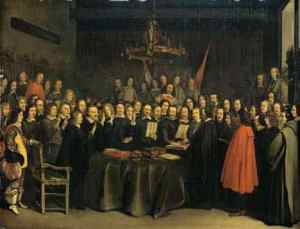
Treaty of Westphalia

Support Semi-Partisan Politics with a one-time or recurring donation:

Agree with this article? Violently disagree? Scroll down to leave a comment.

Follow Semi-Partisan Politics on TwitterFacebook and Medium.

The Left’s New Cunning Plan: Pretend To Support Brexit, Then Sabotage It Later

Brexit Saboteur - Remain - Establishment

Someone needs to tell the pro-EU centrist establishment that plotting an establishment usurpation of democracy in public isn’t the smartest strategy

You have to admire the chutzpah of the establishment centre-left right now. Last week they publicly advanced their super clever idea for Remainers to pretend to make peace with Brexit in order to regain credibility with the public (but only in order to sneakily backstab the whole enterprise a few years down the line).

No, seriously:

An increasing number of Remainers are attracted to an alternative strategy. After a lengthy transition, they argue, voters should be offered a choice between a new EU trade deal and re-entry under Article 49 of the Lisbon Treaty. By the mid-2020s, Remainers calculate, the risks of Brexit will be clearer and the original referendum will be a distant memory. The proviso, they add, is that the EU would have to allow the UK re-entry on its existing membership terms (rather than ending its opt-outs from the euro and the border-free Schengen Area).

Rather than publicly proposing this plan, MPs are wisely keeping their counsel. As they know, those who hope to overturn the Brexit result must first be seen to respect it.

Interesting. So let me get this straight:

Step 1: Pretend to accept the EU referendum result.

Step 2: Work furiously behind the scenes to overturn it in a few years’ time.

Step 3: Keep the whole dastardly plot a secret, so that nobody finds — oh, too late.

And today we see another confession from the Left, this time that they plan on pretending to be on board with the outdated and embarrassing ideas of patriotism and pride in Britain – because their stupid, backward working class base insist on clinging on to those foolish notions. Again, this was done in public.

Alessio Colonnelli over at LabourList begins by stating exactly what he thinks of the backward and dangerous concept of patriotism:

Brexit is a bout of extreme patriotism; an angry Pamplona bull you can’t really grab by the horns. You run away from it, then hide and watch it thunder past. Overwhelmed by it all, gasping for air, the only question left is: how to make the best out of this situation?

This is a promising start – not merely suggesting that the patriotism felt by a majority of Brits is irrational or a hankering for lost empire (the familiar trope from Remainers), but that it resembles an angry charging bull.

Colonnelli continues:

Having lost millions of voters in northern England, Wales and Scotland in between 2010 and 2016, the red party has started doing “patriotism” a bit more. It would be very worrying if it were not so. It’s a card one has to play, given the circumstances. Make no mistake: Machiavelli would pat you on the back for doing that. Whatever it takes, so his lesson goes. Besides, it’s not as if a dash of mild jingoism was ever alien to Labour throughout its history – Hugh Gaitskell was never enamoured with Europe either, after all.

The thing about Machiavelli, though, is that he didn’t advocate that politicians announce their dastardly plans in public before executing them, or make it painfully obvious that they are only pretending to get along with the target of their deception. He assumed that geopolitical actors would have a sufficient baseline of intelligence that pointing this out wasn’t necessary.

Not so for Alessio Colonnelli though, who tells us exactly what he thinks about patriotism, declares that he sees it as a form of “mild jingoism” in which the metro-left should nonetheless pretend to partake for the sole purpose of tricking Brexiteers, and then titters to himself that he is somehow pulling one over on those of us who campaigned and voted for Brexit on the grounds of democracy, sovereignty and patriotism.

He continues:

Occasionally, as we all know, the centre of politics shifts, and momentarily weaker outfits are forced to follow the changes – the zeitgeist. It happens everywhere. In Britain, the centre has moved towards the right over the past seven years (with Ukip’s crucial help), and you would expect social democratic organisations to do something to counter this while playing along to the new tune for a bit and sneakily carving out a new space.

How brave. How principled, to pretend to agree with a current political trend that you find objectionable rather than standing up to it with courage and conviction. First I am astonished that Colonnelli believes that the political centre of gravity has shifted to the right lately, given the fact that Theresa May completely blew the general election, Jeremy Corbyn surpassed expectations and the public seem to be signalling that they are getting tired of this whole austerity thing. But presumably he is talking exclusively about Brexit, which in his two-dimensional mind he sees as being a right-wing phenomenon rather than a democratic one.

In all seriousness, though, there is an interesting contrast between the way that the Left is responding to populist setbacks on either side of the Atlantic. In Britain, we do see the stirrings of this attempt to reach out to Brexiteers and others for whom patriotism is not an embarrassment (the Somewheres, to use David Goodhart’s terminology) – even if it is only a transparent ruse designed to trick them.

This almost certainly would not be the choice of most of the Parliamentary Labour Party, who hold Brexiteers in barely disguised contempt and who wear their fawning, unconditional love for the EU like a badge of honour. But Labour’s centrist MPs are constrained in what they can do because Jeremy Corbyn, their leader, is a eurosceptic at heart and set the tone in the 2017 manifesto that Labour would support Brexit.

In the United States, however, the Democratic Party – despite having thrown away the White House, a minority in Congress and severely weakened in state government – shows no signs of being ready for a rapprochement with the voters that their standard bearer Hillary Clinton once called “deplorable” and “irredeemable”. If anything, the American Left seems increasingly determined to publicly double down on the divisive identity politics messaging which alienates middle America and saw the Democrats lose the Rust Belt (with the exception of a few brave voices in the wilderness, like Mark Lilla).

Two different approaches – on one hand an attempt to understand voters and meet them where they are (even if only as part of an elaborate and cynical deception), and on the other hand a perplexing decision to furiously lash out at the electorate and double down on the same old failed identity politics strategy.

Neither populist insurgency is going tremendously well right now – in Britain, the Conservative government seems determined to enact the most ruinous and disorderly version of Brexit possible, while in America Donald Trump is simply being Donald Trump. This might represent fertile territory for a left-wing party which actually knew what it was doing, a movement which wasn’t consumed by blind fury at being ignored by the electorate and cast unexpectedly from power.

The question is, when will the Left cease their temper tantrum, grow up, regain their senses and try being effective opposition again? Because surely it will happen eventually, and that will be a bad day for the populists.


Remainer paints EU flag on her face - European Union - Brexit

Support Semi-Partisan Politics with a one-time or recurring donation:

Agree with this article? Violently disagree? Scroll down to leave a comment.

Follow Semi-Partisan Politics on TwitterFacebook and Medium.

General Election 2017: The Unbearable Light-weightedness Of British Politics

rainbow unicorn

We can’t go on like this

I’m just going to come out and say it: given the appallingly weak options available, Jeremy Corbyn probably deserves to be the next prime minister of the United Kingdom.

Don’t get me wrong: if his hard-left socialist policies and aspirations were fully enacted, Corbyn would also likely be the last prime minister of the United Kingdom, but that’s another matter.

After all, is not the point of democracy, of elections, to give the people their right to choose political leadership and representation which they want to see take their communities and their country forward? And if so, who during this miserable general election campaign has done more to convince the British public that they are a person of principle and conviction, willing to tell uncomfortable truths as they see them while standing up to entrenched special interests – Theresa May or Jeremy Corbyn?

Let’s compare.

Who produced an election manifesto which represented some of the best traditions (and sincerely held political views) of their party? That would be Jeremy Corbyn. Who huddled together with two unelected aides to produce in secret a manifesto which declared war on her own voters, repudiated Thatcherism, threw the libertarian wing under the bus and pandered to the worst instincts of everybody who thinks that the state should be like a third parent to them? That would be the “conservative” prime minister, Theresa May.

Jeremy Corbyn’s Labour manifesto, in all its leftist, spendthrift glory: costed. Theresa May’s Coke Zero Conservative manifesto – “coke zero” because like the drink, it has the same branding as the real thing but none of the ideological, calorific ooomph which makes it taste good and perk you up – not so much.

Who has made gaffe after gaffe and exacted numerous self-inflicted political wounds, missteps and humiliating U-turns on her party and campaign? That would be Theresa May, whose claim to unruffled, grown-up leadership looks more and more tarnished by the day. Who seems to have finally stopped his penchant for weekly PR disasters and learned not to intervene when his enemy is making a mistake? That would be the old rube, Jeremy Corbyn, despite the fact that he faces a highly antagonistic press.

Who has behaved like an adult and at least accepted the necessity of a Brexit deal with the European Union (however weak a negotiator he would otherwise likely be) as a precursor for economic stability? That would be Corbyn. Meanwhile, who still publicly entertains the confidence-sapping notion of no deal and a disastrous crash out of the EU? That would be strong ‘n stable Theresa.

And who found the courage to go on national television and articulate their party’s values and vision for Britain in tonight’s BBC election debate? Jeremy Corbyn. Who was frightened and cowered away in Downing Street, risibly sending a surrogate minister to fight her battles? That would be the ever-formidable Theresa May.

Whatever one thinks of Jeremy Corbyn, there is mounting evidence that Theresa May simply does not have what it takes to be a successful British prime minister in the 21st century. Perhaps being a diligent, hardworking, non-telegenic, secretive authoritarian with a tiny circle of close-knit advisers helped Theresa May when she was Home Secretary. Lord knows it allowed her to become prime minister despite the party and the country barely having any idea of her core values or guiding philosophy. But as prime minister in the television and internet age, May’s natural reticence doesn’t play well.

You can say that this is a small and petty criticism, and in some ways it is. And perhaps personality should matter less, but we must deal with the world as it is rather than as we would like it to be. When Theresa May skulks in the back row of G7 summit family photos while Donald Trump gladhands with the boy wonder French president Emmanuel Macron and “leader of the free world” Angela Merkel, one gets the strong impression that she similarly fails to win hearts and minds in the all-important closed door sessions.

For all their arrogance and vapidity, the American political elite positively purr over Emmanuel Macron, bulwark against Evil Brexit and saviour of the “liberal world order”. I would wager that far fewer could even name Theresa May. And this advances British interests with our closest and most important ally how, precisely? Donald Trump is one man, quite possibly soon to be an ex-president if the slow-motion coup against him ultimately succeeds. Meanwhile the vast apparatus of American government remains a juggernaut fully committed to the internationalist status quo, and Theresa May is doing nothing to persuade them that any of their preconceptions about the evilness of Brexit and the EU’s self-evident splendour are wrong. A better, more natural communicator would have a fighting chance.

Two provisos: First, Jeremy Corbyn would do no better in this regard, and quite possibly far worse, given that his worldview is based in no small part on anti-Americanism. But Theresa May only looks vaguely acceptable in this regard because Jeremy Corbyn would be so appalling. That’s not a ringing endorsement or a solid qualification for remaining prime minister.

And second, it is hardly as though the Conservative front benches are brimming over with talent one thinks of as solid alternative prime ministers – Boris Johnson is rightly known in America and around the world as a fool who uses a bumbling persona and a smattering of Latin phrases to mask an insatiable vanity and hunger for the spotlight. Who else to choose? Philip Hammond? Well, at least Theresa May makes him look fiscally responsible by comparison, but he’s no media performer. Amber Rudd? She’s a loyal soldier and did a highly commendable job stepping into Theresa May’s shoes for tonight’s debate, particularly so soon after the death of her elderly father earlier this week, but a potential leader? Who else, then? Seriously, I’m asking? Who?

If you had to design the perfect Tory party leader and prime ministerial candidate for this moment in time specifically, what would they look like? Well, everybody probably has their own preferences, but here would be my take on what would work best both politically in Britain and as a person capable of commanding interest and admiration on the world stage:

Ex armed forces (of either gender), mid to senior rank, with an illustrious overseas deployment history. Someone who exudes unapologetic patriotism yet never lapses into cheap jingoism, and whose commitment to defence, national security and veterans affairs is beyond question.

Followed up by a successful later career, possibly in the third sector or the arts but better still in the private sector, having founded a stonking great big corporation that also gives back to the community by employing ex-offenders or partnering with charities to do meaningful work in society.

A solid and consistent record (at least dating to the start of the EU referendum campaign) on Brexit, able to tell a compelling story about how Brexit – properly done – can be good for our democracy and at least neutral on the economic front.

A person who believes that until somebody comes up with a viable alternative to (or augmentation of) the democratic nation state, this institution remains the best method yet devised of ordering human affairs, and that consequently we should not needlessly undermine and vandalise it by vesting power in antidemocratic supranational organisations or pretending that we can sidle our way into a post-patriotic world by stealth rather than with the consent of the people.

Somebody who will not bargain away our civil liberties chasing the chimera of absolute security from terrorists and madmen – particularly while refusing to face down radical Islamism as an ideology to be confronted and defeated – but who will also stand up to expansionist, nonsensical definitions of human rights and an identity politics / political correctness agenda that values hurt feelings more than freedom of expression.

Somebody with the articulateness, gravitas, sincerity and quickness of thought capable of doing the near impossible in 2017: single-handedly turning the tide away from the vapid, broken politics of me, me, me. Somebody willing to ask – as John F. Kennedy once did – not what our country can do for us, but what we can do for our country. Somebody who dares to call us to a higher purpose than merely living in a country with “good public services”, deifying “Our NHS” and having the goddamn trains run on time.

Somebody who chooses for us to go to the moon (or rather its current day equivalent in terms of spectacular human achievement) “and do the other things, not because they are easy, but because they are hard, because that goal will serve to organize and measure the best of our energies and skills”. Kennedy again.

Somebody who realise that unless we as a society nurture and maintain some kind of higher common purpose with one another – and we’ve largely done away with organised religion in Britain, while the Left’s commitment to unlimited multiculturalism has made even the suggestion of unifying around non-negotiable core values prima facie evidence of seething intolerance or racism – we are doomed to fracture into separate warring special interest groups and victimhood lobbies jockeying for position. A country so lacking in confidence in its own values that it refuses to proclaim them, let alone insist upon them. A country in name only, led by a conservative in name only.

So where is such a potential transformative, neo-Thatcherite Tory leader? Where is such a potential leader of any political party in Britain? Good luck finding them. Look at the typical calibre of people who now become MPs. Sure, you get some who are diligent constituency MPs or single issue campaigners, but this only highlights the flaw of a system of government which draws the executive from the legislature. Look at the new or new-ish MPs of any party with serious ministerial ambitions and you’ll generally find nothing but focus group-approved platitudes and a yawning chasm where ideology or principle ought to reside. Look at the seven characters who lined up behind podiums to debate the issues on primetime TV.

No such party leader (or surrogate) standing on stage at tonight’s BBC televised election debate in Cambridge lived up to even one of these tests. The seven parties of the Left – Labour, Liberal Democrat, Green, Scottish National, Plaid Cymru, UKIP and now Theresa May’s rootless Tories – only know how to campaign by promising people stuff. Lots of stuff, any stuff. More more more. Better, bigger, shinier public services. A welfare state blindly doling out the same universal benefits in disbursements which are laughably small for the wealthy (who don’t need them but are hooked on them because that’s how universal benefits do their dirty work) yet which too often allow the genuinely sick and disabled to barely subsist. Promise after promise. No call to citizenship, to personal responsibility. Just endless promises of safety, security and more stuff, all for free.

Vote for me, I’ll keep you safe from terror. Just gonna need your Facebook password, please. No, vote for me, I’ll keep the economy strong because we all know the only point of a strong economy is to raise more tax to spend on the NHS. Liar! You want to destroy Our Precious NHS! You want people to die in the streets when they get sick, just like they do in America. No, we are now the true party of the NHS! Anything for Our NHS, oh god, anything and everything, my very life for Our Blessed NHS.

Oi! Look over here, free university tuition! Yeah, it’s subsidised by the taxes of other people who never went to university and whose earning power has not been boosted through having a degree, but still. Fairness! Young people are the future! No, no, no, it’s all about the environment. That evil party wants to build an experimental nuclear fusion plant in your grandmother’s basement. But we will bulldoze nasty, Brexit-supporting Stoke-on-Trent and replace it with a massive solar panel field. Much better.

No, look over here! We will bring back British Rail; remember how great British Rail was? Who needs Pret when you’ve got a trusty British Rail egg and cress sandwich? Nice and warm, of course, just like the good old days. Let’s have car-commuting taxpayers in Gainsborough subsidise the travel of London-based city commuters, because fairness. British Rail? Scoff. I’ll see your British Rail and raise you British Leyland! Woohoo – nationalisation, baby! For the Common Good.

All immigrants are a godsend, to the last man. If it weren’t for immigrants, your inflamed appendix would have been dug out by a native-born, chain-smoking school dropout with a can of special brew in his spare hand, and don’t you forget it. No, of course we should have a sensible, measured conversation about immigration. It’s just that I’ll stand here and shriek into the TV cameras that you’re an evil, divisive racist if you disagree with me. But please, go ahead. No no, we should listen patiently to people’s concerns and then carefully explain to them why they are wrong. People love that.

Oh, you? No dear, you don’t have to do anything. We, the politicians, are here to promise you stuff, to pander to your every passing whim. If I’m prime minister, I will make it my overriding personal concern to fix the broken chairs at your GP surgery waiting room – I’ll come round and do it myself, I’ve got some tools in the shed – and make sure that New British Rail adds free wifi to your single-carriage metro train between Stoke and Crewe. Seriously, no worries. I’ll call the boss at 6AM every day until it happens. NATO summit? Geopolitics? Statecraft? Boring! Why be a statesman when I can be a glorified town councillor for 65 million insatiable people? I’m on the case for you, and your every last petty concern. I’ll read foreign policy briefings when I’m on the can, that stuff doesn’t matter.

Heavens no, of course we don’t need to properly empower local politicians to make decisions in the local interest, raising and spending taxes independently of Westminster. For I am running to be Comptroller of British Public Services, and my sole job, my only care in the world is to make your passage through life as easy and painless as possible. You and 65 million of your fellow citizens. The buck stops with me, because public services are everything. After all, Britain didn’t do anything of value or renown on the world stage until we starting implementing the Beveridge Report. Not a damn thing. And now we’ve jacked up the size of the state so much and you have to deal with it so bloody frequently that we’d darn well better make sure you come skipping away happy from every last interaction – too many bad experiences for you are political suicide for us.

All seven of them, yapping away on stage like this as the minutes ticked by and the left-wing Cambridge audience dutifully clapped along to each pledge of More Free Stuff like so many trained seals. But at least Jeremy Corbyn sounded like he meant it, like he was advocating all of these things because they flowed from a sincere and coherent – if utterly misguided – worldview. The rest were just preening, moralising virtue-signalling charlatans. With the exception of Amber Rudd, who did sterling work in the face of her leader’s cowardice, and whom I will not criticise given the circumstances of her appearance.

Now, all of that being said, the prospect (raised by new YouGov polling showing a tightening race) of Jeremy Corbyn overperforming expectations, gaining seats in parliament and entering 10 Downing Street as prime minister backed by a “pwogwessive alliance” of Britain’s childlike left-wing parties, is simply untenable. And so I will vote Conservative on June 8, because my constituency of Hampstead & Kilburn is a tight two-way marginal and the Labour incumbent MP, Tulip Siddiq, was a staunch Corbyn supporter and an unrepentant enemy of Brexit.

So yes, I’ll vote Tory this time. But Lord knows I’ll feel unclean and deeply depressed while doing so, with zero expectation that it will result in anything positive for the country and with considerably more admiration for the man I hope to see defeated than the woman I barely want to win.

Britain, we can do better than this. Probably not much better realistically, at least right now – because as a society we have fallen and been infantilised to such a worrying degree – but still we can do better than these paltry political party leaders. They’re all just so very…small.

Somebody, anybody else, please step up soon. Deep down, as a nation we want more than is being offered to us by Jeremy Corbyn, his provincial Mini Me’s and a confused Tory leader who thinks the path to victory involves dismantling – rather than building upon – the legacy of our greatest post-war prime minister.

Step forward, find the spirit of public service and call us to action, too. Ask us to set our sights beyond our own narrow interests, beyond our bank balances, our bin collections, our next step on the property ladder, the feelings of our intersectional identity groups, the fate of our free mobile roaming calls in Tuscany. Help give us a new purpose, a common purpose, a higher purpose.

Set us a challenge.

 

People skipping beneath a rainbow

Support Semi-Partisan Politics with a one-time or recurring donation:

Agree with this article? Violently disagree? Scroll down to leave a comment.

Follow Semi-Partisan Politics on TwitterFacebook and Medium.

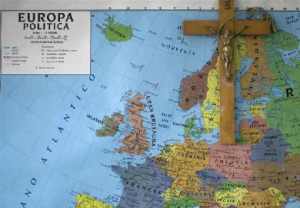
More Christian Brexit Hysteria From The Anglican Church

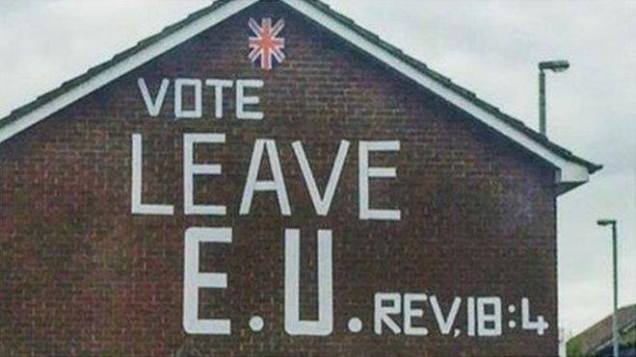
Brexit - Christianity - House mural - Revelation Chapter 18 verse 4 - EU Referendum

To believe that Brexit is the greatest threat to Britain’s Christian heritage and values is profoundly misguided

The people over at Reimagining Europe are at it again.

The Rt. Revd. Dr. Gregory Cameron, Bishop of St Asaph, is concerned that Britain may be about to throw it’s European-given Christian heritage out with the EU bathwater. One might consider it strange that he considers Brexit to be the existential threat to British Christianity rather than, say, increasing secularisation or the aggressive attacks by the Cult of Social Justice and Identity Politics on what were once traditional Christian family values, but such is the way of things these days within the Churches of England and Wales.

Bishop Cameron writes:

In spite of the fact that the Bible has more to say about the distribution of wealth, social justice and the welfare of nations than ever it does about eternal life, Christianity and religion have gently been tidied away by many to the sidelines of political life. To ask therefore about a “Christian Brexit” might provoke the response “Why should there even be talk of such a thing?” While fear of religious extremism may have fuelled the leave vote, Brexit is trumpeted as a clinical economic exercise, perhaps with a little national pride thrown in but free from ideological fancy. So many might wonder why would religion get mixed up in it?

In fact, Christian philosophy is something woven into the very fabric of British society.  It undergirds many of our attitudes and values, even if the rationales have become obscure, and the foundations repudiated by many.  Christianity came to us from the continent, and bound us to the continent, whether it was the mission of Pope Gregory to the Angles on the cusp of the seventh century, or the repudiation of one sort of Europe (the Catholic) in order to embrace another (the Protestant) in the sixteenth.  Even if we’ve chosen to renounce the politics of European integration, this doesn’t imply a rejection of a shared European culture – which is just as well given that most of British culture derives from a classical and Christian European past.  Could there even be a Britain without Christendom, the Angevin Empire, and the struggles for the European soul played out in the Napoleonic and World War conflicts?

It’s great that somebody is now asking these questions. I’m just astonished that the good bishop has identified Brexit as the greatest threat to this cultural heritage, rather than any of the other far more pressing issues. Of course Britain would not exist in anything like it’s current form without Christendom. Why does that mean that Britain should have voted to remain in a supranational political union beset with so many problems and unloved by so many?

And of course renouncing the EU’s explicitly political union and integrationist purpose does not mean that we reject our “shared European culture”. Given that Bishop Cameron understands that these are two different things, one wonders why he is concerned that rejecting one would even endanger the other.

More:

So which Christian values do I wish to see thrive in a Britain set apart?  One of the worst aspects of the Brexit vote, much commented upon, was the permission unintentionally given for xenophobia.  Too many immigrants (even to the third or fourth generation) are now made to feel unwelcome; too many folk have been given licence to be rude or violent.  I want to see a Britain which affirms our human connectness and the fundamental attitudes of respect and hospitality.  We need a people centred Brexit, which respects the individual choices and irrevocable commitments that immigrants and ex pats have made about their futures in the expectation of a border free Europe which is now slipping away from us.

I’ll have to take the bishop’s word for this. I have many friends and acquaintances in parts of the country condescendingly referred to by elites as “Brexitland“, but I myself live in cosmopolitan London, where Brexiteers and not “immigrants” are the scorned and endangered species. And while I do not question the veracity of media reports of xenophobic and racist incidents in the wake of the EU referendum campaign, from my own experience of strongly pro-Brexit places such as Stoke-on-Trent or my hometown of Harlow, neither have I witnessed anything like the wave of supposed anti-immigrant sentiment which the left-wing, pro-EU media insist is taking place.

Furthermore, if third and fourth generation immigrants are being made to feel unwelcome, clearly this is an issue which extends far beyond Brexit and Britain’s place in the European Union. As with the disastrous start to Donald Trump’s presidency in America, there is a tendency to blame every bad thing that happens in Britain on Brexit rather than seek to intelligently separate those factors which existed prior to the referendum and need addressing separately, and those which are legitimately connected with Britain leaving the EU.

The bishop then waxes lyrical about the “irrevocable commitments that immigrants and ex pats have made about their futures”. I’m sorry, but I have to take issue with this. The ultimate expression of making an irrevocable commitment to a new country that you want to call home is to become a citizen of that country. When my wife and I eventually move back to the United States, I eagerly look forward to the day when I receive my US citizenship as it will be an acknowledgement of the commitment I am making to that great country. Why should it be any different for somebody who intends to permanently settle and build their new life in Britain?

While EU citizens have been bribed for several decades with promises of a “borderless world” – while politicians have simultaneously kept silent about the damage done by undermining the nation state through the EU project – there is in fact nothing abnormal about expecting people to take that final oath of loyalty and allegiance before fully accepting them as a fellow countryman. You don’t prove your commitment to small-L liberal, British values simply by turning up, getting a job and starting a life here. An immigrant’s commitment to their new country should be more than the sum of the taxes that they pay and the personal enjoyment that they and their families receive as a result of making the move. To paraphrase John F. Kennedy, citizenship is about asking what you can do for your (new) country, not just what your (new) country can do for you.

More:

I want to see a Britain which reasserts its care for the weakest in its own society and in the citizenry of the world; which is committed to international development and international exchange.  We need a culture which is open to and accepting of heterogeneity.  In such a future, “British” should not stand in contradiction to “European”, but incorporate an international spirit: a continuing commitment to lowering barriers and not raising them.

Now this is just generic leftist pablum. Do we not already have an extensive welfare state? Do we not already lead the world by (wrongly, in my opinion) devoting an extraordinary fixed percentage of our GDP to inefficient, government-administered international aid? “British” does not stand in contradiction to “European”. But rather than becoming interchangeable, as EU integration ultimately demands, in future

Of course we should remain an open and tolerant society, but a culture which is “open to and accepting of heterogeneity” to an unlimited degree is a culture which refuses to assert its own values, fails to properly assimilate new immigrants and which fosters breeding grounds for unimaginable, unforgivable horrors like the sexual abuse epidemic in Rotherham, or the infant mortality rate as a result of consanguineous relationships in the London Borough of Redbridge. One might expect a Church of Wales bishop to be at least as equally concerned with these social problems as with the feelings of immigrants who felt perfectly happy in Britain until the Brexit vote but who now apparently feel besieged and despised, but apparently this is too much to ask.

More:

Brexit may not be a spiritual or religious enterprise, but we do have to defend the best aspects of our national life to build a future of which to be proud.  All the churches, including the Church in Wales, have to engage vigorously in the public debate about Brexit and our society as advocates of a Christian vision of social inclusion and people centred politics.

No. The trouble is that the Church has been lustily involved in the Brexit debate all through the referendum campaign and now it’s aftermath, but in an incredibly one-sided manner. Almost to the last person (with a few honourable exceptions) the bishops and clergy have come down hard on the side of remaining in the EU, often argued by clerics with a tissue paper-thin understanding of the issues at hand but a burning desire to signal their progressive virtue.

Has Bishop Cameron ever stopped to consider how an ordinary, decent, Brexit-supporting person might feel when confronted with the Anglican church’s institutional metro-leftism and scornful opinion of Brexiteers? Has he stopped to think what effect the Archbishops of Canterbury and York might have on the Brexit-supporting faithful when they so transparently agitate in favour of remaining in the European Union, and cast aspersions on the morals of those who dared to take a different position?

The bishop’s article concludes:

In challenging times of change it falls to us to demonstrate what loving our neighbours really means.

Yes, it does. Bishop Cameron might like to reflect on how he lives out those values in his own ministry, with particular regard to how he engages with the sincere beliefs of those within his own Welsh diocese who voted in good conscience for Brexit, are now looking forward in a spirit of optimism to its enactment, and are perhaps hoping for some pastoral encouragement (rather than despairing forgiveness) as they do so.

Because if this article is any guide, he has a long journey ahead of him.


christianity-europe-eu-brexit-3

Support Semi-Partisan Politics with a one-time or recurring donation:

Agree with this article? Violently disagree? Scroll down to leave a comment.

Follow Semi-Partisan Politics on TwitterFacebook and Medium.