–
It is becoming fashionable among the undecideds in the EU referendum campaign to complain about the supposed lack of available facts in the debate. But they don’t want facts – they want to be spoon-fed opinions and simultaneously reassured that these answers are unbiased
There is a rather nauseating new trend among those people who have somehow not yet come to an informed opinion on whether or not Britain should vote to leave the EU, whereby they blame their inability to reach a decision on the supposed lack of available facts handed down to them from on high.
We even see this cropping up in Question Time, as the Independent reports:
With 113 days until the EU referendum – that’s more than 15 weeks away – levels of stamina among the public for the flow of information being directed at them seem to be waning.
And when the opening question of BBC’s Question Time was on how much the referedum’s outcome would depend on “which side could scare us more”, one audience member put the problem laid before the country in very clear terms.
A young man said the decision to continue or terminate the 40-year relationship all rested on wondering who could be trusted to give impartial, accurate information.
“With all this scaremongering that’s going on in the media about this, I don’t see how us as the general public can make an informed decision,” he said, prompting nods from those around him.
[..] In the light of such risks, the audience member seemed to be concerned that he was given little information with which to make a safe and long-term decision.
“It’s just all sides saying different things and you just don’t know who to believe,” he said.
Boo hoo. It’s so difficult for undecided voters today, bombarded with passionate (but often fact-free) arguments from both sides. How can they possibly be expected to vote when the government and the meejah don’t give them a clear and unambiguous signal?
The amusing thing is that the young Question Time audience member asking the question would probably have absolutely no difficulty using the internet to research a complex and technical query relating to his malfunctioning Playstation or home cinema system. He is likely adept at finding YouTube tutorials which show how to disassemble and repair household appliances, and if he has a favourite sports team, band or celebrity he can quite likely find all manner of information about them online with no difficulty at all.
But when it comes to the workings and operation of his own country and the European Union which influences so many aspects of his life, it apparently does not occur to the questioner that he can use exactly the same skills he honed researching his fantasy football team to turn up some relevant, unbiased facts about the EU. The thought simply does not compute. When it is something glitzy and fun, he is more than willing to spend five minutes consulting Google and a few hours reading through the results that his search throws up. But on “boring” matters like the governance of the EU, what the European Union might look like in the future or how Brexit might actually be accomplished, he loses focus before he can finish typing a query into the Google search bar.
Of course he is not getting unbiased information from the media. Playing the role of high-minded, neutral arbiter has not proven to be very successful for most media outlets, nearly all of which instead churn out content which plays to the gallery of their readerships. That’s life. But it does not mean that the primary information needed to reach an informed and independent opinion is unavailable. It just means forsaking Monday Night Football or the Great British Bakeoff for one night and using the internet or local library to make oneself a more informed and engaged citizen.
EU referendum blogger Pete North has by far the best response to these aggrieved undecided voters who flaunt their ignorance of the debate as though it is an injury inflicted upon them by evil external authority figures withholding “the facts”:
I watched Question Time last night. I heard that whining bovine complaint once more “I just want to be given the facts”, expecting that it’s the government’s job to spoonfeed them with information, under the assumption government can and will. Could they be any more bovine?
As it happens, the facts are available insofar as anything is ever truly a fact. On something as comprehensive as the EU there is all the information you could possibly want. And while you can say a lot of bad things about the EU, one thing we can say is that it is transparent. It publishes most of what it does, the schedules, the regulations, the meeting minutes, the agendas and the agreements. It’s all there if you can be bothered to look for it. I didn’t learn what I know by reading John f*cking Redwood.
And when it comes down to it people say they want the facts but they don’t. You can give them the facts but it’s always “tl;dr”. So they want a digest version of the facts. So you provide them with that and it tells them things they don’t want to hear – and so they stick with their ridiculous notions that either we can pull out overnight and comes the dawn of a new utopia – or on the other side the europhiles pretend the European Union IS that new utopia.
What people mostly want is to be told what to think. To have someone else make the decisions. To not let the complexity of life disturb their comforting ignorance. It’s the “I pay politicians to do the politics” attitude. THAT is how we get in these messes to begin with. Politics is too important to be delegated to these bozos and if this referendum has revealed anything it is that most of our elected representatives are intellectually subnormal and know f*ck all about nine tenths of anything.
In the end, to have a proper democracy participation requires more than just turning up to vote. It requires that you educate yourself, keep yourself informed, keep yourself up to date and find the facts for yourself – and especially that you do not rely on the media – after all our media are very much part of that political class with even less clue than the morons we elect. If you can’t be bothered to engage on that level you really do deserve everything you get from your “leaders”.
It is a lazy, naive idea that we can outsource the running of our country to elected politicians and only perk up and pay attention once every five years or so when there is a general election. As Pete North rightly says, that is how we got into this mess in the first place – people failing to hold their leaders to any kind of account, while the politicians did as they pleased.
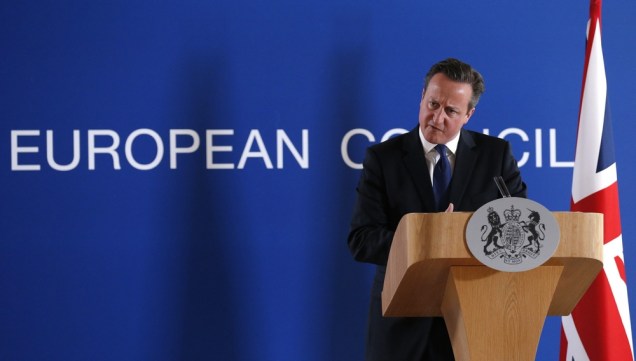
If you want to be told what to think by the government or those in authority, don’t complain when David Cameron comes back with a one-sided, pro-EU propaganda leaflet costing the taxpayer over £9 million to produce and distribute. That’s what you get for outsourcing your decision-making processes to people with vested interests.
But at least if you do so, you are in plentiful (I won’t say good) company. Neither the official Remain or Leave campaigns are exactly brimming over with deep expertise on the workings of the European Union, in which direction the EU will travel or the logistics of achieving Brexit.
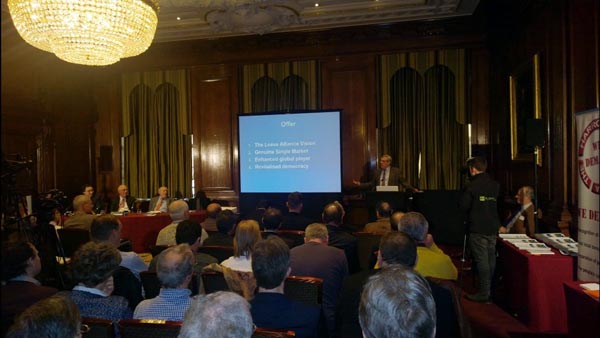
Fortunately, there are those who stopped watching television for long enough to educate themselves on this important subject. A number of them have become experts in the subject, certainly far more so than the Westminster media with its superficial grasp of the facts, all while holding down day jobs. They are the the bloggers of The Leave Alliance, and the plan they promote for leaving the European Union in a safe, orderly and non-disruptive way is called Flexcit, or the market solution.
Start with that. Or start with the European Union’s own websites – as Pete North says, much of this information is “hidden” in plain sight. Begin your search for facts in any number of places, just don’t repeat the whiny, false complaint that there is no factual information available.
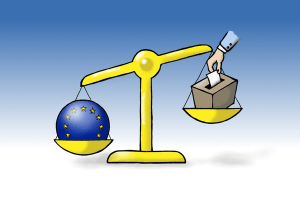
Postscript: The irony is that facts and figures supporting either side are not the most important thing in this referendum, while economic projections are particularly unreliable to the point of being pure fiction. This blog contends that the EU referendum comes down to more qualitative factors like democracy, sovereignty, governance and constitutional reform, which simply cannot be calculated in an Excel spreadsheet.

–
Agree with this article? Violently disagree? Scroll down to leave a comment.
Follow Semi-Partisan Politics on Twitter, Facebook and Medium.








 Semi-Partisan Politics