What Conservative Government? – Part 3, Tim Montgomerie Edition

David Cameron - Margaret Thatcher - Coke Zero Conservatism

You, sir, are no Margaret Thatcher

Tim Montgomerie has finally had enough. He is embarking down the lonely path of exile trodden by many of us who remain deeply proud to call ourselves conservatives (with a small C), but who feel absolutely no connection, affinity or devotion to the ideologically shapeshifting, centrist machine led by David Cameron. And he is resigning his membership of the Conservative Party.

Montie signs off with this warning in the Times:

The PM will no doubt treat with disdain my resignation like the departure of tens of thousands of once-loyal grassroots members who have already walked away. But one day an opposition party will get its act together or a wholly new party will emerge. At that point there’ll be a realisation that the Tories’ 40-odd per cent in current opinion polls was a mile wide but an inch deep; reflecting disappointment at alternatives rather than allegiance.

And at some point Britain will notice that the Conservatives didn’t fix the roof when the sun was shining. That we will head into the next economic downturn with the public finances still in precarious shape, with vital airport runways unbuilt and banks too-big-to-fail as big as ever. And if Mr Cameron gets his way we’ll still be powerless to control immigration from an economically turbulent, declining EU, of which we will be an impotent member.

But why desert the Tory party now that they finally hold a majority administration for the first time since 1997?

Tim’s reasons are exactly what you would expect – the abysmally centrist, soul-deadeningly unambitious agenda which has been set by David Cameron and George Osborne since 2010, and which this blog has been constantly condemning since I began writing back in 2012.

The Conservatives are supposed to be the party of fiscal responsibility, and yet the national debt has nearly doubled under George Osborne’s watch, while he struts and crows about his meagre attempts to reduce the annual budget deficit.

The Conservatives – at their best – lift people up out of disadvantaged circumstances and help them to realise their own innate potential, rather than trapping them in a life sentence of government dependency and subsistence. But David Cameron’s government has been half-hearted on housing, on infrastructure, on welfare – kicking the can down the road, and pandering to their wealthy, older, property-owning base at every turn.

The Conservatives are meant to be the party of a strong national defence, but under David Cameron the military has been pared back to the bone, with many essential capabilities (like maritime patrol aircraft) eliminated entirely just when they are needed most, and our aircraft carriers – crucial to maintaining Britain’s status as a world power with expeditionary military capabilities – decommissioned, with their replacement not due to come online until 2018.

The Conservatives are meant to be the party of national sovereignty and of patriotism, and yet in David Cameron we have a prime minister who only glibly and unconvincingly talked the eurosceptic talk, and who is currently perpetrating a fraud on the British people with his cosmetic and entirely irrelevant “renegotiation”.

And one might add (though Tim Montgomerie did not mention this in his resignation letter) that the Conservatives traditionally stood for individual liberty, and the right of the people to go about their lives unmolested and undisturbed by government. But David Cameron’s government – with its creepy “plan for every stage of your life” – is determined that the state involve itself in as much as possible, and has cynically exploited national security concerns to roll back civil liberties and undermine privacy.

But enough of me – I’ll let Montie speak for himself:

Could David Cameron be much more different [than Thatcher]? He promised to bring down immigration but despite Theresa May’s hollow rhetoric, it’s rising. And that defining mission to eliminate the deficit? The Treasury is still borrowing £75 billion a year — a burden on the next generation that would once have shocked and shamed us, and still should. The national debt is up by more than 50 per cent, but this hasn’t seen our armed forces rebuilt. They’ve been cut to the bone.

What about fundamental change in Britain’s relationship with Brussels that the PM pledged, promised and vowed to deliver? The 69 per cent who think he got a bad deal are right. The newspapers that called the deal a “joke”, “conjuring trick” and “delusion” weren’t exaggerating. But it took the Fourth Estate rather than Tory MPs to point out the emperor’s naked state. With a few honourable exceptions Conservative parliamentarians were silent when Mr Cameron, pretending to have changed anything that matters, stood at the same dispatch box at which Mrs Thatcher vowed to fight European integration.

This criticism is spot-on. It has been particularly galling in recent weeks to see just how few current Tory MPs – particularly of the newer intakes – have continued to voice the principled euroscepticism which they were only too happy to display while flaunting their wares to their local constituency party selection committees.

The EU referendum is not just another political issue to be legitimately haggled over by MPs who broadly share the same outlook. This isn’t an arcane policy debate or a minor difference of opinion over fiscal policy – it is absolutely fundamental to how Britain will be governed for the next decades and beyond, and the fact that so many Conservative MPs choose loyalty to their chameleon-in-chief over their constituents and their country is profoundly depressing.

Montie goes on to warn that the Conservative Party will not have the fortune of a weak and divided opposition forever – and that the narrow window for effecting real radical conservative reform is being missed:

For the moment Mr Cameron can get away with all of this. Labour moderates are no nearer getting rid of their extremist leader than when he was elected. It will probably take a generation before northern England and Scotland trust the Lib Dems again. And Ukip, although resilient at double figures in most opinion polls, is too Trump-ian to mount a credible challenge for power.

Faced with a weak, divided opposition in the 1980s Mrs Thatcher moved the country forward. She seized the opportunity to deliver tough reforms that a more effective opposition might have stopped. Today, David Cameron and George Osborne are doing little that Blairites or Cleggites could object to. I recently asked Peter Mandelson what separated his politics from that of Mr Osborne. He joked that the top rate of income tax was too high. At least I think he was joking.

This is also true. And Tim Montgomerie rightly acknowledges that there may well be short-term electoral dividends to be won with a doggedly centrist approach. But only if winning elections is all you care about. If you actually want to do something useful and positive with the power you wield, then the Cameron/Osborne approach is nothing short of a disaster.

As I have written many times before on this blog, the unhinged, virtue-signalling British Left are determined to see the current Conservative government as some kind of ideologically extreme, Thatcher-on-steroids, evil and inhumane government, despite the fact that in reality the government is profoundly centrist. Ed Miliband first started allowing this narrative to take hold as he sought to buy breathing space for his party back in 2010, but six years on and the Labour Party are now in the midst of being devoured by the ‘Tory Scum’-roaring beast that they unleashed.

And since anything that conservatives of any stripe now do will automatically and reflexively be painted by the Left as malevolent and evil, there is absolutely no point in trying to curry favour with the centre-left by copying New Labour policy on taxes, wage controls or anything else. Since the hysterical Nazi comparisons are going to come flying at us come what may, we should at least be using this time of limited and disorganised opposition to boldly enact a radical conservative agenda, much as Thatcher did in the mid 1980s. But this is not happening, and Montie’s resignation suggests that he has given up hope of a change in strategy, even after Cameron goes and is (likely) replaced by Osborne.

And who can blame him? I saw the writing on the wall when I moved back from Chicago in 2011, as it became clear that Cameron’s ideological caution was not a function of being in coalition with the LibDems, but was actually his true, authentic self. And so I never rejoined the Conservative Party back then. But if I had, I too would be cutting up my membership card in solidarity with Montgomerie.

I’m currently reading an excellent book – “Thatcher’s Trial”, by Kwasi Kwarteng, the Conservative MP for Spelthorne. The book focuses on the early days of Margaret Thatcher’s premiership, specifically the period from March to September 1981 when she had to negotiate a difficult Budget and ultimately reassert her authority with a bold Cabinet reshuffle.

I’m only half way through Kwarteng’s book, but the portrait he paints is a true profile in courage – somebody with firm and unyielding principles, a strong ideological compass, a righteous hatred for consensus politics and the ability to impose her will on her party and her country. In short, Kwarteng is describing everything that David Cameron, Thatcher’s successor, is not.

Back when Jeremy Corbyn was on the cusp of being elected leader of the Labour Party, this blog asked:

If David Cameron’s Conservative Party was voted out of office today, what will future historians and political commentators say about this government fifty years from now? What will be the Cameron / Osborne legacy? What edifices of stone, statute and policy will remain standing as testament to their time in office? Try to picture it clearly.

Are you happy with what you see?

I genuinely don’t know what legacy David Cameron thinks he is building through the course of his rootless premiership. But it is not a legacy with which I wish to be associated in any way.

It has been lonely these past few years, being a conservative without a party at a time when political opponents assume we must be thrilled with David Cameron’s every slick and insincere pronouncement. But at least we now have Tim Montgomerie to keep us company in our solitude.

Now, the first order of business for the inaugural meeting of Conservatives in Exile: how do we get our party back, and save it (and the country) from Cameronism?

 

Britain's PM Cameron arrives to pose for a family photo during an EU leaders summit in Brussels

Agree with this article? Violently disagree? Scroll down to leave a comment.

Follow Semi-Partisan Politics on TwitterFacebook and Medium.

The Daily Smackdown: Toby Young’s Misguided Invitation To Dan Hodges

Dan Hodges - Labour Party - Defect to Conservative Party

Not so fast, Toby Young. Dan Hodges is an honourable man, but he has no place in the party of Margaret Thatcher

It wasn’t the first time and it probably will not be the last, so understandably you may have paid little attention when Dan Hodges quit the Labour Party this week in disgust at the leadership of Jeremy Corbyn and the behaviour of his supporters.

Hodges departed again this week, firing this parting shot:

I’m done. Yesterday I cancelled my direct debit to the Labour Party. “Why don’t you just sod off and join the Tories”, Jeremy Corbyn’s supporters regularly ask anyone who dares to challenge their rancid world view.

I won’t be joining the Tories. But I am sodding off.

Fair enough. Dan Hodges has legitimate, irreconcilable differences with Jeremy Corbyn – both his policies and the way in which he runs the party (though Hodges’ sudden sensitivity to supposed bullying from the Corbynites seems a little odd coming from someone who was only too happy to get scrappy in his past life as a political campaign manager).

But clearly Dan Hodges and Jeremy Corbyn have very different visions of what the Labour Party should be, and nobody should fault Hodges’ decision to quit. I made the conscious choice not to re-join the Conservative Party when I returned to Britain in 2011, out of disgust with the centrist course plotted by David Cameron and an unwillingness to associate myself with the record of the coalition government, and so I’m certainly not preaching any kind of “stand by your man” dogma.

And now, inevitably, the offers to Dan Hodges to come join the Conservative Party are coming rolling in. At first, these were mostly coming from mocking Corbynistas on social media, rejoicing that a turncoat “Red Tory” like Hodges had finally gone (again). But then the mocking from the far left was replaced by more earnest offers from the supposed political Right.

Foremost of these offers came from Toby Young, Hodges’ colleague at the Telegraph, who wrote an open letter attempting to woo the ex-Labour columnist into the Tory fold. This letter is well-meant, but utterly misguided and counterproductive, as we shall see.

Toby Young begins:

On all the biggest political issues facing our country – what to do about the Islamic State, tackling the deficit, the renewal of our independent nuclear deterrent, education reform – you and the other Labour moderates are far closer to the leadership of my party than to Labour’s. I think that’s even true of the NHS, given that the health budget has increased in real terms year-on-year since David Cameron became Prime Minister. The commitment to increase spending on the NHS even further in the Autumn Statement surpasses anything promised by your party. And, as I’m sure you know, the minimum wage is set to rise faster under this government than it would have done under Ed Miliband, assuming he’d stuck to Labour’s manifesto.

And it’s true – Dan Hodges does hold refreshingly realistic perspectives on tackling ISIS in Syria, the deficit and Trident. When it comes to fundamental issues of national security, as all of these are, people from the Left and Right are often united.

More worryingly though, when it comes to trampling civil liberties in pursuit of an unattainable degree of security, both he and Theresa May are on the same page. And if Dan Hodges actually believes that throwing more money at a fundamentally broken and outdated NHS model is a good thing, then there is great crossover potential there, too. I’m just not sure that this is a good thing, as Toby Young seems to believe.

Young continues:

Indeed, on all the most important aspects of Osborne’s economic policy, the Labour moderates are much more closely aligned with us than you are with John McDonnell, not least because it’s virtually indistinguishable from the policy set out by Alastair Darling. In this respect, as in so many others, the Prime Minister and his Chancellor are the heirs to Blair.

Toby Young clearly meant this to be a bright and positive pitch to Dan Hodges to jump ship. But by hammering home the similarities between George Osborne and Alastair Darling and their remarkably similar (in practice if not in rhetoric) approaches to deficit reduction, all he manages to do is reveal just what a weak and ineffectual supposedly conservative government we currently have – Blairites with a patrician Tory façade.

Young concludes:

If your only hope of improving the lot of the least well-off is to persuade the Conservative Party to be more compassionate, then shouldn’t you do exactly what you’ve been urging the leadership of your own party to do? Say to hell with ideological purity and strike a bargain?

[..] I also think that, in time, many people on my side will come to see the value of a Blairite faction within the Conservative Party. Some of us are already worried about the corrosive effect that a lack of serious opposition will have on the government and would welcome a proper challenge. If that’s not going to be provided by Labour, then it must come from within our own ranks. Those of us who style ourselves “modernisers” will regard you as natural allies. In my mind’s eye, I can already see Lord Finkelstein standing at the other end of the welcome matt, bottle of champagne in hand.

So come on over, Dan. You already have many friends in the Tory party,including the Prime Minister, and I’m sure you’d quickly make many more. I think we’d be lucky to have you.

Unfortunately, in his rash invitation to Dan Hodges, Toby Young is falling into the same trap as David Cameron’s woolly “One Nation” model. Sure, it may be possible for the Tories to eke out a couple more narrow election victories by becoming so blandly inoffensive and unrecognisable that a sufficient number of the most bovine voters grunt their approval. But these narrow victories, like David Cameron’s “miracle majority” of twelve, provide a mandate only for the dull, technocratic management of Britain’s public services. Essentially they elect a Comptroller of Public Services – someone to kick when the trains don’t run on time or NHS waiting times get too long – not a world leader.

Convincing majorities – margins of the sort that allow radical changes to the country like realigning foreign policy, rolling back the remaining vestiges of the post-war settlement and delivering a smaller, more effective state – don’t come from pretending to be sufficiently like the Labour Party that it tricks a few wavering voters into switching sides. They come from articulating a vision so clear, so exciting and so blazingly inspirational that people vote as enthusiastic citizens inspired by the message, not self-interested consumers voting based on fear or greed.

A Conservative Party that is tame and toothless enough to accommodate someone like Dan Hodges would by definition be of the former type, not the latter. The mere fact that Toby Young is able to make his offer with a straight face proves that there is not currently a cigarette paper’s worth of difference between Blairite Labour-in-exile and the Cameron Conservatives, a party which enthused the electorate with their vision so much that they are perpetually just six defections away from defeat in the House of Commons.

In 1968, over a decade before she became prime minister, Margaret Thatcher warned in a speech:

There are dangers in consensus; it could be an attempt to satisfy people holding no particular views about anything. It seems more important to have a philosophy and policy which because they are good appeal to sufficient people to secure a majority.

[..]

No great party can survive except on the basis of firm beliefs about what it wants to do. It is not enough to have reluctant support. We want people’s enthusiasm as well.

Many supposed conservatives and Tory party members seem to have forgotten that lesson – the essential truth which delivered three terms of a Thatcher premiership, saving this country from seemingly inevitable decline and irrelevancy. David Cameron and George Osborne, both old enough to reap the fruits of Thatcherism without having really understood why it was so necessary, seem never to have absorbed this lesson in the first place.

Announcing the defection of Dan Hodges to the Conservative Party – having David Cameron welcome him at the door of Number 10 Downing Street with a big bottle of champagne and a basket of pears – would be the ultimate triumph of One Nationism. It would complete the transformation of the Conservative Party, underway since Thatcher left office, from a party of some ideological coherence to a well-oiled and finely calibrated PR machine, excelling in being all things to all people. An intelligent but soulless hive mind of people who quite fancy being in power, and who are content to say anything or compromise on any conviction in order to keep it. Thus, David Cameron will go down in history as the twenty-first century version of Ted Heath.

I don’t think that this is good enough. A Conservative Party sufficiently bland and uncontroversial that it might appeal to Dan Hodges, even on his most jaded day, is not one which I could bring myself to vote for at the ballot box. It’s not good enough for me. But way more important than that, it’s not good enough for Britain. This country is crying out for real leadership, a renewed sense of national purpose, and the re-imagining of the state and its role in our lives. Monolithic institutions like the broken welfare state and “our NHS” (genuflect) – fraying anachronisms from the post-war consensus – need to be redesigned from the ground up, with their blind apologists and vested interests dragged kicking and screaming into the new century.

But if Dan Hodges is walking around with a Conservative Party membership card in his wallet by the time 2020 rolls around, it’s all over. None of this essential conservative reform will happen. Not because Hodges is in any way a bad person, but because he is Labour to his core – and a Conservative Party which provides a political home for him is quite simply no longer a conservative party at all. They will defeat Labour and win a third term, sure. But their voter coalition will be so broad and so lacking in common aspiration that they will be even more rudderless and scattershot in government than they are today.

I’m almost certain that I know who Toby Young would pick if he was forced to choose, but I’m going to make the ultimatum anyway, because I care deeply about the Conservative Party too, and I am deadly serious about this.

Toby Young: It’s Dan Hodges or me.

Toby Young - Dan Hodges - Defect to Conservative Party

Agree with this article? Violently disagree? Scroll down to leave a comment.

Follow Semi-Partisan Politics on TwitterFacebook and Medium.

Harriet Harman, Celebrated Feminist, Calls Margaret Thatcher A ‘Witch’

Harriet Harman - Margaret Thatcher - Witch - Feminism - Sexism

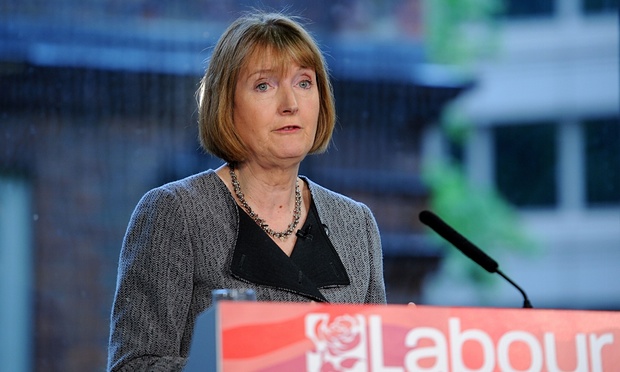
Acting Labour Leader Harriet Harman gave a very revealing interview to the Guardian this weekend, looking back on her career as she prepares to return to the backbenches after serving in the party leadership since 2007.

Whilst one can – and should – strenuously disagree with Harman’s politics, no one can deny her role in the feminist movement or the trail she blazed by standing up to the horrifically sexist club that Parliament was when she was first elected in 1982. Given these accomplishments, it is a shame that she now ends her frontbench career presiding over a farcical leadership contest and the potential splitting of her party.

But the most memorable part was when Harman spoke about how terrified she was of then Prime Minister Margaret Thatcher that she actually hid round a corner in the Houses of Parliament in order to prevent the approaching prime minister meeting her newborn baby:

Couldn’t the then prime minister Margaret Thatcher have taken her [to the Strangers’ Bar in Parliament]? Harman recoils. She wouldn’t have dreamed of socialising with her, she says.

“Very early on, I brought in one of the babies to the Commons and I saw her at the other end of the corridor. She was bearing down on me with two adoring parliamentary private secretaries trotting at her side, and she looked as if she was going to come and admire the baby. I had this terrible feeling of thinking, ‘I don’t want her to look at the baby’, almost like one of those cartoons where the witch looks at the baby and the baby shrivels. I didn’t want my perfect baby to have Thatcher’s eyes upon him.” Did she hide her baby from Thatcher? “No, I just shot off down a side corridor. It was very visceral, very heartfelt.”

I’m not sure quite what Harriet Harman intended this little vignette to reveal about herself, but it speaks volumes about the way many in the Labour Party see themselves and view their conservative opponents.

Continue reading

We Need A British CPAC

CPAC merchandise


As UKIP’s spring conference gets underway, The Spectator makes lighthearted fun of the patriotic, themed merchandise available for delegates to purchase. And fair enough – some of it is quite kitschy. In fact, some of the trinkets remind one of the gaudy offerings you might find displayed for sale at the annual CPAC conference, currently underway in the United States.

Bloomberg reports:

The CPAC exhibition floor is about marketing, and advertising to conservatives is the same as marketing to anyone else: everything has to be unique, free, or superhero-themed. 

On the free stuff front, there are dozens of buttons, posters (including one celebrating the day President Obama leaves office), pens, steel water bottles, and other knick knacks people want more than need. The libertarian group Young Americans for Liberty gave out free “Stand with Rand” t-shirts to anyone who filled out a political philosophy form, with questions like “There should be no restrictions against law-abiding citizens owning firearms.” Each response (agree, maybe, and disagree) comes with a score, and the higher the score, the closer the attendee’s political philosophy is to Ronald Reagan.

All of which leads to some pressing questions: Why is there no equivalent of CPAC, the Conservative Political Action Committee, in Britain? And are not British conservatives and big government sceptics greatly in need of one?

Continue reading

Going Back To Battle For Thatcherism, 40 Years On

nights watch 1


In this week’s thrilling Game of Thrones season finale, there was a moment when the great wall separating the barbarian wastelands from the civilised world seemed sure to be breached. Disheartened and battle weary, the leader of the wall’s depleted guard crossed enemy lines to negotiate the terms of their surrender to the wildling force besieging them. There was no other way out – when suddenly a saviour rode into view, a king from the south with thousands of armed men galloping behind him.

Trade the fictional land of Westeros for the realpolitik of Westminster, and David Cameron’s Conservative Party are not in quite as bad a shape as the ragtag Night’s Watch army on the wall, holding back the tide of socialism but leaderless and in desperate need of rescue by stronger and more organised forces – at least not yet. But this is largely thanks to the Liberal Democrat implosion and Ed Miliband’s pioneering work in the field of political self-immolation.

Were it not for this hugely favourable climate, the Tories would certainly be on the ropes with less than a year to go until election day. That the conservatives are under siege is evidenced by the fact that they have all the unpopularity of a losing team despite having successfully achieved almost none of their policy goals such as eliminating the budget deficit, rolling back the state or pushing back against antidemocratic EU interference from Brussels.

For British conservatives, libertarians and classical liberals, the heroes riding to the rescue were decked out in workaday business attire rather than the resplendent suits of armour seen in Game of Thrones, but they were no less welcome a sight for that when they arrived at London’s Guildhall to participate in the first annual Margaret Thatcher Conference on Liberty, organised by the think tank Thatcher founded with Sir Keith Joseph 40 years ago.

British advocates of individual liberty and a small state have endured long years in the wilderness – the fading days of the Major government, thirteen years of gradual state encroachment under the benevolent grin of Tony Blair (then the angry fist of Gordon Brown), and four years of conservative-in-name-only meandering under David Cameron’s coalition with Nick Clegg. Aside from the misty-eyed retrospectives following Margaret Thatcher’s death, talk of personal freedom, liberty and unapologetic pride and optimism in Britain have been missing in action from mainstream political discourse, presumed dead.

Before you cry ‘hyperbole!’, think on it for a moment: The main political mantras of the period 2010 to 2014 have been “The Big Society”, “We’re all in this together” and “Paying their fair share” (fairness, of course, remaining conveniently and forever undefined). All are collectivist tropes designed to soothe and placate natural Labour voters, not the principled words of liberty befitting the heirs to Thatcher.

The Big Society was meant to serve as rear-guard cover as the Conservative-led coalition sought to stem the rise in government spending and enlist volunteer groups to pick up the slack, but its architects forgot that a sudden burst of civic-mindedness and philanthropy was unlikely to come to pass if the government did not reduce its ominous presence in everything else that we do.

“We’re all in this together” was always a phrase better left to the teenage cast of Disney’s “High School Musical”, because it sounds both patronising and wooden coming from the mouths of politicians like David Cameron and his Chancellor of the Exchequer. George Osborne & co. are quite clearly not suffering the effects of austerity in the same ruinous way as families who have been deliberately led down the road to government dependence through Labour tax credits and allowances, and stranded there to suffer in the great recession. Suggesting that we are all suffering equally has opened the door to ridicule and Labour’s inevitable counterattack of ‘class warfare!’ as they seek to distract attention from their awful record in office.

And the less said about “paying your fair share” the better; suffice it to note that we now live in a country where any reduction in benefits granted to an individual by the state is not only indignantly referred to by opponents as a ‘tax increase’, phrases such as ‘the bedroom tax’ are unquestioningly adopted by the media without the slightest hint of irony.

As this blog noted yesterday, these are not auspicious times for those Britons who believe in a smaller government and more power for the individual.

But this only made the words spoken and the ideas expressed at the Margaret Thatcher Conference on Liberty all the more heartening for those beleaguered souls who think Thatcher was right, and that we need to embrace rather than repudiate her vision of a modern, capitalist Britain.

From start to finish there were powerful speeches on important topics such as re-emphasising national sovereignty, promoting free markets, tax reform, foreign policy, immigration and defence. Sometimes the ideas discussed were almost startling because they clashed so violently with the centrist orthodoxy that now predominates.

Take the panels on economics and fiscal policy. With Art Laffer in attendance there was no pulling of punches as he restated his timeless keys to success for any national economy: “A low-rate, broad-based flat tax, spending restraint, sound money, free trade and sane, limited regulation”. It cannot go unnoticed that the Conservatives have ceded some of this ground to UKIP in the past few years, but while policies such as a flat tax may be something of a pipe dream, Laffer’s contribution to the debate could be what is needed to help the Tories rediscover their footing on tax policy.

Also looming large in the discussion was growing cosiness between big business and big government, be it through lobbying at the national and EU level (more than 15,000 lobbyists and counting, noted Conservative MEP Daniel Hannan) or direct collusion on matters such as government surveillance. Perhaps surprisingly, given the circumstances, the delegates still considered big government a bigger threat than big business by a margin of 79% to 21%. Art Laffer summed up this sentiment, saying “big or small business is irrelevant – what matters is efficiency and competency”.

The discussions on national sovereignty and the need to stand firm in support of the nation state as the best guarantor of individual liberty were particularly refreshing, as they stood in such stark contrast to the pessimism and declinism which inevitably colour the attitudes of the pro-Europeans and those who have lost the ability to distinguish between patriotism and nationalist xenophobia.

Daniel Hannan argued that the EU should become “a free trade area in the model of NAFTA”, a nice idea, but given the fact that the European project has taken on a life of its own with the EU’s own interests now superseding those of its member states, there was too little discussion of how best to effect a British exit. Indeed, when the time came to vote on whether the EU can realistically be reformed, attendees voted 43% yes (wishful thinking) but a solid 57% no.

One of the most concrete areas of policy development was on tax, with the launch at the conference of the very SEO-friendly #ThePolicy. This proposed tax reform calls for the total abolition of capital gains and corporation tax for small businesses, giving them a shot in the arm to expand and create more jobs. The negative impact on the Treasury would be offset by the falling welfare bill, together with increases in PAYE and National Insurance contributions from the newly employed. While the policy needs further analysis and costing, it seems a lot more solid than Labour’s various hare-brained schemes to achieve full employment by levying yet another one-time tax on ‘the bankers’.

Underpinning all of these conversations on the economy was the imperative to rescue the reputation of capitalism, which has been tarnished partly through its own fault but mostly by left wing saboteurs, crony capitalism and poor government regulation. Charles Moore, Margaret Thatcher’s biographer, posed the question: “How can capitalism work for people who don’t have capital?”. It is certainly the prevailing view, and has too often been the case, that capitalism has not worked well for too many people as implemented by their governments. Changing this negative impression of capitalism, and the element of truth behind it, will be key if the Conservatives are to rebuild the winning coalition of working and middle classes that Thatcher forged in 1979.

This discussion naturally led to the importance of preventing distortions in the market, and the observation that “gifts through the tax code and obscure regulatory benefits” are no less than corporate welfare, and should be discouraged in order to salvage capitalism’s reputation. And in another nod to the importance of semantics, it was reinforced that “libertarians, Thatcherites and other pro-capitalism sympathisers need to speak of being ‘pro-market’, not ‘pro-business’ in order to avoid being associated with harmful crony capitalism.”

There were several interesting debates on the media, with Guido Fawkes blogger Paul Staines and the National Review’s Jonah Goldberg hosting an interesting Google Hangout on the future of news media, the opportunities presented by online journalism and the disruptive impact on existing revenue models – a topic which could have been a day conference in itself. And it was perhaps unsurprising that 70% of delegates were against continued full state subsidisation of the BBC.

On national identity and culture (or what has become known here as the #BritishValues debate), former Australian prime minister John Howard attempted to reframe the argument, describing himself as a “multiracialist, not a multiculturalist”. In doing so, Howard explained that conservatives should be welcoming to immigrants regardless of their race and ethnicity, but hold everyone to the same standards of behaviour and observance of the law – a call to assimilate which many on the left are too timid to echo.

John Howard also had timely words of warning on winning elections, a topic where David Cameron could use advice from a someone with a track record. Howard warned: “The worst way to try to win office is to pretend you’re not too different from your opponents”.

Cameron is limited in what he can do in government by his Liberal Democrat coalition partners, but when the starting gun is fired on the 2015 general election campaign, this will no longer be the case. The Conservative Party – if they are willing and courageous enough to do so – will be able to clearly articulate their policies and present a radically different blueprint for Britain than that offered by Ed Miliband’s dystopian “One Nation” vision.

The centrist status quo was challenged on almost every issue, even if some topics (such as immigration, where delegates from North America and Europe found themselves talking at cross purposes for much of the time because of their differing experiences) were not convincingly resolved.

The only question remaining now the conference is over: Is today’s Conservative Party still receptive to what the small government free-marketeers have to say? Will the Tories reach out and take the help and advice being offered?

In Game of Thrones, those who guard the wall are a motley crew of misfits, idealists and outcasts. Anyone who has ever made the mistake of expressing support for conservatism or (heresy of heresies) admiration for Lady Thatcher at a Hampstead dinner party or northern England working men’s club could immediately identify with their plight.

But despite the prevailing atmosphere of scepticism, the happy warriors at the 2014 Margaret Thatcher Conference on Liberty did something important in defence of the realm the likes of which we have not seen on such a scale since their not-so-ancient order was founded by Sir Keith Joseph and Margaret Thatcher in 1974 – they came together and boldly, unapologetically proclaimed the principles of small government and individual empowerment that saved Britain once and can do so again.

By contrast, Ed Miliband addresses crowds of the Labour faithful (nobody else listens to him now) and – with a straight face – proclaims that his disproven, tired old formula of tax hikes and renationalisation represents “the new politics” that Britain so desperately needs, if only we realised.

Consequently, the 2015 general election could end up being a battle between two recycled political ideologies. And we will have a choice to make: Shall we choose the one that inevitably leads to the four-day working week, rolling blackouts, industrial unrest, punitive taxation, the brain drain, the politics of envy and ‘managed decline’, or the one that puts its trust in the people, liberating them to make Britain great again through their own efforts?

With the Margaret Thatcher Conference on Liberty, Thatcher’s peers, friends and successors made a surprisingly forceful show of strength on the side of freedom.