“Maybe Brexit one day, but not under a Tory government” – the Left’s stunning disregard for democracy makes a mockery of Jeremy Corbyn’s New Politics
The refrain is already familiar to us: But if we leave the EU, the current Conservative government might do the kind of things that they pledge in their manifestos! The only way to stop the democratically elected Conservative government from actually governing conservatively is to stay in the European Union, where it doesn’t matter which party holds power in Westminster!
One assumes that the Remain campaign have done some focus group testing on this sentiment and found it to be effective, but to many people this will sound like a chilling and cavalier disregard for democracy rather than an expression of the supposed best traditions and instincts of the Left.
And yet leftist Remainers are doubling down on this line of attack, trying to paint Brexit not simply as a matter of whether or not to leave the European Union, but as a purely Tory initiative, no doubt part of the Evil Tory government’s heartless, genocidal campaign against the sick and disabled.
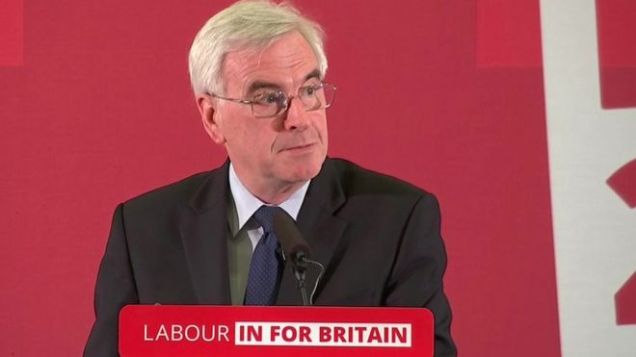
This attempt to sully the Brexiteers’ campaign to reclaim democracy as a purely partisan Conservative Party initiative is summed up in a new phrase being trialled by Labour’s John McDonnell: “Tory Brexit”.
John McDonnell has a new catchphrase: “Tory Brexit”.
It may sound uncomfortably close to the name of a new character in Star Wars but it’s what McDonnell and his team believe is the best route to turn Labour voters out for a Remain vote in the coming referendum.
Shadow ministers and Labour MPs are increasingly worried that Labour voters don’t know what the party’s stance on the referendum is – and even more troublingly, they don’t much care. That much of the media has covered the contest largely through the prism of the Conservative succession has only made matters worse. The government’s message about the dangers of Brexit, too, are calibrated towards the concerns of Tory voters: house prices, security, and the economy.
Tony Benn must be turning in his grave. For Benn was a Labour politician of principle and patriotism, one who realised that the gnawing short-term fear that the opposing party might get to implement some of their own policies when in government is not sufficient reason to neuter Westminster altogether by making it subordinate to supranational EU institutions.
By contrast, the leading lights in today’s Labour Party – including the Corbynites, who in many cases have been so sanctimonious about how the are the sole custodians of political principle, unlike those sellout New Labour types – couldn’t give a damn about democracy. They really couldn’t. And like John McDonnell, they openly boast about a Remain vote being key to thwarting the supposed actions of a democratically elected British government.
Bush continues:
It also has the added bonus of keeping open the idea that Brexit under a leftwing government mightn’t always be the worst thing in the world, which, depending on your perspective, either defangs the minority of Labour politicians who are pro-Brexit, or allows McDonnell and Jeremy Corbyn to keep the party united while not closing the door on supporting a Leave vote at a later date. Either way, it’s canny politics.
Stephen Bush might call it canny politics. Anybody who really cares about democracy would call it appalling, craven political posturing bordering on constitutional vandalism – being willing to “switch sides” on an existential question like Britain’s future in the EU based purely on which party is currently enjoying a five year term in government.
It is also base scaremongering of the worst sort. In the event of a Brexit vote, the Conservative government which enters into secession negotiations with the EU will – regardless of who leads it – be comprised of many Remainers, if not a majority. And in order to get the terms of that renegotiation through Parliament, the deal must also attract a sufficient number of Remainers, including some in the Labour Party for the figures to add up. Immediately this means that all of the most apocalyptic Brexit scenarios being bandied about the media by disingenuous Remainers are out the window. And what remain will be a much more easily negotiated “off the shelf” interim solution which maintains political and economic stability – in other words, exit to EFTA in order to continue access to the EEA, also known as the Norway Option.
The trouble for Remainers is that this form of Brexit is incredibly benign. It ensures Britain’s continued unimpeded access to the Single Market, preserves freedom of movement (with a better “emergency brake” on immigration than is available to Britain as an EU member) and ensures maximum stability in every area, while removing us entirely from the antidemocratic, authoritarian political union of which most Britons want no part.
If this most likely form of Brexit was properly understood by the public (and Vote Leave shoulder the blame for failing to grasp the importance of adopting such a plan upfront), the Remainers’ case would be utterly blown apart. All of their apocalyptic doomsday scenarios would be invalidated, and they would be forced to fall back on their “real” arguments for wanting to remain in the EU – because they do not believe that Britain, the fifth largest economy and second most powerful nation on Earth, can prosper outside of a political union with our neighbours. Or because they genuinely feel more European than British, and are terrified of being torn away from what they have come to see as their true country.
But fighting a campaign purely based on hatred and pessimism about Britain and/or wanting everyone to be European citizens first and foremost would be toxic to many voters, and so is hardly a very solid path to 50%+1 of the vote in the EU referendum. Thus Remain have engaged in a constant campaign of fear, uncertainty and doubt (FUD) from the beginning, always assuming the most unlikely and traumatic of Brexit modes in their “analysis”, and now by trying to portray supporting Brexit as essentially voting for a turbo-charged Tory government.
These are the lies and evasions of a side which has lost the core argument on democracy and self-determination, which cannot state its real reasons for wanting to stay in the EU for fear of alienating the voters, and which has consequently decided to pummel the electorate into acquiescence by subjecting them to wall-to-wall scaremongering.
The “Tory Brexit” line may gain some traction, particularly among the credulous and those with a particularly flimsy grasp of how democracy is supposed to work. But those who claimed to represent the New Politics, the kinder and more honest way of conducting oneself in public life, will have their halos irrevocably tarnished by their participation in this grubby pro-EU campaign of fear, distortion and deceit.
But quoting extensively from a failed parliamentary candidate who unabashedly declared that there is nothing good about British culture and power (as Tristram Hunt did when he quoted the losing Harlow candidate Suzy Stride) is nothing compared to the latest self-inflicted wound administered to the party by one of its own sitting MPs.
Next to enjoy her moment in the sun is Europhile Labour MP Pat Glass, who while campaigning in Derbyshire for Britain to remain in the European Union had some rather choice words to describe her encounter with a man who raised concerns about immigration.
A Labour MP campaigning for the UK to remain in the EU has apologised after being recorded calling a voter a “horrible racist”.
Shadow Europe minister Pat Glass made the comments after an interview with BBC Radio Derby in Sawley, Derbyshire.
She said: “The very first person I come to is a horrible racist. I’m never coming back to wherever this is.”
[..] The man Ms Glass is believed to have been referring to said he had spoken to her about to a Polish family in the area who he believed were living on benefits, describing them as “spongers”, but denied being racist.
The North West Durham MP said: “The comments I made were inappropriate and I regret them.
“Concerns about immigration are entirely valid and it’s important that politicians engage with them.
“I apologise to the people living in Sawley for any offence I have caused.”
Let’s be honest – Pat Glass isn’t sorry that she made the remarks. She is sorry that she was caught making the remarks, which is very different. For just as surely as rich Californian donors bankrolling then-candidate Barack Obama understood exactly what he meant when he made his dog-whistle comments about backward Southerners clinging to their guns and religion, so Pat Glass’s intended audience knows exactly what she means when she recoils in mock horror after an everyday encounter with someone sceptical about immigration.
Because like the current Labour Party as a whole, Pat Glass’s audience is not the entire country. Her audience is not even everyone on the Left. And it certainly isn’t the “white working class”, with whom Labour now have such a fractious relationship. Pat Glass’s preferred audience is the same middle-class clerisy which cheered on Ed Miliband, whose sheltered home counties wishy-washy Fabianism renders them utterly capable of identifying with the hopes, fears and dreams of whole swathes of the country.
As is often the case, the initial reflex tells us everything that we need to know. And Pat Glass’s reflex on being confronted with the voter in question was not to attempt to understand their viewpoint and see the world through their eyes, but rather to high-handedly dismiss them as being beneath her dignity. Glass knows that both the EU and high net migration are both unabashed goods, and anybody who deigns to disagree with her is uneducated at best, or “racist” at worst. Why bother to hide it?
(Incidentally, Andrew Neil does a great job skewering Labour apologist Zoe Williams in the Daily Politics clip shown above, taking her to school on the difference between racism, xenophobia and bigotry).
We have seen this story play out before, and we will see it again. Mostly because it is how many Labour Party MPs and activists actually feel, and speaking the truth in an unguarded moment is a perennial occupational hazard in politics. Of course, under Jeremy Corbyn, Pat Glass can comfortably expect to receive no censure. Ed Miliband, obsessed with outward appearances, went too far the other way in the case of the Emily Thornberry St. George’s flag Twitter picture, purging Thornberry from his shadow cabinet.
But whether the Labour Party is breezily ignoring the issue or wildly overreacting out of concern for bad PR, the one thing that the party still shows no inclination for doing is actually reaching out to their scorned working class base and asking – pass the smelling salts – whether they might actually have a point? Until now, the best that Labour have managed to do in this regard is to put up a few spokespeople to say something along the lines of “of course it’s not racist to be concerned about immigration”. But this is then immediately followed by the pivot to “but here’s why they are wrong, and the EU / unlimited immigration is actually great”. In other words, the Labour Party are trying to tackle this gulf between the party leadership and the disaffected working class base as a problem of optics rather than a fundamental disagreement over policy.
Maybe the Labour Party will struggle along all the way through until the next general election without resolving the inherent tension between the multiculturalist direction set by the leadership and the more nativist attitudes held by those of their supporters who drifted away to UKIP or stayed home during the 2015 election. But unless Jeremy Corbyn or someone else steps forward with a concerted act of leadership, effectively “choosing a side” once and for all, the party will continue to be embarrassed in the polls when sneering Labour MPs accidentally reveal their true feelings about the working classes.
First, Labour must learn simply to tolerate the country again – to look upon the white working class and others of their former supporters not as godless infidels who spurned the One True Faith and threw their lot in with the genocidal Tories and racist Ukippers, but as decent and rational human beings who simply don’t like what the Labour Party is currently selling.
Meanwhile, Labour shadow ministers and the army of activists who knock on doors and deliver leaflets need to dial down the moral sanctimony from 100 to about 50, and accept that maybe they, rather than the electorate, made the mistake on May 7 (and the days leading up to it) last year.
At present, whether it is Pat Glass or the Labour In For Britain crowd in general, the scorn and contempt heaped by major party figures on otherwise natural supporters who fail to toe the correct line on immigration and the EU speaks volumes. The people are not stupid. They know when they are being mocked, and they will not buy the subsequent walkback and fake expressions of contrition.
So perhaps this is a split which needs to happen. Just as the Tories desperately need a cleansing fire to purge their ranks of all the wets and panting europhiles post-referendum, maybe the Labour Party needs to split into two new parties – one comprised of middle class luvvies who think they know best about what the working classes need, and another new party comprised of actual working class people who do not need sanctimonious young Corbynistas, Hampstead dwelling champagne socialists or the likes of Pat Glass to defend their interests.
Right now, this is an open question. But the antics of people like Pat Glass are making it a slightly less difficult one to answer.
Finally, a glimmer of self-awareness from within the perennially self-satisfied Labour Party. But there is a long, difficult road ahead if Labour are serious about reaching out to their legions of disaffected former voters, and it is far from certain that senior party figures have either the stamina or the humility to make the journey
“What makes us great as a country is not our culture, it’s not our wealth, and it’s definitely not currently our footballing abilities.” – Suzy Stride, Labour Parliamentary Candidate for Harlow, 2014
Apparently Tristram Hunt has been filling the time freed up through refusing to serve in Jeremy Corbyn’s shadow cabinet by having a good, long think about why the Labour Party imploded quite so badly under the hapless leadership of Ed Miliband.
Hunt’s principle contribution to this process of soul-searching has been to assemble and edit a book of essays by various people within the party, each one ruminating on the cause of their defeat. The common thread which emerges, unsurprisingly, is the profound extent to which the increasingly metropolitan, middle-class core of the modern Labour Party has diverged from the “white working class”, to the extent that the Labour leadership (and many activists) had almost nothing to say to Britain’s strivers going in to the 2015 general election.
Hunt previews this new book – “Labour’s Identity Crisis” – in an article for the Guardian, and it makes fascinating reading, though probably not for the reasons that its author would like. For it reveals the absolute mountain which Labour has to climb just in order to appear relevant to those voters who have deserted the party for UKIP or the Tories.
“I’m a white working-class Englishman who isn’t on benefits, Labour isn’t for people like me.” That was the brutal message that confronted the Labour party candidate Suzy Stride on a doorstep in Harlow, Essex, during last year’s general election.
It was a sentiment repeated across the country: Labour didn’t speak for England. Worse, in that remarkable tweet from the Islington MP Emily Thornberry – picturing St George’s crosses adorning a semi in Rochester – we seemed to mock it.
It’s very interesting that Tristram Hunt should kick off his article with a quote from failed 2015 Labour parliamentary candidate for Harlow (my hometown), Suzy Stride. Because this is what Stride had to say about the country which gives her life and liberty back during the 2014 Labour Party Conference:
“What makes us great as a country is not our culture, is not our wealth, and it’s definitely not currently our footballing abilities. What makes us great is that we have the dignity to care for those who are most vulnerable. So when did it become acceptable to make parents queue for food at foodbanks?”
This is someone who stood before the electorate asking for their vote only months after boasting on television that she believes there is nothing special about her country, its culture, history or achievements, and that the only thing which we on this rainy island have to be proud of is the fact that we confiscate ever more money from the most productive people in society and blast it indiscriminately at anybody declared by the Labour Party to be “vulnerable” (currently hovering at around 50% of the population, in terms of net welfare recipients).
And yet up pops Suzy Stride in Tristram Hunt’s book, acting as though the seeds of her defeat were sown not by her own contemptuous attitude toward her country, but rather by the mistaken priorities and poor leadership of the national party. The man who went on to beat Stride by 8,350 votes, incumbent Conservative MP Robert Halfon, understands that in fact our culture is great, as is our history, our wealth and global power. And while he is far from being a Thatcherite right-winger, Halfon at least appreciates that the greatness of our country is more than the sum of our public services. Faced with a choice between the two candidates, it was no contest for the voters of the bellwether constituency of Harlow.
Tristram Hunt quotes Stride again, at the end of a long passage on immigration:
For too many voters, we were still the party that had once dismissed Gillian Duffy as “bigoted” for raising the question of mass migration and cultural change. Labour still has a long way to go to acknowledge the post-2004 influx as one of the most dramatic demographic surges in the history of England. As a result, England has changed in cultural and ethnic composition with an intensity many voters understandably find deeply unsettling.
For at the same time as new migrants found work, manufacturing was laying off workers in the face of increased global competition. There was no direct link between the jobs gained and those lost, but the conjunction of immigration, globalisation and job losses left a toxic political legacy: industrial communities in England saw their way of life change under a Labour policy for which democratic consent was never sought, let alone given. Even worse was an unwillingness by Labour activists to acknowledge the problem. According to Tim Bale, professor of politics at Queen Mary, University of London, eight out of 10 Labour party members think that immigration is good for the country. This is not the case on most doorsteps in Labour areas. And when, in 2015, English voters raised cultural concerns about changes in language, dress and social norms, we answered with crass, material responses. “Many middle-class Labourites scoffed at such views,” according to Suzy Stride in Harlow. “Where would the NHS be without immigrants?” was a common response from canvassers, she said.
This is actually a very good passage, and is the closest we have yet come to anything approaching contrition for the way that the New Labour government of Tony Blair waved through an unprecedented influx of immigrants without so much as mentioning it to the British electorate, let alone seeking their permission. Whether one is generally pro or anti-immigration (and this blog is very much pro), we should all be able to agree as democrats that such a significant national change, brought about by stealth, was an unconscionable act of arrogance by the Blair government. The fact that many Labour activists still have to be coaxed ever so gently toward this realisation is itself a sign of how much atoning the party still has to do.
Tristram Hunt then gets to the core of it:
A failure to appreciate the value of Englishness played an important role in our 2015 defeat and nothing Corbyn has done as leader has changed this. Indeed, his cosmopolitan views on immigration, benefits, the monarchy and armed forces are likely to have exacerbated the disconnect.
As George Orwell put it: “In leftwing circles it is always felt there is something slightly disgraceful in being an Englishman and that it is a duty to snigger at every English institution, from horse racing to suet puddings.” He was right: in no other progressive European tradition – from the French Socialist party to Spain’s Podemos – do you find a similar reluctance to fly the flag.
So there are obvious reforms for Labour to pursue: an English Labour party; a referendum on an English parliament; radical devolution to cities and counties. Alongside that, we have to be careful during the EU referendum campaign not to alienate those millions of Labour voters opting for Brexit. But more than that, what these tales from the 2015 campaign expose is Labour’s need to shed its metropolitan squeamishness about England. It needs to express its admiration and love for the people and culture of this great country.
An admirable sentiment, but at present a futile hope. As Hunt himself admits, the election of Jeremy Corbyn to the leadership of the Labour Party has done nothing to change the core of the party’s disdain for that bulk of people lumped together under the umbrella term “white working class”. While this blog hailed Corbyn’s leadership bid not because of his odious foreign policy opinions but because of the opportunity he represents to inject some real partisan choice back into our domestic political debate, there is sadly little evidence that the army of new members Corbyn helped attract to the party hail from outside the urban, middle class clerisy first identified by Brendan O’Neill as the Labour Party’s new de facto rulers.
You see the effect in Jeremy Corbyn’s immediate U-turn on the European Union the moment he became Labour leader. Corbyn had always held a principled eurosceptic stance and had voted to leave back in the 1975 referendum, and yet here he is in 2016, chanting the praises of Brussels. Why? Because while the Labour party membership will forgive many things (including supporting the IRA, as Alex Massie reminds us), the one thing they cannot abide is a failure to support the mindless, anti-democratic pseudo-internationalism of the EU, or the failure to take a firm, unapologetic stance in favour of unlimited immigration. Those things are simply non-negotiable for Labour activists, most of whom can scarcely conceal their disdain for anybody who fails to hold the “correct” view on immigration in particular.
And that’s the problem. Too many Labour activists actually hate the people of this country – or at best they view those not already convinced of Labour’s righteousness as dangerously ignorant, as Tristram Hunt goes on to explain:
Jamie Reed, MP for Copeland, in Cumbria, takes the analogy further by suggesting that, if Labour fails to embrace Englishness, it will face in northern towns and villages the same fate as the Democrats in the US south: a failure to connect “culturally” with a socially conservative working-class electorate, increasingly willing to vote against their own material interests.
Jamie Reed presumptuously declares that it is the cultural issues surrounding English identity which make natural Labour supporters spurn the party and vote against their own material self interest. But this lazy “what’s the matter with Kansas?” attitude is itself part of the problem – the arrogant assumption that people are voting Tory or UKIP despite rather than because of their right wing economic policies, and that of course they would see that good old fashioned socialist policies would be much better for them, if only they were a little more educated.
The headline of Hunt’s piece in the Guardian is “There’ll always be an England – and Labour must learn to love it”. But from all the evidence currently on display, aspiring for love is setting the goal far too high. First, Labour must learn simply to tolerate the country again – to look upon the white working class and others of their former supporters not as godless infidels who spurned the One True Faith and threw their lot in with the genocidal Tories and racist Ukippers, but as decent and rational human beings who simply don’t like what the Labour Party is currently selling.
Meanwhile, Labour shadow ministers and the army of activists who knock on doors and deliver leaflets need to dial down the moral sanctimony from 100 to about 50, and accept that maybe they, rather than the electorate, made the mistake on May 7 (and the days leading up to it) last year.
If these extracts from “Labour’s Identity Crisis” – and the behaviour of Labour supporters in the year since that fateful general election – are anything to go by, the party has a lot of unresolved anger toward the British electorate. If this were a marriage, couples therapy would most definitely be in order. All of which is quite ridiculous, because it is Britain which has every right to be angry at the Labour Party, and not vice versa.
The white working class and many others spurned the Labour Party in 2015 not because they are morally defective, but because the centre-left, urban, woolly Fabianism of the Miliband era had absolutely nothing to offer them.
And what remains uncertain, despite a radical change in leadership and a plucky first attempt at introspection from Tristram Hunt, is just how the Labour Party ever expects to win a future majority when they continue to hold such a large segment of the population in open contempt?
–
Support Semi-Partisan Politics with a one-time or recurring donation:
–
Agree with this article? Violently disagree? Scroll down to leave a comment.
Zac Goldsmith or Sadiq Khan for London? Who cares?
“I think voting is great, but if I have to choose between a douche and a turd, I just don’t see the point” – Stan Marsh, South Park
Apparently Thursday 5th May – local election day across the UK – is being dubbed “Super Thursday“.
Except that unlike the Super Tuesdays of the American presidential primary calendar, there is nothing remotely exciting about these local elections, with the partial exception of the Scottish and Welsh assembly polls.
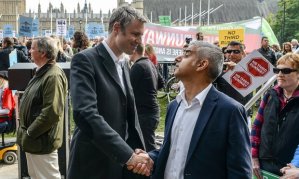
In London, we are bestowed with the awesome privilege of choosing between two leading candidates for mayor – Zac Goldsmith and Sadiq Khan – neither of whom have any meaningful executive experience and both of whom fail the first test of competence and political courage by failing to support the immediate expansion of Heathrow Airport. For this dismal failure alone I cannot bring myself to vote for either man.
Depressingly, the only remotely praiseworthy recent act of English localism – the introduction of Police and Crime Commissioners – has been badly administered and (with a few honourable exceptions) increasingly captured by the same mindless party line approach to voting seen elsewhere. And the scheme does not even apply to London – here, the mayor holds the powers of police commissioner, meaning there is no possibility of a New York style Giuliani-Bratton double-act to crack down on crime. Nobody in London specifically responsible for crime can be removed at the ballot box.
Granted, “Super” Thursday carries a little more weight if one is hugely invested in how aggregate tallies of local council seats reflect on the leadership of the main political parties. But with all the parties committed to campaigning for Britain to remain in the European Union (save UKIP, who often may as well be fighting for the Remain camp) again there is little incentive to specially reward or unduly punish one of the parties currently engaged in the process of selling out our democracy more than any other.
Besides, if you are choosing the person to represent your local ward or district because of something that David Cameron or Jeremy Corbyn said on TV or because everyone in your family/workplace/pub votes a certain way out of tribal loyalty, then you probably don’t understand how local politics is supposed to work. But then I cannot really fault those who do so, for in nearly all cases local authorities have so little real power in over-centralised Britain that it doesn’t much matter who controls the council anyway.
So, if you are a hardcore Sadiq Khan or Zac Goldsmith supporter (assuming that a human watercolour painting like Zac Goldsmith actually has any hardcore fans) – good luck today. May your man win, and may you dance in the street in celebration.
To those pundits waiting to pounce on the results as they come in, and speculate feverishly about whether significant council seat losses for Labour will bring forward the much-anticipated coup against Jeremy Corbyn – knock yourselves out.
Voting to stay in the EU in the hope that a left-wing movement might make the organisation simultaneously more socialist and democratic is like moving to North Korea in the expectation that a friendly word with Kim Jong Un will see the country immediately become a capitalist land of plenty
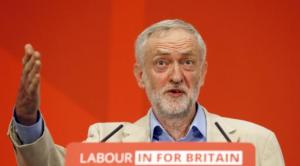
Yesterday, Jeremy Corbyn gave his much-heralded intervention in the EU referendum debate, which is worth analysing as perhaps the single biggest disappointment of Corbyn’s tenure as Labour Leader thus far.
The Labour Party is overwhelmingly for staying in because we believe the European Union has brought: investment, jobs and protection for workers, consumers and the environment, and offers the best chance of meeting the challenges we face in the 21st century.
In fact, Britain’s bounce back from (Labour-inflicted) 1970s decline was due to the free-market policies of the Thatcher Conservative government. The limited extent to which our membership of the European Union helped bring jobs and investment to Britain are the very same reasons why Corbyn now dislikes the current EU – because it is “neoliberal”, market oriented and has awkward rules about state aid and nationalisation of industry.
By voluntarily placing Britain in the EU’s regulatory straightjacket at a time when we were most decidedly mad (with price and wage controls and vast nationalisation of industry) we were indeed prevented from inflicting more harm on ourselves. But Corbyn pines for all the edifices of state socialism which were worn down by Thatcherism and constrained by the EU.
Corbyn basically wants 1970s declining Britain, repeated at a European level. He may admire the social, employment and environmental regulation, but he will not be happy until member states are free to pursue strongly left-wing policies without interference or blocking from Brussels. And of course this is a hopeless fantasy, because the EU is travelling in a direction where member states are able to do fewer and fewer things autonomously in their own national interest, while the euro crisis demands more, not less, convergence.
Corbyn continues:
In the coming century, we face huge challenges, as a people, as a continent and as a global community. How to deal with climate change. How to address the overweening power of global corporations and ensure they pay fair taxes. How to tackle cyber-crime and terrorism. How to ensure we trade fairly and protect jobs and pay in an era of globalisation. How to address the causes of the huge refugee movements across the world, and how we adapt to a world where people everywhere move more frequently to live, work and retire.
All these issues are serious and pressing, and self-evidently require international co-operation. Collective international action through the European Union is clearly going to be vital to meeting these challenges. Britain will be stronger if we co-operate with our neighbours in facing them together.
Not one of these issues is something which cannot be tackled by determined, well-executed inter-governmental co-operation between sovereign member states. There is nothing mysterious about climate change or terrorism or free trade which can only be solved if the countries of Europe dissolve themselves into a single supranational political entity which sits above them, its unelected leaders making decisions on their behalf.
So what is the answer to the European Union’s problems if not recognising that it is a terminally flawed, anachronistic holdover from the early twentieth century, and pulling the eject lever before we impact with the ground?
Corbyn’s solution:
So Europe needs to change. But that change can only come from working with our allies in the EU. It’s perfectly possible to be critical and still be convinced we need to remain a member.
[..] I have listened closely to the views of trade unions, environmental groups, human rights organisations and of course to Labour Party members and supporters, and fellow MPs. They are overwhelmingly convinced that we can best make a positive difference by remaining in Europe.
Then they are all part of the same collective delusion. The European Union is not shy about its ultimate goal of ever-closer, not simply more perfect union. And the juggernaut has continued to trundle inexorably in the same integrationist direction for decades. What, exactly, gives them hope that a twinkly-eyed, bearded British socialist and his starry eyed chums like Greece’s Alexis Tsipras (who was pretty much castrated by the eurogroup on live television during last year’s euro crisis) are going to change the direction of travel?
Don’t expect an answer. Every EU apologist from the dawn of time has been ready with mealy-mouthed protestations that “of course the EU is flawed” and “of course we need to push for reform in Europe”, but there are two problems. One is that the European Union is not interested in their kind of reform, and the second is that the EU apologists lose all interest in actually agitating for reform after awhile. Running into a brick wall at full speeds begins to lose its appeal, after awhile.
Then we get to the meat of Corbyn’s speech:
When the last referendum was held in 1975, Europe was divided by the Cold War, and what later became the EU was a much smaller, purely market-driven arrangement. Over the years I have been critical of many decisions taken by the EU, and I remain critical of its shortcomings; from its lack of democratic accountability to the institutional pressure to deregulate or privatise public services.
Except that what the EU does is not so much lavish spending on cash-strapped institutions being starved to death by the mean Tory government in Westminster. What it actually does is bribe citizens with their own money. In the case of a huge net contributor to the EU budget like Britain, that means sending our taxpayer money to Brussels where it goes through the bureaucratic machine, before a portion of those funds are redistributed to organisations and councils within Britain, to be spent in the way agreed with the EU.
That so many academic, artistic and cultural leaders are so desperate for Britain to remain in the EU should indeed tell us something. It should tell us that they are either stupid for not realising that they are being bribed with their own money, or that they are very smart and cynically think that the EU’s anti-democratic nature is a great way to get taxpayer funding for things which are either so pointless or so much more at home in the private sector that the British public would never countenance spending the money.
So what exactly are these never-gonna-happen reforms supposed to look like? Corbyn sets out his vision:
But we also need to make the case for reform in Europe – the reform David Cameron’s Government has no interest in, but plenty of others across Europe do.
That means democratic reform to make the EU more accountable to its people. Economic reform to end to self-defeating austerity and put jobs and sustainable growth at the centre of European policy, labour market reform to strengthen and extend workers’ rights in a real social Europe. And new rights for governments and elected authorities to support public enterprise and halt the pressure to privatise services.
So the case I’m making is for ‘Remain – and Reform’ in Europe.
Today is the Global Day of Action for Fast Food Rights. In the US workers are demanding $15 an hour, in the UK £10 now. Labour is an internationalist party and socialists have understood from the earliest days of the labour movement that workers need to make common cause across national borders.
Working together in Europe has led to significant gains for workers here in Britain and Labour is determined to deliver further progressive reform in 2020 the democratic Europe of social justice and workers’ rights that people throughout our continent want to see.
But real reform will mean making progressive alliances across the EU – something that the Conservatives will never do.
Ah, so “reform” actually just means lashings more socialism in Europe.
Anyone proposing a change to the workings of the EU based on a single political ideology is immediately doomed to fail, because they are by their own admission less interested in democracy, governance and international co-operation, and more interested in inflicting their own worldview and values on others. And so it is with Jeremy Corbyn’s vision of a left-wing Hands Across Europe movement.
Corbyn has no interest in working with conservative or centrist voices in Europe to create a better-functioning set of institutions and rules, because for him (and many on the left), policies and structure are inseparable. Corbyn doesn’t really care that the EU is antidemocratic – after all, right now he is grateful that the EU is undemocratically imposing on Britain various employment and social directives with which he agrees. Therefore his only interest is seeking out other like-minded people on the continent to grab as much power as possible, only then considering changes to the structure of the organisation to make it harder for conservatives to mount a counter-attack.
And when it comes to partisan point-scoring against conservatives, Jeremy Corbyn’s extended diatribe against tax avoidance incidentally reveals the single biggest hypocrisy in his entire position on Europe.
Corbyn begins this section:
The most telling revelation about our Prime Minister has not been about his own tax affair, but that in 2013 he personally intervened with the European Commission President to undermine an EU drive to reveal the beneficiaries of offshore trusts, and even now, in the wake of the Panama Papers, he still won’t act.
And on six different occasions since the beginning of last year Conservative MEPs have voted down attempts to take action against tax dodging.
But then he dramatically overreaches:
Left to themselves, it is clear what the main Vote Leave vision is for Britain to be the safe haven of choice for the ill-gotten gains of every dodgy oligarch, dictator or rogue corporation.
They believe this tiny global elite is what matters, not the rest of us, who they dismiss as “low achievers”.
For any apologist or supporter of the EU to stand up in front of a room full of people and declare that it is those fighting for Brexit who are the elitists takes real cojones, and an inscrutable poker face. Because back in the real world, nothing epitomises the desire of a small political and financial elite to escape national democratic accountability for their actions more than the existence of the EU.
The EU is not, as its cheerleaders claim, a coming-together of European peoples. Rather, it represents the outsourcing of key parts of national political life to the unaccountable, unreachable realm of the European Commission and other Brussels-based bodies. It directly waters down our democratic clout through granting ever-greater authority to institutions like the EC and the European Court of Justice, whose edicts and rulings can be imposed on nations regardless of what national governments, far less national plebiscites, think of them. That is anti-democratic. End of. And it should be viewed as intolerable by anyone who considers himself progressive, and who recognises that every radical, inspiring leap forward in modern times – from the Levellers to the Chartists to the Suffragettes – has been about people wrestling from the authorities the right to choose who governs them; the right to political say-so.
The EU is a union not of peoples, but of elites. It has in recent decades become the sphere in which national elites, feeling ever more estranged from their national electorates, have effectively taken refuge. In pooling their national sovereignties into the EU, our national rulers absolve themselves of the responsibility to have tough, testy debates with us about various political and social matters, in favour of seeing such issues discussed and resolved by the commissioners and self-styled experts of this rarefied zone.
The EU is not any kind of internationalist or cosmopolitan project, as its supporters claim. Nor is it a conspiracy of French and German blaggards to do over decent Blighty, as its detractors insist. Rather, it is the institution that has grown from and been constantly fed by national elites’ own growing feeling of exhaustion with democracy – and with democracy’s engine: the demos – be it politicians who would rather an aloof court decided something they haven’t got the stomach to debate or advocacy campaigners who agitate for an EC regulation because nothing repulses them more than the idea of trying to win over the plebs of their own nations.
And O’Neill’s conclusion in the same piece could be aimed directly at those left-wing EU supporters who, like Corbyn, insist that we must stay locked in unwanted political union to protect our “rights”:
All those things that the Remain lobby claims will be better if we stay in the EU – workers’ rights, freedom of movement, anti-terror security measures – are things that should be discussed and decided by us. To say the EU does ‘good things’, even though it does them without any real democratic oversight, is to support a benevolent tyranny. A tyranny enacted not to crush us but to save us – the worst kind.
But of course Jeremy Corbyn (and much of the Left) do not trust us to make the “correct” decisions on these or any other issues, so they are more than happy for democratic control of these things to be outsourced to a supranational European level of government which is more amenable to their demands.
So to summarise – Jeremy Corbyn supports Britain remaining in the European Union on the basis that the EU may one day magically reject capitalism and seek to become a socialist paradise. And yet no serious watcher of the EU or its member states believes that this is remote possibility, whatever Yanis Varoufakis and his Democracy in Europe Movement may say.
Therefore Jeremy Corbyn is willing to subject Britain to the ongoing uncertainty of remaining part of a relentlessly integrating supranational political union (not to mention the probability of a violent, uncontrolled Brexit further down the line when the EU either disintegrates or takes another major step toward federalisation) because he is holding out the flimsy hope that a ragtag assortment of socialist and communist groups across Europe will get together and take over the EU’s institutions, recasting Brussels in their own image.
Of all the grandiose claims from both official sides in this referendum campaign, how likely does this proposition seem to you?
Exactly. There is not a snowball’s chance in hell that any of the things that Jeremy Corbyn freely admits to finding most objectionable about the European Union will change any time soon. Deep down, Jeremy Corbyn knows this, and yet here he is, telling us about the wonderful, socialist-friendly EU which could soon be ours.
When Jeremy Corbyn won the Labour leadership contest and almost immediately recanted his long-held euroscepticism, this blog remarked:
There are lots of words you can use to describe the Labour Party’s fawning and uncritical “IN at all costs” attitude toward the European Union, but it is certainly not the “new politics” promised by Jeremy Corbyn.
And as Corbyn’s leadership of the Labour Party continues, it will be very interesting to observe where he chooses to make a stand in defence of his left-wing principles, and where else he is willing – or forced – to make concessions to the majority centrists of the parliamentary party.
On nearly every other issue – armed intervention in Syria, Trident nuclear weapons, you name it – Jeremy Corbyn has been more than willing to provoke rage and hysteria within his own party by treading a different path and rejecting a number of sacred New Labour shibboleths. But when it came to the European Union, Corbyn didn’t simply send out Hilary Benn to give the doe-eyed, europhile position. He swallowed his pride and did it himself.
One might call it a rather bold act of leadership by Corbyn, were it not also such a grotesque betrayal of his own beliefs on the subject of Europe.
Ultimately, Jeremy Corbyn wanting to stay in the European Union to bring about democratic socialist reform is like me wanting to go to North Korea to single-handedly convince Kim Jong Un to surrender power and help his country transition away from totalitarian dictatorship. The aim is certainly ambitious, maybe even noble, but the audience’s receptiveness to the message is decidedly limited. And both are equally doomed to failure.
The only difference is that as a private citizen, I am free to indulge in as many far-fetched daydreams as I like without consequence, whereas Jeremy Corbyn is leader of the Labour Party and the official Opposition.
When I waste my time and energies advocating for a futile cause, it harms nobody. When Jeremy Corbyn does the same, as he did at Senate House yesterday, he betrays not only his conscience but also the people who voted for Corbyn trusting him to speak his true mind and defend their interests.











 Semi-Partisan Politics