We Do Not Suspend Our Democracy As A Gesture Or Tribute; The Batley And Spen By-Election Should Be Contested

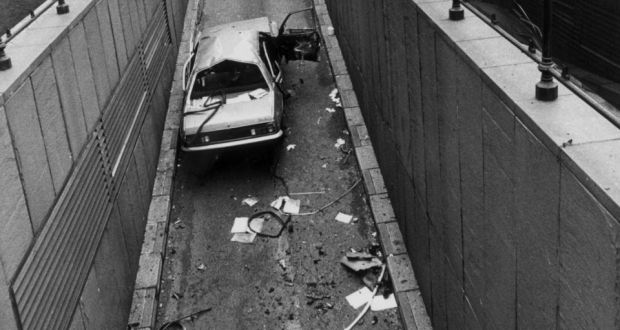
Airey Neave Assassination - INLA

Suspending democracy is no way to pay tribute to a murdered MP

I’m strongly inclined to agree with Archbishop Cranmer’s take on the decision by the major political parties not to contest the Batley and Spen by-election brought about by the despicable murder of Jo Cox, essentially giving Labour a free run at a seat they were almost certain to hold regardless.

Metro reports:

The Lib Dems and Ukip have joined the Conservative Party to announce they will not contest the by-election in Batley and Spen resulting from the death of Jo Cox.

Mrs Cox, 41, died yesterday after she was stabbed and shot outside a library in Birstall.

The Labour MP had held her seat in West Yorkshire since the General Election last year, which she won with a majority of 6,057.

No date has yet been set to elect a new representative.

To which Cranmer writes in response:

Whoever Labour chooses to be their candidate will be gifted a seat in Parliament. We honour a murdered democrat by suspending democracy. Our political leaders respect her values service, community, tolerance – by treating her former constituency as heritable property. There can be no disjunctive voice, no division and no dissent: Jo Cox’s values, her political philosophy and her apprehension of the world order must be perpetuated “as a mark of respect to a much-loved and respected politician”. The Batley and Spen by-election thereby becomes a memorial, and her successor a living monument.

[..] The thing is, there is something odd in not contesting a seat after a sitting MP has been murdered:

1990 Murder of Ian Gow by PIRA – By-election contested – LD gain
1984 Murder of Sir Anthony Berry by PIRA – By-election contested – CON hold
1981 Murder of The Rev Robert Bradford by PIRA – By-election contested – UUP hold
1979 Murder of Airey Neave by INLA – No by-election, but GE seat contested – CON hold
1922 Murder of Sir Henry Wilson by IRA – By-election uncontested.

So the last uncontested by-election in this tragic circumstance was in 1922 for North Down (which had occasional uncontested elections into the 1950s).

Perhaps things have moved on since the murder of Ian Gow: 26 years is an eternity in politics. Or is it that only murdered Protestants and Tories have to be challenged in the hope of driving their particular brand of hatred, division and intolerance from public life? Whatever, the decision not to contest Batley and Spen permits the Labour Party to put into Parliament anyone they want. Although it is extremely unlikely that the seat would have changed hands, it is an offence against democracy to respond to attack upon democracy with a rigged political appointment. Far better for all the main political parties to put up a full slate of candidates, and then for  those candidates to selflessly exhort the people of Batley and Spen to vote Labour as a mark of respect to a much-loved and respected politician. At least then the people would have been free to honour Jo Cox’s values of service, community and tolerance as they would wish to do, instead of being coerced into a contrived expression of political unity, or hectored into a mellow manifestation of Anglican generosity and integrity.

“A contrived expression of political unity”. And isn’t that all that this would be – like the symbolism of MPs mixing it up in parliament and sitting next to members from opposing parties on one day before calling each other’s motives and morals into question again the next? If so, it hardly seems like a good enough reason for the suspension of democracy in one constituency.

And let’s not pretend that this will not happen. The Labour Party in particular have tremendous form in suggesting that those with conservative leanings are morally defective or singularly lacking in compassion. Is this all to cease now, because of the awful murder of Jo Cox? Will Labour MPs finally accept that it is possible to care about the poor and the vulnerable while believing that conservative policies are best for them and the country? I wouldn’t bet on it.

In fact, while there is an undeniable and odious far right element in British politics at the fringes, in terms of the voices currently heard in parliament and in the mainstream media, I would argue that it is the supposedly morally virtuous Labour Party which is guilty of most of the intemperate and divisive rhetoric heard today. And if we are to be political about it, if one party’s behaviour has been least deserving of being given a free run in a by-election, one could make a strong case that it is the Labour Party.

And yet how things seem to have changed. As Archbishop Cranmer points out, after the brutal assassination of several other MPs during the twentieth century, the idea of suspending competitive by-elections was never even considered. Of course the affected constituents should pick themselves up and avail themselves of their democratic right, was the prevailing thinking. And yet in 2016, in order to show solidarity or respect (or in actual fact, I’m almost hesitant to say, to signal virtue) it is apparently necessary to suspend democracy. To make a nice gesture.

As a society, we are getting very good at making nice, sentimental gestures in the face of tragedy. In the West, we have become particularly adept at lighting up our national landmarks to mourn terrorist attacks in one country or another. And there is obviously an important place for vigils, and grieving, and ritualised mourning. But it rather seems that this is now all that we can do. We can make the public gesture but not change the behaviours which makes the gesture necessary in the first place.

Just as one can predict with fearful certainty that the London Eye, Eiffel Tower and Brandenburg Gate will soon be lit up in the national colours of the next country to face a major terror attack while our politicians remain unable even to properly articulate the nature of the Islamist terror threat which we face, so it seem we are now about to celebrate democracy by effectively suspending it. In a twisted homage to Jo Cox, we are about to allow the Labour Party, through whatever opaque selection process they choose, to parachute a new MP into parliament without giving the people a real choice.

There are many appropriate ways to pay tribute to the late Jo Cox, a universally liked MP and the cruel victim of presumed far-right terrorism (for we should call it what it is). But the spectacle of an uncontested by-election, or a by-election fought only by a handful of ugly fringe candidates, is not one of them.

And for once, it would be gratifying if our commitment to democracy could trump the desire to make ourselves feel good with showy but ultimately counterproductive demonstrations of virtue.
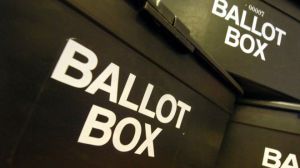
 

By election - ballot box - Democracy

Agree with this article? Violently disagree? Scroll down to leave a comment.

Follow Semi-Partisan Politics on TwitterFacebook and Medium.

Wait – When I Said That Gordon Brown Should Be Sent To Coventry…

With this intervention by Gordon Brown, the Remain campaign scrapes rock bottom

The worst thing you’ll see all day: Gordon Brown sullying the grounds of the beautiful Coventry Cathedral (my favourite modern cathedral – I used to attend choral evensong while studying at nearby Warwick University) with his latest tawdry intervention in the EU referendum campaign.

Sebastian Mallaby, a Washington Post opinions contributor (and not coincidentally in this case a paid up Remainer) thinks that this is just brilliant:

A few days ago, former Labour prime minister Gordon Brown offered a glimpse of what Britain can be. He paced the ruins of Coventry Cathedral, a medieval gem destroyed by Hitler’s bombs, and praised “a Europe where the only battle is the battle of ideas; a Europe where we fight with arguments and not with armaments.” Staring into the camera, Brown appealed to his countrymen to lead, not leave. “What message would we send to the rest of the world if we, the British people, the most internationally minded of all, were to walk away from our nearest neighbors?”

The best news from this desultory referendum campaign is that Brown’s video has gone viral.

In the video, which I watched while literally shaking with rage, Brown roams around the beautiful ruins, heaping praise on the European Union for ushering in “a Europe where decisions are made by dialogue, discussion and debate”.

But those decisions are not made democratically, are they, Mr. Brown? At least not by any serious definition of the word. Or is the mere existence of the European Parliament supposed to make up for the fact that the only EU institution with even a tenuous claim to the word “democracy” can neither propose new legislation or strike down the bad, and represents an utterly non-existent European demos (hence the abysmally turnout in European elections)?

Until now, I thought the succession of intellectually tepid interventions by the misguided pro-EU bishops were the worst thing to be done to (and by) the Church during this EU referendum. But Gordon Brown has gone and outdone himself, making the hand-wringing apologetics of John Sentamu and Rowan Williams seem positively devout.

Standing in the ruins of the old Coventry Cathedral, and in the shadow of the new – a magnificent and unique British contribution to architecture, conceived and built to the glory of God long before we joined the European Economic Community – Gordon Brown propagated the Remain campaign’s fatuous assertion that the EU single-handedly kept the peace in Europe and is still needed today for this purpose.

Back on planet Earth, anybody with a brain, a television and an internet connection can see for themselves that the European Union is doing far more to foster resentment and discord between the European countries than sowing peace. Whether it is the promise of young lives being permanently snuffed out or curtailed by 50% youth unemployment or the utter ruin of a small country which ought never to have been allowed to join the calamitous euro experiment in the first place, the last thing the EU is doing is promoting peace, cooperation, tolerance or understanding. I’ve been to Athens. I have seen the anti-German graffiti on every street corner.

Exactly how bad would it have to get for Gordon Brown and his allies in the Remain campaign to feel a twinge of shame or doubt about using Coventry Cathedral, an international emblem of peace and reconciliation, to drum up support for a European Union which has drifted far from the lofty goals of its own mythology, and which only now manages to function at all to the extent that it suppresses democracy and the popular will of the various member states?

I happened to be in Coventry Cathedral on April 21st this year, the Queen’s birthday. And after choral evensong was over, as a tribute the organist played “Orb and Sceptre”, William Walton’s coronation march written for the Queen’s coronation in 1955. In the music echoed centuries of history and independence which Gordon Brown and many in the Remain campaign are apparently willing to cast aside gladly and without a second thought, enthralled instead by a creaking and dysfunctional supranational political union, a mid-century relic which will almost certainly not live to see its hundredth birthday.

But as magnificent as the organ sounded that day, and speaking from a purely personal perspective, it will take a long time to stop the echo of Gordon Brown’s nauseating hymn of praise to the European Union from reverberating around that beautiful cathedral.


Coventry Cathedral - The Latter Glory Of This House Shall Be Greater Than The Former

Coventry Cathedral - Sculpture of Reconciliation

European Union - United Kingdom - Britain - Flags

Images: Semi-Partisan Politics

Agree with this article? Violently disagree? Scroll down to leave a comment.

Follow Semi-Partisan Politics on TwitterFacebook and Medium.

Labour Blames Its Own Supporters For Failing To Enthusiastically Back Remain

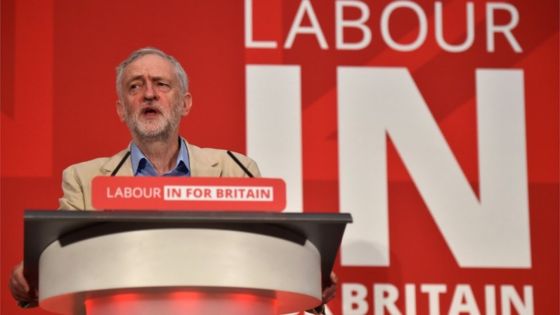
Jeremy Corbyn - Labour In for Britain

Don’t blame Jeremy Corbyn for the ambivalence verging on hostility toward the European Union seen in Labour Party strongholds

Hilariously, the Labour Party is finally waking up to the fact that their leader’s (at best) ambivalence about the Remain campaign might be harming their slavish desire to remain in the European Union at all costs.

This vignette from the BBC provides a telling insight into the hive mind of pro-EU Establishment Labour (my emphasis in bold):

Comparatively unnoticed, cast into shadow by the pyrotechnic light-show in the Tory party, the Labour Party has come to realise it is losing the argument, and may be in real danger of losing the referendum for the Remain campaign.

This morning, Labour’s shadow cabinet agreed the party needed to “up its game” and to do so urgently. Alarmed backbench MPs have been excusing themselves from parliamentary duties to kick-start what they describe as the near-torpid campaigning in their constituencies.

MP after MP has returned to Westminster with depressing tales from their home turf; of door-knocking in staunchly Labour areas where apathy towards the EU question has given way to rank hostility. One former minister contacted dozens of local Labour councillors urging them to mobilise behind the Remain campaign. To the MP’s fury, the appeal elicited one single reply.

To be clear: the Labour former minister’s response, upon realising that none of their local councillors were interested in helping the Remain campaign, was one of fury. Not surprise, or shame, or introspection – wondering why so many people in the Labour Party have no interest in spending the next couple of weeks singing hymns of praise to the European Union. No. Just fury.

This is the arrogance and entitlement of the Labour Party establishment. To be sure, many Corbynites – at least the virtue signalling middle class clerisy brigade – are little better. But it would take a considerable effort to surpass this former Labour minister quoted by the BBC, who believes that he/she and the Remain campaign deserve and are somehow entitled to the support of grass roots Labour supporters.

This is the arrogance of a class of Labour politicians who have forgotten that it is still their job to make the case, and to persuade people. And thus far, the Remain campaign has been an endless parade of miserabilist, declinist, pessimistic drivel, simultaneously talking down the prospects of the country of which many Labour supporters are justifiably proud while simultaneously painting a childishly naive picture of the European Union (puppies and unicorns) which almost nobody believes to be true.

In this context, the anonymous Labour former minister should be grateful to have received even one positive response from a Labour councillor – they were lucky to avoid a torrent of justified verbal abuse.

Once again, the Labour Party has absolutely nothing to say to those working class communities utterly unmoved by the woolly Fabianism of Ed Miliband or the edgy, student-friendly activism of Jeremy Corbyn. With no real debate over whether or not it was the right move, the party swung unthinkingly behind the Remain campaign because doing so is the instinctive response of many Labour elected representatives and donors. Too few Labour MPs – Kate Hoey, Graham Stringer, Frank Field, Gisela Stuart, Kelvin Hopkins, Khalid Mahmood and Roger Godsiff for a total of seven – have been willing to challenge the groupthink and articulate a different position.

And even now, with polls tightening and the discovery of a vast sea of apathy toward the EU throughout the Labour heartland, all that the party bigwigs can do is rage against their own supporters for failing to unquestioningly support the party’s Remain position, handed down to them from on high with no consultation and no fresh analysis since Labour became staunchly pro-EU in the late 1980s.

So if Labour bigwigs are casting around for someone or something to blame for their party’s weak contribution to the Remain campaign, they shouldn’t blame Jeremy Corbyn and they certainly shouldn’t blame their own supporters. The fault lies with their own arrogance and often disconnection from their communities.


European Union - United Kingdom - Britain - Flags

Top Image: BBC

Agree with this article? Violently disagree? Scroll down to leave a comment.

Follow Semi-Partisan Politics on TwitterFacebook and Medium.

Maurice Glasman Makes A Thoughtful Left Wing Case For Brexit

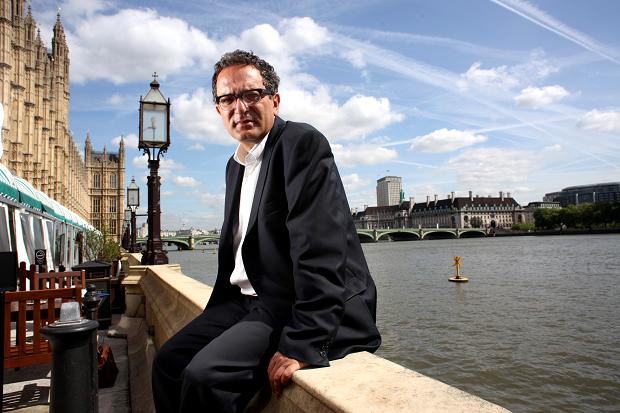
Maurice Glasman - EU Referendum - Blue Labour - Brexit

Maurice Glasman’s thoughtful intervention in the EU referendum debate is more proof that left-wing thinkers who value democracy naturally gravitate toward Brexit

The glib, feeble left-wing case for Britain remaining in the European Union can basically be summed up as “don’t give us back democracy, because the British people might be so foolish as to demand conservative policies and vote for conservative politicians”. It is, in other words, profoundly and actively anti-democratic, springing from a toxic and elitist mindset which hates and distrusts the people.

Unsurprisingly, the great and the good of the modern Labour Party have therefore flocked to its banner, endlessly repeating the shocking (to them) warning that if Britain did not have certain values imposed from above by a higher authority in the form of the EU, the British people themselves might not be so enlightened as to choose left-wing policies for themselves.

This is a weak and contemptible argument, and those advocating it – from Jeremy Corbyn to Owen Jones to Yanis Varoufakis – should know better, and quite probably do know better, deep down. This makes their betrayal of British democracy all the more unforgivable.

But there is a left-wing case for Brexit of more substance and nuance, and Maurice (Lord) Glasman now makes it in LabourList. At its core is still the desire to favour left-wing politics in particular rather than seek to regain democracy in the abstract, but at least Glasman puts some actual thought into his argument.

Glasman concedes that the EU was flawed from the start:

Unfortunately, probably from the outset, and certainly by the Rome Treaty of 1957 a Jacobin tradition of unmediated space, emptied of decentralised institutions had asserted itself, particularly through the head of the High Authority, that became the European Commission, Jean Monet.  He asserted that economic exchange and legal uniformity would, over time, produce political unification.

Perhaps naturally, Glasman traces the EU’s decline firmly back to the accession of Britain in 1973:

Under the leadership of Edward Heath, who had a genuine feeling for the fate of Europe, Britain did join the Common Market, as it was called it for a long time.  It did not go well from that time on as the Common Market was not based on a shared political economy. 

Britain is an island and was always at an angle to Europe.  It avoided the continental territorial struggle for domination and developed a maritime rather than a landed economy as well as distinctive political institutions based upon the balance of powers within the Ancient Constitution. 

De Gaulle, in continuation with Napoleon, thought that all Britain cared about was free trade and the primacy of the City of London. He argued that the British State could never agree with either the administrative directives favoured by the French or the institutional co-operation embodied in the German Social Market. 

The difference between territorial rule underpinned by an army and central directives and a maritime economy based on the Navy and free trade was what was at stake in the Napoleonic wars.   In boycotting Britain and building a Europe of administrative conformity Napoleon continually blasted Russian, German and Austrian leaders for continuing to trade with Britain, which as a maritime power traded with the world.  Napoleon’s career ended when he voluntarily boarded a Royal Navy ship and was taken to a faraway island where his board and lodging was paid for by the City of London.  Despite the conclusive result of that conflict it was not the end of the argument. 

The political and economic systems of Britain and France was very significantly different.  Britain had dispensed with its peasantry during the last stages of enclosure and the Corn Laws, it had embraced the market at home as well as free trade abroad. On joining the Common Market the very unhappy marriage of Napoleonic directives and free trade objectives began which threatened the European Community’s earlier achievements of agricultural protection and worker participation.  The Common Market, or European Economic Community as it then became known, had been built on a substantive conception of an economy based upon agriculture and industry, land and labour.  Britain, in contrast, brought a model of a financial and services based economy in which free movement rather than social partnership was the primary goal of political union. 

And correctly identifies the anti-democratic black hole which appears when the EU technocracy instinctively recoils from the people and their dangerous passions:

As the European Union becomes more general, abstract and administrative it will naturally side with capital and directives, viewing politics itself as populist.  The reaction is already present within each European State. When I was in Berlin last weekend the AfD had surpassed the SPD in the polls.  When reason itself becomes desiccated and exclusively rational, severing itself from institutional judgement and historical experience it turns all forms of resistance into demagogy and madness.  And yet, democracy is the European way of resisting the outrageous claims of capitalism to own, commodify and de-contextualise human beings, nature and all civic institutions.  The tension between democracy and markets can no longer be resolved at the level of the EU, which through its inverted definition of subsidiarity in which the larger subsumes the smaller, is hostile to democracy, distinctive local and national institutions.

Obviously Glasman is particularly interested in democracy as a means for the people to resist what he sees as the “neo-liberal” agenda of the EU – he is not advocating Brexit for the pure sake of democracy. But at least democracy gets a look-in in Glasman’s argument, which is more than can be said of the Jeremy Corbyn / Owen Jones position, which unashamedly seeks to cling on to the European Union precisely as a means of suppressing British democracy.

Glasman’s conclusion is particularly devastating (my emphasis in bold):

For many years the European project has served as an alternative to Labour having a serious politics of national transformation, of building the coalitions necessary to constrain capital and strengthen democracy. It was a national political weakness that led to the enthusiastic embrace of the EU and it remains a refuge from domestic political defeat.  Labour should be robust in supporting free and democratic trade unions throughout Europe, in championing a balance of interests in corporate governance and strong civic self-government with a deep partnership between universities, cities and firms.  The question is whether being part of the EU hinders this.  Britain is already outside the Eurozone and the Schengen agreement.   It is gratuitous to remain part of a political union that is so hostile to diversity and democracy and so disposed to the consolidation of big capital that it has become a remorseless machine for the liberalisation of trade and the disintegration of society, in which the demand for liquidity has dissolved solidarity. Perhaps it is time to think again.

This really gets to the heart of it – the EU has indeed been an poor alternative to having a serious national political conversation about how we wish to govern ourselves. Labour are not exclusively to blame in this regard. Politicians from all parties have gladly surrendered power to the European Union, eagerly seizing the opportunity to keep the trappings of power for themselves while divesting themselves of ever more responsibility for the outcomes of decisions now made in Brussels.

And how refreshing it is to hear a personality from within the Labour Party actually suggest that maybe – just maybe – it should be the job of left wingers to argue their case in public and seek to convince the British electorate of the attractiveness of socialist policies rather than seek to bypass the electorate and impose social democracy from above via the EU.

In fact, Maurice Glasman, founder of Blue Labour, is exactly the type of voice that the Labour Party needs to listen to and place front and centre of their policymaking if they want to staunch the exodus of working class support from a party which increasingly resembles a middle class, creative industry, virtue-signalling talking shop.

A party which lost seats to the Tories because of traditional voters defecting to UKIP – and facing the prospect of Nigel Farage’s party nipping at its heels in a swathe of Northern constituencies – would make a place of honour for someone like Maurice Glasman, and perhaps even listen to what he has to say about the European Union.

But they can’t do it. Jeremy Corbyn and co. were happy to enrage the party establishment and donors on all manner of issues, from the Syria military action vote to their perceived tolerance of anti-Semitism. But on the crucial issue of Britain’s membership of the European Union, suddenly Stockholm syndrome kicks in and everybody robotically sings from the same worshipful hymn sheet. It’s pathetic.

There is still an element within the Labour Party that actually cares about the hopes, dreams, fears and priorities of the working class. But you won’t find it within Jeremy Corbyn’s inner circle, or the mainstream party in exile. This dwindling branch of the Labour Party is now much like the Popular Front in Monty Python’s “Life of Brian” – a solitary man, sitting on his own, ignored by everybody else.

In their unthinking support for the European Union, the shining practitioners of the New Politics have thrown the working class – indeed , everyone who loves democracy – well and truly under the bus. And at some point there will probably be a reckoning for that.


European Union - United Kingdom - Britain - Flags

Top Image: The Times

Agree with this article? Violently disagree? Scroll down to leave a comment.

Follow Semi-Partisan Politics on TwitterFacebook and Medium.

Warning Of ‘Tory Brexit’, Labour’s Unspeakable Shadow Chancellor Parades His Contempt For Democracy

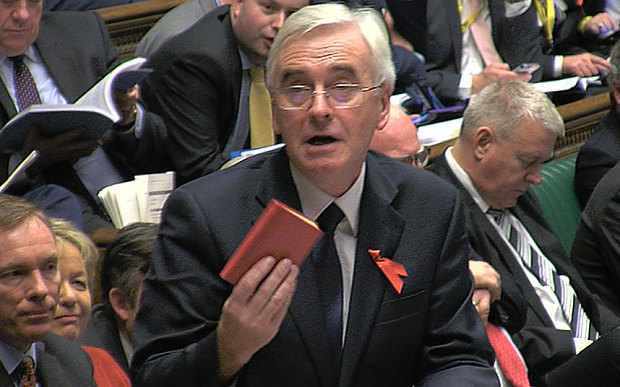
John McDonnell - Little Red Book - Tory Brexit

The Labour Party doubles down on its sick, openly anti-democratic case for Britain remaining in the European Union

That slobbering, Marxist, assassination-approving, lynching-advocating IRA-supporter John McDonnell continues to show his contempt for democracy by loudly opposing Brexit on the grounds that freedom from the European Union might make it easier for a democratically elected British government to actually, y’know, govern.

Of course this would be terrible and cannot possibly be allowed to happen – when the incumbent government is a Tory one, that is.

Labour’s unspeakable shadow chancellor is now taking to the pages of the New Statesman to promote his pie-in-the-sky, fantasy land “Another Europe”, whereby an explicitly integrationist and federalist club can be magically transformed by McDonnell, Jeremy Corbyn, Yanis Varoufakis and other assorted left-wingers into some kind of Utopian, socialist paradise.

McDonnell, trialling his “Tory Brexit” catchphrase again, writes:

The undeniable truth about the referendum is that what is on offer is a Tory Brexit. On 24 June, we will still have a Tory government, because under the Fixed-Term Parliaments Act the Conservatives could change leader from David Cameron to Boris Johnson and still try to cling on until 2020.

This would be a disgraceful betrayal of democracy. But what over the past six years has suggested to you that anything would be beneath the Tories? And, regardless of who would be leader of their party, the initial trade negotiations following a Tory Brexit could resemble TTIP on steroids.

We know what they think of the Working Time Directive; can you imagine what other workplace rights they would trade away and try to blame on someone else? With global economic uncertainties combined with George Osborne’s economic incompetence, the UK is uniquely exposed to the risk of an immediate economic fallout from a Tory Brexit.

Odd, you might think, that Labour’s shadow chancellor is so happy to associate the movement to restore democracy and independence to Britain with his lifelong enemies in the Conservative Party. But then these are not ordinary times.

McDonnell continues:

I want to see a reformed EU in which we make many of its institutions more transparent and democratic. For the first time in a generation, there is a growing coalition of socialists across the EU who can help us achieve this together. By choosing Labour’s “Another Europe” agenda, our country can stand with others across Europe to make a positive case to end austerity, offer a more humane response to the migrant crisis and protect and expand workplace rights.

And the evidence that this Magical Candyland Europe spoken of so warmly by leftists from Jeremy Corbyn to Owen Jones is actually achievable? Zip. Zilch. Nada. Tumbleweeds. The very purpose of the European Union is to facilitate a process of integration towards a common European state. Don’t take my word for it – see what the EU’s own leading voices openly say about their creation. In this grand endeavour, democracy is the mortal enemy. And John McDonnell seriously thinks that he can make EU institutions deliberately designed to shut out popular opinion more democratic?

Whether or not there is indeed a growing coalition of socialists, there is absolutely nothing to suggest that they currently form – or could conceivably form in the future – a bloc powerful enough to wrest control of the key European Union institutions. Even if the parties of the far-left somehow manage to defeat the parties of the centre, centre-right and far right and become a force in the European Parliament (itself an impossibly tall order), so what? The European Parliament is a rubber stamp, the least important and least powerful of all the EU institutions. How does that alter the makeup or direction of the Commission or the ECJ? The answer, of course, is that it doesn’t.

The very best scenario that McDonnell and friends could conceivably hope for is to jam the European Parliament with a bunch more angry leftists. But any anti-establishment wave which helps the left is generally likely to help the right, too. In fact, the radical right have been running rings around the socialists for some time. McDonnell’s dream scenario, therefore, is one where parties like Podemos and Syriza scream at parties like UKIP and others much further to the right, and bring the European Parliament to a cacophonous deadlock, while the other EU institutions – the ones which actually matter – glide on, unchecked.

Here is a political party – and an approximation of a man – who have let their blind, seething, inchoate rage against the Evil Tories snuff out what little dedication they ever had to democracy or respect for the will of the people. Here is a shadow chancellor and broader left-wing movement who are so wedded to their policy of unthinking, virtue-signalling pseudo-internationalism that they would sooner doom Britain to remain trapped in an antidemocratic, dysfunctional, failing political union than admit the terminal flaws in the European Union and fight for left-wing policies in a newly independent Britain.

But more than all of that, this is a left wing movement which cares about democracy only when it advances their own particular narrow agenda. John McDonnell isn’t willing to energetically make the case for the things he claims are under threat in case of Brexit. He simply wants those things to be undemocratically imposed on the British people by a higher, supranational authority. He wants to win without trying, to impose his beliefs on others without doing the hard work of winning them over. McDonnell literally doesn’t care how his policies are implemented, or who is steamrollered in the process – just as long as those clapped-out old left-wing policies somehow see the light of day.

You can call that “passionate” and “principled” if you want, if you are still enthralled by the Corbynite glow. But the rest of us should call it what it is – narrow minded, bigoted authoritarianism.

Meet your friendly Labour Party of 2016 – happy to throw democracy and British independence under the bus in pursuit of the fevered hallucination of a united, socialist Europe.


European Union - United Kingdom - Britain - Flags

Top Image: Telegraph

Agree with this article? Violently disagree? Scroll down to leave a comment.

Follow Semi-Partisan Politics on TwitterFacebook and Medium.