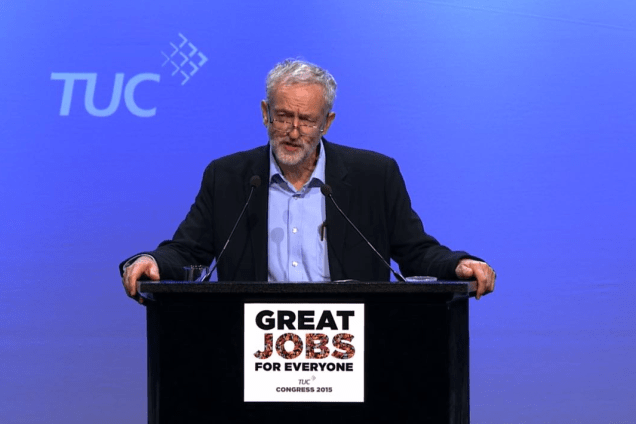
Purge Tom Watson From The Labour Party, Not The Corbynites

Tom Watson - Jeremy Corbyn

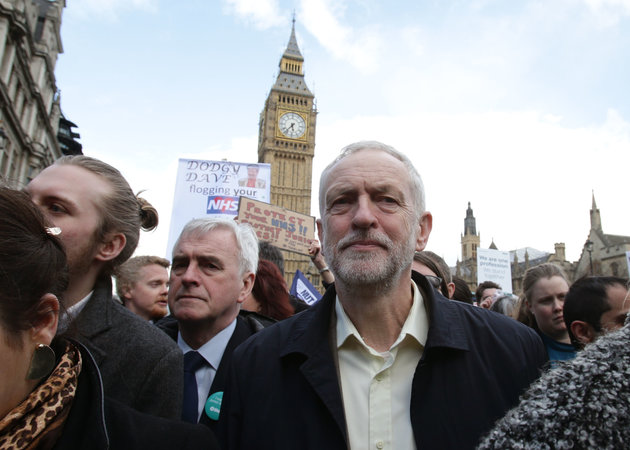
If there is to be a Labour Party purge, leave the Corbynites and centrists alone and purge disgusting people like deputy leader Tom Watson

Charles Moore is quite right to identify the real odious usurper within the top echelons of the Labour Party – deputy leader Tom Watson:

The majority opinion is that it is a disgrace that Jeremy Corbyn is the leader of the Labour Party. Actually, the real disgrace is that Tom Watson is its deputy leader.

It is a question of character, not of political views. Mr Watson is an inveterate plotter (see, for example, his almost successful political assassination plot against Tony Blair in 2006, to assist Gordon Brown). He is also the purveyor of utterly unsubstantiated malicious rumour.

Moore reviews Watson’s inglorious history:

In 2012, collaborating with the website Exaro, he used parliamentary privilege to allege “clear intelligence” of a “powerful paedophile network” in Parliament and Downing Street. He called on the Metropolitan Police to investigate, and later passed them “information”. This led to a series of operations by the police – Fairbank, Fernbridge, Midland – which looked credulously into allegations, some blatantly crazy, about child abuse, torture and even murder by leading figures in politics and society.

The investigations collapsed this year, but not before they had defamed the late Sir Edward Heath, ruined the last years of Lord Brittan, tormented the wife who then became his widow, and persecuted Field Marshal Lord Bramall (who is still, I am glad to say, robustly with us) and many more.

And then explains why the odious Tom Watson actively hinders the efforts of Labour’s suddenly reviled centrists to dislodge Jeremy Corbyn:

Now Mr Watson alleges that the Labour Party is being infiltrated by Trotskyists. “Some old hands [are] twisting young arms,” he says, making it sound like his favoured subject of child abuse. He may actually be right in this case. But the Corbyn team clearly finds it easy to say Mr Watson is “peddling baseless conspiracy theories”: he has done so before. It is utterly dismaying to see Labour led by the hopeless Mr Corbyn, unless you want a permanent Tory government (which I certainly don’t), but Labour moderates who oppose him do not seem to understand why they cannot gain the moral high ground. A big part of the answer is Mr Watson.

I’m actually with Owen Jones on this one – the idea that Trotskyist entrists are of any significance  in Labour’s influx of new members is ridiculous overstatement. Anyone who has ever been to a party conference or a political demonstration knows just how fringe these wizened far-leftists are, with their cheaply produced pamphlets and anachronistic slogans.

The fact that Tom Watson seeks to portray these people as having outsized influence is quite understandable, given his thuggish imperative to topple his leader and restore the rule of the centrists, but that does not make it true. In fact, it is a great slander on the hundreds of thousands of people who have flocked to the Labour Party, attracted by the fact that Jeremy Corbyn offers something other than the muddled centrism practised by Blair-Brown-Cameron-Miliband.

Tom Watson is exactly the kind of bruising, Chicago-style machine politician that we should be working to purge from our politics, not looking to as our salvation from Corbynism. He is the epitome of New Labour’s headline-led approach to governing – the fact that Watson’s first major act as an MP was to agitate for a ban on Gary Glitter albums shows a slavish desire to win the approval of The Sun and a brutal authoritarian streak which has been revealed numerous times since, not least in his Herculean efforts to take down Tony Blair in 2006, acting as Gordon Brown’s hired gun.

Is Jeremy Corbyn the great white hope of British politics? Of course not – his ideology and policy obsessions come pretty much unreformed from the 1970s, his foreign policy is alarmingly anti-American and he has any number of unpleasant friends and associations, at home and abroad. But at least he offers a gosh darn alternative to the centrist consensus.

Ambitious Conservatives in particular should appreciate that Corbyn’s efforts to shift the left hand border of Britain’s political Overton window makes it equally possible for a future radical Conservative leader (anyone? anyone?) to push the other boundary further to the right.

And for that potential alone, Jeremy Corbyn is worth 650 Tom Watsons.


Tom Watson - Labour Party - Deputy leader

Top Image: ITV

Bottom Image: International Business Times

Support Semi-Partisan Politics with a one-time or recurring donation:

Agree with this article? Violently disagree? Scroll down to leave a comment.

Follow Semi-Partisan Politics on TwitterFacebook and Medium.

Mandatory Reselection Of MPs Should Be The Norm For British Political Parties, Not A Scandalous And Controversial Idea

Jeremy Corbyn - Mandatory Reselection Labour MPs

MPs do not have a divine right to represent their constituencies forever once selected by their local party, Jeremy Corbyn is quite right to consider mandatory reselection for MPs and all political parties that profess to care about democracy should follow his lead

The Telegraph leads today with a breathless piece warning of Jeremy Corbyn’s intention to press for mandatory reselection of MPs whose constituencies are changed as a result of the coming boundary review, assuming he prevails in the Labour leadership contest.

Jeremy Corbyn’s allies are planning to end the parliamentary careers of dozens of critical Labour MPs by approving plans for mandatory reselection by the end of the year.

The Telegraph understands his supporters will use their increased majority on the party’s ruling body to clarify rules about which MPs can stand for election after the 2018 boundary review.

Rhea Wolfon, elected to the Labour’s National Executive Committee [NEC] this week, hinted at the move by saying the party must have a “conversation” about “mandatory reselection”.

However Andy Burnham, Labour’s new mayoral candidate for Greater Manchester, said it would “pull the rug from under our MPs” and fuel a “climate of distrust”.

While Politics Home reports that Steve Rotheram, Jeremy Corbyn’s PPS and now Labour’s candidate for the Liverpool city regional mayoralty, has also made approving noises about challenging the “divine right” of MPs to remain in their position come what may:

Steve Rotheram, who serves as Jeremy Corbyn’s parliamentary private secretary, said elected politicians should not think Westminster is the “repository of all the best ideas”.

It comes after Rhea Wolfson, a newly elected member of Labour’s ruling National Executive Committee, said the party should have a “conversation” on the mandatory reselection of MPs.

When asked whether he was in favour of such a proposal, Mr Rotheram said he was “attracted” to Tory MP Zac Goldsmith’s 2014 plan that would see misbehaving MPs face a by-election if 5% of constituents signed a “notice of intent to recall” and 20% then sign a “recall petition”.

He said he did not support Mr Goldsmith’s defeated amendment to the Recall of MPs Bill amid concerns about the exact motion he was putting before the House of Commons.

The MP for Liverpool Walton added: “But yes, I think that MPs should reflect what the membership who select them are putting them into parliament to do. We shouldn’t believe that we’re down here and that we’re the repository of all the best ideas.

“We really should be looking at what our members are telling us to do and I think that’s part of the role as a Member of Parliament.”

Cue shock, horror and clutching of pearls from the political establishment – Andy Burnham, himself about to jettison a Westminster career cul-de-sac in the hope of municipal glory in Manchester, says that it would be “pulling the rug” out from underneath MPs. Well, perhaps MPs need to have the rug pulled out from underneath them. Perhaps they need the rug to be yanked hard enough so that they either become genuinely responsive to the party activists who work to get them elected or quit the field of play altogether.

The great thing about democracy at its best is that it rewards those who show up when the times comes to choose. Old people reliably vote in large numbers, therefore government policy when it comes to housing, welfare spending and any number of other policy areas is generously skewed in their favour. If only young people could put their Pokemon Go games down for long enough to make it to a polling station, government policy might begin reflecting their concerns too. But they don’t, so it isn’t.

Unfortunately, the way MPs are currently selected by Britain’s main political parties takes this important aspect of democratic responsiveness and throws it out the window. Once an MP has been chosen as their party’s nominee, they have very little use for their own party activists. These dedicated and principled people are hardly likely to ever support a candidate from another party, and therefore an unscrupulous MP can abuse and betray them to their heart’s content knowing that they automatically qualify as their party’s parliamentary candidate the next time a general election rolls around.

And inevitably this can lead to a growing gulf between the political stance of a constituency party and the views espoused (and votes taken) by that constituency’s Member of Parliament. This is what we now see happening to the Labour Party, where depending on your view either the parliamentary party has shifted to the right or the membership has shifted dramatically to the left (in reality a bit of both) and no longer stand for the same principles.

The brutal truth right now is that many Labour MPs, including some quite prominent ones like former leadership contender Angela Eagle, are now irreconcilably out of step with their own local parties. Why, therefore, should they have the automatic, divine right to continue to represent local parties who despise them and wish to put forward someone for parliament who more closely reflects their own priorities and positions?

When viewed this way, Jeremy Corbyn’s proposal seems quite tame. In fact, this blog would go further – MPs should not only face mandatory reselection in the case of constituency boundary review (the specific circumstance currently under discussion) but every five years ahead of a general election. This would bring Britain into line with other countries like the United States, where Representatives and Senators do not have “jobs for life” and must compete in party primaries if they wish to run for their seat at the next election. Such a move would put the wind up an often self-entitled political class, forcing MPs to justify their worthiness of a place on the ballot at regular intervals and forcing many of the older, less useful bench warmers off into retirement.

No constituency should be lumbered with a doddering old MP who doesn’t care any more, or a sharp-elbowed go-getter who ignores their constituency as they focus on climbing the greasy pole. Mandatory reselection goes a long way to solving those problems.

The current system, by contrast, is an abomination – incumbent MPs, often initially selected to stand for parliament in their constituencies through dubious, opaque or even downright corrupt means are then largely free from scrutiny by their own party for the rest of their career. As soon as they enter parliament they are enveloped in the Westminster self-protective cloak which serves to insulate parliamentarians from the consequences of their behaviour and political decisions.

If you know that nothing you can do will ever get you fired – if there is no political betrayal (like, say, pretending to be a eurosceptic during selection and then turning around and supporting the Remain campaign) for which you will ever be held to account – then there is every incentive to lie about your real political beliefs and motivations during selection, and then behave in as abominable and self-serving a way as you please as soon as your are elected to the Commons.

The status quo needs to change, and whatever else one may think of Jeremy Corbyn (and however self-serving his motivations may be), he should be applauded for taking a stand for democracy and accountability and against the entrenched privilege of the political class.

If political parties are to be accountable to their supporters then there needs to be an established process for the base to hold their candidates to account for decisions taken in office. Mandatory reselection – together with a proper right of recall, empowering constituents to recall a failing or unpopular MP subject to a certain percentage of the local electorate signing a petition – is an important aspect of that process.

Under a properly democratic system, MPs should fear the wrath of their local constituency party and be closely responsive to their priorities and concerns. At present, too many MPs take their local party for granted as soon as their selection is assured, shunning the activists who knock on doors and deliver leaflets on their behalf in order to cravenly pander to the centre.

This needs to change. This can change. And Jeremy Corbyn should be commended for trying to do something about it.


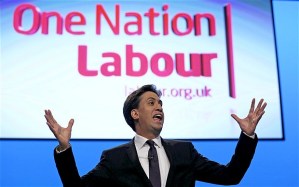
Ed Miliband Labour One Nation

Top Image: Huffington Post

Support Semi-Partisan Politics with a one-time or recurring donation:

Agree with this article? Violently disagree? Scroll down to leave a comment.

Follow Semi-Partisan Politics on TwitterFacebook and Medium.

On Left And Right, British Politics Is Characterised By Pitifully Small Thinking

Grammar Schools - Conservative Party - Theresa May

Grammar schools and OBEs – anything to distract ourselves from the real, serious political issues facing modern Britain

Of all the issues and circumstances which afflict modern Britain, what policy do you think would make the single most positive difference? Ensuring that Brexit takes place and that we positively reshape our relationship with Europe and the world? Comprehensive healthcare reform? Constitutional reform to reinvigorate our democracy? Freeing higher education from the dead hand of government funding and control? Sweeping simplification and reform of the tax code?

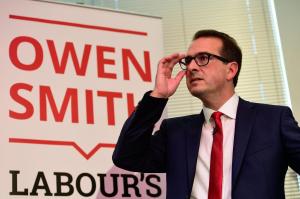
One could debate endlessly (though this blog would prioritise Brexit above all else). But two things almost sure not to make the list would be the two political stories dominating the news this weekend – Labour leadership contender Owen Smith’s ostentatious vow to ban the bestowing of new honours for five years if he becomes leader, and indications that Theresa May’s government is on the verge of overturning New Labour’s spiteful and vindictive ban on the opening of new grammar schools.

From the BBC:

Labour leadership challenger Owen Smith says honours will not be bestowed upon Labour donors, MPs, advisers and staff for five years if he wins the contest.

Mr Smith, who is challenging leader Jeremy Corbyn, said he wants an honours system that rewards “selfless acts, not political and personal patronage”.

Mr Smith, MP for Pontypridd, said Mr Cameron’s list – which included many Downing Street staffers and Conservative donors – was put together with “blatant cronyism”.

“David Cameron’s resignation honours list has brought the system into disrepute and deepened people’s mistrust of politics.

“It’s simply not good enough for [Prime Minister] Theresa May to turn a blind eye to this situation – we need fundamental reform of the honours system so it can reward good deeds and restore people’s trust in politics.”

He also said his proposed five-year honours ban would stay in place until a total overhaul of the system was completed.

This blog does not dispute the fact that the British honours system is hopelessly corrupt and abysmal at recognising exemplary virtue. If Samantha Cameron’s personal stylist is worthy of career-boosting recognition in a gross act of cronyism, what possible grounds are there to deny an honour for every single member of the British armed forces, all of whom risk their lives for very little financial reward compared to that which they could receive in other private sector careers?

While there are many aspects of British imperial tradition which are worth carrying into the present day, the byzantine honours system, with its multiple levels and incomprehensible initials, is not one of them. In fact, it is the ultimate expression of inward-looking elitism, a Country Club tiered membership system which allows its wealthy and well-connected members to compare themselves with one another while excluding thousands of people whose lifetimes of service make them far more deserving of public recognition.

So scrapping the honours system altogether and replacing it a flattened and simplified system – perhaps just one award for civilian life, like a stripped down variant of the Order of Australia – would be a worthy goal, though hardly mission-critical for UK prosperity. Far less impressive, though, is Owen Smith’s dismal suggestion of an arbitrary five-year pause to supposedly review the system.

This is a typically British muddle. When faced with an unacceptable scandal or unethical situation, the establishment’s typical response is to launch a meandering and ultimately fruitless inquiry, kicking the issue into the long grass until public outrage has died down sufficiently that things can go on unchanged. The only way that the rotten system will ever change is either for firm and immediate action to be taken, or for the issue to be folded into a package of further-reaching constitutional reform (by far the better, though less likely option).

Owen Smith, last gasp of the Labour centrists, clearly has no interest in serious reform – of the honours system or anything else. His proposed five-year moratorium is a quintessentially New Labour device, assuaging public anger with a big flashy gesture while doing absolutely nothing to tackle the underlying issue or inequality. This isn’t bold new leadership from somebody worthy of succeeding even Ed Miliband and Jeremy Corbyn. And this is the man who believes he is uniquely gifted to carry Labour back into government?

Not that the Conservatives are any better.

The main news emanating from the Conservative Party this weekend has been the leaked suggestion that Theresa May is planning to announce a repeal of New Labour’s ban on the building on new grammar schools – not unpleasing news, certainly, but concerning (and highly vulnerable to political attack) when not placed in the clear context of wider education reform with a laser focus on raising standards and improving social mobility.

The Guardian reports:

Theresa May has been warned she will face stiff opposition to plans for new grammar schools from some senior Tory MPs as well as Labour and the Liberal Democrats.

The prime minister was facing a backlash after the Sunday Telegraph reported that she will announce a return to more selective schools in England as early as the Conservatives’ autumn conference.

Downing Street made no attempt to dampen speculation that an extension of selection in schools is on the government’s agenda, releasing a statement on Sunday that said: “The prime minister has been clear that we need to build a country that works for everyone, not just the privileged few.

“Every child should be allowed to rise as far as their talents will take them and birth should never be a barrier. Policies on education will be set out in due course.”

The suggestion that May, a former grammar school pupil, will opt for new selective schools after an 18-year ban delighted many Conservative backbenchers. More than 100 Tory MPs are said to support a campaign by ConservativeVoice, a group endorsed by senior cabinet ministers Liam Fox and David Davis in 2012.

In many ways, seeking to lift the ban on new grammar schools is commendable – the ban is a grotesque piece of spiteful, anti-aspirational Labour Party downward social engineering, in which “equality” was to be achieved by hacking away at the ladders to success in favour of dull, uniform mediocrity.

But as a first major flagship Conservative policy under Theresa May, it is disappointing. Yes, it shows more grit than was ever displayed by David Cameron, and yes it will keep restive Tory backbenchers happy – essential if May’s government is to survive the next four years with a notional majority of just 8. But in terms of the overall education reform which Britain needs, grammar schools are but a drop in the ocean.

The proportion of pupils in grammar schools has been under 5% since the late 1970s. Even assuming an aggressive policy of encouraging new grammar schools, it is hard to see this figure substantially increasing within, say, the next decade (i.e. in time to make a measurable difference in the productivity and quality of the British workforce).

Academic selection can be beneficial, and we should certainly aim to stretch the most talented pupils and appropriately enrich their education wherever possible. As a former state school pupil, my own education was in no way enhanced by being grouped together with other children of decidedly mixed ability (and this despite streaming). And I strongly doubt that the less able students benefited greatly from my presence either.

But the real issue in British education is the stunted curriculum, unambitious targets and wildly excessive early focus on specialisation. As a state school student, I had no opportunity to learn Latin, or philosophy or the classics. And no matter what steps I have taken in adult life to fill the yawning gaps in my knowledge, nothing can replace exposure to these topics at an early age. Why should these subjects be the preserve of expensive fee-paying private schools, simply because some dull left-wing bureaucrat decided that “ordinary” students do not need exposure to the classics and the Western canon in order to get jobs working in factories which no longer exist?

Why, too, are fourteen-year-olds expected to know what they want to be when they grow up, and begin dropping subjects like hot potatoes as they begin studying for their GCSE examinations? How on earth is a young teenager, who has perhaps only ever had one teacher in history or geography or modern languages, supposed to know for sure that they will never need whole areas of knowledge in their future lives? For this is exactly what we demand of our young people today.

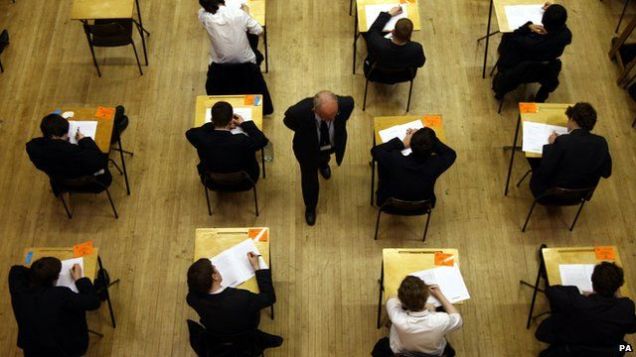
At a tender age (when frankly, issues of popularity or boredom come into play as much as anything else) we expect young people to drop subjects and constrain their life choices first at fourteen, when they start preparing for GCSEs, and again at sixteen (if they haven’t been encouraged to abandon school altogether by pandering government agencies) when they begin preparing for A-levels. This is ludicrous – and the idea of dropping subjects which one finds difficult hardly instils young minds with a positive attitude towards dealing with life’s inevitable challenges.

Rather than continuing to shoot for the middle with our education policy, contenting ourselves when we just about keep pace with other middle-ranked nations, we should set our sights higher as a country. We should be looking to match and outdo countries like Japan, Finland and South Korea from their perch at the top of world tables in educational outcomes, and improving our schools so that it is no longer just our elite private schools and Oxbridge which are the envy of the world.

Would this be easy? Of course not. Many factors are involved, from daycare and early pre-school education, relative poverty and tackling an often lukewarm culture of aspiration. In some of these areas (particularly around the culture of aspiration and delayed gratification) we can clearly do much more. In other areas, there may be difficult questions over infringement on personal choice and the proper role of the state. But we should at least have the debate and talk about how much power we are prepared to concede to different levels of government (or determined to take back from government) in order to drag ourselves up the educational league tables.

But these are all discussions which will never take place if the focus is taken over by a debate about grammar schools, which make up just one weapon in the fight to improve educational outcomes. We will never have the broader discussion and the complete policy review if Theresa May’s government expends a vast amount of political capital fighting furious Labour and LibDem MPs to an impasse and ends up being defeated in the Commons by a jubilant Jeremy Corbyn.

So here we are – well over a month after the EU referendum, and here we are talking about grammar schools and the honours system.

Of course the machinery of government must grind on, Brexit or no Brexit. And of course this is the slow summer season, when MPs and journalists normally take a break, promising each other that nothing momentous will take place while they try to grab some quality beach time. But the fact that the Labour Party is consumed by yet another leadership election with a challenger whose key selling point is promising to spend five years thinking about changing the honours system, while the Tories play to the backbenches by choosing to fight and die on the hill of grammar schools, is not encouraging.

Maybe party conference season and the return of Parliament will provide more context, or some other sign of hope that Theresa May’s government plans to do more for social mobility than re-litigate a battle from the 1970s, or that Labour’s childish centrist MPs will either accept four more years in the wilderness or finally show some courage and strike out on their own.

Because at present, the policies and preoccupations of Britain’s leading politicians do not seem remotely equal to the scale of the challenges at hand.


Grammar Schools

Grammar School - Conservative Party

Support Semi-Partisan Politics with a one-time or recurring donation:

Agree with this article? Violently disagree? Scroll down to leave a comment.

Follow Semi-Partisan Politics on TwitterFacebook and Medium.

What Next For The Labour Party?

And when Jeremy Corbyn storms to re-election as Labour leader, what then?

Ben Kelly despairs:

To see just how low the Labour Party has sunk don’t look at Jeremy Corbyn, look at the usurper the rebels have chosen; Owen Smith. Is that really the best they have to offer? He is a total non-entity with no personal charm whatsoever. His combination of smarm and Corbyn-lite policy ideas are sure to repel the electorate and offer no hope for redemption for his wretched party. His ambition vastly outsizes his talent and the fact his pitch has been an attempt to attract Corbyn supporters exposes him as not just weak, but utterly pointless.

If Owen Smith miraculously manages to win the leadership race is he really going to bring salvation for the Blairites? He asserts that he is the only person who can unite the Labour Party but it is clear that he hasn’t the courage or the political intelligence to confront the Corbynite activist base, nor has he got the full blooded support of the Parliamentary Labour Party.

The harsh truth is that those figures in the Labour Party who really want to be leader have opportunistically ducked out of this race because they don’t want to enter a leadership race they will probably lose. They are too cowardly to take on the Momentum crowd and want to bid for the leadership when they can cruise into the position in some fantasy future when the Corbnyites realise the error of their ways.

Before Corybn Labour were already losing voters and it was mainly due to welfarism and immigration. Owen Smith is in no better position to win back the voters that have abandoned his party because of these issues than Corbyn. To that you can also add his Europhilia and his commitment to push for a second referendum in a blatant attempt to prevent Brexit. Ideologically his is little more attractive to the electorate and personally? This creep isn’t going to be embraced by the British people anytime soon.

The spending commitments in his cringeworthy, amateur hour, 20 policy pledges is quite enough to repel the wider electorate. The 28% that Corbyn’s hapless Labour Party is polling at the moment is clearly an over estimation, and the idea that Owen Smith is the man to reverse this dire situation is laughable.

The fact that even the man trying to oust Corybn thinks Britain wants socialism of any kind, even after Milibandism was comprehensively rejected in 2015, is a clear indication that Labour is in very serious trouble. It will either split or leap head first into electoral oblivion from which it will likely never recover.

Pete North is similarly unenthused:

https://twitter.com/PeteNorth303/status/761532183458803716

Well, at least Corbyn is powering a thriving socialist folk song revival.

This blog’s assessment, however, remains unchanged:

If Jeremy Corbyn remains as leader and takes Labour to an historic defeat in the 2020 general election, the party will be out of power for nine more years at most. But if the centrists, acting in a fit of pique at finding themselves out of favour and influence for once, decide to split the party then it will be ruined and broken forever. The time horizon in the minds of the centrist rebels conveniently gels with the likely length of their own political careers. When centrist Labour MPs earnestly declare that the future of the Labour Party is at stake, what they really mean is that their own parliamentary careers are at stake. The Labour Party has survived bad leaders before. What it cannot survive is the treachery and self-serving behaviour of the majority of its own parliamentary caucus.

If Labour’s centrists are serious about regaining control of their party and influence within in, there is only one course of action. And it involves sitting down, shutting up and letting Corbyn drive Labour off a cliff at the 2020 general election. Anything less than their full-throated support (or at least their tacit acceptance of his rule) will see bitter Corbynites attempt to pin the blame for their defeat on lack of enthusiasm (or indeed sabotage) within the parliamentary party. If Corbyn is to be deposed and Corbynism rejected once and for all, he and McDonnell must be given a clear shot at the general election and allowed to fail on their own.

“But people can’t take nine more years of Tory rule”, sanctimonious centre-leftists wail, indulging in their favourite pastime of painting themselves as the sole Defenders of the Poor. This would be a marginally more convincing if there was actually a radical, Thatcherite conservative government in office rather than the Cameron/May Tories who preach statist, paternalistic big government solutions to every problem – effectively Tony Blair’s missing fourth term.

It would be more convincing if there was more than a cigarette paper’s difference between centrist Labour and the leftist Toryism practised by a party which has more to say about “social justice” than liberty and freedom. But since there is so little difference, it doesn’t really matter whether Labour are in power or not – so they may as well take this decade to get their house in order and decide exactly what kind of party they want to be.

And if, at the end of that process of sober reflection, the decision remains that the party would be better off splitting into a hard left contingent and a centrist contingent for the professional political class then so be it. But this is a grave and permanent decision indeed, of sufficient magnitude that it ought to be determined by something more than the frustrated career aspirations of a few restless centrist Labour backbenchers.

Advice that will doubtless be ignored as this failed generation of exceptionally unexceptional Labour centrist MPs howl, rage and bring the Labour Party crashing down upon their heads, beside themselves with self-entitled rage at being out of power and influence for even a few short years.


Owen Smith - Labour Party Leadership Coup

h/t Christopher Snowdon – Thank you for the music

Support Semi-Partisan Politics with a one-time or recurring donation:

Agree with this article? Violently disagree? Scroll down to leave a comment.

Follow Semi-Partisan Politics on TwitterFacebook and Medium.

The British Left Tries And Fails To Solve Its Immigration Dilemma

TUC - Managing Migration Better for Britain - Immigration - Labour Party

Labour’s metro-left ruling elites want unlimited immigration to continue unchecked forever. Labour’s working class voter base want – at the very least – an element of genuine control. And there is simply no papering over this widening chasm

The biggest political issue facing the Left right now, besides the slow-motion clown car crash that is the self-immolation of the Labour Party, is immigration – specifically, the yawning gulf between the liberal metro-left who love unlimited immigration and the working class voters who stupidly, stubbornly refuse to accept what a wonderful thing it is, simply because someone else gets all of the benefits while they pick up all of the social and opportunity costs.

The latest plucky hero to try to bridge this unbridgeable divide is the Trades Union Congress, who have cooked up a fancy new report – Managing Migration Better for Britain – in an attempt to get those ignorant, racist working class plebs to go back to the Light Side.

The report is a load of codswallop, primarily because it has nothing to do with “managing migration” at all. What we have instead is a tacit (but unwritten) acceptance that unlimited immigration should continue as before, balanced with the promise that lots of failed left-wing policies from the 1970s (think collective bargaining, incomes policy and the Winter of Discontent 365 days a year) will somehow make everyone happy.

Here’s Owen Tudor, the TUC’s Head of European Union and International Relations, trying to polish that dinosaur dropping into something shiny and attractive in Left Foot Forward (his emphasis in bold, not mine):

The idea of restoring the Migration Impact Fund is now widely shared. But our concern is that the fund should be considerably larger than it was under Gordon Brown, and should give local people a say over the funding of local services, like schools, hospitals and GP surgeries. It should also pay for the extra housing needs of a growing population.

We want to make sure that the economic benefits of migration that politicians and economists talk about actually filter through to the people who need better services and more homes.

We also want to press the case for an economy that prevents both exploitation of migrants and undercutting of the existing workforce.

Bad bosses will use any opportunity to divide working people if they can make a fast buck out of it. That’s what’s behind the lower rate for young people of the so-called National Living Wage, and it’s what they tried when women entered the labour force in greater numbers.

The appropriate response is to ensure equal pay for people doing the same job in the same place, closing the loopholes that allow exploitation and undercutting, and toughening up the enforcement of such rules.

Restoring collective bargaining where unions can recruit, and introducing modern wages councils where that doesn’t happen also have a part to play.

The TUC is also advocating a bigger Border Force, with a remit to prevent trafficking and exploitation, to take the strain of enforcing migration laws off employers, landlords, education and health professionals.

As the Byron Burgers experience shows, turning private people into part of the Border Force leads to all sorts of abuses, as well as giving people roles they are uncomfortable with and unprepared for.

Pish.

The very first section in the report is entitled “Take action against undercutting and exploitation”, showing exactly where the TUC’s sympathies really lie – with immigrants working low paid jobs that British people are reluctant to do for the wages on offer. Now, preventing exploitation is an entirely worthy aim, just as it was when Ed Miliband led with that ambition leading into his enormously successful 2015 general election campaign… But it has nothing to do with managing migration and everything to do with looking after people who have already migrated.

Back in the real world, though, getting all misty-eyed over the rights of immigrant workers is not the most pressing concern for most of Labour’s lost working class voters. And this is where the much-vaunted Migration Impact Fund comes in. This is to be expanded and turned into a massive slush fund where the monetary “benefits of migration to the economy” are wrested from the hands of their legal owners and dumped in the hands of local councils to be frittered away on gender-affirming street lighting, safe spaces for school exam trauma survivors and, inevitably, Our Blessed NHS (genuflect).

Unfortunately, this can basically be summed up as “raising taxes”. That is the only way that you can possibly take an economic benefit from one economic agent and redistribute it into the lap of another. The TUC can wail all they want about reinstating the 50p rate of income tax or only taxing the rich, but it will inevitably be the middle classes who end up paying into this Migration Impact Fund, through direct, indirect and stealth taxes. It always is.

Then it all starts to get very 1970s indeed. The TUC literally wants to re-establish wage councils (putting the word “modern” in front of the toxic term doesn’t make it any better) with wide-sweeping powers to encourage and enforce collective bargaining agreements on a regional and sectoral basis. And as well as advocating an immediate return to the inflationary policies of the 1970s, the report goes on to recommend the wholesale de-liberalisation of the labour market, effectively killing off the temporary workers industry and making self-employment onerously, punishingly unrewarding, stripping people of their right to flexible work and employment on their own terms.

Then the TUC turn their attentions to “shared values and a shared language”. This is where you might think they would be on stronger ground, and that perhaps we are about to hear a stirring call toward patriotism and the need for immigrants to quickly assimilate into the culture of their adopted home.

But no. Apparently the real problem is that the British are not welcoming enough, that we do not already bend and twist and cast aside our own values and traditions to make those with other values feel more at home. Hence the TUC sees a massive role for nasty, politically biased organisations like Hope Not Hate in policing the indigenous population in case of anti-immigrant thoughtcrime, with a few words about learning English thrown in as a half-hearted gesture.

Worse, the report goes on to suggest that the key to placating unease about the extent of recent immigration is to hold more “inclusive events at moments of national unity such as royal occasions, Remembrance and sporting events”. Those moments aren’t already great as they are and have been for generations, you see. They must be carefully deconstructed and reassembled by bien-pensant leftists to include more nods to other cultures.

And the last part of the TUC’s report is entitled “Protect the rights of EU citizens in Britain and tackling racism and xenophobia”, which can basically be interpreted as instructing the police to spend even more time on social media tracking down people who say off-colour things on social media and dragging them through the criminal justice system to make an “example” out of them. Again, fantastic outreach to the disaffected working class left-wing vote, just brilliant.

One can feel some sympathy with the TUC. As an organisation, their leadership is filled to the brim with exactly the kind of sneering metro-lefties that have infected the Labour Party. They all want more low-skilled immigration, either in order to signal their own virtue as Wonderful Tolerant People or as a demographic wheeze to create more future Labour voters. But they also want working class Britons to vote for them, and they know that a supremely relaxed stance on unlimited immigration is an obstacle to this goal.

But it is a goal they are not willing to give up. They will not even meet their disaffected working class voters at a genuine half way point and talk, just talk, about reducing net numbers, the one thing which many people have clearly said that they want. The most they will do is airly say “oh, let’s just raise taxes and fling the extra cash at places with higher immigration” (i.e. back to London) as though bribing people with their own tax pounds was ever a genuine, long-lasting political solution.

Getting a contemporary Labour politician to accept that a working class voter’s complaint about the level of net migration is actually about the level of net migration (and not about housing policy or workers’ rights or anything else) is about as hard as it is for an Islamist gunman to convince the political and media establishment that the terrorist atrocity he has just committed was performed in the name of Islam and is not an inchoate cry about welfare spending or social inclusion. They just don’t want to hear it. They have certain fixed narratives in their minds – unlimited immigration is always good and must be defended at all costs, Islam is purely a religion of peace and is never in any way connected with acts of violence carried out in its name – and they will squander every last drop of dignity and public credibility before letting go of those mantras.

And so, determined to maintain net immigration at current figures of c. 300,000 people a year, the Left is reduced to tricks, sleights of hand and outright lies, like this “report”, which feigns to take working class concerns about unlimited immigration seriously, yet somehow manages to propose a permanent extension of the status quo with the added bonus of resurrecting the days of industrial strife and national decline.

This is why the Labour Party is ultimately doomed, regardless of who prevails in the Jeremy Corbyn / Owen Smith showdown. This is why every Labour MP representing a Northern constituency will be deservedly plagued with sleepless nights from now until May 2020 when the electorate render their judgement. There is simply no credibility any more. Having already been shown up as grasping and self-serving in their attitude to Brexit, immigration and everything else, they have decided to simply double down on the same patronising strategy while hoping in vain for a different outcome.

Let Jeremy Corbyn (or Owen Smith) pick up this report, and try to run with it. Let’s see just how far it gets them on the stump in Stoke-on-Trent, or Sunderland.

There are two honourable courses of action open to the TUC, the Labour Party and the Left in general. They can flat-out tell their working class voters that they are wrong to be worried about immigration, that their concerns are grasping, xenophobic and not worth addressing, and then try to “educate” them in the enlightened ways of metro-leftism. That is one honourable path – politics as a means of persuasion, even against the odds.

The other honourable course of action would be for the metro-leftists to have one brief moment of introspection for once in their lives, think again about whether pursuing policies which screw their core vote is a morally acceptable choice to make in the pursuit of blind multiculturalism, and maybe start acting as the voice for the working class again rather than a very deceitful interpreter.

There is no honour, though, in the third way desperately trodden by Ed Miliband and now picked up by the TUC and Jeremy Corbyn, which is to cry “I hear you!” in response to working class sentiment about permanently high, unlimited immigration while deliberately refusing to do a damn thing about it.

This is the path which Labour has chosen, and if it leads those pandering moral cowards off a cliff and towards electoral Armageddon then nobody should shed a tear.

 

Labour 2015 General Election Mug Control Immigration - Immigration Policy

Top Image: Independent

Support Semi-Partisan Politics with a one-time or recurring donation:

Agree with this article? Violently disagree? Scroll down to leave a comment.

Follow Semi-Partisan Politics on TwitterFacebook and Medium.