We Need More Political Organisations Like Momentum

Momentum - Jeremy Corbyn - Labour Party - Facebook Page

We should welcome the creation of campaign groups like Momentum, not fear their potentially disruptive effect

When the last meeting of the Parliamentary Labour Party descended into an acrimonious shouting match audible to journalists listening outside, it was partly due to widespread suspicion of Momentum, the rebranded “Corbyn for Leader” campaign group which intends to continue agitating within Labour for left-wing policies as a kind of anti-Progress organisation.

Yes, there were other reasons why restive Labour MPs vented their frustrations at the PLP meeting, not least the fact that their Shadow Chancellor seems to have the political intelligence of a ten year old. But the incompetence and hard left-wingery could all be forgiven if only the bulk of centrist MPs were not terrified that Momentum might serve as a vehicle for Jeremy Corbyn to conduct a purge of the moderates, sweeping them aside in order to make room for more of his ideological soulmates.

The Telegraph’s Kate McCann reported at the time:

Senior Labour MPs have warned a new campaign group, set up by supporters of Jeremy Corbyn, is a “threat to sitting MPs” and will “undermine” the party.

Momentum, a collective set up with the backing of the Labour leader and the Shadow Chancellor John McDonnell, aims to influence party policy but MPs are worried it is the beginning of a purge of moderate members who don’t support the leader.

One Shadow Cabinet Minister said: “They are setting up a party within a party and I fear that they will use it to take control of conference, policy-making and mount a purge.”

Much of the reporting of Momentum has thus been framed in terms of the threat the organisation might pose to centrist Labour MPs and other enemies of Jeremy Corbyn, which is interesting enough, but overlooks the more important question of whether new political campaign groups like Momentum are a good or bad thing for our democracy in the first place.

Continue reading

Labour’s Economic Policy: The Slow-Motion Car Crash You Can’t Not Watch

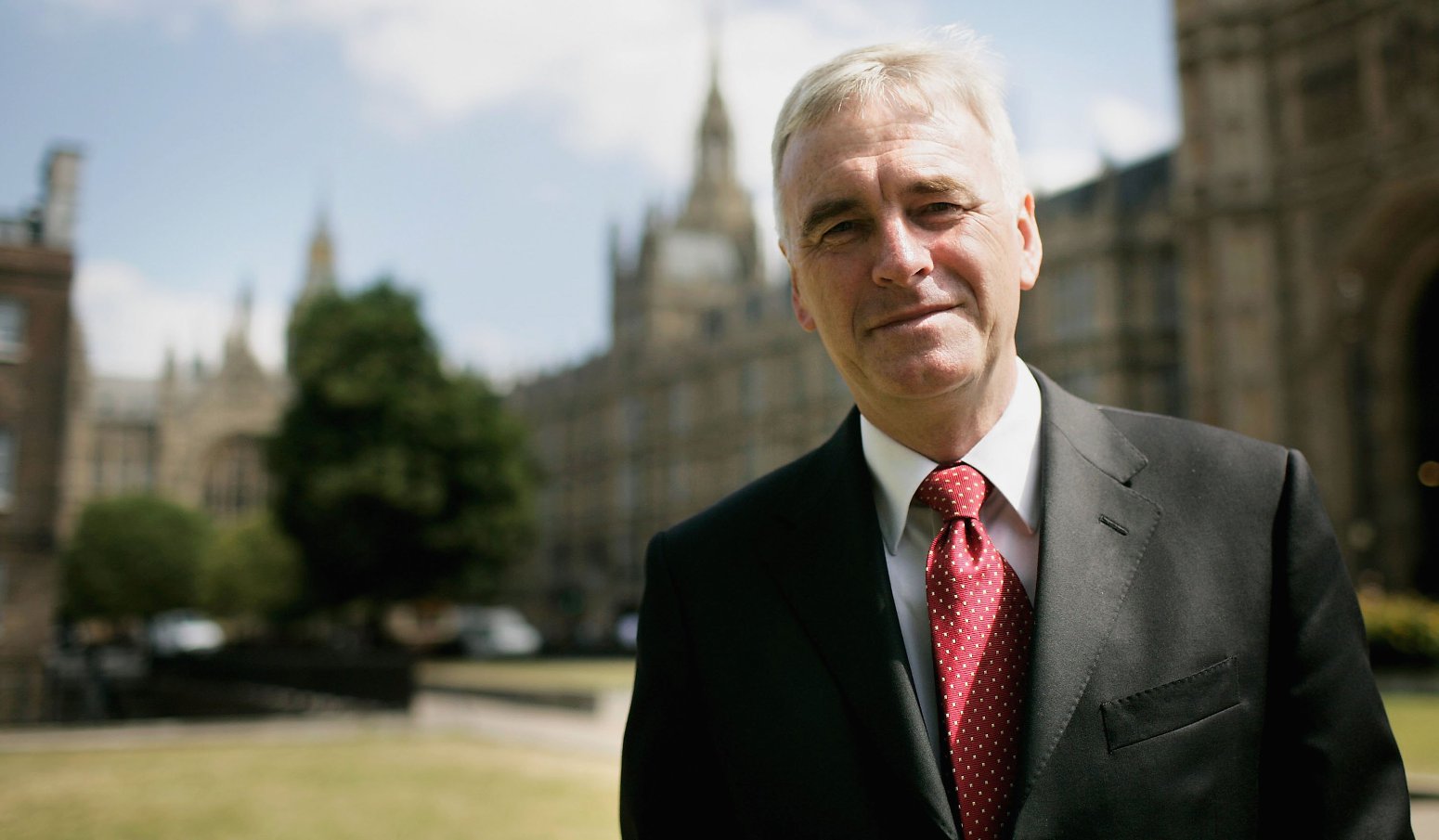
John McDonnell - Labour Party - Jeremy Corbyn

Labour’s loose cannon Shadow Chancellor is behaving like an economically illiterate, childish simpleton with no clue how to oppose effectively, let alone one day govern the country

The past month has not been pretty for those of us who hoped that Jeremy Corbyn’s election as leader of the Labour Party might help usher in the return of serious ideological debate to British politics.

Jeremy Corbyn has scored just one significant victory so far: his first outing at Prime Minister’s Questions, where the opposition leader’s measured tone and clever decision to raise questions submitted by the general public succeeded in changing the tone of the session – and for the better.

But that one bright spot aside, it has been utterly miserable – unforced error following self-inflicted wound, compounded by acts of astonishing political naivety. On the rare days when the newspaper front pages have not carried stories about Labour Party splits and internal warfare, the newly energised Hard Left supporters have stolen the show with their venomous spitting, their rape threats and their incessant chants of “Tory Scum!”

And now Labour’s Shadow Chancellor, John McDonnell, has succeeded in undoing the parliamentary party’s only truly coherent and sensible position, for reasons which seem to change by the hour. In his infinite wisdom, John McDonnell decided to reverse Labour’s policy of following the Fiscal Charter – the commitment set by George Osborne to run a budget surplus during normal economic times – having announced it only two weeks ago at Labour Party conference.

Continue reading

The Only Thing Worse Than Prime Minister Jeremy Corbyn Would Be A Military Coup Removing Him

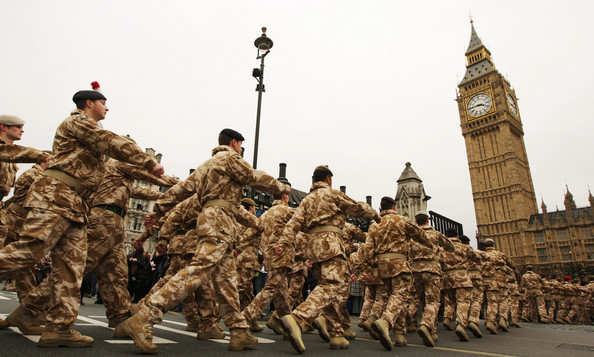
Troops Westminster Parliament

The Armed Forces deserve our strong support in the face of ongoing budget cuts and the depletion of their capabilities, but we must never tolerate the interference of arrogant generals in our democracy

Jeremy Corbyn’s socialist policies, well-intentioned though some of them are, would bring Britain to ruin so quickly that the damage would quickly become irreparable. But does that give military leaders the right to openly muse about destabilising a hypothetical Corbyn government, or launching their own Very British Coup?

Apparently so, according to comments made to the Sunday Times by a senior serving Army general, and widely reported in the press:

The senior serving general, speaking anonymously to the Sunday Times, said Mr Corbyn’s victory has been greeted with ‘wholesale dismay’ in the army.

He added: ‘There would be mass resignations at all levels and you would face the very real prospect of an event which would effectively be a mutiny.

‘Feelings are running very high within the armed forces. You would see a major break in convention with senior generals directly and publicly challenging Corbyn over vital important policy decisions such as Trident, pulling out of Nato and any plans to emasculate and shrink the size of the armed forces.

‘The Army just wouldn’t stand for it. The general staff would not allow a prime minister to jeopardise the security of this country and I think people would use whatever means possible, fair or foul to prevent that. You can’t put a maverick in charge of a country’s security.’

Continue reading

The Moral Case For Conservatism

Conservatism - Moral Case 3

In the Age of Corbyn, conservatives must be unafraid to promote and defend their ideas in clear moral terms

Who dares to make the moral case for conservatism?

The parties of the political Left shamelessly portray themselves as virtuous warriors in the titanic struggle between altruistic socialism and selfish conservatism, and are adept at debating political issues using the language of morality and “social justice”. It comes naturally, never sounding forced or contrived – websites like the Huffington Post, Left Foot Forward and LabourList are full of earnest articles penned by young writers who take for granted that theirs is the only legitimate moral perspective on the world.

Not so conservatives. We conservatives have tended to shy away from the moral discussion, afraid to set out our strongly-held beliefs in moral terms and preferring to focus on dry and often negative arguments about the risks posed by the Left. But by debating the issues on the Left’s terms and focusing on pragmatism above all else, we have largely ceded the moral high ground to the Left.

This did not matter so much when Ed Miliband, a thoroughly uninspiring centrist, was in charge of the Labour Party. But in the new age of Jeremy Corbyn – when the Labour Party is on the brink of re-adopting genuinely left-wing policies – it is disturbing that Corbyn’s ideas are given the weight of moral imperative while right-wing rebuttals too often sound technocratic and uninspiring.

Continue reading

Jeremy Corbyn Capitulates On The EU, Betraying Left Wing Eurosceptics

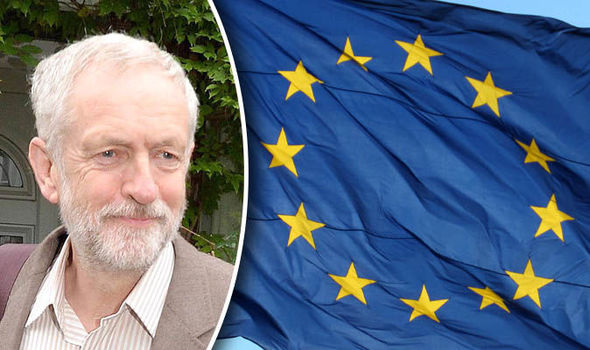
Jeremy Corbyn - EU - European Union - Brexit - EU Referendum

Is Jeremy Corbyn’s capitulation on Europe a sign of things to come?

We all know that Jeremy Corbyn is a eurosceptic at heart. He voted for Britain to leave the European Community in the 1975 referendum for precisely the same reason he remains sceptical of it now – Corbyn recognises that remote and anti-democratic institutions in Brussels and Strasbourg make it impossible for Britain to pursue her own sovereign policies.

Of course, in Corbyn’s case, the EU stands in the way of creating a true socialist state, a People’s State of Great Britain with levels of regulation, social legislation and economic protectionism that even Brussels rightly rejects. Corbyn’s euroscepticism is thus very different from a conservative or libertarian’s euroscepticism, but it still comes down to sovereignty at the end of the day – whether Britain should be free to pursue her own interests, or subordinate our national interest to the “greater good” of European unity and harmonisation.

Since the general election and the summer escalation of the Greek economic crisis, there has been an encouraging increase in left-wing euroscepticism, with prominent thinkers and voices finally starting to accept that the EU might not have the interests of all its individual member states at heart. It has been encouraging to watch these green shoots of euroscepticism grow on the Left, as more people came to realise that this anti-democratic anachronism from the 1950s is perhaps not the solution to the challenges of the twenty-first century.

But all of this welcome progress came to a screeching halt yesterday when Jeremy Corbyn announced an abject and humiliating climbdown in his eurosceptic stance, no doubt forced by self-entitled members of his restive shadow cabinet:

Continue reading