Tracey Crouch, Tax Credits And The Unravelling Of The Left Wing Mind

Tracey Crouch MP

When even Tracey Crouch’s sympathetic  words on tax credits provoke left-wing fury, there is no hope for real welfare reform in Britain. And no hope for the Labour Party, either

Had Conservative Sports Minister Tracey Crouch known about the outrage that would be whipped up by her interview in The Spectator before she gave it, she would quite possibly have chosen to go without the glowing portrait by Isabel Hardman in order to avoid the deluge of left-wing bile which immediately followed.

Unfortunately for Crouch, there is no telling which harmless phrase or action will send the modern British Left into a full-on social media jihad, and so she has had to spend the better part of today apologising for offending the Poor and Vulnerable.

Here is the part of Crouch’s Spectator interview with Isabel Hardman that caused so much left-wing outrage:

But given Crouch knows what it means to struggle to make ends meet, isn’t she worried about the cuts to tax credits that will hit families not unlike the one she grew up in? She’s happy to defend these controversial reforms that have agitated so many of her colleagues. ‘I think it’s about communication,’ she says, adding:

‘We will be discussing this, and I’m sure that DWP are looking at all of these issues, in great detail but I think at the end of the day one of the kindest things that we can do is try to help people to support themselves and work around their finances: some of my most heartbreaking cases are those that come to me saying that they are struggling and then you go through with them their expenditure and income – I’m not generalising at all, I’m talking about some very individual cases – and actually they just haven’t realised some of the savings that they need to make themselves, you know it can be… things like paid subscriptions to TVs and you just sit there and you think you have to sometimes go without if you are going to have people make ends meet.’

Fairly innocuous stuff, no? Just look at all of the caveats, provisos and exemptions in Crouch’s words:

“I’m not generalising at all”

“I’m talking about individual cases”

“Some of my most heartbreaking cases”

“One of the kindest things we can do”

There’s no reasonable way that you can read Tracey Crouch’s words and come away thinking that here is some callous, unfeeling elitist who thinks that people are poor through their own fault. There just isn’t. Tracey Crouch is hardly some monacle-squinting, golden pocketwatch-twirling Monopoly man, looking down on the working poor from a lofty aristocratic perch and finding them wanting.

And yet that’s exactly how her interview is being spun by the perpetually outraged Left. The Daily Mail provides a good sampling of the preening, self-righteous virtue signalling which followed Crouch’s interview. First Labour pile on:

Shadow Treasury minister Rebecca Long-Bailey said: ‘Another day and yet more evidence of out of touch Tory MPs insulting working people in low pay in what has been a further torturous week for George Osborne on tax credits.

‘It’s outrageous for a serving minister to claim that working families simply need to ‘go without’ in order to make ends meet. Losing £1,300 a year isn’t about cutting back on luxuries, it’s about families being able to pay the bills.’ 

And then come the Lib Dems, twisting the knife:

Liberal Democrat president Sal Brinton said: ‘This is hypocrisy at its worst. For a Tracey Crouch, someone on a ministerial salary, to turn around to the people who are going to be hit by her Government’s heartless cuts to tax credits and tell them it’s now their fault for not budgeting properly shows just how utterly out of touch the Tories are.’

I re-emphasize: Tracey Crouch was talking specifically about poor budgeting decisions made by certain individual constituents, emphasising multiple times that she was not generalising from the examples that she gave. And yet still we are treated to this hand-wringing mock horror from the Left, as though the Sports Minister had called for all tax credit recipients to be sent to the workhouse.

When the entitlement culture runs so deep that a government minister who grew up relatively poor cannot give true personal testimony about the importance of budgeting, or cite real-life examples of those struggling on low incomes who had not considered every option for reducing their outgoings, what hope can there possibly be for meaningful welfare reform?

What chance can there ever be of lifting people out of the benefit trap, into entry level employment and then onward and upward in self-sustaining careers when as honest and humble an MP as Tracey Crouch cannot even make a factual statement about her constituent cases without being vilified by left-wing activists?

Unfortunately, the reality of modern Britain is that too many people work hard in very low-paying jobs which are only financially viable when topped up by government tax credits. Gordon Brown can splutter and roar all he likes about the supposed virtues of his benefits brainchild, but the cold hard reality is that tax credits promote a form of welfare dependency.

Yes, it’s more noble form of dependency because the recipient is working – often very hard – for their low wages. But dependency means coming to rely on something day-to-day in order to maintain a certain standard of living. People rage against the Evil Tories for daring to consider tax credit changes in their effort to restore fiscal sanity to Britain, but have no words of condemnation for the moralising New Labour government who made millions more people dependent on welfare in the first place.

When I grew up poor in Essex, we didn’t have a Sky TV subscription. We didn’t even have a colour television until I reached secondary school in the 1990s – I watched Neighbours and Newsround in black and white. These things were not the essentials of life, much as I would have loved them, and so we went without.

Fast forward to 2015 and a Netflix subscription is no more necessary now than an expensive Sky subscription was in the early nineties. So why, exactly, was Tracey Crouch wrong to call attention to cases where those on low incomes had not considered cutting down on unnecessary expenditure?

As Julia Hartley-Brewer notes in the Telegraph:

In reality, the only people who are out of touch with how ordinary people live are Labour MPs like Rebecca Long-Bailey, who appear to think that Sky TV is some kind of inalienable human right to be funded out of taxpayers’ hard-earned cash.

Everyone has to make choices about what they can and can’t afford to spend their money on. Tracey Crouch was simply pointing out what every ordinary family in Britain knows: you have to cut your cloth according to your means.

But you can’t say that any more, according to the Left. To acknowledge the basic economic truth that poor people cannot purchase unlimited luxury goods is grossly offensive – not to the millions of low paid people who already strive to live within their means, but rather to those who do not, and the Labour politicians who cheer for their “right” to never have to collide with fiscal reality.

The government’s approach to tax credits is flawed, and considering other areas of continued state profligacy (universal pensioner benefits, for example) there is no great reason why tax credit recipients must swallow such a harsh dose of George Osborne’s fiscal medicine upfront while others slip by unchallenged. And Labour might have a realistic chance at forcing an important, beneficial concession from the Chancellor on this topic, if only they could stop the bickering and infighting long enough to organise themselves.

But when Labour MPs charge mindlessly into battle against the Conservatives (especially a self made Tory Minister like Tracey Crouch) in defence of the Universal Human Right to subscription TV, of all stupid things, they make no serious point, they win no new allies, and they help precisely no one.

But then that’s the Labour Party and the modern British Left in a nutshell. Noisily hating the Tories and whining about fairness but not doing, saying, thinking or proposing a damn thing to hold the current government to account or make anyone’s lives permanently better.

Tracey Crouch - Sports Minister

Agree with this article? Violently disagree? Scroll down to leave a comment.

Follow Semi-Partisan Politics on TwitterFacebook and Medium.

Chinese State Visit: This Fawning Spectacle Is No Nixon In China Moment

https://www.youtube.com/watch?v=elUoGdPOcAk

Richard Nixon and Henry Kissinger are hardly role models. But unlike David Cameron and George Osborne, at least they had the self-respect to meet the Chinese leader on equal terms

Iain Martin thinks that Chinese President Xi Jinping’s state visit to Britain marks the beginning of the downfall of George Osborne, who has assiduously courted and flattered his way back into the Chinese government’s good graces:

Of course we have to trade with China, and it is going to be especially vital for the City of London, but do we have to be quite so shameless and pathetic about it? Osborne is the architect of the UK’s China policy, and has made sure that everyone knows it. Now, the optics of this state visit, as viewed on television news, look increasingly like a national humiliation.

It’s hard to disagree with that assessment, and to feel a mounting sense of shame at Britain’s determinedly mercantilist foreign policy. It may reap financial and political rewards, but craven spectacles such as this gravely undermine Britain’s role as a world leader.

It is all the more galling because it is so unnecessary. No disrespect intended to Spain’s westward neighbour, but Britain is not Portugal. We are not, thankfully, some middle-ranking economic and military power. Our armed forces may be worryingly pared back and our workforce’s productivity frustratingly low, but Britain is still one of the few indispensable nations. Though we have been introspective and full of self doubt of late, our fundamentals – world leading firms, popular culture, arts and music, legal system and democracy – are among the most popular and most envied in the world.

None of this is to say that we should not have welcomed Xi Jinping to Britain – we are right to do so. It is absolutely in our interests to forge and maintain good diplomatic relations with China. But we should not allow ourselves to be seduced or intimidated by China’s new economic and geopolitical clout. Continued Chinese growth – and the ongoing stability of their autocratic, dictatorial regime – depends on maintaining friendly relationships with key countries like Britain. Neither country can much afford to freeze the other out for the long term.

The problem is not the Chinese – it’s us. It is the attitude of some of our politicians and their friends in the media, who seem too eager to buy into the pessimistic narrative of British decline and waning relevance. Listening to some of them, one would almost think that we were back in the dark, pre-Thatcher days of the 1970s all over again.

Back in 1972, when Britain truly was floundering in the economic doldrums, riven by industrial strife and a failed post-war consensus while the United States grappled with problems of their own, President Richard Nixon travelled to Beijing to “reset” America’s relations with China in far more tense and unpredictable circumstances than those which bring Xi Jinping to London this week.

As a general rule, it’s best to avoid the examples set by Richard Nixon and Henry Kissinger. But on this one particular  occasion, our political and media class might take a useful lesson in terms of how they conduct themselves.

Richard Nixon - Zhou Enlai - Nixon In China

Xi Jinping - State Visit - Britain

Music: “Cheers” chorus from the opera “Nixon in China” by John Adams

Agree with this article? Violently disagree? Scroll down to leave a comment.

Follow Semi-Partisan Politics on TwitterFacebook and Medium.

Stop Worshipping ‘Centrist’ Voters – They Are Responsible For Britain’s Woes

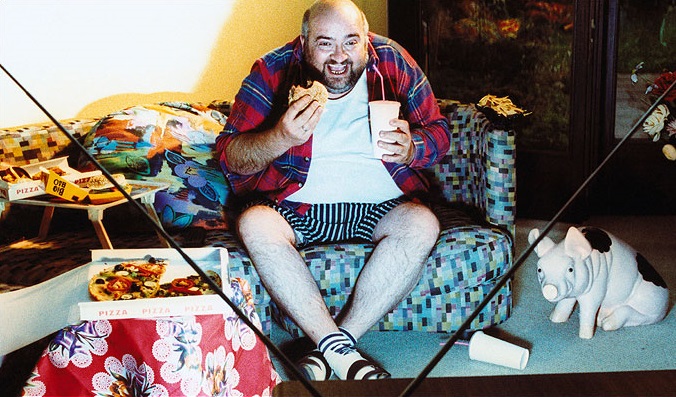
Swing Voters - Couch Potato - 2

First published at the Conservatives for Liberty blog

What exactly constitutes the political centre, anyway? Is it even a real thing? And why are we so in thrall to something so vague and ill-defined?

The political centre ground: people talk about it all the time. It is meant to represent the silent majority, that great conclave of wise and sage-like citizens who – unlike us hotheated partisan folk with our strong beliefs and awkward ideals – remain serenely above the political fray, calmly and methodically weighing competing policies against each another before arriving at their pragmatic, irreproachable voting decision on polling day.

Every British political party leader since Thatcher left office has been in hot pursuit of the political centre ground, happily throwing established party orthodoxy and revolutionary thinking alike out the window, preferring to court the good opinion of people who took a good look at Labour’s managed decline of the 1970s and the Tory individualism of the 1980s, and, Goldilocks-like, decided that they prefer something half way between the two, thank you very much.

But who are these political centrists? Do they actually exist, or are they an artificially created demographic, an amorphous and shifting blob of people whom the pollsters have not yet found a better way to categorise?

It’s a relevant question, because you can be assured that British politics for the next five years – or at least, the narrative around politics constructed by the media – will be all about the political centre, and which party is doing the better job of wooing it approaching the 2020 general election.

Continue reading

The Great Left Wing Race Card Scam

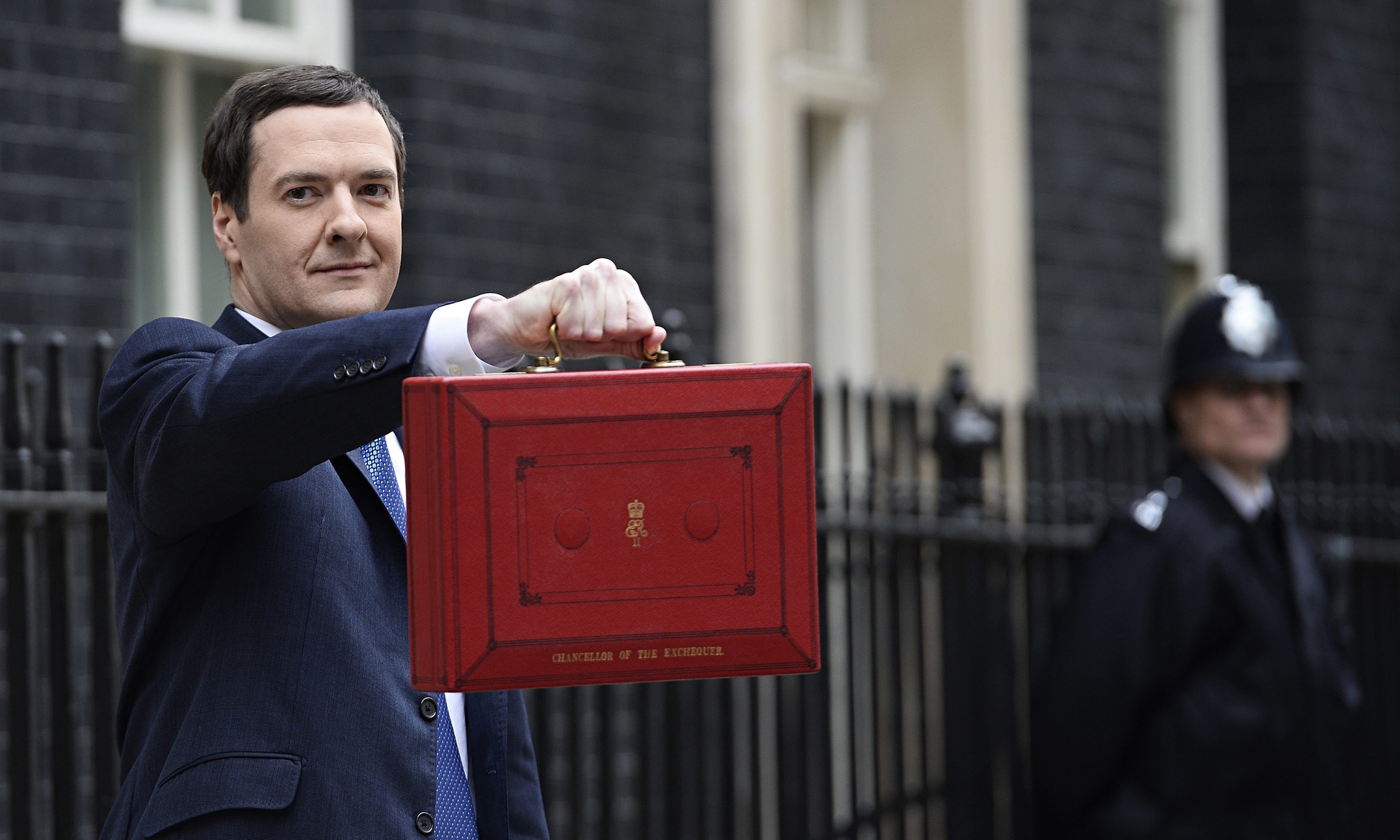
George Osborne with despatch box

The cynical, virtue-signalling Left think nothing of abusing the term ‘racism’, using it as a blunt cudgel to bash right wing policies when reasoned debate is too much effort. In this hysterical universe, even the Chancellor’s Budget can be deemed ‘racist’

Just so we are all on the same page, here is the dictionary definition of racism:

  • the belief that all members of each race possess characteristics, abilities, or qualities specific to that race, especially so as to distinguish it as inferior or superior to another race or races.
  • prejudice, discrimination, or antagonism directed against someone of a different race based on the belief that one’s own race is superior.

There’s not too much ambiguity here, it should be fairly simple to understand. But not for Varinder Singh, Left Foot Forward pundit and secretary to an unnamed Member of Parliament.

Singh is possessed of a racism detector whose needle jerks from “Just about OK” to “Ku Klux Klan” if affirmative action isn’t baked into absolutely every government policy working its way through parliament. And the latest target of his ire is George Osborne’s 2015 summer Budget, which he casually labels “racist” for failing to sufficiently patronise and condescend to Britain’s ethnic minorities.

In order to arrive at this surprising conclusion, Singh relies on a report by The Runnymede Trust, which deduced that ethnic minorities will be disproportionately worse off as a result of George Osborne’s fiscal tinkering. And then he changes the definition of the word “racism” to mean “policies that fail to actively promote my own personal agenda”.

Continue reading

Our Long Term Economic Madness

George Osborne - Budget 2015 - Long Term Economic Plan - Fiscal Conservatism - Balanced Budget


By Ben Kelly, blogger and editor of The Sceptic Isle.

In May, the Conservative Party portrayed the election as a choice between Tory competence and Labour chaos; Labour’s spending and borrowing compared to the Conservative “long term economic plan”. The electorate made their choice and the current government received a mandate to cut the budget deficit and fix the economy.

Britain is now purportedly on the path to economic sanity, but you can be forgiven for having some moments of doubt. In the year 2015, after nearly six years of “austerity”, we will still spend £70 billion over budget. Should we redefine what the word “austerity” means?

The economic madness really began when Gordon Brown and Ed Balls implemented their plans for a high tax, high spend, much enlarged state with a continental-style economy. As we know only too well, it grew completely out of control.

The current government has the opportunity to reshape the British state permanently, and when ideas are floated about “thinking the unthinkable” and slashing budgets by 40% there is a flicker of hope that they might grasp it with both hands. Sadly, there is too much evidence to the contrary to believe anything serious is really being done to end the public spending spree and return to a sensible, sustainable fiscal situation.

Continue reading