Left Wing Eurosceptics – An Endangered Species Flirting With Extinction

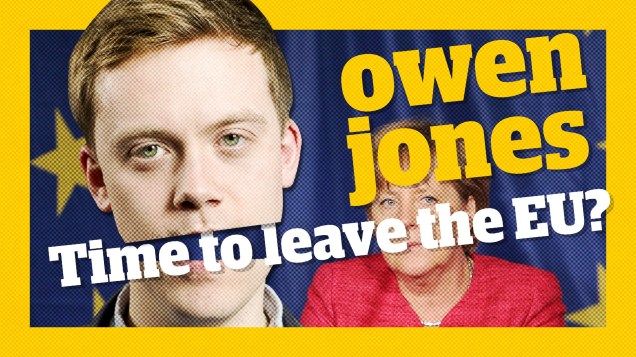
Owen Jones - The left must now campaign to leave the EU - Brexit

Many left-wing Remain supporters have no great love for the European Union, but nonetheless want Britain to remain subservient to Brussels as a means of inflicting left-wing policies on a reluctant Britain. And they call themselves champions of democracy!


“We must be clear about this: it does mean, if this is the idea, the end of Britain as an independent European state. I make no apology for repeating it. It means the end of a thousand years of history. You may say ‘Let it end’ but, my goodness, it is a decision that needs a little care and thought.”

– Hugh Gaitskell, speech to 1962 Labour Party Conference


Pete North, in a justifiably bitter tirade aimed at that group of British left-wingers who persist in stubbornly supporting the EU and campaigning for Remain against their better instincts, writes:

I don’t think I can win over leftists to the Brexit cause. They keep saying “If we leave the EU, the Tories might do stuff I don’t like” – which roughly translates as “I don’t want to live in a democracy where the government responds to the views and wishes of the public”. It also translates as “I am happy to deprive others of the right to choose because my politics are superior”. There’s not really much I can say to that. Traditionally, people like that are wearing uniforms and we shoot them rather than engage in polite discourse. What worries me is that if these people get their way, eventually they will be wearing uniforms and we will have to shoot at them.

Absolutely.

If you ever wanted proof of the British Left’s paper-thin commitment to democracy, you need only compare these two paragraphs from Owen Jones – one written when he was flirting with euroscepticism last year as the Greek euro crisis was at its peak, and the other shortly after David Cameron declared victory in his “renegotiation”.

First, Jones in Grexit mode:

Even outside the eurozone, our democracy is threatened. The Transatlantic Trade Investment Partnership (TTIP), typically negotiated by the EU in secret with corporate interests, threatens a race to the-bottom in environmental and other standards. Even more ominously, it would give large corporations the ability to sue elected governments to try to stop them introducing policies that supposedly hit their profit margins, whatever their democratic mandate. It would clear the way to not only expand the privatisation of our NHS, but make it irreversible too. Royal Mail may have been privatised by the Tories, but it was the EU that began the process by enforcing the liberalisation of the natural monopoly of postal services. Want to nationalise the railways? That means you have to not only overcome European commission rail directive 91/440/EEC, but potentially the proposed Fourth Railway Package too.

Other treaties and directives enforce free market policies based on privatisation and marketisation of our public services and utilities. David Cameron is now proposing a renegotiation that will strip away many of the remaining “good bits” of the EU, particularly opting out of employment protection rules. Yet he depends on the left to campaign for and support his new package, which will be to stay in an increasingly pro-corporate EU shorn of pro-worker trappings. Can we honestly endorse that?

And here he is last month, falling into line with the Remain crowd:

Last July, I suggested that the left should at least consider Brexit, not least because Cameron believed left-leaning voters were in the bag for an “in” vote, giving him little incentive to preserve the progressive elements of the EU. My view is now to stay in, but unite with those across the continent – like the former Greek finance minister Yanis Varoufakis’s new movement – who want a democratic EU run in the interests of working people.

[..] People like me can say: like you, I was sceptical. I’m no pro-EU ideologue, but a genuine floating voter. I understand your concerns. But I’ve come to the conclusion that we must remain in the EU, as a first step to the reform it so desperately needs.

In other words: democracy is a great and noble thing to be defended when it is delivering good old fashioned left-wing policies and high-taxing, high-spending governments. But when the people look like they might be about to vote for anything centrist or right-wing, the Left disown democracy at lightning speed, and embrace any and every procedural or bureaucratic obstacle which might thwart the people’s wishes.

Owen Jones is a smart cookie. He knows the true nature and purpose of the European Union, just as he knows that any “reform” or democratising of the EU is impossible because it would go against the very purpose of the organisation (the creation of a supranational and unaccountable layer of government above the nation state, freeing European leaders to make decisions and implement policies that their own electorates would never otherwise permit).

So when Owen Jones “saw the light” and came out in support of the Remain campaign, it wasn’t because he had suddenly found reason to hope that the EU can actually be reformed. No, it was purely and simply because cold hard political calculus told him that while the European Union may be a “neoliberal” dystopia for lefties, an independent Britain with conservative government would be far worse.

Jones changed his tune because he realises that a conservative government in an independent Britain might – shock horror – implement conservative policies desired by the voters, and the Left would have no means of undemocratically preventing it.

As a strategic piece of hard-headed and pragmatic realpolitik, you can’t fault the vanishing armies of left-wing euroscepticism for their tactical retreat. But as self-styled morally virtuous warriors for social justice and democracy, their hypocritical stance on Brexit stinks to high heaven.

 

Brexit - EU Flag

Agree with this article? Violently disagree? Scroll down to leave a comment.

Follow Semi-Partisan Politics on TwitterFacebook and Medium.

The Pro-EU Elites Have Not Even Considered The Case For Brexit

Britain in Europe Campaign

More people become eurosceptic with time and experience than come to love the EU. That should tell us a lot about who to listen to in this EU referendum debate

In his Telegraph column today, Charles Moore considers the  soft bigotry of the “swivel-eyed moderates” who instinctively support the Remain campaign for Britain to stay in the European Union without even considering the opposing arguments.

Moore writes:

I do not mean that they do not know a lot about the subject – many of them do. Nor that they are not genuinely concerned for Britain’s future – most of them are. I mean that most have not, for one single second, imagined that life outside the EU might be a viable, even preferable alternative to life within it, so they do not understand the case they are opposing.

This is a form of bigotry, and it is less common on the Leave side – not because the Outers are necessarily deeper people, but because they have lived under the dominance of the pro-EU order, and so have been forced to think hard about it.

The bigotry of successful people is stronger than that of uneducated ones, because their life stories tell them they know best. So they stop thinking and instead merely disdain those who disagree with them. Years ago, Mr Cameron famously derided Ukip as “swivel-eyed loons”. Such people exist, perhaps, but the present danger is much more from the swivel-eyed moderates, who so resolutely refuse to look at the way the world is going.

They also do not see how much they have failed. In the 21st century, the world order and financial systems dominated by the free West have been shaken more profoundly than at any time since 1945, and the people in charge do not know how to correct their own errors, or even admit them. The euro is a major part of this new world disorder, as is the effort to deepen the European Union in the wake of it.

There is a lot of truth in this argument.

Certainly everyone of my age (33) has grown up knowing nothing other than life inside an explicitly political European Union, with many of the same institutions – the Parliament, the Council – which exist today. Unlike those who voted to leave the European Community in 1975, people my age have no recollection of life in a sovereign country, and so have no frame of reference when considering Brexit. No wonder, then, that to many young people the thought of leaving something so seemingly rooted and permanent as the EU (though of course it is nothing of the kind) seems to be crazy.

There is much truth, too, in Charles Moore’s assertion that those of a pro-EU dispensation – particularly the wealthier professional and establishment types who tend to support the EU the strongest – have not been forced to think hard about the question. This is not a criticism of such people, for in many ways it is inevitable.

If you have grown up and prospered under the status quo, with Britain as a vassal state of a larger and ever-more tightly integrating political union, then it takes an extraordinary amount of curiosity, empathy or insight to come to any conclusion other than that the EU has been a resounding success on all counts. By contrast, if you are self-employed or work in a semi-skilled or unskilled job at the sharp end of globalisation, you are more likely to be negatively impacted not just by immigration, but by the inability of your vote to effect any kind of meaningful political change in Britain thanks to the cross-party pro-EU consensus.

As this blog recently noted when discussing the Christian case against the EU:

Too often – at least in Britain, with the media’s patronising and dismissive coverage of UKIP leading up to the European and general elections – we explain away these populist movements, or belittle their support base by suggesting that they are all economically left-behind losers or curtain-twitching village racists.

And it’s partly true, only not as an insult. If you are a well paid professional in rude financial health you can better afford to be a consumer rather than a thinking citizen. You can use your vote to signal your virtue (anyone but UKIP!) or advance your lazily thought out utopian daydreams, with little fear of the consequences. But those of our fellow citizens on the sharp edge of globalisation – those whose livelihoods are impacted by deindustrialisation, new technology, outsourcing and the information economy – tend to see things differently.

This doesn’t mean that we should adopt every nativist, protectionist policy that comes along – because barriers to trade are never the right answer. But it does mean that we should acknowledge that the eurosceptic parties of the Right and the Left are at least asking some important questions that the mainstream parties, trapped in their centrist consensus groupthink, have consistently failed to do.

I feel particularly qualified to talk about this, as growing up I was the most ardent European Union supporter and federalist imaginable. And not in an ignorant way – I had done the reading and acquainted myself with how the EU was structured and how it worked. I firmly believed that the age of the nation state was over, that patriotism was silly and gauche, and that our only hope of a prosperous future lay in dissolving ourselves into a greater European collective. Adopting the euro, creating an EU army – you name it, I believed in it.

I would look enviously across the Atlantic at the power and influence of the United States and, coveting the same, agitate for the European Union become an equally powerful actor on the world stage. Britain seemed small, parochial and redolent of the past. Surely, I thought, our future lies as part of something greater?

Euroscepticism - Eurosceptic - Word Cloud

And I persisted in this belief for some time, the arrogance of youth helping me to dismiss friends, family, experts and the vast majority of the general public who thought differently to me as being xenophobic Little Englanders who just didn’t know what was good for them.

Only when my appreciation for democracy and self-determination (and small-c conservatism) caught up with my authoritarian Utopianism did I realise that the accumulated wisdom of the British people might exceed my own, and that there may be good reasons to be sceptical of the European Union. And only when I came to realise the extent to which the EU is a creation of a small group of European intellectuals and political elites who thought that they knew best – and that the only way to bring about their creation was through stealth and subterfuge, never declaring the ultimate federal destination of travel – did I come to see how profoundly wrong it is.

The point is that I have been on a political journey. I held one set of beliefs and looked to one limited set of facts, and then I questioned those ideas, drew on a wider array of evidence and renounced my previous positions. As Charles Moore would put it, I grew up under the dominance of the pro-EU order, but then thought hard about it and changed my mind.

The pro-EU Remain campaign boasts very few people who have been on a similar journey but in reverse; who were once ardent eurosceptics but came to see the light and learn to love enforced European political union. And that’s because the pro-EU consensus is nothing but a haven for establishment groupthink and bias confirmation. Newcomers to the pro-EU cause such as the Conservative Party’s Sajid Javid and Rob Halfon have not been on an intellectual journey, but merely fell into line behind their party leadership. That’s what makes their “coming out” arguments so desperately unconvincing.

The uncomfortable truth for the pro-EU crowd and the Remain campaign is this: the more you learn about the European Union, its history, the way it came about and its ultimate direction of travel, the more likely you are to oppose it and want Britain to leave. When ignorance prevails and people believe that the EU is nothing more than a friendly club of countries trading and co-operating with one another to Save the Earth, the europhiles win. But when the drip-drip of facts and evidence begins to permeate the debate, people start questioning those pro-EU shibboleths and opposing our continued participation in this mid-century supra-national experiment.

Furthermore, it is those who think primarily with their wallets, as consumers first and foremost, who are most likely to be susceptible to the Remain campaign’s Project Fear and scaremongering tactics about the hysterically hyped “costs” of leaving the European Union, while those who think as engaged citizens and global stakeholders who are most likely to question the European project.

Charles Moore is quite right: there is indeed an army of swivel-eyed ideologues in this EU referendum debate. And though they would hate to admit it, it is those on the Remain side who are most likely to be impermeable to facts, and who are least likely to have ever held a different view on the EU and been on an intellectual journey to arrive at their present position.

And as a rule of thumb, it is generally wisest to listen to those who can show evidence of having thought deeply about an issue and been persuaded by the steady accumulation of evidence to revise their thinking, rather than those who were born with their deeply-engrained love of the European Union pre-programmed in their brains.


Brexit - EU Flag

Agree with this article? Violently disagree? Scroll down to leave a comment.

Follow Semi-Partisan Politics on TwitterFacebook and Medium.

Tony Benn And The Left Wing Case For Brexit

What is the left wing case for Brexit? The same as everyone else’s case: democracy and self-determination

In this response to a student’s question at the Oxford Union, the late Tony Benn makes a calm but passionate argument for Brexit which anybody of any political leaning should be able to embrace:

When I saw how the European Union was developing, it was very obvious that what they had in mind was not democratic. I mean, in Britain you vote for the government and therefore the government has to listen to you, and if you don’t like it you can change it. But in Europe all the key positions are appointed, not elected – the Commission, for example. All appointed, not one of them elected.

[..] And my view about the European Union has always been not that I am hostile to foreigners, but that I am in favour of democracy. And I think out of this story we have to find an answer, because I certainly don’t want to live in hostility to the European Union but I think they are building an empire there and they want us to be a part of that empire, and I don’t want that.

Typically, the left-wing argument against the EU and for Brexit consists of lamentations that EU rules prevent the government from renationalising industries, erecting protectionist barriers to trade and entry, or otherwise meddling in the free market. Jeremy Corbyn would be busy making such arguments right now, were it not for his colossal failure of political courage in rolling over to the demands of the die-hard pro-Europeans the moment he became Labour Leader.

Such arguments are all well and good, if you are one of the small minority of the population for whom the British government’s current inability to renationalise the energy sector keeps you awake at night in a cold fury. But such people are few and far between.

When asked his own thoughts about the European Union, Tony Benn did not do what most contemporary Labour Party personalities do, and talk about the virtues of undemocratically imposing more stringent social and employment laws on Britain (an irritatingly less social-democratic country than our continental friends). Because Tony Benn understood that the left-wing case against the European Union was about democracy, democracy and more democracy.

Tony Benn understood that some things are more important than whether Britain might happen to move in a slightly more left or right wing direction as a short and medium term consequence of Brexit. He understood that self-determination and democracy – particularly the ability for the citizenry to remove people from office – is the first and most important consideration in determining the democratic health of a country.

And Benn understood that living in a democracy where his own side would sometimes win and sometimes lose was far preferable to living in a dictatorship where his own preferred policies were implemented through coercion with no public redress.

Jeremy Corbyn also seemed to understand these things, until he most unexpectedly ascended to the leadership of the Labour Party, which loves the European Union with a blinkered fierceness with which there can be no reasoning.

Indeed, there are now so few high profile left-wing eurosceptics that the bulk of the heavy lifting in this EU referendum will inevitably be done by those on the centre-right. Their challenge – our challenge – will be to make a positive case for Brexit as a desirable thing in and of itself, and not as part of a partisan political agenda.


Jeremy Corbyn - European Union - EU Referendum - Capitulation

Agree with this article? Violently disagree? Scroll down to leave a comment.

Follow Semi-Partisan Politics on TwitterFacebook and Medium.

Will The EU Referendum Be Decided By The “Shy Eurosceptic” Vote?

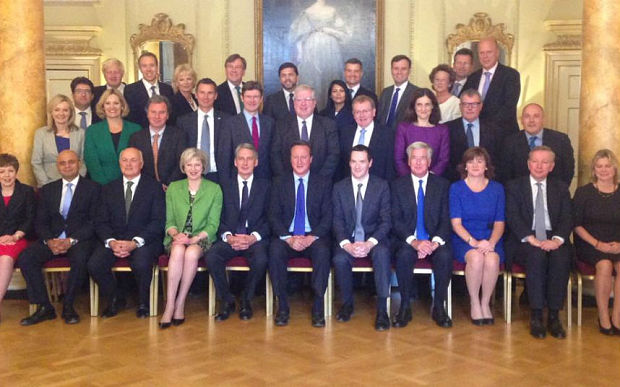
David Cameron - Conservatives - Cabinet

Is there a shy eurosceptic factor at play in the EU referendum?

What happened to all of the supposedly staunchly eurosceptic Conservative cabinet ministers – people like Sajid Javid and Rob Halfon – when it came time to nail their colours to the mast and declare their desire to leave the European Union?

Charles Moore has a theory:

Obviously one factor is that Tory MPs have found it convenient in recent years to adopt Eurosceptic protective colouring in their constituencies. But I think there is something deeper. The fear factor which may well win the referendum for Mr Cameron actually operates even more strongly on the elites than on the mass of the population. People who hold important jobs are much more worried than normal citizens about being considered ‘off the wall’. If they opt for ‘leave’, they will be interrogated fiercely by their peers about their decision. If they declare for ‘remain’, they will be left in peace. The EU is the biggest elite orthodoxy of the western world since we gave up our belief in imperialism. Most people within elites find it too tiring and dangerous to question the orthodoxy under which they have risen to the top.

Now, I have no time at all for those craven Conservative MPs who built their precious reputations and careers on a foundation of what turns out to be utterly fake euroscepticism. But neither can I deny the very real, socially oppressive aura that surrounds euroscepticism in some quarters, whereby it becomes very difficult for people to publicly express their eurosceptic opinions in certain context and company. And if one cannot excuse the shameless U-turning when it is committed by our elected representatives, we should perhaps be more understanding when ordinary members of the public falter.

So what are we dealing with here? It’s the same factor which makes otherwise confident, extroverted people drop their voices to a hushed and conspiratorial whisper when discussing their conservative political leanings in an elite (or creative/artistic) workplace, or makes a school teacher think twice before openly contradicting the biased, anti-Tory ranting of their colleagues.

But it is more than simply avoiding hassle. For many people, not only the elites, it is also a case of seeking to avoid very tangible real-world consequences of being known to hold unfashionable opinions – the threat of public ridicule, professional censure or even job loss, simply for committing thought-crime.

Maybe nobody will care if you fail to join in the joking with your colleagues when they laugh about Nigel Farage or mock those knuckle-dragging Little Englanders who want to pull up the drawbridge on Fortress Britain. But maybe they will notice, and maybe it might lead to an awkward question: “Wait a minute, you can’t seriously support those racists, can you? You’re having a laugh, right?” Far easier to just go along with the crowd. Why risk antagonising the boss, or the people you sit next to every day? Why risk that upcoming promotion? Better just stay silent.

And of course, this is exactly what happened last May. Ed Miliband and the Labour Party convinced themselves that they were heading for victory in the general election. They really, sincerely believed it (read Dan Hodges’ book “One Minute To Ten” to get a sense of just how fervently they believed it). But it was all nonsense, a great exercise in self-deception made possible by the fact that Labour activists had created such a stultifying aura of sanctimonious left-wingery and screeching Tory-hatred that anyone with a remotely conservative political leaning simply dropped out of the conversation and went silent. Silent, that is, until May 7 – at which time they marched to their polling station and delivered David Cameron back to 10 Downing Street.

Is there a chance that history might repeat itself now it comes to the EU referendum? It is certainly a possibility. There are many social settings – mostly where the social, academic or artistic elites live and work – where expressing a eurosceptic opinion or declaring one’s support for Brexit is tantamount to reading aloud from Mein Kampf in the town square. But conversely, there are no equivalent places or scenarios where one might reasonably expect to be actively persecuted for expressing pro-EU sentiments.

That alone speaks volumes. And while it may not excuse the despicable behaviour of some Conservative cabinet ministers who chose career advancement over eurosceptic principle, it would explain the reluctance of many people from certain professions or social groups to openly declare their euroscepticism.

As to how much of a chilling effect the establishment’s instinctive pro-EU instincts have on the polling and the wider referendum debate, we will likely not know until the votes are counted.


Scientists for EU

Universities for Europe - 2

Agree with this article? Violently disagree? Scroll down to leave a comment.

Follow Semi-Partisan Politics on TwitterFacebook and Medium.

Philip Hammond’s Weak Diplomacy And Our Friends In The European Union

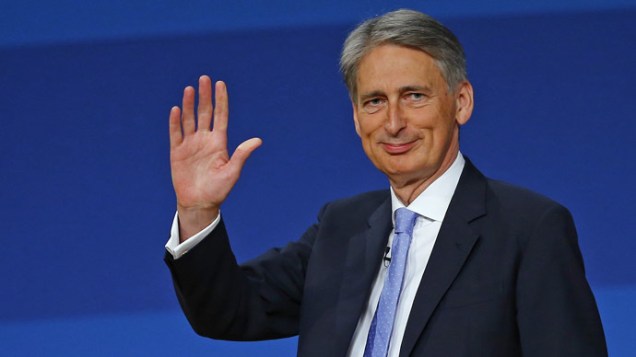
Philip Hammond - European Union - Remain - EU Referendum - 2

If the Foreign Secretary sincerely believes that other member states would punish us for leaving the European Union, he hasn’t been doing his job cultivating strong diplomatic relationships and standing up for Britain

Alan Johnson and Philip Hammond both clearly attend the same branch meeting of the Dewy-Eyed European Union Cheerleaders Association, because both politicians – one Labour and one Conservative – are both now peddling the same pathetic line to the media, namely the suggestion that Britain amicably leaving the European Union would be like “sticking two fingers up” at our allies and inviting some form of deserved retribution in return.

Alan Johnson writes in MailOnline:

In terms of our own borders, Britain is actually in the best possible position – in the EU, signed up to the Dublin Accord but outside Schengen.

Thus economic migrants have to register in the EU country where they first arrive (thousands have been deported from Britain in the past 20 years for breaching this requirement), and a visa is still required for anyone outside the EU to enter this country.

Furthermore, it was because Britain was part of the EU that David Blunkett was able to persuade Nicolas Sarkozy to, in effect, move Britain’s border from Dover to Calais.

If Britain put two fingers up to the 27 other nations in the EU the first reaction of the French would undoubtedly be to end that arrangement, thereby ending the security barrier that that arrangement offers us.

This was tremulous, scaremongering nonsense when the same idea was advanced by Conservative MP Mark Field, and it is tremulous, scaremongering nonsense when it comes out of the mouth of Alan Johnson, too, having been comprehensively refuted and debunked by many people, not least on this very blog.

Meanwhile, Philip Hammond – who one might have expected to know and conduct himself better, given the fact that he currently serves as Foreign Secretary – echoed the same cheap catchphrase to MPs in Parliament.

The Telegraph reports:

The Foreign Secretary has told MPs a leave vote the EU would be seen as “two fingers to European leaders and we can expect the same in return.”

He says that if Britain votes to leave the EU “the mood of goodwill towards Britain will evaporate in an instant”.

This is essentially an admission of incompetence by the Foreign Secretary. What Hammond is suggesting to us with this cheap attempt at scaremongering is that he has so mismanaged our relationships with key European allies, and so misled them as to the nature of British public sentiment toward the EU and the consequent possibility of Brexit, that our perfectly amicable and controlled departure would come as a complete shock to them.

Furthermore, if Hammond’s words are to be taken seriously, it means that he has presided over the worst diplomatic failure in recent British history – namely the failure of a declared nuclear power, as well as a leading military, economic and cultural power, to command such respect on the world stage as might survive us leaving a supranational arrangement which we no longer believe works in our favour. Is that really what the Foreign Secretary wants to tell the British people?

Europhiles and Remainers can’t decide whether Brussels is friend or frenemy; whether the other EU member states are dear friends who would be sorry to see us go, or bitter rivals who would seek to punish Britain for rejecting their vision of a politically unified Europe. And it is about time they made up their minds.

As this blog recently pointed out:

Of course, the cynical pro-EU “Remain” campaign tries to have it both ways. When it suits them in their campaigning, the EU is a happy-go-lucky club of like-minded countries who frolic and trade with one another. But when that hopelessly naive, childlike view of Brussels is questioned by eurosceptics and Brexiteers, out comes the other portrait of a snarling, vicious EU which will ruthlessly destroy Britain if we continue to drag our feet or think about leaving.

Good cop, bad cop. Europhiles will normally try the “good cop” routine first when engaging with undecided voters. But this tends to come unstuck as soon as eurosceptics and Brexiteers counter with their own positive vision of Britain restored as a sovereign democracy playing a full and engaged role in global trade and world affairs.

Since the pro-EU crowd are unable to share their own repugnant vision of a politically integrated Europe for fear of scaring people away, they are instead forced to go negative, hence the rapid and disconcerting pivot from “See how nice the European Union is, and all the wonderful things it does for us” to “If we try to leave the EU, they’ll rough us up”. Truly, their position is less a serious argument about governance and diplomacy, and more the tortured thought process of a battered spouse trying to rationalise staying in an abusive relationship.

In many ways, it is unsurprising that there is so much confusion over what would likely happen in the event that Britain declared our intention to leave the EU following a “Leave” vote in the referendum. Few journalists have taken the time to assimilate the information and share it with their readers, which then positively begs unscrupulous Remainers like Philip Hammond and Alan Johnson to exploit the public’s fear and ignorance.

The excellent Brexit blogger Ben Kelly lays the groundwork – and demolishes a lot of misconceptions on both sides of the debate – in this piece at Conservatives for Liberty, well worth quoting at length:

Negotiations undertaken after citation of the withdrawal clause of the Lisbon Treaty will be a matter of practical politics. Although the application of EU and international law is not a settled issue, especially in this as yet untested area, the notion that the EU would refuse to cooperate, or even seek to “punish” the UK in the event of secession – thereby clearly violating EU law as well as failing to comply with international law – is beyond the realm of realistic politics.

Although Article 50 negotiations conducted under a framework of treaty law will be first and foremost a political matter, it is clear that lawyers will be consulted regarding the laws application. What we can be certain of is that – as Sir David Edward, the first British Judge of the European Court, has said – EU law requires all parties to negotiate in good faith and in a spirit of cooperation.

Article 50 requires the EU to conclude an agreement with the seceding state, “taking account of the framework for its future relationship with the Union“. Notably, Articles 3,4 8 and 21 of the Treaty on European Union require the EU to “contribute to … free and fair trade” and to “work for a high degree of cooperation in all fields of international relations, in order to … encourage the integration of all countries into the world economy, including through the progressive abolition of restrictions on international trade” and to adhere to the “principle of sincere cooperation […] in full mutual respect” and “assist each other in carrying out tasks which flow from the Treaties.”

Moreover, the Vienna Convention of the Law of Treaties obligates negotiators to act in “good faith” and “good faith” itself is an underlying principle of international law, and certainly a principle of WTO law.

The EU negotiators must therefore endeavour to reduce trade restrictions in accordance with treaty provisions and, crucially, their actions are justiciable. If EU negotiators were to veer away from treaty provisions, or indeed if any other EU member sought to impose sanctions or restrict trade, the UK could opt to lodge a formal complaint with the European Court of Justice (ECJ), and block the discriminatory action.

It must be remembered that during the Article 50 negotiations the UK remains a member of the EU and enjoys the full rights and privileges of membership. The Commission itself may be legally obliged to step in and begin infringement proceedings against the offending member state.

It may amuse lazy political commentators to paint the hypothetical future Brexit negotiations as some kind of zero-sum game, trial of strength or fiendishly complex case study in Game Theory, but this would simply not be the case. The truth would be altogether more boring and pragmatic than the europhile naysayers would have us believe, with both sides obligated to negotiate with one another in good faith.

Kelly is right to eschew the tub-thumping “they need us more than we need them!” kind of language as he builds his case, but nonetheless it is worth pointing out that in the event of Brexit negotiations being initiated, all national governments would come under huge and sustained pressure by their local business leaders and lobbyists to avoid taking any retaliatory or counter-retaliatory action which might lead to the throwing up of onerous new barriers to trade.

Given the amount of money and reputational capital that many multinational companies are willing to spend lobbying and campaigning for a “Remain” vote, it is not unreasonable that they would make equally strong representations to the British and EU member state governments to ensure a smooth and orderly Brexit – one which this blog firmly believes is best accomplished by following a fully worked-through plan like Flexcit, in which we would minimise economic disruption from leaving the EU’s political union by maintaining our EFTA and EEA membership.

Those people on the Remain side who seek to dumb down the argument and reduce the nuanced situation of Article 50 Brexit negotiations to a cartoonish “sticking two fingers up at Europe” / “get punished by France and Germany in response” are being deliberately misleading in attempt to distract from the paucity of their case. But worse than that, they are also subscribing to the fatalistic, anti-British mindset which states that our country – the fifth largest economy and one of the most consequential actors on the world stage – is actually nothing more than a minor, third-rate country, easily bullied by its peers.

But remember: by peddling this nonsense, EU apologists like Philip Hammond and Alan Johnson are not merely demonstrating their lack of faith in Britain (particularly concerning coming from a Foreign Secretary). They also reveal their lack of respect for the intelligence of their fellow citizens, whom they lazily assume can be swayed and manipulated by their base scaremongering and dark warnings of EU reprisals.


British Foreign Secretary Hammond attends a news conference in Riyadh

Agree with this article? Violently disagree? Scroll down to leave a comment.

Follow Semi-Partisan Politics on TwitterFacebook and Medium.