The Economist Endorses Remain, In A Display Of Bad Journalism And Worse Citizenship

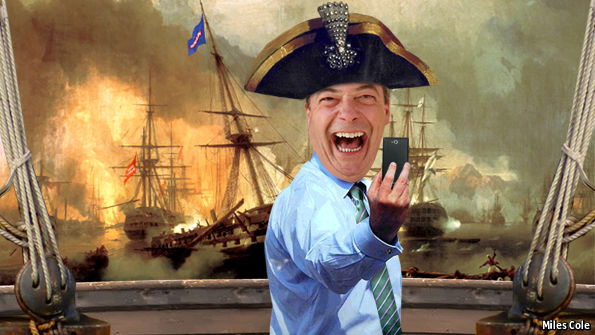
Nigel Farage Show - The Economist

How to suck at modern citizenship, by The Economist

The Economist has, inevitably, now thrown its support behind the campaign to keep Britain in the European Union.

Their endorsement of the EU is full of the usual denial about the EU’s trajectory and bromides about cooperation and not weakening Europe at a time of global uncertainty, but more astonishing is their condemnation of the very campaign in which the Economist – like all other major media outlets – played a major role.

In a separate piece published concurrently with their endorsement of Remain, the Economist declares:

Such has been Britain’s EU referendum. David Cameron first promised the vote in 2013, spooked by UKIP’s success in local elections and importuned by UKIP-inclined MPs on his Conservative benches. The result has been an unedifying campaign that has both bolstered Mr Farage and carried his imprint. It has been divisive, misleading, unburdened by facts and prone to personality politics and gimmicks. What might have been a hard-nosed debate about Britain’s future, about the pros and cons of EU membership, has turned into a poisonous row about the merits of what is ultimately Mr Farage’s vision of England: a hazy confabulation of content without modernity; of warm beer, bowler hats, faces blackened by coal dust; of bread-and-dripping, fish-and-chips, hope-and-glory.

The outcome has been a contest with the logical architecture of an Escher drawing: Remain and (in particular) Leave issuing assertions that double back on themselves, Möbius-strip arguments that lead everywhere and nowhere. Knowledge has been scorned (“I think people in this country have had enough of experts,” huffs Michael Gove, the pro-Leave justice secretary). Basic facts have fallen by the wayside: Mr Cameron claims Brexit would help Islamic State; Leave implies Turkey, with its 77m Muslims, is about to join the EU. The complicated reality of an evolving union and Britain’s relationship with it has been ignored.

[..] To some extent the referendum has revealed things that were already present: the growing void between cosmopolitan and nativist parts of the country, the diminishing faith in politics, the rise of populism, the inadequacy of the left-right partisan spectrum in an age when open-closed is a more salient divide. Yet it is hard not to conclude that the campaign has exacerbated all of these trends. Polls suggest that trust in senior politicians of all stripes has fallen. And that is just the start. If Remain wins on June 23rd, Brexiteers will tell voters they were conned. If Leave wins, Mr Cameron will go and his successor will negotiate a Brexit that does not remotely resemble the promises of the Leave campaign, which trades on the lie that Britain can have full access to the European single market without being bound by its regulations and free-movement rules.

Either way, politics is coarsened. Voters will believe their leaders less. Short of a total reconfiguration of the party-political landscape (possible but unlikely), the existing Westminster outfits will look increasingly at odds with political reality. The currency of facts will be debased, that of stunts inflated, that of conviction sidelined. It will be de rigueur to question an opponent’s motives before his arguments, to sneer at experts, prefer volume to accuracy and disparage concession, compromise and moderation. Mr Farage’s style of politics has defined this referendum. It will live on in the muscle memory of the nation.

It is frankly astonishing that the Economist can survey the dismal scene of this referendum campaign and choose to be dismayed not by the behaviour of our prime minister – a man who has boldly and shamelessly lied, bullied, deceived, threatened and intimidated the country into voting his way – but rather by the now typical antics of an increasingly sidelined Nigel Farage.

The Economist is quite right to point out that politics has been coarsened throughout this debate. This is partly inevitable – we are debating serious, existential issues in a once-in-a-generation plebiscite. And human nature being what it is, distortions will be made and tempers will flare. But it is thoroughly depressing to see the Economist seemingly hold the people in charge of the country on the Remain side to a lower standard of behaviour than those outsiders, typically with less experience of top level politics, who are advocating Brexit. Apparently we should all be aghast at the fact that there are some Little Englanders and conspiracy theorists on the margins of the Brexit movement, but simply accept that the prime minister of the United Kingdom has become a serial liar who happily threatens his own people.

If a certain style of politics is to “live on in the muscle memory of the nation”, as the Economist frets, it will be the style of politics practised by those on the Remain side who have abused their offices of state, their bully pulpits and any sense of common decency to wage a narrow campaign of fear based almost entirely on economic scaremongering. It will be the Tyranny of the Experts, in which the politically motivated verdicts of Highly Credentialed People are shouted louder and louder to drown out dissent – as though a consensus of “experts” has never been wrong about anything before (and as though democracy can be measured in an economic model).

But since the Economist is so willing to overlook the scandalous behaviour of our own prime minister and concentrate all of its fire on Nigel Farage’s personality, it is worth calling into question the Economist’s own role in this referendum campaign. Have they helped to shed light, to inform, to raise the level of debate? No. They have peddled in exactly the same glibly superficial, personality-based lazy journalism as nearly every other major outlet.

All this time, out of sight of the shining ones at the Economist, there was a rich, informative and inspiring debate taking place online which the rest of the legacy media entirely missed because they were so busy quoting each other and hanging on the every last word of Nigel Farage and Boris Johnson.

The bloggers of The Leave Alliance in particular have exposed the fascinating world of international trade and regulation, and the slowly emerging global single market – comprised of the real global “top tables” – of which Britain could be a part, if only we had the national confidence to stop hiding behind the euro-parochialism of Brussels. This is really interesting stuff, when you dive into it – the kind of topic which might make an excellent Economist Special Report, come to think of it, though it is apparently too obscure for their journalists to take the time to learn.

What the Economist (and many other publications) fails to realise is that Nigel Farage and Boris Johnson do not speak for the entirety of the Brexit movement, least of all the liberal Leavers whom the Economist scandalously misrepresents in their sloppy wet kiss to the EU. A few quick Google searches and some basic human curiosity (combined with a willingness to look outside the Westminster bubble for original thinking and writing) on the part of journalists could have completely changed the nature of this EU referendum. Opened it up. Taken it to a higher level, where we actually debated the importance of global regulation and how Britain can best wield our influence in the global bodies which actually hand regulations down to the EU. We could have spent this time debating the meaning of democracy and sovereignty in the 21st century, and how Brexit could just be part of a process of democratic renewal in Britain.

In short, the Economist has no right to scorn the very referendum campaign in which they were themselves utterly complicit. They could have sought out other, more informed voices and given them a platform and a sceptical but fair hearing. But all they wanted to hear from the Brexit side was the ranting of Nigel Farage, so that is all they did hear. The Economist wanted to see the Brexit campaign as a Little Englander movement spurred by nostalgia, insularity and xenophobia and they made sure to pay attention only to those facts and those voices which reinforced that viewpoint.

And in so doing, the Economist gave its readers exactly what most of them wanted to read – people in that prized demographic too busy being captains of industry with glittering international careers (and buying the Patek Philippe wristwatches advertised on the back cover) to really care much about democracy or how we exercise control over our leaders. Why would they care? They are generally doing very well, thank you very much. Most of them don’t see any need for things to change, or for people to be held to account for bad decisions in government which only ever affected “other people”, very different to themselves.

You can call that what you will. The Economist are certainly very proud of themselves. But to my mind it is shoddy journalism, and a truly rotten form of citizenship.

 

European Union - United Kingdom - Britain - Flags

Top Image: Miles Cole, The Economist

Agree with this article? Violently disagree? Scroll down to leave a comment.

Follow Semi-Partisan Politics on TwitterFacebook and Medium.

Praising The EU And Supporting Remain Has Become A Virtue Signalling Sport

Monkey Cymbals 2

Don’t take the bait. Don’t take the bait. Don’t take the — ah, screw it

The Huffington Post serves up the worst thing you will read all day (h/t Pete North) in terms of EU referendum commentary – this sneering, virtue signalling attempt at mockery of Brexiteers by author and commentator Johnny Rich.

It’s a bit like W. S. Gilbert’s “little list”, except written by a dribbling imbecile:

Some people think it’s completely irrational to want to leave the EU. So, to avoid looking like you’re ignorant or incapable of understanding the issues, here’s a handy list of 30 excuses you can give for your position.

You don’t have to believe them all, just use whichever you feel comfortable with.

Don’t worry, we are not going to go through them all. I’ll serve up the highlights.

2. Experts don’t always get it right. In fact, because I can think of one example of an expert getting something wrong, I’m going to assume they’re all wrong on the economic consequences of leaving the EU.

Like the experts who told us that Britain would fade away into irrelevance unless we joined the euro? Righty-o. And can we please move on from this tyranny of credentials? Richard Dawkins may hate living in a world where ordinary people get to make decisions based on their own values, but nonetheless it needs pointing out that the EU referendum is primarily a question about democracy, not numbers on an Excel spreadsheet.

4. I believe that there aren’t enough jobs to go round for EU immigrants, despite the fact that more workers create a larger economy, creating more jobs as well as a higher tax take.

This blog happens to be pro immigration and I do not normally like to dwell on this issue, but it needs stating that while more workers do indeed create a larger economy, other critical things like housing, infrastructure and public services do not increase in a smooth line together with the population. It takes concerted effort and political will by local and national government to ensure that our national infrastructure is kept up in line with a rapidly increasing population.

Now, whether you want more immigration or less, I think we can all agree that successive British governments have done a woeful job of ensuring that our housing sector, infrastructure and key services were well positioned to absorb the kind of net migration we have been seeing – whether it was the last Labour government which wanted to sneak in mass immigration under the radar, or the current Conservative government which shamefully prevaricates when it should be expanding airport capacity in London and across the country. So a little less of the smug would be good.

12. I believe that, contrary to intelligence experts, the UK would be safer from terrorists without pooling intelligence with other European countries, even though most of the 7/7 bombers were born and raised in, erm, the UK

I wasn’t aware that intelligence from other European countries could have prevented 7/7, or that intelligence sharing and cooperation can only take place inside a political union. One wonders how Britain manages such close cooperation with the United States despite the two countries not sharing a parliament and a supreme court.

14. I believe I am better represented by the first-past-the-post elected parliamentarians in Westminster than the proportionally representative elected parliamentarians in Brussels and it’s got to be one or the other, rather than both.

Actually, I believe I am best represented by a body which represents a distinct and known demos with which I identify. I happen to feel British, therefore I find legitimacy in the Westminster parliament for all of its flaws. And no, the unelected House of Lords does not excuse a puppet European Parliament elected on pitiful turnouts, beloved by nobody, and which is incapable of proposing new legislation or striking down old laws. We should strive for constitutional reform to renew democratic government in Britain, not give up on it and outsource all of the meaningful decisions to Brussels.

16. I believe the EU is all a Franco-German conspiracy and the best way of defeating it is to, erm, allow the Germans and French to get on with it.

It isn’t a conspiracy at all. To be fair to the European Union and many of its past and current leaders, they are quite open in stating their intention to move toward becoming a common European state. Francois Hollande and Angela Merkel hardly ever shut up about it. It is only here in Britain where people like Johnny Rich stick their heads in the sand and furiously pretend to themselves that the EU is all about “trade and cooperation”, and nothing more.

19. I don’t find Leave’s figure of £350Mn in payments to the EU a week remotely ridiculous, even though it takes no account of either the rebate or payments to the UK.

Thanks, Vote Leave. Thanks a lot. Now you’ve made this sanctimonious little twerp correct about something.

21. I believe Britain’s exit from the EU will bring the whole edifice tumbling down and I don’t like anyone else forming an international collaboration if we’re not part of it, even though, erm, I don’t want to be part of it.

But it is not just an “international collaboration” though, is it? If Johnny Rich (the author) knew anything about the history of the EU and the century-old movement for European political union, he would know that the EU is an explicitly integrationist club with the expressed intention of one day becoming a common European state. We all love collaboration, but somehow every other country in the world outside of Europe seems to have found a way to collaborate well with neighbours and allies without forming a joint political union with them. If Johnny Rich were capable of thinking, this might give him pause for thought.

22. I believe holidaying in Europe will be just as easy and no more expensive because they should be happy to have our fine British pounds, even though after Brexit they might be worth a lot less.

Exchange rate fluctuations take place all the time, and while the pound may lose a small amount of value against other currencies in the short term as investors watch and wait, in the long term this could easily be more than offset by future increases resulting from stronger fundamentals after Brexit. And of course a weaker pound actually helps our exporters and domestic tourism industry. Unless Johnny Rich doesn’t care about British manufacturers and B&B owners?

24. I’d like to be able to rip off music and videos, like they do in China and Russia, because they don’t have those pesky EU intellectual property controls which stop me stealing from artists whose work I like.

I didn’t realise that intellectual property was not protected in Britain, or that one of the key drivers of pro-Brexit sentiment was the prospect of pirating music and videos. But if you say so.

26. I believe an isolated UK will have more influence on a global stage because, well, we used to have an Empire you know. Just like, erm, Egypt, Mongolia and the Aztecs.

No. But I do believe that the fifth largest economy, second (by some measured) ranked military power, nuclear power, P5 UN Security Council member and a country with a vast cultural and diplomatic reach like Britain will do just fine when we speak with our own voice on the international stage rather than squabbling with 27 other countries to influence the collective voice of the EU.

29. I don’t mind my taxes supporting scroungers hundreds of miles away and with whom I have no connection so long as they’re this side of any sea, but I don’t want them supporting no foreign scroungers whose need might be even greater. After all, I do my bit by giving a fiver to Pudsy most years.

Remainers do not have a monopoly on compassion. But it increasingly appears that they do have a near monopoly on unbearable moral sanctimony.

30. I just want to shove it to Cameron and Osborne.

Guilty as charged. But that is not why I support Brexit. It is just a fortunate, delicious coincidence.

35. I genuinely feel no cultural connection to Abba, Archimedes, Aristotle, Bach, Beethoven, Brie, Cervantes, Chanel, Cicero, Croissant, Da Vinci, Einstein, Euclid, Goethe, the Grimms, Homer, Ibsen, Joyce, Leibniz, Michelangelo, Mozart, Pasta, Plato, Pythagoras, Rousseau, Schiller, Socrates, Tapas, Truffaut, Virgil, Zola or whatever, but on the other hand, I’ve got Morris dancing, Robert Burns, bara lafwr and the Orangemen in my veins.

I feel a tremendous amount of cultural connection to many of these artists – and foodstuffs. I live and breathe Bach’s Goldberg Variations. The opening of Beethoven’s fourth piano concerto slows my heart rate and instantly puts me in a more relaxed frame of mind. I find some passages from The Iliad to be some of the most beautiful poetry ever written, instantly bridging the gulf of ages separating the author from our modern world. Schiller, though, I can take or leave.

But crucially, I am able to have all of these connections, affinities and attitudes without needed to belong to the same political union – and eventually the same common European state – as these great artists. Is Johnny Rich really worried that leaving the EU might threaten his bragging rights of association with JS Bach or a bowl of penne? What part of his intellectual and cultural heritage does Rich think will be ripped away if the same supranational political union covering the land of Mozart stops overshadowing him? The man is insane. Or simply deluded.

Basically, Rich has swallowed every facile and superficial argument about the wonders and accomplishments of the European Union, hook, line and sinker. He has no understanding of democracy, and consequently no respect for it. Serious questions about how people can and should wield influence over the decisions affecting their lives go sailing right over his smug little head. Support for the EU is, to Johnny Rich, a mere act of public virtue signalling – a way to showcase to his equally insufferable friends that he is progressive, compassionate, and holds all of the necessary right-on opinions. And the net result is his “little list”, a sneering wink at fellow believers all utterly convinced of the righteousness of their cause.

Or as Pete North put it when citing Johnny Rich’s drivel:

If I didn’t know anything at all about the EU and I was relying on Vote Leave for the arguments to leave the EU – and my only perception of leavers was through the media, I would vote to remain in the EU. But it would mean I was a virtue signalling, lazy narcissist. For the removal of doubt, here is one one of those looks like…

I shouldn’t do it, I know. There is absolutely nothing to be gained from getting into pitched battles with shrill, morally certain HuffPost bloggers, people too dim to do the first bit of research on opposing arguments but always ready with a snarky post or tweet.

But those of us on the thinking Brexit side have probably each spent more time learning the history of the European project and thinking through the various implications of leaving and remaining than Johnny Rich has spent doing whatever he does for a living – writing obscure, unread novels, by the look of it.

And there is only so much that one can take of being mocked and called stupid by the conclave of cavorting village idiots who make up the unthinking, virtue-signalling (and dominant) wing of the Remain camp before one has to punch back.


Monkey Cymbals 4

European Union - United Kingdom - Britain - Flags

Support Semi-Partisan Politics with a one-time or recurring donation:

Agree with this article? Violently disagree? Scroll down to leave a comment.

Follow Semi-Partisan Politics on TwitterFacebook and Medium.

There Can Be No Rational Debate With Those Who Deceive Themselves About The EU’s Purpose And Destination

European Union - EU Referendum - Supranational Government - Brexit - Remain - Leave

I am no longer willing to indulge Remain supporters who insist on deceiving themselves (and others) that the European Union is a humble trading organisation with no pretensions to statehood or aspirations for ever more power

The question which exasperated EU defenders often ask when they (unsurprisingly) fail to win Brexiteers over to their side goes something like this: “But all these world leaders and heads of NGOs want Britain to stay in the European Union! Do you really think that you know better than all of these important people?”

And on the very surface it sounds like quite a disarming point – who are we, after all, to second guess the learned and wise decisions of our rightful rulers? But then one remembers that this is precisely what we are supposed to do. The very reason we moved beyond despotism and absolute monarchy is the fact that we do not want (and no longer have to suffer) a small, homogeneously educated “born to rule” class making decisions on our behalf unchecked; that the mere fact of occupying positions at the top of the establishment makes it likely that vested interests will begin to corrupt decision making, and that democratic checks and balances are the best means we have yet devised of guiding and restraining the behaviour of our very flawed, very human leaders.

This point is eloquently expanded upon in a new piece by Pete North, itself a response to a very smug and very ignorant piece in the Guardian by Nick Cohen, gloating at the unarguable ineptitude of the official Leave campaign.

Cohen simperingly asks:

There are dozens of good reasons for leaving the EU. Before endorsing them you should ask, do you feel that the Institute for Fiscal Studies, Bank of England, IMF, OECD and the hundreds of economists we survey this week are all lying? Do you feel that all our allies who are begging us to stay wish to lead us to our ruin? Do you feel that Boris Johnson is fit to be prime minister or any kind of minister for that matter? Do you feel that Scotland won’t leave? Do you feel that Irish politics won’t darken? Do you feel that Putin won’t rejoice? Do you feel the Leave gang will find answers in June to the questions it cannot answer in May?

In short, you’ve gotta ask yourself one question: do I feel lucky?

Well, do ya, punk?

To which Pete North replies:

In his closing remarks [Cohen] asks “do you feel that the Institute for Fiscal Studies, Bank of England, IMF, OECD and the hundreds of economists we survey this week are all lying?”

I think they are politically slanted toward the status quo. I think they are exploiting the weakness of Vote Leave to disingenuously cloud the issue. I think they are wilfully ignoring facts they don’t like thus lying by omission. And I also think they are wrong because (and I say this in full knowledge of how it sounds) I have examined it from more angles than they have, and have thought about it longer and harder than they have, and I have explored areas they are barely aware of. They are largely ignorant of the political and practical dynamics. Their forecasts are of limited use and only their short term forecasts based on the immediate aftershocks have any real worth. I will argue that til the cows come home.

Cohen then asks “Do you feel that all our allies who are begging us to stay wish to lead us to our ruin?”

This is a shallow question. Firstly who governs us is absolutely none of their business. But there is a consensus groupthink at the top of global politics where they believe their own rhetoric and the rhetoric upon which the EU stands. That drives their calls for Britain to remain. But this is not about what they want. That is why we are having a referendum. I also feel that Brexit threatens to disturb that cosy consensus and it threatens their agenda for the accumulation of power. I think that is a good reason to leave in its own right. Brexit is a message that the power belongs not to them but the people. And that’s what this is fundamentally all about.

Absolutely so. Remainers love to affect that they live in a world of hard-headed reality while those of us who support Brexit and the restoration of nation state democracy are either conspiracy theorists or dangerous fantasists. But in fact it is the other way around – we have seen how supporting Brexit in the face of a chorus of establishment opposition is not only understandable but absolutely necessary in order to prevent too much power accumulating among the elites at supranational level. And it is the Remainers who studiously ignore mountains of evidence in which the EU’s architects and leaders speak quite openly about their motivations and desire to create a common European state.

But of course this does not stop Remainers from prancing around as though the burden of proof were somehow on the side of the Brexiteers. Typically, this arrogance expresses itself through articles which read something like this:

Before we can even begin to think about leaving the EU, Brexit supporters have to answer these ten simple questions:

1. What categorical assurances can the Leave campaign give that there will not be a 3 point magnitude earthquake in Torquay if Britain votes to leave the EU?

2. Where is the Leave campaign’s fully costed plan showing Britain’s GDP increasing above current trends once we cut ourselves off from the world and hang up a big sign declaring that Britain is closed for business?

3. Where is the Leave campaign’s signed (in blood) declaration from Angela Merkel that British citizens will not have to pass an IQ test before entering Germany in the event of Brexit?

4. How many human sacrifices will Britain make to appease Barack Obama after angering the US president by ignoring his advice in the referendum?

5. Where is the Leave campaign’s signed (in blood) declaration from John Kerry that the United States will not close its embassy in London and suspend diplomatic relations with Britain?

6. Where is the Leave campaign’s statement, signed by 500 economists, standing behind an economic model which proves that the price of foie gras will remain stable if Britain leaves the EU?

7. Prove that average global temperatures will not rise in the event of Brexit.

8. Prove that France and Germany will not face off against one another precipitating a new world war in the event of Brexit. (And didn’t millions of soldiers perish in two world wars precisely so that a united, supranational government of Europe might one day arise in Brussels?)

9. Prove that the Evil Tory government will not pass a bill on June 24 abolishing maternity leave and establishing mandatory child labour if we leave the EU.

10. Produce a list of fifty elected heads of state, all of whom have clear political interests in the steady maintenance of the established international order and avoiding the slightest disruptions to (or distractions from) their domestic agendas, all declaring that they want Britain to leave the European Union (with which they must simultaneously maintain good diplomatic relations)

And when Brexiteers look puzzled and inevitably fail to answer each question in a way which satisfies the EU’s cheerleaders:

Aha! See, they don’t know what Brexit will look like! Can we really afford to take the risk? Etc. etc.

Personally, I’m done playing that game. Dancing to the sanctimonious tune of the EU cheerleaders does not interest me. I do not have to prove anything. Yes, in order to persuade a plurality of people that voting to leave the European Union is safe, there must be a comprehensive and rigorous plan. Such a plan already exists, and is finally being spoken of (in content if not always in name) by a growing number of Brexiteers and commentators alarmed at the childish incompetence of Vote Leave.

But beyond promoting this plan and urging people to read it, there is nothing further left for thinking Brexiteers to do in this regard. It will never be possible to give the EU worshippers the assurances they demand – to prove that the recipe for Nutella will never change if we leave the EU. And they know this. Definitively proving a counterfactual is not possible, and it is this con which is helping the Remain campaign to a consistent lead in the polls.

But it might be possible to respect Remain campaigners a little more if they were capable of being honest themselves about the organisation which they so eagerly defend. And so when asked by sneering Remainers to prove to 100% probability that the cabbage harvest will not wither in the event of Brexit, we should respond with some challenges of our own.

And this blog’s challenge to sincere, thinking Remain supporters is for them to complete the following statements in an honest and remotely plausible manner.

Statement 1: I understand that continent-wide supranational political union is not strictly necessary in order for countries and people to cooperate and work together to solve common challenges, but I still think Britain should remain in the EU because…

Statement 2: I appreciate that global bodies such as UNECE, Codex Alimentarius, the IMO and ILO are responsible for creating much of what goes on to become EU regulations and directives, but I believe Britain should remain in the EU rather than seeking to regain our seat and wield influence at the true top tables because…

And, of course:

Statement 3: I, [insert name], want Britain to remain in the European Union because in my heart I feel more European than British, and do not want to be torn away from what I really consider to be my true country.

Remain campaigners who repeat any of these statements straight into a television camera will have my grudging respect because they will be making a case for the European Union based not on airy wishful thinking about what the EU is and might become, but rather on truthfully admitting their understanding of and acquiescence to the EU’s eventual aim of becoming a unified European state.

Those who persist in pretending to themselves and the rest of us that the European Union is benign, super democratic and Just About Trade, however, can take a hike for the remainder of this referendum campaign.

I am no longer willing to debate this issue while the Remain side occupy a position of fundamental dishonesty as to their understanding and intentions. From 10 Downing Street to Canterbury Cathedral we are being lied to, and I will no longer do anything which remotely assists these invidious people in their shameful, dishonest work.


European Union - United Kingdom - Britain - Flags

Top Image: Telegraph

Agree with this article? Violently disagree? Scroll down to leave a comment.

Follow Semi-Partisan Politics on TwitterFacebook and Medium.

The Financial Times Makes A Worryingly Stupid Cheerleader For The EU

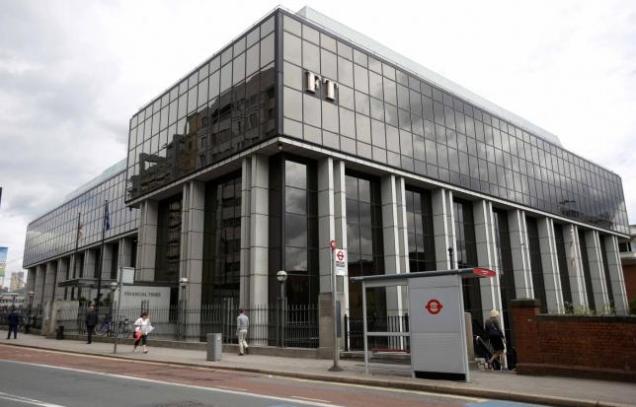
A company logo hangs on the headquarters of the Financial Times newspaper in London

The slavishly pro-EU Financial Times often displays a childlike level of understanding of how the European Union – and global regulation – actually works

Apparently the arguments for Brexit “do not add up”.

We have this from the most scrupulous and unbiased of sources, the Financial Times, so of course it must be true. Millions of Brexiteers, The Leave Alliance and little old me can pack up our things and go home, because Martin Wolf of the Financial Times has spoken.

Except that when Martin Wolf speaks on the topic of the European Union, he sounds like an idiot. This is his opening gambit:

If the UK voted to leave the EU, it would almost certainly be outside the arrangement organising the life of our neighbours and principal economic partners forever. Given this, the question is whether the option to leave should be exercised now. My answer is: absolutely not. To see why, let us examine popular arguments in favour of departure.

Oh dear. In his first sentence, Wolf inadvertently describes the overwhelming case for Brexit, before he can even launch in to his promised list of ten rebuttals. For he says that the EU is an organisation which seeks to “organis[e] the life of our neighbours and principal economic partners” – and indeed ourselves, since we are part of the union, too.

This is refreshingly honest, albeit unwittingly so. The EU does indeed seek to organise not only the lives of our neighbours and trading partners at the nation state level, but crucially (and most offensively) at the level of the private citizen too. Why? Because the EU does not see itself as some kind of a trading club. It sees itself as a government of Europe, sitting above national governments but gradually rendering them obsolete and irrelevant. The EU makes no secret of this fact – it is enshrined in the treaties, quotes from senior EU officials and even emblazoned on the wall of the European Parliament Visitors’ Centre, for those who care to look. It is only here in Britain where politicians and assorted EU apologists bury their heads in the sand and lie to themselves (and to us) about the real purpose of the European Union.

So Martin Wolf is quite correct – if Britain leaves the EU, we will absolutely be outside the arrangement which seeks to organise the lives of 500 million European citizens from every single member state. Power will be brought one step closer back to the individual citizen. And the fact that Martin Wolf and the Financial Times see this as a bad thing – that they visibly recoil from the idea that Britain should shed a superfluous layer of supranational government and seek to return power to the people – really tells you everything you need to know about whose side they are on. Hint: it is not the side of we the people.

The article then lurches from bad to worse, with a series of “rebuttals” of the Brexit case each one less supportable than the next. We are assured, for example, that a politically integrated eurozone is unlikely, despite the European Union doing everything but spell out in fireworks their intention to do exactly that.

Some of Wolf’s later points – particularly around immigration and trade agreements – are slightly more accurate. But this is only because he is creating straw man arguments to demolish, aided in his efforts by the hapless official Vote Leave campaign. The various spokespeople and figureheads of Vote Leave say enough stupid things between them to enable Martin Wolf to publish a ten point anti-Brexit rebuttal every day from now until polling day, but that is very different from Wolf managing to disprove or discredit the core arguments in favour of Brexit, most of which he pointedly skirts around.

Specifically, Martin Wolf never appears more out of his depth than when he attempts to show that there is no natural positive alternative to EU membership, and when he attempts to discredit the Norway (EFTA/EEA) option as an interim step. Thus we get utter bilge like this:

Seventh, it would be easy to agree on alternatives to EU membership. Yet those recommending leaving have no agreed position. There are three plausible alternatives: full departure with trade regulated by the World Trade Organisation, which would cost the UK its preferential market access to the EU; Swiss-style membership of a trade arrangement in goods, with bilateral deals in other areas, which is complex and would require the UK to retain free movement of people; and Norwegian-style membership of the European Economic Area, giving full access (except for having to abide by rules of origin in trade in goods) but would deprive the UK of a say on regulations. In all, the more sovereignty the UK wishes to regain, the less preferential access it retains. This trade-off cannot be fudged.

Enter Pete North, with a forensic and merciless dissection of Wolf’s position that genuinely make one wonder how it can be that North is the amateur blogger and Wolf the supposedly prestigious journalist.

North responds:

Wolf says that “There are three plausible alternatives”. This is where we are in straw man territory. He cites the WTO option which does not in any way address the multiple cooperation agreements or issues surrounding non-tariff barriers and in fact would likely cause asymmetric tariffs in the EU’s favour. If Wolf was a halfway credible analyst he would know that much. It’s a non-starter and would in fact case the very chaos that remainers have been talking up. So we are back to the age old question. Ignorance, dishonesty or both?

This means of exit is commonly associated with unilateral withdrawal, which no government intends to do nor would even consider it when faced with the practical ramifications. And so we can say with absolute certainty that we are looking at a negotiated exit.

With regard to the Swiss Option, comprising of membership of a trade arrangement in goods, with bilateral deals in other areas, Wolf is right to say it is “complex” and given that we have only two years under Article 50 to negotiate a settlement, we can safely assume that a bespoke deal is not on the cards. Talks may be extended but the tolerance for uncertainty will be short. Any UK government entering negotiations would rapidly be disabused of any fanciful notions of recreating the relationship from the ground up.

So actually, an off the shelf agreement based on the EEA is looking the most probable exit means and since it is the least disruptive for both parties and the most achievable, that is most likely what will be asked for and the only thing on offer. Having done a scoping exercise in advance of submitting our Article 50 notification, we can say with some confidence that a transitional deal could be arranged inside the mandated two years. To ensure it does not drag on, we will in all likelihood adopt most of the existing cooperation agreements as they are without opening them up fro scrutiny. We will swallow the lot. Wolf has it that the UK would have to retain free movement of people membership of the European Economic Area, which is true, but actually irrelevant.

At the end of negotiations what we end up with is more or less the same access to the single market and no real changes in the business environment. Cooperation agreements continue as before and nothing looks that much different on day one. This renders much of the speculation about Brexit entirely redundant. Wolf as much admits this.

Having taken Wolf to school on the fundamental about the most likely future model for UK-EU relations, North goes on to destroy Wolf’s fatuous but oft-repeated claim that an interim EEA/EFTA solution somehow means having no “say in regulations”:

In any area of regulation you care to look, the EU is a recipient of rules as much as anybody else. Its rules are subordinate to global standards and such standards from the basis of nearly all new EU technical regulation. Brexit not only gives us a right of opt out at the WTO/UNECE level, we would also enjoy EU consultation before any rules went as far as the EU parliament for what they laughingly call scrutiny. What that means is we will never again see the EU abusing its power to foist rules on us that we do not want.

Wolf is right however when he says that there are trade-offs. Asserting sovereignty in regulatory areas does have trade-offs. Because Norway has heavy protections on its own aquaculture and agriculture it is subject to tariffs. It remains that way because that is what Norway chooses to do. Their parliament examined the balance of issues and decided on a case by case basis whether the trade off was worth it. In more areas than one, Norway has concluded that sovereignty matters more. This would be that democracy thing. And the whole point of Brexit as it happens.

And while the regulatory regime doesn’t change that much, it does mean that we are free to change it where we deem change is appropriate. It categorically does not mean a huge administrative undertaking to establish a separate regulatory system. All it means is we can change it as and when we want to – and when we want regulatory reform, we have a direct line to the global bodies that make the rules rather than having the EU speak on our behalf. The clout we have in that regard in on the basis of what we bring to the table in terms of soft power and expertise which is considerable when you consider the UK’s many assets.

[..] The dinosaur hacks of the FT are fixated on “free trade deals”, many of which are not actually that useful to UK industry and we would benefit more from independent participation on global forums to remove technical barriers to trade. In that respect the traditional bilateral trade deal (or FTA as they insist on calling them) is obsolete. The future is the development of common regulatory frameworks that extend far beyond the confines of little Europe. Being independent of the EU ensures that we put the brake on the EU’s gold plating tendency while having first dibs in the global arena.

In so many ways, Brexit gives us the best of both worlds. The continuity of single market access along with trading agility, free association with global alliances and a functioning veto. All we get from the europhiles is that we can’t have our cake and eat it. It turns out we can eat the cake and ask for seconds if we so choose.

I cannot repeat this often enough: if you want sound analysis of the EU referendum question and an informed understanding what Brexit might look like, it is absolutely no good turning to the legacy media. They simply do not know what they are talking about because they have not invested the time to think through the issues clearly or to update their 1990s-era understanding of global trade and regulation. Worse still, they lack the humility to learn from those who have invested time and do know.

Martin Wolf airily tries to dismiss Brexit as a leap into the unknown, claiming that leaving the EU would entail moving toward one of three unpalatable future relationships, when it actually turns out that there is only one likely future model Brexit state given the political and economic constraints faced by both parties, and that one model preserves the single market access about which the FT and others rightly fret while extricating us from the unwanted political union.

Worse still, Wolf compounds his error by lazily asserting that this “cake and second helpings option” (as North puts it) would mean Britain having no say when it comes to shaping regulations, when in fact it is only by leaving the European Union that we are able to restore our voice at the real “top tables” where the rules are made.

We are now presented with a rather difficult set of possibilities. Either:

1. Martin Wolf and the Financial Times are so thoroughly incompetent and lacking in knowledge about one of the very subjects for which readers pay them for their expertise, or

2. Martin Wolf and the Financial Times do understand how global trade works and the true nature of the European Union, but deliberately keep this information from their own readers for some other sinister purpose (most likely because their corporate readership balks at the increased economic risk which inevitably accompanies any great enterprise worth undertaking – like Brexit)

Incompetence or malevolence. Pick your poison, but the Financial Times is undoubtedly guilty of at least one of these offences, if not both.


European Union - United Kingdom - Britain - Flags

Top Image: Reuters

Agree with this article? Violently disagree? Scroll down to leave a comment.

Follow Semi-Partisan Politics on TwitterFacebook and Medium.

Jeremy Clarkson: Refreshingly Frank Federalist Or Craven Castrato?

Jeremy Clarkson - EU Referendum - European Union

One Jeremy Clarkson column, two very different reactions

To say that Breitbart’s James Delingpole disagrees with me about Jeremy Clarkson’s column calling for Britain’s dissolution into a federal European state would be putting it mildly.

While I praised Clarkson for being one of the only people in the whole sorry Remain campaign to honestly and openly admit their love for the European Union, Delingpole accuses him of “chopping off his own balls”:

There are lots of piss-poor columnists out there who you can easily imagine churning out this kind of bilge. But Clarkson really isn’t one of them. For a start, he has forged his entire career on tell-it-like-it-is-outspokenness and political incorrectness (especially where uppity foreigners are concerned). Also, he’s not stupid. The reason his collected columns tend to go to the top of the bestseller lists is partly because they’re funny but partly because they’re true. He has a gift for boiling down the political concerns of our time into a punchy but chatty style, replete with colourful images, witty asides and broad jokes which make them accessible to everyone.

Here, though, he’s not doing any of that. There is no way – in the unlikely event that he could ever bring himself to reread those words – that Clarkson will ever be able to look at that column and go: “Yup. I really nailed it, there.” Because he patently hasn’t. This isn’t just a fail. It is, by some margin, the worst Jeremy Clarkson column ever. Or at least the worst of the many I have read and (invariably) admired.

In fact what strikes me most is that here is the very exemplar of the kind of column you write when your heart just isn’t in it, when you’re making an argument you simply don’t believe in.

[..] I’m not sure I’ll ever be able to look at Clarkson in the same way again, however good his Top Gear replacement series is, because all I’ll be thinking is: “You had a choice, Jeremy. Either to go to the wall for the cause you believe in. Or to sell your soul to something you don’t believe in just because you live near the Prime Minister in the Cotswolds, share the same circle of posho friends and want to curry favour with the smart set.”

By contrast, I remarked:

But what is surprising (and actually rather impressive) is the full-throated way in which Clarkson embraces his support of the EU.

Unlike nearly every leading politician and personality in the Remain camp, Clarkson does not attempt to flatter us or pretend that he “gets” our concerns about Brussels gradually usurping our democracy. Unlike the deceitful-yet-ingratiating Sajid Javid, Clarkson makes no promises to go back to ranting at Brussels the moment he has helped doom us to continued membership of the EU (though in Clarkson’s case, more ranting is all but guaranteed).

Jeremy Clarkson actually does something which almost nobody in the intellectually squalid, fear-based Remain campaign dares to do – he owns his pro-Europeanism and wears it as a badge of honour, rather than doing what so many Turncoat Tories and others have done, prancing around like the World’s Biggest Eurosceptic before meekly running to David Cameron’s heel and supporting Britain’s continued membership of the EU as soon as the prime minister snapped his fingers.

Delingpole is also adamant that Clarkson’s full-throated support of European federalism was part of an effort to ingratiate himself with the prime minister and his circle of friends, whereas I tend to be a bit more generous, believing simply that because they both came of age during a long period of British decline, Clarkson and David Cameron almost inevitably share the same defeatist, pessimistic view of Britain’s capabilities and prospects as an independent country:

Our prime minister and foreign secretary may hold our country, its history and present capabilities in astonishingly low esteem, but fortunately the same cannot be said for many of the people. Many of us correctly believe Britain to be one of the few truly indispensable nations on Earth, that our contributions to the arts, sciences, commerce and global security are almost unmatched, and that we could throw our weight around in the world accordingly, if only we cared to stand up for our own national interest once in awhile.

But such views are unheard of outside the Chipping Norton set, the middle class clerisy in general and the fawning circle of friends and admirers surrounding David Cameron (of whom Jeremy Clarkson is one). These people, many of whom came of age at the peak of 1970s declinism and economic doldrums, have at their core a deep pessimism and scepticism about the ability of Britain to survive and prosper as an independent actor on the world stage.

So deeply have they internalised this self-doubt and self-loathing that no matter how much evidence you show them to the contrary – the examples of Australia and New Zealand, say, somehow surviving in the world without being part of an Asia Pacific Union and sharing a common parliament and court – they bat it away without even stopping to think.

Regardless of his motivation, I still think that Jeremy Clarkson made a more honest case for Britain staying in the EU than nearly anyone else in the Remain camp, with their bogus scaremongering statistics and artfully disguised vested interests.

Whether that happens to be Clarkson’s own honestly expressed view, or if he was channelling the honest view of others (like our prime minister, who is too cowardly to talk frankly about his commitment to Brussels, or nearly any other subject), remains a dirty secret known only to Jezza himself.

And maybe Delingpole is right that the column reads as though Clarkson doesn’t have his heart in it. But still: what other high profile public figure has expressed their desire for Britain’s participation in a federal European state so strongly? The answer is none. Tumbleweeds.

And that alone makes Jeremy Clarkson’s column quite significant, if not personally brave.


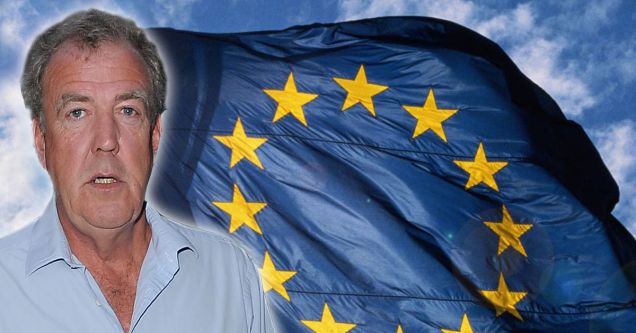
British television presenter Clarkson returns to his home in west London

Agree with this article? Violently disagree? Scroll down to leave a comment.

Follow Semi-Partisan Politics on TwitterFacebook and Medium.