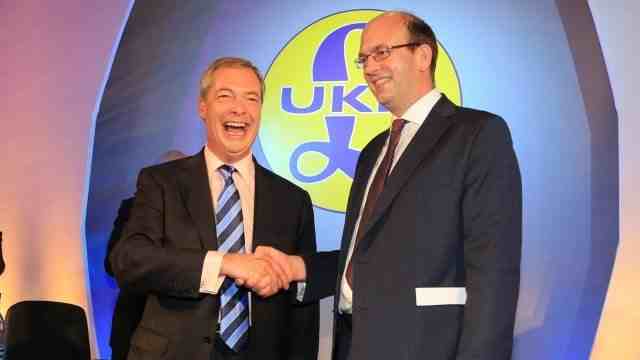
With the pumped-up remix of the classic song ringing in their ears, UKIP delegates to the party’s 2014 conference in Doncaster stood and cheered and welcomed their latest high profile parliamentary defector: now ex-Conservative MP Mark Reckless.
Say what you want about UKIP’s policies, internal contradictions and some of their wackier personalities, but this does not look like a party of economically left-behind losers or over-the-hill retirees caught up in nostalgia for times past.
As Mark Reckless himself noted, to thunderous applause: “The only nostalgia I see is that of the European bureaucrats as they cling to their fading 1950s vision.”
And in a political landscape where talk is cheap and real progress is rare, all of the action and momentum right now is with UKIP.
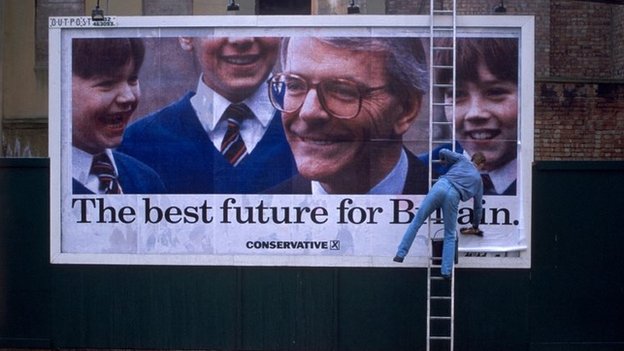
In a blast from the past, former prime minister John Major, continuing his recent trend of interventions in the British political debate, has made headlines for supposedly contradicting David Cameron’s stance on immigration.
In an apparent snub to David Cameron, the former Conservative Prime Minister said it was admirable that people coming to the UK had the “guts and the drive” to travel thousands of miles to Britain in order to improve their lives, not just to “benefit from our social system”.
Speaking to the BBC Radio 4 programme Reflections with Peter Hennessy, he continued: “I saw immigrants at very close quarters in the 1950s and I didn’t see people who had come here just to benefit from our social system.
“I saw people with the guts and the drive to travel halfway across the world in many cases to better themselves and their families. And I think that’s a very Conservative instinct.”
Of course, John Major is absolutely right. People who make the long journey to Britain in order to build a better life for themselves and their families are highly likely to have drive, ambition and work ethic in greater degrees than the average sedentary Brit. But in seeking to create a story in the middle of political slow news season, many media outlets (including the BBC) have been somewhat disingenuous in the way that they presented Major’s remarks.
The former prime minister was quite specific that he was talking about the kind of immigration that he saw first-hand, growing up and living with his family in Brixton, London. The immigration profile at that time was light years away from the current breakdown of immigration in the 21st century, and crucially did not include large numbers of European immigrants coming to Britain availing themselves of their rights under the EU’s common market. In John Major’s youth, the EU and the dream of ever-closer union was but a twinkle in the eye of the era’s political leaders.
The 1950s did see a period of mass immigration, but it was not of the same scale in absolute numbers and was mostly immigration from the Commonwealth as British passport holders born overseas took advantage of their right to settle in the mother country. To speak in praise of immigration from this era is not necessarily to contradict the government’s efforts to reduce net immigration in the year 2014. Thus it is disingenuous for the British media to take John Major’s praise of a 1950s phenomenon and translate it into criticism of 21st century policy.
The one area where John Major is absolutely right, and was not misrepresented by the media, is his claim that many immigrants do indeed have quite conservative instincts at heart. This instinct can be broken down into two types – social conservatism (particularly the case for immigrants from heavily Catholic countries) and fiscal conservatism. The worry for the Tories is that they are completely failing to tap into either of these sentiments or to build meaningful levels of support among recent immigrants.
But how can the government go about doing this while honouring its pledge to reduce overall net immigration? There is a narrow tightrope to walk between responding to public concern about the current immigration rate and making it clear to existing immigrants that they are welcome, encouraging them to assimilate as quickly as possible and then reaching out to them to turn them into Conservative voters. The margin for error is small, but it should still be possible.
Many recent immigrants come from countries that only a few decades ago struggled to escape from under the heavy yoke of Soviet communism – think Poland or Slovakia as prime examples. There is a love and appreciation for capitalism and the free market among many Poles and Slovaks that is often absent from indigenous British people, who tend to take our system for granted or focus only on its faults. And at a time when Ed Miliband’s Labour party seem to offer heavy regulation and re-nationalisation as their only policy prescriptions, the Conservatives have a ripe opportunity to show that their vision of lower taxes and greater freedom will deliver for everyone in the UK, immigrants firmly included.
There is also political capital to be made in toughening up the rules around access to benefits for newly arrived immigrants. The notion that newly arrived immigrants should be allowed to claim support from a system which they have never contributed towards is just as galling to a Polish family settled in Britain for five years and paying taxes as it would be to any UK citizen. But successfully arguing this point would require deft and precise use of language so that the media has no opportunity to run with the false trope that the evil Tories believe that all immigrants are benefit-scrounging parasites.
In short, the areas where the Conservative party (and indeed UKIP) currently alienate immigrants tend to be around the semantics and tone of the debate, whereas their actual policy prescriptions (maximum freedom, low taxes) make an ideal fit for many prospective immigrant voters.
But the Conservatives should have absolutely no expectations that the media, or the Labour Party, will lift a finger to guide immigrants toward this truth. In fact, if the twisting of John Major’s words today is anything to go by, the opposite will take place – the Conservatives will be painted as heartless and cruel in wanting to enforce stricter entrance criteria, while the many negative ways that Labour policies have the potential to hurt economic migrants will be glossed over and excused.
The irony is that British immigration policy tends to only affect new immigrants once – at the point they enter the UK to settle and work. From that point onward, once they are safely settled and working in Britain, the issue becomes largely irrelevant. Ed Miliband and the Labour Party have thus far managed to coast along on the assumption that they will win the lion’s share of the recent immigrant vote because they tend to advocate for a more laissez-faire border policy. But there is absolutely no reason why this should be the case.
The Conservatives have a compelling message to offer those recent immigrants who will go to the ballot box for the first time in 2015. It is a message of liberty and personal responsibility which should resonate strongly with just the type of people who took a huge risk in packing up their lives and moving to Britain. But for all his well-intentioned words, John Major failed to deliver that message in a way that cut through the skewed agenda of the news editors.
David Cameron and the Conservative Party urgently needs charismatic MPs and councillors to step up, refine and then start sharing this new message, this Conservative pact with recent immigrants. If they do not rise to the challenge, Labour will win the immigrant vote by default once again.
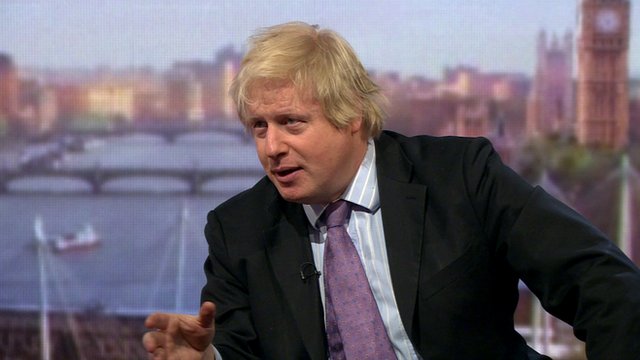
Almost everyone in the commentariat class seems to care, and to have a strong opinion about what is perhaps the most unsurprising revelation in British politics. But precisely why the rest of us should care about this revelation is not so self-evident. There’s obviously something in it for Boris Johnson: the opportunity to compete for the Conservative Party leadership in the event of a 2015 general election or 2017 EU referendum defeat. But what does a potential future Boris Johnson premiership offer the country that merits such a fevered round of speculation and media coverage?
Read any of the articles breathlessly speculating about David Cameron’s annoyance at being outmanoeuvred by Boris whilst on holiday, where the Mayor of London will make his stand as he searches for a constituency, or the pieces imagining the circumstances in which Boris might beat George Osborne and Theresa May to the leadership in the event of Cameron’s early demise, and you will learn everything you possibly need to know about The Decision. Everything, that is, except for why a Boris Johnson administration would be interesting, or different, or especially harmful or beneficial to Britain. But you can’t entirely blame the press corps for the oversight – if they are unable to answer these questions it is because the great man himself is just as uncertain of the answer, and has taken every opportunity to avoid revealing his vision.
Those people hailing Boris Johnson’s announcement should explain to the rest of us exactly what it is about their man that makes it worth getting excited about. Is it his bold, original policies on this or that? Because precious little has been written about the stark policy differences that distinguish the London mayor from the likes of David Cameron or George Osborne. Is it his approach to the electorate and politics in general? Because the Boris trademark down-to-earth, sometimes frank demeanour is nothing that UKIP’s Nigel Farage does not already offer. Or is it because of his years of executive experience managing the capital city of the world? Because the competencies needed to be a competent mayoral figurehead are not necessarily the same skills of tenacity, diplomacy and coalition-building needed to succeed as prime minister.
In one of the few tangible political divides where Boris Johnson has forcibly expressed an opinion, he has been wrong, and unabashedly part of the problem rather than the solution. At a time when airport capacity in southeast England is under pressure and London’s competitiveness impacted, the British government has done what it does best – handwringing, buck-passing and stalling for time with lengthy enquiries – and London’s mayor has campaigned against the obvious solution of expanding Heathrow airport in favour of a hare-brained scheme to close the UK’s largest airport and replace it with an entirely new facility in the Thames estuary. This blog has repeatedly explained the foolishness behind the mayor’s alternative vision.
Boris Johnson is also on manoeuvres to distinguish himself from Conservative Party orthodoxy on the thorny subject of Britain’s EU membership, but even here his newfound embrace of euroscepticism is riddled with disclaimers and lacks sincerity. It is particularly telling that when polled, over half of UKIP voters said that if Boris Johnson were to stand for the Conservatives on their local constituency, it would make no difference to their voting intentions. While eurosceptics and believers in nation state democracy should be pleased when any prominent Conservative politician commits to campaigning for a British EU secession in the event that renegotiations fail, in Johnson’s case it does not automatically make up for his previous equivocation and instinctive desire for Britain to remain inside the European Union.
In David Cameron and his coalition government, Britain already has a thoroughly conservative-lite leader, happy to talk the talk about fiscal responsibility and small government while carelessly treading the same uncompetitive, centrist and statist path as his predecessors. If the British electorate is to be asked to vote Conservative again, do they not deserve an upgrade from the Tories’ 2010 offering? Differences of image and style aside, it is very difficult to discern how Boris Johnson represents anything new, let alone an improvement on David Cameron.
And in a surprise twist, one of the few senior politicians (aside from Boris Johnson’s direct competitors for the Tory leadership) to see through the bumbling, affable persona is the usually hapless deputy prime minister, Nick Clegg:
“The thing about Boris Johnson is despite all the clumsiness and bumbliness he’s actually a really, really ambitious politician,” Mr Clegg said.
“He treats his political ambition like he treats his hair. He wants everybody to think he doesn’t really care, but he actually really, really does care.
“His tousled hair, his bumbliness, all that’s great. But behind all of that is someone who is absolutely fixated with his own political ambitions.”
The only thing missing from Nick Clegg’s timely critique is this blog’s concern that there might actually not be anything beneath the populist image and the driving ambition. It would be bitterly ironic if Britain’s next Conservative prime minister turned out to be the polar opposite of his most recent Labour predecessor in every area except for one – that they both shared a burning desire to reach Number 10 Downing Street, but had absolutely no idea what to do with the prize once they had it.
So why should we care that David Cameron’s former classmate has made official his plans to return to Parliament? The onus is still on Boris Johnson to convince us that it matters in the slightest.
The Margaret Thatcher Conference on Liberty 2014 is now underway at London’s Guildhall.
Semi-Partisan Sam is live-tweeting the event here, and previewed the conference here.
First impressions are of a bold start, giving increased hope for the sessions that follow throughout the day. This blog was concerned about the title of the first session, which speculated about whether the EU and big business are ganging up against liberty and the nation state when the answer is all too obvious – but fortunately there was little ambivalence in the lively panel discussion itself.
Indeed, when the time came to vote on whether the EU can realistically be reformed, attendees voted 43% yes (wishful thinking) but a solid 57% no.
Hopefully the remainder of the conference will start to unpick what this means, and what Britain needs to do to preserve and protect her national interests in the all-too-likely scenario that the EU will continue on its course toward ever-closer union without paying heed to the wishes of the European people or the results of the recent European elections.
Other highlights so far:
Daniel Hannan suggesting that the EU should become “a free trade area in the model of NAFTA”
Charles Moore, Margaret Thatcher’s biographer, posing the question “How can capitalism work for people who don’t have capital?. Having a strong, compelling answer to this conundrum is vital if conservatives are to rebuild the winning coalition of working and middle classes that Thatcher built in 1979.
The pernicious relationship between big business and big government being made clear in one arresting fact – that there are now more than 15,000 lobbyists in Brussels, taking advantage of “economies of scale” whereby one lobbyist can seek to influence the policies and laws of 28 EU member states. Big business and the lobbyists truly are able to divide and conquer under the protection of the EU.
A timely reminder that “gifts through the tax code and obscure regulatory benefits” are corporate welfare that distorts the free market.
A suggestion that libertarians, classic liberals, Thatcherites and other pro-capitalism sympathisers need to speak of being pro-market, not pro-business in order to avoid being associated with harmful crony capitalism.
Stay tuned to @SamHooper on Twitter for live-tweets from the conference, and to this blog for discussion and analysis of the conference after the fact.
Most British people will go through life not knowing what it takes for a foreigner to become a citizen of the UK. Why would we? By accident of birth most of us had the immense good fortune to grow up in one of the greatest, most wealthy, powerful and free countries on Earth, never giving our 0.89% against-the-odds luck a second thought. We have no experience of uprooting our lives and moving to these isles from somewhere else, or of the financial and bureaucratic hurdles that must be overcome in order to settle here and acquire a British passport.
Our lack of empathy – together with widespread ignorance of the various types of immigration and the differing rules and laws governing them – makes it very hard to have a rigorous, fact-based discussion of past and present British immigration policy. Throw in the careerist short-term focus of our politicians and a sane debate becomes next to impossible, as we have seen over and over again, most recently in the 2014 European elections.
Witnessing the British immigration system close-up when you are already a UK citizen, safe and secure in your legal status, offers a dispassionate but revealing glimpse of what it is actually like to go through the arduous and often stressful process of settling permanently in Britain. If only our political leaders and opinion-setters in the media would disengage from the battle of the 24 hour news cycle for one day and take the time to see for themselves, they might have a small epiphany and (for those with genuinely open minds) become willing to think and talk about immigration in a different way, giving us the debate we need rather than the one we have.
You don’t have to travel far for this reality check because the heart of Britain’s current immigration problem is best expressed not at passport control at Heathrow airport, the migrant camps in Calais or the Polish grocery store on the high street, but in the accredited test centres up and down the country that administer the “Life In The UK” test to people seeking permanent residency or citizenship of the UK.
To be clear, the problem is not the “Life In The UK” test itself – though one could certainly quibble with the curious selection of factoids and trivialities that the Home Office proclaims to represent a sound working knowledge of modern Britain, or speculate endlessly about the percentage of immigrants who exercise their right to take the test in Welsh or Scottish Gaelic (at unknown cost to the taxpayer).
The problem is that the “Life In The UK” test takers are in the midst of a long, demanding and expensive process to settle permanently in Britain, one which an equal number of immigrants – by virtue of being EU citizens – are free to bypass altogether. This disparity of treatment, a function of Britain’s membership of the European Union, inadvertently reveals almost everything that is wrong with the current British immigration debate.
Observing the waiting room in of one of these anonymous-looking test centres as an existing, documented British citizen is a revelatory and slightly humbling experience, because here you are surrounded by people who fiercely covet something that you already have. As you enter, you are quite likely to pass by people leaving in tears because they have failed the test and have to take it (and pay the fee) again.
The prevailing mood is one of fear – the candidates sit in tense silence, often with heads bowed over test prep books, going over a few final practice questions before showtime. Did the Roman occupation of Britain last for 150 years or 400 years? Who fought in two wars against Napoleon – Horatio Nelson or Winston Churchill? And is driving your car as much as possible one of the two things you can do to look after the environment?
Softball questions aside, the bar to settle here when you come from outside the EU is set very high. To seek permanent residency or citizenship is to make a significant investment of time, energy and money towards an application which may not even be successful (and for which there is no refund in the event of rejection).
It involves divulging every conceivable detail about your life and proving to immigration officials beyond reasonable doubt that you are capable of sustaining yourself economically without becoming a burden on the state. And to top it off, your biometric information is taken and added to a database for identity verification whenever you enter or leave the country, and for any other purpose that the government may concoct in future.
A and B might be more fun.
The process by which someone from the European Union settles in the United Kingdom is rather simpler. The single market ensures that citizens of any EU member state can move to the UK to work and live indefinitely as they please, bypassing all of the steps and hurdles facing a Sri Lankan, American, Turkish or Chinese immigrant. The minimum logistical requirements consist of packing a bag and turning up.
This is great for those of us who want (and are able) to live an itinerant life or pursue a multinational European career – the benefits of the single market cannot then be overstated. But for every British person who sees only opportunity in the EU’s free movement of people, there is another working for the minimum wage who will never be offered a secondment to the Brussels office by their company, and who must console themselves with the second-order benefits of free movement – such as “delighting in the capital’s kaleidoscopic culture” or being served their “early morning coffee” by someone from Spain.
The single market in its current and unamended form may yet be in Britain’s best interest, and the free movement of people may be a net positive thing – but the British people have not had a say in the matter since the 1975 European Community referendum, and it’s quite clear that they want to have a debate about it now.
Sometimes that desire is expressed forcefully and unpleasantly – any talk from politicians and their supporters about “hordes of Romanians” or slurs about eastern European workers is rude, disrespectful and unbecoming – but it is categorically not racist. Those who disagree need to check their dictionary and contemporary history books to reacquaint themselves with the true meaning of the word.
(It should – but does not – go without saying that just because the immigration sceptics have their fair share of racists within the ranks, this does not imply or prove that all anti-immigrant positions are necessarily racist. All racists are against immigration by definition, but not all people – or even most people – with concerns about immigration are racist).
Our British democracy is neither perfect or universal. That’s how it comes to pass that people have voted in every general and European election since the 1975 referendum but still ended up in 2014 with an immigration policy widely considered unsatisfactory. We have been guided to this bad place by generations of politicians who were too cowardly to start a difficult conversation on the subject during their own tenures, happy to leave the issue on the back-burner until it is now finally starting to boil over in the age of Cameron, Clegg, Miliband and Farage.
A real leader would seize the opportunity to give the British people the debate that they want, and which has been wrongly suppressed for too long by a political consensus that cried “racism!” at the first mention of immigration. A real leader would step up and proclaim the many benefits that immigration confers on Britain, while acknowledging its wildly varying impact on different sections of society, and discussing ways to mitigate the negative aspects. A real leader – and for all he has done to start the debate, Nigel Farage has failed here – would do all of this without resorting to scapegoating or undue exploitation of people’s fears.
In short, none of Britain’s party chiefs can at present be described as a responsible leader on one of the most important political issues of the day for many people. As it stands, our country loses no matter who wins in 2015.
If Labour (who have been almost entirely captured by their metropolitan professional class at the expense of their former party base) win the general election, nothing will change and the increasingly poisonous status quo will continue. A majority within this rootless Labour Party still see any questioning of immigration as morally equivalent to owning a signed first edition of Mein Kampf, and Ed Miliband has apparently decided that refusing to acknowledge UKIP’s victories and the public sentiment behind them will somehow be interpreted as a sign of his strength and resoluteness.
If the Conservatives win, they will likely fail in their attempts to extract meaningful concessions for Britain on inter-union movement of people from the EU or changing the eligibility for immigrant access to public services and the welfare state (getting unanimous support from the other 27 member states being a dim prospect). The only way the Tories will then be able to save face is to increase the already onerous barriers and impediments to those seeking to come to the UK from outside the European Union, many of whose talents and skills we urgently need – and the last thing we should be doing is further discouraging them from coming here.
If the Liberal Democrats avoid complete electoral annihilation in 2015, their best hope is to join another coalition government, in which case their natural instincts could only lead them to solidify Ed Miliband’s “full steam ahead” policy on Europe in the event of a Labour-led government or act as a minor brake on any destructive moves to crack down further on non-EU immigration in the event of another Conservative-led coalition.
And if UKIP were to perform well and capture a significant number of seats at Westminster without toning down their overly strident rhetoric or adding any kind of nuance or acknowledgement of geopolitical reality to their own policies, the other parties would likely be so unwilling to deal with them that their MPs would simply be frozen out of the process altogether.
For all this ambivalence, Britain is a diverse and mostly tolerant land, and immigrants have played a huge part in our history and heritage. In today’s modern economy we need to be able to compete for the brightest and best of all the world’s talent, making it attractive for people to study at British universities, work for British firms and settle here with their families.
Somewhere between the onerous and expensive application process for non-EU immigrants combined with quotas and limited access to public services on one hand, and the EU single market’s wide open borders on the other, lies the best answer to Britain’s immigration conundrum. Unfortunately, Britain is not able to choose the perfect point along this spectrum because the EU mandates an all-or-nothing approach. You are either part of the European Union and a full member of the single market, or you are on the outside.
The free-movement aspect of the single market makes perfect sense in the context of the ‘ever-closer union’ that the EU’s founders envisaged would one day become a single political European superstate – indeed, such a goal cannot be realised without total, unimpeded free movement of people. But if the goal is anything less than total political union (and a vanishingly small proportion of Brits or other Europeans want to be subsumed into such an entity) then there is no real reason for the absolutist status quo, in which any controls on people coming from the EU to live and work in Britain are prohibited.
Unlike the United States of America – a real political, cultural and economic union – in Europe there are naturally occurring impediments to the free movement of people anyway, due to differences in language, culture, currency (not all of the EU is within the Eurozone) and other factors. Imposing modest, light-touch limitations in response to the wishes of the people need not bring the European Union crashing down or mean the imposition of ‘fortress Britain’.
The free movement of people within the EU may or may not remain the correct policy for Britain once all is said and done. But those who trumpet only the benefits and view any discussion of the cost as tantamount to xenophobia are guilty of shutting down an important debate whose time has come.
In this age of austerity, the main political fault line is over how much the rich should contribute versus the poor at a time of cuts to government services. Some of those who speak out most eloquently and forcefully on behalf of the poor are the same relatively wealthy middle class people who also unquestioningly support unlimited immigration.
These left-wing champions of the downtrodden would be aghast at the suggestion that their noble and high-minded political beliefs are in any way hurting the working classes for whom they presume to speak, but in supporting unlimited EU immigration and seeking to shut down any debate on the matter with accusations of racism and ignorance, they are doing just that – preserving benefits for themselves at the expense of the less privileged.
And if you personally benefit from immigration because it keeps your gentrified city neighbourhood more interesting and makes it affordable to get your house cleaned twice a week, but you don’t care about the effect – real or perceived – on those who are never likely to enjoy these benefits, how are you any better than the hated ‘bankers’ who protest higher taxes because (according to the received wisdom) they are good for society but bad for them?
The current immigration debate sees the British metropolitan left doing what it does best – high mindedly pontificating on what’s best for the country and for the less well-off in particular, and then being horrified when those same people actually express ideas and opinions of their own rather than following the script carefully prepared for them.
Immigrants studying for the “Life in the United Kingdom” exam often use the official Home Office approved test preparation book, which contains 408 practice questions to rehearse before subjecting themselves to the real thing. As a result, some newly-arrived immigrants find themselves better versed in fundamental aspects of British life than those of us who have lived here our whole lives.
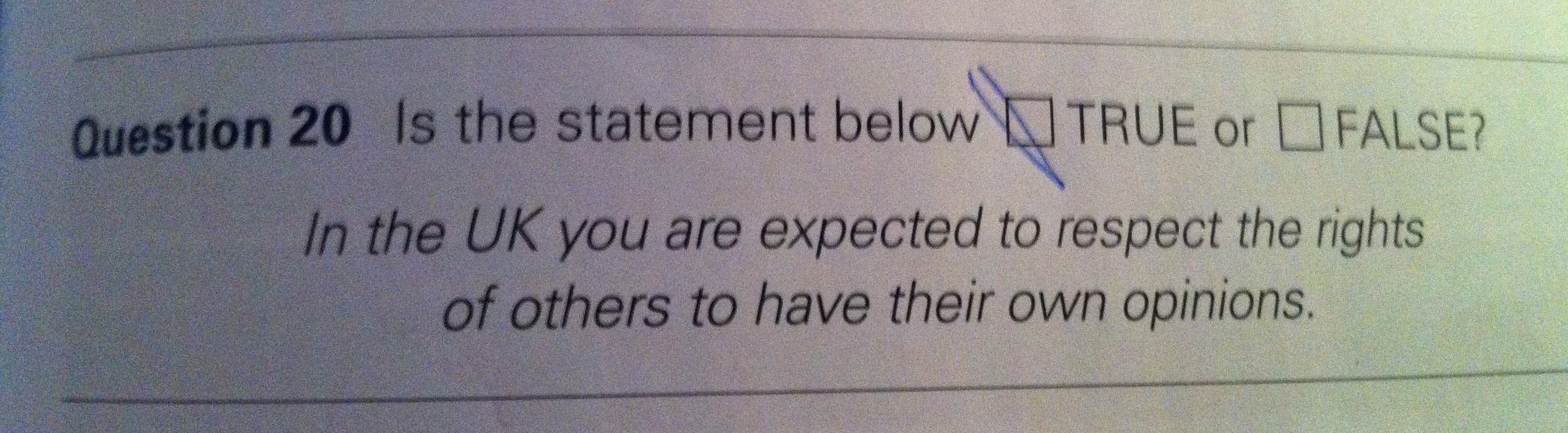
Those politicians, journalists and activists who still seek to police the immigration debate and preordain its outcome could do worse than studying up on this one, known to every new British citizen:
Is the statement below TRUE or FALSE?
In the UK you are expected to respect the rights of others to have their own opinions.
If you enjoyed reading this article, please take a second to LIKE or SHARE it on social media using the buttons below. Help to spread the word and continue the debate.





 Semi-Partisan Politics