Andrea Leadsom vs Theresa May – An Impossible Choice, On Which The Fate Of The Conservative Party Rests

Stepping Stones Report - Goals and Risks - Brexit - EU Referendum

At this difficult time we can take inspiration from our recent history and our last successful effort at national renewal

So it’s Theresa May versus Andrea Leadsom – the final two candidates in the Conservative Party leadership race whose names will now go forward to the wider Tory Party membership in September.

I’m delighted that the Conservatives will soon have given Britain her first two female prime ministers, I really am. When it comes to equality of opportunity the Tories deliver, while Labour bang on endlessly and fruitlessly about equality of outcome, peddle in tawdry identity politics and choose one white male after another to lead them onwards.

But does the successor to Ted Heath Mark II David Cameron really have to be one of these two women? When she entered 10 Downing Street, Margaret Thatcher already had the “Stepping Stones” report in her pocket and on her mind. By contrast, Andrea Leadsom brandishes an overhyped yet still rather thin CV, while Theresa May has your entire internet browsing history and the paranoia to use it against you.

And so, when deciding who to support in this battle to be the next British prime minister I find myself faced with an impossible choice – one may as well flip a coin.

This blog will inevitably write more about the Conservative Party leadership race in the coming days and weeks as I try to make a decision – right now I see pitifully few upsides to either candidacy, and great risk behind either option.

But for now I content myself with re-reading the seminal “Stepping Stones Report” authored by the late John Hoskyns, that masterful diagnosis of everything which ailed Britain in the late 1970s when the state socialist cure had almost succeeded in killing the British patient.

This report – and the solutions contained within it – quite literally saved this country when Margaret Thatcher, who had studied it, came to power in 1979. Without Stepping Stones, Britain would quite likely be a colder, more populous but equally poor and dysfunctional version of Greece. I say this to underline the amazing good which the Conservative Party can do when under the right leadership, and the thread by which such hopes often hang (Margaret Thatcher was considered a rank outsider when she first declared her candidacy for the Tory leadership in 1975).

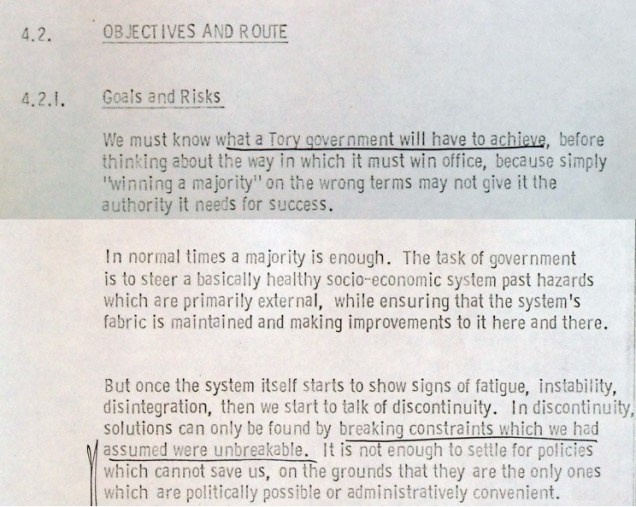
At this time I am drawn to this passage in particular:

We must know what a Tory government will have to achieve, before thinking about the way in which it must win office, because simply “winning a majority” on the wrong terms may not give it the authority it needs for success.

In normal times a majority is enough. The task of government is to steer a basically healthy socio-economic system past hazards which are primarily external, while ensuring that the system’s fabric is maintained and making improvements to it here and there.

But once the system itself starts to show signs of fatigue, instability, disintegration, then we start to talk of discontinuity. In discontinuity, solutions can only be found by breaking constraints which we had assumed were unbreakable. It is not enough to settle for policies which cannot save us, on the grounds that they are the only ones which are politically possible or administratively convenient.

It is safe to say that the Conservative government of David Cameron and George Osborne has been in office but not really in power since being re-elected with a tiny outright majority in 2015. And aside from their creepy manifesto pledge about having “a plan for every stage of your life” it has been almost impossible to discern what the Tories actually stand for, besides staying in power.

Winning a majority has not been enough because the majority was won on the wrong terms – by a prime minister who often pitched himself to the left of Tony Blair in the tawdry hunt for centrist votes. And these are far from ordinary times. As this blog recently pointed out, quoting Lincoln, the dogmas of the quiet past are inadequate to the stormy present.

Theresa May is an accomplished technocrat, but also a fierce and implacable authoritarian. Even her more restrained actions – such as denying the former London mayor Boris Johnson the power to use his expensively purchased second hand German water cannon for crowd control – smack more of political chicanery rather than any shred of liberal principle.

On civil liberties, May is utterly monstrous. But more to the point, Theresa May came down on the wrong side of the most fundamental, existential question to face this country since the end of the Second World War.Worse, she supported the Remain campaign with a calculated half-heartedness, refusing to boldly commit and make the public case for her position. What kind of leadership is this?

Andrea Leadsom is no better. She has publicly and irresponsibly spoken about triggering Article 50 almost immediately, well before any initial scoping discussions have even had the opportunity to commence and well before the British government has had the proper chance to decide how best to implement Brexit, and seems intent on taking us out of the EEA as we secede from the European Union. Her haste is not evidence of super-virtuous commitment to democracy or an uncommon respect for the will of the people, but is the conclusion reached by what seems to be a rather glib and uncurious mind.

But whether you are less repulsed by the flinty-eyed authoritarianism of Theresa May or the oversimplifying, CV-padding antics of Andrea Leadsom, it seems reasonable to say that neither of the two remaining candidates have anything approaching a latter-day Stepping Stones report waiting in their pockets for immediate unveiling as soon as the Queen has invited one of them to become prime minister. And that is what we need most of all right now.

Theresa May’s authoritarian streak, contempt for civil liberties and belief in wielding the coercive power of the state is incredibly objectionable to this blog – yet as by far the more experienced candidate, May is best placed to negotiate good secession terms for Britain with the EU (assuming that she doesn’t double-cross us and effectively condemn Britian to “associate membership” on the margins).

Andrea Leadsom has precious little track record in government or politics in general, and has distinguished herself by saying some downright irresponsible things about Brexit. As a result, she could potentially overshadow the democratic dividend of Brexit through unnecessary self-inflicted economic wounds (e.g. by taking Britain out of the EEA). Yet she is superficially more Thatcher-like (I won’t say Thatcherite), and has the potential, however small, to grow into a far more radical Conservative leader than the soul-sappingly ideology-free Theresa May could ever be.

Choose May and you risk turning Britain into a dystopian police state while rewarding yet another ideology-free, politics-by-numbers technocrat, the kind of person whose unambitious, managerial approach to the great issues of the day turns millions of people off politics altogether.

Choose Leadsom and you risk a tumultuous and highly suboptimal form of Brexit while taking an enormous leap of faith that an untested neophyte will successfully get to grips with one of the steepest learning curves in the world, and that they will be advised well in the process.

Who can choose between these two flawed options with any degree of certainty?


Stepping Stones Report - Wiring Diagram

Brexit - EU - European Union Flag - Missing Star - Britain - UK

Top Image: ‘Stepping Stones’ Report

Agree with this article? Violently disagree? Scroll down to leave a comment.

Follow Semi-Partisan Politics on TwitterFacebook and Medium.

Of Course Brexit Will Not Solve The Housing Crisis

Housing Crisis - Brexit

Build. More. Houses.

Rosamund Urwin has a rather strange and unnecessary piece in the Evening Standard warning us that Brexit will not miraculously solve the housing crisis:

Brexit may well enable a fast-moving few to buy, but I doubt it can offer a solution for the majority of those who want to escape renting. It’s like letting crows snack on a carcass; the rest of the aviary will still need feeding later too.

Although it may make the average home cheaper, Brexit is also expected to deplete the number of homes (including the “affordable” variety) being built. There’s a shortage of land earmarked for residential construction in London, partly because developers keep most of their vast landbanks as empty plots, rather than putting homes on them. Given the uncertainty Brexit has unleashed, developers are more likely now to delay or mothball schemes. That will exacerbate the shortage of housing stock long-term.

To top that off, building will soon incur bigger bills. The cost of imported materials has risen with the sliding pound and labour costs would increase without EU workers.

I don’t know a single person with a functioning brain who thought for a moment that Brexit would solve the housing crisis.

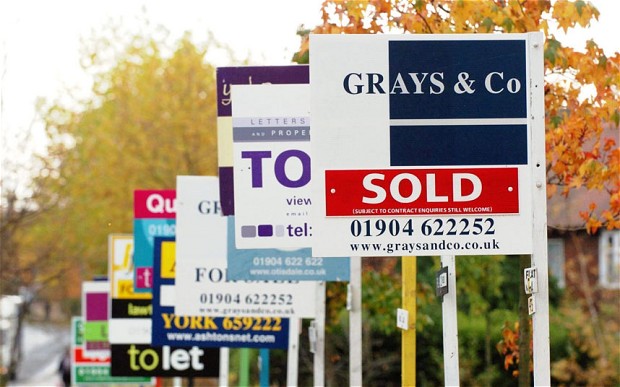
The only thing which will ever solve the housing crisis – bar a lethal smallpox pandemic that wipes out half of the population – is the one thing that successive cowardly, pathetic governments have not done: Build more houses.

But this government is committed to building a million new homes by 2020“, whines David Cameron in protest. Does he want a medal? Net migration is running at upwards of 300,000 per annum. Even the government’s most sunny estimate of future housebuilding means less accommodation per capita in 2020 than there is today. Every month of this dithering, prevaricating (and now leaderless) Coke Zero Conservative government is a month when demand for housing further outstrips supply.

If you were captain of a sinking ship, taking on hundreds of gallons of water a minute, you should not expect to be hailed as a hero for filling your coffee mug with seawater and flinging it overboard instead of plugging the massive hole in the ship’s hull. It is a worthless gesture which makes almost zero difference – much like the government’s furious pretence that building more council houses and cooking up various “help to buy” schemes is a fitting response to a festering national crisis.

It’s all quite deliberate, of course. To actually build the number and type of new homes that Britain needs – in the cities, and upwards not outwards – would cause house prices first to stagnate and then to fall. And since houses in Britain are now revered more as an investment vehicle than somewhere to put the flat screen TV and shelter from the elements, we are now blessed with a generation of politicians more than happy to waffle on about the housing crisis but loathe to do anything to tackle it.

Dishonest, NIMBYish politicians are what stands in the way of resolving the housing crisis and putting the dream of home ownership back within reach of millions of hard-pressed middle class Britons. Brexit makes little difference either way.

Unlike education or healthcare, the solution to the housing crisis is actually as simple as it looks. But we continue to tolerate politicians who almost take pride in conspicuously doing nothing about it.


Brexit - EU - European Union Flag - Missing Star - Britain - UK

Top Image: Telegraph

Agree with this article? Violently disagree? Scroll down to leave a comment.

Follow Semi-Partisan Politics on TwitterFacebook and Medium.

Brexit Fallout: Shaming Leave Voters Is Despicable, And Will Backfire

Shame

Remainers were not able to win the EU referendum, but they are determined to make wavering Brexit voters regret and feel ashamed about their vote

I’m now starting to get quite angry at the effect the bullying, hectoring and self-entitled sore loser contingent within the Remain camp are having on soft Leavers.

Many people were genuinely conflicted in their decision, and have already displayed an enormous amount of personal courage in overcoming the incessant Project Fear messages crafted by Will Straw, David Cameron and their Britain Stronger in Europe henchmen. To see them now cowed and bullied into feeling bad about their decision by furious Remainiacs intent on associating them with racists and xenophobes is offensive in the extreme.

Newsweek magazine details some of the abuse received by just one left-wing Brexit supporter:

Here is one of the hateful comments that was posted on my Facebook profile by a male friend in Berlin: “It’s plain & simple: You voted with the fascists and now you use their lingo (that the mainstream media covered it wrong) to justify your naivety. If I hadn’t heard that sentiment a gazillion times from morons in Germany or the UK, it would be pretty funny, but now it just makes me sick and I have to say it somehow fits ya…[sic]” Not content with that, he then followed up with an even more insulting private message to me, at which point he was defriended.

This next one came from a senior male ex-colleague: “You voted leave??? A racist hate campaign based on lies which were admitted not even 24 hours after the vote? I am shocked. But at least Trump sent his congrats. Unbelievable.”

Another male friend, this time from London, wrote: “When you’ve got commenters on the Daily Mail site saying they feel misled and would change their vote if they could, then you know you’ve got problems.” I told him I didn’t feel misled. He didn’t like that very much. Cue more vitriolic and deeply patronizing comments where I was told to “look up this” and “look up that” as if my IQ had dropped.

Newsflash! I didn’t go to bed left-wing and wake up right-wing. As all my real friends know, I believe in integration, tolerance, multiculturalism, the NHS and equal rights. So just to say it once more for those at the back not really listening—that’s definitely not fascist. Perhaps some of my so-called friends would like to talk to people up and down the country, not just in London, and learn how disenfranchised and disappointed many in the U.K. are with the EU, the Conservatives and austerity politics in general.

Latest to succumb to the browbeating is divorce lawyer Ayesha Vardag, who pitifully recants her Leave vote in the Telegraph:

I think there has been a lack of informed debate on both sides. I was not uninformed. But perhaps, in this instance, I was too informed, and I should have voted with my natural, liberal, European-spirited tribe rather than according to my concerns about the federal project, which now feel to me esoteric and unimportant.

With all this, I sound as if I’m making excuses. But I am only trying to explain, I suppose, why I voted as I did and why, too late, I have changed my mind.

I hate much more than anything about the EU the divisions in our country, the racism and xenophobia that have been given voice and legitimacy, the indignity of the shameful lack of leadership in our country, the destruction of our national esteem in our own and others’ eyes, the horrible, horrible mess that engulfs us now.

I feel, bizarrely, personally responsible for everything that goes wrong now, because, with my vote, with my expressed opinions, I contributed to it, and I shall be sorry every day. And those who know me well know I don’t much like to say sorry.

I’m sorry I voted out, given how it has transpired. I am so sorry so many people I care about are upset about the referendum result. I feel guilty that I voted for something that has made them so afraid and unhappy. I also feel massively panicky about the market instability, the social division and the failure of sensible direction at the top.

Guilt trick – successfully accomplished.

This blog is no great fan of Ayesha Vardag, but one should still deplore the fact that a fellow citizen and voter can have such opprobrium heaped upon them – including accusations that they are effectively in collusion with racists and reactionaries – simply for voting based on their perfectly valid and mainstream criticisms of the European Union.

And it is not just angry trolls on social media whipping up this anti-Brexiteer hatred. It is politicians and commentators and supposedly respectable people who have decided to characterise the EU referendum as a battle of good versus evil in which any dissenters from the pro-EU status quo automatically fall into the evil category.

This can only backfire. Loudly and shrilly accusing half of the country of being racist simpletons didn’t work when the establishment was fighting to keep Britain in the EU; it will certainly not work as disappointed Remainers seek to find their footing and regain their influence over political events. Indeed, we already see the opposite happening, with even some Remain voters recoiling from the arrogance and intolerance of their own side.

The Spectator carries the story of one Remain voter who now openly wishes that he had voted Leave:

As the week progressed, and demonstrators with radical piercings marched on Parliament in solidarity with EasyJet and George Osborne, I found my mood change. As one Guardian commentator after another dismissed the opinion of the poor, the old, the white, the uneducated, I began to wonder if the Leavers hadn’t been right all along. Perhaps the Remain side were out of touch with what much of Britain thought.

[..] As my mood changed, yet more taboo thoughts rose to the surface. If the EU has transformed working conditions for the better, why are there so many zero-hours ‘contracts’? Why do ‘left wingers’ trust businesses so reliant on cheap labour? If it’s so important for crime prevention, how do we explain Saliman Barci and Arnis Zalkalns? We are ‘informed’ that we need young blood because there’s a pensions crisis, but won’t migrants also grow old? We are told by Jeremy Corbyn that immigration has no impact on housing, and it’s all because the Tories are too mean to build 300,000 houses a year. What if he’s wrong and the EU did in fact have a negative impact on housing stock?

Then came the petitions. Remainers calling for the referendum to be ignored, or worse, re-run, revealed themselves to be the enemies of democracy. How many of them would tolerate similar calls from the Leave camp if the vote was reversed? And what happens if a re-run took place and a slender majority did vote Remain. Did they really think the Leavers would take that lying down?

By now, I also wanted to repent. I’d voted Remain, but had not realised that my vote would have counted for more if I had voted Leave. I regretted my vote because if the margin had been wider, perhaps those commentators who make a living decrying our country, our electorate, our past, would pause to reflect on what voting meant to ordinary people rarely allowed to make national decisions. For an overwhelming majority of Leave voters it wasn’t about sending messages to Brussels, or wiping the smugness off Cameron’s face; it was about deciding which choice would be best for them, their children, and for the country they love.

In case it was not already apparent (with the ascendancy of Jeremy Corbyn, the SNP and Donald Trump) these are not normal political times in the West. The establishment was already discredited and seriously off balance even before the stunning EU referendum result further highlighted their disconnect from much of the population. And now, many people within and around the establishment seem determined to compound this disconnect by either explaining away the people’s decision to vote for Brexit or angrily chiding them for it.

But for every tearful recanting of a Leave vote under duress on social media we are likely to see two or more hearts hardened against pleas from establishment figures for the people to defer to their arrogant self-interest masquerading as dispassionate expertise. People just aren’t buying it any more.

Ayesha Vardag, for her faults, has absolutely nothing to apologise for when it comes to her vote in favour of democratic self government and against a failing, dysfunctional and terminally un-reformable European Union. And though wall-to-wall catastrophisation of Brexit in the media and screeching denunciations of Brexiteers on social media have caused her to recant her vote, she will be vindicated in her initial decision in the fullness of time.

And this sneering, arrogant and deeply ignorant anti-Brexiteer inquisition being waged by disappointed Remain supporters will not succeed.


Shame - I will not do it again

Brexit - EU - European Union Flag - Missing Star - Britain - UK

Agree with this article? Violently disagree? Scroll down to leave a comment.

Follow Semi-Partisan Politics on TwitterFacebook and Medium.

Brexit Fallout: Fear And Loathing (Of Democracy) In Brussels

The hysterical response of EU officials to Brexit (as opposed to national leaders, who have been more pragmatic and conciliatory) shows why we were right to leave the European Union, and why no lover of democracy should be happy so long as it continues to exist as a supranational government of Europe

Among a number of my fellow liberal-minded Brexit supporters I sense a reticence to attack the European Union now that we have most unexpectedly won the EU referendum. This, I think, stems from the admirable and earnest desire to do the right thing for Britain, ensuring that we negotiate the best possible secession deal with Brussels without needlessly antagonising our European partners. All of this I understand and agree with.

But I cannot retract nor temporarily suppress any of my earlier criticism of the European Union, and nor should any other Brexiteer not intimately involved in the Brexit negotiations feel compelled to pull their punches.

The EU was and remains an aloof, arrogant and insulated escape pod for failed national politicians, dreary bureaucrats and starry-eyed euro-federalists to govern nearly an entire continent without the first shred of democratic legitimacy. The EU is an answer (the eventual common European state) without a question, a solution without a problem and a glaring anachronism from a bygone age.

The EU is a succubus, draining the life and capability for self-governance from its member states (as the British government is now belatedly finding out, facing the prospect of having to think and act independently on the world stage), replacing the potentially positive outcomes of intergovernmental cooperation with the fudged, amateurish, self-inflicted calamities of unstable supranational governance.

It therefore follows that just as I believe EU membership is wrong for Britain, so I believe it is wrong for other EU member states too – and it should be up to the national electorates of each country to validate their continued partnership in this project by voting to leave or remain in their own national referenda. If the European Union had any shame or dignity it would positively welcome such a step in order to finally affirm its existence through popular support, rather than doing what it always does – hiding behind staunchly pro-EU governing elites in each country.

And it is this fear of further referenda in other countries which is now spooking many of the EU’s most senior leaders, though they remain utterly divided as to their reaction, with Donald Tusk and the Council favouring a “steady as she goes” approach and EU Commissioners and Parliamentarians like Jean-Claude Juncker and Martin Schulz wanting a reformed (read: more) Europe.

In a speech to the European Parliament, Guy Verhofstadt declared in a speech directed at Donald Tusk, President of the European Council:

…the reaction of the European Council to this political earthquake, because an earthquake it is, what happened in Britain. The only reaction I have heard of the Council was that we should not change anything, that it’s just a question of implementing the existing European policies. I find this shocking, and I find it all so irresponsible. I don’t think you understand what is happening.

It’s not only a Brexit referendum. Before that there was the referendum in Denmark, negative. There was the referendum on the Ukraine agreement in the Netherlands, negative. Now in the UK. What are you waiting for? For the next referendum in France? The next referendum in Italy, maybe? When will you recognise, when will the council recognise that this type of European Union of today, you can not defend it any more? And that Europe needs to be reformed. And in my opinion that the new vision, the new approach should be presented to the citizens of Europe.

Of course, Verhofstadt then goes wildly off key, claiming that the results of a recent Eurobarometer poll somehow represent a seething public desire for a common European army, intelligence service and indeed a true EU government:

The real problem today [..] is intergovernmentalism. A loose confederation of nation states based on unanimity can not work. That is the reality of today, that you don’t recognise until now.

So More Europe, then. Even now, after the loss of the EU’s second largest economy and strongest diplomatic, cultural and military power, the elites sitting in Brussels and Strasbourg wish to press ahead with implementing their vision. The only reason for its widespread unpopularity and rejection by Britain is, to their minds, the fact that their vision remains incomplete. If only we saw the common European state standing finished in all of its glory we would learn to love it, so those countries which remain must hasten to bring it about.

What dangerous garbage. This is why any lover of democracy and any supporter of the nation state as the last line of defence and supreme guarantor of our freedoms should be implacably opposed to the European Union, now and always.

Out of necessity we must maintain warm, cordial and productive relations with Brussels, especially as we begin the delicate work of unpicking 40 years of incessant political integration by stealth. But if the happy day finally comes when the EU collapses under the weight of its own sanctimony, misconceived sense of destiny and glaring internal contradictions then the world will be a better place, the cause of democracy will be better served and nobody should shed a single tear.

Let’s not lose sight of that.


Brexit - EU - European Union Flag - Missing Star - Britain - UK

Agree with this article? Violently disagree? Scroll down to leave a comment.

Follow Semi-Partisan Politics on TwitterFacebook and Medium.

Brexit: One Good Bishop Admits Voting To Leave The European Union

Bishop of Shrewsbury - Mark Rylands - EU Referendum - Brexit - Christianity - Church of England

A bishop the Church of England should be proud of (but won’t be)

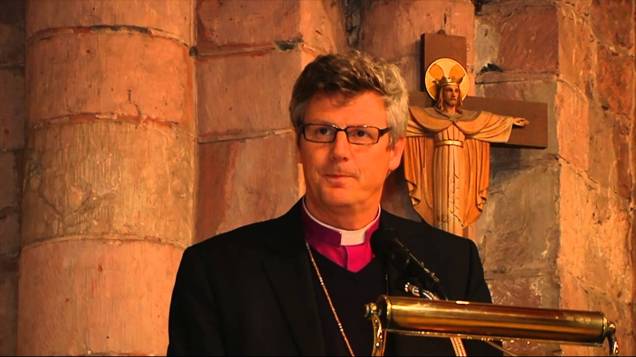
Mark Rylands, Bishop of Shrewsbury, is one of the very few Christian leaders to come down on the right side of the EU referendum debate, having admitted in a letter to the Church Times that he voted Leave on 23 June.

From Bishop Rylands’ letter:

At my bishops’ cell group in May, I came out as a Brexit bishop. My episcopal friends, at first, did not believe me. The following 24 hours brought some lively conversation, mixed with a certain amount of gentle mocking.

Yes, I voted to leave the European Union. I did so for all the usual reasons that were cited over the past months: democratic deficit, huge central staff salaries, waste of resources in Brussels and Strasbourg, loss of both sovereignty and oversight of UK laws.

I have long hoped for the reformation of the EU. In February, I felt pity for David Cameron as he hailed a renegotiation barely worthy of the name. It showed that the EU leaders did not see the need for any reformation. It smacked of arrogance.

While in agreement with the EU’s outlook on tackling climate change, and its policies on GM seeds, I had other reasons for voting Leave:

  • The EU’s commitment to its member states means it can be a bad neighbour to outsiders. Its actions have an adverse impact on poorer countries through various trade policies, most notably the Common Agricultural Policy. The EU’s export subsidies for EU agricultural products have disastrous consequences for food security, and undercut agricultural sectors in the poorest nations. Jesus teaches us that our neighbour is not just our next-door neighbour, but everyone. Leaving the EU does not mean shunning Europe. We are Europeans, and we will still have strong relationships with EU nations. Being able to make our own trade agreements, however, gives us an opportunity to be more globally linked.
  • The EU does not seem to be good news for the poorest nations in the eurozone. Countries in the single currency, struggling economically, appear stuck with low growth. Unable to devalue their currency, they are trapped in a rut of depression. Youth unemployment in Spain, Greece, and Italy has soared, and extremist political groups are gaining a strong foothold.

The letter goes on to list other compelling reasons, and ends with this exhortation:

Listening to the marginalised: our hope is in Christ who unites all of us. The referendum has highlighted faultlines and divisions in our society. Churches are called, like Christ, to stand with the voiceless and the marginalised. Some of those voices have been racist and xenophobic. We are not aligning with these, of course. We must, however, align ourselves with those who feel unheard, not allowing them to be dismissed as “uneducated” and “stupid”. Why are so many people so angry? The new work around mission on urban estates may have something to teach us here. But let’s not forget that the rural poor have also spoken loud and clear in this referendum.

[..]

Being in Europe does not mean you have to be in the EU. All across the UK, there are towns and villages twinned with towns and villages in France and Germany. And there are many dioceses that have formal links with other dioceses across Europe. Sharing meals and hospitality; exploring faith and ideas, enjoying laughter and conversation with our neighbours across the Channel: Let’s do more of it! Such hospitality can strengthen our bonds of friendship more than any policy or agreement. After all, loving football does not mean you have to love FIFA.

The FIFA/EU comparison is brilliant. The endemically corrupt world governing body of football represents the love that millions of people have for the game of soccer no more than the creaking, anachronistic and profoundly antidemocratic European Union represents Europe, or the sole vision of European cooperation and solidarity. This is a point always worth emphasising, and a welcome antidote to the usual “puppies and rainbows” bilge spewed by apologists about the EU’s supposedly benign intentions.

Archbishop Cranmer is impressed:

If you pray, please do so for the witness and courage of Mark Rylands, Bishop of Shrewsbury. He understands the unification of ethics and politics; of moral duties and the exercise of virtue. He views Brexit in the context of God’s comprehensive governance and divine jurisprudence. He reshapes the geo-political ethic to comply with the doctrine of Christian compassion and salvation. He is prepared to speculate on a different truth from that set forth by the Established Episcopacy. In short, Mark Rylands interprets distinctively the nature of European goodness, and preaches a higher practical judgment; a greater pleasure and happiness. The Church needs a few more like him.

While noting:

It is worth noting that his coming out as a Brexit Bishop was initially a cause of disbelief among his fellow clergy, followed by “lively conversation” and then some “gentle mocking”. Please don’t read over those apparently affable reactions without considering that incredulity may be infused with contempt; “lively conversation” may be interspersed with derision and disparagement; and “gentle mocking” may tease and taunt, but beneath the chaff is the condescending sneer of those who know better, which easily becomes an expression of ‘hate’.

Does the Dean of Exeter think the Bishop of Shrewsbury is “stupid”? Does the Dean of Manchester believe the Brexit Bishop is “racist”? Does the Dean Emeritus of Durham berate him for acquiring a few new fascist and anti-Semitic “friends”? Is this the new division: Remain sheep and Brexit goats? Is this what Mark Rylands meant by “lively conversation” and “gentle mocking”?

(The Catholic Archbishop of Southwark, Peter Smith, likewise expressed eurosceptic opinions and outrage at the campaign of fear and intimidation waged by the Remain side, but did not openly declare his support for Brexit.)

I shall certainly say a prayer of thanksgiving for the leadership, witness and remarkable moral courage of Mark Rylands in openly defying the leaders of his own church when he realised that they had strayed into temporal matters on entirely the wrong side of the EU referendum debate.

When so many Christian leaders let their flocks down by thoughtlessly and uncritically singing hymns of praise to the European Union throughout the referendum campaign, either ignoring EU’s manifest failings or insisting contrary to all evidence that the beast could somehow be reformed, Bishop Rylands made the right call.

If only there were more bishops like him. Standing up against an antidemocratic, relentlessly tightening and public opinion-resistant political union in favour of democracy and self-determination should not be a niche interest within the Church.


christianity-europe-eu-brexit-3

Agree with this article? Violently disagree? Scroll down to leave a comment.

Follow Semi-Partisan Politics on TwitterFacebook and Medium.