Why Can’t We Raise The Quality Of The Debate On Europe?

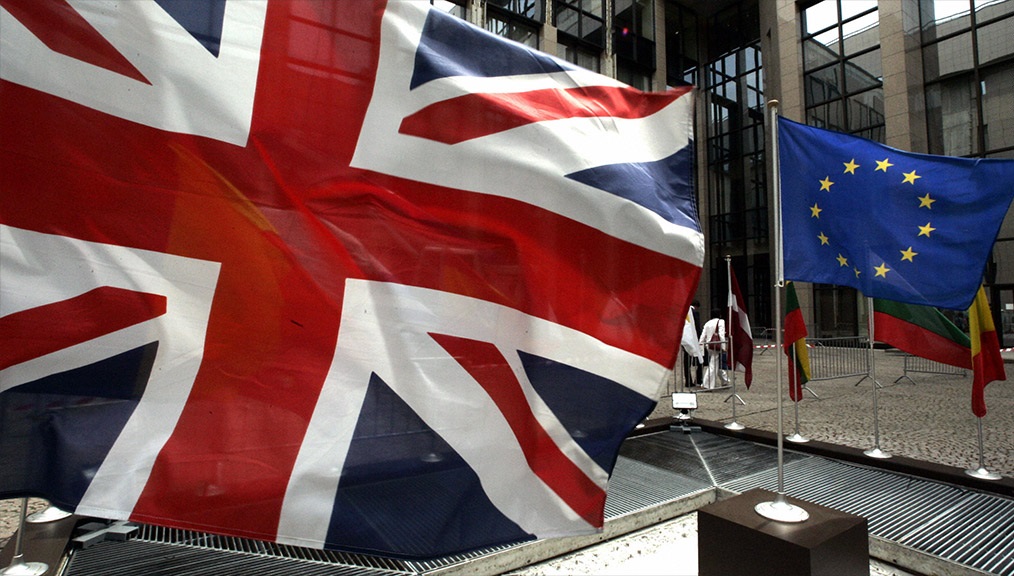
EU UK Britain Flags

The stakes could not be higher for our country, and yet the debate about Britain’s place in Europe takes place in a febrile atmosphere where blinkered partisanship and confected outrage on social media draws a larger audience than reasoned argument. No wonder we are incapable of disagreeing with honour when it comes to our place in the EU

Why can’t we disagree well on Europe?

That is the question posed by Justin Welby, Archbishop of Canterbury, in a thought-provoking intervention posted at Reimagining Europe, a new Church of England blog examining Britain’s place in Europe and the world from a Christian perspective.

In his piece ‘Learning to disagree well on Europe’, Welby writes:

People will say that we should not take the risk of leaving, others that it is less of a risk than staying. There will be talk of national sovereignty, of national confidence, of repatriation of laws, or being bound by European laws over which we have no control. The only certainty is that there will be much heat, probably slightly less light, but that it is a hugely important decision, with thoughtful and committed people, including Christians, on both sides.

But what about those in the UK for whom our membership, or withdrawal, from the Union, is not a major question, those for whom the needs and responsibilities of each day take precedence, and mention of political debates such as this leave them cold?

[..] How can we revitalise ideas such as sovereignty and subsidiarity – ideals formed out of Christian faith whose political dimensions capture their meaning only in part – and help encourage a clearly values-based approach to Britain’s future relationship with the EU; one that includes, but does not end with, economic and political perspectives?

All worthy questions. And in the spirit of making a constructive response, I would offer two main reasons that the quality of the debate has been – and is likely to remain – so desperately low.

First, the stakes of the debate are so high: we are not talking about tweaks to the tax code or welfare system which can be easily undone by a future administration, this decision will shape the future of our country, and the way in which the whole world responds to the challenges of globalisation. And secondly, the quality of our political discourse in general is driven by the internet and social media, democratising in their way but also a megaphone for those with the loudest and most outrageous opinions to seize control of the narrative.

Continue reading

Why Should Britain Help Germany Reform The EU?

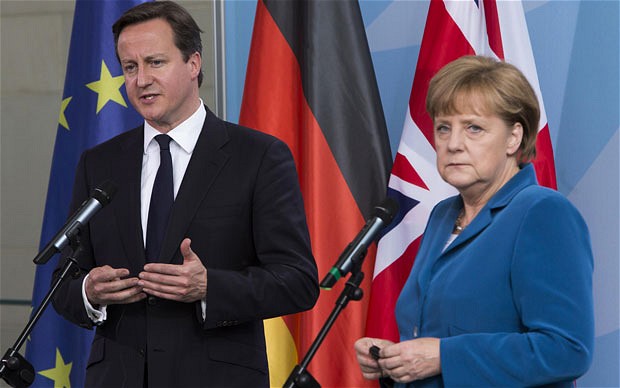
David Cameron - Angela Merkel - EU - 2


You have to hand it to Michael Fuchs, deputy chairman of Angela Merkel’s CDU party in Germany. If you genuinely want Britain to remain part of the European Union – for intentions noble or otherwise – the best way for other countries to achieve that outcome is by convincing the British people that they too are frustrated by Brussels bureaucracy, that they yearn for real reform, and envisage our humble selves at the heart of this great effort.

And this is exactly what Fuchs has done, presenting the face of German concern about Britain’s place in the EU while his ally Angela Merkel is preoccupied with the far more pressing matter of the Greek crisis.

From the Telegraph:

“I want the UK to stay in the EU, and I cannot even imagine an EU without the UK. I don’t want to imagine it,” [Fuchs] said.

“In particular, for us it’s not good because the UK is a partner promoting a free-market economy, much more than the southern hemisphere in Europe. [Some of these countries] want to have a more state-regulated economy, and the UK is more like us, for instance, like Holland and the northern hemisphere, so we would not be very happy to see it go.”

Mr Fuchs described Brussels as a “huge” bureaucracy that needed to be scaled back. “I fully agree with certain statements of [Prime Minister] David Cameron saying that Brussels need not be such a huge bureaucracy, with so much red tape.

“That’s quite important, I think, and we need Cameron’s help to change it.”

Unfortunately, when someone you normally expect to be an antagonist starts acting very friendly, there is usually an ulterior motive at play. Feigning concern for and agreement with a difficult negotiating partner is straight out of Hostage Negotiation Strategy 101, and just as the man in the FBI jacket doesn’t really care that your wife left you and isn’t really going to arrange that escape airplane filled with cash, so Germany isn’t really about to let awkward old Britain stop the wheels of an EU juggernaut which has been rolling and gaining momentum since the 1950s.

Continue reading

If Barack Obama Likes The EU So Much, America Can Take Britain’s Place

Barack Obama - EU - Britain - Brexit


The harshest critics of President Obama like to complain that the 44th president of the United States does not believe in American exceptionalism.

But today Barack Obama proved these fears to be unfounded – he does indeed believe that America is different and better than all the other countries of the world. And he did so by using an intervention at the G7 summit in Germany to pointedly suggest that a diplomatic settlement which the United States would never accept for itself (membership of a supernational body with sovereignty over the US government) is perfectly good enough for Britain, America’s closest ally.

From the Huffington Post:

Mr Obama’s comments came as he met Prime Minister David Cameron for talks in the margins of the G7 summit of world leaders in Schloss Elmau, Germany.

They are the strongest indication yet that Washington wants a Yes vote in the referendum which Mr Cameron has promised by the end of 2017 on whether Britain should stay in the EU.

Greeting Mr Cameron at the start of the bilateral talks, Mr Obama said the US-UK relationship remains strong, telling reporters: “We have no closer partner around the world on a whole host of issues.”

And he added: “I would note that one of the great values of having the United Kingdom in the European Union is its leadership and strength on a whole host of global challenges, so we very much are looking forward to the United Kingdom staying part of the European Union because we think its influence is positive not just for Europe, but also for the world.”

It should be noted that by making these pro-European interventions, President Obama is only repeating the longstanding American diplomatic position, which is that Britain should remain part of the European Union, come hell or high water.

Unfortunately, both hell and high water are now nearly upon us thanks to the suffocating economic and political embrace of the Old World, and it is high time we stopped giving any weight or consideration to American entreaties for us to do what is most convenient and beneficial for their own foreign policy over and above what is best for Britain. The United States would certainly like for Britain to remain in the European Union. But don’t take this as a sign of some overriding concern for the future of the UK’s economy or the health of our democracy – far from it.

Continue reading

What Comes After Britain?

What comes after Britain broken union flag

Those who are eager to undermine the nation state should explain how they intend to preserve democracy once it is gone

I’m on the losing side of history.

I still believe that the nation state is a force for good, and that it remains the best repository and defender of our most fundamental rights and liberties. But I’m in a dwindling minority, and others have different ideas. Most things to do with the nation state are either being replaced, deconstructed or just becoming passé. I get funny looks if I say wouldn’t it be nice if we brought back the national anthem before sporting and other events, or if I write anything about “British exceptionalism”.

I know that all of these things are fading into the past, and I can make my peace with that. But for those who call themselves “progressive” and heartily embrace conceptions and institutions such as today’s vast European Union or total, unmanaged multiculturalism*, I have a question: do you really know what you are letting yourselves – and all of us – in for?

At the moment almost all of our rights are vested in and guarded by the nation state. But the nation state is under attack on all fronts – unlimited immigration within the EU, free trade, global capital flows, multinational corporations. I broadly agree with some of these trends, I often like them in principle and even personally benefit from most of them; but they are all gradually undermining the nation state.

Continue reading