The Narrowing Path To Victory For Brexit Supporters

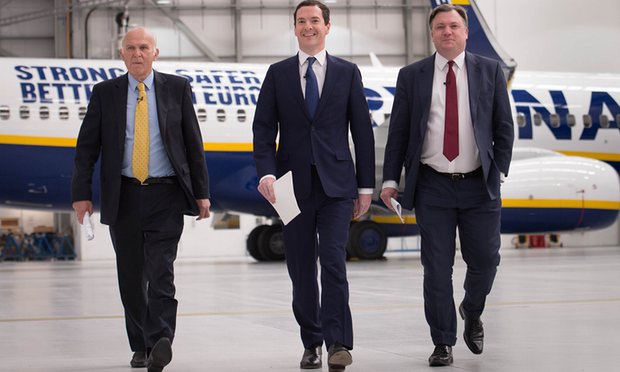
George Osborne - Ed Balls - Vince Cable - RyanAir - Brexit - EU Referendum - Establishment - Coke Zero Conservatism

A big external shock or a rising tide of anti-establishment rage are now the only remaining paths to victory for the poorly-led Brexit campaign

Getting a majority of Britons to vote to leave the European Union – particularly in so compressed a time frame, with the entire establishment chorus raised in unison against us – was always going to be very much a long shot. That much is obvious; asking people to vote against the established status quo is always very difficult, and despite having spent years flaunting their euroscepticism in public, it quickly became clear that many of the “big hitters” had given almost no thought as to what Britain’s future outside the EU should look like.

How different things could be if only the official Leave campaign had…oh, I don’t know, some kind of Brexit plan – not just familiar recitations of everything that is wrong with the EU, but an actual positive alternative vision for Britain, rooted in fact and probability rather than idle conjecture. But the shining ones in charge of Vote Leave and Leave.EU saw no need for a stinkin’ plan, preferring to paint with childishly broad brushstrokes their half-baked vision of buccaneering Britain negotiating and signing tens of trade deals a year, while the EU falls over itself to give us all the benefits of single market access at no cost (because the Germans like selling us their cars, don’t you know?)

Or as Pete North puts it:

From the outset you need to stress test your message. It has to be the words of winners. Eurosceptics bleat on about going global but it’s empty when you contrast it with the rest of their message which is outright hostile to global engagement. Again, it fails the credibility test.

I’ve said it time and again, but simply whingeing about the EU doesn’t work. Very few people like the EU, but they need a seriously good reason to take a risk – and that means you have to have a safe and desirable alternative. Oh, and a plan to get there. Vote Leave’s approach is to pretend there are magic wands to instant prosperity. Rather than seeking experts they sought people who will tell them what they like to hear. The Westminster bubble all over. They are going to lose and they will deserve it.

And so, with an uphill battle on their hands, the official Leave campaign has done almost nothing to improve their chances of victory, preferring to fire up the base and exalt in their lack of a Brexit plan rather than make a concerted effort to win over the undecided. And we are now rapidly approaching the point where all straightforward paths to victory are closed to the eurosceptics. Privately, David Cameron’s team expect to win with as much as 58% of the vote, and it increasingly appears that the only thing which might decisively change the Leave campaign’s fortunes is a big external shock – a flareup of the migrant crisis, a badly timed EU power play or a domestic political scandal, for example.

But why, besides the obvious ineptitude of the official Leave campaign, is it proving so hard to win over the undecided? It certainly doesn’t help that the arguments for remaining in the EU tend to be simplistic and fear-based*, while those in favour of Brexit (at least the thinking person’s version of Brexit) are more nuanced and complex. Among those who are not already die-hard eurosceptics, the push factor away from the EU can only take root when one has a basic grasp of the EU’s history and workings, while the pull factor toward an outward-looking, globally engaged Britain requires an understanding of the changing global trade and regulatory environment which the mainstream media utterly fails to provide (because they themselves do not understand it either).

(* Here I discount the genuine euro-federalist argument, which is perfectly legitimate but almost never heard in Britain because it is so distasteful to the majority.)

When Remainers crow that most major organisations from the IMF to large corporations want Britain to remain in the EU it superficially sounds like a slam-dunk case for staying, until one realises that most of the organisations held up by the Remain campaign are duty bound to minimise the risk (however small) of economic disruption, but have absolutely no mandate whatsoever when it comes to protecting and preserving democracy.

The CEO of a large corporation is accountable to the board and shareholders for the financial performance of their firm – often, it should be pointed out, with an unhealthy emphasis on the short term. CEOs have no legal responsibility to make public pronouncements about what is best for Britain’s democracy – the ability of British citizens to exercise meaningful control over the decisions and policies affecting their lives. And they certainly do not forfeit their bonuses when political engagement and voter turnout falls as people increasingly realise that it doesn’t much matter which party holds the majority in Westminster.

Were it not so depressing, it would be amusing watching Remain campaigners, particularly those on the Left, eagerly lap up every word uttered by the voices of big business – people whom they otherwise utterly distrust and openly despise, but whose statements that Britain should remain in the EU are accepted gratefully and unquestioningly because they confirm all of the existing biases of the EU apologists. Enjoy it while it lasts, because you are never again likely to hear Ryanair and the Labour Party press office singing so lustily from the same hymn sheet.
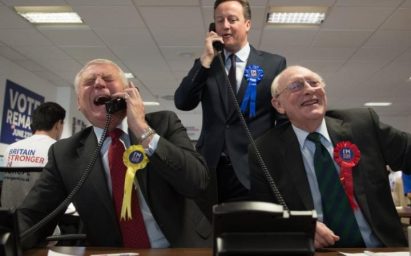
David Cameron - Neil Kinnock - Paddy Ashdown - Stronger In - EU Referendum - Brexit

But if, as expected, we go on to lose the referendum by a sizeable margin, our only remaining hope will be that the victorious David Cameron acts in as smug and condescending a way as he did in the aftermath of the Scottish independence referendum. Counterintuitively, this is when we need the prime minister to be at his arrogant best – to claim that the issue is settled for a lifetime and then swan around taking his gruesome victory lap and talking overexcitedly about how Britain will play a leading role in his mythically reformed European Union.

In other words, we need the prime minister to do everything in his considerable power to mock and belittle us if Remain carry the day, because this will add much needed fuel to the eurosceptic movement, light a fire under the the referendum post-mortem (Pete North is already talking about Nuremberg trials for those Brexit big beasts who did the most to let the side down) and hopefully result in a post-defeat surge in support like the one enjoyed by the SNP last year.

And there is every chance that this will happen – David Cameron has a big ego and a thin skin, and his political radar often deserts him when he gets emotional. Sadly, this may now be our best hope – to keep the margin of defeat as small as possible, and then hope for (or indeed provoke) as many gaffes and missteps as possible from the victorious Remainers.

It bring no joy to report this state of affairs – clearly it would be far better if Leave were consistently ahead by 10 points in all the polls and on course for victory, even if it means winning on the back of a “Brexit plan” drawn in children’s crayon. The only consolation is that this blog increasingly believes that the EU is doomed one way or another, that within ten years or twenty it will disintegrate under the weight of its own paralysing indecision, internal contradictions and interminable one-way ratchet towards closer integration.

We would all like to spend the remainder of 2016 preparing for secession negotiations and pressing the government to adopt sensible stances – and we should continue to fight to win, right up to the end. This is the last negative word this blog will write about the Leave campaign until the referendum is over – at which point you will find me, gavel in hand, on the bench at Brexiteer Nuremberg.

But increasingly it seems that our immediate job on 24 June will be to keep the flame of liberty alive, ready for the next opportunity – if and when it comes. And if we are truly dedicated to the cause, we must now begin preparing for that eventuality, too.

 

European Union - United Kingdom - Britain - Flags

Top Image: Guardian

Agree with this article? Violently disagree? Scroll down to leave a comment.

Follow Semi-Partisan Politics on TwitterFacebook and Medium.

Why The Real Elites Consistently Support Britain’s EU Membership

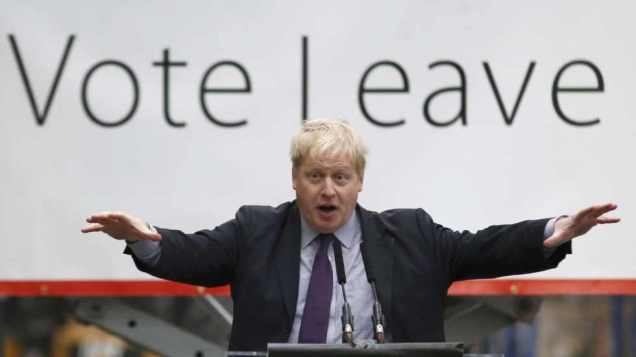
Boris Johnson - Vote Leave - European Union - EU Referendum

Professional and social elites are more likely to oppose Brexit for narrow personal reasons – which makes them bad citizens

James Delingpole writes in the Spectator that the real dividing line when predicting someone’s position on Brexit is where they fall on the posh / oik spectrum:

If you need to know how properly posh you are there’s a very simple test: are you pro- or anti-Brexit?

[..] So there I was at dinner the other evening with a delightful, erudite Old Etonian friend of mine. Let us call him ‘Kevin’ (not his real name). Kevin has an accent so deliciously plummy that if you could somehow tin it and sell it to the Chinese you’d become a billionaire. He is immensely cultured, civilised, wise and sensitive. I agree with him on everything, so naturally, when I asked him his views on Brexit and he launched into his eloquent diatribe on why he believed — and long had done — that the EU was the Abomination of Desolation, I listened in a state of near-ecstasy.

Kevin’s beautifully modulated speech went on for at least ten minutes. (There was hardly a shortage of material.) Then, suddenly, something weird happened. About 30 seconds before the end, Kevin shifted tack, and explained (or actually, hardly explained at all) that for all these reasons the only logical position was for Britain to remain in EU. Something to do with Europe being a lovely place and our having a moral duty to help it set the tone, I think.

And goes on to draw a interesting parallel with the Thatcher era:

What does all this tell us about snobbery and Tory politics? Quite a depressing bit, I’ve begun to realise. You can see much the same sort of thing going on in the Thatcher era. Who were her greatest loyalists, the ones most in tune with her radical programme? Why, they were grammar-school types with slightly suspect accents, such as Robin Harris and Norman Tebbit — not the plummy-voiced grandees such as Heseltine et al, who were the ones who eventually did for her.

This is also true, I think, of the upper social echelons’ attitude towards Nigel Farage. It’s not that they disagree with much of what he says: how could they, when he’s so refreshingly candid and reactionary and un-PC? But they’ve persuaded themselves that, like Ukip, he’s just a bit too spivvy and downmarket to deserve their open affiliation. This enables them to have their cake and eat it: privately enjoying his every home truth but never being tainted by that awkward, embarrassed feeling which tends to accompany frankly expressed views on matters like immigration.

Delingpole sees this as an elitism thing: the closer you are to the establishment or to the top of your field or profession, the more likely to are to have vested in the current  order of things and the more likely you are to sense Brexit (sometimes justifiably) as a threat to your current position.

I think that this probably holds true in all manner of fields, from education (How many university Vice Chancellors are brave enough to bite the hand that feeds them recycled British taxpayer money?) to the arts (for the same reason) to the world of business, which understandably cares a lot about economic stability and not so much about democracy.

But this blog maintains that one’s stance on the EU referendum is also determined by whether you consider yourself a citizen or a consumer first and foremost. As Delingpole’s anecdote makes clear, many of the European Union’s biggest advocates within the British establishment freely concede and attack its antidemocratic nature, but still refuse to countenance leaving the club. They are unable take this logical step because they are thinking with their wallets and their social reputation in mind, rather than the good of the country.

By contrast, someone at the sharp end of globalisation – who has experienced the negative aspects of free trade and free movement of people on their employment, living standards and public services far more than the person living in Mayfair – is more likely to vote on the kind of issues that a thinking citizen should vote on, because they are much more likely to be directly touched by those issues.

As this blog recently noted:

If you have grown up and prospered under the status quo, with Britain as a vassal state of a larger and ever-more tightly integrating political union, then it takes an extraordinary amount of curiosity, empathy or insight to come to any conclusion other than that the EU has been a resounding success on all counts. By contrast, if you are self-employed or work in a semi-skilled or unskilled job at the sharp end of globalisation, you are more likely to be negatively impacted not just by immigration, but by the inability of your vote to effect any kind of meaningful political change in Britain thanks to the cross-party pro-EU consensus.

[..] It is those who think primarily with their wallets, as consumers first and foremost, who are most likely to be susceptible to the Remain campaign’s Project Fear and scaremongering tactics about the hysterically hyped “costs” of leaving the European Union, while those who think as engaged citizens and global stakeholders who are most likely to question the European project.

That doesn’t mean that the Oik (in Delingpole’s parlance) is not also often voting for his or her self interest. They may well want to see Brexit as part of a broader package of counterproductice protectionist measures, which would inevitably do Britain more harm than good. But regardless of their personal motivation, they are more likely to discuss the issue of Brexit in terms of policy and of democracy. The oiks thus often act like a better, more engaged citizens than the elitists who lazily support the Remain camp to virtue-signal their distaste at UKIP while overlooking the democratic question.

As for myself, I enjoyed the delights of a state education, worked to get myself into Oxbridge, but then left Cambridge University and went to Warwick. I suppose all of that places me firmly in the “Oik” category, a position I shall hold with even more pride now that it is also a marker for principled euroscepticism.


European Union - United Kingdom - Britain - Flags

Agree with this article? Violently disagree? Scroll down to leave a comment.

Follow Semi-Partisan Politics on TwitterFacebook and Medium.

The Pro-EU Elites Have Not Even Considered The Case For Brexit

Britain in Europe Campaign

More people become eurosceptic with time and experience than come to love the EU. That should tell us a lot about who to listen to in this EU referendum debate

In his Telegraph column today, Charles Moore considers the  soft bigotry of the “swivel-eyed moderates” who instinctively support the Remain campaign for Britain to stay in the European Union without even considering the opposing arguments.

Moore writes:

I do not mean that they do not know a lot about the subject – many of them do. Nor that they are not genuinely concerned for Britain’s future – most of them are. I mean that most have not, for one single second, imagined that life outside the EU might be a viable, even preferable alternative to life within it, so they do not understand the case they are opposing.

This is a form of bigotry, and it is less common on the Leave side – not because the Outers are necessarily deeper people, but because they have lived under the dominance of the pro-EU order, and so have been forced to think hard about it.

The bigotry of successful people is stronger than that of uneducated ones, because their life stories tell them they know best. So they stop thinking and instead merely disdain those who disagree with them. Years ago, Mr Cameron famously derided Ukip as “swivel-eyed loons”. Such people exist, perhaps, but the present danger is much more from the swivel-eyed moderates, who so resolutely refuse to look at the way the world is going.

They also do not see how much they have failed. In the 21st century, the world order and financial systems dominated by the free West have been shaken more profoundly than at any time since 1945, and the people in charge do not know how to correct their own errors, or even admit them. The euro is a major part of this new world disorder, as is the effort to deepen the European Union in the wake of it.

There is a lot of truth in this argument.

Certainly everyone of my age (33) has grown up knowing nothing other than life inside an explicitly political European Union, with many of the same institutions – the Parliament, the Council – which exist today. Unlike those who voted to leave the European Community in 1975, people my age have no recollection of life in a sovereign country, and so have no frame of reference when considering Brexit. No wonder, then, that to many young people the thought of leaving something so seemingly rooted and permanent as the EU (though of course it is nothing of the kind) seems to be crazy.

There is much truth, too, in Charles Moore’s assertion that those of a pro-EU dispensation – particularly the wealthier professional and establishment types who tend to support the EU the strongest – have not been forced to think hard about the question. This is not a criticism of such people, for in many ways it is inevitable.

If you have grown up and prospered under the status quo, with Britain as a vassal state of a larger and ever-more tightly integrating political union, then it takes an extraordinary amount of curiosity, empathy or insight to come to any conclusion other than that the EU has been a resounding success on all counts. By contrast, if you are self-employed or work in a semi-skilled or unskilled job at the sharp end of globalisation, you are more likely to be negatively impacted not just by immigration, but by the inability of your vote to effect any kind of meaningful political change in Britain thanks to the cross-party pro-EU consensus.

As this blog recently noted when discussing the Christian case against the EU:

Too often – at least in Britain, with the media’s patronising and dismissive coverage of UKIP leading up to the European and general elections – we explain away these populist movements, or belittle their support base by suggesting that they are all economically left-behind losers or curtain-twitching village racists.

And it’s partly true, only not as an insult. If you are a well paid professional in rude financial health you can better afford to be a consumer rather than a thinking citizen. You can use your vote to signal your virtue (anyone but UKIP!) or advance your lazily thought out utopian daydreams, with little fear of the consequences. But those of our fellow citizens on the sharp edge of globalisation – those whose livelihoods are impacted by deindustrialisation, new technology, outsourcing and the information economy – tend to see things differently.

This doesn’t mean that we should adopt every nativist, protectionist policy that comes along – because barriers to trade are never the right answer. But it does mean that we should acknowledge that the eurosceptic parties of the Right and the Left are at least asking some important questions that the mainstream parties, trapped in their centrist consensus groupthink, have consistently failed to do.

I feel particularly qualified to talk about this, as growing up I was the most ardent European Union supporter and federalist imaginable. And not in an ignorant way – I had done the reading and acquainted myself with how the EU was structured and how it worked. I firmly believed that the age of the nation state was over, that patriotism was silly and gauche, and that our only hope of a prosperous future lay in dissolving ourselves into a greater European collective. Adopting the euro, creating an EU army – you name it, I believed in it.

I would look enviously across the Atlantic at the power and influence of the United States and, coveting the same, agitate for the European Union become an equally powerful actor on the world stage. Britain seemed small, parochial and redolent of the past. Surely, I thought, our future lies as part of something greater?

Euroscepticism - Eurosceptic - Word Cloud

And I persisted in this belief for some time, the arrogance of youth helping me to dismiss friends, family, experts and the vast majority of the general public who thought differently to me as being xenophobic Little Englanders who just didn’t know what was good for them.

Only when my appreciation for democracy and self-determination (and small-c conservatism) caught up with my authoritarian Utopianism did I realise that the accumulated wisdom of the British people might exceed my own, and that there may be good reasons to be sceptical of the European Union. And only when I came to realise the extent to which the EU is a creation of a small group of European intellectuals and political elites who thought that they knew best – and that the only way to bring about their creation was through stealth and subterfuge, never declaring the ultimate federal destination of travel – did I come to see how profoundly wrong it is.

The point is that I have been on a political journey. I held one set of beliefs and looked to one limited set of facts, and then I questioned those ideas, drew on a wider array of evidence and renounced my previous positions. As Charles Moore would put it, I grew up under the dominance of the pro-EU order, but then thought hard about it and changed my mind.

The pro-EU Remain campaign boasts very few people who have been on a similar journey but in reverse; who were once ardent eurosceptics but came to see the light and learn to love enforced European political union. And that’s because the pro-EU consensus is nothing but a haven for establishment groupthink and bias confirmation. Newcomers to the pro-EU cause such as the Conservative Party’s Sajid Javid and Rob Halfon have not been on an intellectual journey, but merely fell into line behind their party leadership. That’s what makes their “coming out” arguments so desperately unconvincing.

The uncomfortable truth for the pro-EU crowd and the Remain campaign is this: the more you learn about the European Union, its history, the way it came about and its ultimate direction of travel, the more likely you are to oppose it and want Britain to leave. When ignorance prevails and people believe that the EU is nothing more than a friendly club of countries trading and co-operating with one another to Save the Earth, the europhiles win. But when the drip-drip of facts and evidence begins to permeate the debate, people start questioning those pro-EU shibboleths and opposing our continued participation in this mid-century supra-national experiment.

Furthermore, it is those who think primarily with their wallets, as consumers first and foremost, who are most likely to be susceptible to the Remain campaign’s Project Fear and scaremongering tactics about the hysterically hyped “costs” of leaving the European Union, while those who think as engaged citizens and global stakeholders who are most likely to question the European project.

Charles Moore is quite right: there is indeed an army of swivel-eyed ideologues in this EU referendum debate. And though they would hate to admit it, it is those on the Remain side who are most likely to be impermeable to facts, and who are least likely to have ever held a different view on the EU and been on an intellectual journey to arrive at their present position.

And as a rule of thumb, it is generally wisest to listen to those who can show evidence of having thought deeply about an issue and been persuaded by the steady accumulation of evidence to revise their thinking, rather than those who were born with their deeply-engrained love of the European Union pre-programmed in their brains.


Brexit - EU Flag

Agree with this article? Violently disagree? Scroll down to leave a comment.

Follow Semi-Partisan Politics on TwitterFacebook and Medium.