When The Established Church Goes To War With Half The Country

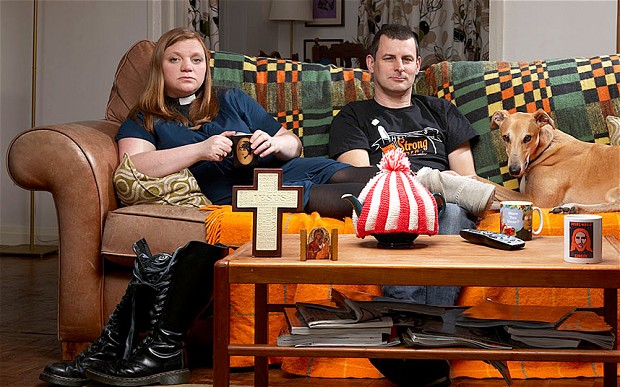
Kate Bottley - Gogglebox - Church of England - Partisan - Conservative Party - Tory Scum

What to do when the established church makes no attempt to hide its hatred for conservatives?

Those who watch Gogglebox are no doubt familiar with the Reverend Kate Bottley, whose ambassadorship for the Church of England probably reaches many millions more people than most bishops.

Should we be concerned, then, that one of the established church’s most high profile characters holds a seething contempt and hatred for one of our country’s two main political parties?

Archbishop Cranmer lays down the charge, based on Bottley’s recent on-air admission that “I hate it when I agree with a Tory”:

She wasn’t wearing her dog collar this week, but she doesn’t need to: the whole country knows (and so do Channel 4 editors and producers) that she is a Church of England vicar and a minister of the Word. And she is very well liked and respected: there is no hint of moral or doctrinal delinquency, but national admiration for her personal spirituality and great teaching capacity. She is a manifestly gifted, active communicator who is dedicated to serving her parish.

But ministry isn’t simply service, for that is the whole of Christian life. Her task as a vicar is distinctively liturgical, catechetical and pastoral, principally for the needs of the whole Christian community, including Tories. As an ordained priest, she is both servant and shepherd among the people to whom she has been sent, and that includes Tories. Her task is to proclaim the Word of the Lord and to watch for signs of God’s new creation, including in Tories. Her vocation is to teach, admonish, feed and provide for her flock, which includes Tories.

The majority of England is instinctively conservative: it appears to be a natural disposition; an affinity with the natural order; part of the psyche of essential Englishness. The Rev’d Kate Bottley is by no means obliged to approve of that: indeed, she is free to repudiate its consoling power and turn her religious fervour to more meaningful transcendent bonds. But you’d think there might be some sensitivity to the political-philosophical implications for mission praxis. Why should those Tories who attend her church bother to listen to her tell the story of God’s love, if all the time she is pinching her nose at their spiritual halitosis? Why should all those Tories who watch Gogglebox even consider walking with her in the way of Christ, hoping to be nurtured and encouraged in their faith? Why should they gather round the Lord’s Table if their vicar deems them to be unworthy or unable to resist the evil philosophies of men?

Bottley is far from an isolated case. Seething anti-Tory sentiment clearly exists much higher up in the church hierarchy, too, judging by the Bishop of Manchester’s decision to play host to Jeremy Corbyn and a left-wing rally coinciding with the Conservative Party conference taking place in the city.

Long gone, it seems, are the days when the Church of England was commonly known as the Tory party at prayer. And with church personalities using their pulpits to inveigh against right-wing policies and pontificate on the supposed dangers of Brexit, the time has come to urgently look again at the privileged position which the partisan established church holds in our constitution.


Church of England in Parliament - Church and State

Agree with this article? Violently disagree? Scroll down to leave a comment.

Follow Semi-Partisan Politics on TwitterFacebook and Medium.

David Cameron And Donald Trump – Promising Security Over Conservatism

David Cameron - Donald Trump - Conservatism - Conservative Party - Republican - GOP - Ideology - Security

Donald Cameron and David Trump. Or is it the other way around?

In many ways, you couldn’t imagine two politicians more different than Donald Trump and David Cameron.

The British prime minister (despite his best efforts) exudes an air of privileged, private school entitlement at all times, and has a reputation for making withering (if cruel) put-downs of his opponents in the House of Commons. The increasingly presumptive Republican Party presidential nominee, on the other hand, takes pride in being brash and boastful, and his claim to “have the best words” is as laughable as it is factually inaccurate.

Furthermore, David Cameron was quick to weigh in against Donald Trump when Trump made sweeping and inaccurate generalisations about Britain and Muslims, stopping short of the shrieking and hysterical calls for Trump to be banned from entering the UK, but still condemning him in strong words.

And yet, the two politicians – one seasoned in Westminster politics, the other making a virtue of his inexperience in the ways of Washington – are more alike than it first seems.

In seeking to understand the persistent appeal of Donald Trump to a large and broad swathe of the Republican Party base, Einer Elhauge argues that Donald Trump wins because he promises to be The Great Protector, keeping Americans physically safe and financially secure in an uncertain world.

Elhauge writes in the Atlantic:

The message of his Republican opponents has effectively been: We are more faithful to conservative principles. Trump’s message has been entirely different. He essentially says: I will protect you. I’m conservative, but if protecting you requires jettisoning conservative ideology, I will do so. Protecting you is the prime directive. This message has powerful resonance, especially for voters who feel the Republican Party has failed to protect their interests.

You see this pattern in all of Trump’s deviations from conservative orthodoxy. Take the debate over Planned Parenthood. Like all conservatives, Trump opposes abortions. But he stresses he does not want to stop funding their wonderful work protecting women from cervical and breast cancer. The other Republican candidates simply express a desire to destroy Planned Parenthood outright. Trump’s message to voters: The other candidates will adhere rigidly to ideology, even if it needlessly fails to protect millions of women from cancer. I won’t.

[..] Trump’s signature policy is to build a wall to protect his voters’ jobs. What could evoke protection more than building a huge wall? His opponents quibbled about its feasibility but ultimately adopted the same position. Trump’s message to voters: I care about protecting you enough to propose huge historic projects. The other candidates begrudgingly agreed, but their heart is not in it, so they are less likely to follow through.

Free trade is great, Trump says, but it has to be fair. His opponents just adhere to pure free trade, which does increase the economic pie. But economic research shows that free trade harms some subsets of voters, particularly the working-class voters flocking to Trump. The message to his voters: I will favor free trade only to the extent that I can protect you from harm, perhaps by compensating you using the gains of trade. My opponents will favor free trade even if it harms you.

And as it goes for policy, so it goes for style. Trump consistently eschews the hard-headed statements of fidelity to conservative principle or the Constitution which voters hear from Senator Ted Cruz, focusing instead on cultivating the same “your safety first” narrative:

Trump talks endlessly about his polls, because the polls stress that he is strong enough to protect his voters. He speaks extemporaneously and often crassly in a stream-of-consciousness way, which has many pitfalls but emphasizes that his views are unprepared, authentic statements of his views and that he will thus carry out his promises to protect his audience. He responds aggressively to every attack, no matter how minor, conveying the sense that he will also aggressively protect his voters.

It is hard to deny the success of this approach. Many voters, feeling let down by the stewardship of both President Obama and the reactionary Tea Party dominated Congress which followed in 2010, have lost faith in politicians selling explicitly ideological remedies for America’s ills.

Rand Paul, Mike Huckabee and Rick Santorum got nowhere this election cycle, suggesting that the public’s flirtation with Constitutional libertarianism and social conservatism respectively are not the vote-winners they once were. And the same goes on the Left, with Hillary Clinton now pulling clear of Senator Bernie Sanders in the Democratic primary, despite the huge achievements of Sanders’ campaign.

The situation in Britain is strikingly similar. David Cameron’s general election victory – at Labour’s expense and despite the rise of UKIP, the SNP and Green Party on the radical Right and Left – suggests that while a minority of voters (this blog included) crave stronger ideological differences and a move away from consensus politics, a larger number of people looked at the two main parties and went for the option which they believed would deliver them the most security.

Having secured his coveted Conservative majority government in the general election, David Cameron declared in his victorious 2015 party conference speech:

I tell you: our party’s success in growing our economy and winning the economic arguments has never been more vital.

Nothing less than the security of every single family in our country depends on it.

Before concluding:

And now with couples married because of us, working people backed because of us, the NHS safe because of us and children in the poorest parts of the world saved because of us, everyone in this hall can be incredibly proud of our journey – the journey of the modern, compassionate, One Nation Conservative Party.

This was not the speech of a flinty-eyed ideologue yearning to roll back the frontiers of the state. It was the speech of a leader who calls himself a conservative, but is perfectly willing to use the machinery of government to deliver the social and economic outcomes that he wants – in Cameron’s case, building an election-winning coalition by promising physical, social and economic security over and above freedom and individual liberty.

Ed Miliband, to the extent that his weak leadership stood for anything, ran on a platform of fairness and equality, emphasising entitlement over strength and security. And it got him absolutely nowhere.

David Cameron and the Conservatives, by contrast, ran on a platform of stability and security as the only objective. It wasn’t thrilling, inspiring or glamorous, but given the weakness of his opponents, it was enough to deliver a parliamentary majority that almost nobody predicted.

You can argue that David Cameron represents everything that is ideologically vacuous and wrong with modern British conservatism – as this blog does, loudly and often. But what you cannot do is deny the fact that Cameron has hit on a winning electoral strategy.

That’s why David Cameron ran for re-election with a manifesto pledging a creepy, statist “plan for every stage of your life”.

That’s why the Conservative Party talks about creating a strong economy not as an end in itself, but only in the context of generating more taxes to pay for ever more public services.

That’s why there is not an ancient right or civil liberty that David Cameron and Theresa May will not gladly crush in their effort to be seen as strong in the fight against terrorism.

Sure, they may look and sound different – almost complete opposites, in style and temperament. But both Donald Trump and David Cameron are both essentially playing the same trick – or perpetrating the same fraud – on their respective electorates, depending on your outlook.

Donald Trump was once a Democratic Party supporter and donor, talked up his great friendship with the Clintons and held positions which are diametrically opposed to his current conservative stances. David Cameron, meanwhile, calls himself a Conservative but is busily implementing Tony Blair’s fourth term New Labour agenda.

Neither man is what he publicly claims to be. And certainly neither Donald Trump nor David Cameron can fairly be described as small-c conservatives.


Donald Trump - Make America Great Again - Hat

Agree with this article? Violently disagree? Scroll down to leave a comment.

Follow Semi-Partisan Politics on TwitterFacebook and Medium.

The Left Wing Case Against Mass Surveillance And The Investigatory Powers Bill

Theresa May - Investigatory Powers Bill - Mass Surveillance

The draft Investigatory Powers Bill will neither increase security nor effectively tackle extremism

Laura Westwood argues in Left Foot Forward that existing mass surveillance techniques have proved ineffective at stopping terror attacks, and that the new measures outlined in the government’s draft Investigatory Powers Bill would further undermine civil liberties with no commensurate reward:

Perhaps most unsettling is the potential harm caused by intruding on the lives of innocent people. Whatever the rationale, mass surveillance practices imperil our rights to privacy and freedom of expression. The UK’s Independent Reviewer of Terrorism Legislation himself warned that taking missteps could sow divisions in society and incubate the problem of ‘home-grown’ terrorists.

Why? Because extremists thrive on exploiting disenfranchisement and grievance. We are told so by former members of Islamist extremist groups. Taking blanket surveillance even further than it already goes is a calculated risk at best, and right now, the sums aren’t adding up.

Already, people languish in British prisons not for committing or inciting terrorist acts, but merely accessing articles and propaganda which praises terrorist acts, or expressing support for them on social media. Such actions may be reprehensible, but bringing the full weight of criminal law crashing down on people with odious foreign policy views and sharp tongues on social media is punishing thought, not words, and is incompatible with a free society.

Furthermore, locking up people like Runa Khan – imprisoned for “disseminating terrorist material”, which basically meant sharing pro-ISIS propaganda articles on Facebook – does nothing to confront and kill the noxious ideas in question, but rather elevates them to an unearned position of nobility, and makes a martyr of their speaker.

As Mick Hume argues in his book “Trigger Warning: Is The Fear Of Being Offensive Killing Free Speech?”:

If she had dressed her young children in suicide vests and sent them out to die in a bomb attack, that would be terrorism. But going online to argue that Muslim mothers should try to raise their sons to grow up as jihadis is something else entirely, more like perverse parenting advice than a military command. Words are not physical weapons and viewpoints are not violence, however ‘radical and extreme’ they might appear to most of us. The opinions expressed by the likes of Runa Khan need to be openly challenged. Trying to bury them instead in prison, on the ground that they are too dangerous to be let loose on Facebook, can only lend their radical message more credence.

At a time when almost all the serious business of governing has ground to a halt for the duration of the EU referendum campaign, mass surveillance is the one area where David Cameron’s ideologically rootless, authoritarian government seems determined to make progress. All other reforms and legislative activity have effectively been placed on hold, yet this most un-conservative government is formalising and expanding the powers of the state to indiscriminately collect and hold data on the private activity of citizens, with the kind of weak and unenforceable safeguards that you would expect from a country with no written constitution.

Why? Because while everything else is allowed to drift as David Cameron seeks to bully and scare the British people into fearfully voting to remain in the European Union, expanding the power and influence of the state over our lives knows no rest.

Those on the Left who oppose this are right to do so – not in pursuit of a political victory over the Evil Tories, but because the Investigatory Powers Bill is bad law and bad policy. And because it will be the poorest, most disadvantaged and least well-connected citizens who first fall prey to the surveillance state, as it always is.

Don't Spy On Me - Mass Surveillance

Agree with this article? Violently disagree? Scroll down to leave a comment.

Follow Semi-Partisan Politics on TwitterFacebook and Medium.

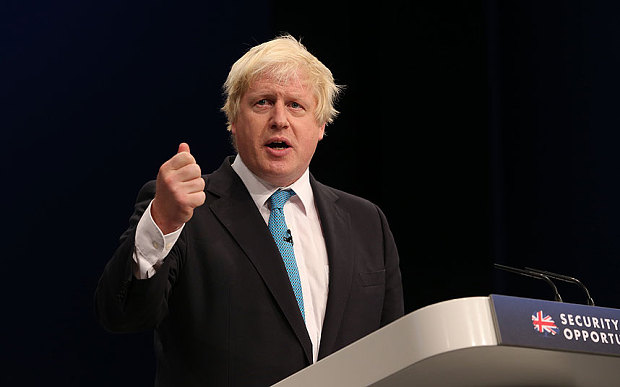
Boris Johnson, Follower-In-Chief

Boris Johnson - Follower in Chief - Brexit - EU Referendum - European Union

Boris Johnson, Profile in Cowardice

While many of us rolled our eyes and lost what last remaining scraps of respect we may have had for Boris Johnson after his last-minute, nakedly self-serving decision to spurn David Cameron and back the Leave campaign, others seem to be swooning with delight.

The Telegraph conducted a delightfully unscientific poll of local Conservative Party Constituency Association heads, and found that a handful more local chairs now back Boris Johnson over George Osborne.

Boris Johnson has pulled ahead of George Osborne in the Conservative leadership race after coming out in favour of Britain leaving the European Union, a survey of grassroots Conservatives has found.

The Telegraph contacted the heads of 50 Conservative constituency associations and found that 12 back Mr Johnson, the Mayor of London, while eight support Mr Osborne, the Chancellor.

Theresa May, the Home Secretary, and Sajid Javid, the Business Secretary, have the support of just five of the Conservative Association heads between them after choosing to back the campaign to remain in the European Union.

Priti Patel, the employment minister, had the support of one association head while 24 said that they are undecided.

If leading the Conservative Party in your local geographic area still entitles you to call yourself a “grassroots” member, then one wonders what term should be used for the humble folk who stuff envelopes, knock on doors and distribute leaflets without the benefit of a title. Root vegetable conservatives? Tuber Tories? Surely something deeply subterranean, at any rate.

And leave aside for the moment the depressing fact that the only one of these potential future leaders who might reasonably be described as an ideologically uncompromised conservative – Priti Patel – has the support of only one constituency chairperson.

It is what comes next – the words of one Conservative constituency chairman, praising Boris – which is truly puzzling:

John Doddy, chairman of the Broxtowe Conservative Association, said: “Boris Johnson was needed to make a positive impact on Vote Leave. We needed a big hitter. The only potential leader that has shown considerable courage is Boris.”

The Telegraph picks up and runs with this Heroic Boris theme in the sub-headline to their article:

Exclusive: Grassroots Tories hail Boris Johnson’s ‘courageous’ decision to come out in favour of a Brexit in potentially ‘game-changing’ moment for party leadership race.

Considerable courage? Hardly.

Boris Johnson, Follower-In-Chief, dithered, vacillated and prevaricated for as long as he possibly could, until the Tory Leadership Acquisition calculus shifted around him (as other, more principled colleagues nailed their colours to the mast one by one) to such an extent that eventually there was only one option left open to the London mayor if he wanted to present himself as a viable alternative to George Osborne.

With all of his main rivals for the Conservative Party leadership swinging behind David Cameron’s fatuous and empty “renegotiation” and supporting the Remain campaign, the only possible way for Boris Johnson to find himself in the top two candidates selected by MPs for consideration by the wider party was for him to declare for the other side and then hope that his choice is validated with a “Leave” vote in the referendum, casting Boris as the only heavyweight to have been on the right side of the plebiscite.

But even then, one could tell that Boris Johnson was reluctant – that this Hail Mary political pass was the last thing that he actually wanted to do, and that it went against his own far more pro-EU instincts. That much was revealed by the fact that when outlining the reasons for his decision, Johnson initially floated the “can’t we all just get along” suggestion that we vote Leave only to wring a few more minor concessions from Brussels rather than actually leaving the EU, before eventually having to walk back this suggestion in the face of justified criticism and ridicule.

And yet there are some in the Conservative Party – generally those who would smile and forgive Boris if they came home from work to find him in bed with their spouse – whose determinedly superficial thinking leads them to hold Boris Johnson a courageous hero, and others in the media willing to help the narrative along despite its obvious falsehood.

“Considerable courage”? From Boris Johnson? If this is what bold and visionary courage looks like, I would hate to ever behold rank, abject, self-serving cowardice.


Boris Johnson - EU referendum

Agree with this article? Violently disagree? Scroll down to leave a comment.

Follow Semi-Partisan Politics on TwitterFacebook and Medium.

David Cameron Is At His Arrogant Worst When He “Wins” PMQs

David Cameron - PMQs - Prime Ministers Questions

Since he has proved himself incapable of cleansing the Tories of their unfair reputation as the “nasty party”, what exactly is the point of David Cameron?

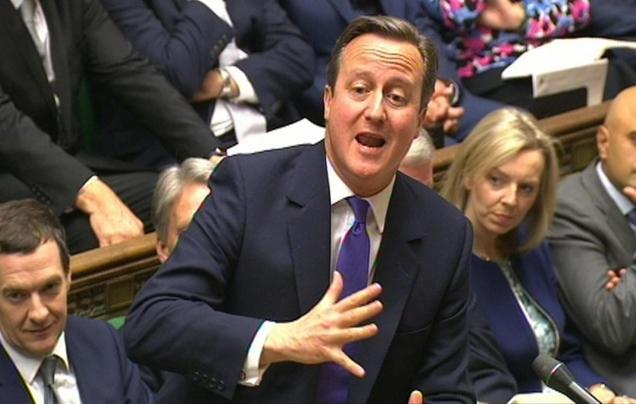
The media is abuzz today with talk of David Cameron’s withering put-down of Jeremy Corbyn at Prime Minister’s Questions.

The Spectator breathlessly reports that “Cameron delivers a knockout blow to a struggling Corbyn“:

This could have been a tricky PMQs for David Cameron. Instead, it will be remembered for Cameron ventriloquising his mother and telling Corbyn ‘put on a proper suit, do up your tie and sing the national anthem’.

What gave this jibe its potency, is that it sums up what a lot of voters think of the Labour leader. It was not quite as Flashmanesque as it sounds. For it came in response to a Labour front bench heckle asking what Cameron’s mother would say about cuts in Oxfordshire.

Even before Cameron floored Corbyn with that line, the Labour leader was struggling. He chose to go on the NHS and the junior doctors’ strike. But even on this subject, he couldn’t make any headway. Worryingly for Labour. Corbyn’s PMQs performances are—if anything—getting worse. You can tell that Cameron is now just cruising through the Labour leader’s questions.

Responding to a heckle from the Labour benches about his mother, Mary Cameron (who signed a petition opposing local public service cuts), the prime minister let loose with all of the pent-up frustration he feels at Jeremy Corbyn’s refusal to play the traditional role of Generic PMQs Sparring Partner.

Here’s Cameron’s quote in full:

“I’ll ask my mother. Oh I think I know what my mother would say, I think she’d look across the dispatch box and she’d say put on a proper suit, do up your tie and sing the national anthem.”

If this is what “winning” Prime Minister’s Questions now looks like, then both the tone and content of our political debate – even by the low standards set by Parliament – is in far worse a state than even I have been lamenting.

And Tim Montgomerie’s decision to leave the Conservative Party is vindicated, as David Cameron’s latest flash of temper reminds us that under his leadership, the Tories are not interested in enacting radical conservative reform in the model of Thatcher, but rather seek to wield power just for the sake of it, while ridiculing everybody else from their lofty perch. Why else refuse the opportunity to respond directly to criticism and defend his record in favour of delivering smarmy, schoolboy jaunts directed at the Leader of the Opposition?

People who defend David Cameron’s rootless, opportunistic leadership of the Conservative Party love to claim that by steering such a centrist, New Labour-friendly course, the prime minister is in some way helping to “de-toxify” the Tory brand.

The clear implication of this is that we should shut up and accept the fact that there is almost nothing conservative about this Conservative government, because bland centrism and the failure to advance conservative principles is the price we have to pay whilst conservatism’s reputation is cleansed of the “stain” of Thatcherism. And to be fair, with so little else to recommend Cameron’s government other than the fact  it is not Ed Miliband’s government, they have a point. Detoxification is all that the Tories have going for them at the moment.

Except they don’t even have that. We live in a political climate where anti-Tory activists will daub “Tory Scum” on war memorials, spit at innocent people attending the Conservative Party conference and indulge in all manner of overblown rhetoric about the heartless Evil Tories coming to take away your human rights and cast your disabled relatives out onto the streets to die of exposure. If the past few years are supposed to have been an exercise in image rehabilitation for the Tories, they have been the most abject failure and waste of political capital.

Yet David Cameron is supposed to be our Great White Hope, the man who delivers Conservative majority governments at general elections by running away from any policy or principle which might be seen as “nasty” or right wing.

It is all the more surprising, then, that Cameron consistently chooses to be so nasty and unnecessarily aggressive at PMQs – not just putting his points across or counter-attacking forcefully, as PMQs requires, but actively relishing in delivering the most personal put-down or remark possible. Less Tony Blair’s devastating but above-the-belt “weak, weak, weak” jibe at John Major’s expense, and more “you’re too poor to buy nice clothes”.

Seriously, how did David Cameron think that his “proper suit” comment would play once it seeped beyond the Westminster and media echo chamber and into the public consciousness? Sure, it won a big laugh and sustained mockery of Corbyn in the House of Commons chamber, but replayed on television it just looks like a cheap and nasty stunt from a man who would rather resort to personal insults than answer a straightforward question.

People sitting at home – those few who actually pay any attention to the outcome of Prime Minister’s Questions, at any rate – will not have seen a clever and likeable prime minister slapping down an angry, extremist left-winger. They will have seen a haughty, self-important Old Etonian standing at the dispatch box and making cutting personal remarks about the sartorial choices of a slightly befuddled but harmless-looking professor type.

Even when David Cameron “wins” Prime Minister’s Questions (as he did today) he loses, because he is fundamentally incapable of winning his exchanges with the Leader of the Opposition without morphing into the most ridiculous caricature of a snobbish public school boy imaginable in order to do it.

And hey presto, Labour’s work is done for them – smoking gun evidence that the Tories are a party of arrogant toffs, and that if they had their way then politics would only be for impeccably dressed people from establishment families, wearing Savile Row suits and speaking the Queen’s English. And all Jeremy Corbyn had to do in order compound this perception in the public consciousness was wince through David Cameron’s latest smarmy insult.

Remind me: what was David Cameron’s essential winning quality, again?


Jeremy Corbyn - PMQs

Agree with this article? Violently disagree? Scroll down to leave a comment.

Follow Semi-Partisan Politics on TwitterFacebook and Medium.