What Conservative Government? – Part 4, Iain Duncan Smith Resignation

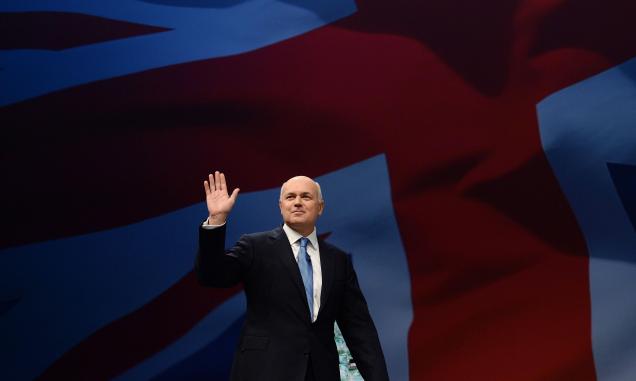
Iain Duncan Smith - IDS - Resignation

How many more ideologically principled, Thatcher-style conservatives can David Cameron’s centrist political machine afford to alienate?

There is a telling line in James Kirkup’s excellent, fair assessment of the full context behind Iain Duncan Smith’s resignation:

The Prime Minister has already done things that will underpin his eventual legacy: winning the Scottish independence referendum and the general election.

Kirkup probably meant this as praise, but in reality it is the most damning indictment of the current conservative government imaginable – far worse than anything that Iain Duncan Smith said in his resignation letter.

Because it is quite true – some of the greatest accomplishments of David Cameron and his core team of loyalists since 2010 are avoiding having the country disintegrate on their watch, and managing to win a second general election against a historically weak Labour leader pursuing a transparently flawed strategy. If the bar for success in British government has truly been set so low then we are in real trouble.

But David Cameron is not a visionary leader. He came to power in 2010 promising to get Britain through difficult economic times, and was re-elected in 2015 promising to be a reasonably competent Comptroller of Public Services. And to be fair to the man, he never really promised to be a great statesman or a formidable world leader.

Being a doggedly centrist technocrat is all well and good, but eventually people quite rightly start to ask what your government is for, besides acquiring the reins of power and then keeping hold of them for as long as possible. David Cameron’s best answer – the main headline from the Conservative Party’s 2015 general election manifesto – was that we should vote Tory because they have a “plan for every stage of your life“.

Nobody within the Conservative Party seemed to care that this sounded alarmingly socialist and suggestive of the Nanny State – people craved security above freedom, it was believed, and so that’s what would be promised and delivered. More of the status quo, whether the status quo worked well or not.

In other words, as this blog has long been saying and my Conservatives for Liberty colleague Paul Nizinskyj has now eloquently written, David Cameron’s role model is far more the steady pair of hands in tough times rather than the visionary, bloody minded reformer – more Ted Heath than Margaret Thatcher.

I won’t lie: my first reaction on hearing the news that Iain Duncan Smith – who together with Michael Gove is one of the few Conservative heavyweights left with any discernible core conviction – had finally snapped and told George Osborne exactly what to do to himself was “great – anything to make the smug little cretin sweat”.

Because George Osborne is David Cameron with less charisma. And since David Cameron has almost no charisma of his own, that puts George Osborne well into negative territory. Given the fact that his blunders (the Omnishambles Budget, tax credits, PIPs) have done as much to colour the political landscape as his “victories”, I also find his reputation as a master political strategist to be hugely overinflated.

If running to the political centre by jettisoning core conservative principle by adopting left-of-Labour policies like a £9 minimum wage counts as political genius then sure – anybody who can successfully cross-dress as a politician from a different party to pick off some extra votes is a master strategist. But it makes George Osborne a lousy conservative.

Not everything in Osborne’s budget was wrong. Should the thresholds for tax brackets move upwards with inflation? Ideally yes, they should do so every year to neutralise the effect of fiscal drag. But to package measures such as this with reductions in the Personal Independence Payments to hundreds of thousands of disabled people is frankly idiotic.

In some ways, this is emblematic of the ridiculous nature of the Budget spectacle, a choreographed event which encourages the Chancellor of the Exchequer to play god with other minister’s departments, either stealing their flagship ideas (as with academies) or otherwise presenting them out of context. But it also speaks to this government’s utter failure to enact a bold, coherent and unapologetically conservative agenda.

Janet Daley sums it up perfectly:

Mr Osborne’s reputation as a tactical political genius has gone south too. Maybe that’s been the problem all along: his understanding of politics was all about tactics – about messaging and grids, presentational gloss and re-branding – and had nothing to do with fundamental, irreconcilable principle. I am prepared to guess that he quite literally does not understand politicians who are prepared to risk everything for an idea, a conviction: a personal moral mission.

He thinks that they are bloody-minded and naive, with no comprehension of the modern science of winning elections. But that, it seems, is not what the people believe: they are beginning to think that their leaders should stand for something, should have a fundamental sense of what they are in politics for. It’s what they call “authenticity”, and it could turn out to be more of a winner than all the clever marketing techniques in the world. Imagine that.

I understood what Michael Gove was trying to accomplish at Education. And I get what Iain Duncan Smith was wrestling with at the Department for Work and Pensions, and admire his semi-successful efforts to get people into work, and to make that work pay more than dependency on the state. Unlike many others who write sanctimoniously but ignorantly about the issue, I have witnessed the welfare state up close, and seen exactly what our “compassionate” system is capable of doing to people when the dead-eyed state machine is responsible for their lives.

I get all of that. But I have no idea what David Cameron is trying to accomplish as prime minister, or what George Osborne thinks he is doing at the Treasury. Because it certainly isn’t paying down Britain’s debts, as they both like to claim. Nor is it guarding Britain’s sovereignty and place in the world – Cameron has gutted Defence, and is in the process of tricking the British people into voting to remain in what he falsely claims to be a “reformed” European Union.

Neither Cameron or Osborne are motivated by the desire to roll back the state and make the British people more free – their heavy-handed government is all for ever-greater restrictions on both ancient and recent hard-won civil liberties, and is seemingly anxious to sacrifice what freedom we have left upon the altar of “national security”.

There is almost nothing about shrinking the state and expanding personal liberty in this government. But there are lots of policies – cutting state spending on the poorest and weakest in society while continuing to lavish stage largesse on wealthy older people (through non-means tested benefits and the lack of a housing supply policy to benefit the young) – which play right into Labour’s hands, making the Tories (and those who support them) look like nothing more than selfish, grubby opportunists, lining the pockets of the already wealthy while others suffer.

In short, I don’t know what this Conservative government is for, besides trying to stay in power and preventing Labour from stealing it. And apart from the work he was doing in his own department, I suspect that Iain Duncan Smith didn’t know either, no matter how much obligatory praise he heaped on Cameron in his resignation letter.

So I cannot do anything but endorse Iain Duncan Smith’s decision to quit. The final straw was no doubt Downing Street’s insistence that Duncan Smith come out all guns blazing in defence of the welfare cuts in the Budget, while simultaneously planning to walk back the proposals themselves – making IDS look like the crazed ideologue and Cameron / Osborne as the calm voices of reason. Who would want to stick around to be treated in that way?

And if Iain Duncan Smith’s resignation destabilises the government – so what? We currently have a nominally conservative prime minister who is busily enacting Tony Blair’s fourth term of office. We effectively already have a Labour prime minister – or a New Labour one, at least.

Maybe an improbable defeat to Jeremy Corbyn’s Labour Party – or a good scare, at least – is the shock the Tories need to dig deep and find a real conservative leader.


Postscript: Iain Duncan Smith’s full resignation letter – which this blog believes was far too generous and courteous – is shown below.

I am incredibly proud of the welfare reforms that the government has delivered over the last five years. Those reforms have helped to generate record rates of employment and in particular a substantial reduction in workless households.

As you know, the advancement of social justice was my driving reason for becoming part of your ministerial team and I continue to be grateful to you for giving me the opportunity to serve. You have appointed good colleagues to my department who I have enjoyed working with. It has been a particular privilege to work with excellent civil servants and the outstanding Lord Freud and other ministers including my present team, throughout all of my time at the Department of Work and Pensions.

I truly believe that we have made changes that will greatly improve the life chances of the most disadvantaged people in this country and increase their opportunities to thrive. A nation’s commitment to the least advantaged should include the provision of a generous safety-net but it should also include incentive structures and practical assistance programmes to help them live independently of the state. Together, we’ve made enormous strides towards building a system of social security that gets the balance right between state help and self help.

Throughout these years, because of the perilous public finances we inherited from the last Labour administration, difficult cuts have been necessary. I have found some of these cuts easier to justify than others but aware of the economic situation and determined to be a team player I have accepted their necessity.

You are aware that I believe the cuts would have been even fairer to younger families and people of working age if we had been willing to reduce some of the benefits given to better-off pensioners but I have attempted to work within the constraints that you and the chancellor set.

I have for some time and rather reluctantly come to believe that the latest changes to benefits to the disabled and the context in which they’ve been made are a compromise too far. While they are defensible in narrow terms, given the continuing deficit, they are not defensible in the way they were placed within a Budget that benefits higher earning taxpayers. They should have instead been part of a wider process to engage others in finding the best way to better focus resources on those most in need.

I am unable to watch passively whilst certain policies are enacted in order to meet the fiscal self imposed restraints that I believe are more and more perceived as distinctly political rather than in the national economic interest.

Too often my team and I have been pressured in the immediate run up to a budget or fiscal event to deliver yet more reductions to the working age benefit bill. There has been too much emphasis on money saving exercises and not enough awareness from the Treasury, in particular, that the government’s vision of a new welfare-to-work system could not be repeatedly salami-sliced.

It is therefore with enormous regret that I have decided to resign. You should be very proud of what this government has done on deficit reduction, corporate competitiveness, education reforms and devolution of power. I hope as the government goes forward you can look again, however, at the balance of the cuts you have insisted upon and wonder if enough has been done to ensure “we are all in this together”.

 

Iain Duncan Smith

Agree with this article? Violently disagree? Scroll down to leave a comment.

Follow Semi-Partisan Politics on TwitterFacebook and Medium.


The Republican Party’s Cynical, Anti-Obama Hysteria Created The Monster That Is Donald Trump

If you trawl for votes by quietly suggesting to people that their country has been taken over by a socialist, foreign-born, America-hating Muslim, don’t be surprised when they gravitate towards a politician who plays more effectively to those fears

The Republican Party has a lot to answer for when it comes to the rise of Donald Trump.

As a British conservative who has lived in America, knows the country (and not just the coasts) well and is married to a Texan, I have a sense of perspective lacking in many American conservatives. I come from a country with a far more left-wing political climate, in which edifices of the post-war consensus – the welfare state, the NHS – are idolised and often exempted from nearly all meaningful criticism.

I grew up in a culture which is a lot more suspicious of conspicuous success and achievement, more collectivist (though less so than continental Europe) and generally more expectant that government will play a hectoring, overbearing role in our lives. And therefore, when I see Republicans rending their garments wailing and rending their garments about the intolerable left-wingery of Barack Obama, I know exactly how whiny and entitled they are being.

The Republican Party reacted to the election of Barack Obama as though his presidency was going to usher in the end of the Republic. They acted as though a suite of rather workaday centre-left policies were part of a sinister conspiracy to turn America into a socialist country. Needless to say, they barely uttered a peep when their own side was busy ratcheting up the size of the state under the “compassionate conservative” Big Government presidency of George W. Bush, in which massive Medicare expansions – heck, even entire wars – were placed on the national credit card, and fiscal conservatism was put through the shredder. No, it was Obama who represented an un-American step too far, according to this false narrative.

And of course it was all nonsense. As Barack Obama’s second term reaches its end, the size and scope of the federal government is still stubbornly large, but America has by no means transitioned into a Soviet-style planned economy. Even the hated (in right-wing circles) ObamaCare has only tinkered around the margins, funnelling a few million uninsured into some form of health coverage, inconveniently disrupting the existing coverage of a number of other people but otherwise doing nothing to change the private insurance, private provision model of American healthcare. The Second Amendment has not been substantially undermined, let alone repealed. Defence spending may be misaligned but still eclipses the rest of the world, and the US military has not been decimated. In terms of domestic policy, in other words, the world has not ended.

Has America become a libertarian paradise under President Obama? Of course not. But that’s because a Democrat won the White House and focused (as much as he could, given a spineless Democratic congressional caucus and entrenched Republican opposition) on the kind of centre-left priorities you would expect from a Democrat. And crucially, neither has America become a socialist dystopia in that time.

That’s not to say that the Republicans did not often have a point, or that they were perpetually in the wrong – in many cases, their opposition to Obama’s agenda was justified. But at all times this opposition was carried out in a shrill, alarmist and hyperbolic manner – much as British left-wingers are currently mirroring the American Tea Party with their “pass the smelling salts” horror at the thoroughly unexciting, centrist government of David Cameron.

And when you go trawling for low information votes by feeding on prejudice and stoking up concerns about the personal motivations, the loyalty and even the American-ness of the president in a childishly obstructionist scorched earth strategy, you can’t really feign surprise when the sentiments you unleash give rise to a populist demagogue like Donald Trump. And people should call you out for doing so if you even try, as many Republicans are now doing as part of their cynical #NeverTrump movement.

Bill Maher – whose politics I often disagree with, but whose criticism of the Right is usually depressingly accurate – was on to something when he said on a recent episode of Real Time with Bill Maher that Republicans had “made a Faustian bargain with the racist devil years ago”, and are now paying the price.

During the panel discussion on his show, Maher said:

So let’s get right to it – the Republican Party, having an existential crisis. They are very upset that half their voters wanna give nuclear weapons to a guy who gets into Twitter feuds with D-list celebrities, and we understand that. I almost feel bad for them, except I really don’t, because they brought it on themselves. They made a Faustian bargain with the racist devil many years ago, and now those chickens are coming home to roost.

Let me read what Paul Ryan said this week. He said “if a person wants to be the nominee of the Republican Party they must reject any group or cause that is built on bigotry. This party does not prey on people’s prejudices”. LOL.

To which I would say to him: what about voter ID laws? What about once defending the guy who gets shot – the black guy, unarmed – instead of the cop? Y’know, I mean who are they kidding? This is the party they are, and Trump is just the latest.

And then the killer line:

They always say that it’s a big tent. To me it’s more like a house – think of it more like a house. And they let the racists have a room in that house. They didn’t go in that room with all the memorabilia, but they made a very comfortable room in there. And now they took over the house, and the regular Republicans are afraid to go to the kitchen at night to get a snack.

Ouch.

To be clear, while this blog does not support Donald Trump’s candidacy, neither does it subscribe to the idea that Trump or the majority of his supporters are racist. Certainly criticising illegal immigration in America is not racist, despite the cynical attempts by many Democrats and those on the left to suggest otherwise. Building a wall is not the solution, but the idea of properly enforcing the perfectly reasonable existing laws about illegal (the leftists love to leave out the word “illegal”) immigration is entirely defensible. Similarly, Trump’s nationalist, protectionist policies may well also be very counterproductive were they ever implemented, but this does not make them – or him – evil.

(One thing that does put Trump beyond the pale, in the view of this blog, is his lack of commitment to the constitution or to US treaty obligations, including those relating to torture. The First Amendment is not a plaything to be wielded like a weapon and undermined to snuff out criticism of a thin-skinned president, as Trump has suggested doing, and torture and reprisal killings were and are abhorrent and un-American).

As with many of Trump’s left-wing critics, Bill Maher is wrong to make this all about race. But he is quite correct in pointing out that in their desperation to win back the White House, the GOP tolerated all manner of crazy squatters and couch-surfers sleeping under their party’s roof. And while they did not explicitly add these people to the deeds of the house, they certainly left the front door wide open and stood on the street corner beckoning the crazies inside with a wink and a smile.

It is therefore exquisitely hard for me to feel sorry for the modern Republican Party as they are devoured by the very monster they kept as a pet and fed – particularly as I hail from a country which is planted a couple of steps firmly to the left in terms of the political centre ground, and have first-hand experience of the kind of “socialism” that the GOP cynically pretended was about to be unleashed on America.

I don’t want to see Donald Trump become the Republican Party nominee – though I feel much sympathy with many of his supporters – but if it does happen, as now seems increasingly likely, I cannot say that it was undeserved.


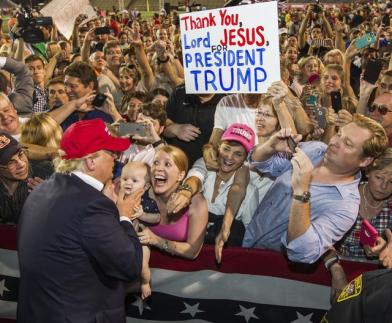
Thank You Lord Jesus for President Trump

Agree with this article? Violently disagree? Scroll down to leave a comment.

Follow Semi-Partisan Politics on TwitterFacebook and Medium.

Tales From The Safe Space, Part 11 – From A Dissenter Behind Enemy Lines

Conservatives Libertarians Campus

From deep behind enemy lines…

The following lonely cry for solidarity and advice comes from a British student posting on a libertarian Facebook group, and gives a snapshot of the current climate of hostility facing conservative and libertarian students who refuse to buy in to the Identity Politics orthodoxy reigning on university campuses.

The student asks:

Any libertarians or even Tories here struggle with being shut down at uni? I’ve just handed in the most left wing essay I’ve ever written in order to get a good mark, I lost marks in a presentation for stating that the EU arrest warrant is unjust (because we signed up to it, so it’s voluntary according to the lecturer), a girl was literally shaking with rage when I said I will be voting to leave the EU and she had a lot of back up…but it gets to a point where it’s having a negative effect on my education and not sure how to tackle it. Should I just keep my views to myself and write left wing essays? Advice needed. I am treated like a fascist.

Such students increasingly face genuine hostility when they insist on being true to themselves and refuse to hide or disown their sincerely held political opinions, both from peers and even their own professors.

And particularly where students’ academic results are at stake, this real-world hostility stands in stark contrast to the largely imaginary hostility (microaggressions) dreamed up by the Identity Politics brigade as a pretext for demanding ever more restrictions on liberty, and ever more transfers of power to themselves from fawning, deferential university authorities.


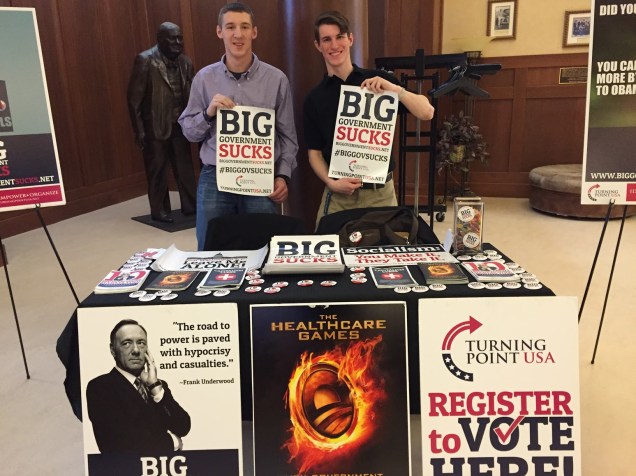
Safe Space Notice - 2

Agree with this article? Violently disagree? Scroll down to leave a comment.

Follow Semi-Partisan Politics on TwitterFacebook and Medium.

When The Established Church Goes To War With Half The Country

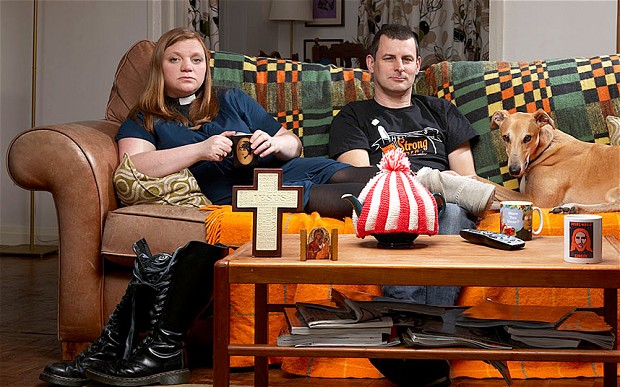
Kate Bottley - Gogglebox - Church of England - Partisan - Conservative Party - Tory Scum

What to do when the established church makes no attempt to hide its hatred for conservatives?

Those who watch Gogglebox are no doubt familiar with the Reverend Kate Bottley, whose ambassadorship for the Church of England probably reaches many millions more people than most bishops.

Should we be concerned, then, that one of the established church’s most high profile characters holds a seething contempt and hatred for one of our country’s two main political parties?

Archbishop Cranmer lays down the charge, based on Bottley’s recent on-air admission that “I hate it when I agree with a Tory”:

She wasn’t wearing her dog collar this week, but she doesn’t need to: the whole country knows (and so do Channel 4 editors and producers) that she is a Church of England vicar and a minister of the Word. And she is very well liked and respected: there is no hint of moral or doctrinal delinquency, but national admiration for her personal spirituality and great teaching capacity. She is a manifestly gifted, active communicator who is dedicated to serving her parish.

But ministry isn’t simply service, for that is the whole of Christian life. Her task as a vicar is distinctively liturgical, catechetical and pastoral, principally for the needs of the whole Christian community, including Tories. As an ordained priest, she is both servant and shepherd among the people to whom she has been sent, and that includes Tories. Her task is to proclaim the Word of the Lord and to watch for signs of God’s new creation, including in Tories. Her vocation is to teach, admonish, feed and provide for her flock, which includes Tories.

The majority of England is instinctively conservative: it appears to be a natural disposition; an affinity with the natural order; part of the psyche of essential Englishness. The Rev’d Kate Bottley is by no means obliged to approve of that: indeed, she is free to repudiate its consoling power and turn her religious fervour to more meaningful transcendent bonds. But you’d think there might be some sensitivity to the political-philosophical implications for mission praxis. Why should those Tories who attend her church bother to listen to her tell the story of God’s love, if all the time she is pinching her nose at their spiritual halitosis? Why should all those Tories who watch Gogglebox even consider walking with her in the way of Christ, hoping to be nurtured and encouraged in their faith? Why should they gather round the Lord’s Table if their vicar deems them to be unworthy or unable to resist the evil philosophies of men?

Bottley is far from an isolated case. Seething anti-Tory sentiment clearly exists much higher up in the church hierarchy, too, judging by the Bishop of Manchester’s decision to play host to Jeremy Corbyn and a left-wing rally coinciding with the Conservative Party conference taking place in the city.

Long gone, it seems, are the days when the Church of England was commonly known as the Tory party at prayer. And with church personalities using their pulpits to inveigh against right-wing policies and pontificate on the supposed dangers of Brexit, the time has come to urgently look again at the privileged position which the partisan established church holds in our constitution.


Church of England in Parliament - Church and State

Agree with this article? Violently disagree? Scroll down to leave a comment.

Follow Semi-Partisan Politics on TwitterFacebook and Medium.

David Cameron And Donald Trump – Promising Security Over Conservatism

David Cameron - Donald Trump - Conservatism - Conservative Party - Republican - GOP - Ideology - Security

Donald Cameron and David Trump. Or is it the other way around?

In many ways, you couldn’t imagine two politicians more different than Donald Trump and David Cameron.

The British prime minister (despite his best efforts) exudes an air of privileged, private school entitlement at all times, and has a reputation for making withering (if cruel) put-downs of his opponents in the House of Commons. The increasingly presumptive Republican Party presidential nominee, on the other hand, takes pride in being brash and boastful, and his claim to “have the best words” is as laughable as it is factually inaccurate.

Furthermore, David Cameron was quick to weigh in against Donald Trump when Trump made sweeping and inaccurate generalisations about Britain and Muslims, stopping short of the shrieking and hysterical calls for Trump to be banned from entering the UK, but still condemning him in strong words.

And yet, the two politicians – one seasoned in Westminster politics, the other making a virtue of his inexperience in the ways of Washington – are more alike than it first seems.

In seeking to understand the persistent appeal of Donald Trump to a large and broad swathe of the Republican Party base, Einer Elhauge argues that Donald Trump wins because he promises to be The Great Protector, keeping Americans physically safe and financially secure in an uncertain world.

Elhauge writes in the Atlantic:

The message of his Republican opponents has effectively been: We are more faithful to conservative principles. Trump’s message has been entirely different. He essentially says: I will protect you. I’m conservative, but if protecting you requires jettisoning conservative ideology, I will do so. Protecting you is the prime directive. This message has powerful resonance, especially for voters who feel the Republican Party has failed to protect their interests.

You see this pattern in all of Trump’s deviations from conservative orthodoxy. Take the debate over Planned Parenthood. Like all conservatives, Trump opposes abortions. But he stresses he does not want to stop funding their wonderful work protecting women from cervical and breast cancer. The other Republican candidates simply express a desire to destroy Planned Parenthood outright. Trump’s message to voters: The other candidates will adhere rigidly to ideology, even if it needlessly fails to protect millions of women from cancer. I won’t.

[..] Trump’s signature policy is to build a wall to protect his voters’ jobs. What could evoke protection more than building a huge wall? His opponents quibbled about its feasibility but ultimately adopted the same position. Trump’s message to voters: I care about protecting you enough to propose huge historic projects. The other candidates begrudgingly agreed, but their heart is not in it, so they are less likely to follow through.

Free trade is great, Trump says, but it has to be fair. His opponents just adhere to pure free trade, which does increase the economic pie. But economic research shows that free trade harms some subsets of voters, particularly the working-class voters flocking to Trump. The message to his voters: I will favor free trade only to the extent that I can protect you from harm, perhaps by compensating you using the gains of trade. My opponents will favor free trade even if it harms you.

And as it goes for policy, so it goes for style. Trump consistently eschews the hard-headed statements of fidelity to conservative principle or the Constitution which voters hear from Senator Ted Cruz, focusing instead on cultivating the same “your safety first” narrative:

Trump talks endlessly about his polls, because the polls stress that he is strong enough to protect his voters. He speaks extemporaneously and often crassly in a stream-of-consciousness way, which has many pitfalls but emphasizes that his views are unprepared, authentic statements of his views and that he will thus carry out his promises to protect his audience. He responds aggressively to every attack, no matter how minor, conveying the sense that he will also aggressively protect his voters.

It is hard to deny the success of this approach. Many voters, feeling let down by the stewardship of both President Obama and the reactionary Tea Party dominated Congress which followed in 2010, have lost faith in politicians selling explicitly ideological remedies for America’s ills.

Rand Paul, Mike Huckabee and Rick Santorum got nowhere this election cycle, suggesting that the public’s flirtation with Constitutional libertarianism and social conservatism respectively are not the vote-winners they once were. And the same goes on the Left, with Hillary Clinton now pulling clear of Senator Bernie Sanders in the Democratic primary, despite the huge achievements of Sanders’ campaign.

The situation in Britain is strikingly similar. David Cameron’s general election victory – at Labour’s expense and despite the rise of UKIP, the SNP and Green Party on the radical Right and Left – suggests that while a minority of voters (this blog included) crave stronger ideological differences and a move away from consensus politics, a larger number of people looked at the two main parties and went for the option which they believed would deliver them the most security.

Having secured his coveted Conservative majority government in the general election, David Cameron declared in his victorious 2015 party conference speech:

I tell you: our party’s success in growing our economy and winning the economic arguments has never been more vital.

Nothing less than the security of every single family in our country depends on it.

Before concluding:

And now with couples married because of us, working people backed because of us, the NHS safe because of us and children in the poorest parts of the world saved because of us, everyone in this hall can be incredibly proud of our journey – the journey of the modern, compassionate, One Nation Conservative Party.

This was not the speech of a flinty-eyed ideologue yearning to roll back the frontiers of the state. It was the speech of a leader who calls himself a conservative, but is perfectly willing to use the machinery of government to deliver the social and economic outcomes that he wants – in Cameron’s case, building an election-winning coalition by promising physical, social and economic security over and above freedom and individual liberty.

Ed Miliband, to the extent that his weak leadership stood for anything, ran on a platform of fairness and equality, emphasising entitlement over strength and security. And it got him absolutely nowhere.

David Cameron and the Conservatives, by contrast, ran on a platform of stability and security as the only objective. It wasn’t thrilling, inspiring or glamorous, but given the weakness of his opponents, it was enough to deliver a parliamentary majority that almost nobody predicted.

You can argue that David Cameron represents everything that is ideologically vacuous and wrong with modern British conservatism – as this blog does, loudly and often. But what you cannot do is deny the fact that Cameron has hit on a winning electoral strategy.

That’s why David Cameron ran for re-election with a manifesto pledging a creepy, statist “plan for every stage of your life”.

That’s why the Conservative Party talks about creating a strong economy not as an end in itself, but only in the context of generating more taxes to pay for ever more public services.

That’s why there is not an ancient right or civil liberty that David Cameron and Theresa May will not gladly crush in their effort to be seen as strong in the fight against terrorism.

Sure, they may look and sound different – almost complete opposites, in style and temperament. But both Donald Trump and David Cameron are both essentially playing the same trick – or perpetrating the same fraud – on their respective electorates, depending on your outlook.

Donald Trump was once a Democratic Party supporter and donor, talked up his great friendship with the Clintons and held positions which are diametrically opposed to his current conservative stances. David Cameron, meanwhile, calls himself a Conservative but is busily implementing Tony Blair’s fourth term New Labour agenda.

Neither man is what he publicly claims to be. And certainly neither Donald Trump nor David Cameron can fairly be described as small-c conservatives.


Donald Trump - Make America Great Again - Hat

Agree with this article? Violently disagree? Scroll down to leave a comment.

Follow Semi-Partisan Politics on TwitterFacebook and Medium.