Bring On Jeremy Corbyn’s Cabinet Reshuffle, And Save Us From These Whining Babies


Spineless nonentities in Jeremy Corbyn’s shadow cabinet seek to undermine the Labour leader at every turn, yet demand respect and job security for themselves

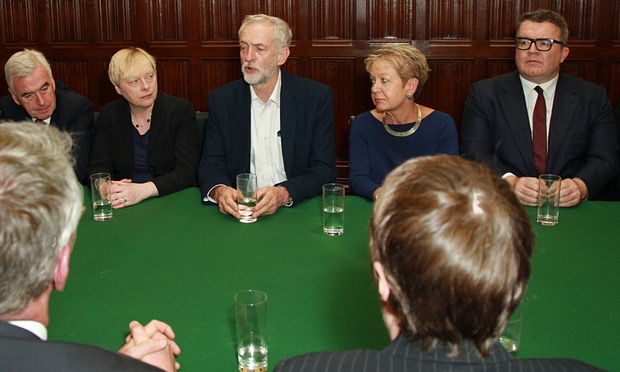
Never mind all those people who spent Christmas on the streets, in hospital or caught in the grinding deprivation which still grips too many of our fellow citizens. They can all go to hell. Instead, you should spare a thought for those poor Labour shadow cabinet members who spent the past three months agitating against Jeremy Corbyn’s leadership, and who have suddenly woken up to the realisation that publicly trashing your boss in the national media is a poor guarantor of job security.

Just when you think that the preening sanctimony and self-regard of the Labour Party and its parliamentary caucus cannot possibly get any worse, they somehow manage to find a new low. And this time they have excelled themselves, with coddled and self-entitled Labour shadow cabinet members weeping to journalists that rumours of a coming Corbyn reshuffle “ruined” their Christmas and New Year break.

The Telegraph reports:

Jeremy Corbyn “ruined Christmas” for moderate members of his front-bench with his plans for a a “revenge reshuffle”, a shadow cabinet minister has said.

[..] The Labour leader is expected to sack Hilary Benn, the shadow foreign secretary, along with Maria Eagle, the shadow defence secretary, and her sister Angela Eagle, the shadow business secretary. Rosie Winterton, the chief whip, is also said to be on the brink of being demoted.

The shadow minister said: “Our Christmas was ruined, there’s a level of fear within the party that’s worse than anything I’ve seen since the 1980s. It’s insidious.

“We [moderate members of the shadow cabinet] feel as if we have targets on our backs. This is supposed to be a new politics – instead we’re left wondering if we’ll have a job when we get back after the New Year. I chose to serve as a front-bencher because I am loyal to Labour, I just thought he would respect that”.

It is truly heartbreaking to hear of the emotional torment suffered by those Labour shadow cabinet members who think that Jeremy Corbyn is a disaster, but lack the cojones to publicly say so and win enough popular support of their own to mount a plausible leadership challenge.

Let us all observe a moment of silence for the “ruined” Christmases of the restive Labour centrists. Maybe some bright spark can pull together a legal argument that Corbyn violated their “human rights” with his rumoured reshuffle. After all, no one is better at cooking up fabricated human rights abuses than the Labour Party.

Hilariously, many of the same Labour MPs and shadow cabinet members who spent the past five years bashing the Evil Tories while prancing around as virtuous Defenders of the Poor are now finding themselves on the receiving end of hysterical criticism from the far left for their lack of ideological purity. And they don’t like it one bit.

The Telegraph reports in another article:

A plot to takeover the Labour party by ousting moderate MPs and seizing control of policy making has emerged in a document being circulated by Jeremy Corbyn’s key aides.

The ‘Taking Control of the Party’ blueprint, which has been seen by the Daily Mail, is understood to have been penned by veteran Left-winger Jon Lansman, now a director of the Corbyn-supporters organisation Momentum.

[..] A former Labour shadow minister told the Telegraph: “What we are finding is there’s a Stalinism that’s beginning to appear and a moral superiority which we are finding very irritating.

“It really is very animal farm and deeply unpleasant. What we are getting instead of an attempt to build bridges and compromise, is Stalinism.

“He doesn’t accept that a leader of a mainstream British political party has to adopt certain attitudes and behaviours. Its so childish.”

Moral superiority, from the party of unearned moral superiority? Surely not.

And what arrogant remoteness from the people is revealed by the pompous statement from a Labour shadow cabinet member that things must always be done a certain way – the insistence upon “certain attitudes and behaviours” – and that any attempt to conduct politics differently, to favour the people over the political class, is “so childish”?

No. What’s “so childish” is the born-to-rule mentality of centrists from all parties – but particularly the current Labour Party – who seek to make a virtue out of the fact that they believe in nothing and stand for nothing, save the aquisition and keeping of power.

What’s “so childish” is the tantrum-like meltdown occurring within mainstream Labour; the incredulous refusal to accept that their utter vacuity, when it came to policy making or offering an alternative vision for Britain, is the reason why they have been swept from their lofty perches and displaced by the Corbynites who (love them or hate them) actually do stand for something.

If Blairite and Brownite centre-leftism is so star-spangled awesome, why was it so comprehensively routed at the ballot box in May? And if telegenic soundbite-bots like Andy Burnham and Yvette Cooper truly have what it takes to be a viable world leader in waiting, why were they unable to convince any more than a handful of supporters to vote for their respective candidacies?

There is almost nobody currently sitting in Jeremy Corbyn’s shadow cabinet who could plausibly be described as exceptional, let alone as a future prime minister. Many of them would never have gotten close to front bench politics were it not for the fact that Corbyn was desperate for warm bodies when trying to assemble his team, and had to accept mediocrity in order to make up the numbers.

And yet these spineless nonentities – these utterly unremarkable politics-bots, many of whom would be toiling away in dusty select committees or vying for the title of Best Constituency MP had they not been plucked from obscurity by Jeremy Corbyn – dare to complain that their leader does not shower them with effusive praise when they brief against him anonymously to the daily papers, or publicly distance themselves from him on television.

What ungrateful, forgettable, pathetic weaklings.

Dan Hodges is absolutely right when he makes the point:

There is also something faintly pathetic about the cries of anguish emanating from around the shadow cabinet table. Those who have taken the fight to their leader were right to do so. But they can hardly complain when he fights back. It’s a bit like watching a pub tough screaming “not in the face” after suddenly finding his aggression reciprocated.

Bring on the reshuffle. And may Jeremy Corbyn’s purge of snivelling moderates, those who criticise anonymously while failing to hold or articulate beliefs of their own, make the Game of Thrones “Red Wedding” episode look like a spring picnic.

img_0010

Agree with this article? Violently disagree? Scroll down to leave a comment.

Follow Semi-Partisan Politics on TwitterFacebook and Medium.

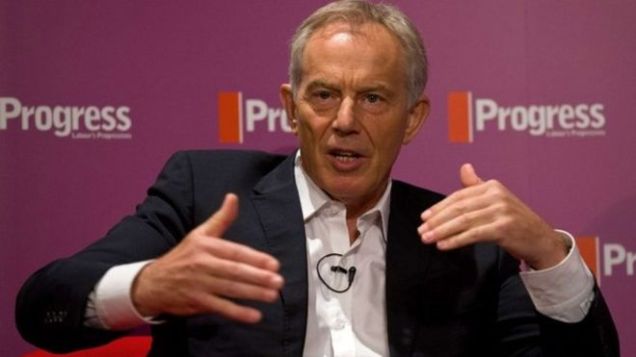
The Daily Toast: Tony Blair On Labour’s Future In The Age of Corbyn

Tony Blair - Labour Leadership - Jeremy Corbyn - Annihilation

The Labour Left may dismiss him as a Red Tory war criminal, but Tony Blair raises some awkward questions about what Labour stands for in the Age of Corbyn

In the Christmas special edition of The Spectator, Tony Blair offers a typically self-aggrandising but (to the Corbynite Left) infuriatingly perceptive take on the challenges facing Labour, and why the emboldened hard Left are not equal to the task before them.

Defending New Labour’s record in government between 1997-2010, Tony Blair writes:

In a society in which fewer and fewer people thought of themselves as traditional working class, we needed to build a new coalition between the aspirant up and coming and the poorest and most disadvantaged. For the task of winning power, the emphasis on the values of community, society, family, compassion and social justice was highly effective.

But for the task of governing, we had to do more than proclaim our values, we had to have the courage and creativity to apply them anew to a changing world and make what counted what worked rather than defending interests or tradition.

That’s the rub: what does Labour stand for in a society where fewer and fewer people  think of themselves as being working class, or attach any real meaning or identity to that label? And specifically, what does the Corbynite Left of the party stand for in this new reality?

Blair points to an uncomfortable truth for Labour. Because few people, other than the Owen Jones romantic Left, still obsess about class. And though economic inequality is very much a real thing, many of us share common tastes in popular culture to an extent which was simply not the case in the 1920s or even the 1950s.

What does social class even mean when thousands of one-percenters listen to the same pop music and partake of traditionally working class interests such as football, and the technological revolution has given the masses the same access to entertainment, culture and travel destinations as the very wealthy? Does class mean anything at all in 2015, besides being a shorthand way to describe a person’s accent? Arguably not.

So what has replaced the issue of class in our public discourse? The answer, of course, is the new obsession with equality. Nebulous and never clearly defined, the Left harp on about equality without ever explaining whether they are referring to equality of opportunity or equality of outcome. But as a crude generalisation, one could say that centrist Labour strives (however badly) for equality of opportunity, while the Corbynite Left dream of a word of total, enforced equality of outcome.

What unites these two warring factions within Labour is the fact that neither side have the first clue about how to use public policy to translate their vision into reality. Centrist Labour is intellectually dead and hasn’t had an original idea since Tony Blair left office, but the rot became particularly bad during the Ed Miliband era. Miliband’s speeches were full of meaningless platitudes and waffle about creating a “fair” Britain, but shockingly free of specific policies or strategies to reshape the country accordingly.

And the emboldened Left are full of spittle-flecked condemnation of the Evil Tories, not to mention the endless, preening virtue-signalling which has become their hallmark. But they offer no solutions either, just a 24/7 Twitter stream of criticism of Tory policy. Want to know what the Corbynites want to do with taxes or welfare? Good luck finding out. Most of them don’t have a clue, and the few that do know won’t say because they know that their real vision for Britain would be hugely unpalatable to the general electorate.

The danger for Labour in failing to stand for an election-winning coalition of voters – as they did when they represented a cohesive working class in the twentieth century – is that others will define Labour to the electorate, and not in a flattering way.

Already, the Conservatives are pushing the message that Labour are the party of welfare, entitlement and anybody who is a net “taker” from society. And what can Labour possibly say to counter this claim, when they can always be found popping up on television to denounce spending cuts without announcing anything amounting to a cohesive plan of their own?

Blair closes his Spectator piece by warning:

Right now we’re in danger of not asking the right questions never mind failing to get the right answers. All of it is about applying values with an open mind; not boasting of our values as a way of avoiding the hard thinking the changing world insists upon.

Unfortunately, even the anti-Corbyn elements of the Labour Party seem utterly unable to grasp this fundamental truth. And too often, it seems that all Labour know how to do is hate the Tories and boast about their own values, rather than identifying solid policies to put them into practice.

Consider how the recent vote on military action in Syria descended into a mudslinging sideshow, with the Corbynite left accusing anyone who disagreed with their pacifist stance of being an Evil Tory warmonger. Or the way that the Labour Party rode to battle against the tax credit changes, the welfare cap and the NHS junior doctors pay dispute, enthusiastically taking up arms against the Conservatives without uttering a word about how they would address very real problems of concern to many British voters.

On these issues and more, Labour currently propose no solutions. While military intervention in Syria may well fail or lead to a worse outcome, no alternative has been clearly outlined – assuming that airy talk about negotiating with ISIS is not to be taken seriously. Ask ten Labour MPs (including the shadow cabinet) what the party proposes to do about welfare or the NHS and you are likely to get fifteen different answers.

In his article, Tony Blair repeatedly argues against focusing on ideology:

Infrastructure, housing, social exclusion – all these challenges require more modernising and less ideological thinking.

But this is misleading. Strong viable governments only come about when there is a coherency and consistency of ideology which informs the policies offered to the electorate. It’s no good just coming up with a basket of pragmatic policies – people rightly see this for what it is: electoral opportunism.

Labour need to pick an ideology, whether it is that of their leader, that of Tony Blair or that of the incoherent band of uncharismatic centrists who currently pass for party heavyweights. And then they need to show the public that real, tangible policies for government can flow through the party, shaped and informed by those ideals. Labour’s credibility is currently so low that opportunistic opposition to individual Conservative policies will deliver them nothing at the ballot box. An alternative platform for government is what’s needed.

And that takes us back to the opening question: who does Labour actually represent in the Age of Corbyn and his sulky centrist antagonists, when nearly everybody with an aspirational bone in their body is abandoning the party?

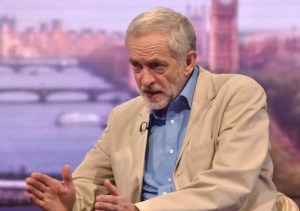
Jeremy Corbyn - Labour Party - Andrew Marr Show - BBC

Agree with this article? Violently disagree? Scroll down to leave a comment.

Follow Semi-Partisan Politics on TwitterFacebook and Medium.

The Daily Toast: Hugo Rifkind On The Dilemma Of Labour Party Centrists

Labour Centrists

Why don’t those members and activists who hate the new direction of the Labour Party simply leave?

It’s hard to bring yourself to leave an organisation when you have convinced yourself that everyone outside of it is hateful, immoral and evil. That’s the point Hugo Rifkind makes in his latest piece for the Spectator, a reflection on why there has been no hint of a centrist exodus from the Labour Party in the Age of Corbyn, despite much grumbling and plotting.

Rifkind wonders out loud:

What is wrong with these people? It’s like they’re children. Part of the madness comes, I suppose, from social media, whereby every utterance is ‘campaigning’, even if you’re just doing it in the office, on the loo. The bulk of it, though, is the idea that Labour people have to be Labour forever, even if they completely disagree with Labour, or else they’re not Labour. It’s weird and it’s needy and it’s anti–intellectual, and it makes no sense at all. They went big on this during the leadership election, when a host of people with politics virtually indistinguishable from Jeremy Corbyn’s were kicked out on the basis of prior support for the Greens or the Scots Nats. Because, of course, if they were true Labour they’d support Labour even while disagreeing with Labour, because that’s what Labour does.

Why does it? Nobody else behaves like this. Nobody else turns party into a tribe, not just putting loyalty over policy, but feigning a virtue with it, too. In any other party, anyone who disagreed with the party line as often as Corbyn has might have been expected to resign at least once, if only out of embarrassed deference to the voters who had blithely ticked the ‘Labour’ box. Perhaps due to its history, though, Labour is not merely a jumble of policies in the manner of other parties. Labour is a ‘movement’ and if you aren’t with it, you’re against it. No matter which direction it currently happens to be moving in.

An interesting argument, but it’s hardly as if the other main political parties are chock full of people who resign in fits of pique and then come crawling meekly back in rhythm with party policy. The only really noteworthy defections of the past few years are those of Mark Reckless and Douglas Carswell – both from the Tories to UKIP.

So while the gulf between the Corbyn left and the Blairite centre of the Labour Party may be particularly large, right-wing Tory MPs such as John Redwood and Bill Cash – with no frontbench career aspirations of their own to worry about – are just as unlikely to leave the Conservative party in disgust at David Cameron as Chuka Umunna or Andy Burnham are about to forsake Labour out of despair with Corbyn.

Rifkind closes by admonishing the centrists:

This is what happens when you brainwash yourself into believing that your lot are the only good guys; when you forget that it’s not the club that matters, but what the club does. This is what happens when you grow so used to feeling superior to everybody outside Labour that you can no longer properly believe such people are proper, moral humans at all. It’s not a church. It’s not a sin to go somewhere else for a bit if you need to. Not when the nuts do it, and not when you do either. Pull yourselves together. People are laughing.

This part is very true, and speaks to a sickness at the heart of the Labour Party – and the British Left in general – which this blog was one of the first to report on, and the most consistent in highlighting.

There are many reasons why Jeremy Corbyn’s leadership of the Labour Party is not yet provoking an exodus. First, there is the hope that Corbynism may yet prove to be a passing phase, and that a couple of years of underperformance or a 2020 general election defeat will shock the Left back to its senses. Second, there is the self-protective instinct most Labour MPs have over their political careers – breaking away to start a new political party rarely leads to career advancement and power. But thirdly, there is what Hugo Rifkind calls the “tribal” instinct – that same stubborn unwillingness to leave which kept Jeremy Corbyn in the Labour Party for all his long wilderness years, and which now keeps the centrists grimly hanging on.

Would it be so hard for the centrists to step away from the Labour Party had they not grown up telling themselves that the Evil Tories represent everything bad about Britain, that Britain’s greatness can be summed up by the output of our public services alone, and that Labour have a monopoly on both wisdom and compassion? Probably not. But they did, and they still do.

Back when the Labour leadership contest was still raging, this blog argued:

If Jeremy Corbyn is not the answer to Labour’s irrelevance, whoever ends up taking the party forward will need to explicitly make peace with capitalism, and undo the bad blood created by Gordon Brown’s brooding statism and the hand-wringing “predators vs producers” equivocation of Ed Miliband. And this will require explicitly praising the virtues of capitalism, and potentially letting the Jeremy Corbyn-led wing of the party split off and float away back to the 1970s.

This does not mean that the remaining rump of the Labour Party should then cast itself as just another centrist alternative to the Tories – British politics desperately needs real ideological variety and choice. But the future ideological lines will be drawn over how to make capitalism work for all the people, with laissez-faire small government types on one side, and bigger government interventionists on the other.

[..] Sniping at capitalism while conspicuously enjoying the fruits of all that it provides has proven to be a deeply unconvincing platform. And it won’t become any more convincing, or win Labour any new voters, by the time of the next election.

So can a Labour Party at peace with the free market still stand for anything, and be a party of clear principle and ideological coherence? Absolutely. But it won’t happen by chance, it will require careful and determined consideration.

But Jeremy Corbyn did win the contest, and it is clear that the Labour Party will not “make peace” with capitalism so long as he remains leader. And in some ways that’s fine – I supported Jeremy Corbyn’s candidacy precisely because I wanted to end the stale centrist consensus which currently grips British politics.

However, it does leave those centrists in a bind: disagreeing with nearly everything their leader says, used to attacking capitalism themselves in their lazy campaign rhetoric, but increasingly coming to appreciate capitalism the more they look at Corbyn’s alternative.

If Corbyn looks as though he will stay in power up to the 2020 general election, at some point the centrists will have to jump. And when they do, they will be ruthlessly attacked and vilified by precisely those voices who currently believe that virtue and salvation can only be found within the Labour Party.

But if the centrists wish to stay in politics and be taken seriously, what other choice will they have?

Jeremy Corbyn - Labour Leadership Election - Victory Nears

Agree with this article? Violently disagree? Scroll down to leave a comment.

Follow Semi-Partisan Politics on TwitterFacebook and Medium.

Jeremy Corbyn Is Leader Of The Labour Party: This Is A Political Earthquake

Labour Leadership Election Result - 2

The result of the Labour leadership contest is an earthquake, shaking British politics to its very foundations

At last, we live in politically interesting times.

Because Jeremy Corbyn has led the polls and been treated by the media as the presumptive winner for many weeks now, it is easy to overlook just what a remarkable thing has occurred today. But this is a result that was never meant to happen.

In an age when nearly every politician in a senior position appears perfectly manicured, perfectly briefed and perfectly on-message at all times, it is genuinely astonishing to see a real conviction politician – someone whose beliefs and values have remained fixed and  unchanged even as Britain has changed a great deal – achieve any degree of success.

You don’t have to agree with Jeremy Corbyn to appreciate the significance of his victory. And you certainly don’t have to want Corbyn to be the next Prime Minister of the United Kingdom.

Assuming that Corbyn does not go on to become Prime Minister – and he won’t – what harm has possibly been done today, other than to the short term 2020 electoral prospects of the Labour Party?

Continue reading

The Arrogance Of Labour’s Centrists

Jeremy Corbyn - Labour Leadership Election - Victory Nears

Accustomed to getting their way for nearly 20 years, Labour’s centrist MPs are having a hard time adjusting to the fact that they may no longer call the shots or dictate policy

Jeremy Corbyn has not yet been crowned as the new leader of the Labour Party and Her Majesty’s Loyal Opposition, but already the party’s centrists and Blue Labour types are attempting to dictate the terms of their surrender.

And as the Independent points out, at present it is by no means certain that the centrists – who have known nothing but power and influence for nearly two decades – will accept the result with anything like good grace:

The real question, of course, is whether they will accept the verdict of the party’s membership. The vote may well be closer than anyone expects – with a late showing by Yvette Cooper offering the tantalising prospect of a second surprise to overtake the original shock of the Corbyn surge. But, if he wins, Mr Corbyn will have a mandate to lead his party under the rules the party introduced to increase participation.

It also depends on how far figures such as Andy Burnham, Yvette Cooper and Liz Kendall go to try and reconcile their views with his. They have been more or less clear about what they would like to do, but the more that people such as they, and Chuka Umunna and Tristram Hunt boycott the Corbyn leadership, the more he will be able to ignore them. It is their duty to serve their party and their leader, and for them to push for their policies from within. To abstain, to run away, to sulk – this is not only not in Labour’s best interests, but would hardly serve to put Labour back on the road to social democracy.

In fact, there are growing indications that a number of Labour frontbenchers may choose to take their ball and go home rather than support the new leader and risk their own future careers by associating themselves with Jeremy Corbyn’s unabashed socialism.

Continue reading