In Defence Of Jeremy Corbyn

The Labour Party is Jeremy Corbyn’s party now. If rebellious centrist MPs don’t like it, it is for them to leave and find (or found) a new party, and new voters to support them

This blog has little time for the left-wing politics of Jeremy Corbyn, but has consistently supported his leadership of the Labour Party – not out of some mischievous desire to make Labour unelectable, but because centrism is a disease which has sucked the meaning and consequence from British politics, allowing indistinguishable governing elites from all parties to consistently act in their own interests rather than the national interest (see: European Union). And in our current centrist malaise, this blog has common cause with anyone who promises to give the British people a genuine ideological choice.

The naivety and numerous missteps in Corbyn’s first year in charge of Labour have been frustrating to watch, as they have only given further ammunition to those bitter centrist forces who never accepted the validity of his leadership in the first place, and who have been working tirelessly (and in many cases openly) to undermine their leader since the day he was elected. And this blog has had occasion to take Corbyn to task several times for his controversial stances, particularly in the realm of national security and foreign policy.

But Corbyn now finds his leadership under sustained and determined attack by a Parliamentary Labour Party determined to be rid of him in order to resume their previous, uninspiringly bland centrist course. Though this rebellion was precipitated by the shock Brexit victory in the EU referendum (with many sullen Labour MPs blaming their leader for failing to uncritically sing the EU’s praises loudly enough during the campaign), the Labour coup has in fact been building for months. Even I, at the outermost margins of the London political scene, am aware of the late night plotting which has been taking place in homes and pubs with a view to deposing Jeremy Corbyn – in some cases before he had even been formally elected as leader.

And now, ten months later, things are finally coming to a head.

The Parliamentary Labour Party’s stalking horse in this campaign is Angela Eagle. Yes, that complete and utter nonentity Angela Eagle, the former shadow Business Secretary with the voice and mannerisms of a Dalek.

LabourList reports:

Angela Eagle today kicked off her challenge to Jeremy Corbyn’s leadership, saying that her priority is to “heal” the Labour Party.

The former Shadow Business Secretary, who resigned from the frontbench last month, accused Corbyn of “hiding” from his critics. She said that Labour needed to be “strong and united” to deal with the fallout from the Leave vote in the EU referendum, and that Corbyn is now unable to deliver that.

Setting out her pitch to be Labour leader on ITV’s Peston show, Eagle said: “I think we need someone who can heal the party.

“I think we need to have somebody that can lead the Labour Party forwards and unfortunately Jeremy has lost the confidence of the vast majority of his parliamentary party.

“We need a strong and united Labour Party that can put a very compelling case to the British people to deal with the challenges that Brexit will give.”

And the rebels intend to create this “strong and united” party by fixing the rules to prevent Jeremy Corbyn from automatically appearing on the ballot in the first place.

The Telegraph reports:

The two rivals made televised pitches to supporters this morning in broadcast interviews after a dramatic series of developments ended the stand-off over the embattled leader’s position.

Ms Eagle suggested Mr Corbyn should not automatically be on the ballot. “He will have to find the nominations”, she said.

“I’m a gay woman with strong, Northern, working class roots. I think I’m the right person for this job at this time”.

So this would-be Labour leader is already resorting to crass and superficial identity politics to get on the ballot, presenting her socioeconomic background and sexuality as traits which would somehow make her a better leader.

What fatuous nonsense. What the Labour Party really needs is not some wheedling, self-entitled centrist who thinks that being a gay woman gives her additional plus points, but an authentic leader who can actually connect with Labour’s disillusioned base by actually reflecting some of their fears, priorities and aspirations.

And it gets worse:

Former shadow business secretary Ms Eagle said Mr Corbyn had “failed to fulfil his first and foremost duty, that is to lead an organised and effective Parliamentary Labour Party (PLP) that can both hold the Government to account and demonstrate we are ready to form a government in the event of a general election”.

Speaking earlier this morning Angela Eagle did not set out any policy areas where she differed from Mr Corbyn but said he was not able to win a general election.

Angela Eagle’s leadership bid is particularly risible because given a prime spot on the Sunday shows to set out her own alternative policy stall, she failed to name a single substantive difference between herself and Jeremy Corbyn. One would think that rattling off a few clear dividing lines would be easy, given how terribly left-wing Corbyn supposedly is, but apparently we are supposed to be sufficiently entranced by Eagle’s winning personality that we don’t need to see an alternative policy platform.

In fact, the article goes on to mention that Eagle’s greatest selling point is apparently her “electability” and ability to connect with the British people – a skill which she has thus far failed to demonstrate during her own utterly unremarkable political career.

But it’s okay – the Guardian (always the voice of the power-hungry metro Left rather than the true socialists or the working classes, and who supported Yvette Cooper of all people for the leadership) tells us that Angela Eagle is “tough”:

Many believe the former shadow business secretary and chess champion is up to the challenge. “She’s tough – in the best possible sense of the word,” a former colleague, who rates her chances highly, observed.

[..] The leadership contest really began for her on 27 June, when she became the 15th member of Jeremy Corbyn’s frontbench to leave, tweeting that she had done it “with deep regret, and after nine months of trying to make it work”.

Let’s be honest. None of the former shadow cabinet ministers who resigned in an attempt to destabilise Jeremy Corbyn’s leadership and force his resignation tried to “make it work”. They were simply biding their time, waiting for the opportune moment to strike against him. And following defeat for the Remain side in the EU referendum and with the fear of an impending snap general election, the timetable was accelerated.

When Angela Eagle and others speak of “healing” the Labour Party, what they mean is dragging it back to the old settlement where the left-wingers knew their place, shut up and didn’t cause any trouble. The plotters have no interest in reaching a consensus or balance of views across the party – they just want to return to the centrist days where Labour competes for power by trying to look as similar to the Tories as possible while yammering on about compassion a bit more. That’s what the rebels are familiar with, and that is what they think offers them the greatest chance of returning to power. Their minds cannot conceive of another path to victory, one based on principle and persuasion rather than compromise and trickery.

What is most offensive about the behaviour of the Parliamentary Labour Party is the arrogance of Labour MPs who think that the fact that they sit in parliament gives their voices greater weight and importance than the overwhelming majority of Labour members and supporters who overwhelmingly supported Corbyn in the leadership election. For a party which supposedly exists to lift up the oppressed and give the ordinary working people a voice, the Labour rebels show a remarkable disdain for their own internal party democracy. And now, bizarrely, they seek to blatantly subvert the wishes of their own party members while still demanding the loyalty (and campaign support) of the very activists whom they are in the process of betraying. This is the arrogance of the permanent political class.

And just contrast this low political skulduggery with what Jeremy Corbyn has been doing.

This weekend, Jeremy Corbyn spoke at the annual Durham Miners’ Gala, an important fixture in the socialist calendar. In an unprecedented move, many serving Labour MPs from the Northeast were disinvited from attending the reception by Gala organisers because of their war of attrition against their own party leader.

The Guardian reports:

The Durham Miners’ Gala attracts at least 100,000 people annually, but this time many Labour MPs from the north-east had tickets to the official reception rescinded by the leader of the Durham Miners’ Association, Dave Hopper. He accused those who had backed the parliamentary vote of no confidence in Corbyn as traitors and “New Labour remnants” who “cannot stand any form of democracy and appear to be interested only in themselves”.

This is the toxic state of relations between the party’s working class base and its elite, out of touch parliamentary caucus. An event like the Durham Miners’ Gala should be de rigeur for any self-respecting Labour MP, and for these MPs to be banned from attending shows the scorn, contempt and even hatred in which they are now held by people who should be their supporters.

All of the warning signs are there: The huge gains for UKIP at Labour’s expense in the 2015 general election. The spurning of centrist Labour’s slavishly pro-Brussels stance in the EU referendum. The banning of centrist MPs from the Durham Gala. And still the Parliamentary Labour Party is treating the party membership and their own working class base with complete and utter open contempt. Still they are sending the message that working class people are only welcome when they shut up, vote Labour and don’t try to influence policy in a more authentically left-wing direction.

And yet against this backdrop, Jeremy Corbyn addressed the Durham Miners’ Gala. This is what he had to say:

There’s a lot of debate about what’s happening in the Labour party at the present time. And I am inundated with questions, questions, questions all the time. And I have patience that is infinite to answer questions, questions and questions.

But one I got today really did puzzle me. They said are you coping with the pressure that’s on you? I simply said this: there is no pressure on me. None whatsoever. Real pressure, real pressure, real pressure – is when you don’t have enough money to feed your kids, when you don’t have a roof over your head, when you are wondering if you are going to be cared for, when you’re wondering how you are going to survive, when you’re wondering how you’re going to cope with the debts you’ve incurred, you’re wondering if your lovely employer is going to give you a call to give you a couple of hours of work, or not bother, or change their mind when you’re on the bus on the way to do that job.

That is the real pressure in our society.

For those people struggling on low pay, struggling on zero hours contracts, not knowing what’s coming from one week to the other, not knowing if they’ll be able to pay the rent, not knowing if they are going to be homeless, not knowing if their children will end up in care, that’s the kind of brutal pressure that’s put on people every day of the week in this country.

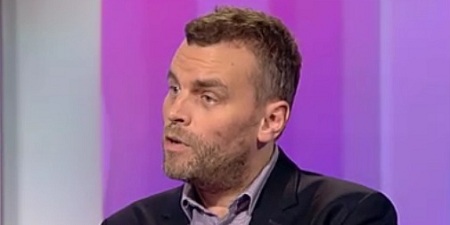
Watch the video at the top of this article. Hats off to Corbyn’s speechwriter for a powerful and actually well-written peroration, and to Corbyn himself for an authentically passionate delivery. Whatever else you might say about Corbyn, he shows more eloquence and passion in two minutes here than Ed Miliband managed to muster in five years of cerebral, ineffective opposition.

Here is an embattled leader, stabbed in the back by nearly his entire shadow cabinet (including a number of complete nonentities who would never have had shadow ministerial careers at all were it not for Corbyn), who even now is making speeches highlighting the struggles of the poor, the sick and the marginalised rather than his own plight. I’m sorry, but that’s a class act – and one which only serves to show the petty sniping and plotting of his rebellious colleagues in an even more damning light.

There is no way that this ends well for the Labour Party – and the fault lies entirely with the centrists. Even if they succeed in keeping Jeremy Corbyn off the ballot paper and unjustly ending his leadership, their petulant, childish and subversive actions have created a new normal for dissent within the party.

If Ed Miliband had suffered just one of the many acts of defiance and insubordination from his shadow cabinet that Jeremy Corbyn endures on a near daily basis, the offending MPs would have been banished to the cold extremities of Westminster political life before you could blink (much as nobody really remembers who Adam Afriyie is following his impertinent challenge to David Cameron’s leadership back in 2013).

But how things have changed. Now, it is apparently perfectly acceptable for Labour MPs to openly speculate about their leader’s skills and abilities on the Sunday shows, or for shadow cabinet ministers to vent their frustrations to sympathetic newspaper columnists. Now, even the most junior shadow minister is free to air their grievances in public, party and message discipline be damned. In fact, the level of childish playground politics we are now witnessing makes the unedifying tussle between the Blairites and Brownites look like the model of courteous debate.

The Labour rebels are deluding themselves if they think that this rotten and cowardly behaviour will go back in the box once Corbyn is deposed. It won’t. Such behaviour has now been legitimised by senior Labour figures, including Angela Eagle herself. And these same tactics will be used mercilessly against any compromise, unity or centrist candidate who manages to steal the crown from Jeremy Corbyn – by angry leftists and other centrists who simply want to steal power for their own faction.

This is what Labour’s petulant, rebellious centrists have wrought. A leader undermined by the seething resentments and petty career aspirations of his ideologically rootless, C-list challengers, and a party rendered utterly ungovernable thanks to a complete breakdown in discipline.

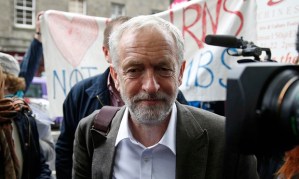
But one thing remains clear: after being elected leader outright on the first ballot with nearly 60% of the vote, Jeremy Corbyn remains the one with a mandate. And a quick scan of the swelling membership roles underlines the fact that this is Jeremy Corbyn’s party now. It no longer belongs to the centrists.

This blog has no time or sympathy for the Labour centrists, but one can appreciate their dilemma, serving in a party under a leader they cannot (or will not) support. But it is for them to leave the party. Jeremy Corbyn, love him or loathe him, has earned the right to lead his party. He won a huge mandate from the party membership less than a year ago, and retains widespread popularity.

And if Angela Eagle and her fellow plotters don’t like it, it is for them to leave the Labour Party and go in search of a new party and new supporters.

The door is open, and they most assuredly will not be missed.
 

Jeremy Corbyn - Labour Leadership Election - Victory Nears

Support Semi-Partisan Politics with a one-time or recurring donation:

Agree with this article? Violently disagree? Scroll down to leave a comment.

Follow Semi-Partisan Politics on TwitterFacebook and Medium.

A Tory-Labour Centrist Alliance? The Self-Serving Establishment Will Stop At Nothing To Stay In Power

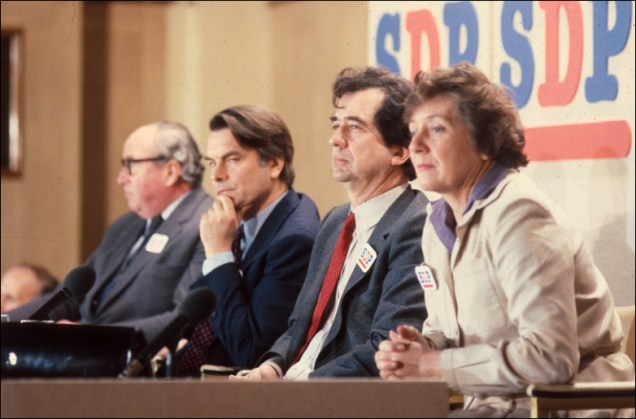
SDP Launch

The British people have made clear that they want their two main political parties to once again stand for recognisably different policies, values and objectives. But the response of calculating, stale and ideology-free centrist MPs seems to be to reorganise themselves in order to avoid dealing with a reality they would rather ignore

Politics is finally getting interesting again. After more than two decades of stale, centrist managerialism following the resignation of Margaret Thatcher, we are finally starting to see real ideological and intellectual dividing lines re-emerging in our political discourse.

After a long and dismal period where it barely mattered whether you voted for Team Red or Team Blue, so similar were their policies, we face the delicious prospect of which way people vote actually mattering once again. This is a good thing. Dry, stultifying conformity might just about be acceptable when things are in a good state, everyone is prosperous and happy, and a safe pair of hands is all that is required to keep the good times rolling.

But while many prosperous, metropolitan professional types (including nearly the entire British political class) may have been coasting through life thinking that everything was fine and dandy, in fact things were not fine for millions of their fellow citizens. And when the status quo is failing so many people, a consensual, moderate and determinedly un-radical form of politics is the very last thing which will bring about the required change.

This is why we should celebrate the short-term chaos which is roiling British politics. For too long we have been cursed by a Labour Party which cares more about making its middle class, urban supporters feel good about themselves than actually delivering tangible improvements in the lives of the working poor and the dispossessed or responding to their concerns about our democracy and our country. And since Thatcher’s departure, the ideologically rootless Tory Party – this blog describes the Cameron cohort as Coke Zero Conservatives, the same conservative taste you recognise but with none of the caffeinated, calorific oomph which makes it worth drinking – has adopted one socialist, redistributionist policy after another in a desperate, failed bid to shake off their so-called “Nasty Party” image.

In other words, within the space of twenty years the two major political parties have converged to such an extent that they were almost indistinguishable from one another – Ed Miliband’s Labour Party went into the 2015 general election flogging coffee mugs on their campaign website which promised to “control immigration”, while David Cameron’s Conservative Party manifesto was creepily subtitled “A plan for every stage of your life” – statist control freakery if ever there was.

The result of this, we all know, was the rise of the fringe parties – the incredible success of the Scottish National Party despite their utterly woeful record actually wielding power in Scotland, and the rise and rise of UKIP which set the wheels in motion for David Cameron’s bitterly regretted decision to offer the country a referendum on our continued EU membership.

Since the shock victory for Brexit in the EU referendum, things have only gotten worse for the forces of dull, greyscale centrism. David Cameron resigned in justified humiliation having waged a deceitful and bullying campaign in favour of remaining in the EU, in which he threatened his own citizens with punishment if they voted the “wrong” way, and yet still managed to lose. Meanwhile, the Labour Party, whose parliamentary caucus never accepted Jeremy Corbyn’s leadership and sought to undermine it from Day One, decided to make their last stand. Unfortunately, that last stand appears to be the utterly bland and uninspiring figure of Angela Eagle, whose coming leadership challenge will be utterly obliterated by Jeremy Corbyn, who remains very popular with the expanded Labour Party membership.

In other words, this has been a bad time for the establishment. Our poor superiors have endured setback after setback, with their preferred centrist candidates being routed as the public justifiably yearn for the return of authenticity and ideological coherence to their politics. And now they face a setback which cannot be endured – the prospect of seeing their country taken out of the European Union (that great escape from accountability for Europe’s governing elites) against their will.

But they are not going to take this lying down.

The Guardian reports on an utterly despicable new development – the fact that centrist Tory and Labour MPs, terrified at the prospect of the bland, consensual form of politics in which they thrive being brought to an end, are now proposing to unite in order to form a new centrist political party.

From the Guardian:

Tory and Labour MPs have held informal discussions about establishing a new political party in the event of Andrea Leadsom becoming prime minister and Jeremy Corbyn staying as Labour leader, a cabinet minister has disclosed.

Senior players in the parties have discussed founding a new centrist grouping in the mould of the Social Democratic party (SDP) should the two main parties polarise, according to the minister. Talks should be taken seriously, though they are still at an early stage, according to the source.

“There have been talks between Labour and Tory MPs about a new party,” the minister said. “A number of my colleagues would not feel comfortable in a party led by Andrea Leadsom.”

It is understood that MPs in both parties who campaigned to remain in the European Union believe there is an opportunity to build on the newly founded relationships between centrist MPs in both parties made before the EU referendum.

A Tory party source said Labour and Conservative MPs who campaigned in favour had become closer during the campaign and increasingly come to regard themselves as “a tribe”.

In other words, if the centrists do not get their way (as they have done uninterrupted since at least 1991) then they will take their toys and leave, founding an entirely new political party for their own glorification rather than doing the hard work of convincing existing party members that they are wrong.

This seems to be prompted largely by the fact that certain prima donna centrist MPs, used to enjoying the trappings of power and influence which come from senior positions in government or opposition, are unable to tolerate even a brief period in the wilderness while more unabashedly ideological leaders have their turn running the show, and so must orchestrate a way for their own failed and reviled centrist clan to continue pushing their self-serving, wishy-washy agenda.

In Labour’s case, this is just about understandable. Jeremy Corbyn is indeed vastly different to what we have been trained to think a Labour leader should be since the days of Michael Foot. The post-Clause IV, post-Blair accommodations with capitalism mean nothing to Jeremy Corbyn, and he is proud to admit as much. Under Corbyn’s watch, the Labour Party has indeed become markedly more left wing. Therefore, a convincing case could indeed be made that moderate, centrist Labour MPs have no place in the party of Jeremy Corbyn. But since Corbyn is supported by a thumping majority of Labour Party members, it would rightly be for the centrist MPs to toddle off and find a new home (and new supporters). Labour is Corbyn’s party now, not theirs.

The Conservatives, though, have far less of an excuse. It would be interesting to know whether the Tory SDP plotters come predominantly from the older guard or from the 2010 and 2015 intakes. Logic would suggest that many of the more recent Tory MPs, who entered parliament in the dismal Age of Cameron, are most ill at ease at the prospect of being led by a superficially more Thatcherite leadership candidate like Andrea Leadsom. But then Theresa May hardly fits the profile of progressive conservatism, with her flinty-eyed authoritarianism, disdain for civil liberties and championing of a large, overbearing nanny state to watch over us and regulate our speech and behaviour. None of these are endearing qualities in a future Tory leader and prime minister, so any Conservative MP happy to wear the blue rosette for Theresa May but happy to shack up with Labour in case of Andrea Leadsom clearly has a very broken and opportunistic political compass.

The Guardian article continues:

A senior Labour party source confirmed that at least one Conservative minister and one of the shadow cabinet ministers who resigned last week had been involved in discussions about such a reshaping of British politics.

“There is a feeling that there might have to be a new party at the centre of British politics,” he said. “It’s early days, but the conversations are at a pretty high level.”

The suggestion comes as the Liberal Democrat peer Shirley Williams demands a central role for all pro-EU parties at Westminster in shaping the UK’s relationship with the EU. She warns that, without a cross-party consensus on the final deal, the country could fall apart in bitter post-Brexit division and acrimony.

Trust Shirley Williams to be at the centre of this subversive attempt by the political class to reorganise themselves so as to thwart the will of the people. She may play the part of the kindly faced elderly lady very well, but is there any more noxious emblem of our centrist malaise than Baroness Williams? I can think of none.

We now witness the depressing fact that a group of Conservative and Labour MPs – we do not yet know how large this potential grouping may be – have a shared love for keeping Britain chained to the antidemocratic EU which transcends whatever minor differences they may have on policy. And those policy differences between Tory an Labour are undoubtedly very few in this centrist age. Therefore, in a last-ditch effort to avoid being dragged out of the EU kicking and screaming, these MPs are now willing to betray the constituents who elected them to parliament by defecting to join a “worst of all worlds” Party of the Damned, a cesspit of wishy-washy MPs who startle like shy fauns at the first sign of passionate ideological debate.

Even before the official result of the EU referendum was declared, there were noises being made by pro-EU Remainers in denial that some means should be found to overturn the public’s vote to leave the European Union on one spurious pretext or another. Most popular now is the idea that the referendum should be ignored or re-run because the public are gullible fools who were tricked by the slick lies and distortions of the official Vote Leave campaign (as though the Remain camp was not engaged in lies, threats and downright cheating of its own). And it now seems that this is to be used as cover, an excuse to legitimise the subversion of British democracy by a group of spoiled sore losers accustomed to always getting their way.

We must not allow these machinations to succeed. While Labour MPs – so diametrically at odds with a leader who commands overwhelming support among the party membership – should arguably do the decent thing and walk off into obscurity and irrelevance by attempting to form a new party of the centre-left, there is absolutely no excuse for Tory and Labour MPs joining together to create a hybrid centrist party – particularly when neither of the two remaining Conservative leadership candidates can be described as right-wing ideologues in the mould of Thatcher.

That such a dramatic step is even being considered shows the rot in our national and political life wrought by the EU. We are now lumbered with a largely useless political class, wobbly-lipped MPs who are terrified at the prospect of Britain governing herself and not having our government’s every decision vetted by the omniscient supranational European government in Brussels. These plotting MPs are behaving like children suddenly separated from their parents in a busy crowd – screaming, weeping, arms outstretched in anguish at having been ripped away from that which gives them comfort and succour, their alpha and omega. It is an unseemly, pathetic exhibition which they are putting on in their desperation to stop Brexit, stop the realignment of British politics along more ideological lines and return to the happy days when fast-track ministerial careers were their for the taking so long as they managed to be sufficiently bland, predictable and uncontroversial.

Hopefully before long we will learn the names of these Labour and Tory MPs who care so much about their future career prospects but so little for their own constituents that they would abandon the parties under which they were elected in order to create a new centrist holding party to achieve through political skulduggery what they were not able to achieve at the general election or the EU referendum.

And hopefully those MPs concerned will then quickly face the full wrath of their constituency parties and associations for having entertained such self-serving thoughts.

God willing, none of them will be in parliament by the time of the next general election, having been deselected and replaced by new MPs for whom socialism, conservatism, ideology and principle are not such dirty words.


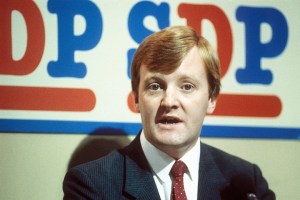
SDP - Charles Kennedy

Brexit - EU - European Union Flag - Missing Star - Britain - UK

Agree with this article? Violently disagree? Scroll down to leave a comment.

Follow Semi-Partisan Politics on TwitterFacebook and Medium.

When Expecting Politicians To Have Principles Is Considered Unreasonable

trump-announce

Damn those stubborn idealists

Sometimes satirical American news site The Onion strikes a little too close to home.

The latest case in point is an excellent News in Brief story from last week, entitled “Precious Little Voter Needs To Feel Inspired By Candidate“:

CLEVELAND—Noting how important it is for him to find a campaign that stirs genuine optimism and enthusiasm in its supporters, sources confirmed Tuesday that precious little voter Adam Higgins needs to feel inspired by a candidate. “To be perfectly honest, I just can’t bring myself to vote for someone I’m not excited about,” said the delicate little flower, who simply has to experience an authentic and personal connection to a candidate and believe in his wittle-bitty heart that the candidate’s message will legitimately move the country forward in meaningful and significant ways. “Policies and experience are certainly important, but a candidate has to have a vision I truly believe in. I’m only going to cast a ballot for someone who actually provides real hope for the future of this country [because I need to feel all snuggly-wuggly and special].” Sources further confirmed the fragile, dainty buttercup feels he absolutely must vote for someone who is trustworthy and competent.

The Onion’s fictional Adam Higgins sums up this blog’s attitude nicely in a single paragraph. Let Semi-Partisan Politics be a refuge for dainty buttercups everywhere!

But maybe it is time to give up on our dainty buttercup ways and embrace the cold hard reality of politics, where even fundamental positions on issues as consequential as the future of our democracy are nothing more than bargaining chips to be picked up, traded and discarded as politicians seek to advance their careers.

Maybe if people like me – those who think that political ideas and governing ideology actually matter, and that there is nothing mature or laudable about “pragmatically” lurching from crisis to crisis, dealing with each one on an isolated, ad hoc basis in pursuit of favourable newspaper headlines – simply shut up and got out of the way, the whole system would suddenly start functioning much better.

Actually, no, it wouldn’t. It is for the political class to change their ways, not the citizens who many politicians have so conspicuously failed to serve. Give me Jeremy Corbyn over Ed Miliband any day, even though his politics are anathema to this blog. And give me Margaret Thatcher over almost anybody in the Ted Heath tribute act of a government we currently have in Britain.

The most unnerving Onion headlines and stories are generally those which in the the course of recent years have become impossible to distinguish from real life, or those which invert reality so that the offensive and unnatural is considered normal.

This is one of those stories.


And no, this blog does not support Donald Trump.


Political centrism

Agree with this article? Violently disagree? Scroll down to leave a comment.

Follow Semi-Partisan Politics on TwitterFacebook and Medium.

What Might A Post-Osborne Conservative Party Actually Look Like?

Britain Election

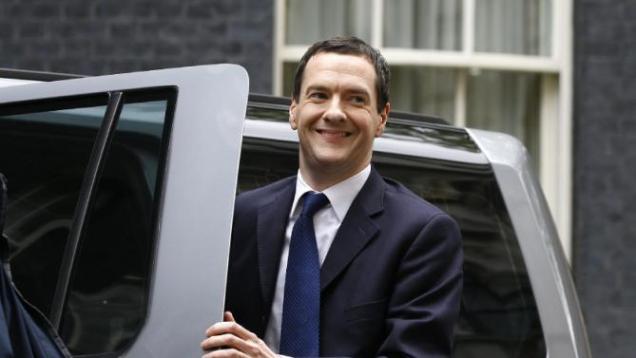
George Osborne has political enemies. But are they also ideological opponents?

What hope is there that the Conservative Party might realistically follow a different intellectual and ideological path after the Age of Cameron and Osborne?

While there have been precious few public signs of senior cabinet or backbench, leadership-calibre Conservative MPs willing to make a public stand for a smaller state and greater individual liberty, perhaps we should be encouraged by the fact that many Tory MPs apparently hold such a low opinion of George Osborne, the navigator largely responsible for the party’s current centrist course.

James Kirkup has been surveying attitudes to the Chancellor within the parliamentary party:

How much trouble is Mr Osborne in? Put it this way: Tory MPs who a few months ago were so wary of his power over their future that they flinched at the mention of his name are now speculating about whether he will keep his job.

By way of evidence, here are some things Conservatives have said to me about the Chancellor in recent days. Two of the quotes below come from serving members of the government. One is from someone who holds a senior office in the Tory hierarchy. One is a backbench MP who could easily have a prominent place in Cabinet in a year or two.

1. “No chance. None. Zero. Never going to happen. Dead. Deader than dead.”

2. “He has been found out. He doesn’t believe in anything and no one likes him. It was useful for people to support him when he was on the way up, but no one will stick with him on the way down.”

3. “The thing about George is that a lot of people think he’s a bit arrogant and rude, but that’s because they don’t really know him.

“Well I’ve worked with him pretty closely for several years now and so I know that the truth is that in person he’s actually much worse than that.”

Kirkup goes on to chart a path back out of the wilderness for Osborne, which is of far less interest to this blog, which ardently hopes that the Chancellor and his “New Labour Continued” strategy perish in the desert.

But there is no point looking forward to the departure of Cameron and Osborne unless there is a reasonable prospect of them being replaced by other, better alternatives – future leaders whose conservatism does not retreat at the first sight of negative headlines, and who know when the pain of public opposition is worth the gains (i.e. not in pursuit of a paltry £4bn of savings from Personal Independence Payments for disabled welfare claimants).

Back in November of last year, this blog pointed out that winning power only to implement Tony Blair’s unrealised fourth term of office was a waste of a Conservative administration, and that those who campaigned and voted Tory deserved better:

The fact that David Cameron and George Osborne are watching the slow implosion of the Labour Party and conjuring up plans to woo Ed Miliband voters – rather than capitalise on this once-in-a-century opportunity to execute a real conservative agenda unopposed – reveals their worrying lack of confidence in core conservative principles and values. If the Prime Minister and Chancellor really believed in reducing the tax burden, reforming welfare, building up our armed forces, shrinking the state, promoting localism and devolving decision-making to the lowest level possible (with the individual as the default option), they could do so. They could be building a new, conservative Britain right here, right now. Virtually unopposed.

But Cameron and Osborne are doing no such thing. They simper and equivocate, and talk about fixing the roof and paying down the debt while doing no such thing, and still they attract endless negative headlines for inflicting an austerity which exists primarily in the minds of permanently outraged Guardian readers.

If Britain is not a transformed country in 2020 – with a smaller state, more dynamic private sector and greater presence on the world stage – there will be absolutely nobody to blame other than the party holding the keys to government. The party with the word “conservative” in their name. The Tories will have been in power for ten years and have nearly nothing to show for it, save some weak protestations about having fixed Labour’s prior mismanagement of the economy.

That’s not the kind of party I want to be associated with. That’s not the party I campaigned to elect in 2010, back when it seemed possible that a new Conservative administration might aspire to being something more than a moderate improvement on Gordon Brown.

In other words, in order to make an exciting potential future leadership candidate, the Conservative MPs rolling their eyes as the Chancellor of the Exchequer self destructs (or uses up another of his nine political lives) must not simply dislike George Osborne – and there is increasing evidence that his support is a mile wide but an inch deep – but actually have an entirely different vision for the party.

That rules out all of the most obvious successors (Theresa May, Nicky Morgan, Philip Hammond, Michael Fallon, Jeremy Hunt) as well as those one-time Bright Young Things who have recently proven their unreliability by failing to come out in support of Brexit (Sajid Javid, Stephen Crabb, Matt Hancock, Rob Halfon).

Unfortunately, that mostly leaves a pool of potential candidates who are probably too new to Parliament to mount a credible leadership bid by 2020, or citizen politician types who have already publicly disavowed any future leadership ambitions. This blog took a warm liking to Chris Philp (if only he can be cured of his europhilia), David Nuttall (with some specific policy reservations) and James Cleverly when these MPs recently addressed a Conservatives for Liberty lobby event, and also Lucy Allan – though the latter’s social media exploits and alleged behaviour towards her staff raise some worrying temperamental questions.

Kwasi Kwarteng is also a sound conservative, advocating a return to a contributory welfare state as well as being an excellent author. Dominic Raab is very bright, and strong on individual liberty and meritocracy.

None are what you might consider to be household names at present. In some cases, that may have the potential to change by 2020, depending on what happens and whether any of these candidates are promoted into the cabinet as the Conservative Party approaches the end of David Cameron’s term.

But the green shoots of a British Conservative revival do exist. They are small and fragile at present, and no matter who is leading Labour in 2020, Cameron’s successor will have to contend with Tory Fatigue after ten years back in government, making the urge to tack to the centre even harder to resist than it is already.

Which is all the more reason why this blog believes it is now imperative to identify, support and champion those future leadership prospects who fit the profile of an heir to Thatcher rather than another disappointing, Cameron-style Ted Heath tribute act.


Conservative Party Logo - Torch Liberty - Tree

Agree with this article? Violently disagree? Scroll down to leave a comment.

Follow Semi-Partisan Politics on TwitterFacebook and Medium.

The Daily Toast: Douglas Murray On Putting Country Before Party

Tim Montgomerie - 2

The exodus begins…

Douglas Murray lends an eloquent voice of support to Tim Montgomerie and his brave decision to quit the Conservative Party as an act of protest against Cameronism:

In the wasteland of principles that is Westminster, Tim Montgomerie has always been an exception.  The area is filled with ambitious, bland careerists whose idea of taking a stand (as with most of the commentariat) consists of trying to locate two ‘extremes’ before comfortably wedging themselves equidistant between them.  But in resigning from a lifetime’s membership of the Conservative party, Tim Montgomerie has demonstrated that there is still room for principles in politics.

[..] But here is the bigger problem for [Montgomerie’s critics]. It may well be that they shouldn’t care about the founder of Conservative Home, and one of their party’s most loyal and thoughtful members, choosing to leave the party.  Just as they may for the time-being not mind taking all those leaflet-deliverers for granted while riding against their core wishes.  But one day they may wake up to discover that amid all the high-handed dismissals and principle-free careerism, there is nobody around left to watch their political backs.  What a day that will be.  And perhaps it will come sooner rather than later.

If anything is going to hasten this day of reckoning, it will be the coming EU referendum. The party grassroots are overwhelmingly at odds with the leadership on the key question of Brexit. The parliamentary Conservative Party is on course to split just as dramatically as Labour split over the vote for military action in Iraq back in 2003.

Then throw in a rancorous, ill-tempered EU referendum campaign – our country is debating an existential issue, and tempers will inevitably fray and then snap. Things will be said that are far worse than David Cameron’s prissy, coded jibes at the expense of Boris Johnson in Parliament today.

And in the midst of this intra-party warfare, Conservative MPs may come to realise – or recall – that there is far more that divides them than just the question of Brexit. Other ideological differences, suppressed in the name of the “greater good” of general election victory, will come bubbling back to the surface.

Some Tory MPs might even make the mistake of asking themselves what the Cameron/Osborne legacy will be – and then recoil in horror when they realise that they fought their way back to power only to blindly implement Tony Blair’s fourth term New Labour agenda.

And then will come the desperate casting around for a more authentic conservative vision, and a more credible leader to bring it about. And vindication for Tim Montgomerie.


Read my take on Tim Montgomerie’s resignation from the Conservative Party here, as part of the “What Conservative Government?” series.


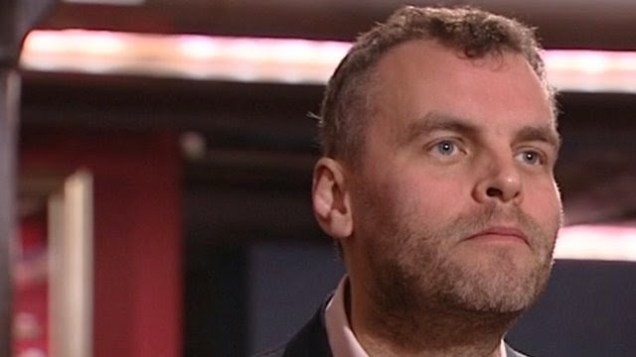
Tim Montgomerie

Agree with this article? Violently disagree? Scroll down to leave a comment.

Follow Semi-Partisan Politics on TwitterFacebook and Medium.