Tales From The Safe Space, Part 11 – From A Dissenter Behind Enemy Lines

Conservatives Libertarians Campus

From deep behind enemy lines…

The following lonely cry for solidarity and advice comes from a British student posting on a libertarian Facebook group, and gives a snapshot of the current climate of hostility facing conservative and libertarian students who refuse to buy in to the Identity Politics orthodoxy reigning on university campuses.

The student asks:

Any libertarians or even Tories here struggle with being shut down at uni? I’ve just handed in the most left wing essay I’ve ever written in order to get a good mark, I lost marks in a presentation for stating that the EU arrest warrant is unjust (because we signed up to it, so it’s voluntary according to the lecturer), a girl was literally shaking with rage when I said I will be voting to leave the EU and she had a lot of back up…but it gets to a point where it’s having a negative effect on my education and not sure how to tackle it. Should I just keep my views to myself and write left wing essays? Advice needed. I am treated like a fascist.

Such students increasingly face genuine hostility when they insist on being true to themselves and refuse to hide or disown their sincerely held political opinions, both from peers and even their own professors.

And particularly where students’ academic results are at stake, this real-world hostility stands in stark contrast to the largely imaginary hostility (microaggressions) dreamed up by the Identity Politics brigade as a pretext for demanding ever more restrictions on liberty, and ever more transfers of power to themselves from fawning, deferential university authorities.


Safe Space Notice - 2

Agree with this article? Violently disagree? Scroll down to leave a comment.

Follow Semi-Partisan Politics on TwitterFacebook and Medium.

Tales From The Safe Space, Part 5 – Return Of The Sombrero Scandals

Sombreros - Cultural Appropriation

The selective outrage at supposed acts of “cultural appropriation” on university campuses takes proactive offence-seeking to a dismal new level

There is no article of clothing more likely to make a British or American university administrator break out in a cold sweat today than the sight of a sombrero on campus. Because as we all know, wearing a sombrero when not of Mexican origin is a hateful and violent act of cultural oppression, second only to donning the white robe and prancing around a burning cross.

In the UK, sombreros caused a stir last year when the University of East Anglia took it upon itself to ban and confiscate hats handed out to students by an off-campus Mexican themed restaurant. Possessed of an oversensitive racism detector which seems to jerk violently from “OK, I suppose” to “Hitler! Hitler!”, the UEA felt that the sight of non-Mexicans wearing sombreros was “discriminatory” and “stereotypical”, thus justifying their tyrannical dress code.

One might think that sombreros would at least be acceptable at a tequila party, but this too is now quite intolerable for the New Age Censors, as several unfortunate students at Bowdoin College, Maine, recently discovered to their cost.

The Washington Post reports:

Two weeks ago, some students threw a birthday party for a friend. The email invitation read: “the theme is tequila, so do with that what you may. We’re not saying it’s a fiesta, but we’re also not not saying that :).” The invitation — sent by a student of Colombian descent, which may or may not be relevant here — advertised games, music, cups and “other things that are conducive to a fun night.”

Those “other things” included the miniature sombreros, several inches in diameter. And when photos of attendees wearing those mini-sombreros showed up on social media, students and administrators went ballistic.

College administrators sent multiple schoolwide emails notifying the students about an “investigation” into a possible “act of ethnic stereotyping.”

Partygoers ultimately were reprimanded or placed on “social probation,” and the hosts have been kicked out of their dorm, according to friends.

Consider just how fascistic and totalitarian the concept of “social probation” is. And yet this is apparently a routine form of punishment at Bowdoin College, meted out to anybody who transgresses the strict, often post-hoc lines which are drawn to mark out unacceptable speech and behaviour for fully grown adults.

(The college immediately clammed up and refused to answer journalists’ questions in the aftermath of sombrero-gate, so precisely what is involved in “social probation” is not fully clear – but one can reasonably assume that it involves attending the same kind of Identity Politics re-education classes that have sprung up elsewhere. The student handbook makes reference to restrictions on “off-campus study” and the infantilisation of students by informing their parents of any misdeeds).

The Bowdoin Student Government (the student union) released a portentous declaration following the terrible sombrero incident, announcing:

WHEREAS, the Assembly reaffirms its adherence to a definition of cultural appropriation as a power dynamic in which members of a dominant culture take elements from a culture of people who have been systemically oppressed by that dominant group, perpetuates racist stereotypes, and/or misrepresents people’s culture;

WHEREAS, on Friday, February 20th, 2016 members of the student body organized a “tequila party”, during which students appropriated aspects of Mexican culture;

WHEREAS, this act of cultural appropriation is offensive for the previously stated reasons, is disrespectful, creates an environment where students of color, particularly Latino, and especially Mexican, students feel unsafe, and contradicts our goal to refine the education of students in an inclusive residential community;

[etc. etc. – you get the idea]

The statement then goes on to make the predictable list of “recommendations” (underscored by implicit threat of interminable protests in the event of non-capitulation) which we have come to expect, namely:

Recommend, that the administration should more immediately acknowledge incidents of this nature, and it must acknowledge not only their occurrence but also the deep hurt that students may be feeling immediately following such acts.

Further Recommend, 

That the administration must make clear to students, well in advance, their commitment to creating a supportive space for students who have been or feel targeted, for as long as students deem necessary.

Further Recommend,

That the administration must create a space for those students who have been or feel specifically targeted.

Further Recommend,

That the administration must create a separate space open to other students for discussion, support, and processing of the incident.

In other words, it was not enough that their well-trained lapdog university administrators immediately rushed to highlight and condemn the incident, and mete out “social probation” punishments on fully grown adults for engaging in harmless activity at a social event. This is now the bare minimum. What the university should have done additionally is to explicitly acknowledge the deep, searing, life-altering injury sustained by students who felt that their culture was being mocked, belittled and somehow appropriated and marginalised at the same time.

But this pales in comparison to Bowdoin College’s failure to provide multiple safe spaces following the traumatic event – one for students who were (or who felt) “targeted” by the wearing of mini sombreros, and another for students who weren’t affected in the least, but who still might want a well-appointed room with board games and puppy dog videos so that they can have a good, validating cry about the whole thing.

Two safe spaces – the Hierarchy of Oppression works a bit like airline lounges, with one reserved for first class passengers and one for business class and those who purchase day passes. Very important.

And of course:

Further Recommend,

That the Office of Academic Affairs mandate an academic or experience in the classroom for those involved in such incidents.

Further Recommend,

That the College develop processes for punitive measures to be undertaken against those involved in such incidents.

Further Recommend,

That the College remain cognizant of the time and academics of students of color following such incidents and take appropriate measures to ensure their academic, mental, and social wellbeing.

There’s the punishment bit. Of course it is not enough for those whose delicate psyches were injured by encountering something with which they disagreed to be comforted and fawned over in their imaginary distress. No, those who transgress in thought, word and deed must suffer the consequences – in the case of Bowdoin College, an “experience in the classroom” would seem to hint at a form of public shaming ceremony.

And finally we have the cautionary shot across the bows of the college, warning administrators that students should not have their vital social activism curtailed by onerous academic demands, and that the university is on the hook for their “mental and social wellbeing”.

Once upon a time – if the legends are true – people went to college to learn, and not simply to exchange one set of parents back at home for another set of overbearing auxiliary parents in the form of ever-watchful university administrators. And yet increasingly, universities are devoting more time catering to their students pastoral needs than their academic rigours, either reactively (after being bullied and bossed around by student mobs) or proactively (by professors and administrators too craven to stand up to said mobs).

Giving in to these petty campus tyrants only encourages them to come back with even more absurd demands. So if student activists are absolutely insistent that university authorities tend to them as though they were children, then colleges should begin administering tough love and discipline as well as obsequious hand-holding.

There may be a time and a place where people need to be monitored to ensure compliance with a dress code, and placed in detention (or “social probation”) for bad behaviour. But it’s called middle school, not college or university.

And any students who have genuinely failed to master Human Interaction 101 – and still require an external authority figure to mediate their interpersonal affairs by the time they reach the age of eighteen – should seriously stop and consider whether they are cut out for higher education.


Safe Space Notice - 2

Top Image: The Tab – “Sombreros banned from Freshers’ Fair

Agree with this article? Violently disagree? Scroll down to leave a comment.

Follow Semi-Partisan Politics on TwitterFacebook and Medium.

One Year Later, Are We Still Charlie?

Paris - Charlie Hebdo Anniversary - Je Suis Charlie

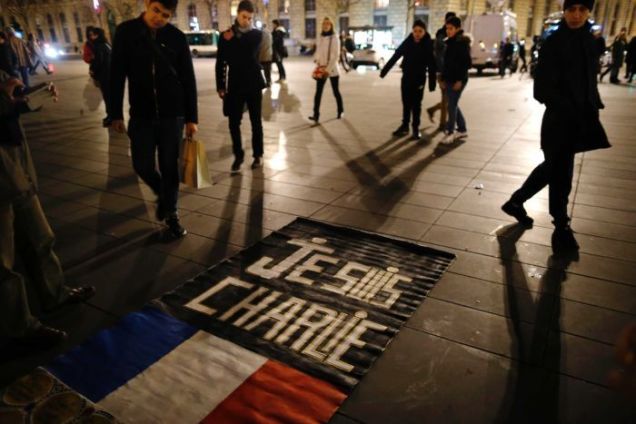
As we pass the one year anniversary of the Charlie Hebdo attacks in Paris – the terrorist atrocity which prompted us to declare Je Suis Charlie in support of free speech – are we still Charlie, one year on? Were we ever?

This past week saw the first anniversary of the Charlie Hebdo attacks in Paris, a sickening assault on journalism and free speech, and the worst thing to happen to France until the Paris attacks of 13 November ensured that 2015 would end much as it started for Europe: in the shadow of Islamist terrorism.

At the time of the Charlie Hebdo shootings, many of us rallied to the cause of the small, satirical newspaper which found itself in the crosshairs of a primitive, totalitarian ideology, and we declared “Je Suis Charlie”.

It was a nice gesture, even if it wasn’t strictly true. Though David Cameron was eager to be seen marching arm-in-arm with other world leaders through the streets of Paris in support of free speech, those of us back in London knew that any British newspaper attempting to publish some of the satirical cartoons that Charlie Hebdo published would have been vilified, sued and shut down, and its editor would likely languishing in a British prison cell.

Things didn’t get much better as 2015 progressed, as Glenn Greenwald notes in his latest column for The Intercept:

It’s been almost one year since millions of people — led by the world’s most repressive tyrants — marched in Paris ostensibly in favor of free speech. Since then, the French government — which led the way trumpeting the vital importance of free speech in the wake of the Charlie Hebdo killings — has repeatedly prosecuted people for the political views they expressed, and otherwise exploited terrorism fears to crush civil liberties generally. It has done so with barely a peep of protest from most of those throughout the West who waved free speech flags in support of Charlie Hebdo cartoonists.

That’s because, as I argued at the time, many of these newfound free speech crusaders exploiting the Hebdo killings were not authentic, consistent believers in free speech. Instead, they invoke that principle only in the easiest and most self-serving instances: namely, defense of the ideas they support. But when people are punished for expressing ideas they hate, they are silent or supportive of that suppression: the very opposite of genuine free speech advocacy.

[..] In the weeks after the Free Speech march, dozens of people in France “were arrested for hate speech or other acts insulting religious faiths, or for cheering the men who carried out the attacks.” The government “ordered prosecutors around the country to crack down on hate speech, anti-Semitism and glorifying terrorism.” There were no marches in defense of their free speech rights.

Glenn Greenwald goes on to express his contempt for the fair-weather free speech advocates who are all to eager to shout their support for speech which offends people they happen to dislike, while simultaneously demanding that the authorities clamp down on speech which offends them or people with whom they sympathise.

Meanwhile, in Britain, the newly re-elected Conservative government was getting ready to “defend” free speech by expressing impatience with the fact that they did not have  more freedom to harass citizens acting in accordance with the law.

When David Cameron announced draconian new security measures, impatiently proclaiming “For too long, we have been a passively tolerant society, saying to our citizens ‘as long as you obey the law, we will leave you alone'”, this blog retorted:

These measures have the look and feel of a side which feels unable to win the argument in favour of British and western values through open debate, and so seeks to impose them by force of law instead.

A truly free and liberal society would not need to take such draconian steps as requiring “extremists” (never defined, and certainly not necessarily convicted) to submit advance copies of public remarks to the police for review and censoring, an astonishing proposal. But our society is becoming less and less free by the day, opting instead for security and a quiet life.

And at its depressing heart, this is what it comes down to – a desire for cloistered security above all else. On the economy, on foreign affairs and now on terrorism, our politicians have decided that we are too frightened and worn down by the dangers and threats of this world to face our challenges as a strong, independent nation.

But government has not been solely to blame. The desire to trade liberty for a chimerical sense of security has been coming from the bottom-up, with an increasing number of citizens – particularly those on the Left who ostentatiously proclaim their concern for issues of “social justice” – insisting that core liberties such as the right to free speech should be curtailed when they negatively infringe on the feelings of another person.

This corrosive new development has its roots in academia and the university environment, where a generation of liberal professors espousing political correctness as their religion are finally beginning to reap what they sowed – a new generation of coddled adult baby students who require trigger warnings, safe spaces and dawn-to-dusk parenting by their colleges just to make it through the day.

These New Age Censors and their petty authoritarianism are toxic to free speech, and their growing influence has already resulted in calls to outlaw clapping and booing, tearful temper tantrums about dress codes, stifling ideas by labelling them ‘problematic’, the insistence on safe spaces and mandatory sexual consent workshops.

As I recently explained, deep down this has nothing to do with “social justice”, but instead is all about gaining power by wrestling control over the language and laying verbal land mines with the intention of destroying opponents who – regardless of how they actually behave – happen simply to say the “wrong” thing:

That’s where the New Age Censors, the Stepford Students, the resurgent activist Left step in, always watching over your shoulder and always quick and eager to tell you when you have crossed one of the many invisible lines that they are busy drawing across our political and social discourse. Only the telling always seems to take the form of a social media lynching rather than a friendly pointer.

When the rules over precisely what can be said and how it must be phrased become so fiendishly complex that we are all liable to fall over them at some point, it grants enormous power to the gatekeepers, those swivel-eyed young activists at the forefront of modern identity politics. Not only do they get to write the rules, they and they alone get to sit in judgement as to whether those rules have been violated.

[..] Who knew that the petty tyrants of today would be cherubic-faced, smiley student activists, chanting mantras about keeping us safe as they imprison us in their closed-minded, ideological dystopia?

As far as 2015 Year In Reviews go, all of this makes for depressing reading. Indeed there are many reasons to be concerned for the future of free speech and civil liberties in general, particularly when many of our fellow citizens seem intent on destroying our freedoms from within.

And yet there have been some good news stories too, providing small glimmers of hope. One such case has been the exoneration of a Northern Irish pastor, James McConnell, who found himself on trial for sending “grossly offensive” communications following a sermon in which he described Islam as “a doctrine spawned in hell”.

This was a spiteful sting by the prosecution. McConnell’s sermon – in which the 78-year-old pastor said some highly unpleasant and inflammatory things about Islam – had been recorded and then later posted on the internet, allowing the authorities to accuse him of “causing a grossly offensive message to be sent by means of a public electronic communications network”.

Too often, such show trials have resulted in conviction and a prison sentence, which in this instance could have been six months. But in this case, Judge Liam McNally, threw the case out, saying “the courts need to be very careful not to criticise speech which, however contemptible, is no more than offensive”. If only this legal interpretation was more widely shared and disseminated throughout the English and Scottish legal systems, from the UK Supreme Court on downwards.

But the truly pleasing aspect of this case is the fact that one of the people who spoke outside the court in support of James McConnell was a Muslim academic, a senior research fellow in Islamic studies at the Westminster Institute named Muhammad al-Hussaini.

Taking a brave stance in support of speech which he himself must have found very distasteful, al-Hussaini nonetheless defended Pastor James McConnell’s right to say hateful things about the religion of Islam.

The Guardian reported at the time:

Speaking outside Belfast magistrates court to hundreds of McConnell’s supporters, Muhammad al-Hussaini, a senior research fellow in Islamic studies at the Westminster Institute, said he was in the city to back McConnell’s right to free speech.

Hussaini said: “This is possibly one of the most important things at our juncture in history; it could be the make or break for the continued survival of our planet actually.

“Against the flaming backdrop of torched Christian churches, bloody executions and massacres of faith minorities in the Middle East and elsewhere, it is therefore a matter of utmost concern that, in this country, we discharge our common duty steadfastly to defend the freedom of citizens to discuss, debate and critique religious ideas and beliefs – restricting only speech which incites to physical violence against others.

“Moreover, in a free and democratic society we enter into severe peril when we start to confuse what we perhaps ought or ought not to say, with what in law we are allowed to, or not allowed to say.”

At a time when freedom of speech is just as much under attack from safe space zealots and our own government as it is from radical Islamic terrorism, it is especially important that we stand in solidarity with those who defend free speech, and particularly those who have the moral courage to defend the speech that they personally hate.

In this regard, civil libertarians owe a debt of gratitude to Muhammad al-Hussaini and others like him. For in his defence of the rights of pastors – or anybody else – to say what they please, so long as they do not actively incite violence against another, this Muslim scholar is doing far more to defend the ancient British and enlightenment values of freedom and liberty than

In fact, one could quite easily say that al-Hussaini is more authentically British (in terms of extolling and living by the values which we supposedly hold dear) than our own government, the grunting anti-Muslim far-right and most of the academic safe space crowd put together.

This is the unusual situation in which we now find ourselves, with a British population and government cowed simultaneously by Islamic terrorism and by Islamophobia seriously discussing banning “hate preachers” like Donald Trump (of all people) from entering Britain, while it falls to a Muslim academic to stand up in defence of the free speech which the West supposedly holds so dear.

This landscape is not encouraging; few of us passed the Charlie Hebdo Test when those terrible shots rang out on 7 January 2015, and fewer still would do so now, based on their words and actions since that heinous attack.

But when a nation begins to forget its own values and once dearly-held principles, it is of some consolation on this first anniversary of the Charlie Hebdo shootings to see the flame of liberty being kept alive in some unexpected places, and by unexpected – but very welcome – custodians.
Freedom of Speech - Free Speech

Agree with this article? Violently disagree? Scroll down to leave a comment.

Follow Semi-Partisan Politics on TwitterFacebook and Medium.

Britain First Are Abhorrent, But Banning Their Party Conference Is Wrong

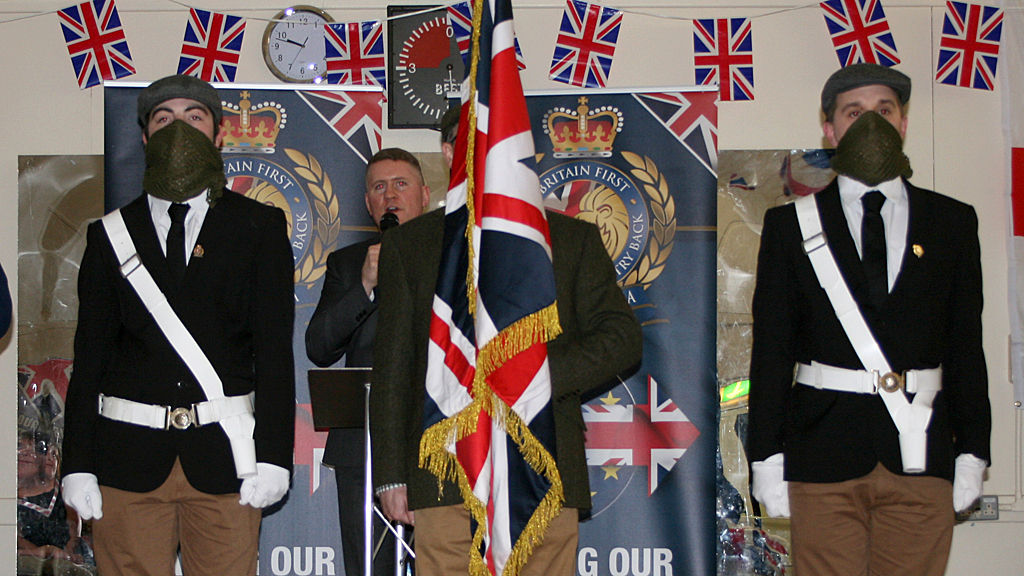
Britain First - Paul Golding - Masked Activists

If you don’t protest the forced cancellation of the Britain First conference in Chesterfield, don’t call yourself a supporter of free speech

Let’s skip the near-obligatory paragraph restating for the record just how odious and hateful Britain First are. Britain First’s racism, paranoia, manipulative social media campaigns and grotesque subversion of patriotism are abhorrent; that much really goes without saying.

But something else should also go without saying, yet is not being widely said: no matter how nasty that party’s speech and campaigning activities may be, the decision by Chesterfield council to cancel the venue booking for Britain First’s conference at the last minute is a brazen violation of the dual freedoms of speech and assembly.

From the Derbyshire Times:

A far-right political party has been banned from holding a conference in Chesterfield due to “the risk of public disorder”, it has emerged tonight.

Britain First had booked a Chesterfield Borough Council venue for its seven-hour meeting next Saturday.

But in a letter to the nationalist party’s leader Paul Golding, the council’s chief executive Huw Bowen said: “I am writing to advise you that a decision has been taken to cancel this booking because of the risk of public disorder. Your fee of £379 will be credited to your account.”

And the Huffington Post’s jubilant, gloating report:

Continue reading

Banning Hate Preachers Will Not Eradicate University Campus Extremism

Islamist Extremism University Campus Britain 1


Prohibiting extremist preachers from speaking on university campuses will not stop the radicalisation of impressionable young minds – and the ongoing coalition row between the Conservatives and Liberal Democrats shows the Tories at their authoritarian worst.

“Should these men be allowed in UK universities?” frets The Times of London, in a report which begins:

Radical and intolerant Islamist leaders preached to crowds of students at almost 200 official events in the past year, according to a study of external speakers at universities including Cambridge, Birmingham and University College London.

Segregated seating for male and female students is understood to have been implemented for at least a quarter of those public meetings held by the Islamic societies at 21 universities.

The issue of university campus extremism has been brought into sharp relief since it emerged that Mohammed Emwazi, or “Jihadi John”, may have been radicalised while studying at Westminster University in London. This revelation has led to renewed scrutiny of various Muslim student organisations, their invited speakers and their practices (such as segregated seating in some instances). And this scrutiny is often welcome.

But the government goes too far when it seeks to make universities responsible for enforcing the censorship of ideas deemed “extremist”, as the BBC reports:

Continue reading