On Armed Forces Day


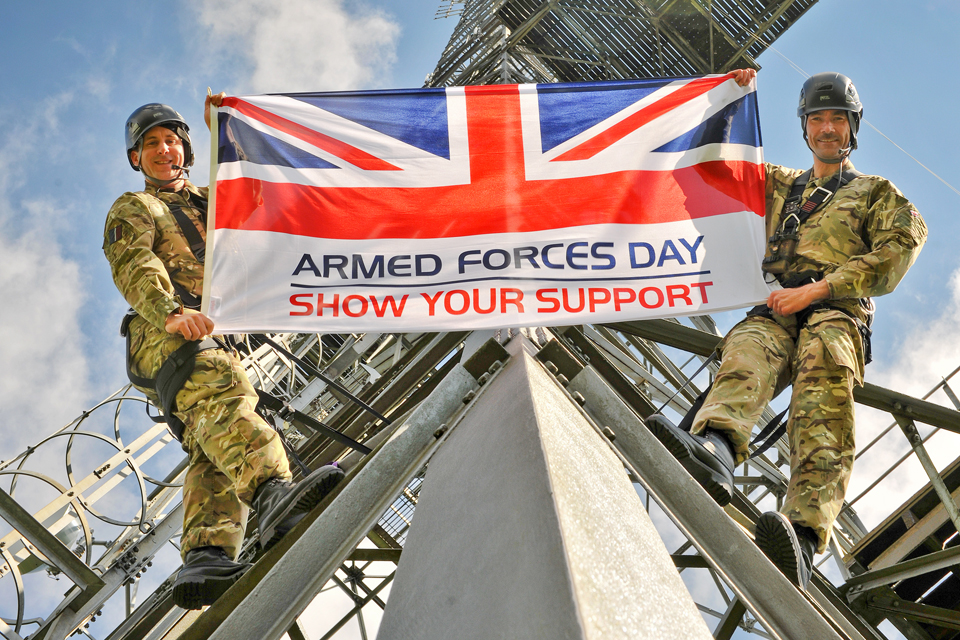
Saturday 28 June is Armed Forces Day in the United Kingdom.

Of course we should all take a moment to express our gratitude to the men and women who serve on the cutting edge of our nation’s defence and foreign policy projection capability – they toil and risk their lives for far less material reward or public recognition than many of us receive for doing far less.

But one day of public praise is not enough. Our armed forces are suffering significant cuts and capability reductions because of the coalition government’s refusal to protect the defence budget from spending cuts. These cuts include the compulsory redundancy of many long-serving, experienced veterans who deserve better from their government.

Britain is not like the United States – aside from our nuclear deterrent and pared-back blue water navy, we do not enjoy an advantage of many multiples over most of our current and potential future enemies, in terms of manpower or total defence spending. What advantage we have comes from our high-tech skills base, strong defence sector and the extraordinary professionalism of the people who serve our country in uniform.

All too often, people (particularly those on the left) suggest that defence spending should be pared back even further (“Shame on us for not investing more in schools while we build two new aircraft carriers”, etc.) It’s easy to say such things while quietly and ignorantly enjoying the fruits of Britain’s peace, prosperity and place in the world, which is underwritten by the very things that they want to see cut back or abolished. But in reality the opposite is true – having a powerful, effective and deployable military is crucial if Britain is to defend her interests, hedge against the unknown and be taken seriously on the world stage.

The introduction of Armed Forces Day has done a lot to promote greater knowledge, awareness and respect for the role that the armed forces play in our national life. But Britain still has a long way to go until serving soldiers and veterans are accorded the daily respect and acknowledgement that they deserve. Here, we can look to the United States as an example of giving the military a more prominent, respected role in society: from simple acknowledgement at places like airports, through discounts at stores and restaurants, up to incorporating more patriotic rituals – and yes, British Values – into the fabric of our national life.

And most importantly of all, we can put our money where our mouth is. In that spirit, Semi-Partisan Sam has made a small donation to veterans charity Help for Heroes, in support of the great work that they do supporting our wounded veterans.

Whatever our party allegiance or political differences may be, on this Armed Forces Day we should all be able to show our appreciation for those who fight our fights and wear the uniform.


The Special Relationship Endures

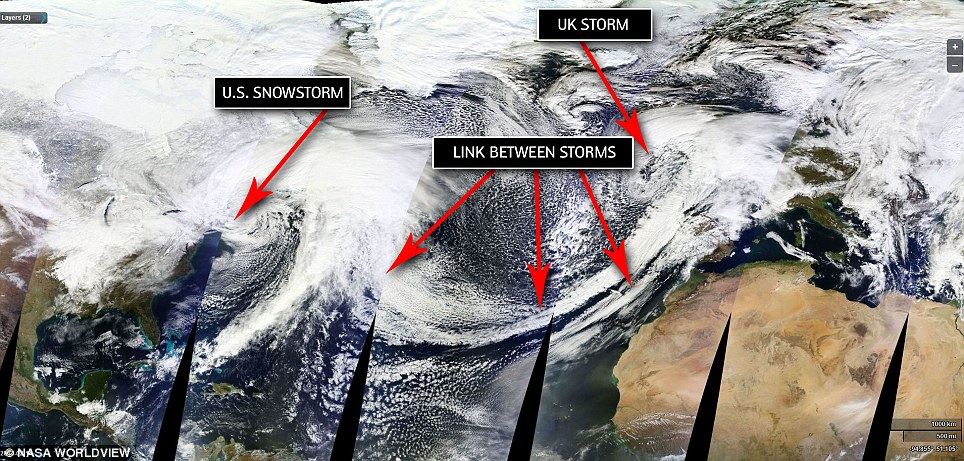
Those Brits who needlessly fret about the strength of the Special Relationship between the United Kingdom and the United States of America can finally rest easy – for so powerful is the bond between our two countries that we now apparently share a common weather system.

The Daily Mail reports on the perfect storm now linking our great nations:

BritainAmericaWeather

For so great is the rapport between our countries that it is now reflected in the heavens themselves.

And at a more human level, fans of the British actor Benedict Cumberbatch hoping to catch a glimpse of him at this evening’s BAFTA award ceremony in Covent Garden, London were left disappointed when our mutual storm stranded him at JFK airport in New York.

This bond is enduring.

The Storm Cone

A supplemental Music For The Day suggestion: “Look, The Storm Cone” from Act I of Benjamin Britten’s 1945 masterpiece, the opera Peter Grimes.

This music seems particularly apt given the severe weather which continues to batter much of the United Kingdom this week, leading to the first “red warning” of the winter from the Met Office.

britishstorm

As the villagers proclaim at the climax: O tide that waits for no man – spare our coasts!


All
Now the flood tide
And the sea-horses
Will gallop over
The eroded coast
Flooding, flooding
Our seasonal fears.
Look! The storm cone
The wind veers.
A high tide coming
Will eat the land
A tide no breakwaters can withstand.
Fasten your boats. The springtide’s here
With a gale behind.
 
Chorus
Is there much to fear?
 
Ned
Only for the goods you’re rich in:
It won’t drown your conscience, it might flood your kitchen.
 
Boles
God has his ways which are not ours:
His high tide swallows up the shores.
Repent!
 
Ned
And keep your wife upstairs.
 
Omnes
O Tide that waits for no man
Spare our coasts!


Those within traveling distance of London may want to check out the English National Opera’s production of Peter Grimes, running until the 27th February.


Defending Gibraltar

It is irking see the Conservatives so publicly and comprehensively outmanoeuvred by Labour recently on a variety of issues, most recently related to education and welfare. To witness the same thing now happen in the sphere of foreign policy is yet another worrying sign that the Conservative-led coalition government is coasting at this point, perhaps made complacent by the recent uptick in economic indicators, and taking their eye off the ball.

The Telegraph reports that Gareth Thomas, the Labour shadow minister for Europe, has raised concerns that Britain is not doing enough to forcefully push back against recent Spanish misbehaviour with regard to Gibraltar:

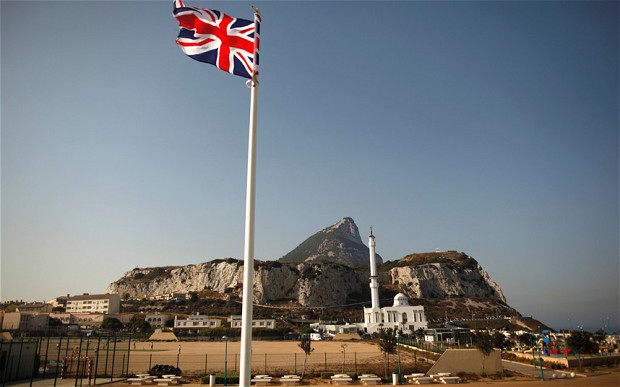
Gibraltar is a territory “under siege” and Spain should be made to account for its actions in relation to The Rock, the shadow minister for Europe has said.

Gareth Thomas, the Labour MP for Harrow West, said that residents of Gibraltar were concerned that Britain was not doing enough to defend them from Spanish harassment. The past 12 months have seen the highest ever number of incursions by Spanish ships into Gibraltar’s waters, with the almost double the incidents from 2012.

“I was struck by the sense that the Gibraltarians have of being under siege,” said Mr Thomas, who visited Gibraltar in November. “Spanish ships are coming into their waters on a regular basis.”

We have seen this before. The leaders of countries that are in the doldrums, facing economic malaise and restive populations (hi, Argentina), suddenly dredging up ancient grievances against Britain. Grievances that were once dead and buried during happier economic times. If you are going to make the case that the absence of the Falkland Islands or Gibraltar is like a gaping hole in your respective nation, I would have slightly more sympathy if we didn’t hear your plaintive appeals only during times of economic recession.

I refer you to the Treaty of Utrecht.

This continual harassment of a British overseas territory is unacceptable, and one cannot help but feel that the diplomatic protest by the UK in response has been far too small. Relying on a corrupt body such as the European Commission to mediate the dispute by visiting Gibraltar was clearly never going to be the answer, and why William Hague thought that this option would be sufficient to resolve the situation is mystifying. Diplomatic pressure is clearly failing in this case, and more stringent unilateral action may be required to bring the Spanish back into line. Bullying behaviour tends only to respond to a show of strength, a clear assertion that the bullying will no longer be tolerated.

Of more concern to me, though, is the fact that William Hague, the Foreign Secretary, has failed to make it sufficiently clear that Britain will not tolerate these childish antics. I had not expected someone so competent and capable to drop the ball or fail to forcefully defend the interests of the UK to the extent that he clearly has. Showing forebearance to Spain on the issue of Gibraltar, particularly given the childish means by which the Spanish government chooses to pursue its non-cause, is no longer cute or charming or patient. It’s weak.

Michael Gove on education, Iain Duncan Smith on welfare and now William Hague on foreign policy, all caught napping and hit from the right by their Labour counterparts. I don’t know whether a weekend retreat is in order at one end of the spectrum, or a wide-ranging cabinet reshuffle at the other, but David Cameron urgently needs to get his cabinet to come out of cruise control.

Seumas Milne Bashes America

seumasmilne

Seumas Milne rides to battle against the United States

It must be a slow news day, because Seumas Milne has taken to his Guardian column to denounce the presence of US military bases on British soil. You might think that resuscitating a dusty old left-wing fall-back piece like this might at least warrant some new angle on the story, or at least be based on some recent newsworthy transgression by the American military that we host here. You might think so, but you would be disappointed. Milne apparently just got out of bed feeling vaguely smug and anti-American, and decided to repeat the same predictable talking points, namely:

1. They came to help fight Nazi Germany in 1942 and the war ended a long time ago, so what can they possibly still be doing here?

2. America has dragged us into unnecessary and failed wars (Iraq was clearly a calamitous mistake, but why this warrants booting 10,000 US servicemen from our shores is never explained by Milne, unless it is supposed to simply be an act of vengeance) but we can absolve ourselves of these sins by closing down their bases here.

3. The British security elite are desperate to maintain a lopsided special relationship with the US, and only tolerate their bases on our soil as the price of achieving this goal.

4. Being so chummy with the Americans makes us less safe. Rather than being proud of our alliance with a country that symbolises democracy and individual freedom (however self-tarnished this image is becoming as a result of the unconstitutional activities of their national security complex), we should actively disown them to curry favour with fundamentalist theocracies who foment terrorism.

The column is not worth quoting at length, but here is an excerpt:

But whose interests are actually served by such a role? No doubt arms contractors are delighted, but it’s hard to argue that it benefits the British people – let alone those on the receiving end of the US and British military. Politicians and securocrats claim it gives them influence over US policy, but they struggle to produce the evidence on the rare occasions they’re asked to explain how. “The foreign policy elite still have a strong idea,” as the Chatham House analyst James de Waal puts it, that intervention based on “values” is an “innate part of what the UK is all about”. In fact, what successive governments have done is mortgaged Britain’s security and independence to a foreign power – and placed its armed forces, territory and weaponry at the disposal of a system of global domination and privilege, now clearly past its peak.

Milne wonders what the Americans would think if we had a military base on their home soil. Aside from the fact that British officers and military personnel routinely serve alongside their American counterparts both at home and in the field, I think that the Americans would be only too happy to see British military spending increased to such a level where we could afford more overseasbases (though whether this itself would be desirable is another matter). The reason for the lack of RAF bases in North Dakota is not that the British are the victims of some one-sided game in which the US gets to play and we have to sit on the sidelines, but everything to do with the fact that we choose to deprioritise defence in sacrifice for other goals, and all the other things that our caring government does for us. And look how that’s working out.

But this is where Milne really reveals his argument for what it is:

Britain’s fake patriots who bleat about the power of the European Commission are more than happy to subordinate the country’s foreign policy to the Pentagon and allow its forces permanent bases on British soil.

Firstly, our foreign policy clearly is not subordinate to the whims of the Pentagon, as the British parliamentary vote against taking military action in Syria made abundantly clear. Try as he might to build a convincing narrative of the British being led by the nose, two conflicts (Afghanistan and Iraq) over thirteen years are not enough to establish the damaging precedent that he wants to portray.

And secondly, I strenuously object to being labelled a fake patriot by Milne, but so bankrupt is his argument that insults are likely the only weapon left in his arsenal. Fake in relation to what, Milne’s more enlightened, cerebral left-wing patriotism? What Milne carefully chooses not to see is the fact that British government policy and the day-to-day experience of British life are influenced far more by the goings-on in the corrupt, undemocratic European Commission than they are by the garrisons of American military personnel on our soil – troops, incidentally, who are there to underwrite our common security objectives. If anything, it is an indictment of the European Union that Milne slavishly and unquestioningly adores that they punch more weight in this country by undemocratic diktat than do the “hostile American occupiers” against whom he childishly rages.

I’m sure that Milne thinks himself terribly persuasive in his closing paragraph:

But the withdrawal of British troops from Germany and this year’s planned renewal of the US-British defence agreement offer a chance to have a real debate on the US military relationship – and demand some transparency and accountability in the process. There is no case for maintaining foreign military bases to defend the country against a non-existent enemy. They should be closed. Instead of a craven “partnership” with a still powerful, but declining empire, Britain could start to have an independent relationship with the rest of the world.

But why should these two things be mutually exclusive? In Milne’s crazed imagination, the fact that we enjoy such a close alliance with a great country like America is shutting us off from good relations with other countries, or, as he puts it, having an “independent relationship with the rest of the world. This would probably come as a great surprise to the British ambassadors representing our country in foreign capitals across the globe, and to everyone working at the Foreign & Commonwealth Office in London toward the same ends. Exactly what relationship with the rest of the world does Milne think we are missing out on by failing to snub and humiliate our closest ally in the way that he proposes? Which are the countries in whose bad graces we currently dwell, who will suddenly warm to us if we send the Americans packing? North Korea? Venezuela? Iran?

I propose to Seumas Milne that he is trying to make an argument in reverse. He is clearly upset about British-American military cooperation and about our alliance in general. He would doubtless prefer to see us much closer to Europe, and have us actively working to further undermine American hegemony. But the American military bases and other visible manifestations of our close alliance are not a cause but an effect. In the case of Britain and America, an alliance such as ours is what you inevitably see when two countries, one larger and one smaller, have so much in common in terms of culture, economic ties and global interests. If Milne wants the US bases to close, he is making the wrong argument. Rather than bleating about Iraq and Afghanistan, he needs to begin convincing us that we are a different country than the one we think we are.

I don’t fancy his chances.